
Procrastination Is Not Laziness: The Ayurvedic Root Pattern Behind Inertia
Procrastination often feels like a character flaw, but Ayurveda gives a more useful lens: the mind can become heavy, scattered, overstimulated, or clear depending on the balance of the gunas and the daily habits that feed them. In this view, the goal is not to shame the person who delays; the goal is to reduce tamasic inertia, steady rajasic activity, and cultivate sattvic clarity so that intention can become action.
Many people with procrastination still have desire. They may want to exercise, build a business, study, write, complete a course, or change a habit. The problem is that desire alone does not move the system. Desire without clarity becomes restlessness; desire buried under heaviness becomes postponement. The Ayurvedic approach is to work with the whole pattern: body, digestion, sleep, sensory input, movement, and attention.
Procrastination Is Not Laziness. It Is a Guna Pattern.
Classical Ayurveda distinguishes the bodily doshas from the mental doshas. Vata, Pitta, and Kapha are described as bodily doshas, while Rajas and Tamas are described as mental doshas. Sattva is the clear, steady, illuminating quality of mind that Ayurveda seeks to cultivate. When Tamas dominates, the mind becomes dull, resistant, and obscured. When Rajas dominates, the mind becomes restless, impulsive, and scattered. When Sattva is strong, the mind can see clearly and act with steadiness.
- Sattva: Clarity, steadiness, discrimination, calm initiative, and the capacity to choose the right action.
- Rajas: Motion, stimulation, urgency, excitement, comparison, and outward-driven activity.
- Tamas: Heaviness, inertia, dullness, avoidance, confusion, and resistance to movement.
Chronic procrastination can be understood as a tamasic pattern with either too little healthy activation or too much unsteady rajasic activation. The person may want change, but the mind-body system remains stuck, foggy, or distracted. Kapha can add to the experience because its qualities include heaviness, stability, and slowness; when these qualities are excessive, they resemble the physical side of procrastination: oversleeping, sluggish digestion, heaviness on waking, and the desire to delay.
| Procrastination Pattern | Ayurvedic Reading | Feeling State | Primary Correction |
|---|---|---|---|
| “I cannot get started.” | Tamas with Kapha-like heaviness | Foggy, heavy, passive, overwhelmed | Light movement, warmth, routine, and small first action |
| “I start but never finish.” | Rajas with Vata-like mobility | Excited at first, then distracted and scattered | Grounding rhythm, fewer choices, one-task work blocks |
| “I do everything except the important task.” | Rajas and Tamas cycling | Busy, avoidant, mentally noisy | Sattvic clarity, task selection, and reduced stimulation |
| “I will do it when I feel ready.” | Tamas dominant | Waiting, postponing, passive | Begin before motivation appears; use brief embodied activation |
| “I overthink until I freeze.” | Rajas/Vata agitation with Tamasic freezing | Anxious, doubtful, mentally overloaded | Calm the nervous system, simplify the next step, and act gently |
The Three-Phase Ayurvedic Protocol for Moving From Tamas to Sattva
This protocol is not a punishment routine. It is a gradual reset of the conditions that feed procrastination. First, the body is mobilized so that heaviness does not dominate the morning. Next, digestion and attention are steadied. Finally, Sattva is cultivated through rhythm, simplicity, and clean sensory input.
Phase 1: Mobilize Kapha and Tamas (Weeks 1-2)
The first correction is physical. A tamasic mind rarely becomes clear through thinking alone; the body must be invited into movement, warmth, and rhythm. The purpose of this phase is to reduce heaviness without overstraining the body.
Morning routine:
- Wake before the morning becomes heavy. Classical daily routine texts praise waking in Brahmi Muhurta, before sunrise, for a healthy person. If that is unrealistic, begin by waking 20-30 minutes earlier than usual and keep the time consistent.
- Wash the face, drink warm water, and expose yourself to morning light. This gives the body a clear signal that sleep has ended and the day has begun.
- Move for 10-20 minutes. Use brisk walking, Surya Namaskar, bodyweight squats, or any safe movement that creates warmth and lightness. Ayurveda praises exercise for lightness, work capacity, digestive strength, and reduction of excess fat, but it also warns against overexertion.
- Use a two-minute task entry. Immediately after movement, open the task you have been delaying and work on it for only two minutes. The goal is not completion; the goal is to break the tamasic seal around the task.
- Keep breakfast light if you wake heavy. Favor warm, simple foods and avoid making the morning colder, heavier, and sweeter than it needs to be.
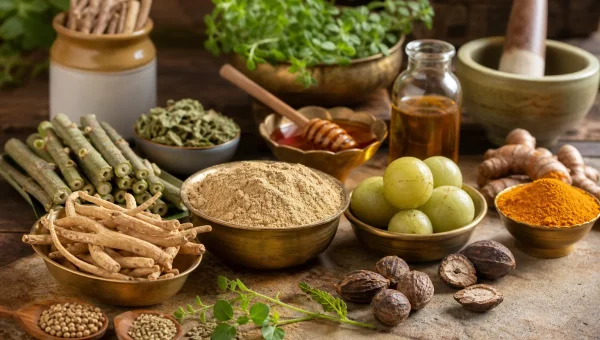
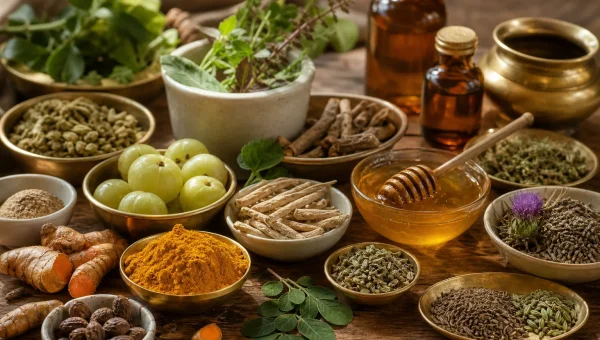
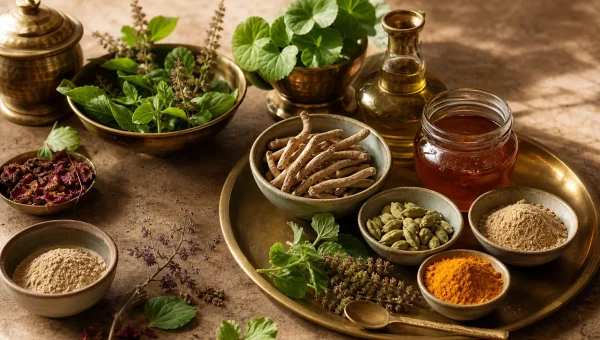
Food and herbal support: For a Kapha-heavy pattern, Ayurveda traditionally favors warm, light, freshly prepared meals and careful use of digestive spices. Trikatu, a classical combination of dry ginger, black pepper, and long pepper, is traditionally used as a warming digestive formula, but it is not suitable for everyone. Avoid self-prescribing strong formulas if you have acidity, ulcers, bleeding disorders, pregnancy, heat symptoms, or are taking medication.
Phase 2: Strengthen Agni and Attention (Weeks 3-4)
Once the morning heaviness begins to reduce, the next step is steadiness. In Ayurveda, Agni refers to digestion, metabolism, and transformation. A dull or irregular daily rhythm weakens the feeling of inner fire; a steady rhythm makes action easier.
- Make lunch the most complete meal. Favor warm, freshly cooked food with enough protein, vegetables, and appropriate spices. Avoid cold, stale, excessively oily, and excessively sweet meals when the pattern is heaviness and delay.
- Keep dinner lighter and earlier. A heavy late meal can make the next morning more tamasic.
- Use one-task work blocks. Choose one task, remove competing tabs and notifications, and work for a defined period. Sattva grows when the mind is given one clear object.
- Use Trataka gently. Candle gazing is a yogic concentration practice based on steady visual attention. Practice for a short period, stop if the eyes strain, and avoid it during active eye irritation, migraine sensitivity, or medical eye conditions unless guided by a qualified teacher or clinician.
- Consider Medhya Rasayana only with guidance. Brahmi and Shankhapushpi are traditionally discussed as Medhya Rasayana herbs for intellect and mental clarity. Use correctly identified herbs from reputable sources and consult a qualified practitioner before combining them with medicines or using them for a chronic mental health concern.
Phase 3: Cultivate Sattva (Weeks 5-8)
After heaviness is reduced and daily rhythm improves, the deeper work is to make clarity normal. Sattva is not produced by stimulation; it is cultivated by clean food, steady sleep, meaningful work, truthful self-observation, and reduced sensory excess.
| Practice | Duration | Frequency | Sattvic Purpose |
|---|---|---|---|
| Morning sitting practice | 10-20 minutes | Daily | Builds self-observation before the day becomes reactive |
| Sattvic food emphasis | All meals | Daily | Favors fresh, wholesome, agreeable food that supports steadiness |
| Nature walk or outdoor stillness | 20-30 minutes | Daily or near-daily | Reduces sensory overload and helps attention settle |
| Consistent sleep window | 7-8 hours when possible | Daily | Prevents late-night overstimulation and morning heaviness |
| Single-tasking | During work periods | Daily | Strengthens one-pointedness and reduces rajasic switching |
| Digital reduction | Especially morning and night | Ongoing | Reduces rajasic input that often ends in tamasic collapse |
Using Ayurvedic Time Windows for Task Management
Many contemporary Ayurvedic routines use the daily dosha clock as a practical overlay for work. This model assigns Kapha qualities to 6-10, Pitta qualities to 10-2, and Vata qualities to 2-6, both morning and evening. Use this as a planning tool, not as a rigid rule.
- 6-10 AM, Kapha time: Use movement, bathing, light planning, and steady routine so heaviness does not take over the morning.
- 10 AM-2 PM, Pitta time: Place the most demanding work, decision-making, study, and execution here when possible.
- 2-6 PM, Vata time: Use this period for lighter creative work, communication, review, and idea capture.
- 6-10 PM, Kapha time: Slow down, simplify, eat lightly, reduce screens, and prepare the next day.
A Modern Lens on Action Control
A modern behavioral lens also treats procrastination as more than laziness. It is often connected with action control, emotion regulation, attention, and the difficulty of turning intention into behavior. This fits the Ayurvedic observation that desire alone is not enough; the mind also needs clarity, steadiness, and the right level of activation.
Movement, meditation, outdoor time, and attention training are useful because they change the state in which decisions are made. Ayurveda would describe this as reducing Tamas, calming unsteady Rajas, and making room for Sattva. Modern language may describe it as supporting attention, self-regulation, and readiness for action.
What Changes When the Pattern Breaks
The first change is usually not a dramatic life transformation. It is smaller and more important: the task stops feeling sealed behind a wall. You still may not feel excited, but you can begin. You still may not finish everything, but you return more quickly. You stop waiting for motivation and start creating the conditions in which motivation is more likely to appear.
When Tamas returns, use the same sequence: warmth, movement, one clear task, and a short beginning. A brisk walk, a few minutes of safe breathing, a warm meal at the right time, and a two-minute start can prevent the pattern from hardening again. For sleep support that complements a sattvic routine, see Beyond Ashwagandha: 5 Sleep Remedies. For fatigue patterns that can resemble tamasic heaviness, read Ayurvedic Approach to Chronic Fatigue.
When Procrastination Signals Something Deeper
Chronic procrastination can overlap with depression, ADHD, anxiety, burnout, trauma, sleep disorders, or medical fatigue. If delay is accompanied by persistent sadness, hopelessness, panic, inability to experience pleasure, self-harm thoughts, severe anxiety, or major impairment in daily life, seek evaluation from a qualified mental health professional or physician. Ayurvedic lifestyle support can be valuable, but it is not a substitute for needed clinical care.
Medical Disclaimer: This article is for educational purposes only and does not diagnose, treat, or cure any medical condition. Consult a qualified Ayurvedic practitioner or licensed healthcare provider before starting herbs, supplements, intensive pranayama, kriya practices, fasting, detoxes, or therapeutic protocols, especially if you are pregnant, breastfeeding, managing a condition, taking medication, or have a history of psychiatric, cardiovascular, neurological, digestive, or eye-related illness. Use reputable, properly tested products, as some Ayurvedic preparations have been found to contain unsafe levels of heavy metals.
References
- Charaka Samhita — Sutra Sthana 1.57
- Charaka Samhita — Rajas
- Charaka Samhita — Mahatigarbhavakranti Sharira
- Charaka Samhita — Sattva
- Charaka Samhita — Kapha dosha
- Easyayurveda (easyayurveda.com)
- Charaka Samhita — Agni
- Rjptonline (rjptonline.org)
- Nootropic herbs (Medhya Rasayana) in Ayurveda: An update (2012), PubMed Central
- Meta-analysis of randomized controlled trials on cognitive effects of Bacopa monnieri extract (2014), PubMed
- Fate of β-asarone in Ayurvedic Sodhana process of Vacha (2013), PubMed Central
- Ema (ema.europa.eu)
- Health and therapeutic benefits of Shatkarma: A narrative review of scientific studies (2021), PubMed Central
- Immediate effect of yogic visual concentration on cognitive performance (2016), PubMed Central
- Effect of Trataka (Yogic Visual Concentration) on the Performance in the Corsi-Block Tapping Task: A Repeated Measures Study (2021), PubMed Central
- Vedabase (vedabase.io)
- Ayurvedacollege (ayurvedacollege.com)
- The Structural and Functional Signature of Action Control (2018), PubMed
- A meta-analytic review of the effects of exercise on brain-derived neurotrophic factor (2015), PubMed Central
- Mindfulness practice leads to increases in regional brain gray matter density (2011), PubMed
- Attention Restoration Theory: A systematic review of the attention restoration potential of exposure to natural environments (2016), PubMed
- The Moderating Effect of Attention-Deficit Hyperactivity Disorder Symptoms on the Relationship Between Procrastination and Internalizing Symptoms in the General Adult Population (2021), PubMed Central
- NCCIH
Not sure I agree on tamas being suitable for Vata-Pitta. My experience was different.
will try sluggish now
is light foods ok during pregnancy? asking for my wife who is in second trimester
can you combine saffron with saffron or is that too much at once
Ha, I think you meant to ask whether you can combine two different herbs rather than the same one twice. Good question though — I was also wondering about stacking the recommendations in this article.
how long do u need to take kapha before results show? been 3 weeks, nothing yet
these ayurvedic treatments take so long to work. western medicine might be faster for acute issues
Is there a seasonal consideration for kapha? I read elsewhere that some adaptogens should be paused in summer. नमस्ते
Good question about seasonality. From what I have read, spring and early summer are actually the peak Kapha periods, so that might be the best time to lean into the stimulating practices described here rather than pause them. But worth checking with a vaidya. नमस्ते
dosage info not clear enuf
same here, morning routine helped me but took longer than the article suggests
Is honey safe to use alongside SSRIs? My psychiatrist has not cleared any supplements and I want to go in informed.
Yeah the kapha timing thing confused me too. I do it before meals now based on another source.
@Jason Not sure I agree on light foods being suitable for Vata-Pitta. My experience was different.
how long do u need to take tamas before results show? been 3 weeks, nothing yet
For the light foods preparation described, does the water temperature affect the active compounds during the decoction process?
Where is the evidence for the brahmi dosage recommended here? I could not find any peer-reviewed backing in the Indian Journal of Ayurveda for these specific numbers.
r side effects of saffron real
i have pitta excess and tamas worked fine for me, but started at lower dose
Same experience with morning routine here. Took me about 6 weeks to notice real change.
Where is the evidence for the kapha dosage recommended here? I could not find any peer-reviewed backing in the Indian Journal of Ayurveda for these specific numbers.
I tried saffron for two months following a similar protocol and saw zero improvement. Not sure if dosage was wrong or the formulation matters that much.
off topic but has anyone here tried Ayurveda for hair loss? sorry if wrong place
this helped. been confused about tamas timing for weeks now
anyone here tried saffron for the specific issue in the article? what was your experience
the decoction method for morning routine is a bit confusing, is there a simpler version
The explanation connecting tamas with morning routine in Ayurvedic theory here is cleaner than anything I found in the textbooks I have.
The explanation of Tamas as a mental boulder really clicked for me.
finally something practical on tackling tamas. been reading Ayurvedic theory for months but nobody explains the actual morning routine this clearly ✨ नमस्ते
the research references on Kapha mental inertia feel a bit dated — anything more recent on the neuroscience side connecting tamas to dopamine or motivation pathways?
Does the quality of sluggish source matter significantly? Organic vs non-organic makes a big cost difference where I live.
Good point about tamas. The quality of the herb makes a huge difference in my experience.
finally something practical. been reading about morning routine for months and this is the first clear how-to
bought saffron from a random brand and got no results. does quality vary that much between suppliers?
about 8 weeks for me with morning routine before any visible change 🙌
8 weeks is actually reassuring to hear. I am only at week three and getting impatient. Did anything specific shift at the 8-week mark or was it more of a gradual thing? 🙌
@Shruti Good point about kapha. The quality of the herb makes a huge difference in my experience.
Same experience with sluggish here. Took me about 6 weeks to notice real change.
6 weeks feels about right from my experience too. The first month I kept second-guessing it, but somewhere around week five the mental heaviness in the mornings just started lifting.
@Shruti Totally agree on herb quality. I noticed the same thing — once I switched to a trusted source the difference in how alert I felt in the mornings was hard to ignore.
Quick question: is the kapha dose mentioned here for KSM-66 extract or full-spectrum powder? The potency difference is significant.
where r the studies for kapha tho
i have high pitta, would the kapha protocol here work or make things worse
I wonder how Kapalabhati feels for someone who’s never done breath work before.
any1 tried kapha here tell me
tryd brahmi nothing happend
i have high pitta, would the morning routine protocol here work or make things worse
how long do u need to take brahmi before results show? been 3 weeks, nothing yet
i have pitta excess and light foods worked fine for me, but started at lower dose
how long do u need to take light foods before results show? been 3 weeks, nothing yet
the dosage chart for saffron is really helpful. been overdoing it apparently
is kapha ok during pregnancy? asking for my wife who is in second trimester
Can children use morning routine? The post covers adults but my 11-year-old has similar symptoms.
i have pitta excess and brahmi worked fine for me, but started at lower dose 💯
yeah light foods quality is huge. local brand didnt work, switched to a standardized extract and different story
@Deepak i have pitta excess and saffron worked fine for me, but started at lower dose
i have high pitta, would the morning routine protocol here work or make things worse ❤️
Not sure I agree on kapha being suitable for Vata-Pitta. My experience was different.
Getting up before six seems tough but the logic about Kapha time makes sense.
For the brahmi preparation described, does the water temperature affect the active compounds during the decoction process?
Where is the evidence for the sluggish dosage recommended here? I could not find any peer-reviewed backing in the Indian Journal of Ayurveda for these specific numbers.
Fair point on the evidence. I had the same question. Anecdotally the approach worked for me, but I would also love to see the article cite specific studies rather than general classical references.
The explanation connecting light foods with light foods in Ayurvedic theory here is cleaner than anything I found in the textbooks I have. 💯
Quick question: is the light foods dose mentioned here for KSM-66 extract or full-spectrum powder? The potency difference is significant.
honestly try tamas for at least 3 months before deciding it doesnt work
That’s a fair concern. I found kapha worked better when I also adjusted my diet simultaneously.
The article mentions starting light foods on an empty stomach. Does this apply even when taking it in ghee form?
The formulation type matters a lot for light foods. Churna vs capsule vs kashayam gave me different results.
Is sluggish safe to use alongside SSRIs? My psychiatrist has not cleared any supplements and I want to go in informed.
Has anyone tried the Trikatu with honey and noticed a shift in morning fog?
where r the studies for light foods tho
honestly try ginger for at least 3 months before deciding it doesnt work
can i take saffron wid metformin??
That is a really important question and I would not guess on it. Metformin interactions with herbal supplements can be unpredictable — please check with your doctor or an integrative physician before combining anything.
My practitioner said the same thing about brahmi. Results vary by individual constitution. 🌿
i have high pitta, would the light foods protocol here work or make things worse
Not sure I agree on morning routine being suitable for Vata-Pitta. My experience was different.
Quick question: is the saffron dose mentioned here for KSM-66 extract or full-spectrum powder? The potency difference is significant.
Good point about morning routine. The quality of the herb makes a huge difference in my experience. 🙌
tryd kapha nothing happend
i have pitta excess and brahmi worked fine for me, but started at lower dose
Good point about light foods. The quality of the herb makes a huge difference in my experience.
about 8 weeks for me with saffron before any visible change
The idea of matching tasks to Pitta Vata and Kapha windows could change how I plan my day.
my vaidya suggested sluggish but never explained the why. this article fills that gap 🙏
Can children use brahmi? The post covers adults but my 11-year-old has similar symptoms.
Quick question: is the sluggish dose mentioned here for KSM-66 extract or full-spectrum powder? The potency difference is significant.
Is there a seasonal consideration for light foods? I read elsewhere that some adaptogens should be paused in summer.
how long do u need to take saffron before results show? been 3 weeks, nothing yet ❤️
I’m curious about the safety note on Vacha sourcing the Asian diploid variety sounds important.
tried brahmi for months, did nothing for me honestly. maybe doesnt work for everyone
the dosage chart for morning routine is really helpful. been overdoing it apparently
Has anyone here tried the Brahmi or Shankhapushpi recommendations specifically for the mental inertia described in the article? Curious whether those worked better than lifestyle changes alone.
hw mny wks 4 light foods 2 work
Would have appreciated actual study citations for the brahmi claims. The references section is thin for something presented as clinical fact.
bought honey from a random brand and got no results. does quality vary that much between suppliers?
same here, kapha helped me but took longer than the article suggests
i have high pitta, would the honey protocol here work or make things worse
High Pitta and procrastination is an interesting combination — I would think Pitta types tend more toward over-doing than avoidance. Does your pattern feel more like anxiety-driven paralysis than actual low energy? The article’s kapha-focused approach might not fully fit if that is the case.
The claim that motivation can visibly shift within a few weeks of reducing tamas-aggravating foods seems optimistic to me. My experience was more like three to four months of consistent effort before I noticed any real change in follow-through.
Just started the brahmi protocol this week. A bit early to report results but the article gave me enough confidence to try it properly.
honestly try tamas for at least 3 months before deciding it doesnt work 🌿
the decoction method for kapha is a bit confusing, is there a simpler version
does brand matter for brahmi or is generic fine
Breaking inertia with movement instead of just thinking feels like a fresh angle.
hw mny wks 4 morning routine 2 work
Is there a seasonal consideration for honey? I read elsewhere that some adaptogens should be paused in summer.
Started following the diet guidelines mentioned for saffron about a month ago. The bloating that had bothered me for years is now very manageable.
any1 tried ginger here tell me
bought tamas from a random brand and got no results. does quality vary that much between suppliers?
can you combine honey with light foods or is that too much at once
The three month timeline for launching a business mentioned in the story gave me hope.
any1 tried tamas here tell me
Do the authors suggest any alternatives if cold water splash is too shocking?
My doctor actually recommended kapha last month, so finding this detailed explanation of the dosing schedule is exactly what I needed. 💯