
Perimenopause Joint Pain: Ayurvedic Asthi-Vata Protocol for Aching Bones
“I thought I was developing arthritis” is something I hear often from women who first notice aching wrists, knees, hips, shoulders, or fingers during perimenopause. Joint aches are recognised around the menopause transition, but they are not automatically “hormonal arthritis.” Injury, osteoarthritis, inflammatory arthritis, and infection can cause similar pain, so irregular periods should not end the assessment.
Modern care can investigate the cause and protect bone health; Ayurveda can add an individualised framework for dryness, stiffness, sleep, digestion, activity, and recovery. Symptoms may improve, but it is inaccurate to promise that they are always reversible, separate from osteoarthritis, or unlikely to need conventional treatment.
The Ayurvedic Explanation: Why Joints Hurt in Perimenopause
Ayurveda relates Vata closely to Asthi Dhatu, the tissue category associated with the supporting framework. The ashraya-ashrayi principle describes Asthi as a seat of Vata, while descriptions of Sandhigata Vata include joint pain, stiffness, crepitus, and restricted movement. This pattern is useful when pain feels dry, variable, worse after overexertion or poor sleep, and accompanied by cracking or reduced ease of movement.
This should not be converted into a literal claim that falling estrogen is the same as declining Artava or Rasa Dhatu. Biomedical hormones and Ayurvedic Dhatus are different explanatory systems. A practitioner may interpret the menopausal transition as a time when Vata and tissue depletion become prominent, but that interpretation supplements rather than replaces diagnosis.
Seek medical review when pain persists, recurs, affects sleep or daily activity, or causes morning stiffness lasting more than about 30 minutes. A hot swollen joint with fever or general illness needs urgent assessment; severe pain after injury, inability to bear weight, or altered sensation needs emergency care.
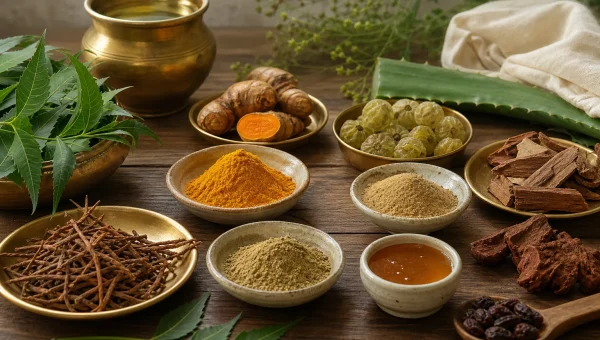
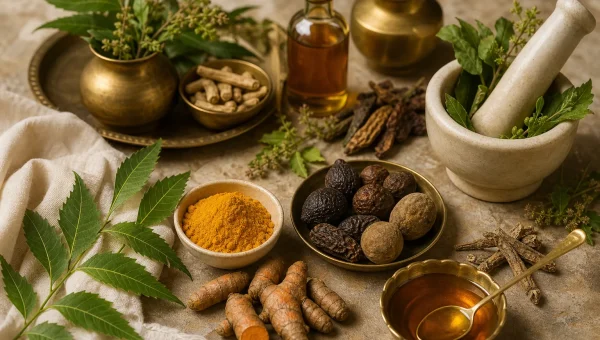
Five Ayurvedic Herbs Commonly Considered
These are not a universal five-herb stack. Classical powders, modern extracts, and compound tablets are not dose-equivalent, and most human evidence below comes from osteoarthritis or general knee-pain research rather than perimenopausal arthralgia. Build one coherent, supervised plan instead of combining everything.
Shatavari (Asparagus racemosus) — A Nourishing Option
Shatavari is an official Ayurvedic pharmacopoeial drug, and its roots contain steroidal saponins. Laboratory work has reported estrogen-receptor activity, but this does not prove that Shatavari replaces estrogen in bone, cartilage, or synovial tissue. In practice it may be selected when dryness or other transition symptoms accompany the pain. The form, dose, and anupana should be individualised; a milk vehicle is not compulsory.
Ashwagandha (Withania somnifera) — Strength and Recovery
The corrected evidence is a 2016 randomised double-blind trial of 60 adults with knee pain, not a 2024 trial of 125 postmenopausal women. Participants received a standardised aqueous root-and-leaf extract at 125 mg or 250 mg twice daily, or placebo, for 12 weeks; both extract groups improved on study measures. This was not menopause-specific, and its dose cannot be converted directly into grams of root powder. Ashwagandha may cause drowsiness or digestive upset, has rare liver-injury reports, and should be avoided during pregnancy; medicines and thyroid, autoimmune, or liver conditions require review.
Shallaki (Boswellia serrata) — Targeted Joint Support
Oral Boswellia extracts may help osteoarthritis pain and inflammation, but studies are generally small and many are low quality. That is more accurate than calling AKBA a “gold standard” or claiming Boswellia avoids all NSAID-related harm. Extracts differ in boswellic-acid content, so one fixed milligram instruction cannot be transferred safely between products. Use a quality-tested preparation only after checking medicines and health conditions.
Guggulu and Yogaraja Guggulu — Practitioner Led
Guggulu is purified oleo-gum-resin from Commiphora wightii; the Ayurvedic Pharmacopoeia lists it as ushna in potency and includes Vata-vyadhi among its traditional uses. Yogaraja Guggulu is an official compound formulation, not plain Guggulu. Its ingredients and product strengths make generic “two or three tablets” advice unsafe. A practitioner may choose it for a cold, stiff Vata pattern or select another formula when heat, swelling, digestive sensitivity, or medication use changes the case.
Haridra (Curcuma longa) — Food Versus Extract
Turmeric can remain part of a normal diet, and a small culinary amount in a warm drink may be a comforting evening practice; it is not mandatory treatment. The misquoted comparison trial studied 367 people with knee osteoarthritis and used 1,500 mg daily of Curcuma domestica extract versus 1,200 mg daily of ibuprofen for four weeks. It did not test 500–1,000 mg curcumin, kitchen turmeric, or perimenopausal pain. Concentrated or enhanced-absorption products can cause adverse effects and have rare liver-injury reports.
External Treatments: The Oil Therapies
External oiling can be retained as a comfort-focused Ayurvedic practice, but it should not be described as proven transdermal delivery of anti-inflammatory compounds. Evidence for a specific medicated oil in perimenopausal pain is limited; practical benefit may come from gentle touch, warmth, reduced guarding, and a regular wind-down routine.
A simple home approach: when a joint is neither hot nor visibly swollen, patch-test a simple carrier oil tolerated by your skin or a practitioner-selected medicated oil. Warm it only to a comfortable temperature, massage lightly for five to ten minutes, and wash it off later if desired. Stop if burning, rash, swelling, or increased pain occurs.
Mahanarayana Taila: CCRAS identifies it as a classical formulation and has published pharmacological and safety work on it. This does not prove benefit for perimenopausal arthralgia or support a universal hot-versus-cold application rule. It is not a generic substitute for diagnosis.
Avoid massage over a hot swollen joint, acute injury, infected or broken skin, or a joint needing urgent examination. The claimed castor-oil comparison with capsaicin cream was not verified and has been removed.
The Dietary Protocol: Supporting Asthi Without Food Myths
An Asthi-supportive diet should be nourishing, regular, and realistic rather than restrictive. Warm cooked meals fit a Vata-pacifying Ayurvedic pattern, while modern bone care requires adequate overall nutrition and calcium. Food cannot diagnose the cause of pain, and routine removal of nightshades is not justified without a clear personal trigger.
| Category | Practical Foods | Reasonable Use |
|---|---|---|
| Calcium-rich | Milk, yogurt, cheese, calcium-set tofu, fortified plant drinks, broccoli, kale, bok choy, sardines or salmon with bones | Recognised dietary calcium sources; choose according to diet and tolerance. |
| Regular nourishment | Dal, beans, eggs, fish, paneer or tofu with cooked grains and vegetables | Avoid an unnecessarily depleted or highly restrictive pattern. |
| Vata-friendly format | Soups, khichadi, stews, cooked roots and greens, modest ghee or oil if tolerated | Warm, moist preparations are a practical traditional choice when dryness or irregular appetite coexist. |
| Limit by context | Smoking, repeated meal-skipping, and reliable personal triggers | Protect general health without inventing a universal inflammatory-food blacklist. |
The Exercise Paradox
Complete rest can reduce strength, while forcing painful high-impact exercise can flare symptoms. The middle path is graded movement: walking as tolerated, resistance work, balance practice, and mobility exercises adjusted to the painful joint. Weight-bearing and strengthening activity support bone and muscle health during the menopause years, but the starting load must match current function.
Start with controlled movements that do not produce sharp or progressively increasing pain: short walks, sit-to-stand practice, wall push-ups, light resistance bands, or familiar gentle yoga. There is no verified rule that everyone must exercise during a “Kapha period” or stop all high-intensity training for four weeks. Persistent pain, instability, or swelling warrants physiotherapy or medical guidance.
Tadasana and supported standing poses may be useful when comfortable, but no pose should be compulsory. For more on the Ayurvedic framework around bones, see our guide on Asthi Dhatu nourishment and bone health protocol.
What to Expect: A Realistic Timeline
There is no verified promise that stiffness improves in two weeks or pain falls by 50–70% in six to eight weeks. The corrected herb studies lasted four to twelve weeks and involved knee osteoarthritis or knee discomfort, not this complete protocol. Track pain, stiffness, sleep, walking tolerance, and medicine use, then reassess instead of continuing an ineffective stack indefinitely.
Joint comfort and bone density are different outcomes. Pain improvement does not prove increased bone density, and supplements should not delay risk-based screening. Postmenopausal women younger than 65 with elevated fracture risk may need bone-density testing. See also the 7-year Rajonivritti transition protocol.
This protocol is educational and is not a diagnosis or substitute for medical care. Perimenopausal joint pain must be differentiated from osteoarthritis, inflammatory arthritis, injury, infection, and other causes. Consult a qualified Ayurvedic practitioner and healthcare provider before using concentrated extracts or compound formulas, especially with regular medicines, chronic illness, liver disease, pregnancy, or breastfeeding. Do not self-escalate doses or stop prescribed treatment.
References
- NHS
- Musculoskeletal Pain during the Menopausal Transition: A Systematic Review and Meta-Analysis (2020), PubMed Central
- Ijim (ijim.co.in)
- Management strategies for Janu Sandhigata Vata vis-a-vis osteoartheritis of knee: A narrative review (2016), PubMed Central
- Ayurvedic Pharmacopoeia of India
- Steroidal saponins from Asparagus racemosus (2009), PubMed
- Estrogenic Receptor-Functionalized Magnetite Nanoparticles for Rapid Separation of Phytoestrogens in Plant Extracts (2017), PubMed
- A randomized, double blind placebo controlled study of efficacy and tolerability of Withaina somnifera extracts in knee joint pain (2016), PubMed
- NCCIH
- NCCIH
- Ayurvedic Pharmacopoeia of India
- CCRAS
- Efficacy and safety of Curcuma domestica extracts compared with ibuprofen in patients with knee osteoarthritis: a multicenter study (2014), PubMed
- NCCIH
- NIH Office of Dietary Supplements
- ACOG
- ACOG
The preparation method you described, can it be adapted for someone who can’t tolerate ghee?
Yes, good question — sesame oil is usually the suggested substitute for ghee in these preparations, especially for those with dairy sensitivity. It’s still a heavy, warming anupana so it serves a similar function for Vata.
my Vaidya in Chennai suggested a slightly different sequence. Regional variation in practice?
@Jennifer the article references a specific classical formula. Is that available in standard pharmacies in India?
From my experience sourcing Ayurvedic formulas in India, the classical preparations are available at most Arya Vaidya Sala or Kottakkal branches. Smaller pharmacies may stock them too but quality can vary, so those two are usually the safer bet.
The 10ml dose mentioned in the article works well for me, started seeing changes around week 3.
My practitioner suggested this herb but didn’t specify the form. What would you recommend based on this?
Does the environmental toxin exposure factor mentioned here require additional chelation support?
Good breakdown of which symptoms respond faster and which need the longer 2 weeks course.
Agreed, and that breakdown is what made the article practical for me. My joint stiffness in the morning eased noticeably within the first week, but the deeper aching in my hips took closer to the full two weeks. Good to know what to expect at each stage.
how does this compare to the Charaka Samhita recommendations for the same condition?
morning stiffness around 45 was my first sign. wish doctors explained this phase more clearly.
I’ve been feeling stiffness in my hips during perimenopause and wondered if it’s just hormonal or something else
The article mentions the protocol but doesn’t give a clear sense of how long before results show up. 3 months? 6 months? For someone managing daily joint pain it really helps to know what to expect before committing.
Agreed that a timeline would help set expectations. I’ll add that the stiffness component probably responds faster than structural joint changes, so you might feel some improvement early even if full relief takes longer. 🙌
That’s a fair point about timelines. From what I’ve read elsewhere, bone-related Vata imbalances tend to take longer to respond than, say, digestive issues — so I’d guess 4-6 months minimum for joint relief, but would love the author to weigh in on this specifically.
does the protocol need to be followed in sequence or can the individual elements be used separately?
From what I understand you can use the elements individually, but the article does suggest the sequence matters for absorption — particularly taking the bone-supportive herbs before the oil application rather than after. Starting with just one piece still seems worth it though.
That’s actually a really valid concern given the Amlodipine question above. I’d say check with whoever prescribed the medication first. Some Vata-pacifying herbs can have mild vasodilatory effects so it’s worth confirming before combining. ✨
some of these herb interactions aren’t well studied. Feels like we’re being used as test subjects tbh
That’s a fair concern. I’ve felt that way about some wellness content too. What reassured me here was the specific sourcing guidance and the honest note that results vary — it didn’t feel like everything was being oversold.
Same reaction here. The step-by-step on the taila preparation is what made this article stand out to me. Most places just list ashwagandha and call it a day, no mention of how to actually use it for joint support.
The article made me think about how joint crepitus could be a Vata sign rather than just wear and tear
what would be the first signs that someone’s constitution is shifting after following this protocol?
In my experience the early signal is usually better sleep quality — Vata aggravation tends to cause light, broken sleep, and that often settles before the joint symptoms fully resolve. Also morning stiffness duration getting shorter is a good early marker.
the lifestyle recommendations here are quite specific. Which elements are most critical tbh
For me the oil application at night was the non-negotiable one. The dietary changes helped but the sesame oil on joints before bed made the most noticeable difference to morning stiffness. If I had to pick one element to prioritize, it would be that.
From what I’ve gathered following this protocol, the first three weeks are mostly about reducing aggravated Vata so the changes are subtle — sleep and digestion improve before joints do. Most people seem to see meaningful joint relief somewhere between weeks four and six.
That’s a genuinely interesting variable. I’d imagine digestion running drier and more Vata-aggravated at altitude might mean you need slightly more grounding — heavier anupana, warmer meals. Has anyone actually asked the author about this directly?
I’m not at high altitude but I can say the dietary piece makes a real difference regardless — three weeks in and the hip stiffness after long car rides has noticeably reduced. Curious whether the author has addressed altitude-specific adjustments anywhere.
For joint pain timelines I’ve seen in other comments here, people seem to notice something within 3-6 weeks of consistent practice. The key word being consistent — skipping the nightly oil application seems to slow results down considerably.
Will try.
Let us know how it goes! I started two weeks ago and the morning wrist stiffness has already eased a bit. Curious whether others notice digestion settling first before the joint symptoms shift.
Good point on quality — I’ve found that for the herbs mentioned here, the difference between a fresh well-sourced batch and a stale one is noticeable. Did you find a reliable supplier you’d recommend?
does the protocol differ for someone who has already done Shodhana (purification therapy) recently?
Does the Asthi-Vata protocol distinguish between joint pain that’s worse in the morning versus pain that flares up after activity? My wrists are worst right when I wake up and I’m wondering if that changes the approach.
the comparison between Churna and Kashayam forms here helped me decide which to ask my Vaidya for tbh
is this article based on classical texts, clinical experience, or modern research, or a mix ngl
I’m curious about trying a warm oil massage on my knees but worry about aggravating swelling
perimenopause joint pain is so under talked about. everyone says weight gain and hot flashes, but aching knees came first for me.
It’s helpful to see that irregular periods alone shouldn’t stop us from looking for other causes of joint pain
The homemade preparation method here is simpler than I expected. Made my first batch yesterday.
Same here actually — the first batch was easier than I expected. Did you do the sesame oil base or the ashwagandha version? Curious which one you tried for joint stiffness.
The article reads like an ad for Ayurveda generally, not a balanced assessment of this specific condition.
I like the idea of focusing on nourishing meals like soups and stews to help with dryness and stiffness
What’s the minimum duration before someone can realistically evaluate whether the protocol is working? 🌿
I’d say give it at least four weeks before drawing conclusions. 🌿 The first two weeks felt like very little was happening for me, and then week three things started to shift — less stiffness getting out of bed, knees more cooperative on stairs.
Four weeks minimum I’d say, based on my own experience. 🌿 The first month can feel slow but consistency really matters with these protocols. Are you doing the external oil application alongside the internal herbs or just one of them?
How does the dosage vary between male and female patients for this specific condition?
is there a specific guidance for those living at high altitude where digestion behaves differently tbh
The section on Shatavari made me wonder if it could help with sleep issues alongside joint aches
I’m skeptical about promising that symptoms will always reverse, since bone health is a longer term concern
Has anyone found that gentle resistance bands ease shoulder discomfort during this transition
honestly thought i was getting early arthritis — wrists aching every morning and hips stiff after sitting at my desk. 47 now and periods all over the place. this protocol makes so much sense to me tbh
I think you might be in the wrong thread — this post is about perimenopause joint pain, not children’s cough. That said, hope your son continues to improve!
This post is actually about perimenopause joint pain, so I’m not sure how the milder version helped a child’s cough. Different issue entirely. Must be a different article you’re thinking of?
Pretty sure you’ve mixed up posts — this one is specifically about Asthi-Vata joint pain in perimenopause, not a children’s remedy. Maybe check your browser tabs?
not everyone responds the same way to this herb. The article could use more nuance on individual variation honestly
the 1g dosage here is quite different from what my Ayurvedic doctor prescribed. Contradictory.
is there any specific preparation guidance for someone who is fasting during Navratri?
During Navratri fasting the ghee-based preparations would obviously need to pause, but the dry herb options and the external oil application should still be compatible with most fasting practices. Would be worth confirming with the author though.
I’d guess you could continue the external taila application without issue even during a fast. The internal preparations with ghee or anupana might need adjustment but the lifestyle and oil elements seem safe to maintain. Hope the author can clarify.
switched to taking this herb with honey based on this article, digestion noticeably smoother.
Interesting — I made the same switch to honey as anupana for the morning dose and noticed less bloating than with warm water. Glad it’s working for your digestion too. Did you change anything else at the same time or was it just the carrier?
is this safe for someone who has had kidney stones? The herb list mentions some diuretics. ✨
The explanation of Asthi as a seat of Vata gave me a new way to think about why my fingers feel sore
I appreciate the reminder to seek medical review if morning stiffness lasts longer than half an hour
Using turmeric in my evening tea feels comforting, but I’ll watch for any stomach upset
the specific mention of seasonal Ritucharya adjustments here adds a layer of depth I appreciate.
my doctor mentioned liver function tests before starting high-dose this herb. Is that standard here too?
The exercise paradox makes sense: too much rest weakens me, but high impact flares my hips
pls add red flags like swelling, fever, one sided pain. not every ache in this age is vata only.
I’m curious whether the assessment here looks at which joints are affected to determine the Vata sub-type involved. Hip and knee pain might indicate a different imbalance than finger and wrist pain — does the protocol adapt accordingly?
I’m interested in Yogaraja Guggulu but want a practitioner to guide dosage given my other meds
How long should someone stay on the maintenance dose before considering a full stop?
Tracking pain, sleep, and walking tolerance seems like a practical way to see what works over weeks
how does the frequency of bowel movements factor into this protocol adjustment tbh
Switched to taking this herb with milk based on this article, digestion noticeably smoother r u?
good breakdown of which symptoms respond faster and which need the longer 2 weeks course honestly
good point on warm food. cold salads made my knee pain feel worse in winter, maybe coincidence but still.
Not a coincidence in my opinion. Cold foods in winter are a classic Vata aggravator and the joints are one of the first places you feel it. I switched to warm soupy meals in winter and my knee stiffness dropped noticeably within a few weeks.
good to see the contraindication list included. Knew about 3 of them but not the this herb one.
How do you store the medicated oil after preparation? Refrigerated or at room temperature?
Useful.
the anupana (carrier) detail you included here is what most online resources miss completely tbh
Completely agree. The anupana choice for bone-targeting herbs is so specific — sesame milk versus plain warm water makes a real difference in absorption, and most general Ayurveda sites just skip over that detail entirely.
the 1g dosage here is quite different from what my Ayurvedic doctor prescribed. Contradictory honestly
The herb quality problem in India is real. You can’t assume readers have access to authentic preparations.
i am not fully convinced herbs can change bone pain alone. diet, strength work and labs should be in same plan.
Expected more from the genomics section. It’s superficial compared to what the title promises.
Fair point, though for perimenopause joint pain I’m not sure how much genomics really applies anyway. The protocol itself seems grounded in Vata-pacifying logic which I found more useful than any genetics angle.
Is the 500mg dose based on body weight or is it uniform for adults?
good breakdown of which symptoms respond faster and which need the longer 3 months course.
Yes, that distinction is really useful practically. In my experience the morning wrist stiffness responded within a few weeks, but the hip aching on stairs took much longer — so that 3-month guidance for deeper Asthi-level issues rings true.
Late to this discussion but wanted to ask, does the herb quality brand matter as much as you suggest?
the Nasya mentioned here, is that something to do at home or only with a practitioner tbh
Thanks!
the asthi vata explanation makes sense, but i would still check vit D and thyroid. joint pain has too many causes.
Can someone with Pitta-dominant constitution take the full dose or should it be halved?
the asthi part was useful but a table for vata pain vs arthritis pain would help readers compare.
Will look into this.
the protocol mentions taking this herb with milk, is that flexible or is the timing critical tbh
Doing this.
Good for you! Which part are you starting with — the oil application or the dietary changes first? I found the morning sesame routine the easiest entry point personally.
the specific preparation method for this herb described here is different from general churna usage, helpful.
The wrist pain on waking description is exactly my experience. I dismissed it as posture-related for over a year. Really glad someone is finally connecting this specifically to perimenopause and Vata rather than just saying take calcium.
these preparations aren’t regulated. How do we know the label matches what’s inside?
The this herb you recommend, is it available at standard Ayurveda stores or is it specialty sourced?
My experience is it depends on what’s in stock locally. The main herbs in this protocol I found at a decent Ayurveda pharmacy, but one or two I had to order online. Worth calling ahead before making a trip.
The sourcing concern is valid — though for joint pain in perimenopause I think the mechanism via Vata and Asthi dhatu is well established in classical texts even if modern trials are thin. Which claims specifically worried you?
I had the same question about timelines. How long did it realistically take for the joint aching to improve on this kind of protocol? The article gives a good framework but doesn’t anchor it to any timeframe.
My knees have been the worst — especially going downstairs, exactly as described. Started adding sesame oil massage about three weeks ago and the morning stiffness is noticeably less. Small change but it feels meaningful.
how do you store the medicated oil after preparation? Refrigerated or at room temperature tbh
Started the protocal after reading this, 6 months in with consistent use and feeling more balanced r u?
finally an article that gives actual prep instructions and not just herb names tbh
is it safe to use this with a blood pressure medication like Amlodipine honestly
Makes sense.
Does this protocol treat all perimenopausal joint pain the same way, or does it account for whether the pain is constant versus only triggered by movement? I’d imagine the distinction matters for which herbs are prioritized.
what’s the difference between the formulation for acute versus chronic presentations tbh
is this article based on classical texts, clinical experience, or modern research, or a mix r u?
Will try!
Realistic expectations would really help here. Is the joint pain relief gradual over months or do people usually notice a clear turning point? I’ve been dealing with hip and wrist pain for about a year and I’m trying to gauge how long to give this before reassessing.
the article mentions benefits for Vata types but doesn’t address what to do when it doesn’t work.
just found this through a Google search. Is this the most current version of the protocol?
I found this a few months back and it seemed relatively current then. The dietary guidelines especially match what I’ve seen in recent Ayurvedic literature on Vata and perimenopause. Worth checking the post date at the top just to be sure.
Is it safe to use this with a blood pressure medication like Amlodipine?
the Kapha morning protocol you described is now part of my daily routine. It works tbh
Worth noting that the joint pain in perimenopause can sometimes overlap with early autoimmune conditions, which would need a very different approach. Has the author seen cases where the two were confused before a proper assessment?
tried this herb for 3 months with zero noticeable change. Might just not work for my constitution.
The first section mentions a specific quality marker for this herb. Where can I verify this at purchase?
is the 750mg dose based on body weight or is it uniform for adults?
Is there a difference in outcome between using the tablet form versus the churna form?
the article assumes readers have a nearby Vaidya for supervision. That’s not always the case tbh
Spoke to two Vaidyas and neither confirmed this exact protocal. Where does it come from r u?
That’s worth knowing. The protocol here does seem to blend classical references with clinical observations, so maybe that’s why it differs from what standard vaidyas are following. Did they object to any specific part of it?
Could be the perimenopause context makes a difference — some vaidyas may not specialize in that hormonal overlap with Vata disorders. My mother’s vaidya wasn’t sure either but was open once we showed the classical references cited here.
I’m Pitta-Kapha dominant, does the dosage for this condition change significantly?
The timeline question is what I keep coming back to. I know Ayurveda doesn’t work like a painkiller, but even a rough range — 2 months, 6 months — would help people stick with the protocol instead of giving up too early.
The side effects section is too brief. i had insomnia on this herb that isn’t mentioned here. ❤️
Would help if the article distinguished between symptomatic relief and root cause resolution.
I appreciated the detail about bone tissue (Asthi dhatu) here — that framing helped me understand why the joint pain feels different from regular muscle soreness. Curious whether ghee is considered essential or optional in the protocol. tbh ❤️
the Pitta-aggravating foods list in this article finally explains why my symptoms peaked in summer.
Good info.
the herb quality problem in India is real. You can’t assume readers have access to authentic preparations honestly ✨
does castor oil apply here or is sesame oil better for this kind of dry aching pain? confused between both.
My practitioner approved this protocol and said the 10ml dose is appropriate for my weight.
Is the protocol appropriate for someone who has just completed chemotherapy?
Can this be taken during a juice fast or does it need solid food to absorb properly?
Good one.
The Nasya mentioned here, is that something to do at home or only with a practitioner ngl
My Ayurveda teacher pointed me to this article specifically. The dosage chart is useful.
The Nasya mentioned here, is that something to do at home or only with a practitioner?
Is this suitable for someone who is vegetarian and avoids dairy entirely?
nice practical post. less glamour than menopause content usually gets, but probably more useful.
The anupana (carrier) detail you included here is what most online resources miss completely.
What does Ojas depletion acutally feel like symptom-wise? Trying to identify if that’s my issue ngl 🙌 धन्यवाद
Quick question, is the 3g dose you mentioned for the extract form or the raw powder?
The combination of Vata accumulation and estrogen decline makes a lot of sense to me as an explanation for the joint changes. What I’m less clear on is whether the herbal support is meant to be ongoing or tapered once symptoms improve.
Saying ‘research supports’ without linking a single study doesn’t help readers verify anything ngl
Can someone combine this protocol with a standard multivitamin without interaction?
How long did it take for the bone-aching specifically to ease on this protocol? The shoulder stiffness described in the article sounds exactly like what I’ve been experiencing and I want to go in with realistic expectations.
realistically, most people can’t source high-quality this herb at affordable prices. Article ignores this.
what would be the first signs that someone’s constitution is shifting after following this protocol tbh
the classical texts cited don’t always agree with each other. The article presents them as unified tbh
the hip pain after sitting for long stretches is what brought me here. assumed it was my desk setup but my doctor found nothing structural. now reading this Asthi-Vata explanation and it clicks tbh
Spoke to two Vaidyas and neither confirmed this exact protocol. Where does it come from ngl
Started the protocol after reading this, 3 weeks in with consistent use and feeling more balanced.
The explanation of why Vata types need higher fat anupana clicked for me after reading this.
my mom says ajwain water helps her stiffness, but she also walks daily. hard to know what is doing the work.
the recipe in the fourth section is something I can actually prepare at home with pantry ingredients tbh
Does the protocol change during the summer Pitta season versus the winter Vata season?
These prepartions aren’t regulated. How do we know the label matches what’s inside ngl 🌿
the article is useful as a starting point but needs more referencing before I’d act on it.
following the 2 months course you described, finished last week and planning to continue maintenance tbh
the Ayurvedic classification of this condition, is it consistent across Charaka and Sushruta texts?
the specific mention of Mangala and this herb avoiding combination was new information for me.
The section on circadian timing, is that strictly necessary or is approximate timing sufficient?
Tried the 3 weeks regimen exactly as described, my Vaidya noted improvement at the follow-up. 🌿
Knee pain descending stairs was my first sign something had shifted. I’m 49 with irregular cycles and everything in this article matches what I’ve been going through. The Asthi dhatu connection is something my own GP never mentioned.
I have autoimmune issues, are there any herbs in this list I should avoid?
the section on drug interactions is too short. My cardiologist had concerns I had to research separately.
I started experiencing exactly this kind of joint creaking at 47 and spent almost a year thinking it was early osteoarthritis. Really validating to read that it’s a recognized perimenopause pattern with a specific Ayurvedic lens.
Reading this in 2027, is the dietary protocol still the same or has it been updated?
The 1g dose mentioned in the article works well for me, started seeing changes around week 3.
where are the actual peer-reviewed citations? I searched PubMed and found mostly small sample studies.
is this protocol appropriate for someone on Metformin for Type 2 diabetes tbh
The diet restrictions here are extensive. Most people can’t maintain this alongside a work schedule.
Useful info. ✨