
A Cumin-Forward Kwath Protocol for IBS-Like Grahani Patterns
IBS commonly presents with abdominal cramping or pain, bloating, gas, and constipation, diarrhea, or alternation between both. In Ayurveda, a similar symptom cluster is approached through the state of agni, the condition of grahani, the presence or absence of ama, and the dominance of Vata, Pitta, Kapha, or mixed patterns. In practical language, this jirakadi kwath IBS protocol uses cumin as the anchor herb while the rest of the decoction is selected according to stool pattern, appetite, heat, mucus, gas, and patient strength.
IBS and grahani are not identical labels. IBS is a modern diagnosis describing a functional bowel disorder, while grahani is an Ayurvedic diagnostic framework rooted in disturbed digestive fire, impaired assimilation, and unstable bowel function. The safest and most accurate approach is to use IBS subtype labels only as symptom anchors, while the actual formula, dose, timing, and diet are decided through Ayurvedic assessment.
Why Jiraka Is Central to the Formula
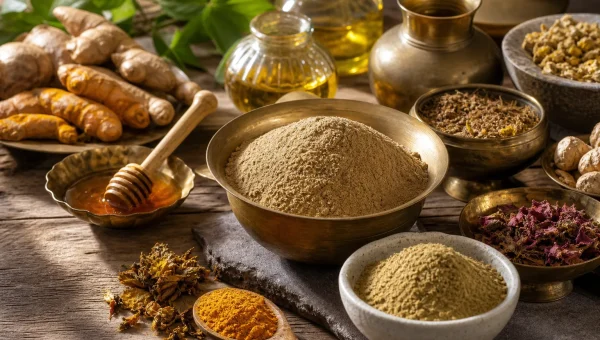
Jiraka, also called svetajiraka, is cumin seed, Cuminum cyminum. The Ayurvedic Pharmacopoeia of India describes it as pungent in taste, light, dry, and sharp in quality, hot in potency, and pungent after digestion. Its classical actions include dipana (kindling digestive fire), pachana (supporting digestion of undigested material), grahi (helping absorb excess intestinal fluid), rucya (improving taste and appetite), and kapha-vatahara (reducing Kapha and Vata aggravation).
This makes cumin especially suitable when bowel irregularity is accompanied by poor appetite, heaviness after meals, erratic digestion, gas, or a tendency toward loose stools after eating. It is not a harsh purgative and should not be treated as a stand-alone cure for IBS; it functions best as the lead digestive herb within a properly selected kwath and diet plan.
The Correct Classical Frame: Cumin-Supported Grahani Kwatha
A clean Ayurvedic way to use this protocol is to treat “jirakadi” as a cumin-supported grahani kwath approach rather than a single fixed market recipe. The classical digestive foundation closest to this use is Nagara Pippalyadi Kashayam, described with dry ginger, long pepper root, deodar, coriander, bilva root, and long pepper, and administered fresh with rock salt and cumin seed powder. For Vata-type intestinal disorder with flatulence and gripping abdominal pain, Dhanya Bilwadi Kashayam is another relevant grahani-oriented decoction, prepared with coriander, bilva, bala, dry ginger, and shalaparni.
For practical use, a practitioner may keep cumin as the lead support and select from grahani-relevant herbs such as dry ginger, coriander, bilva, musta, and kutaja according to the patient’s pattern. A person with hard, dry stools needs a different emphasis from a person with urgency, mucus, and loose stools; therefore, one fixed formula should not be used for every IBS presentation.
Corrected Ingredient Rationale
The following herbs have clearly defined classical roles in digestive and grahani-style presentations. They should be sourced from authenticated suppliers and used in the correct plant part, because the action of a seed, root, rhizome, bark, or fruit pulp is not interchangeable.
| Herb | Botanical Identity | Classical Digestive Role | Best Clinical Emphasis |
|---|---|---|---|
| Jiraka | Cuminum cyminum seed | Dipana, pachana, grahi, rucya, kapha-vatahara | Erratic appetite, post-meal heaviness, gas, and mild loose-stool tendency |
| Shunthi / Nagara | Dried rhizome of Zingiber officinale | Anulomana, dipana, pachana, amadoshahara, vata-kaphahara | Cold digestion, bloating, abdominal distension, sluggish appetite, and Vata-Kapha heaviness |
| Dhanyaka | Coriandrum sativum seed | Dipana, pachana, grahi, hrdya, mutrala | Sensitive digestion where stronger heating herbs may be excessive |
| Bilva | Unripe or half-ripe fruit pulp of Aegle marmelos | Dipana, pachana, grahi, vata-kaphahara | Loose stools, weak grahani function, and bowel instability without marked dryness |
| Musta | Rhizome of Cyperus rotundus | Dipana, pachana, grahi, pitta-kaphahara | Loose stools with heat, heaviness, mucus tendency, thirst, or Pitta-Kapha features |
| Kutaja | Stem bark of Holarrhena antidysenterica | Dipana, sangrahi, kapha-pittashamaka | Diarrhea-dominant, atisara, or pravahika-type patterns under practitioner supervision |
Preparation of Jiraka-Supported Kwath
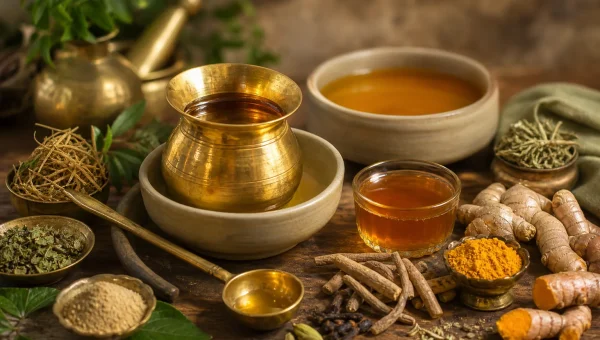
Kwath is a decoction, not an ordinary tea. In a decoction, coarse herbs are boiled in water and reduced so that the water carries the soluble qualities of the selected herbs. Classical pharmacy gives water ratios and reductions according to the nature of the ingredients and the physician’s prescription, so the preparation method should follow the practitioner’s instruction when a formal formula is prescribed.
General decoction framework:
- Use cleaned, authenticated, coarsely powdered herbs selected for the patient’s pattern.
- Combine 1 part coarse herb mixture with 16 parts water as a standard decoction framework.
- Simmer gently on mild heat until the liquid is reduced, commonly to one-fourth or as directed for the specific prescription.
- Strain while warm through a clean cloth or fine mesh.
- Use the kwath fresh rather than storing it for long periods.
- Take it warm, not chilled, at the time advised by the practitioner.
For a cumin-forward grahani protocol, cumin may be part of the decoction itself or added as a fine powder at administration, especially when the selected classical base is Nagara Pippalyadi Kashayam. Rock salt may be used as an anupana in selected Vata-Kapha presentations, but it should be avoided or reduced when hypertension, edema, kidney disease, or salt restriction is present.
Protocol by IBS Pattern
Modern IBS subtypes—constipation-predominant, diarrhea-predominant, mixed, and unclassified—are useful for communication, but Ayurvedic dosing follows the actual presentation. The same decoction can aggravate a patient if the grahi, heating, drying, or stimulating qualities are mismatched.
| IBS Pattern | Ayurvedic Focus | Kwath Emphasis | Caution |
|---|---|---|---|
| IBS-C: constipation-predominant | Vata dryness, obstructed movement, irregular appetite, hard stools | Gentle cumin and dry ginger support, warm meals, and Vata-anulomana measures chosen by the practitioner | Do not overuse strong grahi herbs such as bilva or kutaja when stools are already dry or hard |
| IBS-D: diarrhea-predominant | Weak grahani, excess fluidity, Pitta-Kapha features, urgency, mucus, or post-meal looseness | Cumin with bilva, musta, coriander, and practitioner-selected kutaja when the diarrhea pattern is clear | Avoid laxative adjuncts and seek medical care for dehydration, blood, fever, or persistent diarrhea |
| IBS-M: mixed bowel pattern | Vishama agni, alternating Vata movement and weak assimilation | Moderate-strength cumin-supported kwath with stable meal timing and weekly reassessment | Do not switch between laxative and astringent herbs day by day without guidance |
| IBS-U: unclassified | Incomplete pattern; requires more assessment of appetite, stool, diet, sleep, stress, and red flags | Begin with diet correction and a mild digestive approach only after assessment | Do not assume that all abdominal discomfort is grahani or IBS |
Diet and Anupana Support
In grahani-style digestive treatment, diet is part of the medicine. The classical approach gives priority to light, warm, digestible preparations when agni is unstable and ama is present. Thin rice gruel, soft rice preparations, warm cooked foods, and simple digestive spices are preferred over cold, heavy, greasy, raw, or irregular meals during the active phase.
During bloating, abdominal discomfort, or loose stools, meals should be warm, freshly prepared, and simple. Well-cooked moong dal soup, soft rice, cooked vegetables, and small amounts of ghee may be used when tolerated. Cold beverages, carbonated drinks, large raw salads, heavy fried foods, excessive legumes, and frequent snacking commonly disturb the very agni that the kwath is trying to stabilize.
Takra, or fresh buttermilk, has a special place in grahani management because it is described as light, digestive, and grahi. It may be taken with roasted cumin and a small amount of rock salt in suitable Vata-Kapha grahani patterns. It is not suitable for everyone; patients with marked acidity, burning, intolerance to dairy, or medical restrictions should avoid it unless a practitioner specifically advises it.
Gut-Brain Rhythm and Daily Routine
IBS is recognised as a disorder involving gut-brain interaction, and Ayurveda also recognises the close relationship between digestion, nervous system regulation, meal rhythm, and mental state. A kwath works better when meals are regular, sleep is steady, and the patient avoids eating during acute stress, rushing, or emotional disturbance.
A practical routine is to eat at consistent times, chew thoroughly, sit quietly for meals, avoid screens while eating, and take a short gentle walk after the main meal. Breath regulation, restorative yoga, meditation, and a calm evening routine can be used alongside the kwath when stress clearly worsens bowel symptoms. These supports do not replace medical or Ayurvedic treatment, but they help reduce the triggers that repeatedly disturb samana vayu and agni.
Monitoring the Response
A well-matched cumin-supported kwath should make digestion feel lighter without causing burning, excessive dryness, constipation, urgency, nausea, or fatigue. The first review should check appetite, bloating, stool form, frequency, pain, sleep, and tolerance. If the bowel pattern changes, the formula should be adjusted rather than continued mechanically.
Do not continue the same decoction for months without reassessment. Stronger grahi herbs may be useful in loose-stool patterns but can worsen constipation if used in the wrong patient. Heating herbs may help cold, sluggish digestion but can aggravate burning, acidity, or Pitta signs when overused. The protocol should be tapered, modified, or stopped according to response.
Safety and Practitioner Guidance
Digestive symptoms require medical evaluation when they are new, severe, worsening, or accompanied by alarm features such as rectal bleeding, unexplained weight loss, fever, repeated vomiting, persistent night-time diarrhea, iron-deficiency anemia, pain that wakes the patient from sleep, or new onset after age 50. These symptoms should not be managed with home decoctions alone.
Pregnant or breastfeeding patients, children, older adults, patients taking chronic medication, and anyone with inflammatory bowel disease, liver disease, kidney disease, diabetes, anemia, dehydration, or unexplained weight loss should consult a qualified Ayurvedic practitioner and healthcare provider before using kwath therapy. Kutaja, strong heating herbs, laxative adjuncts, and salt-based anupana require particular caution.
Disclaimer: This article is for educational purposes only and does not replace professional medical advice, diagnosis, or treatment. Consult a qualified Ayurvedic practitioner or healthcare provider before starting any new herbal, dietary, or digestive protocol.
The preparation is time-consuming and the taste is quite unpleasant. Compliance would be a major issue for most people.
Fair point on the taste — it is pretty bitter and earthy. I’ve found adding a small amount of rock salt helps a lot with compliance. The 20-minute reduction time is also a commitment in the morning. Wondering if anyone has tested making a larger batch and refrigerating it for a few days without losing potency.
my IBS is well managed with low FODMAP diet. Adding herb teas hasn’t moved the needle for me and the cumin aggravates my bloating oddly.
That’s an interesting situation — cumin aggravating bloating is counterintuitive given its carminative reputation, but it does happen with IBS-C types sometimes. I wonder if the traditional preparation (boiling vs just steeping) makes a difference, or whether the Jirakadi formula with its other herbs behaves differently than plain cumin tea.
My Ayurvedic doctor prescribed exactly this protocol you describe. Good to have a written reference I can share with my family.
Is the Jirakadi Kwath appropriate for IBS-C as well as IBS-D or is it primarily for thr diarrhea-predominant type?
same question here actually.
i think it depends on your Prakriti honestly.
The article doesn’t differentiate between IBS subtypes clearly enough. Recommending one preparation for all IBS types oversimplifies a condition with multiple mechanisms.
What time of day is optimal pre-meal, post-meal, or empty stomach? धन्यवाद
Pre-meal seems to be what classical texts recommend for Agni stimulation, but I’ve seen some practitioners say 30 minutes before eating works better than right before. Did the article specify? I’ve been taking mine about 20 minutes before lunch and it does seem to reduce the bloating I usually get mid-afternoon.
What time of day is optimal pre-meal, post-meal, or empty stomach?
Jirakadi Kwath is my go-to whenever my IBS-D flares. The bloating relief is within 20-30 minutes consistently. Wish I had known about this 10 years ago.
good question. mine is similar still figuring out the timing.
makes sense given what the article says about the Pitta component.
is the Jirakadi Kwath appropriate for IBS-C as well as IBS-D or is it primarily for the diarrhea-predominant type?
Useful info.
The breakdown of jirakadi kwath ingredients makes it easy to see why cumin leads the formula.
The kwath preparation takes 30-45 minutes. Is there a cold infusion method that retains the therapeutic effect for those short on time?
I wonder if the same decoction would help someone with mainly diarrhea-predominant IBS.