Inflammatory Bowel Disease Ayurvedic Treatment: The Grahani Dosha Framework
Inflammatory bowel disease ayurvedic treatment is best understood as a complementary grahani dosha framework, not as a replacement for the modern diagnosis of Crohn’s disease or ulcerative colitis. IBD is a chronic inflammatory condition of the digestive tract; Crohn’s disease can involve any part of the tract and may appear in separated patches, while ulcerative colitis is centered in the colon and rectum. Ayurveda evaluates the same patient through the strength of agni, the presence of ama, the direction and regularity of vata, the heat and bleeding tendency of pitta, and the mucus or heaviness tendency of kapha.
In the classical description, grahani is the seat and support of digestive fire. Its function is to hold food until digestion is appropriate and then release it onward; when agni is weak or disturbed, the holding and transforming function becomes unstable. This makes grahani a useful Ayurvedic lens for chronic patterns involving loose or irregular stools, undigested material, abdominal discomfort, burning, heaviness, mucus, weakness, and relapse-prone digestion.
Classical grahani is divided into vataja, pittaja, kaphaja, and sannipataja types. For IBD care, this classification is used to individualize supportive treatment: vataja care emphasizes warmth, regularity, and reducing dryness and spasm; pittaja care emphasizes cooling, bleeding-aware and burning-aware measures; kaphaja care emphasizes lightness, reducing mucus and heaviness; sannipataja care requires the most conservative supervision because all three doshas are involved.
Differential Mapping: Crohn’s Disease vs. Ulcerative Colitis in Ayurvedic Terms
Both Crohn’s disease and ulcerative colitis may be interpreted through the grahani framework when impaired digestion, unstable stool, abdominal pain, and systemic weakness are present, but the Ayurvedic emphasis differs according to the clinical pattern.
Ulcerative colitis with pittaja predominance: Ulcerative colitis commonly presents with diarrhea, rectal bleeding, abdominal pain, urgency, and inflammation centered in the colon and rectum. When burning, heat, sourness, yellowish loose stool, bleeding tendency, thirst, irritability, and sharp urgency dominate, the Ayurvedic pattern is usually managed as pittaja grahani with features overlapping atisara and pravahika. The therapeutic emphasis is pitta-pacifying, cooling, stool-stabilizing, and bleeding-aware: avoiding very spicy, sour, fermented, fried, and alcohol-aggravating inputs while using appropriate grahi and pitta-shamaka herbs under supervision.
Crohn’s disease with vata-pitta or sannipata predominance: Crohn’s disease can involve the ileum, colon, or other parts of the digestive tract and may include patchy inflammation, deeper bowel-wall involvement, stricturing, fistula, abscess, obstruction, weight loss, and nutritional depletion. When irregular pain, bloating, alternating stool, low weight, fatigue, cold sensitivity, and variable appetite dominate alongside inflammatory heat, the Ayurvedic pattern is commonly managed as vata-pittaja or sannipataja grahani. The therapeutic emphasis is warm, regular, digestible nourishment, careful agni restoration, reduction of cold and raw foods during unstable phases, and avoidance of overly heating or overly oily measures during active inflammation.
Core Ayurvedic Herbs Used in the Grahani-IBD Framework
Herb selection for IBD must be individualized according to stool pattern, bleeding, mucus, pain, appetite, strength, medication use, laboratory markers, and endoscopic status. The following herbs are commonly discussed in the grahani, diarrhea, and intestinal-inflammation framework, but they should not be self-prescribed during active IBD flares or combined casually with immunosuppressants, biologics, anticoagulants, or steroid therapy.
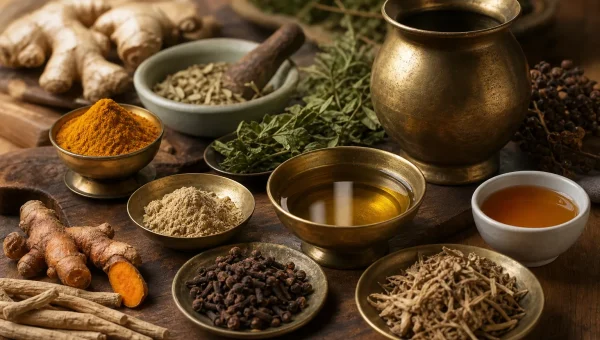
Kutaja (Holarrhena antidysenterica): Kutaja is a primary Ayurvedic herb for loose-stool and dysentery-like patterns. The Ayurvedic Pharmacopoeia of India lists kutaja as bitter and astringent in taste, light and dry in quality, cold in potency, pungent in post-digestive effect, and having dipana, sangrahi, and kapha-pitta-shamaka actions. Its listed therapeutic uses include atisara, pravahika, and jvaratisara, making it especially relevant when diarrhea, mucus, urgency, and pitta-kapha disturbance are prominent.
Bilva (Aegle marmelos): Bilva fruit pulp is classically used where digestion is weak and stool formation is unstable. The Ayurvedic Pharmacopoeia of India lists bilva as light and dry, with grahi, dipana, and pachana actions, and includes grahaniroga, pravahika, and agnimandya among its therapeutic uses. In the IBD-support framework, bilva is most appropriate when the immediate intensity of a flare is settling and the goal is to restore stool form, appetite, and tolerance to simple cooked foods.
Haridra and curcumin (Curcuma longa): Haridra is classically pungent and bitter, dry in quality, heating in potency, and used in conditions involving wounds, skin disorders, metabolic disturbance, and inflammatory presentations. Curcumin, a key constituent of turmeric, has been clinically tested as an adjunct to conventional ulcerative colitis therapy, especially alongside mesalamine. Because haridra is not purely cooling in Ayurvedic pharmacology, patients with strong burning, bleeding, acidity, or very high pitta signs should use it only in a suitable formulation and dose selected by a qualified practitioner.
Shallaki or Kunduru (Boswellia serrata): Shallaki resin, also listed as kunduru in Ayurvedic pharmacopoeial sources, is the gum-resin exudate of Boswellia serrata. Modern pharmacology identifies boswellic acids, including AKBA, as constituents that act on inflammatory leukotriene pathways. In IBD care, shallaki is best framed as an adjunctive, physician-supervised anti-inflammatory support rather than a substitute for aminosalicylates, immunomodulators, biologics, or endoscopic monitoring.
| IBD Presentation | Ayurvedic Pattern | Primary Emphasis | Commonly Considered Supports |
|---|---|---|---|
| Ulcerative colitis with bleeding, burning, urgency | Pittaja grahani with atisara-pravahika features | Cool pitta, stabilize stool, protect hydration | Kutaja, bilva, carefully selected curcumin |
| Crohn’s ileitis with pain, bloating, low weight | Vata-pittaja grahani | Warm regular meals, agni support, avoid cold/raw foods | Bilva, shallaki, individualized nourishing support |
| Mucus-heavy, sluggish, dull digestion | Kaphaja grahani features | Light warm food, reduce heaviness and mucus | Kutaja and bilva when clinically suitable |
| Relapse-prone or mixed presentation | Sannipataja grahani | Conservative, staged, practitioner-supervised care | Minimal formulas, careful diet, close medical monitoring |
Dietary Framework for Active Flares and Remission
Diet in IBD must distinguish active flare care from remission care. During active flares, the practical Ayurvedic principle is to reduce the burden on weak agni while protecting hydration, calories, and medical safety. This usually means small, regular meals of warm, soft, well-cooked foods; rice or rice gruel; thin mung dal soup when tolerated; peeled and well-cooked vegetables; and avoidance of raw salads, hard legumes, nuts, seeds, fried foods, alcohol, and personally identified trigger foods.
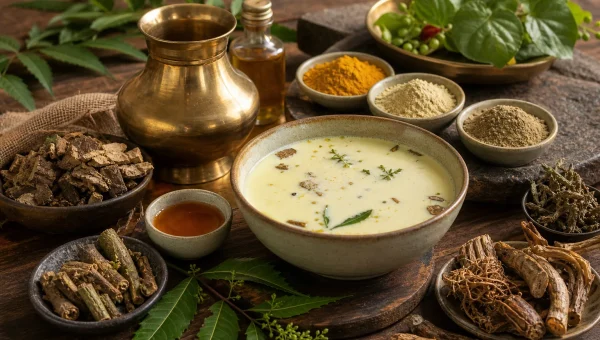
Classical Ayurveda uses preparations such as manda, peya, and yavagu as light gruel-based foods in diarrheal and weak-digestion states. In an IBD context, these are best understood as a traditional low-burden feeding model, not as a substitute for prescribed enteral nutrition, oral rehydration, electrolyte management, or medical flare treatment.
In remission, the diet can gradually broaden while maintaining digestive regularity. Cooked vegetables are usually introduced before raw foods; split mung is generally tested before heavier legumes; fats are increased slowly; and each patient’s response should be tracked rather than assuming one universal IBD diet. Unnecessary long-term restriction can worsen strength, weight, and nutritional resilience, so diet liberalization should be guided by tolerance, labs, body weight, and the advice of the gastroenterology team or dietitian.
Agni Restoration and Daily Routine
Restoring agni is central to the Ayurvedic management of grahani. Classical descriptions connect vataja grahani with factors such as dry and cold food, irregular intake, fasting or under-eating, and suppression of natural urges; kaphaja grahani is associated with heavy, cold, unctuous foods, overeating, and sleeping after meals. For IBD patients, this supports a practical routine of warm freshly cooked meals, consistent meal times, adequate sleep, and avoidance of cold, stale, heavy, or erratic eating patterns. The complete agni restoration protocol can be adapted cautiously to the patient’s flare or remission stage.
Dinacharya is not merely lifestyle decoration in this framework; it is part of stabilizing the gut rhythm. Regular waking, regular meals, gentle movement, appropriate rest, and a calm pre-sleep routine help reduce the irregularity that aggravates vata. For patients who notice stress-linked bowel changes, mild breath practices such as gentle nadi shodhana may be used as supportive nervous-system care, provided there is no strain, breath retention, dizziness, or forcing. The complete pranayama guide should be applied gently in IBD and never during severe weakness or acute flare distress.
Psychological and Stress Management Dimension
Stress management belongs in IBD care because psychological stress commonly precedes symptom worsening and affects quality of life, anxiety, depression, sleep, appetite, and bowel sensitivity. Ayurveda approaches this through sattvic routine, calm meal environments, stable sleep, reduced overstimulation, and practices that steady prana and vata. These measures support resilience and symptom regulation while conventional anti-inflammatory treatment continues to manage intestinal disease activity.
The most useful Ayurvedic stress plan is simple and consistent: eat without screens or rushed work calls, keep meals at predictable times, reduce late-night stimulation, use gentle breathing rather than intense breathwork, and protect recovery during high-pressure periods. This is especially relevant for patients who notice flares after sleep loss, travel, deadline pressure, grief, or prolonged emotional strain.
Panchakarma and Basti: Only in Carefully Selected Stable Cases
Panchakarma is not a home treatment for IBD flares. Procedures such as basti, virechana, or stronger cleansing therapies require a qualified Ayurvedic physician, careful patient selection, and coordination with the gastroenterology plan. During severe diarrhea, dehydration, fever, rectal bleeding, anemia, acute abdominal pain, suspected obstruction, abscess, fistula complications, or major weight loss, cleansing and enema-based protocols can be unsafe unless specifically directed by qualified clinicians. The panchakarma guide should therefore be read as background education, not as a self-treatment plan for IBD.
Integrated Care and Safety
The safest and most effective use of Ayurveda in IBD is integrative rather than alternative. Crohn’s disease and ulcerative colitis require ongoing gastroenterological supervision, appropriate medication, monitoring for anemia and nutritional deficiency, and colonoscopic or imaging assessment when indicated. Ayurvedic diet, routine, and herbs may support digestion, stool stability, stress regulation, and remission resilience, but they should not be used to stop prescribed IBD medicines without medical guidance.
Herbs and supplements can interact with treatment. Curcumin may cause digestive side effects in some people and may increase bleeding risk when combined with anticoagulant or antiplatelet medicines. Boswellia may cause gastrointestinal symptoms or allergic reactions in sensitive patients and should be reviewed alongside all current medicines and supplements. Patients taking biologics, azathioprine, methotrexate, corticosteroids, mesalamine, anticoagulants, antiplatelet drugs, or NSAIDs should introduce herbs only with their gastroenterologist and a qualified Ayurvedic practitioner informed.
Medical Disclaimer: This content is for educational purposes only and does not constitute medical advice. Inflammatory bowel disease is a serious chronic condition requiring ongoing gastroenterological supervision, medication review, nutritional monitoring, and appropriate investigations. Consult a qualified Ayurvedic practitioner and your healthcare provider before starting herbs, supplements, detoxes, fasting, panchakarma, basti, or therapeutic protocols, especially during active flares, pregnancy, anemia, severe weight loss, bleeding, fever, obstruction symptoms, or while taking prescription medication.
References
- CDC
- NIDDK
- Mayoclinic (mayoclinic.org)
- Msdmanuals (msdmanuals.com)
- Charaka Samhita — Grahani Chikitsa
- Ayurvedic Pharmacopoeia of India
- Ayurvedic Pharmacopoeia of India
- Acetyl-11-keto-beta-boswellic acid (AKBA): structure requirements for binding and 5-lipoxygenase inhibitory activity (1996), PubMed
- [Therapy of active Crohn disease with Boswellia serrata extract H 15] (2001), PubMed
- Randomized, placebo-controlled, double-blind trial of Boswellia serrata in maintaining remission of Crohn’s disease: good safety profile but lack of efficacy (2011), PubMed
- Effects of gum resin of Boswellia serrata in patients with chronic colitis (2001), PubMed
- Curcumin in Combination With Mesalamine Induces Remission in Patients With Mild-to-Moderate Ulcerative Colitis in a Randomized Controlled Trial (2015), PubMed
- Cochrane (cochrane.org)
- Curcumin and Its Modified Formulations on Inflammatory Bowel Disease (IBD): The Story So Far and Future Outlook (2021), PubMed Central
- Crohnscolitisfoundation (crohnscolitisfoundation.org)
- Crohnsandcolitis (crohnsandcolitis.org.uk)
- Charaka Samhita — Atisara Chikitsa
- Systematic review: the role of psychological stress in inflammatory bowel disease (2022), PubMed
- Psychological stress in inflammatory bowel disease: Psychoneuroimmunological insights into bidirectional gut-brain communications (2022), PubMed Central
- Frontiersin (frontiersin.org)
- Ijrap (ijrap.net)
- NIDDK
- American College of Gastroenterology
- NCCIH
- Medsafe (medsafe.govt.nz)
- Mskcc (mskcc.org)