Childhood Obesity Ayurvedic Management: The Kapha Sthaulya/Medoroga View
Childhood obesity ayurvedic management begins with careful, non-blaming assessment. In modern pediatric care, BMI-for-age percentiles help screen children and adolescents for weight categories; in Ayurveda, excessive adiposity is understood through sthaulya or atisthaulya, meda dhatu, kapha, agni, and daily causes of over-nourishment. In this article, “kapha bala medoroga” means a child’s kapha-dominant pattern of sthaulya or meda imbalance, not a separate classical disease label.
This approach is more compassionate than treating a number on a chart as a verdict. A child’s weight pattern is shaped by constitution, appetite, digestion, sleep, activity, food environment, family routine, emotional state, and medical factors. Ayurveda adds a practical lens: identify the pattern, remove the repeated causes, strengthen healthy routine, and support digestion without shame or harsh restriction.
Classical Ayurveda describes excessive adiposity as arising from repeated over-nourishment, especially heavy, sweet, cold, and unctuous foods, lack of physical activity, daytime sleep, and hereditary disposition. It also explains that excess meda can obstruct channels and disturb the movement of vata, creating strong digestive drive, frequent hunger, and thirst in some presentations. For this reason, not every child with obesity has the same digestive picture: some have strong appetite, some show sluggish digestion, and many have a mixed behavioral pattern shaped by screen time, snacking, and comfort eating.
The approach differs from adult medoroga management in critical ways. Children are still growing, so aggressive dieting, adult-style lekhana protocols, strong purgation, concentrated formulations, and unsupervised herb-mineral medicines are inappropriate. Management should be family-centered, age-appropriate, positive, and coordinated with a qualified pediatrician and a licensed Ayurvedic physician experienced in pediatric care.
Diagnostic Assessment: Identifying the Kapha Pattern
Before designing a management plan, assess the specific kapha and meda pattern driving the weight accumulation. The same external weight category can arise from different internal patterns, and the plan should match the child rather than applying one fixed “weight-loss” formula.
Kapha-meda excess with strong appetite: The child has genuine hunger, asks for repeated servings, and reaches for sweet, cold, oily, or calorie-dense foods. Digestion may appear strong, but appetite and portion size exceed the child’s actual growth and activity needs. Management emphasis: meal rhythm, warm cooked meals, measured portions, slower eating, satisfying protein-rich dals and legumes, and daily enjoyable activity.
Kapha excess with manda agni or ama signs: The child may eat moderate amounts but feels heavy, sleepy after meals, bloated, sluggish, or constipated. A coated tongue, reluctance to move, and discomfort after cold or heavy foods may be present. Management emphasis: warm simple meals, regular timing, lighter dinners, small amounts of digestive kitchen spices, reduction of cold drinks and grazing, and restoration of bowel regularity.
Comfort-eating and screen-grazing pattern: The child eats when bored, stressed, lonely, or overstimulated by screens. Snacks become a source of comfort, and eating may happen without hunger while watching videos, gaming, studying online, or scrolling. Management emphasis: screen-free meals, predictable routines, outdoor play alternatives, emotional communication, earlier sleep, and household-level food changes rather than blaming the child.
Dietary Principles for Kapha Bala Sthaulya
The dietary approach for children must use substitution and rhythm rather than fear and deprivation. Children respond better when the home offers delicious, warm, filling, kapha-balancing meals than when they are repeatedly told what they are not allowed to eat.
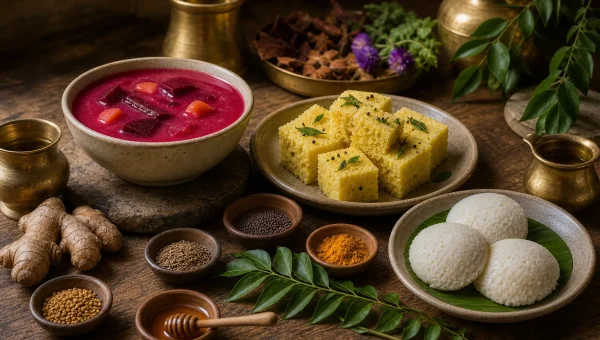
Use warm, cooked, lighter meals: Since heavy, sweet, cold, and unctuous intake is a classical cause of sthaulya, the everyday plate should move toward warm cooked meals, freshly prepared dals, vegetable soups, lightly spiced grains, and seasonal vegetables. Examples include mung dal soup, vegetable khichadi with more dal and vegetables than rice, millet upma, barley-vegetable porridge, and warm lemon-cumin water instead of chilled sweet drinks.
Balance taste without harshness: Kapha is balanced by the pungent, bitter, and astringent tastes when used appropriately. For children, this does not mean bitter medicines or spicy punishment; it means adding child-friendly forms of leafy greens, methi, gourds, radish, coriander, cumin, ginger, black pepper in small amounts, and legumes that provide satisfaction without excessive heaviness. Excess sweet, sour, salty, fried, cold, and creamy foods should be reduced gradually.
Apply the stomach-capacity principle: Ayurveda advises eating according to digestive capacity, leaving room for proper movement and digestion. Practically, this means serving meals on smaller plates, beginning with warm soup or dal, avoiding second helpings until the child has paused, and keeping meals regular rather than allowing all-day grazing. The aim is not starvation; it is the amount that leaves the child light, satisfied, and energetic.
Make meals calm and screen-free: Classical meal discipline emphasizes eating with attention, in a settled manner, and without distraction. In a modern home, the most practical expression is a screen-free dining space, a regular dinner time, and family meals where the child is not rushed, mocked, compared, or pressured.
Age-Appropriate Foods to Emphasize and Reduce
The following table keeps the same kapha-reducing intent while staying practical for children. Foods should be adjusted for age, digestion, culture, allergies, medical conditions, and the child’s pediatric growth needs.
| Category | Emphasize | Reduce | Practical Swap |
|---|---|---|---|
| Grains | Barley, millets, warm oats, vegetable dalia, moderate rice | White bread, sweet cereals, bakery snacks, refined flour foods | Millet or barley vegetable upma instead of sweet packaged cereal |
| Legumes | Mung dal, toor dal, masoor dal, chana, horse gram when tolerated | Creamy dals, excess urad, fried dal snacks | Warm mung dal soup instead of heavy dal makhani |
| Vegetables | Leafy greens, gourds, radish, drumstick, bitter gourd in small amounts | Fried potatoes, frequent sweet potato, vegetables cooked with excess oil | Gourd, greens, or drumstick sabzi instead of potato fry |
| Beverages | Warm water, cumin-coriander-fennel infusion, thin soups | Cold drinks, packaged juice, milkshakes, sweetened beverages | Warm jeera water or unsweetened herbal infusion instead of soda |
| Fats and snacks | Small amounts of ghee when digestion needs support, roasted chana, roasted makhana, fruit with nuts | Fried chips, excess cheese, butter-heavy foods, frequent sweets | Roasted chana or makhana instead of fried chips |
Gentle Herbal and Kitchen Support for Children
For children, food, routine, activity, sleep, and family environment are the foundation. Herbs should be supportive, gentle, age-appropriate, and prescribed according to the child’s constitution, digestion, bowel habits, medical history, and current medicines.
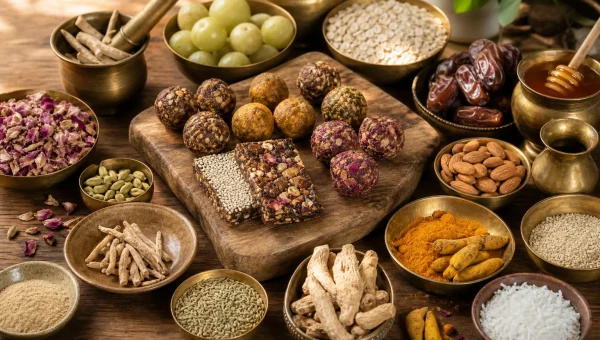
Digestive spices in food: Small culinary amounts of ginger, cumin, coriander, fennel, and black pepper can be used in cooking to make meals lighter and easier to digest. Concentrated trikatu powders, long pepper dosing, and strong pungent formulas should not be used as weight-loss supplements in children unless prescribed by a qualified Ayurvedic physician.
Warm seed infusions: A mild cumin-coriander-fennel infusion may be used as a warm digestive beverage for older children when tolerated. It should not replace meals, should not be used to force fluid restriction, and should not be heavily sweetened. Honey must never be given to infants under 12 months, and medicinal honey use in children should follow professional advice.
Triphala: Triphala is included in classical management discussions for sthaulya, but in children it should be treated as medicine, not as a casual household weight-loss remedy. It may be considered when constipation, sluggish bowel habits, and kapha-meda accumulation are present, but dose and frequency should be decided by a practitioner.
Avoid unsupervised adult medicines: Guggulu preparations, shilajit, mineral or metal preparations, bhasma, kshara, strong purgatives, and adult lekhana formulas should not be self-administered to children. Classical texts describe stronger therapies for adult-style sthaulya, but pediatric use requires specialized supervision.
Activity, Play, Sleep, and Screen Time
No childhood obesity plan is complete without changing the activity-sedentary balance. For children and adolescents aged 5-17 years, the daily target is at least 60 minutes of moderate-to-vigorous physical activity, with activities that strengthen muscles and bones included several times each week.
For a kapha-dominant child, movement should feel like play rather than punishment. Outdoor games, brisk walking with parents, cycling, swimming, dance, martial arts, skipping, climbing, running games, and sports with friends are better long-term tools than a forced exercise routine the child dislikes. The Ayurvedic intent is to counter heaviness, stagnation, and excess comfort with warmth, rhythm, circulation, joy, and regularity.
Screen time matters because it often replaces movement, encourages absent-minded eating, delays sleep, and keeps snacking attached to entertainment. Practical household changes include screen-free meals, no food during gaming or videos, charging devices outside the bedroom, replacing one screen period with outdoor play, and setting a family movement time after school or in the evening.
Sleep should also be corrected without extremes. Classical Ayurveda cautions that improper sleep patterns and daytime sleeping can aggravate kapha and meda in susceptible people. For children, the practical rule is age-appropriate night sleep, a regular bedtime, morning light exposure, and avoidance of late-night screens; necessary naps in younger children should not be forcibly removed.
Outcome Goals and Monitoring
The long-term goal in kapha bala sthaulya management is not crash weight loss. A child is still growing, so the safer goal is healthy growth velocity, steadier BMI trajectory, better stamina, improved digestion, regular bowel habits, sound sleep, better mood, and a family routine that naturally supports metabolic health.
A pediatrician should evaluate the child for medical contributors and complications, especially when there is rapid weight gain, poor height gain, severe fatigue, snoring, early puberty concerns, menstrual irregularity, medication-related weight gain, strong family history, emotional distress, or signs of endocrine or genetic causes. Ayurvedic care can then be integrated safely with pediatric monitoring rather than replacing it.
When the pattern is addressed early, the child does not need to be made fearful of food or ashamed of the body. The household simply becomes more supportive: warmer meals, calmer eating, fewer cold sweet drinks, more outdoor play, better sleep, and consistent guidance from adults.
Medical Disclaimer: This content is for educational purposes only and does not constitute medical advice. Childhood obesity requires assessment by a qualified pediatrician, including evaluation for growth pattern, endocrine causes, medications, sleep issues, nutrition, mental health, and family history. Do not use fasting, purgation, strong herbal formulas, mineral preparations, or weight-loss supplements in children without professional supervision. Consult a licensed Ayurvedic physician experienced in pediatric care alongside your child’s pediatrician for a safe, individualized plan.
References
- CDC
- CDC
- Charaka Samhita — Ashtauninditiya Adhyaya
- Charaka Samhita — Trividhakukshiya Vimana
- LWW Journals
- Easyayurveda (easyayurveda.com)
- CDC
- Clinical Practice Guideline for the Evaluation and Treatment of Children and Adolescents With Obesity (2023), PubMed
- Mayoclinic (mayoclinic.org)
- World Health Organization
- CDC
- Pmc (pmc.ncbi.nlm.nih.gov)
- Link (link.springer.com)
- Nature (nature.com)
- CDC
- LWW Journals
- Ayurvedic Pharmacopoeia of India