Winter Cleanse Ayurveda: The Hemanta Ritu Paradox
Winter cleanse Ayurveda during Hemanta Ritu is best understood as a paradox: early winter is not the season for a restrictive, spring-style detox. In the classical seasonal regimen, Hemanta is a time of increasing strength and powerful digestion. Charaka explains that the cold external environment holds the body’s heat inward, making Agni strong enough to digest heavier and more nourishing food. If this strong Agni is not given adequate food, it can disturb Vata by drawing upon the body’s own nourishing fluids. For this reason, a Hemanta cleanse should not mean fasting, cold juices, raw-food restriction, or deliberate depletion.
The corrected Hemanta approach is a warm, nourishing seasonal reset: protect strong Agni, clear heaviness without weakening the body, gradually move from Sharad into Hemanta, and then build strength, steadiness, and Ojas for the colder months. In many North Indian seasonal explanations, Hemanta is placed around mid-November to mid-January, though practical timing should follow local climate rather than a fixed calendar date. The six-week structure below is therefore a flexible framework for the Sharad-to-Hemanta transition and early winter, not a home substitute for Panchakarma.
Why Hemanta Requires a Different Kind of Reset
Hemanta follows the rainy and autumnal phases, when digestion and doshic balance have already gone through seasonal shifts. Charaka describes Varsha as a time when Agni is weakened and Vata is disturbed, while Sharad is the season in which accumulated Pitta becomes aggravated and is managed with cooling, bitter, and purgative measures when appropriate. By Hemanta, the emphasis changes: strength increases, Agni becomes powerful, and the body is ready for warm, unctuous, nourishing food and protective routines.
This is why Hemanta intervention is less about “detoxing” and more about preventing winter mistakes: under-eating, cold drinks, raw foods, excessive lightness, exposure to cold wind, and irregular meals. These habits oppose the classical Hemanta regimen and can disturb Vata or burden digestion. Common signs that call for a gentler reset include heaviness after meals, sluggish bowels, thick tongue coating, mucus tendency, cold-aggravated stiffness, and low appetite despite cold weather. Persistent or severe symptoms should be assessed by a qualified practitioner rather than treated with self-directed purgation.
Week-by-Week Protocol
This table reframes the original “cleanse” as a seasonal Agni-and-Ojas protocol. It keeps the cleansing intent, but removes the idea that Hemanta is a suitable season for unsupervised castor-oil purgation, basti, or strong deprivation. The deeper Shodhana procedures belong under clinical guidance and are used only when individually indicated.
| Week | Phase | Primary Focus | Key Foods and Practices |
|---|---|---|---|
| Week 1 | Ritu-Sandhi Adjustment | Gradually shift from Sharad lightness into Hemanta warmth | Warm water, cooked meals, regular meal timing, reduced cold/raw food |
| Week 2 | Deepana-Pachana | Support appetite and digest heaviness without depletion | Ginger if tolerated, cumin, ajwain, light khichadi, soups, warm stews |
| Week 3 | Hemanta Kitchen | Introduce nourishing, unctuous, strength-building foods | Rice, wheat, black gram if suitable, milk preparations, ghee, oils, jaggery preparations |
| Week 4 | Abhyanga and Warmth | Protect Vata and support winter strength | Warm oil massage, head oiling, warm bath, sun exposure, warm clothing |
| Week 5 | Optional Clinical Clearing | Use Shodhana only if prescribed | Practitioner-guided Virechana, Basti, or other measures only when indicated |
| Week 6 | Rasayana Building | Build steadiness, nourishment, and Ojas | Chyavanprasha if suitable, nourishing milk preparations, ghee, rest, steady routine |
Weeks 1-2: Deepana-Pachana Without Depletion
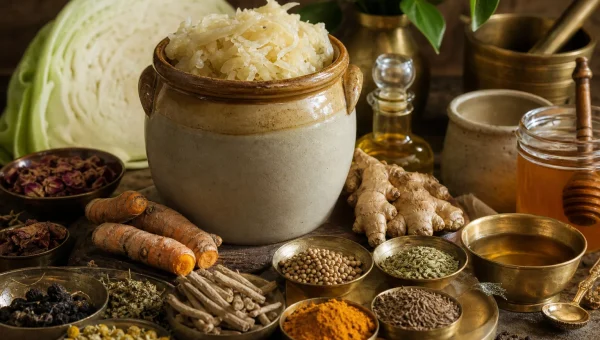
The first two weeks should focus on restoring rhythm rather than forcing elimination. Begin with warm water, regular meal times, and fully cooked food. Fresh ginger, cumin, ajwain, black pepper, or mild Trikatu-style support may be used only when they suit the person’s constitution and do not aggravate acidity, heat, burning, ulcers, pregnancy-related sensitivity, or medication concerns. Trikatu itself is a classical three-pungent combination of Shunthi, Maricha, and Pippali, and it should not be treated as a casual daily supplement for everyone.
Meals during this phase should be warm, cooked, lightly unctuous, and easy to digest: khichadi, vegetable soups, lentil soups, soft rice, stews, and well-cooked seasonal vegetables. Avoid refrigerated food, cold drinks, excessive raw salads, stale food, erratic snacking, and long fasting. A universal dairy elimination is not classical for Hemanta; milk products are actually included in the winter regimen. However, anyone who gets heaviness, mucus, bloating, or poor appetite after milk, curd, sweets, or heavy foods should simplify the diet and seek individual guidance.
Week 3: The Hemanta Kitchen
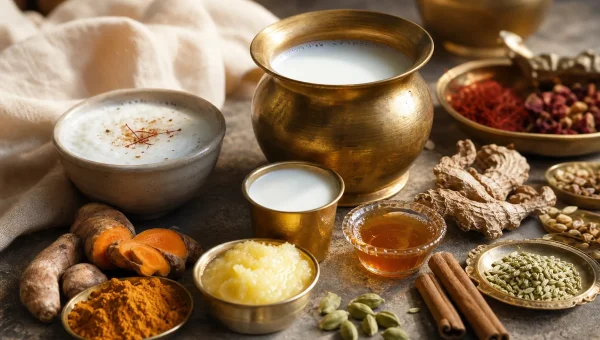
The classical Hemanta kitchen is nourishing, warm, and strength-supportive. Charaka recommends unctuous, sour, and salty food qualities in Hemanta, along with milk products, sugarcane preparations, fats, oils, new rice, and warm water. Ashtanga Hridaya similarly describes sweet, sour, and salty tastes, and includes wheat preparations, black gram, milk products, sugarcane products, edible oils, and other strengthening foods. For a vegetarian household, this can be adapted as warm rice or wheat dishes, moong or black gram preparations if tolerated, root vegetables, ghee, suitable oils, sesame-jaggery preparations where appropriate, and warm spiced milk when digestion is clear.
Triphala can be used by some people as a gentle bowel-regulating and Rasayana-supportive preparation, but it is not a harsh winter purge. Classical descriptions place Triphala among important Rasayana medicines and describe its role in clearing obstruction and supporting proper tissue metabolism. It should be avoided or used only with professional advice during pregnancy, diarrhea, dehydration, frailty, or when taking medicines that may interact with bowel-active herbs.
Week 4: Oil, Warmth, and Measured Strength
Week 4 brings the external winter regimen forward. Hemanta lifestyle includes Abhyanga, oiling of the head, massage, warmth, sun exposure, warm rooms, warm bedding, and protection from cold wind. Warm oil massage is especially useful in a season where strong digestion and cold air coexist, because it protects Vata while supporting comfort, steadiness, and bodily strength. Exercise can be included according to capacity, but it should not become exhausting; winter strength is meant to be cultivated, not spent recklessly.
For home practice, keep oleation food-level and lifestyle-level: ghee or suitable oils in meals, warm oil massage before bathing, and warm clothing after bathing. Clinical Snehapana, where medicated ghee is taken in a planned sequence before Shodhana, should not be copied from Panchakarma protocols without supervision. If a practitioner prescribes medicated ghee such as Tikta Ghrita for a specific Pitta or skin-related indication, the dose, duration, preparation, and follow-up procedure should be individualized.
Week 5: Optional Clinical Clearing, Not a DIY Purgation Week
Strong clearing is not the default Hemanta home practice. Charaka places Pitta-oriented measures such as bitter ghee, purgation, and blood-letting in Sharad when Pitta is aggravated; Kapha-clearing procedures such as Vamana are emphasized in Vasanta, when Kapha accumulated in winter becomes liquefied by the returning heat. Hemanta itself warns against light food, inadequate food, cold exposure, and Vata-aggravating habits. Therefore, castor oil purgation, basti, or intensive medicated oleation should not be presented as a self-care winter cleanse.
If there is a clear clinical reason, an Ayurvedic physician may choose mild Virechana, Basti, or other measures based on the person’s dosha state, strength, age, digestion, season, and disease context. Without that assessment, the safer Week 5 practice is simple: keep the bowels regular, continue warm cooked meals, avoid overeating and under-eating, maintain Abhyanga, sleep on time, and reduce foods that repeatedly create heaviness or mucus.
Week 6: Rasayana Building for Winter
Once appetite is steady and heaviness is reduced, the final week shifts toward Rasayana. Charaka describes Rasayana as a promotive therapy that supports strength, vitality, proper nourishment, and healthy functioning. Chyavanprasha is a classical Amalaki-based Rasayana and is traditionally taken in an amount that does not interfere with appetite or digestion. Because many preparations contain sugar, honey, ghee, and multiple herbs, people with diabetes, metabolic disease, allergies, pregnancy, chronic illness, or medication use should take it only after professional advice.
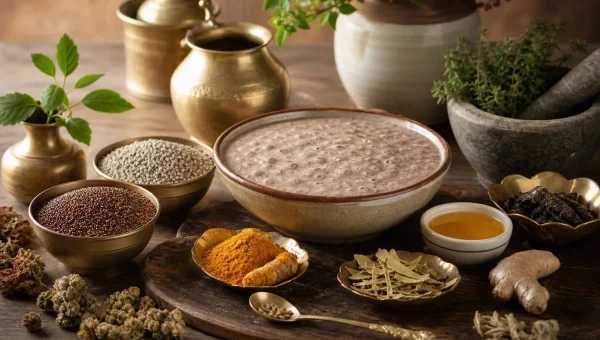
Ashwagandha milk may be suitable for some depleted, Vata-prone, or strength-building constitutions, but it is not universal. The broader Rasayana routine is more important than any single product: warm cooked meals, adequate sleep, steady timing, warm oil massage, moderate movement, emotional calm, and enough nourishment to meet the season’s stronger Agni. By the end of the six weeks, the Ayurvedic goal is not dramatic purging but a warmer body, steadier appetite, smoother elimination, better tolerance of cold, and a grounded sense of winter resilience.
Important Contraindications and Personalization
This protocol is educational and intended only as a general seasonal framework for adults with stable health. Anyone who is pregnant, breastfeeding, elderly, frail, acutely ill, recovering from surgery, taking prescription medication, managing diabetes, liver disease, kidney disease, gallbladder disease, inflammatory bowel disease, eating disorders, bleeding disorders, or any chronic medical condition should consult a qualified Ayurvedic practitioner and healthcare provider before using herbs, medicated ghee, purgation, basti, or Rasayana preparations. Ayurvedic products should be obtained from reputable sources because some products have been found to contain unsafe levels of heavy metals or other contaminants.
Medical Disclaimer: Nothing in this article diagnoses, treats, cures, or prevents any disease. Use it as educational information and consult a qualified Ayurvedic practitioner or physician before starting herbs, supplements, medicated ghee, detoxes, Panchakarma procedures, or therapeutic protocols, especially if pregnant, managing a condition, or taking medication.
References
- Charaka Samhita — Tasyashiteeya Adhyaya
- Easyayurveda (easyayurveda.com)
- Easyayurveda (easyayurveda.com)
- Jaims (jaims.in)
- Frontiersin (frontiersin.org)
- Charaka Samhita — Rasayana Adhyaya
- An overview on ashwagandha: a Rasayana (rejuvenator) of Ayurveda (2011), PubMed Central
- NCCIH
- Betterhealth (betterhealth.vic.gov.au)