
Your kitchen cannot replace a clinic, but Ayurveda does describe many everyday ingredients as useful supports for minor, self-limiting discomforts. This index keeps the kitchen-pharmacy idea practical and conservative: one primary ingredient, or a simple two-ingredient pairing, used in small adult amounts with clear limits.
How to Use This Index
Use one remedy at a time and stop if it irritates you or symptoms worsen. The amounts below are for adults only; for children, pregnancy, breastfeeding, chronic illness, regular medicines, known allergies, or symptoms that persist, consult a qualified Ayurvedic practitioner or healthcare provider.
Digestive Problems
Ayurveda gives special importance to agni, the digestive fire, and many kitchen spices are described with deepana, pachana, anulomana, or related digestive actions. These remedies are for mild, short-lived discomfort only, not severe abdominal pain, dehydration, fever, blood in stool, or repeated vomiting.
1. Bloating or gas: Chew 1/2 teaspoon Ajwain seeds with a small pinch of rock salt, then sip warm water. Use after a heavy meal or when gas feels trapped.
2. Heavy or sour stomach: Crush 1 teaspoon coriander seeds, soak in 1 cup water overnight, strain, and sip in the morning. For frequent acid reflux, chest pain, black stools, or swallowing difficulty, seek medical care.
3. Nausea: Chew a thin slice of fresh ginger with a few drops of honey, or sip mild ginger tea. Pregnant people, people on blood thinners, and anyone with persistent vomiting should take practitioner guidance.
4. Dry constipation: Stir 1 teaspoon ghee into a cup of warm milk at bedtime if milk suits you. Do not use this as the only care for severe constipation, abdominal swelling, vomiting, or sharp pain.
5. Loose stool: Mash 1/2 ripe banana with 1-2 tablespoons plain fresh curd if dairy suits you, and keep sipping fluids. Skip dairy if it worsens symptoms, and seek care for dehydration, fever, blood, severe pain, or diarrhea lasting more than two days.
6. Hiccups: Let 1 teaspoon honey dissolve slowly on the tongue. Do not give honey to infants, and seek care for hiccups that are prolonged, painful, or associated with breathlessness or chest symptoms.
7. Poor appetite: Take a thin slice of fresh ginger with a few drops of lime juice and a pinch of rock salt about 10-15 minutes before meals for a few days. Stop if it causes burning or irritation.
8. After-meal flatulence: Boil 1 teaspoon fennel seeds in 1 cup water for 5 minutes, strain, and sip warm after meals. Fennel is especially useful when the stomach feels tight, airy, or mildly crampy after eating.
9. Burning urination support: Soak 1 teaspoon coriander seeds in 1 cup water overnight, strain, and drink in the morning. Burning urination with fever, flank pain, blood, pregnancy, diabetes, or symptoms beyond 24-48 hours needs medical evaluation.
Pain, Throat, and Mouth
For household pain, Ayurveda favors simple local measures, warm applications, and spices with cleansing, soothing, or shulahara actions. These are comfort measures only; intense pain, swelling, injury, infection, dental abscess, or persistent symptoms need professional care.
10. Toothache: Place one whole clove near the painful tooth and hold it gently; do not burn the gum with concentrated clove oil. This is temporary support until a dentist can assess the cause.
11. Sore throat: Gargle with 1/4 teaspoon turmeric and 1/2 teaspoon salt in 1 cup warm water, then spit it out. Use 2-3 times daily for mild throat irritation; seek care for high fever, pus, breathing difficulty, or worsening pain.
12. Mouth ulcer: Dab a thin layer of honey directly on a small mouth ulcer 2-3 times daily. Rinse if it stings strongly, and consult a clinician for recurrent, large, bleeding, or non-healing ulcers.
13. Tension-type headache: Dilute 1 drop peppermint or menthol preparation in 1 teaspoon coconut oil and rub a tiny amount on the temples, keeping it away from the eyes. Wash off if it burns or irritates the skin.
14. Joint stiffness: Soak 1 teaspoon fenugreek seeds overnight, chew the softened seeds in the morning, and drink the soaking water if it suits your digestion. Avoid self-use in pregnancy or when blood sugar medicines are being adjusted.
15. Menstrual cramping: Boil 1/2 teaspoon Ajwain in 1 cup water for 5 minutes and sip warm. Do not use this during pregnancy; severe, new, or disabling pelvic pain should be evaluated.
16. Minor ear discomfort: Use a warm compress outside the ear for comfort. Do not put oil, herbal drops, or any liquid into the ear if there is discharge, fever, reduced hearing, injury, a tube, or any possibility of a ruptured eardrum.
Respiratory and Cold Support
For mild seasonal congestion and cough, common Ayurvedic kitchen supports focus on warmth, honey, ginger, tulsi, turmeric, and gentle steam. Breathlessness, chest pain, high fever, wheezing, blue lips, dehydration, or a cough lasting more than a few weeks needs medical care.
17. Nasal congestion: Add 1/2 teaspoon crushed Ajwain seeds to hot water and inhale the steam gently from a safe distance for a few minutes. Keep the face well back from the vessel to avoid burns.
18. Dry cough: Mix 1 teaspoon honey with a small pinch of turmeric and take slowly. Do not give honey to infants, and do not use this to delay care for wheezing, blood in sputum, or persistent cough.
19. Productive cough or chest heaviness: Boil fresh tulsi leaves with a thin slice of ginger in water for 5-10 minutes and sip warm. Add a small pinch of black pepper only if it does not irritate the throat or stomach.
20. Cold with low feverish feeling: Sip warm tulsi tea through the day and rest. Fever that is high, persistent, associated with rash, breathlessness, confusion, dehydration, or severe pain needs medical attention.
21. Hoarseness: Sip mild licorice tea or slowly chew a small piece of Yashtimadhu stick for throat coating. Avoid licorice if you have high blood pressure, kidney or heart disease, low potassium, pregnancy, or medicines affected by potassium or blood pressure.
22. Sneezing with throat dryness: Sip warm ginger-fennel tea and avoid cold, heavy foods while symptoms are active. If sneezing is allergic, recurrent, or associated with breathing trouble, use medical guidance rather than repeated self-treatment.
Skin and External Care
External remedies should be used only on minor, unbroken skin and stopped immediately if burning, rash, swelling, or irritation appears. Open wounds, deep burns, infected skin, spreading redness, pus, fever, animal bites, and injuries on the face, eyes, genitals, hands, or large areas need professional care.
23. Minor burn: First cool the area under cool running water for 10-20 minutes. After cooling, apply a thin layer of fresh aloe gel on unbroken skin; do not apply butter, ghee, oil, or toothpaste to a fresh burn.
24. Sunburn: Move out of the sun, cool the skin with a wet cloth, and apply fresh aloe gel if the skin is not blistered or open. Drink fluids and seek care for severe blistering, fever, confusion, eye involvement, or large painful areas.
25. Itchy insect bite: Wash the area and apply a cool compress for 10-20 minutes. On unbroken skin, a tiny paste of turmeric and water may be used briefly, then rinsed; seek emergency care for facial swelling, wheezing, dizziness, or widespread hives.
26. Single pimple: Apply a small paste of turmeric and honey, or turmeric and fuller’s earth with rose water, only on the spot for 10-15 minutes. Patch-test first, rinse well, and remember turmeric can stain skin and cloth.
27. Cracked heels: Massage coconut oil into clean, dry heels at bedtime and cover with cotton socks. Add a pinch of turmeric only if the skin is not open or bleeding.
Sleep, Stress, and Daily Refresh
Kitchen remedies for sleep, stress, and energy are gentle supports for routine imbalance, not treatments for insomnia, anxiety, depression, exhaustion, or medical fatigue. Persistent low mood, panic, severe sleeplessness, or thoughts of self-harm need prompt professional help.
28. Restless evening digestion: Sip a mild fennel-coriander tea after dinner: 1/2 teaspoon fennel seeds and 1/2 teaspoon coriander seeds simmered in 1 cup water. Keep it light and unsweetened if reflux or heaviness is present.
29. Afternoon heaviness: Sip warm ginger tea and take a small, simple snack rather than more caffeine. This is most useful when the crash follows a heavy lunch or sluggish digestion.
30. Bad breath after meals: Chew 5-6 fennel seeds or one clove after eating. Persistent bad breath needs dental evaluation and, when digestion symptoms are present, assessment of the underlying cause.
The Kitchen Pharmacy Essentials
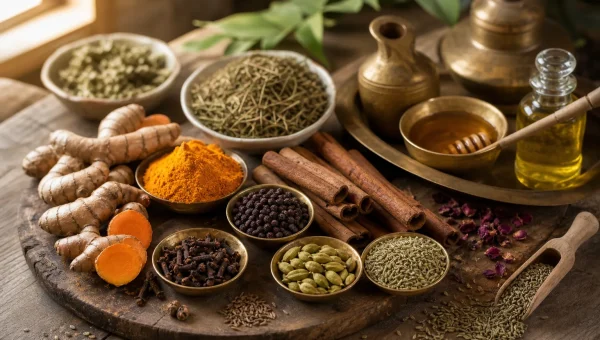
If you keep these staples fresh and use them with restraint, they cover most of the simple remedies in this index. Quality matters: use clean spices, fresh water, pure honey, and oils that have not gone rancid.
- Fresh ginger root
- Raw honey
- Turmeric powder
- Black pepper
- Fennel seeds
- Ajwain seeds
- Coriander seeds
- Whole cloves
- Ghee
- Coconut oil
Disclaimer: These home remedies are for minor, self-limiting conditions only. If symptoms persist, worsen, recur often, or occur alongside fever, bleeding, dehydration, severe pain, breathlessness, pregnancy, chronic disease, or regular medication use, consult a qualified Ayurvedic practitioner or healthcare provider.
References
- Ia800501 (ia800501.us.archive.org)
- The Effectiveness of Ginger in the Prevention of Nausea and Vomiting during Pregnancy and Chemotherapy (2016), PubMed Central
- Efficacy of honey in comparison to topical corticosteroid for treatment of recurrent minor aphthous ulceration: a randomized, blind, controlled, parallel, double-center clinical trial (2014), PubMed
- Ayurvedic Pharmacopoeia of India
- Go (go.drugbank.com)
- NCCIH
- Mayoclinic (mayoclinic.org)
- NCCIH
- Mayoclinic (mayoclinic.org)
- Mayoclinic (mayoclinic.org)
- MedlinePlus
- MedlinePlus
- NCCIH

Been using complete for about 3 months now and the difference in how I feel is real. My practitioner said the same things this article covers so good to have it spelled out.
The turmeric milk entry is so overrepresented in wellness content that I almost skipped this article. The rest of the index entries are genuinely different and practical.
Started the complete protocol my Ayurvedic doctor recommended last summer and my energy has been noticeably more consistent. This explains the mechanism.
The The Home Remedy Index section feels grounded enough to try carefully. The examples make the advice less abstract.
I’ve been using the neem twig tooth cleaning entry since reading this three weeks ago. my dentist’s comment at the last cleaning was that my gum health had improved noticeably
My doctor in Bangalore suggested something similar but used different herbs. Is there regional variation in how Ayurvedic practitioners approach this condition?
I’ve been using the Neem twig tooth cleaning entry since I read this three weeks ago. My dentist’s comment at my last cleaning was that my gum health had improved noticeably. Coincidence possibly but I’ll keep going.
Some of these have enough evidence that they’d hold up in a mainstream medical review. Others are traditional practices with no clinical study. The article treats them all the same which is a bit misleading.
Just tried the ajwain tip for bloating and felt relief in about 20 minutes.
My father-in-law has been on this approach for four months. His joints are better than they were at 55. He credits complete and the diet changes together.
I was looking for a plain explanation of The Home Remedy Index. Small daily changes are easier to follow than a perfect plan.
Wonder if the half dose rule works for a 5 year old with mild constipation.
My practitioner in Pune has been doing this for 30 years and confirms everything here. The complete protocol for this condition has solid traditional backing.
Curious how many of these kitchen compounds actually match what labs spend billions to replicate.
Keeping ginger honey and turmeric on hand has already cut down my last minute pharmacy runs.
The single-ingredient rule is helpful. Most home remedy compilations include things I can’t find without ordering online. Everything here came from my spice rack immediately.
I tried the ginger honey combo for nausea and it eased the queasy feeling within minutes.
Soaked fenugreek seeds overnight; after a week the morning stiffness felt less noticeable.
The article makes it sound straightforward but finding a qualified Ayurvedic practitioner who can actually assess dosha properly is not easy outside major cities.
The article makes it sound straightforward but finding a qualified Ayurvedic practitioner who can assess dosha properly is not easy outside major cities
some of these have enough evidence to hold up in a mainstream medical review. others are traditional practices with no clinical study. the article treats them all the same
Can you add mouth ulcer remedies? I get them repeatedly and standard B12 and iron supplementation doesn’t fully address it
@Andrew apologies for the digression, anyone know the Ayurvedic approach to managing migraines?
I would like more detail on The Home Remedy Index. Would be useful to see a short checklist next.
the single-ingredient rule is helpful. most home remedy compilations include things I can’t find without ordering online. everything here came from my spice rack
not related to this post but does anyone know a good practitioner in Hyderabad?
the turmeric milk entry is so overrepresented in wellness content that I almost skipped this article. the rest of the index entries are genuinely different
my father-in-law has been on this approach for four months. his joints are better than they were at 55. he credits the diet changes too
Useful post on The Home Remedy Index. A few more examples would still help.
found this post helpful. will try the suggested approach. (ref 8327-10)
found this post helpful. will try the suggested approach. (ref 8327-11)
found this post helpful. will try the suggested approach. (ref 8327-15)
can you add mouth ulcer remedies? I get them repeatedly and standard B12 and iron supplementation doesn’t fully address it ✨
found this post helpful. will try the suggested approach. (ref 8327-17)
The article makes it sound straightforward but finding a qualified Ayurvedic practitioner who can assess dosha properly is not easy outside major cities 💯
can you add mouth ulcer remedies? I get them repeatedly and standard B12 and iron supplementation doesnt fully address it
found this post helpful. will try the suggested approach. (ref 8327-14)
🙏 The article makes it sound straightforward but finding a qualified Ayurvedic practitioner who can assess dosha properly is not easy outside major cities
found this post helpful. will try the suggested approach. (ref 8327-20)
For The Home Remedy Index, consistency seems like the hard part. The timing advice is the part I would start with.
can you add mouth ulcer remedies? I get them repeatedly and standard B12 and iron supplementation doesn’t fully address it नमस्ते
For The Home Remedy Index, consistency seems like the hard part. This feels more usable than a long list of herbs.
can u add mouth ulcer remedies? I get them repeatedly and standard B12 and iron supplementation doesn’t fully address it
found this post helpful. will try the suggested approach. (ref 8327-25)
found this post helpful. will try the suggested approach. (ref 8327-26)
sorry off-topic but has anyone here used Ayurveda for hair loss?
Reading this later and the The Home Remedy Index advice still feels relevant. The article avoids making it sound like a quick fix.
the article makes it sound straightforward but finding a qualified Ayurvedic practitioner who can assess dosha properly is not easy outside major cities ठीक है
found this post helpful. will try the suggested approach. (ref 8327-30)
❤️ the article makes it sound straightforward but finding a qualified Ayurvedic practitioner who can assess dosha properly is not easy outside major cities
🙏 Can you add mouth ulcer remedies? I get them repeatedly and standard B12 and iron supplementation doesn’t fully address it
the article makes it sound straightforward but finding a qualified Ayurvedic practitioner who can assess dosha properly is not easy outside major cities धन्यवाद
💯 the article makes it sound straightforward but finding a qualified Ayurvedic practitioner who can assess dosha properly is not easy outside major cities