
Scalp psoriasis at the hairline is difficult to hide and even harder to manage when scale, itching and redness return after ordinary washing. A useful Ayurvedic plan keeps the central aim steady: calm the plaques, soften and lift scale without injury, reduce flare triggers, and address the deeper Kushtha pattern with physician-guided internal treatment. This protocol is not a replacement for dermatology care; it is a complementary Ayurvedic maintenance approach for people who want a structured, classical framework alongside appropriate medical treatment.
In modern medicine, psoriasis is a chronic immune-mediated skin condition in which the immune system becomes overactive and skin cells multiply too quickly, producing inflamed, scaly plaques. On the scalp it may affect the hairline, crown, behind the ears, and the back of the neck. Common flare triggers include stress, infections such as strep throat, injury to the skin, and certain medicines; scratching and picking can also worsen plaques through the Koebner phenomenon.
In Ayurveda, scalp psoriasis is commonly approached under the broad heading of Kushtha, especially the Kitibha and Eka Kushtha spectrum when plaques are dry, rough, thick, scaly and recurrent. The correlation is not one-to-one, because classical Kushtha includes many skin disorders, but the Kitibha description of blackish-brown discoloration, roughness, hardness and scar-like texture is clinically close to many chronic plaque presentations.
Understanding the Ayurvedic Pattern
Charaka describes Kushtha as involving all three doshas with impairment of skin, rakta, mamsa and ambu/lasika. For scalp plaques that are dry, rough, thick and scaly, the dominant practical pattern is usually Vata-Kapha, while redness, heat, burning, bleeding after scratching, and strong inflammation show Pitta-Rakta participation. Treatment therefore needs more than a cosmetic scalp oil: it must soften Vata dryness, reduce Kapha thickness and scale, cool Pitta-Rakta irritation when present, and protect the scalp from repeated injury.
| Observed scalp sign | Ayurvedic reading | Protocol emphasis |
|---|---|---|
| Dry, cracked, tight plaques | Vata dominance | Gentle oleation, regular routine, avoiding harsh shampoos and scratching |
| Thick, adherent scale | Kapha dominance | Softening the scale, mild cleansing, lighter food, bitter vegetables and moong-based meals |
| Redness, burning, heat or easy bleeding | Pitta-Rakta involvement | Cooling diet, avoiding alcohol, excess sour/salty foods and aggressive scalp stimulation |
| Stress-linked flare pattern | Aggravation through nervous-system strain | Sleep discipline, pranayama, trigger tracking and avoiding overwork during active flare |
Phase 1: Physician-Led Shodhana
Classical Kushtha care gives an important place to Shodhana, but this does not mean casual home detoxing. Vamana, Virechana, Basti and Rakta-related procedures are clinical decisions made by a qualified Ayurvedic physician after assessing strength, agni, bowel pattern, season, disease stage, medications and comorbidities. For Pitta-Rakta dominant lesions, Virechana is a major classical route; for Kapha-heavy presentations, Vamana may be selected in appropriate candidates; for Vata-dryness after cleansing, oleation and Basti-type support may be considered.
Charaka specifically warns that repeated purification must protect the patient’s strength, because excessive elimination can aggravate Vata and weaken the patient. For that reason, the safest interpretation for scalp psoriasis is not “more cleansing is better,” but “the correct cleansing, at the correct time, in the correct person, followed by proper diet and restoration.”
Internal Shamana Support
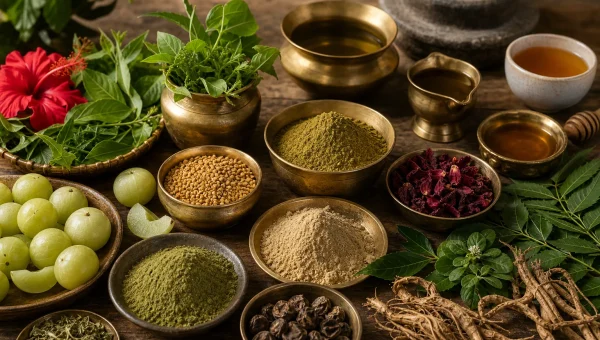
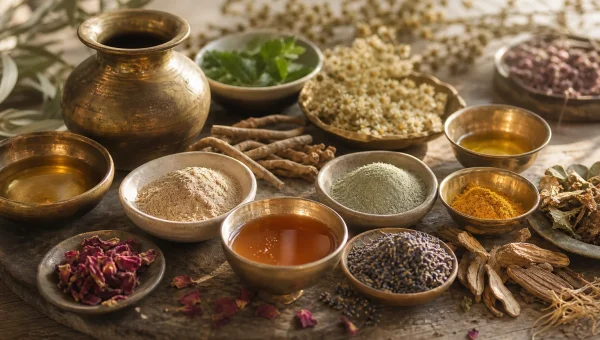
After physician-led assessment, internal Shamana is often used to maintain gains from Shodhana and to reduce recurrence tendency. In classical Kushtha formulations, bitter and rakta-supportive herbs such as Nimba, Khadira, Guduchi, Haridra, Triphala and Patola appear repeatedly. These should be selected as part of a whole prescription rather than taken as a random stack, especially when the person is already using steroid lotions, biologics, methotrexate, cyclosporine, acitretin, anticoagulants, diabetes medicines, liver-affecting medicines, or is pregnant or breastfeeding.
Manjistha is commonly used in Ayurvedic practice for Rakta-prasadana and skin support, especially where discoloration, heat or chronic inflammatory tendency is present. In a scalp protocol it is best used under supervision as part of a decoction, powder, tablet or classical combination, not as a high-dose self-prescribed extract.
Nimba is bitter, cleansing and traditionally important in Kushtha care. It is more suitable when there is itching, oiliness, heat, secondary irritation, or a Kapha-Pitta pattern. Because neem preparations can be strong and may not suit pregnancy, children, liver concerns, or people on multiple medicines, internal use should be practitioner-guided.
Khadira is a key classical skin herb and appears in Kushtha formulations. It is usually chosen when plaques are chronic, thick, itchy or recurrent and when the treatment plan is aimed at Rakta and Kapha regulation.
Guduchi is used as a Rasayana-style support in many Ayurvedic protocols, especially when the patient is depleted by chronic recurrence. It should still be used cautiously and professionally, because “immune support” is not the same as treating an autoimmune disease without monitoring.
Haridra is safest for most people as a food spice in daily cooking. Concentrated curcumin or turmeric extracts are different from culinary turmeric and should be reviewed with a clinician if the patient uses blood thinners, has gallbladder disease, has liver concerns, or takes long-term medicines.
Classical Formulations and What to Correct
Mahatiktaka Ghrita is a classical bitter medicated ghee described for Kushtha and Rakta-Pitta dominant disorders; it is an internal ghee, not a scalp oil. It may be chosen by a physician when digestion, strength and disease stage are suitable. Tikta-ikshvakwadi Taila is described as an external oil useful in itching, Kushtha and Vata-Kapha dominated conditions, but it is a strong classical preparation and should be used only when appropriately dispensed and instructed.
For daily scalp care, the practical lesson from classical Ayurveda is not to apply harsh, irritant preparations to the head. The safe maintenance approach is gentle oleation, softening the scale before washing, avoiding nail-scratching, and choosing mild cleansing that does not strip the scalp.
External Scalp Oil Protocol
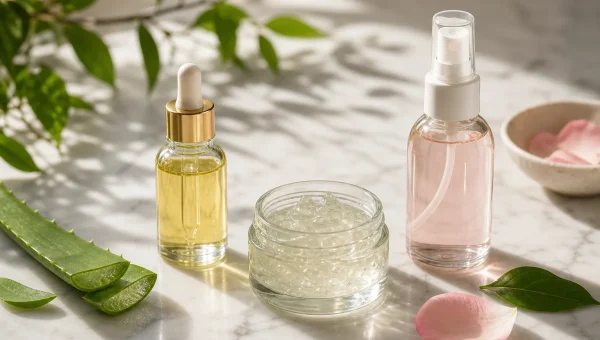
The external protocol is for softening scale and reducing mechanical irritation. It should not burn, sting or worsen redness. During an acute hot, red flare, use only a very mild oil or stop oiling until a clinician reviews the scalp, because heavy or unsuitable oil can trap heat and worsen discomfort in some people.
| Scalp state | Oil choice | Frequency | Best use |
|---|---|---|---|
| Dry, tight, flaky plaques | Plain sesame oil, or a mild practitioner-dispensed medicated sesame oil | 2-4 times weekly | Softening plaques before washing |
| Heat, redness or burning | Small amount of coconut-based or cooling physician-advised oil | 1-3 times weekly as tolerated | Reducing dryness without overheating the scalp |
| Thick scale with itching | Practitioner-dispensed Nimba-based or Tikta-type oil | As prescribed | Kapha-Pitta scalp pattern with itch and scale |
| Open cracks, bleeding, infection, pus or severe pain | Avoid self-oiling | Do not apply until assessed | Needs medical review |
Scalp Application Method
The goal is to loosen scale without creating micro-injury. Nails, comb-scraping and aggressive rubbing can trigger new plaques, so the application must be slow, light and consistent.
| Step | Method | Duration | Notes |
|---|---|---|---|
| 1. Warm the oil | Place the bottle in a bowl of warm water | 5 minutes | Do not microwave; oil should be warm, not hot |
| 2. Section the hair | Part the hair and expose small scalp areas | 5-10 minutes | Apply directly to plaques rather than soaking the hair length |
| 3. Apply gently | Use fingertips, not nails | 5 minutes | Press and glide lightly; do not pick scale |
| 4. Leave on | Cover with a loose cotton cloth if needed | 45 minutes to 2 hours | Overnight use only if the oil never causes itching, heat or follicle irritation |
| 5. Wash | Apply mild shampoo before wetting, then rinse with lukewarm water | As needed | This helps remove oil without repeated harsh washing |
Diet for Scalp Psoriasis
Classical Kushtha diet emphasizes light, digestible meals, bitter vegetables, old grains, mudga and patola-type preparations, while avoiding heavy, sour, curd-heavy, fish, excessive salty foods, jaggery and sesame in active disease. For a modern vegetarian routine, this can be translated into simple meals: old rice or light grains, moong dal, cooked bitter gourd or fenugreek greens, bottle gourd, ridge gourd, leafy greens, turmeric in cooking, and warm water rather than iced drinks.
- Favor: moong dal, old rice, cooked vegetables, bitter greens, turmeric in food, light soups, and regular meal timing.
- Reduce during flares: curd, alcohol, excess sour pickles, very salty snacks, deep-fried food, heavy sweets, jaggery-heavy desserts, and incompatible combinations such as milk with fish.
- Use cautiously: fermented foods, vinegar-heavy foods, very spicy chutneys and sour drinks, especially when redness, burning or itching is active.
- Keep digestion steady: do not fast aggressively and then overeat; avoid eating again before the previous meal is digested.
Stress, Sleep and Trigger Control
Stress is a recognized psoriasis trigger, and Ayurveda also places strong importance on stable routine, sleep and mental steadiness in chronic recurring conditions. A practical maintenance plan includes a fixed sleep window, ten minutes of gentle pranayama, avoiding late-night work during flares, tracking infections or sore throat before sudden eruptions, and protecting the scalp from tight hairstyles, scratching, harsh dyes and heat styling.
When to Seek Medical Care
Get medical review if plaques are spreading rapidly, painful, bleeding often, infected, causing hair loss, associated with fever, or accompanied by joint pain, morning stiffness, swollen fingers or nail pitting. Severe psoriasis, pustular psoriasis, erythrodermic psoriasis and psoriatic arthritis require prompt conventional medical care. Biologics and other systemic medicines can be life-changing for appropriate patients and should not be stopped because an Ayurvedic protocol has been started.
Disclaimer: Psoriasis is a chronic immune-mediated condition requiring individualized care. Virechana, Vamana, Basti, Rakta-related procedures and internal herbal medicines should be used only under a qualified Ayurvedic practitioner or physician. Do not discontinue prescribed dermatology medicines without consulting your dermatologist. Ayurvedic products should be purchased from reputable sources and reviewed for safety, especially during pregnancy, breastfeeding, liver or kidney disease, autoimmune disease, or when taking regular medication.
the article doesn’t address the genetic/autoimmune component of psoriasis. framing it entirely as a Dosha imbalance misses the systemic immune dysregulation.
the internal and external protocol together for how long before expecting significant improvement? Ive been trying the Panchatikta protocol for 4 weeks with minimal change.
scalp psoriasis with severe disease should be under dermatology supervision. biologic treatments exist for severe cases that Ayurveda cannot replace.
the scalp-specific Lepa with Kasisadi tailam and Neem was prescribed by my Vaidya. significant reduction in scales and itching within 6 weeks. 🙌
Helpful.
is Arogyavardhini Vati safe for long-term use (6+ months) or does it need cycling? 🙌
arogyavardhini Vati + Panchatikta Ghrita Guggulu + the medicated oil protocol gave my scalp the most relief in 5 years of trying Ayurvedic approaches. finally the right combination. 🙌
Interesting.
for psoriatic arthritis alongside scalp psoriasis, does the protocol address joint involvement separately or is the anti-inflammatory systemic component the same?
The personal story about hiding plaques with updos really resonated; I have struggled with similar self consciousness.
is Arogyavardhini Vati safe for long-term use (6+ months) or does it need cycling?
@Kavita is Arogyavardhini Vati safe for long-term use (6+ months) or does it need cycling?
Good question — I’ve been wondering the same thing about cycling. My Vaidya mentioned something similar with Kaishore Guggulu, that long-term use needs periodic breaks to prevent the body from becoming dependent on external pitta regulation. Did she give any guidance on what signs to watch for that would indicate it’s time to pause Arogyavardhini Vati?
Did the author mention how often they did the oil massage each week?
for scalp psoriasis, thick scalp plaques matters more than a long supplement list imo tbh
The breakdown of Kitibha Kushtha traits helps connect the rough black brown description to what I see on my scalp.
Thanks!
Makes sense.
Question about Virechana: is it safe to try the ghee prep at home without supervision?
The bit about Manjistha inhibiting T cell pathways caught my eye; any idea where to find quality powder?
I tried a neem shampoo before and noticed less itching but the scaling stayed the same.
the Kitibha Kushtha classification changed my treatment approach. I’d been treating my scalp psoriasis as generic Kapha but the Vata-Kapha mix description matches my symptoms much better.
The dietary advice to avoid dairy with fish makes sense given the Rakta vitiation concept.
How long did the author keep the milk washed oil on before washing?
oil making scales worse sometimes was the only part i was looking for. got the answer
Noted.
The mention of Guduchi regulating Th1/Th17 responses aligns with recent immunology reads.
Wondering if the sesame oil base could be swapped for coconut oil for those with nut sensitivities.
the scalp-specific Leoa with Kasisadi tailam and Neem was prescribed by my Vaidya. significant reduction in scales and itching within 6 weeks. 🙌
The article’s link to gut microbiome differences adds a helpful modern angle.
@Mark is Arogyavardhini Vati safe for long-term uae (6+ months) or does it need cycling?
the scalp-sprcific Lepa with Kasisadi tailam and Neem was prescribed by my Vaidya. significant reduction in scales and itching within 6 weeks.
Did anyone else find the coal tar smell description oddly vivid?
for psoriatic arthritis alongside scalp psoriasis, does the protocol address joint involvemenr separately or is the anti-inflammatory systemic component the same? 🙌
is Arogyavardhini Vati safe for long-term use (6+ months) or does it need cycling? ✨
is Arogyavardhini Vati safe for long-term use (6+ months) or does it need cycling? ठीक है
The step by step oil application guide feels practical for daily routine.
@Indira the article doesn’t address the genetic/autoimmune component of psoriasis. framing it entirely as a Dosha imbalance misses the systemic immune dysregulation.
Curious about the role of rock salt versus sea salt in the diet plan.
@Susan is Arogyavardhini Vati safe for long-term use (6+ months) or does it nred cycling?
Overall the blend of classic texts and recent studies makes the approach feel credible.
for psoriatic arthritis alongside scalp psoriasis, does the protocol address joint involvement srparately or is the anti-inflammatory systemic component the same? 🙏
itching at night is useful, but please add contraindications too
is Arogyavardhini Vati safe for long-term use (6+ nonths) or does it need cycling? ✨
scalp psoriasis with severe disease shoild be under dermatology supervision. biologic treatments exist for severe cases that Ayurveda cannot replace.