Ayurvedic Epilepsy Support Protocol: Apasmara Chikitsa in Context
Ayurvedic epilepsy support through Apasmara Chikitsa needs a careful, safety-first frame. Epilepsy is a serious neurological disorder that requires diagnosis, seizure classification, and ongoing management by a qualified neurologist. Prescribed antiseizure medicines remain the primary treatment for diagnosed epilepsy. The role of Apasmara Chikitsa is complementary: supporting sleep, routine, diet, stress regulation, cognitive well-being, and physician-supervised use of classical Medhya and Ghrita preparations where appropriate. It should never be used to replace prescribed antiseizure medication.
Within that frame, Apasmara Chikitsa remains clinically meaningful. Classical Ayurveda gives a detailed model of episodic loss of awareness, memory disturbance, abnormal movements, doshic differentiation, mental factors, diet, purification, medicated ghee preparations, and reassurance or counselling. Modern use is safest when these ideas are applied as supportive care around conventional epilepsy management rather than as independent seizure-control treatment.
In the classical description, Apasmara involves impairment of memory and awareness, abnormal or distressing movements, blackout-like episodes, and recovery after the acute episode passes. The condition is classified into Vataja, Pittaja, Kaphaja, and Sannipatika forms. The texts also give importance to impure or unsuitable diet, suppression of mental clarity by rajas and tamas, emotional stressors such as fear, grief, anger, passion and worry, and obstruction affecting the heart, mind, and channels of consciousness. This is not the same as a modern neurological classification, but it provides an Ayurvedic framework for supportive management.
The Apasmara Support Review
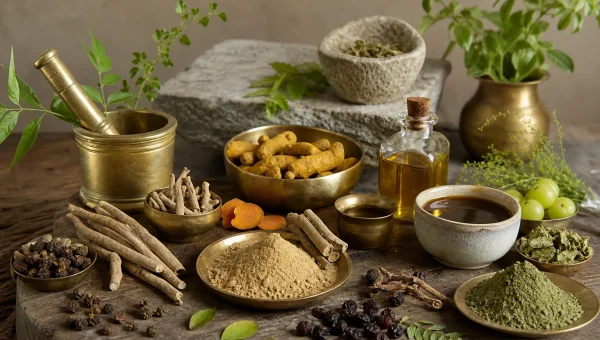
The most responsible way to review Apasmara herbs is to separate classical use, supportive plausibility, and modern safety limits. Some herbs and ghrita preparations have strong traditional relevance, while the biomedical data is mostly preclinical, cognitive-support oriented, or indirect. This makes them candidates for supervised complementary care, not replacements for antiseizure medicines.
| Herb or Formulation | Classical / Ayurvedic Role | Supportive Use in Context | Safety Qualification |
|---|---|---|---|
| Brahmi (Bacopa monnieri) | Medhya, Rasayana, Vatahara and Kaphahara; listed in classical and pharmacopoeial sources as a mind-supporting herb. | Best suited as a supportive Medhya Rasayana for memory, calmness, and resilience when approved by the treating clinician. | Should be reviewed for product quality, sedation, gastrointestinal tolerance, and possible herb-drug interaction concerns in patients taking antiseizure medicines. |
| Brahmi Ghrita | Charaka describes ghee processed with Brahmi juice, Vacha, Kushtha, and Shankhpushpi for conditions including Apasmara and Unmada. | A classical Apasmara-relevant ghrita, considered after assessment of dosha, agni, strength, age, digestion, and current medicines. | Requires qualified Ayurvedic supervision because it contains potent herbs and is not appropriate for unsupervised use in epilepsy. |
| Vacha (Acorus calamus) | Classical herb used in Apasmara-related ghrita and formulations for clearing obstruction and supporting awareness. | A physician-only herb in this context, especially when included as part of a classical formulation rather than used alone. | Safety depends on species, chemotype, processing, dose, and regulatory context; asarone-related concerns make self-use inappropriate. |
| Shankhpushpi (Convolvulus pluricaulis and related market sources) | Used as a Medhya herb and included with Brahmi and Vacha in Brahmi Ghrita. | May support calmness, sleep quality, and cognition as part of a broader Medhya approach. | Botanical identity varies in commerce; quality-controlled sourcing and clinician review are important. |
| Tagara / Valerian-type sleep support | Traditionally used in sleep and calming contexts rather than as the central classical Apasmara herb. | May be considered only for sleep support when insomnia is a seizure-threshold concern. | Can add to sedation from benzodiazepines, phenobarbital, sleep medicines, alcohol, and other CNS depressants. |
Brahmi and Brahmi Ghrita
Brahmi is the most suitable herb to discuss first because it has both classical Medhya status and a modern research profile centered on cognition, neuroprotection, and animal seizure models. In the Ayurvedic Pharmacopoeia of India, Brahmi is identified as the dried whole plant of Bacopa monnieri and is described with Madhura, Tikta and Kashaya rasa; Laghu and Sara guna; Shita virya; Madhura vipaka; and actions including Medhya, Rasayana, Vatahara and Kaphahara.
For epilepsy support, the practical implication is modest but useful: Brahmi may be considered as part of a clinician-supervised plan for cognition, stress tolerance, and general neurological support. It should not be presented as a stand-alone seizure-control herb. Patients taking carbamazepine, valproate, levetiracetam, phenytoin, phenobarbital, clobazam, lamotrigine, or any other antiseizure medicine should introduce Brahmi only after review by their neurologist or pharmacist.
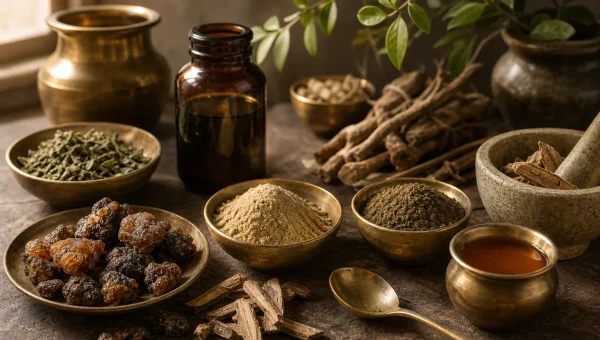
Brahmi Ghrita is especially relevant because it is directly described in Apasmara Chikitsa. Charaka describes ghee processed with Brahmi juice along with Vacha, Kushtha, and Shankhpushpi. This places the formulation within the classical Apasmara tradition, but it also makes professional supervision essential. Ghrita selection, dose, timing, digestion, liver status, lipid tolerance, herb identity, and concurrent medicines all matter in epilepsy patients.
Vacha and Shankhpushpi: Classical but Safety-Gated
Vacha has a strong classical position in formulations for disturbed consciousness, speech, cognition, and obstruction-related states, but it also carries the clearest safety warning in this group. Acorus products differ by species and chemotype, and asarone-containing materials have regulatory and toxicology concerns. For this reason, Vacha should not be used as a self-prescribed epilepsy herb. In modern practice, it belongs only in quality-controlled preparations prescribed by a qualified Ayurvedic physician who is aware of the patient’s antiseizure medicines and medical history.
Shankhpushpi is safer to discuss as a Medhya-support herb, but even here precision is important. The name Shankhpushpi may refer to different botanicals in trade, including Convolvulus pluricaulis and other regional substitutes. When used in epilepsy support, the goal should be calmness, sleep, memory, and anxiety support rather than a claim of independent seizure control. Botanical identity and product quality should be checked before use.
Herb–Drug Interaction Safety Layer
Herb-drug interaction review is the most important safety layer in Apasmara Chikitsa for patients who already take antiseizure medicines. Many antiseizure medicines have narrow therapeutic windows, dose-sensitive side effects, or interaction risks. A herb that causes sedation, alters digestion, affects liver enzymes, changes sleep architecture, or affects adherence can become clinically important even when it seems mild.
- Never stop or reduce antiseizure medicine without the neurologist’s guidance. Sudden changes can trigger severe seizures.
- Avoid Ginkgo biloba in epilepsy unless specifically cleared by a specialist. It is associated with seizure-risk concerns and possible interaction with anticonvulsants.
- Use caution with sedative herbs. Tagara, valerian-type products, Jatamansi, sleep formulas, alcohol, benzodiazepines, phenobarbital, clobazam, and sleep medicines may combine in unpredictable ways.
- Do not combine multiple Medhya products casually. Brahmi capsules, Brahmi Ghrita, Shankhpushpi syrup, Saraswatarishta, sleep herbs, and over-the-counter supplements should be reviewed as one combined regimen.
- Check product quality. Heavy metals, misidentified herbs, excessive alcohol content in fermented preparations, and variable extracts are avoidable risks when treating a neurological condition.
Lifestyle and Seizure Threshold Support
The safest and most universally relevant part of Apasmara support is the lifestyle layer. Classical Apasmara Chikitsa gives importance to diet, purification when appropriate, mental stability, reassurance, and restoration of clarity. Modern epilepsy care also gives practical importance to regular medicine intake, sleep, stress management, illness management, hydration, and avoidance of known individual triggers.
Sleep: Regular sleep timing is a core support measure because sleep deprivation can lower seizure threshold. If insomnia is present, it should be discussed with the neurologist before adding sedative herbs. Gentle night routines, reduced late-night screen exposure, steady meal timing, and calming evening practices are usually safer first steps than self-prescribed sleep supplements.
Stress regulation: Emotional stress is included in the classical causative picture of Apasmara, and stress is also a common practical trigger reported by people with epilepsy. Gentle breathing practices such as relaxed nasal breathing and simple Nadi Shodhana may be used when they do not involve breath retention, strain, hyperventilation, or dizziness. The pranayama guide can be used as a supportive reference, but epilepsy patients should avoid intense practices unless medically cleared.
Diet and agni: Charaka gives importance to unsuitable, impure, and digestion-disrupting food in the Apasmara context. In practical terms, patients should aim for regular meals, adequate hydration, avoidance of fasting triggers, and stable routines. Any ketogenic, fasting, detox, or restrictive diet for epilepsy should be medically supervised because diet-based epilepsy therapy is specialized and can interact with medicines, metabolism, and nutritional status.
Abhyanga and routine: Gentle warm oil massage, steady waking and sleeping times, a calm sensory environment, and regular meals can be used as Vata-pacifying supportive measures when they are comfortable and safe. These practices should be treated as quality-of-life support, not seizure treatment.
The Supervised Protocol Framework
A safe Apasmara support protocol begins with the neurologist’s diagnosis and seizure classification, not with herbs. The Ayurvedic physician should know the exact seizure type, current medicines, dose schedule, seizure frequency, known triggers, sleep pattern, liver and kidney status, pregnancy status where relevant, and any history of status epilepticus, head injury, psychiatric illness, or substance use.
Before adding any herb or ghrita, the patient should have a medicine list reviewed for interactions. If the antiseizure medicine requires blood-level monitoring, the treating clinician should decide whether levels need checking before and after changes. New herbs should be introduced one at a time, at conservative doses, with a seizure diary, side-effect diary, and clear stop rules for rash, sedation, mood change, worsening seizures, vomiting, jaundice, confusion, or allergic symptoms.
In classical sequencing, strong purification is described for selected Apasmara presentations, with Vamana, Virechana, or Basti chosen according to doshic dominance. In contemporary epilepsy care, Panchakarma should be considered only after careful screening and only when the patient is stable, supervised, well nourished, and not at risk from dehydration, fasting, sleep disruption, electrolyte disturbance, or interruption of antiseizure medicines.
The most realistic aim of Apasmara Chikitsa is therefore supportive and integrative: better sleep, lower stress load, improved digestion and routine, careful Medhya use, safer formulation choices, improved adherence, and better quality of life. That preserves the classical intent while respecting the seriousness of epilepsy as a neurological disorder.
Medical Disclaimer: Epilepsy is a serious neurological condition requiring diagnosis and management by a qualified neurologist. Do not alter, reduce, skip, or discontinue antiseizure medication without medical supervision. Ayurvedic herbs and ghrita preparations may interact with antiseizure medicines or worsen sedation in some patients. Consult a qualified neurologist, pharmacist, and Ayurvedic practitioner before adding herbs, supplements, Panchakarma, fasting, detoxes, or therapeutic protocols.
Nothing in this article diagnoses or treats a medical condition. It is educational information for supervised integrative care only.
References
- NHS
- Epilepsy (epilepsy.com)
- Charaka Samhita — Apasmara Nidana
- Charaka Samhita — Apasmara Chikitsa
- Ayurvedic Pharmacopoeia of India
- Antiepileptic potential of Bacopa monnieri in the rat brain during PTZ-induced epilepsy with reference to cholinergic system and ATPases (2021), PubMed Central
- The chronic effects of an extract of Bacopa monniera (Brahmi) on cognitive function in healthy human subjects (2001), PubMed
- Ecfr (ecfr.gov)
- Reporting negative Ames test results for Indian Acorus calamus L., rhizome, extracts, and beta asarone (2025), PubMed Central
- Role of Vacha (Acorus calamus Linn.) in Neurological and Metabolic Disorders: Evidence from Ethnopharmacology, Phytochemistry, Pharmacology and Clinical Study (2020), PubMed Central
- An update on Ayurvedic herb Convolvulus pluricaulis Choisy (2014), PubMed Central
- Study of Convolvulus pluricaulis for antioxidant and anticonvulsant activity (2012), PubMed
- Mayoclinic (mayoclinic.org)
- Fatal seizures due to potential herb-drug interactions with Ginkgo biloba (2005), PubMed
- Epilepsy (epilepsy.com)
- Epilepsyfoundation (epilepsyfoundation.org.au)
- Interaction of carbamazepine with herbs, dietary supplements, and food: a systematic review (2013), PubMed Central