
Dry mouth is not a minor inconvenience when it persists. A constantly dry mouth can disturb speaking, eating, taste, sleep, and dental health, and it may point to medication effects, dehydration, diabetes, Sjögren’s syndrome, salivary-gland disorders, or the after-effects of head-and-neck radiation. Ayurveda approaches this condition through the related ideas of Trishna (morbid or excessive thirst) and Mukha Shosha (dryness of the mouth), with special attention to aggravated Vata and Pitta, depletion of moistening qualities, and disturbance of Bodhaka Kapha, the Kapha function associated with taste and oral lubrication.
What Ayurveda Says About Dry Mouth
In the Ayurvedic view, persistent thirst and oral dryness arise when the fluid-bearing channels are dried or heated by aggravated Vata and Pitta. Charaka Samhita describes morbid thirst as a condition involving Vata and Pitta, with dryness of the mouth, throat, palate, tongue, and lips. It also links excessive thirst with causes such as heat exposure, alcohol, excessive exertion, fear, grief, anger, fasting, and intake of dry, salty, sour, pungent, or dehydrating foods. This gives a clear treatment direction: restore moisture, reduce heat, protect the oral mucosa, and remove the cause wherever possible.
Bodhaka Kapha is traditionally located in the tongue, root of the tongue, throat, and oral cavity, where it supports taste perception and moistening of food. When this moistening function is reduced, a person may experience dryness, reduced taste, difficulty swallowing dry food, and a constant urge to sip water. Modern oral medicine uses the term xerostomia for the subjective feeling of dry mouth and recognizes medication use, polypharmacy, Sjögren’s syndrome, radiation therapy, mouth breathing, dehydration, anxiety, and metabolic disease as important causes.
The Three Practical Ayurvedic Patterns
Ayurvedic management becomes more precise when dry mouth is assessed by its dominant pattern. The following framework keeps the treatment aligned with classical Vata-Pitta pathology while also considering the local role of Bodhaka Kapha.
- Pitta-dominant dry mouth: Burning in the mouth or throat, intense thirst, desire for cool drinks, bitter or acidic taste, red tongue, gum irritation, heat exposure, alcohol, spicy food, or anger as triggers.
- Vata-dominant dry mouth: Roughness, cracking of lips, dryness worse with stress, travel, excessive talking, dry weather, fasting, poor sleep, or dehydration. Thirst may be irregular rather than constantly intense.
- Bodhaka Kapha and rasa depletion pattern: Reduced taste, scant lubrication, difficulty swallowing dry food, dryness after prolonged illness, aging, undernourishment, or strong drying therapies. This pattern needs gentle, nourishing, moistening care rather than strong stimulation.
Key Herbs for Saliva and Oral Moisture Support
The herbs below are best chosen according to the person’s constitution, cause of dryness, medications, and associated symptoms. They are not substitutes for medical evaluation when dry mouth is persistent, severe, sudden, or accompanied by dental decay, oral ulcers, burning, swollen glands, fever, weight loss, or eye dryness.
Yashtimadhu (Glycyrrhiza glabra)
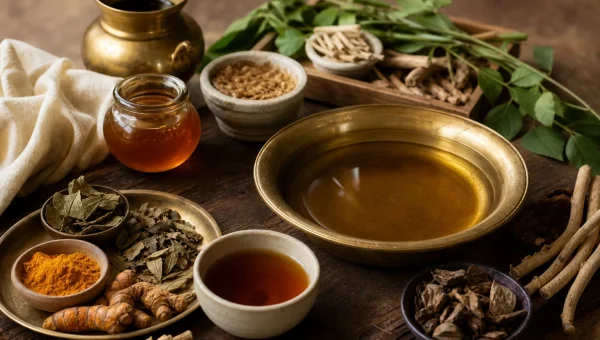
Yashtimadhu, or licorice root, is sweet, cooling, unctuous, and traditionally described as Vata-Pitta pacifying. These qualities make it useful when the mouth feels dry, irritated, rough, or burning. The Ayurvedic Pharmacopoeia of India lists Yashti as Madhura rasa, Guru-Snigdha guna, Shita virya, and Madhura vipaka, with actions including Vatapittajit, Balya, and Raktaprasadana. In practice, it is used as a powder, decoction, or practitioner-prepared medicated oil for mucosal soothing.
Shatavari (Asparagus racemosus)
Shatavari is sweet-bitter, cooling, heavy, and unctuous, with a nourishing and restorative profile. It is especially suitable when dry mouth appears with depletion, post-illness weakness, menopausal heat, low tissue moisture, or Vata-Pitta aggravation. The Ayurvedic Pharmacopoeia of India lists Shatavari as Madhura-Tikta rasa, Guru-Snigdha guna, Shita virya, and Madhura vipaka, with actions including Balya, Rasayana, Pittahara, Vatahara, and Stanyakara.
Amalaki (Emblica officinalis / Phyllanthus emblica)
Amalaki is useful when dryness is accompanied by heat, burning, acidity, or Pitta aggravation. It is classically cooling and Madhura vipaka, while its sour and astringent taste can encourage oral secretions when taken appropriately as food or medicine. The Ayurvedic Pharmacopoeia of India lists Amalaki fruit as containing ascorbic acid and tannins and describes it as Tridoshajit, Rasayana, and useful in conditions including Daha, Amlapitta, Raktapitta, and Prameha.
Guduchi (Tinospora cordifolia)
Guduchi is selected when dry mouth appears in a broader picture of heat, low resilience, metabolic disturbance, recurrent feverishness, or Pitta-Vata imbalance. The Ayurvedic Pharmacopoeia of India describes Guduchi stem as Tikta-Kashaya rasa, Laghu guna, Ushna virya, and Madhura vipaka, with actions including Rasayana, Tridoshashamaka, Raktashodhaka, Balya, and Jvaraghna. It should not be used as a stand-alone treatment for suspected autoimmune disease or diabetes-related dry mouth.
Shunthi and Fresh Ginger (Zingiber officinale)
Ginger is pungent and warming, so it is best reserved for Vata-Kapha patterns where the mouth is dry but not burning. In Ayurveda, Shunthi is Katu rasa, Laghu-Snigdha guna, Ushna virya, and Madhura vipaka, with Dipana, Pachana, and Vatakaphahara actions. Fresh ginger tea or a very small piece of ginger may encourage salivation through taste stimulation, but it can aggravate burning, acidity, mouth ulcers, or strong Pitta symptoms if overused.
Ayurvedic Oil Holding and Swishing: Kavala and Gandusha
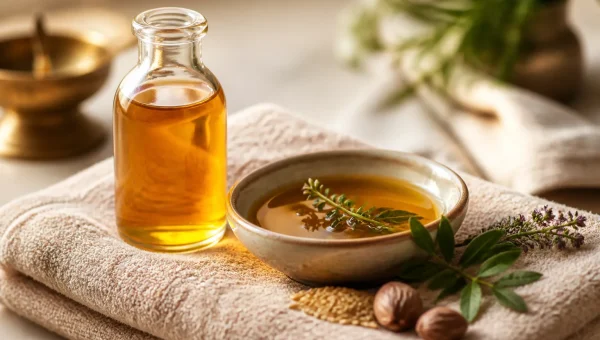
Kavala and Gandusha are traditional oral-care practices in which oil or a medicated liquid is swished or held in the mouth and then spat out. For dry mouth, their role is to coat and comfort the oral mucosa, support gum health, and create a moistening morning routine. They should be used as adjuncts, not as replacements for brushing, flossing, fluoride guidance, dental care, or treatment of the underlying cause.
Sesame oil is commonly chosen when Vata dryness, roughness, cracking, or coldness is prominent. Coconut oil is more suitable when Pitta signs such as burning, heat, redness, or mouth irritation dominate. A practitioner may also use medicated oils prepared with herbs such as Yashtimadhu when mucosal soothing is the main goal. The oil should never be swallowed after swishing; it should be spat into a bin and the mouth rinsed afterward.
Internal Herbal Protocol
The following adult ranges are educational and must be individualized by a qualified practitioner, especially when the person is taking prescription medicines, has hypertension, kidney disease, heart disease, diabetes, pregnancy, oral ulcers, autoimmune symptoms, or a history of cancer treatment.
| Herb | Sanskrit Name | Typical Form | General Adult Range | Best-Fit Pattern | Primary Ayurvedic Role |
|---|---|---|---|---|---|
| Licorice root | Yashtimadhu / Yashti | Powder, decoction, or medicated oil | 2–4 g powder daily, under guidance | Vata-Pitta dryness, irritation, burning, rough mucosa | Cooling, unctuous, demulcent, Vata-Pitta pacifying |
| Shatavari root | Shatavari | Powder, milk preparation, ghrita, or granule | 3–6 g powder daily, under guidance | Depletion, post-illness dryness, menopausal heat, Vata-Pitta pattern | Nourishing, cooling, rasayana, tissue-moistening support |
| Indian gooseberry | Amalaki | Fresh fruit, juice, powder, or classical formulation | 10–20 g fresh fruit or 5–10 ml juice; powder dose individualized | Pitta heat, burning, acidity, Prameha-associated thirst | Cooling, rasayana, Pitta support, taste stimulation |
| Guduchi stem | Guduchi | Powder or decoction | 3–6 g powder or 20–30 g decoction material daily, under guidance | Pitta-Vata imbalance with heat, low strength, metabolic involvement | Rasayana, Tridosha support, Pitta management |
| Dry ginger | Shunthi | Powder, tea, or food spice | 1–2 g powder daily, only when suitable | Vata-Kapha dryness without burning or acidity | Digestive stimulation, taste stimulation, Vata-Kapha reduction |
Diet and Hydration Protocol
Food and drink should be chosen to restore moisture without overloading digestion. The classical direction in morbid thirst is to reduce the drying and heating causes while using water, medicated water, and foods in a way that suits the doshic pattern.
- Favor warm, moist, easy-to-swallow foods such as thin dal, rice gruel, kitchari, vegetable soups, stewed fruits, and soft-cooked vegetables.
- Use cooling Pitta-friendly foods such as pomegranate, soaked raisins, ripe sweet fruits, cucumber, and coconut water when they suit digestion and blood-sugar status.
- For Pitta-type burning thirst, prefer cool or room-temperature water in small repeated sips rather than very hot, spicy drinks.
- For Vata-type dryness, prefer warm water, soups, stews, and a small amount of ghee with meals when digestion and lipid status allow.
- Reduce dry, rough, salty, sour, pungent, fried, dehydrated, and heavily processed foods when they clearly worsen thirst or oral dryness.
- Minimize alcohol, tobacco, and excess caffeine, because they can aggravate dryness and oral irritation.
- When residual salivary function remains, sugar-free chewing gum or xylitol-containing lozenges may be used as a dental adjunct, especially when recommended by a dentist.
Nasya and Upper-Throat Dryness
When dryness extends into the nose, nasopharynx, soft palate, or throat, Nasya may be considered under professional guidance. Classical Nasya is used for disorders above the clavicle and requires attention to suitability, season, digestion, age, strength, and contraindications. Gentle oil application may help selected Vata-dominant dryness, but it should be avoided during acute sinus infection, active bleeding, immediately after meals, intoxication, pregnancy unless supervised, and after recent nasal surgery or trauma.
Dental and Medical Evaluation
Persistent dry mouth deserves proper assessment because saliva protects teeth, oral mucosa, taste, speech, and swallowing. A dentist can assess caries risk, gum health, candidiasis, saliva flow, and the need for fluoride, remineralizing agents, xylitol, saliva substitutes, or prescription sialogogues. A physician can review medications and screen for diabetes, Sjögren’s syndrome, dehydration, salivary-gland disease, radiation injury, anxiety-related mouth breathing, and other systemic causes.
Actionable Tip: For one week, try a gentle morning oral-moistening routine: scrape the tongue softly, hold or slowly swish one tablespoon of suitable oil for 3–5 minutes, spit it into a bin, rinse with warm water, and then brush as advised by your dentist. Use sesame oil for Vata-type rough dryness and coconut oil for Pitta-type burning dryness. Stop if nausea, coughing, mouth irritation, or worsening symptoms occur.
Nothing in this article diagnoses or treats a medical condition. Use it as educational information and consult a qualified Ayurvedic practitioner, dentist, or physician before starting herbs, supplements, medicated oils, Nasya, or therapeutic protocols, especially if pregnant, managing a condition, or taking medication.
References
- Charaka Samhita — Trishna Chikitsa
- Ujconline (ujconline.net)
- Researchgate (researchgate.net)
- NCBI
- Msdmanuals (msdmanuals.com)
- Racgp (racgp.org.au)
- From Drugs to Dry Mouth: A Systematic Review Exploring Oral and Psychological Health Conditions Associated with Dry Mouth in Older Adults with Polypharmacy (2023), PubMed
- Ayurvedic Pharmacopoeia of India
- Ayurvedic Pharmacopoeia of India
- The Effect of ginger herbal spray on reducing xerostomia in patients with type II diabetes (2017), PubMed
- Medicinaoral (medicinaoral.com)
- The effect of oil pulling in comparison with chlorhexidine and other mouthwash interventions in promoting oral health: A systematic review and meta-analysis (2024), PubMed
- Artificial Saliva for Therapeutic Management of Xerostomia: A Narrative Review (2021), PubMed Central
- Development of a Nasya fitness form for clinical practice (2014), PubMed Central
- Identification and estimation of bioactive constituents Negundoside, Berberine chloride, and Marmelosin by HPLC and HPTLC for development of quality control protocols for Ayurvedic medicated oil formulation (2021), PubMed Central
- Pseudohyperaldosteronism, liquorice, and hypertension (2008), PubMed Central
- Frontiersin (frontiersin.org)
I’ve had dry mouth for years and it’s always been attributed to my medication. The Pitta and Vata analysis here is the first explanation that accounts for why it was also present, milder, before I started the medication.
My mother has Sjogren’s syndrome and severe xerostomia. Is the Ayurvedic protocol appropriate for autoimmune-origin dry mouth or is it only relevant for functional presentations?
The cavity development from dry mouth is something my dentist warned me about but gave no useful guidance for beyond artificial saliva sprays. The food-based Pitta cooling approach seems like a more sustainable strategy.
Is the marigold and licorice mouth rinse safe to use while wearing ceramic braces? I’ve been managing dry mouth throughout orthodontic treatment and can’t use most commercial rinses.
✨ the distinction between medication-induced dry mouth and constitutional Pitta dryness helps me understand why the dietary changes might work alongside the medication rather than instead of it
The advice around Dry Mouth (Trishna/Mukhashosha) is specific enough to be useful. I would still ask a practitioner before changing medicines.
I had to stop my antihistamine after 6 months because of the mouth dryness, not the article’s patient situation but my own. The Ayurvedic dietary adjustments helped more than the prescription salivary stimulant I was also trying.
The suggestion to use Yashtimadhu powder after meals caught my eye because I’ve struggled with a sticky feeling in my mouth after brushing.
What’s the shelf life of the prepared pitta formulations? I ask because some preparations I’ve used seemed less potent after 2-3 months.
The oil pulling protocol for dry mouth is something I’ve used for years but only for oral hygiene generally. Understanding it also helps with saliva production changes how I think about when and how to use it.
It seems practical to try Gandusha with warm sesame oil each morning before breakfast as a simple lubricating routine.
One question I have is whether the Vata dominant pattern really improves with just oil pulling or if additional herbs are needed.
tried the amla candy and rock salt protocol for 2 months. Salivary flow has improved and I wake at night less often. Still using the medication but with better results now.
Sharing this. धन्यवाद
My dentist mentioned that dry mouth can increase cavity risk, so reading about the link between Mukha Shosha and dental caries felt relevant.
The distinction between medication-induced dry mouth and constitutional Pitta dryness helps me understand why the dietary changes might work alongside the medication rather than instead of it
How do you distinguish between a genuine healing response and placebo when monitoring progress with pitta? What objective markers should I track?
marigold and licorice mouth rinse, safe with ceramic braces? most rinses I’ve tried interfere with the bonding ❤️
🌿 The kidney function connection to dry mouth is something my Ayurvedic doctor mentioned. now this explains the Pitta accumulation pathway
xerostomia from Sjogren’s syndrome here. is the Pitta-calming protocol relevant for autoimmune dry mouth or only functional presentations?
the distinction between medication-induced dry mouth and constitutional Pitta dryness helps me understand why the dietary changes might work alongside the medication rather than instead of it धन्यवाद
the kidney function connection to dry mouth is something my Ayurvedic doctor mentioned. now this explains the Pitta accumulation pathway
Marigold and licorice mouth rinse, safe with ceramic braces? most rinses I’ve tried interfere with the bonding
oil pulling for dry mouth is something I used only for oral hygiene before. understanding it stimulates saliva production changes how and when I use it
dentist warned me about cavity risk from dry mouth. the Pitta-cooling dietary approach is more sustainable than artificial saliva sprays
A bit skeptical about taking three grams of Amalaki powder daily, I wonder if a smaller dose still offers noticeable salivary stimulation.
amla candy and rock salt protocol for 2 months. salivary flow improved and I wake at night less often. still on medication but better results now
🌿 the distinction between medication-induced dry mouth and constitutional Pitta dryness helps me understand why the dietary changes might work alongside the medication rather than instead of it
Interesting how the article connects Trishna with Pitta aggravation and suggests coriander seed water to stimulate Bodhaka Kapha throughout the day.
my antihistamine caused such severe dry mouth I had to stop it. Ayurvedic dietary changes helped more than the prescription salivary stimulant
💯 the distinction between medication-induced dry mouth and constitutional Pitta dryness helps me understand why the dietary changes might work alongside the medication rather than instead of it
found this post helpful. will try the suggested approach. (ref 1854-16)
The distinction between medication-induced dry mouth and constitutional Pitta dryness helps me understand why the dietary changes might work alongside the medication rather than instead of it ✨
the distinction between medication-induced dry mouth and constitutional Pitta dryness helps me understand why the dietary changes might work alongside the medication rather than instead of it 💯
🙏 marigold and licorice mouth rinse, safe with ceramic braces? most rinses I’ve tried interfere with the bonding
not related to this post but does anyone know a good practitioner in Hyderabad?
found this post helpful. will try the suggested approach. (ref 1854-14)
found this post helpful. will try the suggested approach. (ref 1854-17)
found this post helpful. will try the suggested approach. (ref 1854-18)
marigold and licorice mouth rinse, safe with ceramic braces? most rinses ive tried interfere with the bonding
found this post helpful. will try the suggested approach. (ref 1854-23)
marigold and licorice mouth rinse, safe with ceramic braces? most rinses I’ve tried interfere with the bonding धन्यवाद
found this post helpful. will try the suggested approach. (ref 1854-26)
The distinction between medication-induced dry mouth and constitutional Pitta dryness helps me understand why the dietary changes might work alongside the medication rather than instead of it नमस्ते
marigold and licorice mouth rinse, safe with ceramic braces? most rinses I’ve tried interfere with the bonding ठीक है
found this post helpful. will try the suggested approach. (ref 1854-28)
marigold and licorice mouth rinse, safe with ceramic braces? most rinses I’ve tried interfere with the bonding 💯
found this post helpful. will try the suggested approach. (ref 1854-30)
I would like more detail on Dry Mouth (Trishna/Mukhashosha). The safety notes could be expanded a little.
marigold and licorice mouth rinse, safe with ceramic braces? most rinses ive tried interfere with the bonding नमस्ते
found this post helpful. will try the suggested approach. (ref 1854-34)
Sorry off-topic but has anyone here used Ayurveda for hair loss?
the distinction between medication-induced dry mouth and constitutional Pitta dryness helps me understand why the dietary changes might work alongside the medication rather than instead of it ठीक है
apologies for going off-topic, anyone know the Ayurvedic approach to managing migraines?
found this post helpful. will try the suggested approach. (ref 1854-38)
🙌 Marigold and licorice mouth rinse, safe with ceramic braces? most rinses I’ve tried interfere with the bonding
found this post helpful. will try the suggested approach. (ref 1854-40)