
Every Ayurvedic student learns Brahmi, yet the smaller blue-flowered Shankhavali tradition deserves a careful place in the conversation on memory herbs. In regional practice, Evolvulus alsinoides is known by names such as Vishnukranta, Shankhavel, and Shankhpushpi. Its identity must be handled precisely, because the official Ayurvedic Pharmacopoeia of India monograph for Shankhapushpi is Convolvulus pluricaulis, while the same monograph notes that Evolvulus alsinoides and Clitoria ternatea are used as Shankhapushpi in certain parts of India.
What Is Shankhavali?
Shankhavali, in this article, refers to the regional Shankhpushpi/Vishnukranta use of Evolvulus alsinoides, a small annual or perennial herb of the Convolvulaceae family. Kew’s Plants of the World Online accepts Evolvulus alsinoides as a valid species and describes its native range as the tropics and subtropics. Indian biodiversity sources list common names such as Vishnukranta, Shankhpushpi, Vishnu Kranthi, and Shankhavel, reflecting its wide regional use.
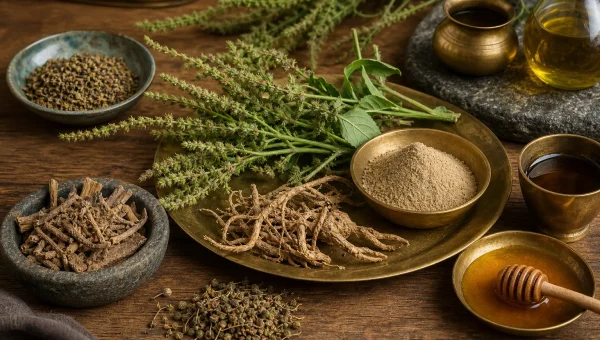
The plant is a slender, hairy, prostrate or ascending herb with small blue flowers that may also appear white. This botanical profile is one reason it becomes confused with other Shankhpushpi plants in commerce. For clinical and educational writing, it is best to state the botanical name clearly: Evolvulus alsinoides when discussing Shankhavali/Vishnukranta, and Convolvulus pluricaulis when discussing the official API Shankhapushpi monograph.
The Shankhpushpi Identity Problem
The name Shankhpushpi is not used for one single plant in all regions. The Ayurvedic Pharmacopoeia of India identifies Shankhapushpi as the whole plant of Convolvulus pluricaulis Choisy and gives its official pharmacopoeial standards, properties, dose, and formulations. The same monograph adds that Clitoria ternatea and Evolvulus alsinoides are used as Shankhapushpi in certain parts of India. This explains why Shankhavali is sometimes overshadowed: its reputation is real, but its name is shared with related regional substitutes and market sources.
Distinguishing Shankhavali from Brahmi
Brahmi and Shankhavali both belong to the wider Ayurvedic memory-tonic conversation, but they are not the same herb and should not be interchanged casually. Brahmi is officially represented in the API as Bacopa monnieri, while Shankhavali refers here to Evolvulus alsinoides, a regional Shankhpushpi source. Their botanical identity, pharmacological markers, and evidence profiles differ.
| Feature | Shankhavali / Vishnukranta (E. alsinoides) | Brahmi (B. monnieri) |
|---|---|---|
| Botanical family | Convolvulaceae | API lists Bacopa monnieri as Brahmi |
| Ayurvedic naming | Regional Shankhpushpi, Vishnukranta, Shankhavel | Brahmi, Sarasvati, Kapotavanka in API synonyms |
| Classical context | Relevant through the Shankhpushpi medhya tradition; API official source is C. pluricaulis | API lists Medhya, Rasayana, Matiprada, Vatahara, Kaphahara actions |
| Notable constituents | Scopoletin, scopolin, umbelliferone, beta-sitosterol, betaine, flavonoids and alkaloids | Bacosides and bacopasides are the best-characterized constituents |
| Modern evidence profile | Mainly animal, in-vitro, in-silico, and traditional-use literature | Larger published human trial literature for cognition |
Classical Medhya Rasayana Context
Charaka’s Rasayana chapter lists four Medhya Rasayana approaches: Mandukaparni juice, Yashtimadhu powder with milk, Guduchi juice with root and flowers, and Shankhapushpi paste. The verse specifically praises Shankhapushpi as intellect-promoting. This classical praise supports the importance of the Shankhpushpi tradition, while the exact botanical source must still be identified carefully in modern writing and clinical use.
In the API monograph for official Shankhapushpi, the listed properties are Katu, Tikta, and Kashaya rasa; Sara guna; Shita virya; Katu vipaka; and actions including Balya, Ayushya, Kaphahara, Medhya, Pittahara, Rasayana, and Mohanashaka. The listed therapeutic uses include Manasaroga and Apasmara, and the powder dose is 3–8 g. Because this monograph is for Convolvulus pluricaulis, it should not be automatically copied onto every Evolvulus alsinoides product without checking the actual botanical source.
Phytochemistry of Evolvulus alsinoides
Evolvulus alsinoides contains several documented phytochemical groups, including coumarins, flavonoids, alkaloids, phytosterols, and other secondary metabolites. Reviews and analytical work list constituents such as scopoletin, scopolin, umbelliferone, beta-sitosterol, betaine, triacontane, and shankpushpine. Scopoletin is a coumarin constituent, not a furanocoumarin, and it should be described as one important marker rather than as the only active principle of the plant.
A 2024 analysis of scopoletin-rich Evolvulus alsinoides extract quantified scopoletin by HPTLC and evaluated antioxidant, in-silico, and zebrafish embryo toxicity parameters. This supports careful standardization: the herb may be valuable, but dose, extract type, and product identity matter.
Modern Pharmacology for Memory and Calm Focus
Animal work with Evolvulus alsinoides has described improved learning and memory performance in rodent paradigms and reversal of scopolamine-induced amnesia. Other preclinical work has described adaptogenic and anti-amnesic activity in stress and memory models. In an intracerebroventricular streptozotocin model, Evolvulus alsinoides was evaluated for cognitive impairment, oxidative stress, cholinergic function, and related neuronal markers.
A comparative mouse study involving Evolvulus alsinoides and Centella asiatica reported neuroprotective and nootropic activity in scopolamine-induced amnesia, with reduced acetylcholinesterase activity in brain homogenate. A separate comparison of different plant sources used as Shankhpushpi found that Convolvulus pluricaulis, Evolvulus alsinoides, and Clitoria ternatea all showed central nervous system activity in experimental models, with activity varying by plant and dose.
Where Shankhavali Fits Beside Brahmi
Brahmi remains the better-known herb because its identity as Bacopa monnieri is widely recognized and it has a larger clinical publication base. Shankhavali is different: it sits at the intersection of the Vishnukranta and Shankhpushpi traditions. For practitioners, its strongest place is not as a replacement for Brahmi, but as a carefully identified regional medhya herb for memory support, worry-linked scattered attention, and nervous-system nourishment within an individualized Ayurvedic plan.
When selecting between the two, the first question should be identity. If the label says Brahmi, the botanical source should be Bacopa monnieri. If the label says Shankhpushpi, the source may be Convolvulus pluricaulis, Evolvulus alsinoides, Clitoria ternatea, or another regional source unless the manufacturer declares the botanical name. If the label says Vishnukranta or Evolvulus alsinoides, it is referring to Shankhavali as discussed here.
Traditional Forms and Practical Use
Because the official API dose applies to Convolvulus pluricaulis Shankhapushpi, while Shankhavali products may use Evolvulus alsinoides, practical dosing should be guided by the product identity and a qualified practitioner. The safest approach is to avoid generic “Shankhpushpi” dosing and confirm the plant on the label before use.
| Form | Verified guidance | Best practice |
|---|---|---|
| Official Shankhapushpi powder | API dose: 3–8 g powder; official plant is Convolvulus pluricaulis | Use only when the botanical source is clear |
| Brahmi powder | API dose: 1–3 g powder for Bacopa monnieri | Choose when a clearly identified Brahmi preparation is desired |
| Evolvulus alsinoides powder or extract | Dose varies by product and extraction method | Follow practitioner guidance and manufacturer standardization |
| Syrup, ghrita, or compound formula | Ingredients vary widely by manufacturer | Check whether Shankhpushpi means C. pluricaulis, E. alsinoides, or another source |
Growing and Identifying Shankhavali
Authentic Evolvulus alsinoides is a small, slender, hairy herb with prostrate or ascending stems. Botanical descriptions record petiolate or subsessile leaves, blue flowers that may rarely be white, and solitary or few-flowered axillary inflorescences. The flowers are small, broadly funnel-shaped, and the plant is widely distributed across tropical and subtropical regions.
For field identification, the blue-flowered, low-growing, hairy habit is helpful but not sufficient. Shankhpushpi commerce includes multiple species, and dried material can be difficult to identify visually. When buying the herb for memory support, the label should state the Latin binomial, the plant part used, and whether it is a powder, decoction base, syrup, ghrita, or standardized extract.
Who May Benefit Most from Shankhavali?
Shankhavali is best considered as a traditional medhya herb for people seeking gentle cognitive and nervous-system support, especially when forgetfulness is accompanied by restlessness, worry, poor sleep rhythm, or mental fatigue. Students, knowledge workers, and older adults may consider it as part of a broader Ayurvedic plan that also includes sleep regularity, digestion support, suitable diet, and reduced overstimulation.
- Students with stress-linked forgetfulness and scattered attention
- Adults with mental fatigue, excessive rumination, or poor recall under pressure
- People seeking a Shankhpushpi-family herb but wanting a clearly identified botanical source
- Those who do not tolerate Brahmi well and need a practitioner-guided alternative
- Older adults seeking rasayana-style support without replacing medical evaluation for cognitive decline
Safety Note
Important: Do not use Shankhavali, Shankhpushpi, Brahmi, or any medhya herb as a substitute for prescribed treatment for epilepsy, dementia, anxiety disorders, depression, insomnia, or any neurological condition. People taking sedatives, antiepileptic medicines, psychiatric medicines, or multiple long-term medications should consult a qualified Ayurvedic practitioner and healthcare provider before use. Pregnancy, lactation, pediatric use, and chronic illness require individualized guidance.
Actionable tip: If you want to try Shankhavali for memory support, buy only a product that clearly states Evolvulus alsinoides on the label. Begin with practitioner-guided dosing rather than a generic Shankhpushpi dose, take it consistently with a stable sleep routine, and assess changes in focus, recall, sleep, digestion, and mood over several weeks.
References
- Powo (powo.science.kew.org)
- Indiabiodiversity (indiabiodiversity.org)
- Ayurvedic Pharmacopoeia of India
- Charaka Samhita — Rasayana Adhyaya
- Intechopen (intechopen.com)
- Exploring the neuropharmacological properties of scopoletin-rich Evolvulus alsinoides extract using in-silico and in-vitro methods (2024), PubMed
- Effect of Evolvulus alsinoides Linn. on learning behavior and memory enhancement activity in rodents (2010), PubMed
- Amelioration of intracerebroventricular streptozotocin induced cognitive impairment by Evolvulus alsinoides in rats: in vitro and in vivo evidence (2012), PubMed
- Adaptogenic and anti-amnesic properties of Evolvulus alsinoides in rodents (2005), PubMed
- Nootropic, anxiolytic and CNS-depressant studies on different plant sources of shankhpushpi (2011), PubMed
- Oamjms (oamjms.eu)
- Efloras (efloras.org)
- NCBI
I’ve been studying Brahmi so thoroughly and had never come across Shankhavali before this article. The rural South Indian practitioner preference mentioned my mother’s family in Karnataka used this specifically for exam preparation. I grew up hearing about it and forgot it entirely.
Is there any research directly comparing Shankhavali to Brahmi on cognitive endpoints? The article presents Shankhavali as potentially superior for memory specifically but I’d want to know whether any trial has tested them head-to-head.
The blue flowers are extraordinary. I’ve seen them wild in hill areas in Goa without knowing what they were. Going to try to source the herb now that I understand what it is.
The acetylcholine precursor mechanism described for Shankhavali is this the same as Brahmi’s mechanism or a distinct pathway? If they work differently they might be complementary rather than alternatives.
My son uses Shankhavali syrup before exams. My grandmother from Kodagu insisted on it when my father was studying for his engineering entrance in the 1970s. Three generations of this family have used it. The continuity of traditional knowledge is striking.
The nootropic supplement market is enormous and almost entirely Western in its focus. This article is a useful counterpoint systematic cognition support in traditional systems that predates the supplement industry by millennia. The plant deserves more research attention.
I take Brahmi daily. Should I substitute Shankhavali or combine both? The article suggests they may have complementary mechanisms but doesn’t address whether combined use is appropriate or excessive.
Got the powder from an Ayurvedic pharmacy in Chennai and started 3 weeks ago. Word of warning: it’s quite bitter. Mixing with honey makes it tolerable. No cognitive changes yet but it’s early.
As someone with ADHD who takes medication, I’m curious about adding Shankhavali as a supporting herb. Has anyone tried this combination and noticed any interaction with stimulant medications?
The conch-shell description of the leaf pattern I’ve seen this plant without knowing what it was. It grows along roadsides in my village in Andhra Pradesh and the elderly women do call it a brain herb. Interesting to finally understand why.
The comparison table really clarified why Shankhavali feels different from Brahmi in practice.
Is Shankhavali available in standardized extract form or only as raw powder? For consistent dosing the standardization question matters significantly.
I tried the powdered form with warm milk last week and noticed a subtle calm during study sessions.
Question: does the fresh juice need to be taken on an empty stomach for best effect, or can it be mixed with something else?
It’s interesting that scopoletin shows acetylcholinesterase inhibition similar to some Alzheimer’s drugs, though the research is still preclinical.
A quick tip: look for the hairy leaves and tiny blue flowers when identifying the plant in the wild.
noticed improvement in word recall and mental clarity after 6 weeks on the powder form. subtle but consistent
This makes sense for Shankhavali (Evolvulus alsinoides). I would like to know how long to try it before judging results.
I notice the article doesn’t address interactions with thyroid medication. Is there a concern there?
shared this with my mom, she has been struggling with this for years and finally has a proper plan
where do u buy quality herbs in India? the market stuff seems adulterated
tried it for 3 months for my anxiety-related memory issues and noticed very little difference compared to Brahmi which i had used before
works!! been doin this 2 months n feeling much better tbh
how long u take this before seeing results? asking for my dad
good artcle, bookmarked. will share w/ my doctor next visit
I’m skeptical of the causal claims here. Symptom improvement after starting a protocol can easily be a placebo response or regression to the mean.
The mechanism explanation is interesting. I would like to understand whether the effect diminishes with long-term use.
what brand of ashwagandha do you recommend? KSM-66 or Sensoril or just regular churna?
the digestive angle makes sense to me but i’m curious about the topical applications mentioned briefly at the end
tried it, didnt work for me. maybe need proper vaidya supervision
can kids take this? what age is safe
finally something that explains the dosage properly instead of just saying ‘take as needed’
where to buy? local shops don’t stock it much 🌿
does anyone know if this works the same way for Kapha types? feels like the article is more Vata focused
I would like more detail on Shankhavali (Evolvulus alsinoides). The timing advice is the part I would start with.
what’s the recommended dose for someone with a Pitta constitution? the article mentions general ranges but i want to confirm 🌿
can you combine Shankhavali with Brahmi or is it either-or based on constitution?
Finally a detailed article on Shankhavali. Most resources just mention it briefly as a secondary herb to Brahmi.
the dose ranges seem very broad, like 1 to 3 grams is quite a big difference. would be more helpful with narrower guidance
Could you clarify whether the herbal preparation needs to be freshly made each day or if a week’s batch is acceptable?
Useful post on Shankhavali (Evolvulus alsinoides). Small daily changes are easier to follow than a perfect plan.
I started this protocol last month. Would it be acceptable to continue Triphala alongside it or would that be too much?
The scientific citations are helpful. Are there any RCTs specifically for the combination therapy mentioned?
Just found this searching for alternatives to long-term medication. How does one find a qualified Ayurvedic practitioner to supervise this?
Useful post on Shankhavali (Evolvulus alsinoides). The article avoids making it sound like a quick fix.
The article would benefit from more rigorous sourcing. The studies referenced are mostly observational, not randomized controlled.
tried this last month, honestly surprised how well it worked for me
Is this protocol safe to follow alongside standard allopathic treatment, or does it need to be spaced out?
The evidence base for Shankhavali is much thinner than for Brahmi. The article makes comparative claims that aren’t fully supported by the citation count.
using Shankhavali ghrita for my kids during exam season, their focus seems better though it’s hard to say definitively
I have a question about the duration. Is the 30-day protocol meant to be repeated or is one cycle sufficient for chronic cases?
this is the kind of detail u cant find anywhere else, other sites just give vague advice
I tried a similar protocol for 6 weeks and saw no improvement. It may depend heavily on individual constitution.
The timeline expectations seem unrealistic for a chronic condition. Most patients I’ve spoken to report much longer recovery arcs.
Been following this for 3 weeks and my energy levels are noticeably steadier throughout the day.
Without knowing a patient’s Prakriti and Agni status, applying a generic protocol seems premature. This kind of generalized advice can actually cause harm.
2 weeks in n no change yet. maybe giving up soon
same issue here, doc said try ayurveda. will try this n update