
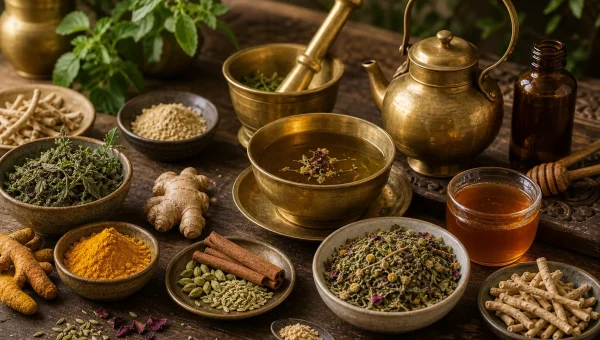
My grandmother made Chyawanprash every winter. Not the bottled kind — the slow, fragrant home version built around Amalaki, ghee, honey, sugar, and a long line of warming aromatics. The process filled the house for days: boiling, straining, pulping, frying, stirring, testing the paka, and finally adding the honey only when the preparation had cooled. What I did not fully appreciate until I studied classical Ayurvedic food therapy was that she was not simply making a herbal jam. She was making Avaleha, one of Ayurveda’s most refined semi-solid dosage forms.
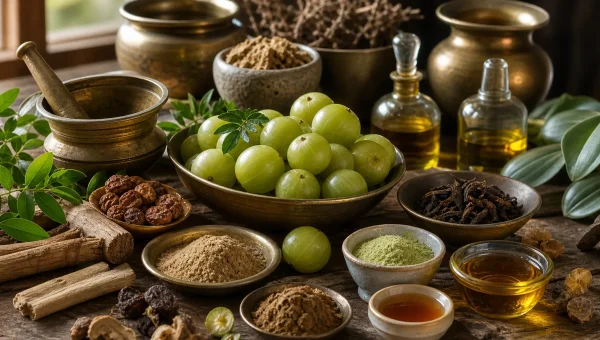
Avaleha, also called Lehya or Leham, is a thick lickable preparation made by processing herbal juices or decoctions with jaggery, sugar, sugar candy, ghee, oil, honey, and fine herb powders. Its strength is that it carries concentrated herbs in a palatable food matrix, especially useful where a bitter decoction or dry powder would be difficult to take regularly. Below are five benefit-focused Avaleha preparations: some are direct classical/pharmacopoeial formulas, and some are careful home-style adaptations built on classical Avaleha rules.
Before the Recipes: The Critical Rules of Avaleha Making
Good Avaleha is neither syrup nor candy. It is a soft, stable, semi-solid preparation made with the correct sweet base, the correct cooking stage, and the correct order of adding powders, ghee, and honey.
- Honey is added only after cooling. Do not boil, simmer, or cook honey. In Avaleha preparation, honey is mixed after the cooked base has cooled to room temperature or gentle lukewarmness.
- The paka test decides the texture. A properly cooked Avaleha becomes thread-like when pressed between fingers, or a small portion dropped into water settles without quickly dispersing. For some formulas, the test is described as a soft bolus that does not spread in water.
- Fine powders must be smooth. Prakshepa dravya — the spices and herb powders added near the end — should be powdered finely and sieved so the final Avaleha is smooth, digestible, and evenly blended.
- Use clean, dry storage. Store finished Avaleha in sterilized glass jars, away from light, heat, and moisture. Use a clean dry spoon every time.
- Do not improvise mineral or alkaline ingredients. Formulas containing ingredients such as Yavakshara or any bhasma should be prepared only with practitioner guidance and reliable sourcing.
Recipe 1: Vāsāvaleha — Respiratory Strength and Kasa-Shwasa Support
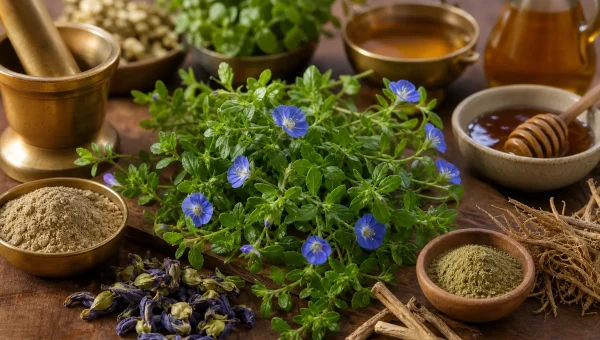
Vāsāvaleha is a classical Avaleha built around Vasa, also known as Vasaka or Adhatoda vasica. It is traditionally used in the Ayurvedic categories of Kasa, Shwasa, Jvara, Raktapitta, Rajayakshma, Parshvashula, and Hrut-shula. For a home batch, prepare it only when fresh, correctly identified Vasa leaves are available, and keep the dose modest.
Small-batch ingredients:
- Fresh Vasa leaf juice: 192 ml
- Sugar candy or clean sugar: 96 g
- Cow ghee: 24 g
- Pippali powder: 24 g
- Honey: 96 g, added only after cooling
Method: Wash the fresh Vasa leaves and extract the juice. Add the sugar candy to the juice, warm gently, and strain if needed. Cook on low heat with constant stirring until the mixture begins to thicken. Add ghee and Pippali powder, and continue stirring until a small portion forms a soft bolus that does not disperse in water. Remove from heat. When the mixture has cooled to room temperature, add honey and mix thoroughly. Store in a clean glass jar.
Dose: About 6 g twice daily, or 12 g total per day in divided doses, with warm water or milk as advised.
Recipe 2: Medhya Brahmi Avaleha-Style Preparation — Memory, Concentration, and Calm Attention
This is a home-style Avaleha built around the Medhya Rasayana idea. Charaka’s Medhya Rasayana group centers on Mandukaparni, Yashtimadhu, Guduchi, and Shankhapushpi for support of intellect, clarity, and mental steadiness. In many households the word “Brahmi” is used broadly for memory-support herbs, but careful preparation should use identity-confirmed botanicals rather than loose market names.
Ingredients:
- Mandukaparni fresh juice: 100 ml
- Guduchi fresh juice or strong decoction: 100 ml
- Shankhapushpi fine powder or paste: 15 g
- Yashtimadhu fine powder: 10 g
- Sugar candy or old jaggery: 125 g
- Ghee: 25 ml
- Ela powder: 1 g, optional
- Honey: 25 ml, added only after cooling
Method: Combine the Mandukaparni juice and Guduchi juice or decoction. Add the sugar candy or jaggery and cook on low heat, stirring steadily. When the base thickens and reaches a soft Avaleha consistency, add ghee and mix well. Remove from heat. When warm rather than hot, add Shankhapushpi, Yashtimadhu, and Ela powders. When fully cooled, add honey and mix until uniform.
Dose: 3–5 g once daily with warm milk or warm water. People with high blood pressure, fluid retention, kidney disease, pregnancy, or regular medication use should take Yashtimadhu-containing preparations only with professional guidance.
Recipe 3: Dashamoola Haritaki — The Lung-and-Bowel Avaleha
Agasthya Haritaki Rasayana is a celebrated large respiratory formula for Kasa and Shwasa, traditionally containing Haritaki, many decoction herbs, Pippali, jaggery, sesame oil, ghee, and honey. For a practical home kitchen, Dashamoola Haritaki is a better-scaled Avaleha in the same lung-and-bowel terrain, combining Dashamoola, Haritaki, warming spices, jaggery, and honey.
Small-batch ingredients:
- Dashamoola coarse powder: 50 g
- Water: 800 ml, reduced to about 200 ml
- Haritaki: 6–7 small fruits, or about 40 g cleaned pieces
- Old jaggery: 300 g
- Tvak powder: 3 g
- Ela powder: 3 g
- Patra powder: 3 g
- Sunthi powder: 3 g
- Maricha powder: 3 g
- Pippali powder: 3 g
- Yavakshara: only if specifically prescribed
- Honey: 24 g, added only after cooling
Method: Boil Dashamoola in water and reduce to about one-fourth. Strain. Cook Haritaki in this decoction until soft, remove seeds if present, and mash the pulp. In a separate thick-bottomed pan, melt and strain the jaggery. Add the Haritaki pulp and cook slowly, stirring until the mixture reaches the soft bolus stage. Remove from heat. Add the fine powders when warm and mix thoroughly. Add honey only after the preparation has cooled.
Dose: 6–12 g twice daily with water or milk, according to strength, season, bowel pattern, and practitioner advice.
Recipe 4: Kūṣmāṇḍaka Rasayana — Strength, Weight, and Fatigue Recovery
Kūṣmāṇḍaka Rasayana, also called Kūṣmāṇḍaka Khanda, is a classical Avaleha centered on mature ash gourd or white pumpkin. Its traditional indications include Kasa, Shwasa, Daurbalya, Karshya, hoarseness, chronic fever patterns, emesis, thirst, and depletion states. This makes it a better classical choice than a stimulant-style “muscle gain” jam when the real goal is nourishment, convalescence, and rebuilding after weakness.
Small-batch ingredients:
- Mature ash gourd or white pumpkin flesh: 300 g, peeled and deseeded
- Water: enough to cook the pieces, about twice the volume
- Ghee: 48 g
- Sugar candy: 300 g
- Pippali powder: 6 g
- Sunthi powder: 6 g
- Jiraka powder: 6 g
- Tvak powder: 1.5 g
- Ela powder: 1.5 g
- Patra powder: 1.5 g
- Maricha powder: 1.5 g
- Dhanyaka powder: 1.5 g
- Honey: 24 g, added only after cooling
Method: Cut the ash gourd into pieces and cook with water until soft. Strain and keep the liquid aside. Mash the cooked pieces into a paste. Fry this paste in ghee with steady stirring until it turns light brown and aromatic. Add sugar candy to the reserved liquid and cook into a syrup. Add the fried ash gourd paste back into the syrup and cook until a soft bolus forms in water. Remove from heat. When warm, add the fine spice powders and mix well. Add honey only after the preparation has cooled to room temperature.
Dose: About 10 g twice daily, or 20 g total per day in divided doses, with milk or water as advised.
Recipe 5: Ardraka-Guda Avaleha-Style Preserve — Digestive Fire and Kapha Season
Ardraka, fresh ginger, is praised in Ayurveda as a powerful digestive and Kapha-Vata balancing kitchen herb. A simple ginger-jaggery Avaleha-style preserve is useful when appetite is dull, the tongue feels coated, food feels heavy, or cold damp weather weakens digestive fire. This is the most kitchen-accessible preparation in the list, but it is also the hottest and sharpest.
Ingredients:
- Fresh ginger juice: 200 ml
- Old jaggery: 150 g
- Ghee: 20 ml
- Rock salt: 1/8 teaspoon
- Pippali powder: 2 g, optional
- Maricha powder: 1 g, optional
- Honey: 30 ml, added only after cooling
Method: Combine fresh ginger juice and ghee in a thick-bottomed pan. Add jaggery and cook on low heat with constant stirring until the mixture reaches a soft Avaleha consistency. Add rock salt and the optional powders after removing from heat. When fully cooled, add honey and mix well. Store in a small clean jar.
Dose: 3–5 g before meals during cold, damp, Kapha-heavy periods. Avoid this preparation during active acidity, burning sensation, bleeding disorders, active fever, and very hot seasons unless a practitioner advises otherwise.
Dosage Reference Table
The table below gives practical adult reference ranges. Avaleha dosing should always be adjusted for age, digestive strength, season, constitution, disease state, and the heaviness of the formula.
| Avaleha | Reference Dose | Timing | Typical Use Pattern | Primary Ayurvedic Use |
|---|---|---|---|---|
| Vāsāvaleha | About 12 g daily in divided doses | With warm water or milk | Short therapeutic course under guidance | Kasa and Shwasa support |
| Medhya Brahmi Avaleha-style preparation | 3–5 g once daily | Morning with warm milk or water | Gentle daily Medhya support | Memory, concentration, calm attention |
| Dashamoola Haritaki | 6–12 g twice daily | With water or milk | Practitioner-adjusted course | Lung-and-bowel combination patterns |
| Kūṣmāṇḍaka Rasayana | About 20 g daily in divided doses | With milk or water | Nourishing Rasayana-style use | Weakness, depletion, cough and breath patterns |
| Ardraka-Guda Avaleha-style preserve | 3–5 g | Before meals | Seasonal, short-term use | Low appetite, heaviness, Kapha digestion |
For related herbal preparation guides, see our Kwatha decoction masterclass, our step-by-step Taila preparation guide, and our piece on Churna formulations decoded.
Safety, Contraindications, and Storage
Avaleha is medicine in a sweet food form; the presence of jaggery, sugar, ghee, and honey does not make it casual. These preparations are best used with individualized guidance, especially when the formula is aimed at respiratory difficulty, weakness, chronic cough, digestion, or mental support.
- Do not use Avaleha to delay urgent medical care for breathlessness, chest pain, high fever, coughing blood, dehydration, severe vomiting, unexplained weight loss, or sudden weakness.
- People with diabetes, insulin resistance, metabolic syndrome, kidney disease, liver disease, hypertension, heart disease, pregnancy, lactation, or regular medication use should consult a qualified Ayurvedic practitioner and healthcare provider before use.
- Children, older adults, and people with weak digestion need smaller doses and professional supervision.
- Do not add bhasma, mineral ingredients, strong alkalis, or unfamiliar herbs to home Avaleha preparations.
- Use identity-confirmed herbs from reliable sources. Do not substitute look-alike roots, leaves, or powders.
- Store in clean, dry glass jars away from light and moisture. Discard immediately if there is mold, fermentation, sour smell, gas formation, or visible spoilage.
Nothing in this article diagnoses, treats, or replaces medical care. Use it as educational information and consult a qualified Ayurvedic practitioner or physician before starting herbs, supplements, detoxes, or therapeutic protocols, especially if pregnant, managing a condition, or taking medication.
नमस्ते, longtime reader first comment. This post finally convinced me to start.
Chyawanprash is the most famous avaleha but you covered it only briefly. The recipe variants deserve their own post.
Same here
The lung avaleha recipe uses 48 ingredients. Where does a home cook even source half of these?
Made Agastya haritaki for chronic cough. Takes 6 hours to prepare but the relief was worth it. 🙌
Useful
My grandmother used to make Chyawanprash at home every winter too, and reading this brought that memory back. The detail about the sequence of adding herbs matters so much — she was very particular about that. Do you have guidance on which of the five avaleha recipes would be best to try first for someone just starting out?
Will try
Hope it works out for you! Which recipe are you planning to start with — the Chyawanprash or one of the others? I’d love to hear how the preparation goes.
Totally agree. The citations from the Ashtanga Hridayam in particular set this apart. It’s one thing to find a recipe online, another to see it traced back to an actual classical source. Makes you feel more confident about putting in the effort to make it properly.
The cognitive-enhancing Saraswatarishta, is the recipe here the same as in Ashtanga Hridayam?
Just found this. Really helpful for my situation.
Glad you found it — which of the avaleha recipes are you looking at trying? The Chyawanprash preparation sounds involved but I’m tempted to attempt it. धन्यवाद for sharing the link here.
Made Vasavaleha for my asthma following this recipe. Substituting jaggery for sugar the article clarified that point nicely.
Doing this
Late to this post, found it via Google. Is this still the recommended approach in 2027?
There’s actually a post on this blog that covers Ayurvedic approaches to hair loss separately — might be worth searching for it. This one is specifically about the therapeutic avaleha preparations. The Chyawanprash recipe in this post does have Amalaki as a base which is sometimes used for hair health as well, so there could be some overlap.
Honestly that’s the question I had too. The post convinced me the difference is real — commercial preparations often substitute ingredients or shorten the processing time, and the grandmother’s three-day Chyawanprash described here is nothing like what comes in a jar. Still figuring out where to source fresh Amalaki though.
Found this helpful. The 5 Classical Avaleha Recipes section was particularly useful for my situation.
Found tjis helpful. The 5 Classical Avaleha Recipes section was particularly useful for my situation.
The Vasavaleha recipe looks doable if I can find fresh Vasa leaves; has anyone tried simmering the juice to half volume and noticed a change in aroma?
The Chyawanprash section especially — reading about the three-day process the author’s grandmother used makes you realize how different home preparation really is. Even trying just one recipe from scratch feels like it would be worth it to understand what the finished product is supposed to taste and feel like. 🙌
✨ Found this helpful. The 5 Classical Avaleha Recipes section was particularly useful for my situation.
Found this helpful. The 5 Classical Avaleha Recipes section was particularly useful fpr my situation. (asking as someone dealing with this since 2022)
🌿 Found this helpful. The 5 Classical Avaleha Recipes section was particularly useful for my situation.
I appreciate the warning about not heating honey above 40°C; it’s a detail I often overlook when making homemade syrups.
Does the Mridu Paka soft ball test work reliably with jaggery, or should I rely more on texture than timing?
The idea of using sesame ghee in Brahmi Avaleha intrigues me; I wonder if regular ghee would alter the synergistic effect.
I’ve read that Ashwagandha can support muscle gain, but seeing the Bala Avaleha dose of 10 15 g twice daily makes me curious about practical scoop sizes.
For someone living in a dry climate, would substituting fresh Amalaki with dried powder affect the final consistency of Chyawanprash style avaleha?
The safety note on Kapikacchu and L DOPA is important; I’ll definitely check with my neurologist before trying any mucuna based preparation.
It’s helpful that the article lists shelf life; keeping avaleha in a dark glass jar seems like a simple way to preserve potency.
I’m curious whether the Ardraka Avaleha’s rock salt amount could be adjusted for those on a low sodium diet without losing the digestive boost.