
Jatamansi in Ayurveda: Sleep, Mental Calm, Memory, and Responsible Use
Jatamansi (Nardostachys jatamansi) is an aromatic Himalayan medicinal plant whose dried rhizome is used in Ayurveda. The Ayurvedic Pharmacopoeia of India describes it as medhya, nidrajanana, varnya, and kushthaghna, and lists traditional applications that include anidra and manasaroga. These terms support its established Ayurvedic role in preparations intended for sleeplessness, mental disturbance, complexion, and certain skin conditions.
Modern laboratory and animal investigations have examined Jatamansi in relation to sleep, cognition, neuronal injury, seizures, and hair growth. Human investigation is much smaller and does not justify treating the herb as a replacement for psychiatric, neurological, or sleep medication. Its medical use also has an ecological dimension because the slow-growing Himalayan species is threatened by destructive rhizome collection and regulated in international trade.
Botanical Identity and Conservation Status
The accepted botanical name is Nardostachys jatamansi (D.Don) DC. Modern taxonomy places the species in the Caprifoliaceae family, within the valerian subfamily, while older pharmacopoeial and botanical references classify it under Valerianaceae. It is a perennial herb of Himalayan subalpine and alpine environments. The Ayurvedic Pharmacopoeia describes plants 10–60 cm high growing at approximately 3,000–5,000 metres.
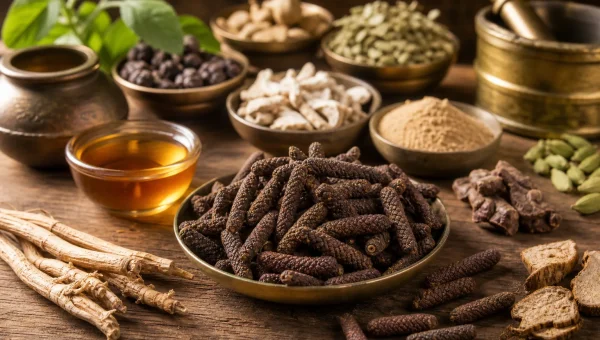
The medicinal rhizome is dark brown, strongly aromatic, and covered by reddish-brown fibres formed from the remains of old leaf bases. This fibrous covering gives the underground portion its characteristic matted or hair-like appearance. The pharmacopoeial drug consists specifically of the dried rhizome, although roots and rhizomes are sometimes discussed together in experimental literature and commercial descriptions.
The species is assessed as Critically Endangered on the IUCN Red List. International trade is controlled through CITES Appendix II, where relevant documents may use the name Nardostachys grandiflora, a name treated as synonymous with Nardostachys jatamansi in current botanical databases. Appendix II does not prohibit all trade, but export and import must comply with the applicable permit and sustainability requirements.
Key Botanical and Ayurvedic Details
The following profile reflects the Jatamansi monograph in the Ayurvedic Pharmacopoeia of India rather than unreferenced commercial descriptions.
- Accepted botanical name: Nardostachys jatamansi (D.Don) DC.
- Modern family: Caprifoliaceae; older references use Valerianaceae
- Pharmacopoeial part: Dried rhizome
- Pharmacopoeial synonyms: Mamsi, Jata, and Jatila
- Rasa: Tikta and Kashaya
- Guna: Laghu
- Virya: Shita
- Vipaka: Katu
- Dosha action: Tridoshanut, indicating alleviation of disturbed Vata, Pitta, and Kapha in the appropriate clinical context
- Recorded karmas: Medhya, Varnya, Nidrajanana, and Kushthaghna
- Recorded uses: Kushtha, Daha, Visarpa, Manasaroga, and Anidra
Ayurvedic Pharmacology
Jatamansi is bitter and astringent in taste, light in quality, cooling in potency, and pungent after digestion. The Ayurvedic Pharmacopoeia does not assign Madhura rasa to the drug. Its designation as tridoshanut also does not mean that the same dose or preparation is suitable for every person. Ayurvedic prescribing considers the dominant dosha pattern, digestive capacity, strength, age, season, associated symptoms, and accompanying medicines.
| Ayurvedic term | Literal clinical sense | Traditional application |
|---|---|---|
| Medhya | Supportive of intellect and mental faculties | Used in appropriately selected preparations for memory, attention, and mental function |
| Nidrajanana | Promoting sleep | Relevant to Ayurvedic management of Anidra |
| Varnya | Supporting healthy complexion | Used in selected internal or external formulations concerned with skin appearance |
| Kushthaghna | Traditionally used in Kushtha | Applied within broader Ayurvedic treatment plans for classified skin disorders |
| Tridoshanut | Alleviating all three doshas | Interpreted according to the patient’s actual dosha disturbance rather than as universal suitability |
Traditional Uses in Sleep and Mental Health
The pharmacopoeial indications Anidra and Manasaroga provide the clearest official basis for discussing Jatamansi in Ayurvedic sleep and mental-health practice. Anidra denotes disturbed or absent sleep within the Ayurvedic diagnostic framework. Manasaroga is a broad category of disorders involving the mind and should not be translated automatically into one modern diagnosis such as anxiety, major depression, psychosis, or dementia.
In practice, Jatamansi may be selected when sleep disturbance occurs with mental agitation, restlessness, heat-related discomfort, or other features compatible with its cooling and sleep-promoting profile. Some patients instead require treatment directed at pain, breathing disorders, endocrine disease, medication effects, depression, sleep apnoea, or another underlying cause. Persistent insomnia therefore warrants proper clinical assessment rather than indefinite self-treatment with a sedating herb.
The designation medhya distinguishes Jatamansi from a substance used merely to produce dullness. In Ayurvedic reasoning, a medicine may support sleep while also being incorporated into a broader plan for mental function. This traditional position is more precise than claims that the herb has been clinically proven to enhance intelligence or prevent neurodegenerative disease.
Phytochemical Profile
The Ayurvedic Pharmacopoeia identifies essential oil and resinous matter as principal constituents and specifies a minimum volatile-oil content for the crude drug. Modern chemical investigations have reported numerous sesquiterpenes together with coumarins, lignans, neolignans, and other constituents. The exact profile varies with plant material, geographical origin, storage, extraction method, and analytical technique.
- Jatamansone, also called valeranone: A characteristic sesquiterpenoid frequently discussed in pharmacological literature on Jatamansi.
- Nardosinone: A nardosinane-type sesquiterpene examined in neuronal cell models, particularly in experiments involving neurite development.
- Nardostachone: One of several sesquiterpenoid constituents reported from the rhizome.
- Nardal and jatamansic acid: Compounds isolated during phytochemical work that also evaluated hair-growth activity in an animal model.
- Nardin: A constituent isolated from the rhizome in phytochemical investigations.
- Lignans and neolignans: Additional classes documented in chemical studies of Jatamansi roots and rhizomes.
Individual constituents should not be assumed to reproduce the action of the whole pharmacopoeial drug. Conversely, the presence of a compound in a laboratory extract does not establish that ordinary powder, decoction, essential oil, and concentrated capsules have equivalent effects or safety.
Experimental Pharmacology
Most modern work on Jatamansi consists of cell-culture or animal experiments. These investigations help identify possible biological actions, but the extracts, doses, routes of administration, and disease models often differ substantially from ordinary Ayurvedic use in humans.
Sleep and Central Nervous System Activity
An animal study of Jatamansi rhizome powder reported reduced locomotor activity, shorter latency to pentobarbital-induced sleep, and prolonged sleeping time. At the evaluated dose, the preparation did not impair performance in the study’s rotarod and gross-behaviour assessments. These findings support investigation of a central depressant or sleep-facilitating action, but they do not establish a benzodiazepine-like GABA-A mechanism in humans.
Learning and Memory Models
An ethanolic extract was evaluated in mice using learning tasks and experimentally induced amnesia. The extract improved performance in the study and attenuated memory impairment produced by scopolamine, diazepam, and ageing. This is preclinical evidence involving a specific extract and animal doses; it does not establish prevention or treatment of dementia in people.
Experimental Neuroprotection
In a rat model involving 6-hydroxydopamine-induced dopaminergic injury, Jatamansi extract attenuated several behavioural, neurochemical, and oxidative changes associated with the lesion. The model is useful for studying mechanisms related to dopaminergic damage, but it is not equivalent to demonstrating clinical benefit in Parkinson’s disease.
Laboratory investigations have also examined Jatamansi constituents in relation to oxidative stress, inflammation, acetylcholinesterase activity, and experimentally produced neuronal injury. Such observations support continued pharmacological study while remaining distinct from evidence for treating Alzheimer’s disease, Parkinson’s disease, stroke, or other human neurological disorders.
Nardosinone and Neurite Development
Nardosinone has been tested in PC12D neuronal cell models. It enhanced neurite outgrowth induced by nerve growth factor and by certain experimental differentiating agents. In one investigation, nardosinone did not itself act as a direct neurotrophic factor; rather, it enhanced neurite development under stimulated conditions. Claims that it independently generates new nerves in humans go beyond these cell-culture findings.
Seizure Models
An ethanolic root extract increased seizure threshold in a maximal electroshock model in rats but was ineffective against pentylenetetrazole-induced seizures in the same published investigation. The extract also interacted with phenytoin in that model. Results therefore depend on the seizure model and preparation. A person with epilepsy must not add Jatamansi, stop medication, or change an anticonvulsant dose without supervision from the treating neurologist.
Hair-Growth Investigation
A phytochemical study evaluated Jatamansi rhizome extract, fractions, and isolated compounds in an animal hair-growth model. Activity was reported for the tested preparations, providing a basis for further investigation of traditional scalp use. The experiment does not establish a standard treatment for human alopecia, premature greying, autoimmune hair loss, or scarring disorders.
Human Evidence for Insomnia
The principal published human study commonly cited for sleep was a small open comparative trial of Tagara and Jatamansi in primary insomnia. Thirty-four participants were enrolled and thirty completed the trial, with fifteen completing treatment in each group. The Jatamansi group received 4 g of powder with milk three times daily after food for one month. Both groups improved on the study’s sleep assessments, while Tagara produced greater improvement on several reported outcomes.
This investigation was not a placebo-controlled trial of 500 mg twice daily, and it did not report the often-repeated comparison of a 38% PSQI improvement against 12% with placebo. The study dose was also much higher than the general 2–3 g powder dose listed in the Ayurvedic Pharmacopoeia. It should be understood as a small exploratory clinical study, not as a universal dosage protocol.
Claims that Jatamansi has clinically established antidepressant, anti-anxiety, anticonvulsant, cardioprotective, or dementia-preventing effects are not supported by comparable human trials. Its strongest verified position remains its traditional pharmacopoeial use, accompanied by preliminary human sleep data and a wider body of experimental pharmacology.
Evidence Overview
The following table separates pharmacopoeial tradition, human investigation, and experimental findings so that they are not treated as interchangeable forms of evidence.
| Area | Type of support | Appropriate interpretation |
|---|---|---|
| Anidra and Nidrajanana | Ayurvedic Pharmacopoeia | Established traditional Ayurvedic indication and action |
| Primary insomnia | Small open comparative human study | Preliminary clinical support; not a definitive efficacy trial |
| Central depressant activity | Animal experiment | Supports caution regarding drowsiness and concurrent sedatives |
| Learning and memory | Mouse models | Experimental activity, not proof of human cognitive enhancement |
| Dopaminergic injury | 6-OHDA rat model | Preclinical neuroprotective investigation |
| Neurite outgrowth | PC12D cell studies | Mechanistic cell-culture finding for nardosinone |
| Seizure threshold | Animal models with differing results | Not a substitute for anticonvulsant treatment |
| Hair growth | Animal-model phytochemical study | Supports further evaluation, not a confirmed alopecia therapy |
Pharmacopoeial Preparations and Doses
The Ayurvedic Pharmacopoeia provides reference doses for authenticated crude Jatamansi. These figures are monograph standards, not individualized prescriptions. Concentrated extracts, capsules, essential oils, compound formulations, and products made from a different botanical species cannot be converted directly from the crude-drug dose.
Jatamansi Churna
For the powdered dried rhizome, the pharmacopoeial dose is 2–3 g. The timing, frequency, duration, and accompanying vehicle should be selected by a qualified Ayurvedic practitioner. The much larger regimen used in the small insomnia study should not be copied without clinical supervision.
Jatamansi Decoction
The pharmacopoeial quantity for preparing a decoction is 5–10 g of crude drug. A decoction is not equivalent milligram-for-milligram to dry powder or standardized extract because preparation changes the concentration and range of extracted constituents.
Jatamansyarka
The Ayurvedic Pharmacopoeia names Jatamansyarka as an important formulation containing Jatamansi. Its manufacture and use should follow an authoritative formulary or licensed product specification. A dose for one preparation should not be transferred to another product merely because both carry the name Jatamansi.
Compound Formulations
The composition of similarly named Ayurvedic compound medicines may differ by textual authority, regional tradition, manufacturer, and licensed formula. Consumers should check the complete label rather than assuming that Saraswatarishta, Manasamitra Vatakam, or another mental-health formulation always contains Jatamansi in the same amount. Complex formulations intended for psychiatric or neurological conditions require professional supervision.
Clinical Individualization
Jatamansi is not selected solely from a symptom such as “poor sleep.” Ayurvedic assessment may distinguish sleep disturbance associated with mental overactivity, heat, digestive discomfort, pain, respiratory obstruction, weakness, irregular routine, substance use, or an underlying illness. The same herb may be unsuitable when the cause, constitution, digestive capacity, or medication profile differs.
- Sleep pattern: Difficulty falling asleep, repeated waking, early waking, nightmares, and daytime sleepiness require different assessment.
- Digestive tolerance: Bitter and astringent medicines may be poorly tolerated by some patients or require a carefully selected vehicle.
- Daytime alertness: Sedating effects are undesirable before driving, operating machinery, climbing, or safety-sensitive work.
- Existing diagnoses: Sleep apnoea, bipolar disorder, severe depression, epilepsy, Parkinsonism, dementia, and cardiac symptoms require medical evaluation.
- Concomitant treatment: Prescription medicines, other sedative herbs, alcohol, and cannabis products may alter tolerability or alertness.
- Source of the herb: Conservation status and botanical authenticity should influence whether Jatamansi is selected at all.
Drug Interactions and Safety
Reliable human interaction and long-term toxicity data for Jatamansi are limited. The herb should not be described as free from dependence, cognitive effects, liver effects, or clinically important interactions merely because such outcomes have not been established in controlled trials. Product concentration and authenticity also vary.
Sedatives, Alcohol, and Driving
Because Jatamansi is classified as sleep promoting and has produced central depressant effects in animals, combining it with alcohol, benzodiazepines, barbiturates, opioid pain medicines, sedating antihistamines, antipsychotics, sleep medicines, or other calming herbs may increase drowsiness or impaired coordination. Avoid driving and hazardous work until individual effects are known. Any combination with prescription sedatives should be approved by the prescribing clinician.
Psychiatric and Neurological Medicines
Published data do not establish the specific serotonin-syndrome warning previously attributed to Jatamansi or a clinically proven monoamine-oxidase-inhibiting effect in patients. Even so, people taking antidepressants, antipsychotics, mood stabilizers, anticonvulsants, or Parkinson’s medicines should use it only after medication review. The animal interaction observed with phenytoin is an additional reason not to self-combine Jatamansi with antiseizure therapy.
Pregnancy, Breastfeeding, and Children
Safety during pregnancy and breastfeeding has not been established, so medicinal use is generally avoided unless specifically directed by a qualified healthcare professional. Paediatric use also requires individualized advice. Adult pharmacopoeial doses must never be scaled casually for an infant or child.
Adverse Effects and Medical Review
Possible intolerance may include excessive sleepiness or digestive discomfort, although the frequency of adverse effects has not been defined in large human studies. Stop the product and obtain medical advice for marked confusion, fainting, breathing difficulty, rash, persistent vomiting, worsening mood symptoms, unusual agitation, or seizure activity. Persistent insomnia, palpitations, severe anxiety, or neurological symptoms also require diagnosis rather than repeated self-dosing.
Product Quality
Use a licensed product that identifies the full botanical name, plant part, batch, manufacturer, and recommended dose. Jatamansi may be confused or substituted in commerce with Tagara, now commonly identified as Valeriana jatamansi and historically called Valeriana wallichii. Although both are aromatic Himalayan medicinal plants, they are not interchangeable species. Pharmacopoeial examination, microscopy, and chromatographic identity testing help distinguish authentic material.
As with other Ayurvedic products, poor manufacturing can introduce microbial contamination, pesticides, undeclared pharmaceuticals, or excessive metals. Choosing a reputable manufacturer with appropriate testing is especially important for products intended for prolonged internal use.
Sustainability and Ethical Sourcing
Harvesting the medicinal rhizome usually destroys the plant. Slow regeneration, habitat pressure, and commercial collection have therefore contributed to serious population decline. Conservation is part of clinically responsible use, not merely an optional purchasing preference.
- Prefer documented cultivated material: Cultivation reduces direct pressure on wild populations when the supply chain is genuine and traceable.
- Check legal trade: International shipments should comply with CITES documentation and the laws of the exporting and importing countries.
- Avoid anonymous loose material: Unlabelled rhizomes provide little assurance of species identity, collection method, contamination control, or legal origin.
- Use only when specifically indicated: Routine inclusion in every sleep or relaxation blend increases demand without respecting the herb’s conservation status.
- Consider appropriate alternatives: A practitioner may select another medicine when Jatamansi’s particular Ayurvedic profile is unnecessary.
India’s medicinal-plant programmes include support for conservation, cultivation, and quality planting material for high-priority species such as Jatamansi. Cultivation must still be accompanied by correct botanical identification and suitable high-altitude agricultural practices.
External and Aromatic Use
The strongly aromatic rhizome yields an essential oil used in perfumery and in some external preparations. Jatamansi may also be incorporated into scalp oils, massage oils, or other traditional topical products. External tradition and animal hair-growth experiments do not establish that the essential oil treats human insomnia, alopecia, eczema, psoriasis, or neurological disease.
Head and Scalp Oils
Standardized Jatamansi-containing oils have been described for head-massage applications, and the pharmacopoeial actions Varnya and Kushthaghna provide an Ayurvedic basis for selected skin and cosmetic uses. The oil should be assessed as a complete formulation because the base oil, concentration, processing method, and accompanying herbs affect its properties.
Essential-Oil Precautions
Essential oil is far more concentrated than rhizome powder and should not be swallowed. For skin application it should be suitably diluted in a carrier oil, tested first on a small area, and kept away from the eyes and mucous membranes. Discontinue use if burning, swelling, or dermatitis develops. Diffusion may provide aroma, but a claim of clinically meaningful sedation through inhalation has not been established.
Jatamansi in Ayurvedic Mental-Health Practice
Jatamansi’s verified Ayurvedic descriptors are Medhya and Nidrajanana, with Manasaroga and Anidra among its listed uses. These terms support a traditional role in carefully selected mental-health and sleep formulations. They do not make Jatamansi itself a form of Sattvavajaya; Sattvavajaya is an Ayurvedic psychotherapeutic approach involving regulation of the mind rather than the name of an herbal category.
Herbal treatment is only one part of Ayurvedic care for disturbed sleep or mental distress. Daily routine, diet, sensory regulation, counselling, physical activity, breathing practices, and treatment of contributing disease may all be relevant. Constitutional and dosha assessment can help determine whether Jatamansi fits the patient’s pattern, but it should not delay psychiatric or neurological care when urgent symptoms are present.
Practical Summary
Jatamansi is an authentic Ayurvedic drug with clearly recorded pharmacopoeial properties and uses. Its bitter and astringent taste, light quality, cooling potency, pungent post-digestive effect, Medhya and Nidrajanana actions, and traditional indications for Anidra and Manasaroga are well documented. Experimental investigations provide plausible leads for sleep, cognition, neuronal protection, seizure modulation, and hair growth, while human evidence remains centred on a small open insomnia study.
Responsible use requires three safeguards: accurate botanical identification, medical review of sedating or neurological medicines, and conservation-conscious sourcing. Jatamansi should not replace prescribed treatment for insomnia, anxiety disorders, depression, epilepsy, Parkinson’s disease, dementia, arrhythmia, or any other serious condition.
This article is for educational purposes. Consult a qualified Ayurvedic practitioner and an appropriate healthcare provider before using Jatamansi, particularly during pregnancy or breastfeeding, for a child, or alongside prescription medicines.
References
- Ia800501 (ia800501.us.archive.org)
- Powo (powo.science.kew.org)
- Iucnredlist (iucnredlist.org)
- Cites (cites.org)
- National Medicinal Plants Board
- Comparative and Functional Screening of Three Species Traditionally used as Antidepressants: Valeriana officinalis L., Valeriana jatamansi Jones ex Roxb. and Nardostachys jatamansi (D.Don) DC (2020), PubMed Central
- Phytochemical investigation and hair growth studies on the rhizomes of Nardostachys jatamansi DC (2011), PubMed Central
- Central nervous system depressant activity of Jatamansi (Nardostachys jatamansi DC.) rhizome (2020), PubMed Central
- Nardostachys jatamansi improves learning and memory in mice (2006), PubMed
- Attenuation by Nardostachys jatamansi of 6-hydroxydopamine-induced parkinsonism in rats: behavioral, neurochemical, and immunohistochemical studies (2006), PubMed
- Nardosinone, the first enhancer of neurite outgrowth-promoting activity of staurosporine and dibutyryl cyclic AMP in PC12D cells (2003), PubMed
- Nardosinone, a novel enhancer of nerve growth factor in neurite outgrowth from PC12D cells (1999), PubMed
- Anticonvulsant and neurotoxicity profile of Nardostachys jatamansi in rats (2005)
- Phytochemical investigation and hair growth studies on the rhizomes of Nardostachys jatamansi DC (2011), PubMed
- A comparative clinical study on the effect of Tagara (Valeriana wallichii DC.) and Jatamansi (Nardostachys jatamansi DC.) in the management of Anidra (primary insomnia) (2015), PubMed Central
- Drugs (drugs.com)
- NCCIH

Does anyone know if the quality differs significantly between brands? I’ve tried two and noticed what seemed like a difference in potency but wasn’t sure if I was imagining it
Really appreciate the mention of quality sourcing. So much of what’s sold online is adulterated. Your guidance on what to look for when buying is genuinely useful.
The part about preparations really helped me understand why the powder form I was using wasn’t working as well as the decoction my practitioner switched me to. Such an important distinction.
Question for anyone who’s tried this, did you notice any digestive adjustment period in the first few weeks? I’m experiencing some mild changes and wondering if it’s normal.
grew up in a household where my grandmother used herbal remedies like this and seeing the science now validate what she always believed is so satisfying. This kind of content bridges the gap so well.
The section on preparation methods is gold. I’d been making it wrong for months. No wonder results were inconsistent. Switching to the decoction method this week.
Your comment prompted me to finally try this. Thank you for the push!
Would love a follow-up post on herb interactions, specifically with common supplements like ashwagandha and triphala. A lot of us take multiple things and it’s hard to find clear guidance.
I had a very similar experience! The first few weeks are the adjustment period, it really does get better
My Ayurvedic practitioner recommended this to me last year and I wasn’t sure at first, but after reading your breakdown of the clinical evidence I feel much more confident. Really well-written article
Ive been researching Ayurvedic herbs for my mother who has kidney issues and this is the most thorough explanation Ive found online. The dosage section especially is helpful. Sharing this with her doctor
this is exactly the kind of content that’s missing in the Ayurveda space online, evidence-based but still honoring the traditional context. Bookmarking this entire site
has anyone else noticed the sleep improvement you mentioned? I’ve been experiencing the same thing.
Visiting India next month and planning to consult an Ayurvedic physician there. This article is helping me prepare intelligent questions. Thank you for the depth.
I’ve been using it for a year and can confirm, the results you’re describing are consistent with my longer-term experience.
I appreciate that you included the safety section and didn’t just hype benefits. That kind of balanced reporting is rare and it makes me trust the rest of the information more.
Three years into my Ayurvedic journey and I still learn something new from posts like this. The nuance around Agni and herb timing is often glossed over elsewhere
That’s a really important distinction you’ve made. I think a lot of people skip the preparation phase and then wonder why results are inconsistent.
My integrative medicine doctor actually mentioned this herb last month so finding this detailed write-up feels like perfect timing. The research references at the bottom are really reassuring.
Question, is it safe to take this alongside standard blood pressure medication? I know the article mentions consulting a doctor but I’d love to hear if anyone here has experience combining the two.
I’ve been taking this herb for about three months now and the difference is genuinely noticeable. My energy levels have improved and the chronic bloating I used to struggle with has reduced significantly. Thank you for putting this together so clearly.
I’m a naturopath and I share quality Ayurvedic content with my clients. This one is going straight into my resources folder. The contraindications section is thorough and honest.
Your grandmother sounds like an amazing woman! Traditional knowledge passed through families is so precious.
I tried this on my own initially without much success. After reading this I realize I was using completely the wrong dose and form. Starting fresh with proper guidance now.
my yoga teacher recommended this site and Ive been reading for hours. This post in particular is incredibly helpful for understanding how to support my constitution.
your comment about the dosage issue is so important. Getting it right makes all the difference
I was looking for a plain explanation of Jatamansi. I appreciate that it does not oversell the result.
The CITES Appendix II listing for Jatamansi and the cultivation difficulty creating genuine scarcity is the context I needed to evaluate quality claims. The market is full of adulterated product. Knowing how to source verified material before spending on this herb matters.
The nardosinone mechanism and GABA modulation mechanism is the bridging science that makes Jatamansi credible to conventional practitioners. I shared this article with my psychiatrist who had never heard of it. She was cautious but couldn’t dismiss the pharmacological basis.
I like this site generally but this particular article feels rushed compared to your usual standard. Some sections need more depth.
Please consider adding a note about consulting with a healthcare provider before starting any new supplement regimen. Some readers might not know this
Useful post on Jatamansi. I would still ask a practitioner before changing medicines.
Thank you for sharing your experience, it’s important that readers see the full range of outcomes, not just success stories. Not every approach works for everyone.
How do you differentiate genuine Jatamansi from valerian substitution at the retail level? The article mentions adulteration is common but doesn’t give me practical tools for verification as a consumer who can’t do lab testing.
good effort but need more clinical data backing these claims. anecdotes arent enough for me
I came for Jatamansi and this answered the main question. The main idea is clear even if someone is new to Ayurveda.
The article mentions that Jatamansi is classified as medhya and nidrajanana in Ayurveda
That’s a very fair point. We always recommend working with a qualified practitioner alongside any self-guided protocol. We’ll add a more prominent disclaimer.
I’ve tried ashwagandha, valerian, magnesium, melatonin, and phosphatidylserine for anxiety-driven insomnia. None of them worked as consistently as Jatamansi powder in warm milk. I can’t explain the pharmacology but the clinical difference is real.
The conservation pressure point is the ethical dimension most supplement discussions skip. Purchasing Jatamansi without verifying sustainable sourcing contributes to the population decline of an endangered plant. That’s a real cost not captured in the product price.
Jatamansi sounds interesting for sleep support given its traditional use for anidra
Jatamansi for grief and bereavement support is the application I hadn’t seen discussed. The article’s mention of using it for emotional processing alongside Ashwagandha in situations of prolonged loss is consistent with what my grief counselor suggested about the physiological component of grief.
I wonder how the Himalayan conservation status affects availability of the rhizome
Reading about its traditional uses made me curious about the standard two to three gram powder dose
It seems the human studies are still limited, which calls for caution when considering it as a sleep aid
Some users might try the powder with milk as described in the small human trial
The neuroprotection angle is intriguing but needs more human data before any claims can be made
I appreciate the reminder to consult a practitioner before self treating with Jatamansi
Based on the excerpt, the herb is bitter and astringent, which could affect tolerance for some people
Many Ayurvedic formulas include Jatamansi, but amounts vary widely depending on the formulation
Researchers should look at sustainable harvesting to protect the species from overexploitation
Anyone else tried combining this with Amalaki? My sleep improved first, then energy.
Is this safe with antacids? Finding a good source was the challenge.
A practical tip is to start with a low dose and monitor sleep quality over several nights
I appreciate that the article mentions when to see a doctor rather than only promoting herbs. Took 3 weeks before I noticed anything.
I would like more detail on Jatamansi. I would still ask a practitioner before changing medicines.
The dosage section here is more specific than most sources I’ve seen. The timing of doses matters more than I expected.
My vaidya prescribed something nearly identical. Good to see the classical basis. The timing of doses matters more than I expected.
The avoidance of cold foods during treatment is something my body confirmed independently. Took 3 weeks before I noticed anything.
The contraindication list should be read first before starting anything here. Consistency seems to be the key.
500mg before bed. Vivid dreams week 1, resolved by week 4. Sleep architecture feels better.
Been using this for 6 months and noticed less stiffness. Started with half the dose initially.
Would love to see a version of this article aimed at practitioners. Consistency seems to be the key.
Been researching this for my father. The practical tips are what he can actually follow. Consistency seems to be the key.
The herb quality issue is real I’ve noticed significant variation across brands. Combined with yoga practice for better results.
Does Jatamansi help specifically with performance anxiety or better for generalized anxiety?
The herb quality issue is real I’ve noticed significant variation across brands. My practitioner is monitoring.
Been researching this for my father. The practical tips are what he can actually follow. Started with half the dose initially.
Any recommended books for deeper reading on this topic? Digestive improvement came before other benefits.
Combining Jatamansi with Ashwagandha at night complementary or potentially too sedating?
Shared this with my mother who has been dealing with this for 5 years. The diet changes helped too.
Late to this post but it answered a question I’ve had for months. The diet changes helped too.
Started this last June and will report back after 3 months. My practitioner is monitoring.
The mechanism explanation is clearer than the PubMed abstract I read. The quality of the herb matters a lot.
Any recommended books for deeper reading on this topic? Finding a good source was the challenge.
The safety profile section is the most important part and it’s well done. More research needed but encouraging.
The herb quality issue is real, I’ve noticed significant variation across brands. Still a work in progress.
Topical Jatamansi oil for temple massage before bed, the absorbance into the scalp may be why it works so quickly.
Medhya Rasayana classification alongside Brahmi and Shankhpushpi, supports cognition, not just sedation.
Is this safe with antacids? The diet changes helped too.