
Recurrent vaginal discharge, odour, itching, burning, cervical irritation, and postmenopausal dryness are not conditions to self-diagnose, but they are exactly the kind of patterns where classical Ayurvedic gynecology can offer a structured way to think about tissue state, dosha dominance, hygiene, diet, and safe supportive care. The useful question is not whether Ayurveda should replace gynecological testing or treatment; it should not. The useful question is how Stri Roga principles, carefully selected herbs, and modern safety standards can work alongside appropriate medical care.
Cervical and Vaginal Health in Ayurveda: Stri Roga and Yoni Vyapat
Ayurvedic gynecology is traditionally discussed under Stri Roga. Classical texts use the word yoni for the female genital tract and reproductive passage, and Charaka Samhita, Chikitsa Sthana 30, describes twenty types of yoni vyapat, meaning disorders of the female genital tract. These are assessed through the involved dosha, affected tissues, symptoms, discharge pattern, pain, bleeding, dryness, and reproductive consequences.
Yoni prakshalana literally means washing or cleansing of the yoni region. In classical and clinical Ayurvedic language, it may refer to medicated washing with herbal decoctions; however, modern vaginal-health guidance requires an important safety update. Internal vaginal douching or irrigation can disturb the natural vaginal environment and may increase the risk of bacterial vaginosis and other complications. For home care, the safer interpretation is external vulvar washing only, using well-strained, cooled preparations and only after appropriate medical evaluation when symptoms are present.
Ayurveda does not treat the vagina as an area that should be sterilized. A healthy approach is to avoid harsh soaps, perfumes, internal washing, and repeated irritants, while addressing the dosha pattern, digestion, tissue nourishment, and local comfort. Persistent or recurrent symptoms still require testing for bacterial vaginosis, candidiasis, trichomoniasis, sexually transmitted infections, cervical changes, and other gynecological causes.
Understanding Symptoms Through a Dosha Lens
The table below is a supportive Ayurvedic reading of common symptom patterns, not a diagnostic chart. Similar symptoms can come from different medical causes, so laboratory testing and examination remain important when discharge, odour, pain, bleeding, or recurrent irritation is present.
| Symptom pattern | Modern condition to rule out | Ayurvedic reading | Supportive approach |
|---|---|---|---|
| Thin grey or white discharge with fishy odour | Bacterial vaginosis and STIs | Kapha-dominant discharge with local dushti; Vata may be involved in recurrence | Medical testing, avoid douching, external cleansing only, Kapha-reducing diet and herbs under guidance |
| Thick white curd-like discharge with itching or redness | Vulvovaginal candidiasis | Kapha with kleda and itching; Pitta if burning and redness are marked | Confirm yeast before treatment, avoid sugar-heavy diet, use external soothing care only |
| Burning, yellowish discharge, heat, tenderness, or inflamed cervix | Cervicitis, STI, pelvic infection, or other inflammatory causes | Pitta and rakta involvement | Prompt gynecological evaluation, cooling diet, Pitta-pacifying herbs only after assessment |
| Dryness, thin tissue, discomfort with intercourse, or postmenopausal irritation | Genitourinary syndrome of menopause, dermatitis, infection, or medication-related dryness | Vata dominance with dryness and tissue depletion | Lubricants or moisturizers as advised, avoid irritants, nourishing rasayana support under supervision |
| Bleeding after sex, bleeding after menopause, pelvic pain, fever, sores, or foul discharge | Urgent gynecological causes including infection, cervical lesions, malignancy, trauma, or retained foreign body | Not suitable for self-care classification | Medical evaluation before any herbal or home treatment |
Internal Herbs for Cervical and Reproductive Support
The herbs below are used in Ayurvedic practice according to constitution, dosha, menstrual status, pregnancy status, medications, and diagnosis. They should not be combined casually or used as substitutes for antibiotics, antifungals, cervical screening, STI care, or follow-up for abnormal Pap or HPV results.
Shatavari (Asparagus racemosus) is a nourishing reproductive rasayana. The Ayurvedic Pharmacopoeia of India lists Shatavari root as madhura-tikta in taste, snigdha and guru in qualities, shita in virya, madhura in vipaka, and describes actions such as rasayana, balya, pittahara, vataghna, and stanyakara. In cervical and vaginal health, it is most relevant where Vata-Pitta dryness, depletion, postpartum or perimenopausal tissue sensitivity, or general reproductive weakness is part of the pattern. Our complete Shatavari guide covers its broader applications.
Classical dose reference: 3–6 g of the root drug, adjusted by a qualified practitioner. Avoid self-starting Shatavari during pregnancy, hormone-sensitive conditions, unexplained bleeding, or while using prescription medicines without professional guidance.
Lodhra (Symplocos racemosa) is one of the most important astringent herbs for discharge-dominant gynecological patterns. The Ayurvedic Pharmacopoeia of India lists Lodhra stem bark as kashaya in taste, laghu in quality, shita in virya, katu in vipaka, with actions including kaphapittanut and grahi, and therapeutic use in pradara. It is especially relevant where excess discharge, heaviness, Kapha-type moisture, or Pitta-Kapha irritation is present.
Classical dose reference: 3–5 g powder, or 20–30 g for decoction, under supervision. Lodhra’s astringency makes it inappropriate for unmanaged dryness or Vata-dominant irritation unless balanced carefully.
Ashoka (Saraca asoca) is classically connected with abnormal uterine bleeding patterns and Pitta-rakta presentations. The Ayurvedic Pharmacopoeia of India lists Ashoka stem bark as kashaya-tikta in taste, laghu and ruksha in qualities, shita in virya, katu in vipaka, and lists therapeutic uses including asrigdara, daha, raktadosha, and shotha. In cervical-health discussions, it is best understood as a supportive herb when heat, inflammation, bleeding tendency, or menstrual disturbance is part of the broader pattern.
Classical dose reference: 20–30 g of bark for decoction, as directed by a practitioner. Do not use Ashoka for unexplained bleeding without gynecological evaluation.
Manjistha (Rubia cordifolia) is used when rakta and Pitta involvement are central. The Ayurvedic Pharmacopoeia of India lists Manjistha stem with actions including kaphapittashamaka, shothaghna, rasayana, artavajanana, and shonitasthapana, and includes yoni roga among its therapeutic uses. It is most appropriate in deeper inflammatory, Pitta-rakta, or chronic tissue-irritation patterns after diagnosis has ruled out urgent causes. Our Manjistha guide covers its wider role in rakta and lymphatic care.
Classical dose reference: 2–4 g of the drug, individualized by a practitioner. It should be used cautiously in pregnancy, heavy bleeding, anticoagulant use, or complex medical conditions.
Guduchi (Tinospora cordifolia) is a rasayana and systemic support herb rather than a direct treatment for vaginal infection. The Ayurvedic Pharmacopoeia of India lists Guduchi stem as tikta-kashaya in taste, laghu in quality, ushna in virya, madhura in vipaka, with actions including tridoshashamaka, balya, dipana, rasayana, raktashodhaka, and jvaraghna. In recurrent inflammatory patterns, it may be used to support overall resilience while the actual cause of symptoms is properly treated. Our Giloy guide covers its broader Ayurvedic use.
Classical dose reference: 3–6 g powder, or 20–30 g for decoction, under guidance. Use caution with autoimmune conditions, liver disease, diabetes medication, pregnancy, or complex prescriptions.
Yoni Prakshalana: Safe External Herbal Washing
For modern home use, yoni prakshalana should be interpreted as external vulvar washing only. Do not insert decoctions, oils, powders, nozzles, or herbal preparations into the vagina unless this is part of supervised clinical care by a qualified Ayurvedic practitioner working with appropriate gynecological oversight. The vagina is self-cleaning; the vulva can be gently washed externally.
Kapha-Predominant External Wash
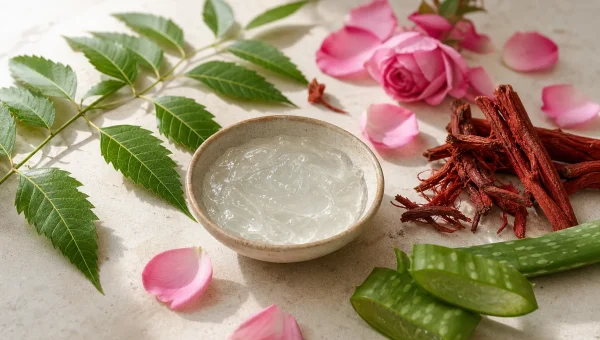
Herbs: 5 g lodhra bark and 2–3 g neem leaf.
Preparation: Boil in 400 ml water and reduce to about 200 ml. Cool completely. Strain through clean muslin until no particles remain. Use only as an external vulvar rinse once daily for a short period, and stop if burning, dryness, rash, or irritation occurs.
Best fit: Kapha-type heaviness, external stickiness, or discharge-associated discomfort after appropriate medical evaluation. This is not a treatment for confirmed BV, yeast infection, STI, or pelvic infection unless a clinician has also addressed the medical diagnosis.
Pitta-Cooling External Wash
Herbs: 2–3 g white sandalwood powder tied in clean muslin, or a practitioner-prepared sandalwood decoction.
Preparation: Steep in water that has been boiled and cooled until lukewarm, then strain carefully. Use externally only. Avoid abrasive powders directly on sensitive tissue.
Best fit: Pitta-type external heat, burning, or mild irritation after serious causes have been ruled out. Do not use if there is ulceration, open skin, active bleeding, severe pain, or suspected infection.
Vata-Dryness Care
Approach: For dryness, the priority is to avoid harsh soaps, perfumed intimate products, internal washing, and repeated friction. Water-based or silicone-based lubricants and vaginal moisturizers may be appropriate, especially in perimenopause and menopause. Small amounts of plain sesame or coconut oil may be used only on the external vulvar skin if tolerated, but oils can damage latex condoms and may irritate some people.
Best fit: Vata-type dryness, thinness, and discomfort. Persistent dryness, painful intercourse, urinary symptoms, bleeding, or postmenopausal changes should be discussed with a gynecologist because effective non-hormonal and hormonal options may be available.
Ayurvedic Support for HPV and Cervical Screening
Ayurveda can support general health, tissue resilience, digestion, sleep, and inflammatory balance, but abnormal Pap smears, positive high-risk HPV tests, cervical dysplasia, bleeding after intercourse, or visible cervical lesions require conventional follow-up. Cervical screening, HPV testing, colposcopy when indicated, and timely treatment of precancerous changes are essential preventive care.
From an Ayurvedic perspective, the supportive plan is usually built around rakta-pitta balance, immune resilience, healthy elimination, avoidance of smoking, adequate sleep, menstrual regularity, and minimizing local irritants. Herbs such as Guduchi, Manjistha, Shatavari, Lodhra, or Ashoka may be selected only according to the individual pattern; they should never be presented as replacements for cervical screening or as cures for HPV.
Our guide on the Ayurvedic menopause transition covers the specific challenges of dryness, tissue sensitivity, and Vata changes in the perimenopausal and postmenopausal period.
Safety and When to Seek Medical Care
Any vaginal or cervical symptom that persists for more than a few days, recurs repeatedly, appears during pregnancy, involves pelvic pain, fever, sores, bleeding, foul odour, green or yellow discharge, pain with sex, urinary pain, or postmenopausal bleeding should be evaluated by a qualified healthcare provider. STI testing is appropriate for new or changing symptoms. Consult a qualified Ayurvedic practitioner before taking internal herbs, especially during pregnancy, breastfeeding, fertility treatment, hormone-sensitive conditions, liver disease, autoimmune disease, diabetes, anticoagulant use, or prescription medication use.
Home vaginal pH strips can sometimes help a clinician interpret recurrent discharge patterns, because pH above 4.5 is part of bacterial vaginosis assessment and yeast infection usually has normal acidic pH. A pH strip cannot diagnose the cause by itself, and it should not be used to justify internal douching or delayed medical care.
The recurrent BV case that failed four rounds of metronidazole is my story too. Antibiotics kill the pathogens but nothing protects or restores the lactobacillus-dominant environment. My Ayurvedic practitioner prescribed Triphala Kwath for vaginal application and the recurrence stopped.
My grandmother used to swear by this and now I understand why. The part about microbiome specifically matches what I observed in her health over the years.
Which practitioners are qualified to administer Yoni Prakshalana? I’m concerned about safety of herbal preparations applied internally without proper training. How do I find someone who has actually been trained versus just reading about it?
The probiotic seed argument is more compelling than I expected. The traditional preparation methods for the herbal formulations apparently preserve beneficial bacterial populations that help recolonize rather than just sterilize. That’s a fundamentally different approach.
My gynecologist has no familiarity with Ayurvedic approaches and I’ve been managing recurrent yeast infections with over-the-counter treatment for years. The Tridosha Yoni Vyapat classification is the first framework that explains why sometimes the standard treatment doesn’t work.
I found the explanation of Yoni Prakshalana very clear especially the part about external vulvar wash only
The part about Cervical Health and Yoni Prakshalana feels realistic. I would like to know how long to try it before judging results.
The traditional classification of Yoni Vyapat into twenty types including different presentations based on dosha predominance is a level of specificity that modern gynecology doesn’t have. Bacterial vaginosis is one category. Within that, Ayurveda apparently distinguishes multiple presentations.
Question: Is the Kapha reducing wash safe to use while breastfeeding
I want to read this carefully before sharing with my patients. The credentialing question matters a lot here. What specifically should I look for in a practitioner who claims competency in Yoni procedures?
Went through exactly this process last year. The microbiome made a difference by week 3 and by month 2 I was back to sleeping through the night.
I tried the Pitta cooling wash after noticing burning and felt a soothing sensation
My grandmother’s generation used these preparations without naming them as medicine. It was just what women did. The medical justification matters for convincing people to take it seriously, but the knowledge was never lost, just dismissed.
It would be useful to see more data on how Lodhra affects vaginal pH over time
This makes sense for Cervical Health and Yoni Prakshalana. Would be useful to see a short checklist next.
The article made me think about checking my vaginal pH at home with simple strips
I appreciate that this addresses a real gap but I’d want to see at least some clinical outcome data for the specific preparations mentioned. The framework is compelling but compelling frameworks without outcome data have led medicine astray before.
I wonder if the Vata nourishing oil can be combined with a moisturizing cream for extra comfort
The distinction between internal irrigation and external wash is important for safety
Is Yoni Prakshalana safe to do at home or does it require clinical administration? I ask because the preparation complexity and safety considerations seem to vary widely in what I’ve read online.
I have recurrent BV and am interested in trying Lodhra as an astringent herb
Understanding the dosha involvement helped me see why my discharge changes during my cycle
I would like to know if any of these herbs could interact with birth control pills
The reminder to still see a gynecologist for abnormal Pap smears is a responsible note
For Cervical Health and Yoni Prakshalana, consistency seems like the hard part. I appreciate that it does not oversell the result.
Shatavari’s role in supporting cervical mucus quality seems promising for dryness
For Cervical Health and Yoni Prakshalana, consistency seems like the hard part. The timing advice is the part I would start with.
For Cervical Health and Yoni Prakshalana, consistency seems like the hard part. This would be easier to follow with a one-week sample plan.
For Cervical Health and Yoni Prakshalana, consistency seems like the hard part. The safety notes could be expanded a little.
For Cervical Health and Yoni Prakshalana, consistency seems like the hard part. The main idea is clear even if someone is new to Ayurveda.
For Cervical Health and Yoni Prakshalana, consistency seems like the hard part. This feels more usable than a long list of herbs.
For Cervical Health and Yoni Prakshalana, consistency seems like the hard part. The examples make the advice less abstract.
For Cervical Health and Yoni Prakshalana, consistency seems like the hard part. I would like to know how long to try it before judging results.
For Cervical Health and Yoni Prakshalana, consistency seems like the hard part. Good starting point for a cautious reader.
Reading this later and the Cervical Health and Yoni Prakshalana advice still feels relevant. A few more examples would still help.
Reading this later and the Cervical Health and Yoni Prakshalana advice still feels relevant. The practical details matter more than people think.
Reading this later and the Cervical Health and Yoni Prakshalana advice still feels relevant. I would still ask a practitioner before changing medicines.
Reading this later and the Cervical Health and Yoni Prakshalana advice still feels relevant. The article avoids making it sound like a quick fix.
Reading this later and the Cervical Health and Yoni Prakshalana advice still feels relevant. Small daily changes are easier to follow than a perfect plan.
Reading this later and the Cervical Health and Yoni Prakshalana advice still feels relevant. Would be useful to see a short checklist next.
Reading this later and the Cervical Health and Yoni Prakshalana advice still feels relevant. This is the kind of detail readers can test slowly.
Reading this later and the Cervical Health and Yoni Prakshalana advice still feels relevant. The timing advice is the part I would start with.
Reading this later and the Cervical Health and Yoni Prakshalana advice still feels relevant. I appreciate that it does not oversell the result.
Reading this later and the Cervical Health and Yoni Prakshalana advice still feels relevant. This would be easier to follow with a one-week sample plan.
Reading this later and the Cervical Health and Yoni Prakshalana advice still feels relevant. The safety notes could be expanded a little.
Reading this later and the Cervical Health and Yoni Prakshalana advice still feels relevant. The main idea is clear even if someone is new to Ayurveda.
Reading this later and the Cervical Health and Yoni Prakshalana advice still feels relevant. This feels more usable than a long list of herbs.
Reading this later and the Cervical Health and Yoni Prakshalana advice still feels relevant. The examples make the advice less abstract.
Reading this later and the Cervical Health and Yoni Prakshalana advice still feels relevant. I would like to know how long to try it before judging results.
Reading this later and the Cervical Health and Yoni Prakshalana advice still feels relevant. Good starting point for a cautious reader.
The Cervical Health and Yoni Prakshalana explanation is clearer than most short posts. A few more examples would still help.
The Cervical Health and Yoni Prakshalana explanation is clearer than most short posts. The practical details matter more than people think.
The Cervical Health and Yoni Prakshalana explanation is clearer than most short posts. Small daily changes are easier to follow than a perfect plan.
The Cervical Health and Yoni Prakshalana explanation is clearer than most short posts. Would be useful to see a short checklist next.
The Cervical Health and Yoni Prakshalana explanation is clearer than most short posts. I would still ask a practitioner before changing medicines.
The Cervical Health and Yoni Prakshalana explanation is clearer than most short posts. This is the kind of detail readers can test slowly.
The Cervical Health and Yoni Prakshalana explanation is clearer than most short posts. The article avoids making it sound like a quick fix.