
When nails keep peeling, splitting at the tips, or breaking before they reach a comfortable length, the first impulse is often to reach for a harder polish, a stronger supplement, or another cuticle serum. Ayurveda asks a wider question: what are the nails showing about dryness, nourishment, circulation, digestion, and the deeper tissues that support growth?
Your nails are not just decorative keratin plates waiting to be painted. In modern anatomy, nails are made largely of keratin and are healthiest when they are smooth, even in color, and free from persistent grooves, swelling, pain, or distortion. In Ayurvedic physiology, the nails, called Nakha, are discussed in close relationship with Asthi Dhatu, the bone tissue. Classical Ayurvedic teaching connects nail strength and nail loss or breakage with the state of Asthi Dhatu, and Asthi in turn nourishes the next tissue, Majja Dhatu. This is why Ayurvedic nail care looks beyond the surface and asks whether the body is receiving enough warmth, oiliness, minerals, protein, rest, and digestive support.
This guide will help you read common nail patterns through an Ayurvedic lens, then apply four practical treatments that support dry, brittle, ridged, or peeling nails while keeping appropriate medical caution in place.
Reading Your Nails: A Gentle Ayurvedic Self-Assessment
Nail observation can be a useful home check, but it is not a diagnosis by itself. Look at your nails without polish for several days in natural light. Notice the color of the nail bed, the texture of the plate, the condition of the cuticle, whether the nail peels in layers, and whether any change is sudden, painful, one-sided, or worsening. In Ayurveda, these signs are read together with appetite, digestion, sleep, bowel habits, menstrual history when relevant, stress, diet, and constitution.
Vertical Ridges
Fine vertical ridges are commonly seen with dryness, aging, frequent washing, harsh removers, or repeated minor nail stress. Ayurvedically, they fit a Vata pattern because Vata is dry, rough, light, mobile, and irregular. When vertical ridges appear with dry skin, cracking cuticles, constipation, anxiety, disturbed sleep, or a diet dominated by cold and dry foods, the first Ayurvedic response is not more hardener; it is more steady nourishment, warmth, and unctuous care.
White Spots
Small white spots are often caused by minor stress or injury to the nail while it is forming. They are not a reliable home test for calcium deficiency. From an Ayurvedic perspective, repeated white flecks alongside brittle nails, weak digestion, and poor appetite can still invite a closer look at Agni, food quality, and mineral-rich nourishment. The practical response is to protect the nail from trauma, avoid aggressive manicures, moisturize the nail folds, and improve digestion rather than assuming one single nutrient is always responsible.
Pale, Dull, or Bluish Nails
Pale nails can suggest depleted vitality in an Ayurvedic reading, especially when accompanied by fatigue, coldness, dizziness, or weakness. A bluish tint can be more concerning, especially if it is new or persistent, because nail color can reflect circulation and oxygenation. Ayurveda may frame this as poor tissue nourishment, but sudden blue discoloration, breathlessness, chest discomfort, faintness, or marked fatigue should be assessed by a healthcare provider.
Spoon-Shaped or Downward-Curving Nails
Spoon-shaped nails that dip inward are called koilonychia in modern medicine and are often associated with iron deficiency or poor circulation. Pronounced downward curving with enlarged fingertips can resemble clubbing, which may be associated with low oxygen states and should not be managed only with home remedies. Ayurvedically, these patterns call for deeper assessment of Rakta, Asthi, Vata, and circulation, but medically significant nail shape changes deserve prompt professional evaluation.
Horizontal Lines
Deep horizontal grooves across the nail are commonly known as Beau’s lines. They appear when nail growth is temporarily interrupted by illness, injury, major stress, nutritional disruption, or certain medical treatments. These lines move outward as the nail grows. Ayurvedically, they are a visible reminder that the body paused growth to prioritize recovery, so the treatment emphasis is rebuilding strength, digestion, regular meals, and sleep.
The Root of Brittle Nails: Asthi Dhatu, Vata, and Nourishment
Ayurveda links weak, breaking nails with the condition of Asthi Dhatu and with aggravated Vata in the tissues. Classical descriptions of asthi decrease include changes such as weakness of teeth, hair, and nails, looseness or discomfort in joints, and dryness. Because Vata is dry, rough, cold, and irregular, brittle nails often appear in people who are under-rested, irregular with meals, exposed to frequent travel, overusing stimulants, eating too many dry or cold foods, or repeatedly stripping the nails with water, detergents, sanitizers, and removers.
The Ayurvedic answer is twofold: nourish from the outside with oil, moisture, and protection, and nourish from the inside with warm cooked meals, healthy fats, adequate protein, mineral-rich foods, and steady digestion. Topical care can soften cuticles and reduce splitting, but lasting improvement comes when the new nail growing from the matrix receives better internal support.
Four Ayurvedic Nail Strengthening Treatments
These treatments are simple, topical, and suitable for most people when used gently. Do a small patch test first, avoid applying herbs over broken or inflamed skin, and stop any treatment that causes burning, itching, rash, swelling, or irritation.
Treatment 1: Warm Sesame Oil Nail Soak
Warm sesame oil is the classic starting point for dry, ridged, Vata-type nails. Sesame seed and sesame oil have a long place in Ayurvedic body care, and external oleation, called Snehana, is especially appropriate when the pattern is dryness, roughness, cracking, and brittleness. This soak helps soften the nail folds, reduce cuticle tearing, and make the nail plate less prone to peeling from daily friction.
What you need:
- 2 tablespoons cold-pressed sesame oil
- A small heat-safe bowl
- Warm water for indirect warming
- 1 drop lavender essential oil, optional and only if well tolerated
How to do it: Place the sesame oil bowl inside a larger bowl of warm water for a few minutes. The oil should feel comfortably warm, never hot. Soak the fingertips for 10 to 15 minutes, then massage the oil into each nail, cuticle, and fingertip for one to two minutes per hand. Blot away excess oil but do not wash with soap afterward. Use this four to five nights per week for three weeks, especially before sleep.
Treatment 2: Amla and Neem Nail Pack
This treatment is best for nails and nail folds that look heat-irritated, dull, mildly discolored from polish, or prone to roughness around the edges. Amalaki, or Amla, is described in the Ayurvedic Pharmacopoeia as a cooling rasayana fruit and contains ascorbic acid and tannins. Nimba, or Neem, is bitter, cleansing, and traditionally used in skin and wound-care contexts. This is a supportive nail pack, not a replacement treatment for a fungal nail infection.
What you need:
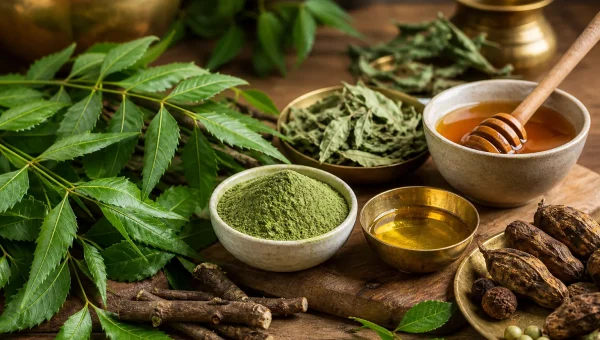
- 1 teaspoon Amla powder
- 1/4 teaspoon Neem powder
- Enough rose water, aloe gel, or plain water to make a paste
How to do it: Mix the powders with a small amount of liquid until you have a smooth paste. Apply a thin layer over the nails and surrounding skin. Leave it on for 8 to 10 minutes, then rinse gently with warm water and apply a few drops of sesame oil, almond oil, or plain moisturizer. Use once weekly. If the nail is thickened, crumbly, lifting, painful, or persistently yellow, consult a healthcare provider rather than relying on a cosmetic mask.
Treatment 3: Triphala Hand and Nail Rinse
Triphala means “three fruits” and traditionally combines Amalaki, Bibhitaki, and Haritaki. Its astringent quality makes it useful as an occasional rinse when the nails feel soft, waterlogged, or prone to peeling after frequent washing. The purpose is not to force minerals through the nail plate, but to give the nail surface a gentle herbal rinse and then seal with oil or moisturizer.
What you need:
- 1 teaspoon Triphala powder
- 1 cup warm water
- A fine strainer or cloth, optional
How to do it: Stir Triphala powder into warm water and let it steep for five minutes. Strain if you prefer a smoother rinse. Soak the fingertips for 10 minutes, rinse lightly, pat dry, and follow with sesame oil or a simple hand cream. Use once weekly. Triphala may lightly stain, so this is best done at night and not immediately before applying pale nail polish.
Treatment 4: Ashwagandha Ghee Cuticle Balm
This balm is best for chronically dry cuticles, hangnails, and brittle nails that worsen with stress and poor sleep. Ashwagandha is listed in the Ayurvedic Pharmacopoeia as a rasayana and balya herb with Vata-Kapha-pacifying action. Ghee provides an unctuous base that softens the nail folds and supports the Ayurvedic goal of countering dryness with nourishing oiliness.
What you need:
- 2 tablespoons ghee
- 1/2 teaspoon Ashwagandha powder
- A clean small glass jar
How to do it: Warm the ghee on very low heat until just liquid. Stir in the Ashwagandha powder, turn off the heat, and let it settle. For a smoother balm, strain through clean cloth while still liquid. Store in a clean jar. Massage a rice-grain-sized amount into the cuticles and nail folds before bed. Keep refrigerated and use within one to two weeks. Avoid this treatment if it irritates your skin or if you are sensitive to either ingredient.
Dietary Support for Nails: Feeding Asthi Dhatu from Within
No topical treatment fully compensates for chronic undernourishment. Nails grow from the matrix, so the new nail depends on overall nutritional status, digestion, protein intake, micronutrients, circulation, and daily habits. Ayurveda emphasizes warm, digestible, nourishing food for Vata-type brittleness and steady Agni for proper tissue formation.
Sesame seeds: Whole sesame seeds are a calcium-rich food and are traditionally valued in Ayurveda as Tila. Use them in a digestible form: lightly toasted and ground, blended into chutney, added as tahini, or sprinkled over warm food. One to two teaspoons daily is a gentle starting amount; increase only if digestion remains comfortable.
Amla: Amla is a traditional rasayana fruit and a source of vitamin C. Vitamin C is required for collagen biosynthesis, which matters for the connective tissue environment around the nail matrix. Fresh Amla, dried Amla, or a small amount of Amla powder in warm water can be used according to tolerance. People with acidity, loose stools, or medication concerns should use it with guidance.
Warm cooked meals with healthy fats: For Vata-dominant nail weakness, favor warm, moist, well-cooked meals such as kitchari, dal with ghee, soups, stews, cooked grains, root vegetables, sesame chutney, and well-spiced seasonal vegetables. Very dry, cold, raw, skipped, or irregular meals can worsen the same dryness and instability that shows up in the nails.
Adequate protein and minerals: Nails are keratin-rich structures, so meals should include sufficient protein from tolerated foods such as dal, beans, lentils, dairy if suitable, eggs if part of the diet, tofu, tempeh, nuts, seeds, or other appropriate sources. Iron, zinc, calcium, and overall energy intake should be considered when nails are weak, slow-growing, pale, or spoon-shaped.
Reduce drying habits: Frequent water exposure, harsh detergents, acetone removers, repeated gel polish removal, and aggressive cuticle cutting can all worsen splitting and peeling. Wear gloves for cleaning, moisturize after washing, avoid cutting live cuticle tissue, and give nails polish-free breaks when they are already fragile.
Safety and When to Seek Care
Consult a qualified Ayurvedic practitioner or healthcare provider if nail changes are sudden, painful, spreading, associated with swelling, bleeding, nail lifting, dark streaks, persistent yellowing or crumbling, spoon-shaped nails, clubbing, blue discoloration, severe fatigue, dizziness, shortness of breath, or suspected infection. Also seek guidance before taking oral herbs, mineral preparations, or concentrated supplements if you are pregnant, breastfeeding, managing a chronic illness, taking medication, or treating a child. Avoid untested Ayurvedic products, especially metal or mineral preparations, unless they are prescribed and verified by a qualified professional.
A Note on Patience
Fingernails grow slowly, roughly a few millimeters per month, so stronger nails appear gradually from the base rather than instantly at the tip. In the first two to four weeks, the earliest changes are usually softer cuticles, less peeling, fewer hangnails, and less breakage. A full visible change in the nail plate takes several months of steady care.
Ayurvedic nail care is the practice of listening to small signs and responding with oil, warmth, nourishment, rhythm, and appropriate medical awareness. Start with the treatment that best matches your nail pattern: sesame oil for dryness and ridges, Amla-Neem for heat and irritation, Triphala rinse for peeling softness, or Ashwagandha ghee balm for stressed, dry cuticles. Give the routine enough consistency for the new nail to tell a different story.
References
- Mayoclinic (mayoclinic.org)
- My (my.clevelandclinic.org)
- Charaka Samhita — Asthi dhatu
- Satyori (satyori.com)
- Charaka Samhita — Vatavyadhi Chikitsa
- My (my.clevelandclinic.org)
- My (my.clevelandclinic.org)
- Mayoclinic (mayoclinic.org)
- My (my.clevelandclinic.org)
- MedlinePlus
- Growth rate of human fingernails and toenails in healthy American young adults (2010), PubMed
- Ayurvedic Pharmacopoeia of India
- NIH Office of Dietary Supplements
- Functional and Nutraceutical Significance of Amla (Phyllanthus emblica L.): A Review (2022), PubMed Central
- Ayurvedic Pharmacopoeia of India
- NIH Office of Dietary Supplements
- Webprod (webprod.hc-sc.gc.ca)
- Therapeutics Role of Azadirachta indica (Neem) and Their Active Constituents in Diseases Prevention and Treatment (2016), PubMed Central
- Hopkinsmedicine (hopkinsmedicine.org)
- NCCIH
The bluish tinge at the nail base description matches my nails exactly. My Vata imbalance shows everywhere but I never connected it to the nail appearance until reading this.
Following this protocol now.
I work as a beautician and nail assessment is something we observe every day without understanding the clinical language behind it. This article is going on the reading list for my staff training.
The biotin supplement industry has made billions on nail health claims that clearly don’t work for most people. The Ayurvedic dhatu-based explanation is more consistent with why biotin often fails.
The connection between nail curl and asthi dhatu assessment is something my Ayurvedic practitioner in Coimbatore taught me. Good to see it written with clinical context.
The traditional context helps understand why it’s done this way. Not just ‘eat this herb’ 🌿
Does the nail assessment change significantly based on whether someone is taking iron supplements? My nails show several Vata signs but I’m also iron deficient which might be confounding the picture.
The section on vertical ridges really made me think about my own snack habits.
The safest part of the Nail Care advice is keeping it simple. The timing advice is the part I would start with.
Thanks!
The white spots are commonly attributed to minor nail trauma rather than any systemic cause by dermatologists. The Ayurvedic interpretation as air bubbles from Vata is different. Which should I believe?
After reading about the bluish tint at the nail base I checked my own nails in morning light.
I came here for nail care tips and ended up reading a whole post about systemic health assessment. The nail as a window to internal health is a genuinely compelling framing.
Does this apply to children or only adults?
A simple sesame oil soak sounds easy to add to a night routine.
Mixing amla and neem powders with rose water feels like a gentle mask for tired nails.
What about toenails specifically? The article focuses on fingernails but toenail assessment seems like it would provide different information given the circulation challenges to the feet.
What’s the typical duration of the treatment before reassessing?
Useful post
The section on dosage was the most practically useful for me
tbh wasnt expecting much from this but the specifics are actually helpful
The brittle nails + dry skin combination is there one treatment that addresses both?
Would love a follow-up article going deeper on the herb preparation methods
Does the nail color diagnosis work differently for darker skin tones?
Did this for 6 weeks exactly as described, going to update here with results
The connection between gut health and this condition is the angle most allopathic doctors miss ✨
The dosage range given is wide. Is there a way to determine where in the range I should start?
Are there clinical studies backing the specific herb combination you mentioned?
Same here
started this 3 weeks ago, too early to say but the process itself feels right
Nice article but no mention of silica-rich herbs for nail strength. Bamboo extract?
Can this be combined with modern medication or is it better standalone?
Doing this
The triphala mineral soak description reminded me of herbal tea rinses I’ve seen for hair.
My nails are ridged AND have white patches. Is that double Vata or something else? 🌿
This explains something I’ve experienced but couldn’t name. Good validation
Using ashwagandha in ghee for cuticles seems like a nice way to bring warmth to dry skin.
Anyone else tried this for longer than 6 months? Wondering about long-term effects
Is this suitable for elderly patients or does the dosage need adjustment?
good info, sharing with my father who has been looking for something like this
Switching from raw salads to warm cooked meals with ghee could be the change my nails need.
Where do you recommend sourcing the herbs mentioned here in India?
I tried a similar approach last year but without the specific sequencing. Wonder if that’s why it didn’t work
Sorry off-topic but anyone here used Ayurveda for hair fall? Would love recommendations
The white spots diagnosis section was an eye opener. Was told its calcium deficiency but Vata angle makes more sense
Seeing how long it takes for a nail to fully grow reminds me to be patient with any new habit.
Been following Ayurveda for 5 years and this article still taught me something new
I appreciate how specific the instructions are compared to most Ayurveda articles
The Ayurvedic framing made this topic much easier to understand than the Western medical version
Bookmarked for future reference.
How long typically before seeing results with this approach?
Checking nails without polish for a few days can reveal the real condition underneath.
The ridges on nails mine have been there for years. Vata imbalance or something systemic?
Not skeptical about Ayurveda generally but some claims here need stronger evidence
The contraindications section was important and often missing from similar articles
Good information on this topic.
Which specific oil works for nails that peel from the edges? Mine break before they can grow
My doctor dismissed this as pseudoscience. Going to try it anyway and report back
Shared this with my Ayurveda practitioner. She agreed with most points
Is the morning or evening timing more important for this protocol overall?
The seasonal variation angle is underused in most health content. Good to see it here
applied mustard oil on nails overnight for 2 weeks, actually helps with dryness and peeling
Never thought nail health would connect to gut health like this. The Agni angle is new to me
Does this protocol change if someone is pregnant or breastfeeding?
Will try
Tried the neem oil suggestion for 3 weeks, nails look better but smell lingers even after washing
Helpful article, thank you. 🌿
Tried this, results were good.
Interesting perspective here.
Will try this approach soon.
Thanks for the clear explanation.
This helped clarify my doubts.
Useful and actionable. 🙏
Good article on this subject. #55
Good article on this subject. #56
Good article on this subject. #57
Good article on this subject. #58