
A patchy or dry beard can be partly genetic, especially where follicles are naturally sparse. The part you can influence is the condition of the skin, the softness and strength of the hair shaft, and the irritation, clogging, and breakage that make a beard look thinner than it is. Ayurveda approaches beard care as a steady routine: oiling, gentle cleansing, dosha-specific adjustments, and nourishment from food and practitioner-guided herbs.
In Ayurvedic language, beard and moustache hair may be discussed with kesh, loma, shmashru, romakupa, and the visible signs of tissue nourishment. Classical descriptions of asthi kshaya include falling or weakening of hair, body hair, beard and moustache hair, nails, and teeth. For practical care, that means a good beard routine should not be limited to surface shine. It should support the skin under the beard, keep the channels clear, reduce dryness and heat, and avoid harsh cleansing that damages the hair shaft.
The Beard Oil: A Gentle Bhringraj-Amla Infusion
A useful Ayurvedic beard oil should be simple, well-strained, skin-safe, and made in small batches. This home method is inspired by the Ayurvedic idea of preparing herbs in an oil base, but it is a household infusion rather than a full pharmacy-grade taila paka.
Base recipe: Bhringraj-Amla Beard Oil
Ingredients:
- 100 ml cold-pressed sesame oil for dry or Vata-type beards; use coconut oil instead if the skin is heat-prone, red, or Pitta-dominant.
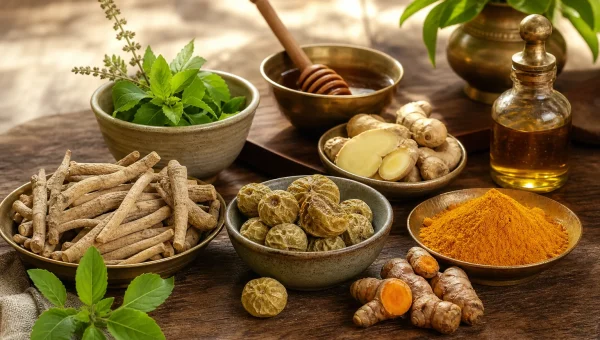
- 2 tablespoons Bhringraj powder (Eclipta alba / Eclipta prostrata), a traditional hair-care herb used in classical hair-oil preparations.
- 1 tablespoon Amla powder (Emblica officinalis / Phyllanthus emblica), a cooling rasayana fruit used for tissue nourishment and Pitta balance.
- 1 teaspoon Brahmi powder (Bacopa monnieri), useful when stress, heat, or scalp-and-skin sensitivity are part of the picture.
- 1/2 teaspoon Fenugreek seed powder (Methi, Trigonella foenum-graecum), optional, for slip and conditioning.
- 1/4 to 1/2 teaspoon Neem leaf powder (Nimba, Azadirachta indica), optional, for oily, itchy, or flake-prone skin; omit it if your skin is very dry or sensitive.
- 5 drops rosemary essential oil, optional; omit essential oils if your skin is reactive, recently shaved, broken, or inflamed.
Preparation method:
- Combine the oil and herb powders in a heavy-bottomed pan or double boiler.
- Warm on the lowest possible heat for 45 to 60 minutes, stirring regularly. The oil should stay warm and calm, not smoke, fry, or bubble aggressively.
- When the oil darkens and the herbs have infused, remove it from heat and let it cool fully.
- Strain through clean muslin or fine cheesecloth. Squeeze gently so the oil comes through while the powder residue remains behind.
- Add rosemary essential oil only after the oil has cooled, if using.
- Pour into a clean dark-glass bottle, label with the date, and store away from direct sunlight.
Make small batches and use the oil while it smells fresh and clean. Discard it if it develops a sour odor, visible contamination, unusual cloudiness, or skin irritation after application. Refrigeration can help a homemade oil stay fresh longer, especially in hot weather.
Application Protocol
How you apply the oil matters as much as the formula. Beard oil should reach the skin under the hair, because dryness, flakes, and blocked follicles usually start there.
Daily application:
- Rinse or wash the face with lukewarm water. Pat the beard mostly dry, leaving it slightly damp.
- Place 3 to 6 drops of oil in your palm. Use less for a short beard or oily skin, and more for a longer, drier beard.
- Rub your palms together and apply first to the skin beneath the beard, not only to the hair surface.
- Massage with the fingertips in small circular movements for about one minute, covering the chin, jawline, moustache area, and sideburns.
- Work the remaining oil through the beard from root to tip.
- Comb gently with a wide-tooth comb in the direction of growth. Avoid pulling through knots; loosen them with the fingers first.
Weekly deep treatment:
- Apply 1/2 teaspoon oil for a short beard or about 1 teaspoon for a longer beard.
- Massage the skin under the beard for two to three minutes.
- Wrap the lower face with a warm, damp towel for 10 to 15 minutes.
- Remove the towel and cleanse gently. A thin paste of chickpea flour (besan) and water may be used as a non-soap wash if your skin tolerates it.
- Rinse thoroughly and finish with one or two drops of oil if the beard feels dry afterward.
The Beard Balm: Hold, Hydration, and Surface Protection
Oil is best for the skin and roots. Balm is best for shape, surface conditioning, and reducing the rough look of a dry beard. This balm keeps the formula simple and uses the infused oil above as the herbal part of the preparation.
Ingredients:
- 2 tablespoons unrefined shea butter or cocoa butter
- 1 tablespoon beeswax pellets
- 1 tablespoon coconut oil
- 1 teaspoon Bhringraj-Amla Beard Oil
- 1 to 2 drops sandalwood essential oil, optional, only if already tolerated
Preparation:
- Melt the beeswax and shea butter in a double boiler.
- Remove from heat and stir in coconut oil and the Bhringraj-Amla Beard Oil.
- Add sandalwood essential oil only if using, and only after the mixture has cooled slightly.
- Pour into a small tin or wide-mouth glass jar.
- Let it cool and solidify at room temperature.
Use a pea-sized amount after oiling, or on its own when you need light hold. Warm the balm between your palms until it softens, then work it through the beard and shape gently. Use less balm in humid weather or if the beard becomes greasy.
Internal Support for Beard Quality
Ayurveda does not treat beard growth as a matter of one miracle herb. Internal herbs should be chosen according to constitution, digestion, sleep, stress, skin type, medications, and medical history. Do not combine multiple internal herbs simply because they are listed as hair-supportive or rejuvenative.
| Herb | Ayurvedic role | Best suited pattern |
|---|---|---|
| Amla / Amalaki | Cooling rasayana, traditionally used for Pitta balance and tissue nourishment. | Heat-prone skin, premature greying tendency, dryness with irritation. |
| Bhringraj | Traditional hair-care herb used in classical oil preparations and internal formulations. | Dull, dry, or weak hair when chosen by a practitioner as part of a broader plan. |
| Ashwagandha | Balya, rasayana, and Vata-Kapha balancing herb. | Stress-related depletion, poor recovery, Vata aggravation, and weakness patterns. |
| Brahmi | Medhya and rasayana herb used when the nervous system and Pitta-type sensitivity need support. | Stress, heat, disturbed sleep, and sensitivity patterns. |
| Triphala | Classical three-fruit formula commonly used when digestion and elimination need support. | Heaviness, irregular digestion, coated tongue, sluggish routine, or Kapha-type congestion. |
Give any topical beard routine at least 8 to 12 weeks before judging it. Beard changes are slow, and early improvements usually appear first as less dryness, less itch, easier combing, and better texture. Coverage changes should be tracked with monthly photos taken in the same lighting and at the same beard length.
Dosha-Specific Beard Problems and Solutions
Dosha-based adjustment helps you avoid using the same heavy oil or herb blend for every beard type. Match the routine to the skin under the beard.
Vata beard issues: Dry, brittle, frizzy hair; rough texture; breakage while combing; irregular patches that look worse when the beard is dehydrated.
Vata solution: Use sesame oil as the base, apply a small amount daily, and keep cleansing gentle. Warm towel treatments are especially useful for this pattern. Food should not be excessively dry, cold, or irregular. If internal support is needed, a practitioner may consider strengthening and Vata-balancing herbs such as Ashwagandha.
Pitta beard issues: Redness, heat, burning sensation, sensitivity after shaving, early greying tendency, and inflamed bumps under the beard.
Pitta solution: Use coconut oil as the base, keep the formula simple, and emphasize Amla. Avoid hot water, aggressive scrubbing, and strong essential oils. Neem may be useful in small amounts when oiliness, itching, or bumps accompany heat, but it should not be overused on dry or sensitive skin.
Kapha beard issues: Oiliness, heaviness, clogged pores, flakes, dullness, and slow-looking growth because the beard sits flat and congested.
Kapha solution: Use less oil, cleanse more regularly, and keep balm light. A small amount of Neem in the oil and a besan wash once or twice weekly may help keep the skin clear if tolerated. Reduce very heavy layering products and avoid leaving excess balm on the skin overnight.
Common Mistakes
Most beard problems are made worse by harsh cleansing, over-oiling, or constantly changing products before the skin has time to settle.
Washing the beard with harsh soap. Strong soap and aggressive face washes can leave the beard rough and the skin tight. Use a mild cleanser, a tolerated non-soap wash, or plain lukewarm rinsing when the beard is not dirty.
Ignoring the skin underneath. Beard hair grows from follicles in the skin. Every oil application should begin at the roots and skin, then move outward to the hair shaft.
Using too much oil. More oil is not automatically better. Excess oil can trap debris, flatten the beard, and aggravate Kapha-type congestion. A few drops used consistently are better than soaking the beard occasionally.
Trimming too early and too aggressively. New growth often looks uneven for several weeks. Allow at least 4 to 6 weeks of steady growth before shaping, then trim conservatively.
Expecting overnight results. Oils can improve softness quickly, but visible changes in beard appearance require steady grooming, skin care, sleep, nutrition, and time.
The Weekly Schedule
A beard routine works best when it is simple enough to repeat. Use this schedule as a practical starting point and adjust for your skin response.
- Daily morning: Rinse or cleanse lightly, apply 3 to 6 drops of beard oil, massage the skin, then comb gently.
- Daily styling: Use a pea-sized amount of balm only if the beard needs hold or surface control.
- Two to three times weekly: Cleanse the beard with a mild cleanser or tolerated besan paste, especially if you use balm.
- Once weekly: Do a warm towel oil treatment for 10 to 15 minutes.
- Monthly: Take comparison photos, clean your comb, check the oil for freshness, and prepare a new small batch if needed.
- Internal herbs: Use only when recommended by a qualified Ayurvedic practitioner or healthcare provider, especially if you take medication or have a medical condition.
A good beard is a long-term grooming project, not a one-time fix. The Ayurvedic approach is consistent care: keep the skin calm, keep the hair conditioned, match the oil to the dosha pattern, and support the body from within when appropriate.
Disclaimer: This content is for informational purposes only and is not a substitute for professional medical advice. Sudden beard thinning, severe dandruff, painful bumps, infection, or major changes in hair growth may indicate an underlying medical condition. Consult a qualified healthcare provider or Ayurvedic practitioner before starting internal herbs. Perform a patch test with any new oil, herb, balm, or essential oil before applying it to the full face.
Related Reading
Continue with these adjacent Ayurveda routines for hormones, eye care, and delicate facial skin.
- Hormone-Disrupting Foods: What Ayurvedic Texts Warn Women to Avoid
- Ayurvedic Eye Care: 5 Remedies for Screen-Tired Eyes
- Ayurvedic Under-Eye Care: Treating Dark Circles and Puffiness with Netra Vitality
References
- Healthline (healthline.com)
- NCCIH
- Easyayurveda (easyayurveda.com)
- Ayurvedic Pharmacopoeia of India
- A comparative evaluation of medicated oils prepared using ayurvedic and modified processes (2009), PubMed Central
- Ayurvedic Pharmacopoeia of India
- Ayurvedic Pharmacopoeia of India
- Revisiting Trigonella foenum-graecum L.: Pharmacology and Therapeutic Potentialities (2022), PubMed Central
- Rosemary oil vs minoxidil 2% for the treatment of androgenetic alopecia: a randomized comparative trial (2015), PubMed
- Art of Prevention: Essential Oils – Natural Products Not Necessarily Safe (2021), PubMed Central
I was looking for a plain explanation of Beard Care. This feels more usable than a long list of herbs.
Is the castor oil and bhringraj combination recommended here suitable for men who are also experiencing some premature greying in the beard? I noticed you covered scalp greying separately but wondering if the same root causes and treatments apply to facial hair or if the hair follicle biology is different enough to warrant a different approach.
Does the recommended oil massage extend to the skin underneath the beard as well, or just the hair itself? I ask because my husband gets dry, flaky skin under his beard especially in winter and none of the balms he has tried have addressed that specifically. Wondering if consistent sesame oil application to the skin directly would help.
I was looking for a plain explanation of Beard Care. Good starting point for a cautious reader.
The advice around Beard Care is specific enough to be useful. A few more examples would still help.
Using sesame oil as the base made the oil spread easily and left no greasy feel.
My husband has been frustrated with patchy growth for years and has tried about five different commercial products with no real result. The part about feeding the tissue from beneath rather than just coating the surface is a different way of thinking about it than anything he has come across. Going to try mixing the bhringraj oil at home first before committing to a full routine.
I appreciate that this article gets into the actual ingredients rather than just saying ‘use beard oil.’ The bhringraj and sesame base combination is something I have been experimenting with for scalp hair and I never thought to apply the same logic to beard growth. Does the application method differ for coarser beard hair versus finer scalp hair?
Does the warm towel step really help the oil sink in deeper or is it just extra time?
The advice around Beard Care is specific enough to be useful. Would be useful to see a short checklist next.
I added a pinch of fenugreek powder to the mix and saw fewer flakes under the chin.
The balm recipe with shea butter gives a light hold without making the beard stiff.
I wonder if kumkumadi taila is worth the extra cost for the skin brightening effect.
Applying the oil to damp skin after washing seems to reduce itchiness noticeably.
Switching to coconut oil for a pitta type beard reduced the redness under my beard.
Is it necessary to strain through muslin or can a fine coffee filter work?
Keeping a monthly photo log helped me see the gradual thickening in patchy spots.
the traditional texts recommendation for frequency, is 3x weekly the right starting point or should I start daily? 🙏
how long before the oil application should I stop before going out? worried about sun sensitivity 🙏
for patchy beard growth specifically, which of the oils mentioned would have the best results?
does scalp bhringraj oil work the same way on beard or is a different concentration needed? ठीक है
that’s a fair concern. I’d suggest starting lower and building up ❤️
i’ve been wondering the same thing. let me know if you find out
I tried a different variant and had a similar result. consistency seems to be key
not sure about the interaction angle but worth asking a vaidya before mixing
Good reminder on Beard Care. This would be easier to follow with a one-week sample plan.
same here, though I found the timing made a bigger difference than the dose
off topic but can these herbs be taken with thyroid medication? my doctor doesnt know
sorry to go off topic but any tips for Ayurvedic approach to knee pain?
unrelated question but does anyone know a good vaidya in Pune?
sorry off-topic but has anyone here used Ayurveda for hair loss? nothing seems to work