
I used to spend a significant amount each month on Ayurvedic supplements until I began comparing simple capsule formulas with the same herbs purchased as bulk powders. That exercise changed the question from “Is DIY cheaper?” to a more useful one: “Which Ayurvedic preparations are simple enough to make safely at home, and which require pharmacy-level processing?” For churnas, teas, and simple kitchen spice blends, home preparation can be practical when the herbs are authentic and tested. For guggulu, bhasma, fermented preparations, standardized extracts, and complex medicated products, buying from a qualified manufacturer is usually the safer and more reliable choice.
The Framework: What Drives the Decision
The make-versus-buy decision is not purely financial. Five factors matter: the complexity of preparation, the quality assurance required, the precision of dose and processing, the stability of the finished product, and the time and skill needed to make it properly. A simple churna is usually the strongest DIY candidate because it is fundamentally a cleaned, dried, powdered, sieved, and mixed herbal preparation. A guggulu tablet, bhasma, asava, arishta, or standardized extract is different: those preparations depend on purification, fermentation, calcination, extraction, or manufacturing controls that are not realistic for most home kitchens.
| Product Type | DIY Feasibility | Quality-Control Risk | Cost Logic | Recommendation |
|---|---|---|---|---|
| Churnas (herb powder blends) | High | Low to medium, depending on herb sourcing | Often favorable when bulk herbs are authenticated and tested | DIY is reasonable for simple formulas |
| Herbal teas and simple spice infusions | High | Low, if food-grade spices are fresh and clean | Often favorable compared with individually packaged tea bags | DIY preferred for simple household blends |
| Kwatha (decoctions) | Medium to high | Medium, because proportion, boiling, and freshness matter | Favorable when prepared fresh from quality herbs | DIY is suitable for simple formulas with guidance |
| Avaleha or lehyam (herbal jams) | Medium | Medium, because heating, consistency, and preservation matter | Variable after accounting for ingredients and spoilage risk | DIY only for simple household recipes; buy complex formulas |
| Ghrita (medicated ghee) | Medium to low | Medium to high, because sneha paka requires correct processing | Variable; mistakes can waste costly herbs and ghee | Buy complex or therapeutic ghritas from a quality source |
| Guggulu tablets or vati | Low | High, because guggulu requires shodhana and proper formulation | Not attractive after skill, sourcing, and processing are considered | Buy from a trusted GMP-compliant manufacturer |
| Bhasma and rasaushadhi preparations | Not recommended | Very high, because safety-critical purification and incineration are required | Not suitable for home preparation | Use only under a qualified Ayurvedic physician, from licensed sources |
| Asava and arishta (fermented preparations) | Medium to low | High, because fermentation hygiene, sealing, temperature, and completion matter | Variable and failure-prone for beginners | Buy unless trained and experienced in herbal fermentation |
| Standardized extracts | Not feasible | Industrial testing required | DIY cannot create an equivalent standardized extract | Buy when a standardized extract is specifically desired |
Cost Analysis: Where DIY Actually Wins
DIY makes the most sense when the preparation method is simple and the quality of the starting material can be checked. The best examples are churnas, fresh spice infusions, and simple tea blends. Buying capsules often means paying for encapsulation, packaging, branding, distribution, and convenience. Buying bulk powders or whole spices means paying primarily for the herb itself, but only if the supplier provides the correct botanical identity, plant part, lot number, and contaminant testing.
Churnas: The Strongest Case for DIY
Churnas are fine herbal powders made by cleaning, drying, powdering, sieving, weighing, and mixing ingredients. This makes them one of the easiest Ayurvedic dosage forms to prepare at home. The practical rule is simple: DIY is sensible only when the formula is simple and the herbs are trustworthy. A poor-quality bulk powder is not an upgrade over a well-made commercial product.
Trikatu Churna: A Practical Example
Trikatu Churna is a classical formula made from equal parts pippali fruit, maricha fruit, and shunthi rhizome. It is traditionally used in small quantities with anupana such as honey or warm water and is classically associated with deepana-pachana use, especially where kapha and sluggish digestion are part of the Ayurvedic assessment. Because the formula contains pungent, heating herbs, it is not a casual daily spice for everyone. People with burning digestion, ulcers, pregnancy, bleeding tendency, or medication use should take practitioner guidance before using it therapeutically.
CCF Tea: The Most Cost-Effective Household Switch
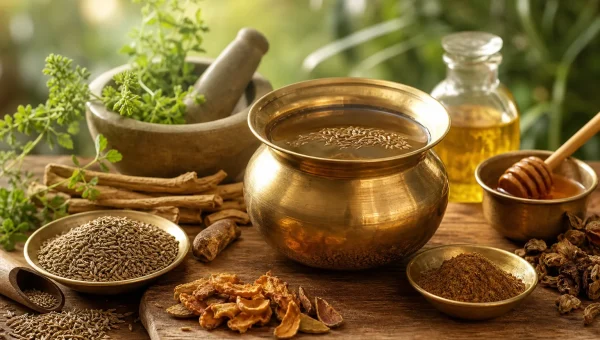
Coriander-cumin-fennel tea is a modern Ayurvedic household blend rather than a classical pharmacopeial formula. It is usually made from equal parts coriander seed, cumin seed, and fennel seed. Compared with pre-packed tea bags, keeping a jar of the whole-seed blend is often more economical and fresher. It is best treated as a gentle food-spice infusion, not as a substitute for prescribed medicine.
DIY Churna Recipes Worth Making
The following preparations are simple home blends, not replacements for individualized Ayurvedic prescriptions. Use clean equipment, label every jar with the preparation date, keep powders dry, and make small batches so the aroma and potency are preserved.
Recipe 1: Digestive Churna Inspired by Deepana-Pachana Principles
Formula: Equal parts shunthi (dry ginger, Zingiber officinale), maricha (black pepper, Piper nigrum), pippali (long pepper, Piper longum), ajwain or ajamoda (carom seed, Trachyspermum ammi), and jeeraka (cumin, Cuminum cyminum). Add half parts saunf (fennel, Foeniculum vulgare) and a small amount of saindhava lavana if suitable.
Method: Use clean, dry, food-grade herbs. Lightly warm-roast only the whole kitchen spices such as cumin, ajwain, and fennel if desired, then cool completely. Grind, sieve, and mix the ingredients in a dry bowl. Store in an airtight glass jar away from heat and light. Use as a small cooking or table spice, or seek practitioner guidance for therapeutic dosing.
Recipe 2: Triphala Churna
Formula: Equal parts haritaki (Terminalia chebula), bibhitaki (Terminalia bellirica), and amalaki (Emblica officinalis) powders.
Method: Use authenticated powders of the correct fruits, mix thoroughly, and store in an airtight glass jar. Classical references list Triphala Churna as an equal-part formula, with adult use commonly given in gram quantities along with suitable anupana such as warm water, honey, or ghee depending on the context. Because triphala can affect bowel habits and may not suit every constitution or condition, use it thoughtfully and consult a practitioner for ongoing use.
Recipe 3: CCF Tea Jar
Formula: Equal parts coriander seed, cumin seed, and fennel seed.
Method: Mix the whole seeds and keep them in a dry jar. For one cup, use about 1 to 1.5 teaspoons of the blend, steep in hot water, and strain. This is a simple household infusion and is best prepared fresh rather than stored after brewing.
When Buying Is Clearly Better
Buying is the better choice when the preparation depends on specialized pharmaceutical processing, safety-critical purification, fermentation control, extraction, or standardization. In these cases, the commercial price is not just paying for convenience; it is paying for manufacturing controls that a home kitchen cannot reproduce.
Standardized Extracts Require Industrial Processing
Products such as KSM-66 ashwagandha and Sensoril ashwagandha are standardized extracts, not simple powdered root. KSM-66 is a root-only ashwagandha extract associated with a proprietary extraction process and standardization to a defined withanolide content. Sensoril is a standardized extract made from ashwagandha root and leaf. A jar of raw ashwagandha powder is therefore not equivalent to these extracts by weight, concentration, or composition.
Guggulu Preparations Require Shodhana
Guggulu is the oleo-gum-resin exudate of Commiphora mukul. Classical pharmacy does not treat raw guggulu resin as interchangeable with shodhita guggulu. The Ayurvedic Formulary describes purification procedures using media such as gomutra, Triphala decoction, herbal leaf decoctions, herbal juices, or milk, followed by filtering, drying, and further processing. This makes guggulu-based tablets and vati preparations a clear buy-from-a-trusted-manufacturer category.
Bhasmas Are Strictly Buy-Only and Practitioner-Supervised
Bhasmas are calcined preparations made from metals, minerals, or animal-derived materials after prescribed purification and incineration procedures. Their preparation involves shodhana, marana, repeated heating cycles, and traditional quality tests such as rekha-purita, varitara, nishchandrika, and apunarbhava. These are not home remedies. They should be used only under the direct supervision of a qualified Ayurvedic physician and obtained only from licensed, quality-controlled sources.
Asava and Arishta Require Controlled Fermentation
Asava and arishta preparations are fermented Ayurvedic liquids made with herbs, water or decoction, sweetening agents such as jaggery or sugar, and fermenting materials. Proper fermentation requires clean vessels, sealing, suitable temperature, completion assessment, and protection from spoilage. Beginners are usually better served by buying these preparations from a reputable pharmacy rather than trying to ferment them casually at home.
Herb Sourcing: The Most Important Variable in DIY Quality
The quality of any DIY Ayurvedic preparation is determined by the quality of the starting herbs. A home-made churna prepared from misidentified, stale, contaminated, or adulterated powder is not better than a commercial product. Before making your own supplements, apply the same seriousness to sourcing that you would apply to buying a finished product.
- Ask for lot-specific testing: A good supplier should be able to provide a certificate of analysis that matches the lot number and includes testing for heavy metals such as lead, mercury, arsenic, and cadmium. Pesticide and microbial testing are also valuable, especially for herbs used regularly.
- Confirm botanical identity and plant part: The label should state the Latin binomial and the plant part. Ashwagandha, for example, should be identified clearly when the intended material is dried mature root of Withania somnifera.
- Be cautious with powders: Powdered herbs are convenient, but they are harder for the consumer to identify visually and can be more vulnerable to adulteration than whole botanicals.
- Use organic certification wisely: Organic certification can be a useful production standard, but it does not replace identity testing, heavy metal testing, or microbial testing.
- Check freshness: Avoid powders with musty odor, clumping, mold, dull color, rancidity, or unclear packing dates. Buy small quantities and rotate stock regularly.
Specific Dosages and Practical Boundaries for DIY Preparations
Traditional dose ranges are not a substitute for individualized care. Age, constitution, digestive strength, pregnancy status, disease state, medications, and the exact preparation all change what is appropriate. Use the ranges below as orientation, not as a personal prescription.
- Triphala Churna: A classical equal-part blend of haritaki, bibhitaki, and amalaki. The Ayurvedic Formulary lists gram-range dosing with anupana such as warm water, honey, or ghee, depending on use and context.
- Trikatu Churna: A classical equal-part blend of pippali, maricha, and shunthi. The Ayurvedic Formulary lists small gram-range dosing with honey or warm water. Because it is pungent and heating, it should be used carefully.
- Ashwagandha root powder: The official Ayurvedic pharmacopoeial material is the dried mature root of Withania somnifera. Non-standardized root powder is not equivalent to standardized extracts such as KSM-66 or Sensoril.
- CCF tea: Coriander-cumin-fennel tea is best understood as a food-spice infusion. It is suitable for simple household use, but it should not be marketed or used as a disease-specific medicine.
- Shelf life: Home-made churnas should be stored dry in airtight containers away from heat and light. The Ayurvedic Formulary states that churnas should not become moist and retain potency for about one year when properly stored.
Simple Buying Checklist
When buying rather than making, look for quality markers that reduce avoidable risk. A good Ayurvedic product should have a clear ingredient list, botanical names where appropriate, plant parts, batch number, manufacturing date, expiry date, manufacturer details, and directions for use. For products used therapeutically, prefer licensed manufacturers following applicable GMP standards and choose products that provide lot-specific testing when available.
- Buy rather than DIY when the formula contains guggulu, bhasma, rasaushadhi ingredients, standardized extracts, complex ghritas, asava, or arishta.
- Prefer transparent labels that identify the ingredients and do not rely only on vague names such as “proprietary blend.”
- Check for quality documentation such as GMP compliance, batch testing, and contaminant screening.
- Avoid exaggerated disease claims and products that promise guaranteed cures.
- Match the product to the purpose: raw powder, classical churna, tablet, extract, decoction, and fermented preparation are not automatically interchangeable.
Safety and Disclaimer
DIY Ayurvedic preparations carry real responsibilities. If you cannot verify heavy metal content, botanical identity, freshness, and contamination status, the safety advantage of home preparation disappears. Never attempt to home-produce bhasmas, rasaushadhi preparations, guggulu tablets, or complex fermented preparations without formal training. Consult a qualified Ayurvedic practitioner or healthcare provider before starting herbs, supplements, detoxes, or therapeutic protocols, especially if you are pregnant, breastfeeding, managing a medical condition, preparing for surgery, or taking prescription medication.
One Actionable Tip
Choose one simple supplement you currently buy, such as a plain churna or a spice-based tea blend. Compare the label with the same herbs from a supplier that provides botanical identity and lot-specific testing. If the formula is simple, the herbs are verifiable, and the per-dose cost is clearly lower, make that one preparation yourself for a month. Start with a low-risk household blend such as CCF tea or a simple churna, and leave guggulu, bhasma, fermented preparations, and standardized extracts to qualified manufacturers.
Nothing in this article diagnoses, treats, cures, or prevents any disease. Use it as educational information and consult a qualified Ayurvedic practitioner or physician before starting herbs, supplements, detoxes, or therapeutic protocols.
References
- Dravyaguna notes
- Ayurvedic Pharmacopoeia of India
- Webprod (webprod.hc-sc.gc.ca)
- Ksm66ashwagandhaa (ksm66ashwagandhaa.com)
- Ninety-day repeated dose toxicity of Ashwagandha (Withania somnifera) root extract in Wistar rats (2023), PubMed Central
- Effects of an Aqueous Extract of Withania somnifera on Strength Training Adaptations and Recovery: The STAR Trial (2018), PubMed Central
- Kripalu (kripalu.org)
- NCCIH
- FDA
- Lead, mercury, and arsenic in US- and Indian-manufactured Ayurvedic medicines sold via the Internet (2008), PubMed Central
- Authentication of the market samples of Ashwagandha by DNA barcoding reveals that powders are significantly more adulterated than roots (2020), PubMed
- Ams (ams.usda.gov)
- Pib (pib.gov.in)
This makes sense for DIY vs Buying Ayurvedic Supplements. This would be easier to follow with a one-week sample plan.
The part about DIY vs Buying Ayurvedic Supplements feels realistic. The main idea is clear even if someone is new to Ayurveda.
The standardized extract versus raw herb comparison is the part most DIY articles gloss over. KSM-66 ashwagandha is concentrated and standardized to withanolide content. Bulk ashwagandha root powder from a market has unknown potency. For some applications the difference matters a lot. For others it doesn’t. This article explains that distinction better than most.
The kutki-bhumyamalaki-aloe liver formula example is exactly the kind of reverse engineering this topic needs. When you actually look at the ingredient lists of branded Ayurvedic products you find three to five common herbs in varying proportions. Once you know which herbs you actually need for your specific concern, the DIY calculation is obvious.
The quality control issue is real and I want to push back on the idea that buying bulk herbs is automatically better value. I have received bulk powder that had no smell and was clearly old stock. Branded products with actual quality assurance may be worth the premium for critical applications. The answer depends heavily on your source for bulk herbs.
I have been making my own triphala for 3 years. The cost saving is significant and I can adjust the ratio of the three fruits for my own constitution rather than accepting the equal-parts standard formula in commercial products. My digestion has been better since I started making a Vata-modified version with slightly more haritaki.
What sources do you use to verify herb identity when buying bulk? Adulteration and substitution are well-documented problems in the Ayurvedic herb market. I have seen analyses that found haritaki sold as amalaki and vice versa. This is one place where branded products with testing certificates have a genuine advantage.
I tried making my own trikatu churna after reading the cost breakdown and saved about seventy percent on my monthly spend.
As someone who runs a small Ayurvedic wellness practice, I often recommend clients make their own churnas for the digestive herbs because the personalization advantage is real. For adaptogenic herbs where the extract standardization matters more, I recommend specific brands I trust. The hybrid approach makes more sense than all-DIY or all-purchased.
The ghee-making at home versus buying calculation is the most interesting one in the article. Commercial ghee in small quantities is expensive per gram. Making ghee from good quality butter is simple, takes 20 minutes, and the yield per rupee spent is much better. The quality is also higher because you can control the temperature and time.
The section on guggulu purification made me reconsider the cheap raw resin I bought online; I’ll stick with a GMP brand.
The section on which formulations are worth buying versus making should have addressed decoctions specifically. Making kwath from dried herbs at home is something many people do but getting the extraction right requires attention to ratios and time. Commercial herbal extract tablets may be more consistent for complex formulas.
Do you have a recommended bulk herb supplier that provides third party heavy metal reports for kutki and bhumyamalaki?
Very practical framework. Applied it this month, cut my supplement spend from around $90 to $35 by making triphala, making my own ashwagandha ghee, and buying brahmi powder in bulk. The only thing I kept as a branded product is the KSM-66 extract because the standardization matters for the specific outcome I am targeting.
I found the cost comparison for CCF tea convincing; switching to loose seeds cut my tea expense to almost nothing.
I wish this article also addressed where to source good quality bulk herbs in India. The quality of what you find at local pan shops versus what comes from reputable Ayurvedic suppliers is vastly different. A sourcing guide would make this significantly more actionable for most readers.
The warning about bhasmas being buy only is important; I appreciate the clear safety note.
When making a simple churna, how fine should the powder be for consistent dosing?
I liked the framework table; it helps me decide which formulations are worth the DIY effort versus buying.
After calculating the per dose price of my ashwagandha capsules, I see why a standardized extract might still be worth the premium.
The analysis of when to buy versus make does not adequately address the standardization issue for herbs with potentially unsafe adulterants. The heavy metal contamination found in some bulk Ayurvedic herb markets is a real safety concern, not just a quality issue. Branded products with third-party testing are genuinely safer in some cases.
This makes sense for DIY vs Buying Ayurvedic Supplements. I appreciate that it does not oversell the result.
What is the minimum viable sourcing infrastructure for someone in a small town in India to access quality bulk herbs? I don’t have access to reputable Ayurvedic pharmacies and the local market quality is genuinely unreliable.
For DIY vs Buying Ayurvedic Supplements, consistency seems like the hard part. A few more examples would still help.
Useful post on DIY vs Buying Ayurvedic Supplements. Good starting point for a cautious reader.