
Vaginal Dryness After Menopause: Yoni Pichu and Ayurvedic Moisture Restoration
Vaginal dryness after menopause is a common and often under-discussed concern. It can affect daily comfort, intimacy, urinary ease, confidence, and emotional wellbeing. In modern gynecology, these changes are usually discussed under the broader term genitourinary syndrome of menopause (GSM). In Ayurveda, the same pattern is understood through increasing dryness, roughness, and sensitivity associated with aggravated vata, especially when the tissues need more sneha—unctuousness, softness, and nourishment.
This article explains how Ayurveda approaches postmenopausal vaginal dryness with local oleation, especially yoni pichu, along with internal herbs, diet, and lifestyle measures. These methods are supportive and complementary. Vaginal symptoms after menopause should still be evaluated by a qualified healthcare provider, especially when there is bleeding, discharge, odor, pain, recurrent urinary symptoms, or sudden change.
Understanding What Happens During Menopause
After menopause, declining estrogen affects the vulva, vagina, urethra, and bladder. The vaginal tissues may become thinner, less elastic, less lubricated, and more easily irritated. Vaginal pH can rise, natural secretions may decrease, and symptoms such as dryness, burning, itching, painful intercourse, urinary urgency, urinary frequency, and recurrent urinary tract infections may appear.
Ayurveda views menopause, or rajonivritti, as a natural life transition in which vata qualities often become more prominent. Vata is dry, rough, light, cold, subtle, and mobile. When these qualities increase in the reproductive and pelvic tissues, the result may be dryness, friction, discomfort, sensitivity, and a feeling of fragility. The Ayurvedic goal is therefore not simply to “lubricate,” but to restore sneha and mardava—unctuousness and softness—through carefully chosen local, internal, dietary, and lifestyle measures.
Charaka Samhita describes Shushka Yonivyapad, a condition in which aggravated vayu produces dryness at the vaginal opening along with discomfort. This classical description supports the Ayurvedic principle that dry, painful, vata-dominant vaginal conditions require warm, unctuous, softening treatment rather than harsh cleansing, drying, or irritating measures.
The Ayurvedic Moisture-Restoration Framework
The Ayurvedic approach to postmenopausal vaginal dryness works best when it is layered. Local therapy gives direct comfort to the dry tissue; internal treatment supports systemic vata balance and tissue nourishment; diet and lifestyle reduce the daily inputs that keep dryness active.
- Local therapy: Yoni pichu, external oil application, and practitioner-guided local procedures help bring unctuousness directly to the vulvovaginal area.
- Internal support: Herbs and formulations such as shatavari-containing preparations, bala-based preparations, ghee, and other vata-pacifying medicines may be selected by an Ayurvedic practitioner according to the person’s constitution and symptoms.
- Diet and lifestyle: Warm, cooked, moist, unctuous foods and a steady daily routine help counter vata dryness from within.
This framework should be adjusted when burning, discharge, odor, itching, infection, pelvic pain, urinary symptoms, or postmenopausal bleeding are present. Those symptoms require medical evaluation and may need treatment beyond home care.
Yoni Pichu: Local Oleation for Dry, Vata-Predominant Tissue
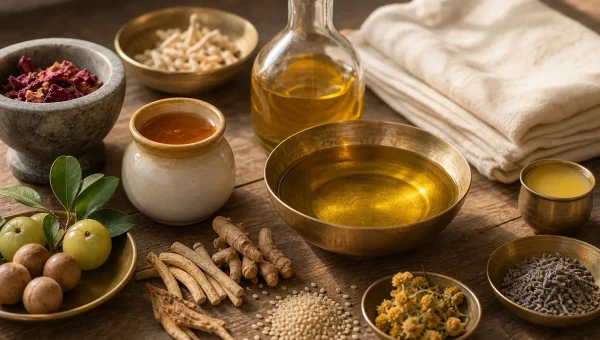
Yoni pichu is a local Ayurvedic procedure in which a small piece of sterile cotton or gauze is soaked in a suitable medicated oil or ghee preparation and placed locally at the vaginal opening or, in clinical settings, inside the vaginal canal for a defined period. The purpose is to keep a gentle, unctuous medium in contact with dry or sensitive tissue.
Charaka Samhita includes warm, unctuous local measures such as irrigation, massage, and picu or tamponing for vata-dominant disorders of the female genital tract. This is the classical foundation for using oil-based local support when dryness, roughness, and discomfort are prominent. Yoni pichu is not the same as routine douching, perfumed cleansing, or internal washing; Ayurveda uses it as a targeted therapeutic procedure, ideally guided by a qualified practitioner.
Why the Oil Medium Matters
In Ayurveda, oil and ghee are not treated as inert carriers only. They are sneha dravya—unctuous substances used to soften, nourish, lubricate, and pacify vata. Charaka describes oleation as producing softness, moisture, and unctuousness, and sesame oil is especially praised among oils for strength and unctuousness. Ghee is traditionally used when vata and pitta both need support, especially when dryness is accompanied by heat, burning, or tenderness.
The choice of oil matters. A person with simple dryness may need a different preparation from someone with burning, discharge, odor, recurrent infections, pelvic pain, or marked tissue fragility. For this reason, medicated oils and ghee preparations should be selected with the help of a qualified Ayurvedic practitioner, especially for internal vaginal use.
Commonly Used Ayurvedic Choices
Different classical and traditional preparations are chosen according to the dominant symptom pattern. The table below gives a practical overview, but it is not a prescription. Do not place essential oils, perfumed oils, cosmetic oils, or nonsterile substances inside the vagina.
| Preparation | Ayurvedic Rationale | Best Suited Pattern | Important Caution |
|---|---|---|---|
| Plain sterile sesame oil or sesame-oil-based taila | Sesame oil is a classical unctuous medium used for vata pacification and softness. | Simple dryness, roughness, and friction without discharge, odor, bleeding, or infection signs. | Use only clean, suitable oil; avoid deep insertion unless instructed by a practitioner. |
| Bala-based taila | Bala is traditionally used as balya and vatahara, supporting strength and vata balance. | Dryness with weakness, tenderness, pelvic vata symptoms, or a sense of tissue fragility. | Should be selected by a practitioner, especially if there is burning or discharge. |
| Shatavari-containing ghrita or taila | Shatavari is a nourishing reproductive herb; Charaka includes shatavari in classical gynecological ghee formulations. | Dryness with depletion, heat sensitivity, or vata-pitta features. | Internal use and local use should be individualized. |
| Madhuka or yashtimadhu-containing preparations | Madhuka appears in classical yoni-related formulations and is often used where soothing support is needed. | Dryness with tenderness or mild burning when selected appropriately. | Licorice-containing internal medicines are not suitable for everyone and need guidance. |
| Practitioner-prepared medicated pichu oil | Classical yoni treatment may combine multiple herbs in oil or ghee according to dosha and tissue condition. | Persistent dryness, painful intercourse, recurrent symptoms, or mixed vata-pitta-kapha signs. | Best used after examination and diagnosis. |
A Safe Home Adaptation
A full yoni pichu protocol is best learned from an Ayurvedic gynecologist or qualified practitioner. For mild external dryness without bleeding, discharge, odor, sores, pelvic pain, active infection, recent surgery, or unexplained pain, a conservative external pichu at the vaginal opening may be used as a gentle home adaptation.
- Prepare clean materials: Wash the hands well. Use sterile cotton gauze or a sterile cotton pad. Do not use synthetic, fragranced, dyed, or chemically treated material.
- Warm the oil gently: Use only a practitioner-approved oil or ghee preparation. Warm it to lukewarm temperature, not hot.
- Soak the pichu: Saturate the cotton or gauze with the warm oil. It should be moist with oil but not dripping excessively.
- Apply externally: Lie down comfortably and place the soaked cotton gently at the vaginal opening and vestibular area. For home use, deep insertion is not necessary.
- Rest briefly: Keep it in place for about 20–30 minutes while resting. Place a towel underneath to protect clothing or bedding.
- Remove gently: Remove the cotton slowly. Clean only the outside with warm water if needed. Do not douche or wash internally.
- Stop if irritation occurs: Discontinue if burning, itching, rash, discharge, pain, swelling, or unusual discomfort appears, and seek professional care.
Your practitioner may advise a short daily or alternate-day course followed by a maintenance routine, but the frequency should depend on the degree of dryness, tissue sensitivity, and whether other symptoms are present.
Internal Support: Sneha, Shatavari, and Practitioner-Guided Herbs
Internal Ayurvedic treatment is chosen according to the whole person, not only the local symptom. Postmenopausal vaginal dryness may be associated with general vata signs such as dry skin, constipation, light sleep, anxiety, joint cracking, low body weight, irregular appetite, or fatigue. In such cases, the treatment often includes internal sneha, nourishing foods, rasayana support, and herbs that build stability and moisture.
Shatavari
Shatavari is one of the best-known Ayurvedic herbs for female reproductive nourishment. Its Sanskrit name is traditionally interpreted as “she who possesses a hundred husbands,” pointing to its long association with reproductive vitality. Charaka includes shatavari in Brihat Shatavari Ghrita, a classical ghee preparation used in gynecological contexts involving yoni, menstrual, reproductive, and vata-pitta concerns.
For postmenopausal dryness, shatavari is often used with warm milk, ghee, or another suitable anupana when digestion allows. The correct form, dose, and duration should be individualized, especially for people with digestive heaviness, breast or uterine conditions, medication use, or a history of hormone-sensitive disorders.
Bala and Madhuka
Bala is traditionally described as strengthening and vata-pacifying. It appears in important Ayurvedic oil preparations and is used when weakness, vata pain, dryness, or tissue delicacy are part of the picture. Madhuka, also known as yashtimadhu or licorice, appears in classical yoni-related formulations and shatavari ghee preparations, especially where soothing and softening support is desired.
These herbs should not be self-prescribed casually. Licorice-containing internal medicines may be unsuitable for people with high blood pressure, kidney disease, fluid retention, low potassium, pregnancy, or certain medication use. Bala and other strengthening herbs also require proper assessment of digestion, constitution, and medical history.
Ashwagandha
Ashwagandha may be considered when stress, poor sleep, fatigue, nervous exhaustion, and vata instability are prominent during the menopausal transition. It is better understood as systemic support rather than a primary local remedy for vaginal dryness. It should be used with practitioner guidance, particularly in people with thyroid conditions, autoimmune conditions, liver concerns, sedative medication use, pregnancy, or complex medical histories.
Dietary Protocol for Moisture Restoration
The dietary principle is simple: reduce dry, cold, rough, irregular inputs and increase warm, cooked, moist, unctuous, grounding foods. Ayurveda treats like with like and opposite with opposite; because vata is dry, light, rough, and mobile, it is calmed by warmth, softness, steadiness, and healthy unctuousness.
| Increase | Reduce |
|---|---|
| Warm cooked meals with a little ghee or sesame oil | Frequent cold meals, dry snacks, and rough foods |
| Soups, stews, soft khichadi, and cooked grains | Excessive crackers, popcorn, dry toast, and rice cakes |
| Warm milk with suitable herbs when tolerated | Excessive caffeine and late-night stimulants |
| Soaked almonds, dates, figs, or raisins in moderation | Frequent fasting, skipped meals, and irregular eating |
| Cooked sweet potato, carrots, beets, squash, and root vegetables | Large amounts of raw salad, especially in cold weather |
| Moist mung dal, well-cooked lentils, and spiced digestible legumes | Gas-producing, undercooked, or very dry legumes |
| Warm water or herbal infusions through the day | Carbonated drinks, iced drinks, and very cold beverages |
| Gentle digestive spices such as cumin, fennel, coriander, and small amounts of ginger when suitable | Excessively hot, sour, or irritating foods when burning is present |
A simple daily restorative option is soaked almonds with dates or figs, followed by a warm, nourishing breakfast. When suitable, a small amount of ghee in warm food can support vata-pacifying nourishment. If there is heaviness, poor digestion, diabetes, high lipids, obesity, or kapha symptoms, the diet should be adjusted by a practitioner rather than simply increasing fats and sweet foods.
Lifestyle Practices That Support Sneha
Moisture restoration is not only a local procedure. Ayurveda uses the word sneha for both oiliness and affection, which is meaningful in menopause care: the body often responds best to warmth, steadiness, gentleness, and regular nourishment.
Abhyanga
Daily or near-daily self-massage with warm sesame oil can help calm vata throughout the body. Apply warm oil to the lower abdomen, hips, sacrum, thighs, feet, and the rest of the body before a warm bath or shower. This is external body massage, not internal vaginal application. If skin is sensitive, patch-test first and use a practitioner-recommended oil.
Sleep and Stress Regulation
Irregular sleep, excessive worry, overwork, and overstimulation aggravate vata. A steady evening routine, warm bathing, gentle breathing practices, screen reduction before bed, and regular meal timing support the same moisture-restoring intention as diet and oil therapy. When sleep disturbance, anxiety, hot flashes, or low mood are significant, professional support is appropriate.
Pelvic Floor and Intimacy
Gentle pelvic floor awareness can support comfort, but painful tightening should not be forced. Some women need relaxation-based pelvic floor therapy rather than strengthening exercises. During intimacy, slower pacing, communication, and a clinician-recommended vaginal moisturizer or lubricant can reduce friction. Pain should not be pushed through; persistent pain with intercourse deserves evaluation.
When to Seek Professional Help
Home Ayurvedic support is appropriate only for mild, uncomplicated dryness. Certain symptoms require prompt medical evaluation because they may indicate infection, inflammatory disease, urinary tract involvement, prolapse, skin disorders, or other conditions needing specific care.
- Any vaginal bleeding after menopause, even spotting or a single episode
- Persistent discharge, bad odor, itching, fever, pelvic pain, or burning urination
- Severe pain during intercourse or pain that does not improve with gentle lubrication
- Recurrent urinary tract infections, urinary urgency, or urinary frequency
- Vulvar sores, lumps, skin color changes, cracks, or persistent irritation
- A sensation of pressure, heaviness, or bulging in the vagina
- Symptoms that worsen despite careful supportive care
Modern options such as vaginal moisturizers, lubricants, local estrogen therapy, and other prescribed treatments may be appropriate depending on severity, medical history, and personal preference. Ayurvedic care can complement these approaches by supporting vata balance, tissue nourishment, and overall wellbeing.
What Improvement Usually Looks Like
Yoni pichu may provide a feeling of local softness and comfort soon after use because the tissue is being protected from friction. Deeper improvement depends on the cause of dryness, degree of tissue change, digestion, diet, sleep, stress, sexual activity, urinary health, and whether infections or other gynecological conditions are present.
It is helpful to track a few simple markers: dryness during the day, burning, itching, pain with intimacy, need for lubricant, urinary urgency, sleep quality, bowel regularity, and emotional ease. If symptoms are not improving or if new symptoms appear, the plan should be reassessed rather than intensified at home.
Supporting Partners
Vaginal dryness after menopause is a physiological change, not a failure of desire, attractiveness, or relationship quality. When a partner understands this, intimacy becomes less pressured and more compassionate. The Ayurvedic idea of sneha applies here too: warmth, patience, tenderness, and emotional safety are part of the healing environment.
Open communication, unhurried intimacy, appropriate lubrication, and willingness to adapt can protect both comfort and closeness. When pain, fear, or grief around intimacy is present, counseling, pelvic floor therapy, gynecological care, and Ayurvedic support can work together.
Medical Disclaimer: This article is for educational purposes only and does not constitute medical advice. Postmenopausal vaginal symptoms should be evaluated by a qualified healthcare provider, especially if there is bleeding, discharge, odor, pain, urinary symptoms, or sudden change. Ayurvedic therapies such as yoni pichu should be used under the guidance of a qualified Ayurvedic practitioner, particularly for internal vaginal application or when symptoms are persistent. Do not delay medical diagnosis or prescribed treatment.
References
- NCBI
- Thebms (thebms.org.uk)
- Genitourinary syndrome of menopause: new terminology for vulvovaginal atrophy from the International Society for the Study of Women’s Sexual Health and the North American Menopause Society (2014), PubMed
- Pib (pib.gov.in)
- Charaka Samhita — Yonivyapat Chikitsa
- Charaka Samhita — Snehadhyaya
- Charaka Samhita — Vatakalakaliya Adhyaya
- Case series on the effect of ayurvedic medications in the management of symptoms of vulvovaginal atrophy in postmenopausal women (2025), PubMed Central
- Ayurvedic Pharmacopoeia of India
- OASH Women’s Health
- NHS
- MedlinePlus
very practical protocol. tried a modified version for a week and already feeling a difference. 🙌
Mine too — she actually recommended adding a sesame oil abhyanga alongside the pichu, said the skin absorption compounds the internal effect of shatavari. Did the practitioner you spoke with suggest anything similar? 🙌
What did she recommend specifically? I am curious whether the advice aligned with what the article describes or if there were differences based on individual prakriti assessment.
I tried shatavari for 3 months and saw no improvement in dryness. might be a Pitta issue making things worse.
very practical protocol. tried a modified version for a week and already feeling a difference.
That is quick progress! What modification did you make — did you change the oil used for pichu or adjust the shatavari dosage? Wondering if the timing of application matters as much as the article suggests.
Right, and that gap in the article is a real one. Knowing the approach is not enough if readers are unsure how long to try it before concluding it is not working for them. A rough timeline for early signs versus full restoration would have been helpful.
worth trying for a month at least before giving up
good point
Really glad this topic is being covered openly. The point about vata-dominant dryness being systemic, not just local, shifted how I think about what I was experiencing after menopause. Yoni pichu addressed the symptom but the dietary piece seems just as essential.
would have liked more discussion on when to see a gynecologist vs rely on this protocol. some conditions need medical attention first.
thanks for sharing that, useful to know
shatavari ghee combination worked within 6 weeks for me. the section on preparation ratios was very clear.
how long before results become noticeable with this protocol? my patience has limits tbh
I think it depends on your constitution tbh
what’s the source text for this recommendation Charaka Samhita or Ashtanga Hridayam
the preparation method described here is exactly what my grandmother used to make. brings back memories.
That kind of living knowledge is so valuable. Did your grandmother use plain sesame oil or did she infuse it with anything? The article mentions shatavari-infused oil specifically, and I am wondering how closely traditional home practice matched what is described here.
how do I source quality herbs for this? most local shops sell low-grade material. 🙌
the article would be stronger with a clear ‘when to see a doctor’ section. some of these conditions need medical clearance.
great to see peer-reviewed studies referenced alongside classical texts. makes it easier to trust.
shared this with my Ayurveda practitioner and she confirmed the approach is sound.
That is reassuring. Did she have any additional guidance on duration — like how many weeks of yoni pichu before expecting noticeable improvement? The article mentions consistent use but is vague about the timeline.
is there a simplified version for beginners who don’t have access to all these herbs
does this protocol change during monsoon season? ive heard Ayurvedic timing is seasonal
Good question and Ayurveda does account for this. During monsoon, vata tends to aggravate, which can actually worsen dryness — so if anything, the protocol might need to be intensified rather than paused. An Ayurvedic practitioner familiar with ritucharya could advise on seasonal adjustments.
is shatavari safe to combine with HRT or does it interfere with estrogen pathways
That is something worth clarifying with a doctor before combining them. Shatavari has phytoestrogenic activity and some studies suggest it can influence estrogen receptor pathways — whether that potentiates or conflicts with HRT likely depends on the specific formulation and dosage. Not a question to guess at.
how often per week for the pichu protocol? the article says 3 times but my practitioner said daily
not disputing Ayurveda has value but articles like this sometimes overstate efficacy.
the kumari (aloe) gel suggestion for topical application, game changer for me personally.
Yes but results vary a lot from person to person
the yoni pichu protocol helped me more than any allopathic cream for postmenopausal dryness. did it for 3 months.
tried a similar protocol 6 months back. results were modest at best and I was consistent.
u mention this is safe but what about drug interactions with common meds like bp tablets
Sharing this.
Bookmarking.
finally an article that explains the classical text basis rather than just listing herbs.
I find the dosage guidance vague. ‘appropriate amount’ is not helpful for someone measuring at home.
is there a simplified version for beginners who dont have access to all these herbs
The explanation of yoni pichu felt clear, especially the part about using warm sesame oil for 30 to 60 minutes.
Same here!
I came here with a similar concern after menopause and found the article surprisingly thorough. The connection between declining estrogen and vata imbalance explained a lot of what I was experiencing beyond just dryness — the sleep disruption and joint sensitivity too. ठीक है
respectfully, most of these claims need larger RCTs before we can say they’re validated.
Finally!
Worth noting that the shatavari discussion in this article does touch on fatigue — it is one of the conditions shatavari is traditionally used for, and the hormonal support after menopause can have energy as a secondary benefit. So not entirely off-topic if that is what brought you here.
Very useful.
is shatavari safe to combine with HRT or does it interfere with estrogen pathways 💯