
A common sciatica presentation is pain that begins in the lower back or buttock and travels down one leg, sometimes with tingling, numbness, burning, or weakness. Ayurveda understands the closest classical disease entity as Gridhrasi, a disorder described under Vata Vyadhi. The name is traditionally linked with Gridhra, the vulture, because the patient’s gait can become stiff, guarded, and altered.
Gridhrasi should not be reduced to “any back pain.” Classical descriptions emphasize stiffness, pain, pricking sensation, and repeated twitching or pulsation along the waist, back, hip, thigh, knee, calf, and foot. This maps closely to many presentations of modern sciatica, but an Ayurvedic physician still has to examine the individual pattern, strength, digestion, bowel habits, neurological signs, and the medical diagnosis.
Two Types of Gridhrasi: Getting the Classification Right
Charaka describes Gridhrasi mainly in two clinical patterns: Vataja and Vata-Kaphaja. The distinction matters because heavy oiling, strong fomentation, purgation, internal medicines, and exercise are not selected in the same way for every patient.
| Feature | Vataja Gridhrasi | Vata-Kaphaja Gridhrasi |
|---|---|---|
| Classical signs | Stambha (stiffness), Ruk (pain), Toda (pricking pain), and Spandana (twitching or pulsation) | The Vataja signs plus Tandra (drowsiness), Gaurava (heaviness), and Arochaka (loss of appetite or aversion to food) |
| Typical modern expression | Sharper, shooting, radiating pain with marked stiffness and restricted movement | Radiating pain with heaviness, dullness, numbness, sluggish digestion, and a sense of congestion |
| Common aggravating pattern | Cold, dryness, overuse, long sitting, poor sleep, fasting, strain, and depletion | Cold-damp exposure, sedentary habits, heaviness after food, sluggish bowels, and Kapha-dominant stagnation |
| Ayurvedic treatment emphasis | Warmth, oiling, Vata-pacifying diet, gentle mobilization, Snehana, Swedana, and selected internal formulations | First reduce heaviness and obstruction with Deepana, Pachana, lighter fomentation, and carefully chosen Vata-Kapha measures before using heavy oil therapies aggressively |
The practical mistake is treating every sciatica case as pure Vata. If the patient has heaviness, drowsiness, poor appetite, thick coating on the tongue, and sluggish digestion, excessive oiling without Deepana-Pachana can increase the sense of heaviness and numbness.
Kati Basti: A Key External Therapy in Contemporary Practice
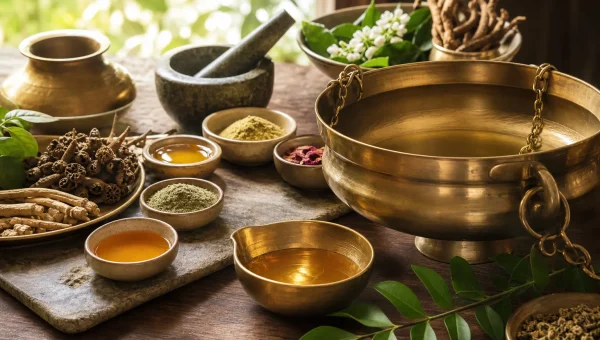
Kati Basti, also spelled Kati Vasti, is a localized warm-oil retention therapy used over the lower back. Kati refers to the waist or lumbosacral region, and Basti here means holding or retaining. In practice, warm medicated oil is held over the lumbar area inside a ring made from black gram dough or another suitable dough.
This therapy is used because Gridhrasi is dominated by disturbed Vata, and Vata responds to warmth, unctuousness, steadiness, and properly applied fomentation. It is not a replacement for neurological assessment, MRI when medically indicated, or emergency care, but it can be a valuable supportive procedure in mild to moderate, non-emergency sciatica presentations.
How Kati Basti Is Usually Performed
A trained therapist positions the patient comfortably, identifies the painful lumbosacral region, and places a sealed dough ring over the area. Comfortably warm medicated oil, such as Sahacharadi Taila, Mahanarayana Taila, Dhanwantharam Taila, or another physician-selected oil, is poured into the reservoir and kept warm throughout the session. The oil is generally retained for about 30 to 45 minutes, then removed, followed by gentle local massage or mild fomentation when appropriate.
The procedure should feel warm and soothing, not burning. In Vataja Gridhrasi, oil-based warmth is often central. In Vata-Kaphaja Gridhrasi, the physician may first use lighter Swedana, Deepana, or Pachana measures before sustained oil pooling, especially when heaviness and digestive sluggishness are prominent.
Internal Medicines: Selected by Pattern, Not by Disease Name Alone
There is no single tablet, decoction, or oil that suits every Gridhrasi patient. Internal medicines should be selected by a qualified Ayurvedic physician after assessing the Gridhrasi type, bowel pattern, appetite, strength, age, pregnancy status, kidney and liver status, and current medications.
For Vataja Gridhrasi
In a dry, painful, stiff, Vata-dominant presentation, physicians commonly consider Vata-pacifying formulations and decoctions that support the lower back, hip, thigh, and leg pathway. Yogaraja Guggulu may be considered in musculoskeletal Vata patterns when appropriate. Dashamoola-based decoctions are used because Dashamoola is the classical group of ten roots: Bilva, Agnimantha, Shyonaka, Patala, Gambhari, Shalaparni, Prishniparni, Brihati, Kantakari, and Gokshura.
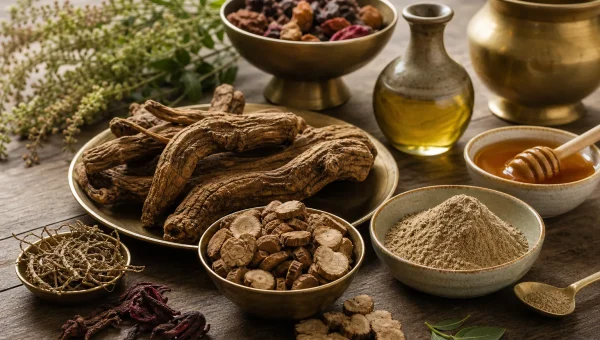
Maharasnadi Kashayam or related Rasna-based decoctions may be chosen when pain and stiffness are long-standing and involve the low back, hip, and leg. Rasna is a major herb in these formulations, and the formulation is traditionally directed toward Vata disorders involving the musculoskeletal and neuromuscular system.
For Vata-Kaphaja Gridhrasi
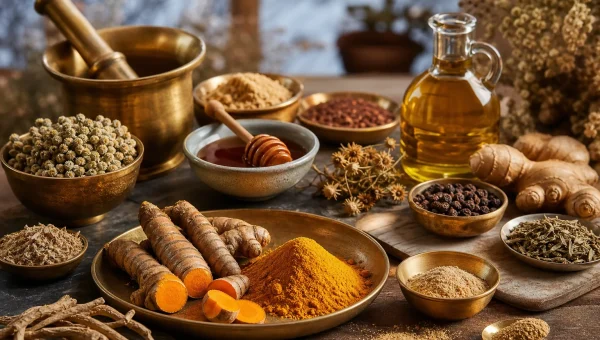
When heaviness, drowsiness, poor appetite, thick coating, sluggish bowels, or cold-damp aggravation is present, the first step is often to kindle digestion and reduce obstruction. Trikatu Churna, a classical combination of dry ginger, black pepper, and long pepper, may be used by physicians for Deepana-Pachana when the patient is suitable. It is not appropriate for everyone, especially those with strong acidity, ulcers, bleeding tendency, marked Pitta aggravation, pregnancy, or heat intolerance.
Eranda Taila (castor oil) is used in Ayurveda as a Vata-Kapha pacifying and purgative oil in selected cases, especially when constipation and lower-body Vata obstruction are important. It should not be self-administered casually; castor oil can cause strong purgation, dehydration, cramping, electrolyte disturbance, and drug interactions if used incorrectly.
The Role of Basti Chikitsa
Classical treatment references for Gridhrasi include Basti, and this is clinically important because the colon and pelvic region are central to Vata management in Ayurveda. In chronic Gridhrasi with constipation, dryness, recurring stiffness, poor sleep, and systemic Vata aggravation, a physician may plan Matra Basti, Yoga Basti, or another Basti schedule according to strength and indication.
Basti is a medical procedure, not a home enema. The oil, decoction, dose, sequence, timing, diet, and post-procedure care must be individualized. It is avoided or modified in many conditions, including acute diarrhea, severe debility, active bleeding, certain acute infections, and situations where a physician considers it unsafe.
The Role of Agnikarma in Stubborn Local Pain
Agnikarma is a para-surgical heat procedure described in Ayurveda and listed among classical measures used for Gridhrasi. In modern Ayurvedic practice, it involves controlled therapeutic heat application with a heated instrument or suitable medium at carefully selected points. It is generally reserved for localized, stubborn pain after proper examination.
Agnikarma should only be performed by a trained Ayurvedic physician or surgeon. It is not suitable for home use and is generally avoided in uncontrolled diabetes, bleeding disorders, active infection, multiple wounds, pregnancy, severe debility, and patients who cannot tolerate heat procedures. Poorly performed Agnikarma can cause burns, infection, scarring, delayed healing, and worsening pain.
Supporting Therapies and Daily Routine
External therapies are chosen according to the active pattern. Patra Pinda Sweda may be used when stiffness and muscular guarding dominate. Gentle Abhyanga with suitable medicated oil may be used in dry Vataja cases. In Vata-Kaphaja presentations, lighter fomentation and digestion-correcting measures may come before heavy oil therapies.
- Movement: Avoid complete bed rest unless advised for a short acute phase. Gentle walking and supervised mobility are usually better than prolonged inactivity.
- Sitting: Avoid sitting for long uninterrupted periods. Change position, stand, and walk briefly at regular intervals.
- Food: Prefer warm, cooked, easy-to-digest meals. In Vataja cases, nourishing soups, ghee in suitable amounts, and warm meals are preferred. In Vata-Kaphaja cases, heavy, oily, cold, stale, and excessively sweet foods are reduced.
- Sleep: Use a position that reduces nerve tension, often side-lying with support between the knees or another position advised by the physician or physiotherapist.
- Yoga and exercise: Use only gentle, individualized movements. Stop any stretch or posture that increases leg pain, numbness, tingling, or weakness.
- Cold exposure: Avoid cold floors, cold showers immediately after oil therapy, and direct cold wind on the lower back and leg.
When to Stop Home Care and See a Neurologist
Gridhrasi treatment is appropriate only after ruling out emergencies and serious causes. Some symptoms need urgent conventional medical care because they may indicate cauda equina syndrome, progressive nerve compression, infection, fracture, malignancy, or another serious condition.
Seek urgent medical care immediately if you have:
- New loss of bladder or bowel control
- Difficulty passing urine or urinary retention
- Numbness in the groin, inner thighs, or saddle area
- Progressive weakness in the leg or foot, including foot drop
- Severe pain after trauma or fall
- Fever, unexplained weight loss, cancer history, or night pain with back and leg symptoms
- Severe or worsening symptoms that do not respond to appropriate care
Ayurveda and modern medicine do not need to be in conflict here. A patient with mild to moderate sciatica may benefit from Ayurvedic care, physiotherapy, posture correction, and lifestyle changes. A patient with red flags needs urgent medical evaluation, and delaying that evaluation can be dangerous.
What a Realistic Gridhrasi Plan Looks Like
A sound Ayurvedic plan begins with diagnosis, not with oil. The practitioner identifies whether the case is Vataja or Vata-Kaphaja, reviews neurological signs, checks bowel and appetite, considers imaging when medically indicated, and then chooses from diet, external therapy, internal medicine, Basti, Agnikarma, physiotherapy-compatible movement, and referral when necessary.
Progress should be measured by pain intensity, walking tolerance, sitting tolerance, sleep quality, neurological signs, bowel regularity, and whether symptoms are moving out of the leg or worsening down the leg. If weakness, numbness, or bladder-bowel symptoms appear, the plan changes immediately and medical referral takes priority.
If you are dealing with sciatica-like pain, consult a qualified Ayurvedic physician and a healthcare provider for proper evaluation. Do not self-prescribe Guggulu, castor oil, strong purgation, Basti, or Agnikarma. Do not discontinue prescribed medicines, ignore neurological symptoms, or delay recommended investigations based on general educational content.
This article is for educational purposes only and does not replace professional medical advice. Consult a qualified Ayurvedic physician and an appropriate healthcare provider before starting any treatment protocol. All medicines, oils, procedures, and exercise plans must be individualized according to diagnosis, constitution, strength, age, pregnancy status, medical history, and current medications.
References
- My (my.clevelandclinic.org)
- Orthoinfo (orthoinfo.aaos.org)
- Easyayurveda (easyayurveda.com)
- Easyayurveda (easyayurveda.com)
- Ayurvaid (ayurvaid.com)
- OA03.18. “A comparative study of kati basti with sahacharadi taila and maha narayana taila in the management of gridhrasi (Sciatica)” (2013), PubMed Central
- Natural Ingredient Resource Center
- Researchgate (researchgate.net)
- Experimental evaluation of analgesic, anti-inflammatory and anti-platelet potential of Dashamoola (2015), PubMed Central
- Rjptonline (rjptonline.org)
- Clinical evaluation of Vatari guggulu, Maharasnadi kwatha and Narayan taila in the management of osteoarthritis knee (2017), PubMed Central
- Jaims (jaims.in)
- Easyayurveda (easyayurveda.com)
- A clinical study of Nirgundi Ghana Vati and Matra Basti in the management of Gridhrasi with special reference to sciatica (2010), PubMed Central
- A comparative clinical study of Siravedha and Agnikarma in management of Gridhrasi (sciatica) (2014), PubMed Central
- Ayurvaid (ayurvaid.com)
- Ayurdhama (ayurdhama.com)
- Mayoclinic (mayoclinic.org)
- NHS
- Cks (cks.nice.org.uk)
- Orthoinfo (orthoinfo.aaos.org)
I had the same presentation as the software engineer in the opening, 11 weeks of shooting pain down the left leg, two rounds of NSAIDs, one steroid injection that helped for three weeks then stopped. Started Kati Basti six weeks ago. The radiating pain is now maybe 30% of what it was. My orthopaedic surgeon is surprised.
The part about Sciatica in Ayurveda feels realistic. Would be useful to see a short checklist next.
I am a chiropractor and the Vata-in-the-nerve-channel description maps onto what I understand as nerve root irritation from mechanical compression plus inflammatory mediators. The Ayurvedic protocol’s emphasis on both reducing the inflammatory component and nourishing the depleted nerve tissue is actually consistent with a biopsychosocial approach to sciatica management.
I had Gridhrasi so bad I couldn’t sit at all for 6 weeks. Neurosurgeon recommended discectomy. I did 21 days of Panchakarma first. The pain resolved to manageable levels without surgery and has stayed manageable for 18 months. Two neurologists have since confirmed my nerve conduction is improved. I am not anti-surgery but I am glad I tried this first.
What about piriformis syndrome that mimics sciatica? Is Gridhrasi classification specific to disc-related nerve compression or does it include all posterior leg pain regardless of origin? I have been told my ‘sciatica’ is actually piriformis entrapment and I wonder whether the treatment approach differs.
I want to push back on the framing of ‘wait and manage’ as inadequate advice. For acute sciatica with disc herniation, 80-90% of cases resolve within 6-12 weeks without surgery or Panchakarma. The natural history is favorable. Ayurvedic treatment might accelerate recovery but the baseline comparison needs to account for spontaneous resolution.
Tried the Mahanarayana Taila local application. Within two weeks the burning quality of the pain, which was the worst part, reduced significantly. The residual ache remains but the burning nerve pain is something I can live with whereas before the treatment I couldn’t sleep. The topical oil was the first thing in 3 months that targeted the burning specifically.
I never knew the word Gridhrasi came from the way a vulture walks until I read this piece
Does the Gridhrasi protocol change for chronic sciatica, say two years or more versus acute onset? My sciatica is from a fall 4 years ago and has been chronic and episodic. I wonder if the treatment for established chronic nerve pattern is more intensive or requires different herbs than acute onset.
the comparison to what the patient’s physiotherapist gave, stretches that made things worse, is something many sciatica patients can relate to. Hamstring stretches in particular are often prescribed for sciatica and for nerve-root irritation they can worsen the neural tension. The Ayurvedic approach of nourishing rather than mechanically stretching an irritated nerve makes sense.
What does the dough dam for Kati Basti feel like when it’s pressed onto the skin
Can this protocol be done at home or does it require a Panchakarma center? I am in a smaller city without access to trained Panchakarma practitioners. The Kati Basti specifically seems to require a clinical setup.
I wonder if using Sahachara Taila instead of Mahanarayana Taila changes the warming sensation
I have had two micro-discectomy surgeries and after the second one developed scar tissue that causes residual sciatica. The Mahanarayana Taila application for post-surgical scar-related sciatic has been more effective for my specific pattern than anything the pain clinic offered. The nourishing approach to nerve tissue works differently from anti-inflammatory approaches.
The description of Vataja pain as sharp and electric matches what I felt during my last flare up
It makes sense that cold weather aggravates the pure Vata type while dampness affects the mixed type
Has anyone tried adding Trikatu Churna with honey before meals and noticed a difference in digestion
The idea of holding warm oil over the lower back for thirty to forty five minutes sounds soothing
I appreciate the clear step by step for building the dam with black gram flour and warm water
Do you think the Abhyanga massage after Kati Basti should be done with the same oil every time
The mention of avoiding cold showers and heavy meals for two hours after treatment is a helpful reminder
I found the explanation of Dashamoola Kashayam and its ten roots very informative
It’s interesting that Eranda Taila is used twice weekly with warm milk to address the Kapha component
Agnikarma seems intense but the note about it being para surgical and needing a trained practitioner is important
The lifestyle tips like setting a timer to sit no longer than thirty to forty minutes feel practical
The case description could be my own history. I had the same L4-L5 diagnosis, same stretch-made-it-worse physiotherapy experience. What I want to understand is the Gridhrasi classification — does Ayurveda treat this differently depending on whether the dominant dosha is Vata alone or Vata-Kapha combined? My symptoms include some of both.
Reading about the software engineer who improved after fourteen sessions gives me hope for my own discomfort
the article doesnt mention that some Guggulu preparations have heavy metal contamination risks if not certified
I would like more detail on Sciatica in Ayurveda. This is the kind of detail readers can test slowly.
I would like more detail on Sciatica in Ayurveda. The timing advice is the part I would start with.
I would like more detail on Sciatica in Ayurveda. The main idea is clear even if someone is new to Ayurveda.
I would like more detail on Sciatica in Ayurveda. I would like to know how long to try it before judging results.
Useful post on Sciatica in Ayurveda. Would be useful to see a short checklist next.
Useful post on Sciatica in Ayurveda. I appreciate that it does not oversell the result.
Useful post on Sciatica in Ayurveda. The main idea is clear even if someone is new to Ayurveda.
Useful post on Sciatica in Ayurveda. The examples make the advice less abstract.
For Sciatica in Ayurveda, consistency seems like the hard part. A few more examples would still help.
For Sciatica in Ayurveda, consistency seems like the hard part. I would still ask a practitioner before changing medicines.
two years of Ayurvedic treatment for my sciatica before I finally got an MRI and found a disc herniation needing surgery. please recommend imaging first
For Sciatica in Ayurveda, consistency seems like the hard part. I would like to know how long to try it before judging results.
the article doesn’t mention that some Guggulu preparations have heavy metal contamination risks if not certified 💯
the Vata pacification diet made a difference I didn’t expect. reducing raw salads and cold drinks helped the pain
Reading this later and the Sciatica in Ayurveda advice still feels relevant. The main idea is clear even if someone is new to Ayurveda.
The Sciatica in Ayurveda explanation is clearer than most short posts. A few more examples would still help.
The Sciatica in Ayurveda explanation is clearer than most short posts. Would be useful to see a short checklist next.
The Sciatica in Ayurveda explanation is clearer than most short posts. The article avoids making it sound like a quick fix.
The Sciatica in Ayurveda explanation is clearer than most short posts. This would be easier to follow with a one-week sample plan.
the article doesn’t mention that some Guggulu preparations have heavy metal contamination risks if not certified
guggulu has been part of my arthritis protocol for 6 months. my orthopedic is confused but impressed asked this earlier
I liked the practical side of Sciatica in Ayurveda. The timing advice is the part I would start with.
I liked the practical side of Sciatica in Ayurveda. The examples make the advice less abstract.
The safest part of the Sciatica in Ayurveda advice is keeping it simple. The practical details matter more than people think.
🌿 guggulu has been part of my arthritis protocol for 6 months. my orthopedic is confused but impressed
The safest part of the Sciatica in Ayurveda advice is keeping it simple. This feels more usable than a long list of herbs.
the article doesnt mention that some Guggulu preparations have heavy metal contamination risks if not certified asked this recently