
When Exhaustion Has a Nutritional Root
Persistent tiredness can have many causes, but low iron is one of the common nutritional reasons people feel weak, breathless, pale, or unusually drained. Anaemia remains widespread globally, especially among women of reproductive age, pregnant women, and young children, and dietary iron deficiency is one important contributor. Food alone is not enough for every case, but iron-aware cooking can be a meaningful part of daily support when guided by proper testing and medical advice.
In Ayurveda, the closest classical frame for pallor, weakness, low vitality, and disturbed blood nourishment is Pandu Roga. The word pandu refers to a pale or yellowish discoloration, and Charaka describes Pandu in Chikitsa Sthana, Chapter 16, with attention to digestion, tissue nourishment, strength, complexion, dosha pattern, and the condition of the channels connected with rasa and rakta. This should not be read as a one-to-one replacement for every biomedical cause of anaemia; it is an Ayurvedic lens for understanding a pallor-and-weakness presentation.
This article focuses on food-level support: iron-bearing ingredients, sour and vitamin C-rich accompaniments, soaked and fermented grains and legumes, cast iron cookware, and meal timing that protects absorption. It preserves the old kitchen wisdom—food as the first daily support—while keeping diagnosis and treatment in the hands of qualified practitioners.
The Ayurvedic Principles of Iron-Building Meals
Ayurvedic cooking does not treat food as isolated nutrients alone. For Pandu-type weakness, a meal should nourish without burdening digestion, should be prepared in a suitable vessel, should use compatible combinations, and should be timed so that helpful ingredients are not cancelled by avoidable inhibitors such as tea, coffee, or heavy dairy taken with the same meal.
| Principle | Ayurvedic View | Nutrition View | Practical Application |
|---|---|---|---|
| Pair plant iron with sour support | Amla rasa and fruits such as amalaki, dadima, and lemon are used to support appetite and digestion. | Vitamin C enhances absorption of non-heme iron from plant foods. | Add lemon, amla, tomato, tamarind, or pomegranate near iron-rich dals, beans, greens, and millet dishes. |
| Use soaked and fermented foods | Proper preparation makes heavy foods more digestible and suitable for daily use. | Soaking, germination, and fermentation can reduce phytate and improve mineral availability from grains and pulses. | Soak rajma, chana, and sesame; ferment ragi dosa batter; cook beans until fully soft. |
| Cook selected dishes in iron cookware | Loha patra belongs to the traditional kitchen vocabulary of metal vessels. | Cast iron cookware can increase iron content of food, especially moist or mildly acidic preparations. | Use a well-seasoned iron kadhai for dals and beans, and an iron tawa for parathas and dosas. |
| Keep tea and coffee away from iron meals | Strong astringent intake around meals can be drying and obstructive for nourishment. | Tea and coffee polyphenols can inhibit non-heme iron absorption. | Avoid tea and coffee for at least 1-2 hours around iron-focused meals. |
| Separate calcium-heavy foods from iron-focused meals | Heavy dairy is best used as its own nourishing food rather than mixed into every therapeutic meal. | Calcium can reduce iron bioavailability when taken with iron-rich foods. | Use water or thin coconut milk in iron-focused porridges; keep curd, milk, and paneer for a separate meal. |
| Support agni with mild spices | Ginger, cumin, black pepper, ajwain, and similar spices are used in small amounts to make meals lighter and more digestible. | Spices improve palatability and meal tolerance, but they do not replace iron-bearing foods. | Use modest amounts of ginger, cumin, black pepper, ajwain, and coriander in dals, beans, and greens. |
Ten Iron-Supportive Recipes
The iron values below are practical kitchen estimates, not medical doses. They vary with variety, freshness, processing, portion size, cookware, and cooking water retained in the dish. The goal is not to force large quantities of iron at one sitting, but to build a daily pattern of iron-containing foods served with absorption-friendly companions.
Recipe 1: Moringa Dal (Shigru Yusha)
Shigru is the Ayurvedic name used for Moringa oleifera, and fresh drumstick leaves are a useful green for an iron-supportive dal. Moong keeps the dish light, while lemon added after cooking provides sour support for non-heme iron absorption.
Ingredients: 1 cup moong dal, 2 cups fresh moringa leaves, 1/2 tsp turmeric, 1 tsp cumin seeds, 2 crushed garlic cloves, 1 inch grated ginger, 1 tbsp ghee or sesame oil, juice of 1 lemon, and salt to taste.
Method: Wash and cook the moong dal with turmeric until soft. In a well-seasoned iron kadhai, heat ghee, add cumin, garlic, and ginger, then sauté briefly. Add moringa leaves and cook until wilted. Add the cooked dal, simmer for 5 minutes, and stir in lemon juice just before serving.
Approximate iron: About 3-5 mg per serving when divided into 3-4 servings. Serve at lunch with rice or millet and avoid tea immediately afterward.
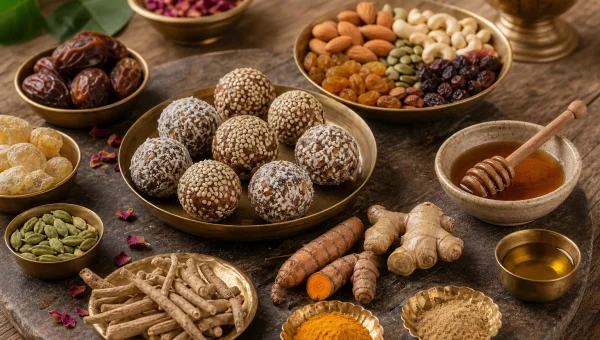
Recipe 2: Black Sesame and Jaggery Laddu
Tila, or sesame seed, is a mineral-dense seed used in traditional Indian cooking. Whole black sesame is the dependable iron ingredient here; jaggery adds sweetness and some minerals, but its iron content varies widely by preparation.
Ingredients: 1 cup black sesame seeds, 1/2 cup desiccated coconut, 1/2-3/4 cup grated jaggery, 2 tbsp ghee, 1/4 tsp cardamom powder, and 1/4 tsp dry ginger powder.
Method: Dry roast sesame seeds on low heat until aromatic, then dry roast coconut separately. Grind the sesame coarsely. Warm jaggery and ghee on low heat until soft and syrupy. Remove from heat, mix in sesame, coconut, cardamom, and dry ginger, then shape into small laddus while warm.
Approximate iron: About 2-3 mg per small laddu, depending on size and sesame quantity. Take one as a snack with amla water or fruit rather than with tea.
Recipe 3: Pomegranate-Amla Iron-Absorption Tonic (Dadima-Amalaki)
Dadima and Amalaki are classical names for pomegranate and amla. This drink is best understood as a sour, vitamin C-rich companion to iron meals rather than as a high-iron food by itself.
Ingredients: 1 cup fresh pomegranate juice, 1-2 tbsp amla juice or 1 tsp amla powder, 1 pinch black pepper, and 1 tsp honey if desired.
Method: Mix pomegranate juice with amla juice or amla powder. Add black pepper and stir well. If using honey, add it only when the drink is at room temperature. Drink in the morning or alongside an iron-containing breakfast.
Approximate iron: Usually less than 1 mg per glass, but it supplies sour support that pairs well with sesame, ragi, dal, chana, or leafy greens.
Recipe 4: Beetroot-Date-Sesame Halwa
Beetroot and dates are not the strongest iron foods on their own, so this version adds sesame and almonds to make the recipe more mineral-supportive while keeping the dessert warm, soft, and easy to eat.
Ingredients: 2 medium beetroots, grated; 6 pitted dates, chopped; 2 tbsp ground black sesame; 2 tbsp chopped almonds; 150-200 ml water or thin coconut milk; 1 tbsp ghee; 1/4 tsp cardamom; and 1 tsp jaggery if needed.
Method: Heat ghee in a pan and cook grated beetroot for 8-10 minutes. Add dates and water or thin coconut milk, then cook until soft and thick. Stir in ground sesame, almonds, cardamom, and a little jaggery if needed. Serve warm.
Approximate iron: About 1.5-2.5 mg per serving when divided into 3 servings. This is best used as a supportive dessert after lunch, not as the main iron source of the day.
Recipe 5: Spiced Rajma Curry in an Iron Kadhai
Rajma is a strong plant-based iron contributor when soaked, cooked thoroughly, and served with tomato or lemon. Cooking the curry in an iron kadhai can add further iron depending on the vessel, acidity, and cooking time.
Ingredients: 1 cup rajma soaked overnight, 2 pureed tomatoes, 1 chopped onion, 2 tsp ginger-garlic paste, 1 tsp cumin, 1/2 tsp turmeric, 1 tsp coriander powder, 1/4 tsp black pepper, 2 tbsp ghee or oil, juice of 1/2 lemon, and salt to taste.
Method: Pressure cook soaked rajma until very soft. In an iron kadhai, heat ghee, add cumin, sauté onion, then add ginger-garlic paste, tomato, turmeric, coriander, and black pepper. Cook until the masala thickens. Add rajma with its cooking liquid and simmer for 15 minutes. Add lemon juice before serving.
Approximate iron: About 3.5-5 mg per serving when divided into 3-4 servings. Serve with rice, millet, or phulka and keep curd for a separate meal.
Recipe 6: Palak Paratha on an Iron Tawa
Spinach and whole wheat both contribute plant iron, but they also contain natural compounds that can reduce mineral availability. Cooking on an iron tawa and serving with lemon pickle, amla chutney, or tomato chutney makes this breakfast more iron-aware.
Ingredients: 2 cups whole wheat flour, 1 cup finely chopped blanched spinach, 1/2 tsp cumin powder, 1/4 tsp ajwain, salt to taste, warm water for kneading, and ghee for cooking.
Method: Mix spinach, flour, cumin, ajwain, and salt. Knead into a soft dough and rest for 15 minutes. Roll into parathas and cook on a hot iron tawa with a small amount of ghee until both sides are browned.
Approximate iron: About 3-5 mg per 2 parathas, depending on size and flour quantity. Serve with lemon pickle or tomato chutney instead of curd when the goal is iron support.
Recipe 7: Ragi Porridge with Sesame and Amla
Ragi, or nachni, is valued in Indian diets for its mineral content, especially calcium, and it also contributes iron. For an iron-focused version, prepare it without milk and add sesame for extra mineral density.
Ingredients: 3 tbsp ragi flour, 1 tbsp finely ground black sesame, 250 ml water or thin coconut milk, 1 tbsp jaggery, 1/4 tsp cardamom, a pinch of dry ginger, and 1 tsp amla powder or a small amla drink on the side.
Method: Mix ragi flour with a little cold water to make a smooth slurry. Bring the remaining water or thin coconut milk to a simmer, add the slurry while stirring, and cook for 5-7 minutes until thick. Add ground sesame, jaggery, cardamom, and dry ginger. Take amla separately or stir in amla powder after the porridge cools slightly.
Approximate iron: About 2-3 mg per bowl, mainly from ragi and sesame. This works well as breakfast on days when lunch includes rajma, chana, or moringa dal.
Recipe 8: Chana-Methi Sabzi
Cooked chickpeas provide a useful amount of plant iron, and methi leaves add a bitter-green quality that fits well with an Ayurvedic digestive approach. Lemon at the end keeps the dish bright and absorption-friendly.
Ingredients: 1 cup cooked chickpeas, 2 cups fresh methi leaves, 1 chopped onion, 2 cloves garlic, 1/2 tsp turmeric, 1/2 tsp cumin seeds, 1/4 tsp black pepper, 1 tbsp ghee or sesame oil, lemon juice, and salt to taste.
Method: Heat ghee in an iron kadhai, add cumin and garlic, then sauté onion until soft. Add washed methi leaves and cook until wilted. Add chickpeas, turmeric, pepper, and salt, then cook together for 5-7 minutes. Finish with lemon juice.
Approximate iron: About 3-5 mg per serving when divided into 2 servings. Serve with rice, jowar roti, or wheat phulka.
Recipe 9: Halim-Amla Seed Drink (Chandrashura/Aliv Support)
Halim, also called aliv or garden cress seed, is a small Indian seed used in traditional kitchen preparations. It is best used in modest food quantities, soaked well, and paired with amla or lemon for sour support.
Ingredients: 1 tbsp garden cress seeds, 1/2 cup warm water for soaking, 1 cup room-temperature water, 1 tsp amla powder or 1 tbsp amla juice, 1 tsp jaggery if needed, and a pinch of roasted cumin powder.
Method: Soak garden cress seeds in warm water for 30-60 minutes until they swell. Add room-temperature water, amla, jaggery if needed, and roasted cumin. Stir well and drink mid-morning, away from tea or coffee.
Approximate iron: About 0.7-1.2 mg per tablespoon of seeds, depending on seed quality. Use small amounts and avoid therapeutic use during pregnancy unless a qualified practitioner or healthcare provider advises it.
Recipe 10: Nachni Dosa with Drumstick-Tamarind Chutney
A fermented ragi and urad batter combines millet and pulse in a more digestible form. Drumstick pods and tamarind bring a sour, vegetable-rich chutney that pairs naturally with an iron-supportive breakfast or dinner.
Dosa batter: 1 cup ragi flour, 1/2 cup rice flour, 1/2 cup urad dal soaked and ground, water as needed, and salt.
Chutney: 4-5 cooked drumstick pods, 1/2 cup roasted peanuts, 1 tsp tamarind, 1-2 green chilies, salt, and a tempering of mustard seeds and curry leaves in ghee or sesame oil.
Method: Mix ragi flour, rice flour, and ground urad dal with water to make dosa batter. Ferment overnight. Cook thin dosas on an iron tawa. For the chutney, scrape cooked drumstick pulp and blend with peanuts, tamarind, chilies, and salt. Add the tempering before serving.
Approximate iron: About 2-4 mg per 2 dosas with chutney. The fermented batter and iron tawa make this a practical recurring meal.
| Recipe | Approximate Iron | Absorption Support | Best Use |
|---|---|---|---|
| Moringa Dal | 3-5 mg per serving | Lemon juice | Lunch |
| Black Sesame-Jaggery Laddu | 2-3 mg per laddu | Amla drink or fruit | Mid-morning or afternoon snack |
| Pomegranate-Amla Tonic | Less than 1 mg per glass | Built-in amla support | Morning or with an iron meal |
| Beetroot-Date-Sesame Halwa | 1.5-2.5 mg per serving | Amla garnish or citrus fruit | After lunch |
| Rajma Curry | 3.5-5 mg per serving | Tomato and lemon | Lunch or dinner |
| Palak Paratha | 3-5 mg per 2 parathas | Lemon pickle or tomato chutney | Breakfast |
| Ragi-Sesame Porridge | 2-3 mg per bowl | Amla powder or amla drink | Breakfast |
| Chana-Methi Sabzi | 3-5 mg per serving | Lemon juice | Lunch or dinner |
| Halim-Amla Drink | 0.7-1.2 mg per tbsp seeds | Amla or lemon | Mid-morning |
| Ragi Dosa with Drumstick Chutney | 2-4 mg per 2 dosas | Tamarind and drumstick chutney | Breakfast or dinner |
A Week of Iron-Building Eating
A steady week is better than one overloaded day. Choose one pulse or bean dish, one millet or whole-grain dish, one seed-based preparation, and one sour companion most days. Keep tea and coffee away from these meals, use soaked or fermented preparations where possible, and separate milk-heavy foods from the main iron-focused meal.
| Day | Iron-Supportive Pattern |
|---|---|
| Monday | Pomegranate-amla tonic, moringa dal at lunch, sesame laddu as snack. |
| Tuesday | Palak paratha with lemon pickle, chana-methi sabzi at dinner. |
| Wednesday | Ragi-sesame porridge, rajma curry cooked in an iron kadhai. |
| Thursday | Halim-amla drink, moringa dal, beetroot-date-sesame halwa after lunch. |
| Friday | Ragi dosa with drumstick-tamarind chutney, sesame laddu away from tea. |
| Saturday | Chana-methi sabzi, pomegranate-amla tonic, palak paratha on an iron tawa. |
| Sunday | Rajma curry, ragi porridge, and a light amla or lemon companion with meals. |
For mild dietary support, these recipes can be rotated through the week alongside a balanced diet. For diagnosed deficiency, they should complement the plan given by a physician or qualified Ayurvedic practitioner rather than replacing prescribed iron, investigation, or follow-up testing.
Medical Disclaimer: This article is for educational purposes only and does not constitute medical advice. Iron deficiency anaemia requires proper diagnosis through blood tests such as CBC, haemoglobin, ferritin, and iron studies, and it may have causes such as blood loss, heavy menstrual bleeding, malabsorption, inflammatory disease, kidney disease, pregnancy-related needs, or other medical conditions. Severe anaemia, active bleeding, pregnancy, fainting, chest pain, marked breathlessness, very low haemoglobin, thalassemia, haemochromatosis, or suspected iron overload require individualized medical care. Do not stop prescribed iron or medication without speaking to your healthcare provider.
Nothing in this article diagnoses, treats, or cures a medical condition. Use it as educational information and consult a qualified Ayurvedic practitioner, physician, or registered healthcare provider before starting herbs, supplements, detoxes, or therapeutic protocols, especially if pregnant, managing a condition, or taking medication.
References
- World Health Organization
- NCBI
- Oral iron supplementation: new formulations, old questions (2024), PubMed Central
- Charaka Samhita — Pandu Chikitsa
- Easyayurveda (easyayurveda.com)
- NIH Office of Dietary Supplements
- NCBI
- Reduction of phytic acid and enhancement of bioavailable micronutrients in food grains (2015), PubMed Central
- Fermentation and germination improve nutritional value of cereals and legumes through activation of endogenous enzymes (2018), PubMed Central
- Iron Absorption: Factors, Limitations, and Improvement Methods (2022), PubMed Central
- Effect of cooking food in iron-containing cookware on increase in blood hemoglobin level and iron content of the food: A systematic review (2021), PubMed Central
- Effect of cooking conditions on iron release from pots and development of kinetic models for iron supplementation in NIPs (2024), PubMed Central
- Ayurvedic Pharmacopoeia of India
- Ayurvedic Pharmacopoeia of India
- Dravyaguna notes
- Miracledrinksclinic (miracledrinksclinic.com)
- Fertilia (fertilia.in)
- Tools (tools.myfooddata.com)
- Tools (tools.myfooddata.com)
- Tools (tools.myfooddata.com)
- Tools (tools.myfooddata.com)
- Tools (tools.myfooddata.com)
- Tools (tools.myfooddata.com)
- Organicmandya (organicmandya.com)
- Arccjournals (arccjournals.com)
- Functional and Nutraceutical Significance of Amla (Phyllanthus emblica L.): A Review (2022), PubMed Central
- Fdc (fdc.nal.usda.gov)
- Mayoclinic (mayoclinic.org)
- Mayoclinic (mayoclinic.org)
- Merckmanuals (merckmanuals.com)
- Hematology (hematology.org)
i have high pitta, would the anemia protocol here work or make things worse
The formulation type matters a lot for iron. Churna vs capsule vs kashayam gave me different results.
totally agree, I noticed the same thing. churna form seemed harsher on my digestion but the kashayam version of iron-rich herbs was much gentler and I felt the energy difference faster
that low-dose start tip is really helpful — I jumped in at full dose and had digestive issues for the first week. wish I had seen this earlier
3 months feels long but honestly that matches what happened with me too — I was ready to quit at 6 weeks and then suddenly noticed I wasn’t dragging myself through afternoon hours anymore
good question actually — high pitta and low iron is a tricky combo. some of the warming iron foods like sesame can aggravate pitta so you might want to lean more on the pomegranate and dates recipes here rather than the spicier ones
yeah switching sources made a big difference for me too with iron absorption — what brand did you end up going with if you don’t mind sharing?
I tried moringa for two months following a similar protocol and saw zero improvement. Not sure if dosage was wrong or the formulation matters that much. 🌿
Good point about moringa. The quality of the herb makes a huge difference in my experience.
Does the quality of iron source matter significantly? Organic vs non-organic makes a big cost difference where I live.
dosw for kids same or diff
Does the quality of fatigue source matter significantly? Organic vs non-organic makes a big cost difference where I live.
for what it’s worth, I went with non-organic and focused on dietary changes at the same time — adding vitamin C rich foods alongside the iron recipes — and the results were noticeable. maybe the diet piece matters as much as organic certification 🙌
that’s a really good point about adjusting diet together — I found that cutting tea and coffee around mealtimes also made a visible difference alongside the iron-rich recipes here. the dietary shifts seem to amplify everything
the studies quoted for anemia are like 10 years old, anything more recent? ❤️
The article glosses over contraindications for iron. People on blood thinners really need to know this before starting.
you’re right to raise that, and honestly the article should say more about it. iron-rich foods like sesame and certain herbal preparations can absolutely interact with anticoagulants. anyone on blood thinners should check with their doctor before changing their diet significantly based on this
I am Vata-Pitta constitution. Would the anemia protocol here need modification or is it generally dosha-agnostic?
Is there a seasonal consideration for moringa? I read elsewhere that some adaptogens should be paused in summer. ठीक है
this helped. been confused about fatigue timing for weeks now
can you combine anemia with iron or is that too much at once
My grandmother used pomegranate for decades. Reading the science behind it here connects the dots for me in a satisfying way.
Would have appreciated actual study citations for the pomegranate claims. The references section is thin for something presented as clinical fact.
tried the lentil and spinach recipe from this post last night — way more filling than I expected and woke up this morning without that usual mid-morning energy crash. small win but I’ll take it
actually there is a link — low iron can cause hair loss too, so some of these recipes might help indirectly. worth looking into whether your iron levels are okay first before going the hair-specific route
not wrong place at all — iron deficiency is actually one of the most common causes of hair thinning, so this post is more relevant than it seems. getting your ferritin checked might be a good starting point
does brand matter for fatigue or is generic fine
about 8 weeks for me with anemia before any visible change
8 weeks sounds about right from what I’ve read — did you notice energy improving before the anemia markers actually shifted on bloodwork, or did both move together? curious because I’m trying to know what to track
my aunt has been doing pomegranate for years, finally understand why it actually helps after reading this ठीक है
how long do u need to take anemia before results show? been 3 weeks, nothing yet
r side effects of pomegranate real
The claim about iron reducing inflammation in two weeks seems optimistic. My experience was more like four months before any noticeable change.
how long do u need to take dates before results show? been 3 weeks, nothing yet
how long do u need to take moringa before results show? been 3 weeks, nothing yet
does brand matter for pomegranate or is generic fine
the decoction method for fatigue is a bit confusing, is there a simpler version
hw mny wks 4 moringa 2 work
about 8 weeks for me with iron before any visible change
Is there a seasonal consideration for dates? I read elsewhere that some adaptogens should be paused in summer.
the decoction method for dates is a bit confusing, is there a simpler version
For the moringa preparation described, does the water temperature affect the active compounds during the decoction process?
any1 tried iron here tell me
How long does it typically take before the dates effects become measurable in blood markers? My next labs are in three months.
Can children use anemia? The post covers adults but my 11-year-old has similar symptoms.
where r the studies for dates tho
can you combine dates with dates or is that too much at once 🌿
Can children use fatigue? The post covers adults but my 11-year-old has similar symptoms.
Yeah the iron timing thing confused me too. I do it before meals now based on another source.
can i take moringa wid metformin??
that’s something to ask a doctor or pharmacist directly — herb-drug interactions with metformin aren’t always obvious and moringa can have a mild blood sugar effect so it’s worth getting a proper answer before combining them
the decoction method for iron is a bit confusing, is there a simpler version
i have pitta excess and dates worked fine for me, but started at lower dose
way too vague about dosage for fatigue. ‘2 to 3 capsules’ covers a huge range depending on body weight
For the pomegranate preparation described, does the water temperature affect the active compounds during the decoction process?
I’ve wondered the same — I’ve seen some sources say to keep it at a low simmer and not boil aggressively to protect the vitamin C content, since that helps with iron absorption too. not sure if that applies specifically to pomegranate decoction though
I asked my rheumatologist about moringa and he was dismissive, citing no RCT data. Would love to know which studies this article draws from.
the dismissiveness is frustrating but understandable given the RCT gap. there is some observational and in-vitro research on moringa’s iron content — not RCT level but not nothing either. might be worth bringing specific references to your next appointment rather than a general question
For the fatigue preparation described, does the water temperature affect the active compounds during the decoction process?
I am Vata-Pitta constitution. Would the dates protocol here need modification or is it generally dosha-agnostic?
Quick question: is the fatigue dose mentioned here for KSM-66 extract or full-spectrum powder? The potency difference is significant.
Where is the evidence for the iron dosage recommended here? I could not find any peer-reviewed backing in the Indian Journal of Ayurveda for these specific numbers.
that’s a fair challenge — the dosage ranges in traditional texts like Ashtanga Hridayam do differ from what some modern articles recommend, and the peer-reviewed literature on specific quantities is thin. would be great if the author could cite their source for those numbers
how long do u need to take fatigue before results show? been 3 weeks, nothing yet
can i take anemia wid metformin??
these ayurvedic treatments take so long to work. western medicine might be faster for acute issues
r side effects of anemia real ❤️
yes very real — I had the brain fog and cold hands for months before realizing what was behind it. the fatigue feels different from regular tiredness, almost heavier. did the iron-rich recipes here help or are you still figuring out what works? ❤️
agreed on quality — where are you sourcing yours? I’ve had inconsistent results and I wonder if it comes down to how fresh the pomegranate peel is when dried
8 weeks in and results can feel really slow, but that timeline makes sense for iron — building up ferritin stores just takes time. did you pair the pomegranate with any vitamin C rich foods to help absorption?
The explanation connecting pomegranate with pomegranate in Ayurvedic theory here is cleaner than anything I found in the textbooks I have.
The moringa dal sounds promising, especially with lemon juice for absorption.
been taking iron for like 6 weeks and honestly sleep is better. never expected it to work this fast tbh
That’s a fair concern. I found moringa worked better when I also adjusted my diet simultaneously.
The article mentions starting pomegranate on an empty stomach. Does this apply even when taking it in ghee form?
can you combine iron with moringa or is that too much at once
my vaidya suggested moringa but never explained the why. this article fills that gap 🙏
My practitioner said the same thing about fatigue. Results vary by individual constitution. 🙌
My practitioner said the same thing about moringa. Results vary by individual constitution. 💯
Is anemia safe to use alongside SSRIs? My psychiatrist has not cleared any supplements and I want to go in informed.
r side effects of fatigue real
anyone here tried dates for the specific issue in the article? what was your experience
I am Vata-Pitta constitution. Would the fatigue protocol here need modification or is it generally dosha-agnostic?
The section on dates dosage timing was something I had not seen explained this clearly before. Taking it 30 minutes before meals has made a real difference.
honestly try dates for at least 3 months before deciding it doesnt work ठीक है
tried the dates recipe from section 3 last week, tasted awful but felt lighter the next morning lol
I tried pomegranate for two months following a similar protocol and saw zero improvement. Not sure if dosage was wrong or the formulation matters that much. 🙏
formulation might really be the key — were you using fresh pomegranate juice or a dried peel preparation? I’ve read they have quite different active compound profiles and the juice form may work faster for some people 🙏
tried pomegranate for months, did nothing for me honestly. maybe doesnt work for everyone 🌿
any1 tried moringa here tell me
finally smthing useful abt anemia
I asked my vaidya the same question about moringa. He said constitution matters more than standard dose.
Yeah the pomegranate timing thing confused me too. I do it before meals now based on another source.
my vaidya suggested anemia but never explained the why. this article fills that gap 🙏
same experience — my vaidya gave me the what but never the why. understanding the rasa-panchabhuta logic behind iron-rich foods actually made me take the dietary changes more seriously instead of just following instructions blindly 🙏
Yeah the moringa timing thing confused me too. I do it before meals now based on another source.
My practitioner said the same thing about fatigue. Results vary by individual constitution.
constitution really does seem to change everything — I’m Kapha-Pitta and the iron-rich recipes here worked well for me, but my sister who is more Vata needed longer and a different combination. ✨
Not sure I agree on iron being suitable for Vata-Pitta. My experience was different. 🙌
My practitioner said the same thing about anemia. Results vary by individual constitution.
I asked my rheumatologist about dates and he was dismissive, citing no RCT data. Would love to know which studies this article draws from.
the decoction method for moringa is a bit confusing, is there a simpler version
The formulation type matters a lot for fatigue. Churna vs capsule vs kashayam gave me different results.
The article glosses over contraindications for dates. People on blood thinners really need to know this before starting.
Trying the black sesame laddu as a snack could be a tasty way to boost iron.