
When a family brings a child with thalassemia major to an Ayurvedic consultation, the first clarification is that this is complementary care, not an alternative to hematology. Regular transfusions, iron chelation, ferritin and organ monitoring, vaccination guidance, and emergency plans remain the foundation. Ayurveda can only be considered as supportive care for appetite, digestion, strength, sleep, comfort, bowel regularity, constitutional depletion, and carefully supervised organ support in a child living with chronic anemia and iron overload.
The responsible answer is not “Ayurveda cures thalassemia.” It does not. The responsible answer is also not “nothing can be done beyond hospital care.” Supportive Ayurvedic care can have a meaningful place when it is transparent, non-iron unless specifically cleared, coordinated with the hematologist, and judged by practical outcomes such as appetite, fatigue tolerance, bowel regularity, sleep, comfort, and laboratory safety.
Thalassemia in the Ayurvedic Framework
Thalassemia is not named as a disease entity in the classical Ayurvedic texts, because the modern genetic understanding of hemoglobin synthesis did not exist in that language. The closest Ayurvedic discussion is not a one-to-one diagnosis but a clinical framework: chronic pallor, weakness, low stamina, breathlessness, poor nourishment, digestive impairment, and depletion of blood tissue are discussed under Pandu Roga and related states of dhatu kshaya.
Pandu Roga: Charaka Samhita Chikitsa Sthana 16 describes Pandu as a disorder marked by abnormal pallor and systemic weakness, with features such as fatigue, low digestive power, dislike for food, giddiness, dyspnea, heaviness, and loss of strength. This makes Pandu a useful Ayurvedic lens for understanding the child’s visible presentation, while still recognizing that thalassemia itself is an inherited hemoglobin disorder requiring modern hematological treatment.
Rakta Dhatu Kshaya: From an Ayurvedic standpoint, the lived picture of thalassemia can be discussed as impairment and depletion of Rakta dhatu, with downstream effects on bala, ojas, growth, stamina, and tissue nourishment. The purpose of Ayurvedic support is therefore not to replace hemoglobin synthesis but to protect digestion, nourishment, recovery, and resilience.
Kshaya and Bala Depletion: Children with severe chronic anemia may show poor stamina, low body reserve, delayed recovery after illness, and emotional fatigue from repeated medical procedures. Ayurvedic care can address this through gentle rasayana-oriented support, food planning, rest rhythm, oil massage when appropriate, and herbs selected for the child’s constitution and current laboratory picture.
Classical Pandu descriptions include pallor, weakness, poor appetite, fatigue, giddiness, breathlessness, heaviness, and reduced strength. In thalassemia, these features should be understood as a supportive Ayurvedic framework, not as a substitute diagnosis.
The Iron Overload Problem: Where Ayurveda Must Be Careful
In transfusion-dependent thalassemia, repeated blood transfusions are life-supporting, but they also add iron to the body. Over time, iron overload can affect the liver, heart, endocrine glands, and other tissues. Chelation therapy is the established medical method for reducing this iron burden; Ayurvedic herbs must not be presented as replacements for deferasirox, deferiprone, deferoxamine, or any hematologist-prescribed chelation plan.
This is the key rule for integrative care: supportive herbs may be considered for digestion, liver support, inflammation balance, bowel regularity, tissue resilience, and comfort, but iron-containing Ayurvedic preparations require exceptional caution. Mandura, Lauha bhasma, Punarnava Mandura, Navayasa-type preparations, and other iron-based formulations belong to classical Pandu treatment, yet they are generally unsuitable for transfusion-dependent thalassemia unless a hematologist and a qualified Ayurvedic physician both review the case, iron studies, transfusion history, ferritin trend, liver iron, and clinical indication.
Bhumi Amalaki / Tamalaki for Pitta-Liver Support
Bhumi Amalaki, described in the Ayurvedic Pharmacopoeia under Tamalaki, is traditionally used in conditions such as Pandu, Amlapitta, Prameha, Kasa, Kshaya, and urinary disorders. Its listed actions include pittashamaka, mutrala, rochana, and dahanashani qualities. In a thalassemia support plan, it is best understood as a pitta-liver and digestion-support herb, not as a proven substitute for iron chelation.
Because Phyllanthus species are often confused in trade, authenticated raw material matters. The Pharmacopoeia identifies Tamalaki as Phyllanthus fraternus Webst., with a synonym referring to Phyllanthus niruri Hook. f. non Linn. A practitioner should use properly identified material rather than relying only on a market name such as “Bhumi Amla.”
Punarnava for Shotha, Fluid Heaviness, and Pandu Support
Punarnava (Boerhavia diffusa) is classically described as shothahara, mutrala, anulomana, and vata-shleshmahara, with traditional use in Shotha and Pandu. In practical thalassemia care, this makes Punarnava relevant when the child has heaviness, swelling tendency, sluggish digestion, or liver-spleen congestion patterns assessed by a practitioner. It should not be used to promise ferritin reduction or to alter chelation without hematology supervision.
Triphala for Digestion, Bowel Regularity, and Rasayana-Oriented Support
Triphala is the classical combination of Amalaki, Haritaki, and Bibhitaki. Its role in this context is modest but useful: supporting bowel regularity, digestion, elimination, and daily rasayana-oriented care. This can be valuable when the child has constipation, sluggish appetite, heaviness, or irregular stools from diet changes, medicines, travel for transfusions, or reduced activity.
Triphala should still be individualized. Loose stools, abdominal pain, dehydration, low weight, active infection, or a medically fragile phase are reasons to avoid casual use and seek practitioner guidance.
Supporting Organ Health Under Chronic Iron Overload
Organ support in thalassemia must be coordinated with the medical monitoring already used in hematology: serum ferritin trends, liver function tests, kidney function tests, endocrine review, echocardiography or cardiac MRI when indicated, and the treating team’s chelation plan. Ayurvedic herbs should be selected to support the person, not to bypass these investigations.
| Area of Concern | Medical Risk in Thalassemia | Ayurvedic Support Logic | Safety Note |
|---|---|---|---|
| Liver and digestion | Iron loading, liver enzyme changes, gallbladder and digestive burden | Bhumi Amalaki, Guduchi, Amalaki, and Punarnava may be considered according to pitta, agni, appetite, and liver-support needs | Use only with liver function monitoring and full disclosure to the hematologist |
| Heart | Cardiac iron overload, rhythm issues, cardiomyopathy risk | Arjuna is a classical Hridya herb and may be considered only as adjunctive cardiac support | Discuss with the cardiologist, especially if cardiac MRI, echocardiography, or cardiac medicines are involved |
| Endocrine and metabolic health | Diabetes, delayed puberty, thyroid or other endocrine complications | Guduchi and Amalaki may support rasayana-style resilience and digestion when constitutionally suitable | Do not replace endocrinology review, glucose monitoring, thyroid monitoring, or prescribed medicines |
| Fluid retention and heaviness | Swelling, spleen-liver enlargement patterns, reduced activity | Punarnava is classically shothahara and mutrala | Use caution with kidney disease, dehydration, diuretics, or electrolyte concerns |
| Bowel regularity and appetite | Constipation, poor appetite, heaviness, irregular eating around hospital visits | Triphala, light digestible food, warm water routines, and agni-supportive meal timing may help | Avoid laxative use in diarrhea, dehydration, acute fever, or unexplained abdominal pain |
Arjuna for Cardiac Support
Arjuna (Terminalia arjuna) is described in the Ayurvedic Pharmacopoeia as Hridya and is traditionally used in Hridroga. This makes it an important cardiac herb in Ayurveda, but thalassemia-related cardiac iron overload is a specialized medical condition. If cardiac iron loading, abnormal echocardiography, rhythm issues, chest symptoms, or cardiac medicines are present, Arjuna belongs only in a cardiologist-aware plan.
In this setting, Arjuna should be viewed as supportive cardiac rasayana care, not as treatment for iron-loaded myocardium. The non-negotiable treatment for iron overload remains the prescribed chelation strategy and the monitoring schedule chosen by the hematologist.
Hemoglobin Support: What Ayurveda Can and Cannot Do
The genetic defect in thalassemia cannot be corrected by herbs, diet, tonics, juices, or rasayana therapy. Ayurveda can support the child’s appetite, digestion, tissue nourishment, recovery from fatigue, bowel regularity, sleep rhythm, and emotional steadiness, but it cannot remove the need for transfusion in thalassemia major.
Amalaki: Amalaki is classically rasayana, tridoshajit, and rich in sour-astringent fruit chemistry. It can be useful as a food-like rasayana and pitta-balancing fruit when tolerated. In transfusion-dependent iron overload, high-dose vitamin C supplementation or aggressive sour-tonic use should be cleared with the hematologist, because vitamin C can influence iron handling and is sometimes medically timed around chelation.
Guduchi: Guduchi is listed as balya, dipana, rasayana, tridoshashamaka, and raktashodhaka, with traditional use in Pandu, Kamala, Jvara, Prameha, and other conditions. In a thalassemia care plan, it may be considered for strength, appetite, recovery, and constitutional resilience when the child’s practitioner finds it suitable. It should be avoided or used only with medical review in complex immune, liver, transplant, or multi-drug situations.
Iron-containing Ayurvedic formulations: Mandura Vataka, Punarnava Mandura, Lauha bhasma, and similar preparations are classical medicines for Pandu, but they contain processed iron. In a transfusion-dependent child, adding iron without specialist review may worsen the central problem of iron overload. These preparations should not be used casually, should not be bought over the counter for thalassemia, and should not be given unless the treating physicians have reviewed the child’s iron status and clear indication.
Quality of Life: The Practical Difference Ayurveda Can Make
Thalassemia affects more than laboratory values. Children and families live with repeated hospital visits, needles, missed school days, fatigue, dietary questions, anxiety, and the emotional weight of long-term care. This is where Ayurvedic lifestyle medicine can be helpful, provided it remains gentle and realistic.
- Abhyanga: Gentle oil massage can be used as a calming home routine when the child is well, afebrile, and comfortable with touch. It should be avoided during fever, acute infection, severe fatigue, painful swelling, skin infection, or immediately after a difficult medical procedure unless the physician approves.
- Gentle yoga and breathing: Simple stretches, relaxed breathing, and quiet restorative postures may help body awareness and anxiety. Practice must be adapted to hemoglobin level, cardiac status, fatigue, bone pain, and the child’s physician’s restrictions. Strenuous pranayama, breath retention, overheating, and competitive exercise are inappropriate.
- Digestible sattvic meals: The goal is steady nourishment: warm cooked meals, adequate protein, fruits and vegetables as tolerated, hydration, and regular meal timing. Diet alone cannot control transfusional iron overload, so dietary iron restriction, vitamin C supplementation, and fortified foods should be discussed with the hematology team.
- Sleep and routine: A predictable bedtime, calm pre-transfusion routine, gentle post-transfusion rest, and reduced overstimulation support the child’s nervous system and family rhythm.
- Sattvavajaya-style emotional support: Reassurance, storytelling, age-appropriate explanation, breathing before needles, and reducing fear around hospital visits are part of compassionate supportive care.
For a broader discussion of rasayana thinking in long-term resilience, see Rasayana therapy and modern longevity research. For another example of careful adjunctive care in a serious medical condition, see Ayurvedic oncology support: herbal adjuncts during chemotherapy.
A Practical Integrative Plan
A safe Ayurvedic plan for thalassemia should begin with the medical facts of the case: diagnosis type, transfusion schedule, latest hemoglobin pattern, ferritin trend, liver function, kidney function, endocrine review, chelator used, adverse effects, infection history, spleen status, cardiac evaluation, and current medicines. The Ayurvedic prescription should be built around this information, not around the disease name alone.
- Keep hematology treatment fixed as the foundation. Do not alter transfusion timing, chelation dose, folic acid, vaccination advice, infection plan, or monitoring schedule because of herbs.
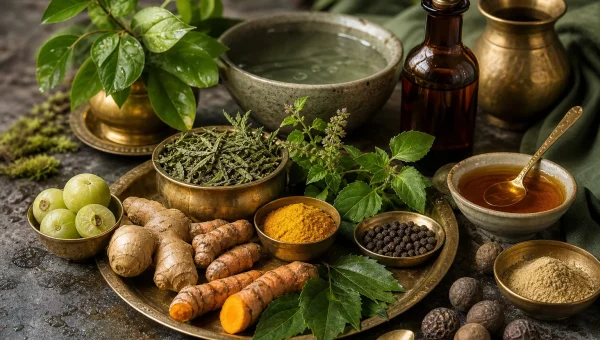
- Prefer non-iron supportive herbs. Consider herbs such as Amalaki, Guduchi, Triphala, Punarnava, Bhumi Amalaki, or Arjuna only when constitutionally appropriate and medically safe.
- Start one intervention at a time. This makes it easier to identify loose stools, rash, appetite change, liver enzyme change, sleep disturbance, or drug interaction concerns.
- Track practical outcomes. Useful markers include appetite, stool pattern, sleep, fatigue after school, recovery after transfusion, abdominal comfort, infections, and laboratory safety.
- Avoid aggressive detoxification. Strong purgation, unsupervised panchakarma, fasting, high-dose supplements, metallic preparations, and internet “thalassemia cure” protocols are not appropriate for medically fragile children.
A Research Agenda That Is Needed
The next useful step for integrative thalassemia care is disciplined clinical work: pediatric safety studies, herb-chelator interaction studies, quality-of-life protocols, fatigue and appetite assessment, liver and kidney safety monitoring, and well-designed adjunct trials that keep transfusion and chelation unchanged. This would help clarify which Ayurvedic interventions are most useful, which are neutral, and which should be avoided.
Until that level of clarity is available, the safest position is to use Ayurveda as supportive care: protect digestion, sleep, comfort, strength, family routine, and constitutional balance; avoid iron-containing preparations unless specialist-approved; and treat transfusion and chelation as the non-negotiable core of thalassemia major management.
Disclaimer: Thalassemia major and thalassemia intermedia require specialized hematological management. The complementary approaches described here should be used only with full disclosure to and coordination with the hematologist managing the patient’s care. Never reduce or discontinue chelation therapy, transfusion schedules, cardiac monitoring, endocrine monitoring, or other prescribed treatments because of herbs, diet, yoga, massage, or complementary approaches. Iron-containing Ayurvedic preparations such as Mandura, Lauha bhasma, and Punarnava Mandura require strict specialist review in any person with transfusion-related iron overload.
This article is educational and does not diagnose, treat, or cure thalassemia or any medical condition. Consult a qualified Ayurvedic practitioner and a licensed healthcare provider before starting herbs, supplements, detoxification, panchakarma, yoga protocols, or therapeutic diets, especially for children, pregnancy, chronic illness, liver or kidney disease, cardiac concerns, endocrine disorders, or concurrent medication use.
References
- Mayoclinic (mayoclinic.org)
- NCBI
- Iron chelation therapy in transfusion-dependent thalassemia patients: current strategies and future directions (2015), PubMed Central
- 2021 Thalassaemia International Federation Guidelines for the Management of Transfusion-dependent Thalassemia (2022), PubMed Central
- Charaka Samhita — Pandu Chikitsa
- Ayurvedic Pharmacopoeia of India
- Ayurvedic Pharmacopoeia of India
- Frontiersin (frontiersin.org)
- Mdpi (mdpi.com)
- Aqueous Extract of Phyllanthus niruri Leaves Displays In Vitro Antioxidant Activity and Prevents the Elevation of Oxidative Stress in the Kidney of Streptozotocin-Induced Diabetic Male Rats (2014), PubMed Central
- Efficacy of Phyllanthus niruri on improving liver functions in patients with alcoholic hepatitis: A double-blind randomized controlled trial (2021), PubMed Central
- Phytochemical, therapeutic, and ethnopharmacological overview for a traditionally important herb: Boerhavia diffusa Linn (2014), PubMed Central
- Revisiting Terminalia arjuna – An Ancient Cardiovascular Drug (2014), PubMed Central
- Quality of life among adolescents aged 14 to 18 years with Beta-Thalassemia Major (TM) in Qatar (2018), PubMed Central
- Quality of life and thalassemia in India: A scoping review (2024), PubMed Central
- Deferiprone-induced agranulocytosis: 20 years of clinical observations (2016), PubMed Central
- Sciencedirect (sciencedirect.com)
- Onlinelibrary (onlinelibrary.wiley.com)
- LWW Journals
- Academic (academic.oup.com)
not replacing transfusion is one of those boring things that probably matters most
Same here.
Yes, and honestly that framing is what makes this article worth sharing with families who might otherwise go looking for alternatives to transfusion. The ‘boring’ consistent part is what keeps kids stable. Everything else — the antioxidant support, the liver care — builds on that foundation rather than replacing it.
My nephew has thalassemia minor and we’ve always wondered whether there’s anything supportive we can do alongside his regular monitoring. This article is the first time I’ve seen a practitioner clearly say ‘complementary, not alternative’ while still offering something genuinely useful. The oxidative stress piece in particular — are there specific Rasayana preparations considered most appropriate for thalassemia minor versus major? ❤️
is there an Ayurvedic approach to managing the chelation needs in thalassemia major patients alongside deferoxamine therapy?
the article mentions Punarnavadi Mandura. is this safe for regular long-term use in thalassemia or does the copper content become an issue? 💯
thalassemia requires hematological monitoring that cant be replaced by Ayurvedic assessment. the article doesn’t make this clear enough.
iron overload caution helped me connect the symptoms with thalassemia support
The article clarifies that Ayurvedic support works best alongside regular transfusions and chelation, not as a replacement.
Good one. 🌿
this was decent, but ferritin monitoring should come with clearer limits
not sure about every claim, but chelation schedule is a fair point
thalassemia requires hematological monitoring that can’t be replaced by Ayurvedic assessment. the article doesn’t make this clear enough.
for thalassemia trait carriers who are pregnant, is the iron supplementation guidance different? standard obstetric iron doses may be inappropriate.
Could Bhumi Amla actually help lower oxidative stress in thalassemia patients, or is the evidence still limited to lab studies?
i like that fatigue support was mentioned. many posts skip that and go straight to herbs
@Nandini thalassemia requires hematological monitoring that can’t be replaced by Ayurvedic assessment. the article doesn’t make this clear enough.
I appreciate the honesty about the middle ground, more than nothing but less than a cure.
is there an Ayurvedic approach to managing the chelation needs in thalassemia major patients alonhside deferoxamine therapy? tbh
this helped mostly because of the hemoglobin expectations explanation. short but useful
Has anyone tried incorporating Triphala into their routine and noticed any change in fatigue levels?
The section on Arjuna for cardiac protection caught my attention, especially the note about discussing it with a cardiologist first.
the practical thing here is carrier status confusion, not trying ten remedies together
It seems important to distinguish thalassemia major from intermedia before considering any iron preparations like Mandura Vataka.
Thanks!
I wonder if Guduchi could really support endocrine health in iron overload, given the limited clinical data so far.
The suggestion to use Abhyanga massage to reduce procedure anxiety sounds practical for kids undergoing frequent transfusions.
Would a Sattvic diet make a noticeable difference in daily energy for someone living with thalassemia intermedia?
I’m cautious about mixing herbs with deferasirox until we have safety data on possible interactions.
The article’s call for randomized trials on Triphala and Bhumi Amla feels like a reasonable next step for evidence building.
One concern is that in vitro iron chelation results may not translate to clinical benefit in transfusion-dependent patients.
Interesting.
It would be helpful to see more quality of life studies using standardized protocols in pediatric thalassemia.
I found the explanation of Pandu Roga and its link to thalassemia symptoms quite enlightening.
Overall, the piece emphasizes that Ayurveda can complement conventional care without promising unrealistic outcomes.
Doing this. 🙏
@Andrew thalassemia requires hematological monitoring that can’t be replaced by Ayurvedic assessment. the article doesn’t make this clear enough.