
Fibromyalgia as Mamsagata Vata: A Research-Based Ayurvedic Classification
Fibromyalgia is a long-term disorder marked by widespread body pain or tenderness, fatigue, sleep disturbance, and difficulty with memory or concentration. Modern descriptions commonly place altered pain processing and central sensitization at the centre of the condition, while also noting that a single reliable diagnostic biomarker is not available. This makes fibromyalgia a useful condition for integrative clinical reasoning, because the person’s pain pattern, fatigue, sleep, digestion, mood, and functional capacity must all be assessed together.
In Ayurveda, the closest classical frame is Mamsagata Vata, or more precisely the description of Vata affecting mamsa and meda tissues. In the Charaka Samhita, Vata situated in these tissues is described with heaviness of the body, severe aching as if struck by a stick or fist, pain, and extreme exhaustion. This does not mean that the modern diagnosis of fibromyalgia is identical to a single classical disease name. It means that the muscle-dominant pain, heaviness, stiffness, fatigue, and tenderness pattern of many fibromyalgia patients can be understood through the broader Ayurvedic logic of aggravated Vata affecting the soft tissues.
The Ayurvedic classification becomes clinically useful when it guides treatment selection. In a fibromyalgia presentation, an Ayurvedic practitioner may assess whether the main pattern is dry, cold, depleted, anxious, sleep-disturbed, constipated, inflammatory, or associated with impaired digestion and ama. The resulting plan is usually not one herb or one procedure, but a staged Vata-pacifying approach that may include snehana, swedana, carefully supervised basti, digestion support, sleep support, and strengthening rasayana measures.
Clinical Literature on Ayurvedic Fibromyalgia Management
The published Ayurvedic clinical literature on fibromyalgia is still limited, but it contains several relevant clinical reports and pilot-level studies. The most useful entries are a nonrandomized controlled pilot study of additive individualized Ayurvedic treatment, a six-month follow-up study from a Maharishi Ayurveda centre, and case reports or case studies where fibromyalgia was managed through the frame of Mamsagata Vata with Panchakarma-style procedures and internal medicines.
The KAFA trial compared additive complex Ayurvedic treatment with conventional standard care alone in patients with severe fibromyalgia syndrome. The study was not a large blinded randomized trial, but it is an important clinical reference because it treated fibromyalgia as a whole-person disorder and used individualized Ayurvedic diagnosis and therapy rather than a single standardized supplement. Its value lies in showing how Ayurveda has been studied as an integrative, multimodal treatment system for fibromyalgia rather than as an isolated analgesic.
A six-month follow-up study from a Maharishi Ayurveda Health Centre in Norway also reported improvement after a facility-based Ayurvedic program for fibromyalgia. This kind of care typically includes diet, daily routine, body therapies, herbal support, rest, and individualized physician guidance. It is closer to how classical Ayurveda is practiced in chronic Vata disorders than to a single-pill research model.
Case literature gives more detail about the Ayurvedic reasoning. One published case report diagnosed fibromyalgia as Mamsagata Vata associated with Vishada and used snehana, swedana, Yoga Vasti, and internal medicines. The Fibromyalgia Impact Questionnaire score changed from 95.3 to 88.8 after the treatment period, with improvement in physical symptoms such as pain, tenderness, stiffness, constipation, headache, fatigue, and sleep-related stiffness, while mood symptoms required separate attention. Another case study used Sarvanga Abhyanga, Patra Pinda Swedana, and internal medicines, reporting a Revised Fibromyalgia Impact Questionnaire score change from 64 before treatment to 20 after the fourteenth day and at follow-up.
| Evidence Source | Ayurvedic Frame | Participants | Main Reported Outcome | Clinical Use |
|---|---|---|---|---|
| KAFA Trial, 2013 | Additive individualized complex Ayurveda with standard care | Pilot-level severe fibromyalgia cohort | Compared individualized Ayurveda plus conventional care with conventional standard care alone | Supports an integrative, individualized model |
| Maharishi Ayurveda follow-up study, 2009 | Facility-based multimodal Ayurveda | Fibromyalgia pilot cohort | Symptom improvement reported at six-month follow-up | Supports whole-program Ayurvedic care |
| Gupta and Mamidi case report | Mamsagata Vata with Vishada; Snehana, Swedana, Yoga Vasti | Single case | FIQ changed from 95.3 to 88.8; physical symptoms improved more than mood symptoms | Shows how classical Vata diagnosis may be applied clinically |
| Panchakarma case study, 2023 | Sarvanga Abhyanga, Patra Pinda Swedana, and internal medicines | Single case | FIQR changed from 64 before treatment to 20 after treatment and at follow-up | Supports oleation and fomentation as central Vata-pacifying measures |
Why the Mamsagata Vata Model Fits the Symptom Pattern
The classical signs of Vata in mamsa and meda emphasize heaviness, diffuse aching, pain, and exhaustion. These are also central clinical complaints in many fibromyalgia presentations. The match is strongest when the patient describes deep muscular pain, body ache, stiffness, fatigue after minimal exertion, cold sensitivity, poor sleep, constipation, anxiety, or fluctuating pain without clear structural injury.
The classification should remain flexible. Fibromyalgia may also involve sleep disturbance, cognitive symptoms, headache, irritable bowel-type symptoms, and mood changes. In Ayurvedic assessment these may be considered through associated Vata aggravation, manovaha srotas involvement, agni disturbance, ama, Vishada, or depletion of strength. The Mamsagata Vata label is therefore best understood as the main musculoskeletal frame, not as the whole clinical picture.
Core Ayurvedic Treatment Logic
For Vata affecting muscle-dominant tissues, classical management favours Vata-pacifying and tissue-supporting measures. In reported fibromyalgia cases, this has translated into external oleation, sudation, basti schedules where appropriate, internal medicines, bowel regulation, sleep support, and gradual strengthening. The treatment sequence must be adjusted to the patient’s strength, digestion, bowel habits, pain sensitivity, age, medications, and associated conditions.
Snehana and Abhyanga: Oil application is central because Vata is classically dry, light, mobile, and cold. Warm oil, slow massage, and routine help counter these qualities. In clinical case literature, oils such as Dhanwantaram taila, Karpooradi taila, Ksheerabala taila, Mahamasha taila, and other sesame-based preparations have been used according to the presentation.
Swedana: Fomentation or sudation is used after oleation when appropriate. Ayurvedic texts describe swedana as useful for pain, stiffness, heaviness, and coldness. In fibromyalgia-type pain, the intensity must be gentle and individualized, because excessive heat, pressure, or exertion may aggravate a sensitive patient.
Basti: In Vata disorders, basti is one of Ayurveda’s major physician-supervised procedures. In fibromyalgia case literature, Yoga Vasti with Niruha Basti and Anuvasana Basti has been used after oleation and sudation. This is not a home enema routine. Decoction-based and oil-based basti require clinical preparation, correct selection, hygiene, timing, and monitoring by a qualified practitioner.
Internal medicines and Rasayana: Internal treatment is chosen according to the pattern. A depleted, weak, poor-sleep presentation may call for nourishing and strengthening medicines, while an ama-dominant presentation may first require digestive correction. This is why fixed supplement protocols are less Ayurvedic than individualized care.
Herbs and Oils Relevant to the Mamsa-Vata Frame
Several Ayurvedic herbs and medicated oils are relevant to a Mamsagata Vata interpretation, but they should not be treated as a universal fibromyalgia formula. The right choice depends on constitution, digestion, bowel pattern, sleep, pain quality, coexisting illness, pregnancy status, blood pressure, and current medicines.
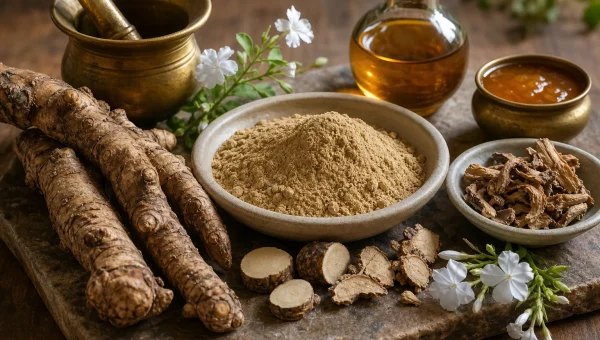
Ashwagandha (Withania somnifera): The Ayurvedic Pharmacopoeia of India identifies Ashwagandha as the dried mature root of Withania somnifera. In Ayurvedic practice it is used in strengthening and rasayana-oriented contexts, especially where fatigue, depletion, poor sleep, and Vata aggravation are prominent. It may be considered as part of a broader plan, not as a stand-alone cure for fibromyalgia.
Bala (Sida cordifolia): Bala is traditionally associated with strength, nourishment, and Vata disorders, and it appears in important medicated oils such as Ksheerabala taila. Because Sida cordifolia can contain stimulant alkaloids such as ephedrine and pseudoephedrine, unsupervised use is inappropriate in people with hypertension, arrhythmia, cardiac disease, stimulant medication use, pregnancy, or other higher-risk conditions.
Shallaki or Kunduru (Boswellia serrata): The Ayurvedic Pharmacopoeia of India describes Kunduru as the oleo-gum-resin exudate of Boswellia serrata, with Shallaki as a recognized synonym. Its listed Ayurvedic actions include Vatahara, Kaphahara, and Balya. It is most relevant when muscle pain overlaps with stiffness, joint discomfort, or inflammatory features, and it should be selected with attention to digestion and concurrent medicines.
Sesame-based medicated oils: Sesame oil is a major base for many Vata-pacifying formulations. In fibromyalgia case literature, medicated oils have been used externally through Abhyanga and related procedures. The practical aim is to combine warmth, lubrication, steadiness, and gentle tissue support rather than to force deep pressure into painful points.
Basti and Panchakarma in a Supervised Setting
Panchakarma-style management may be considered when pain is chronic, widespread, and associated with constipation, stiffness, poor sleep, heaviness, or marked Vata aggravation. A typical supervised plan may begin with assessment of digestion and strength, then proceed to external oleation, fomentation, and only then to basti or other procedures if the patient is suitable.
Niruha Basti generally uses a decoction base combined with ingredients such as oil, paste, salt, and honey according to classical rules. Anuvasana Basti uses medicated oil. Because both require correct preparation and patient selection, they should be performed only under qualified Ayurvedic supervision. Our overview of Panchakarma’s five detox therapies explains the broader context within which basti therapy sits.
Abhyanga Protocol for Home Self-Management
Daily or near-daily warm oil self-massage is the most accessible Vata-pacifying home practice for many people with fibromyalgia-type pain. Use plain sesame oil or a practitioner-recommended medicated oil, warmed comfortably, and apply it with slow, steady strokes for 10-20 minutes before a warm shower. Pressure should be calming, not painful. Tender areas should be handled gently rather than pressed aggressively.
Abhyanga should be avoided or modified during fever, acute infection, active skin inflammation, severe indigestion, immediately after heavy meals, or when oil on the floor creates a fall risk. People with severe pain flares, neuropathy, dizziness, pregnancy, or complex medical conditions should take practitioner guidance before making it a daily routine. For the relationship between Vata, channels, and chronic pain management, our post on the srotas system and channel health provides useful context.
How to Read the Current Evidence
The current clinical record supports Ayurveda as an individualized, multimodal, integrative approach for fibromyalgia care. The best-supported Ayurvedic logic is not a single herb protocol, but a Vata-focused plan that combines body therapies, carefully selected Panchakarma procedures, internal medicines, digestive regulation, sleep support, and gradual restoration of strength.
At the same time, fibromyalgia requires proper medical evaluation, especially when pain is new, rapidly worsening, associated with fever, weight loss, neurological signs, inflammatory joint swelling, anemia, thyroid disease, autoimmune disease, or medication side effects. Ayurveda can be used alongside conventional care, but it should not replace essential diagnosis, emergency care, or prescribed treatment for severe symptoms.
Disclaimer: This article is for educational purposes only and does not replace professional medical advice. Consult a qualified Ayurvedic practitioner and a healthcare provider before starting herbs, Panchakarma, basti therapy, or any new health regimen, especially if you are pregnant, have chronic disease, or take prescription medicines.
References
- Niams (niams.nih.gov)
- CDC
- Mayoclinic (mayoclinic.org)
- Mdpi (mdpi.com)
- Fibromyalgia: A Review of the Pathophysiological Mechanisms and Multidisciplinary Treatment Strategies (2024), PubMed Central
- Charaka Samhita — Vatavyadhi Chikitsa
- Wisdomlib — classical text
- Jpsionline (jpsionline.com)
- Additive Complex Ayurvedic Treatment in Patients with Fibromyalgia Syndrome Compared to Conventional Standard Care Alone: A Nonrandomized Controlled Clinical Pilot Study (KAFA Trial) (2013), PubMed
- Ctv (ctv.veeva.com)
- Treatment of fibromyalgia at the Maharishi Ayurveda Health Centre in Norway. A six-month follow-up study (2009), PubMed
- Jahm (jahm.co.in)
- Ayurvedic Pharmacopoeia of India
- Ayurvedic Pharmacopoeia of India
- Jaims (jaims.in)
- Jaims (jaims.in)
- Jaim (jaim.in)
- Ancientscienceoflife (ancientscienceoflife.org)
- Ayujournal (ayujournal.org)
- Sciencedirect (sciencedirect.com)
- Sciencedirect (sciencedirect.com)
- Ayurvedhealing (ayurvedhealing.com)
- Ayurvedhealing (ayurvedhealing.com)
The warm sesame oil Abhyanga can it be done daily or is every other day sufficient?
For fibromyalgia especially I’d think daily would be better — the whole point of Abhyanga in Mamsagata Vata is consistent nourishment of the muscle tissue, and skipping days might interrupt that. But I imagine it depends on how reactive your skin is to sesame. Have you had any sensitivity issues with daily use? ❤️
is there a role for Panchakarma (specifically Virechana or Basti) for severe fibromyalgia or is the home protocol sufficient?
At what point does the Ayurvedic approach for fibromyalgia need to be complemented by Pregabalin or Duloxetine? What symptoms signal that threshold?
Any concern about Ashwagandha worsening the sleep disturbances that often accompany fibromyalgia?
Any concern about Ashwagandha worsening the sleep disturbances that often accompany fibromyalgia? ठीक है
That’s a relevant concern — Ashwagandha does have stimulating properties for some people at higher doses, even though it’s classified as a nervine tonic. Have you tried it? My fibro sleep is already disrupted and I’ve been hesitant to add anything that might tip it further. ठीक है
@Kavita the IBS overlap is exactly what makes this complicated for a lot of us — the gut-nervous system connection in fibromyalgia means anything that disturbs Apana Vata probably affects both simultaneously. I’d imagine the herb selection would shift toward more gut-soothing options like Shatavari and away from anything too heating, but I’m also just guessing based on what I’ve read.
I tried the full Vata-pacifying protocol for 3 months with no reduction in my fibromyalgia pain scores on VAS. The sleep improvement was marginal. 💯
had the same experience with this.
good question. mine is similar still figuring out the timing.
fibromyalgia for 7 years and the Mamsagata Vata framework is the first model that explains why cold weather, stress, and poor sleep all trigger my flares simultaneously.
Fibromyalgia is a central sensitization syndrome. Peripheral oil massage and herbs address only a part of the mechanism. Central pain modulation needs more.
The pain mechanism description conflates peripheral and central sensitization. Mamsagata Vata as an explanation for fibromyalgia is reductive.
fibromyalgia pain is complex, so i liked that it doesnt claim one herb fixes it
that’s a good point, the dosage question is something I also asked my vaidya about.
Useful info.
The Vata-pacifying Abhyanga with Bala taila and warm fomentation protocol has reduced my tender point sensitivity from 15 to 9 points in 2 months.
The article makes a strong case for viewing fibromyalgia through the lens of Mamsagata Vata.
Helpful.
Same here — the Mamsagata Vata framing helped me understand why fibromyalgia responds so poorly to the typical anti-inflammatory approach. If the pathology is primarily Vata-driven rather than inflammatory, then protocols that focus on nourishment and nervous system grounding make more sense than the usual approach. 💯
had the same experience with this. नमस्ते
Any concern about Ashwagandha worsening the sleep disturbances that often accompany fibromyalgia? 🙏
Is the Mamsagata Vata protocol different for fibromyalgia with IBS overlap (which is very common)? 🙏