
Ayurvedic Cold and Flu Protocol: Stage-Wise Herbs and Remedies
The common cold maps most closely to Pratishyaya in Ayurveda, while flu-like illness with fever is managed under the broader framework of Jwara. Classical Ayurvedic management is stage-specific: it emphasizes prevention before illness, lightening and warming measures at the first signs, careful diet during fever and congestion, and gradual rebuilding of strength after symptoms settle. The safest approach is to match herbs, food, and lifestyle to the stage of illness, the strength of digestion, the dominant dosha, age, medical history, and severity of symptoms.
Prevention: Building Resilience Before the Cold Arrives
Ayurveda places major emphasis on Swasthya Rakshana, the protection of health before disease develops. For seasonal respiratory complaints, this means maintaining steady Agni, avoiding Ama-forming habits, sleeping adequately, eating warm seasonal food, and using gentle Rasayana support when appropriate.
Chyawanprash: The Classical Rasayana Jam
Chyawanprash is a classical polyherbal Avaleha with Amalaki as a central ingredient. It is traditionally used as a Rasayana to support strength, nourishment, and resilience, especially during seasonal transitions and recovery from weakness. A common adult preventive use is about 1 teaspoon daily with warm milk or warm water, adjusted for constitution, appetite, and blood-sugar considerations. People with diabetes, very heavy Kapha symptoms, active fever, or sensitive digestion should use it only with practitioner guidance. For complete information on this formulation, see the Chyawanprash guide.
Tulsi: A Daily Respiratory Support Herb
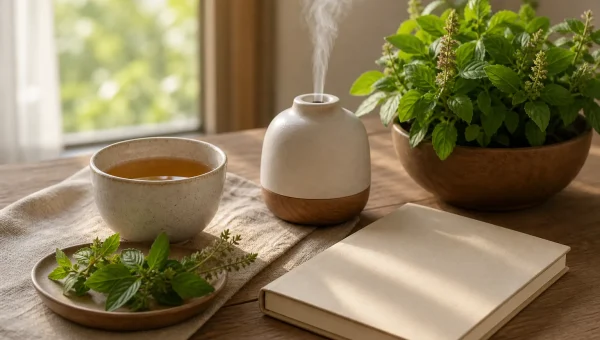
Tulsi is widely used in Ayurveda for cough, cold tendency, seasonal respiratory discomfort, and general resilience. It may be taken as tea by steeping fresh leaves or dried Tulsi in hot water, especially during damp, cold, or Kapha-heavy weather. Honey may be added only after the tea cools to drinking temperature. People taking blood-thinning medicines, those preparing for surgery, pregnant individuals, and people with complex medical conditions should ask a healthcare provider before using Tulsi regularly.
Amalaki and Guduchi
Amalaki is a major Ayurvedic Rasayana and is central to many restorative formulas, including Chyawanprash. It is especially useful in recovery phases when nourishment is needed without overburdening digestion. Guduchi is traditionally used in fever, convalescence, and Pitta-Kapha conditions, but it should be used thoughtfully, especially by people with liver disease, autoimmune disease, transplant history, or immunosuppressive medicines. For comparative information on Amalaki, see the Amalaki guide, and for Guduchi, see the Guduchi guide.
Treatment Timeline: From Prevention to Recovery
A stage-wise protocol is more Ayurvedically accurate than taking the same herbs throughout the illness. Early heaviness, sneezing, and throat irritation call for lightening and warming measures; active congestion calls for Kapha-clearing support; fever calls for careful rest, fluids, and medical judgment; recovery calls for gentle nourishment rather than immediate heavy food or strenuous exercise.
| Stage | Timeline | Key Support | Diet | Lifestyle |
|---|---|---|---|---|
| Prevention | Daily, especially during seasonal transitions | Chyawanprash when suitable, Tulsi tea, Amalaki, practitioner-guided Guduchi | Warm cooked seasonal meals | Regular Dinacharya, pranayama, adequate sleep |
| First Signs | At onset of sneezing, throat tickle, fatigue, chilliness, or heaviness | Trikatu with honey for suitable Kapha/Vata presentations, Tulsi-ginger tea, warm gargle | Light soups, warm water, thin moong dal | Rest, steam inhalation with caution, early bedtime |
| Active Cold | Congestion, cough, sore throat, low appetite | Sitopaladi Churna or Talisadi Churna when appropriate | Kitchari, thin dal, warm vegetable broth | Bed rest, warm fluids, avoid cold exposure |
| Flu-Like Fever | Fever, body ache, marked fatigue, poor appetite | Practitioner-guided Sudarshan or Mahasudarshan; avoid self-prescribing mineral or herbo-mineral medicines | Warm water, rice water, thin moong soup, light liquids as tolerated | Complete rest, temperature monitoring, medical care when warning signs appear |
| Recovery | Symptoms settling, weakness remaining | Chyawanprash when suitable, Amalaki, gentle Rasayana support, Ashwagandha only when indicated | Gradual return from kitchari and soups to normal meals | Gentle walks, mild pranayama, avoid strenuous exercise until strength returns |
The “At First Sign” Protocol
The first day of symptoms is the best time to simplify the diet, protect digestion, increase rest, and use gentle warming measures before Kapha congestion becomes heavier. This stage is not the time for heavy meals, chilled drinks, late nights, or intense exercise.
Trikatu with Honey
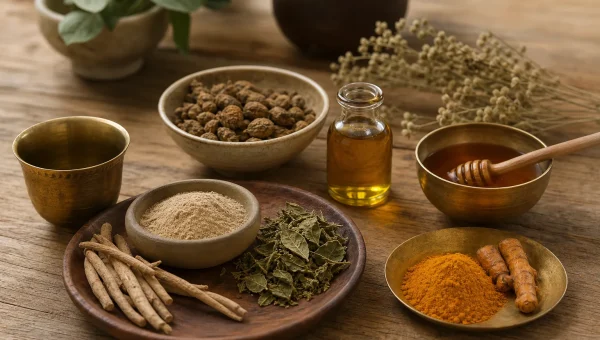
Trikatu is the classical three-pungent combination of black pepper, long pepper, and dried ginger. For an adult with a Kapha-type onset marked by heaviness, sneezing, chilliness, mucus, and low appetite, a small amount such as 1/8 to 1/4 teaspoon may be mixed with honey and taken once or twice in a day. It is not suitable for everyone: avoid or seek guidance in gastritis, acidity, mouth ulcers, active bleeding disorders, pregnancy, high Pitta signs, or when taking medicines that may interact with strong pungent herbs. For detailed information on this formula, see the Trikatu guide.
Tulsi-Ginger Tea
Steep 5-10 fresh Tulsi leaves or 1 teaspoon dried Tulsi with a few slices of fresh ginger in hot water for 5-10 minutes. Sip warm. Honey may be added only after the tea is no longer hot. This is best suited to cold, damp, Kapha-type onset with throat irritation, sneezing, and heaviness; reduce ginger if there is burning, high Pitta, or strong acidity.
Steam, Gargle, and Rest
Steam inhalation may ease the feeling of nasal blockage, but it must be done carefully to avoid burns. Plain steam or steam with Tulsi leaves or a small pinch of ajwain is usually gentler than strong essential oils. Warm salt-water gargling can soothe throat discomfort. Children, pregnant individuals, people with asthma, and those sensitive to strong aromas should avoid essential oils unless advised by a qualified clinician.
Active Cold Treatment: Classical Formulations
When congestion, cough, throat irritation, and appetite loss are established, Ayurveda generally favors light food, warm fluids, rest, and formulas chosen according to the quality of cough and mucus. Classical powders should be used in appropriate dose and duration rather than taken continuously without assessment.
Sitopaladi Churna
Sitopaladi Churna is a widely used Ayurvedic formulation for cough, cold, throat irritation, and upper respiratory congestion. Its classical ingredient pattern includes Mishri, Vamshalochana, Pippali, Ela, and Twak. It is commonly taken with honey in small doses, especially when cough is irritating and the throat needs soothing. People with diabetes should be cautious because the formula contains sugar, and anyone with persistent cough, breathlessness, chest pain, or high fever should seek medical evaluation.
Talisadi Churna
Talisadi, also known in many contexts as Talisapatradi Churna, is used when Kapha is heavier, mucus is thicker, appetite is low, and the cough feels more productive. It is warming and stimulating, so it is not ideal for strong burning sensation, high Pitta signs, or severe dryness unless balanced by a practitioner. It should be selected according to the person’s presentation rather than used as a default cold medicine.
Rasa Shastra Preparations
Mahalaxmi Vilas Ras and related herbo-mineral preparations are traditionally used only under qualified Ayurvedic supervision. These are not home remedies. Because Rasa Shastra medicines may include purified mineral or metallic ingredients, self-prescription is inappropriate, especially in children, pregnancy, kidney disease, liver disease, chronic illness, or when taking modern medicines.
Flu-Like Fever Management
In Ayurveda, Jwara is treated with special attention to stage, dosha, digestive strength, thirst, appetite, body ache, and the patient’s vitality. Fever with severe weakness, dehydration, breathing difficulty, confusion, chest pain, stiff neck, persistent high temperature, or high-risk medical status requires prompt medical care.
Sudarshan and Mahasudarshan
Sudarshan and Mahasudarshan formulations are classical fever-oriented preparations centered on bitter herbs such as Kiratatikta. They are used by practitioners when fever is accompanied by poor appetite, heaviness, body ache, and Ama features. They are best used with professional guidance, especially in children, pregnancy, older adults, liver disease, and people taking regular medicines.
Godanti Bhasma
Godanti Bhasma is a gypsum-based Ayurvedic mineral preparation used in traditional practice for fever and headache patterns, especially when selected by dosha and clinical presentation. It should not be treated as an over-the-counter antipyretic. Use it only when prescribed by a qualified Ayurvedic practitioner using a trusted preparation and appropriate dose.
Diet and Fluids During Fever
When fever weakens appetite, Ayurveda gives priority to Langhana, meaning lightening measures suitable to strength. Warm water, rice water, thin moong soup, and very light meals are preferred until appetite returns. Heavy meals, fried food, cold drinks, alcohol, and overeating during fever can burden digestion and prolong post-illness weakness.
Dosha-Specific Cold Presentations
Ayveda does not treat every cold as identical. Pratishyaya may present with Vata, Pitta, Kapha, or mixed features, and the same herb can help one presentation while aggravating another.
Vata-type cold: Dry cough, scanty mucus, hoarse voice, dryness of throat or lips, body ache, chilliness, disturbed sleep, and a thin watery nasal flow. Treatment emphasizes warmth, rest, gentle oiling when appropriate, warm soups, and avoiding dryness, fasting beyond strength, and cold wind exposure.
Kapha-type cold: Heavy congestion, thick or sticky mucus, dullness, sleepiness, heaviness of head and face, low appetite, and sinus pressure. Treatment emphasizes light warm food, pungent and bitter support, steam with caution, avoiding curd, cold food, excess sweets, and daytime sleeping.
Pitta-type cold: Feverishness, burning throat, yellowish discharge, thirst, irritability, heat sensation, and inflamed throat or eyes. Treatment emphasizes cooling but not chilled support, bitter herbs selected by a practitioner, adequate fluids, and avoidance of excess chili, alcohol, fried food, and overheating. The respiratory health herb guide covers dosha-specific respiratory protocols in more detail.
Diet During Illness
Ayurveda considers diet during illness to be part of treatment. The guiding principle is to feed Agni according to its present capacity. During cold and fever, appetite is often lower; food should therefore be warm, simple, moist, and easy to digest.
Day 1-2: Onset
At the beginning, reduce digestive load and favor warm liquids and light foods.
- Warm water, ginger tea, or Tulsi tea when suitable
- Clear vegetable broth or thin moong dal soup
- Soft rice gruel or rice water if appetite is very low
- Avoid cold drinks, ice cream, fried food, heavy sweets, and overeating
Day 3-5: Active Cold
When congestion is active, food should remain warm and simple, with spices used according to tolerance.
- Simple kitchari made with rice, split mung dal, cumin, coriander, turmeric, and a small amount of ghee if tolerated
- Warm vegetable broth or thin dal
- Steamed vegetables that are easy to digest
- Avoid curd, chilled dairy, excess sugar, and heavy wheat preparations when mucus is thick
Day 6-10: Recovery
After symptoms settle, digestion and strength should be rebuilt gradually rather than suddenly returning to heavy food and exertion.
- Continue kitchari, soups, and soft cooked meals for a few days if weakness remains
- Gradually reintroduce normal foods as appetite becomes steady
- Resume Chyawanprash only when fever has settled and digestion is ready
- Use Ashwagandha or other Rasayana herbs only when appropriate for constitution and stage
The sattvic diet approach during recovery supports simple nourishment and mental clarity. For comprehensive dietary guidance, see the sattvic diet guide.
Home Remedies and Kitchen Pharmacy
Many useful cold-season supports can be prepared from common kitchen ingredients, but they should still be matched to the person’s symptoms. Strong heating remedies are not suitable for every sore throat or fever.
Golden Milk: Warm milk or a suitable plant-based alternative may be simmered gently with turmeric, a small pinch of black pepper, cinnamon, and a little ghee. It is best used in recovery, dryness, or Vata-type irritation, and should be avoided during heavy Kapha congestion if it increases mucus.
Ginger-Tulsi-Honey Tea: Boil a few slices of fresh ginger with Tulsi leaves, strain, allow it to cool to drinking temperature, and then add honey if desired. Honey should not be boiled or mixed into very hot liquid according to Ayurvedic dietary tradition.
Warm Salt Gargle: Dissolve a small amount of salt in warm water and gargle several times daily for throat comfort. A pinch of turmeric may be added if tolerated, but the liquid should not be swallowed in large amounts.
Ajwain Steam: Ajwain seeds may be added to hot water for inhalation when congestion is heavy. Keep the face away from the pot, avoid overheating, and do not use strong steam or essential oils for small children, people with asthma, or anyone who feels irritation.
Seasonal Susceptibility and Prevention
Ayurveda links seasonal vulnerability to doshic accumulation and aggravation. Late winter and spring are commonly associated with Kapha heaviness, mucus, sluggish appetite, and congestion, so lighter warm meals, regular movement, and reduced cold-sweet-heavy foods are favored. In cold and windy periods, Vata protection becomes important through warmth, adequate sleep, oil massage when suitable, and nourishing but digestible meals. The Ritucharya seasonal routine guide covers these transitions in detail.
When to See a Doctor
Ayurvedic home care is appropriate only for mild, uncomplicated cold symptoms in otherwise stable individuals. Flu-like fever, breathing difficulty, severe symptoms, high-risk conditions, or symptoms that are not improving require medical assessment.
- Fever of 103°F / 39.4°C or higher in an adult, or any concerning fever in an infant, older adult, pregnant person, or medically fragile person
- Difficulty breathing, shortness of breath, chest pain, blue lips, confusion, fainting, seizure, or severe weakness
- Severe headache with stiff neck, persistent vomiting, dehydration, or inability to keep fluids down
- Symptoms that improve and then return worse, or fever that persists beyond a few days
- Underlying conditions such as asthma, diabetes, heart disease, kidney disease, cancer treatment, immune suppression, or transplant history
- Bloody sputum, severe sinus pain, ear pain, or worsening symptoms lasting more than 10 days
- Possible COVID-19, influenza, pneumonia, or other contagious infection requiring testing, antiviral consideration, or medical guidance
Green or yellow mucus alone does not prove a bacterial infection, and antibiotics do not treat ordinary viral colds. Ayurvedic herbs can interact with medicines: Tulsi may increase bleeding risk with anticoagulant or antiplatelet drugs, Guduchi requires caution in liver disease and immune-related conditions, and mineral or herbo-mineral preparations should never be self-prescribed. Always disclose herbs and supplements to your healthcare provider.
Building Long-Term Respiratory Resilience
The most sustainable Ayurvedic strategy is year-round maintenance rather than last-minute treatment. A practical routine may include warm seasonal meals, consistent sleep, moderate exercise, pranayama such as Nadi Shodhana when comfortable, stress reduction, Abhyanga when suitable, and gentle Rasayana support such as Chyawanprash or Amalaki when digestion permits. The pranayama guide provides specific techniques for respiratory health support.
This article is for general Ayurvedic education and is not a substitute for medical diagnosis or treatment. Consult a qualified Ayurvedic practitioner and a licensed healthcare provider before starting herbs, treating fever, giving remedies to children, using herbs during pregnancy, combining herbs with medicines, or using mineral and herbo-mineral preparations.
References
- Charaka Samhita — Jwara Chikitsa
- Easyayurveda (easyayurveda.com)
- Chyawanprash: A Traditional Indian Bioactive Health Supplement (2019), PubMed Central
- Evaluation of immunostimulatory activity of Chyawanprash using in vitro assays (2015), PubMed
- Evaluation of Cyavanaprāśa on Health and Immunity related Parameters in Healthy Children: A Two Arm, Randomized, Open Labeled, Prospective, Multicenter, Clinical Study (2017), PubMed
- Chyawanprash: A review of therapeutic benefits as in authoritative texts and documented clinical literature (2017), PubMed
- Double-blinded randomized controlled trial for immunomodulatory effects of Tulsi (Ocimum sanctum Linn.) leaf extract on healthy volunteers (2011), PubMed
- The Clinical Efficacy and Safety of Tulsi in Humans: A Systematic Review of the Literature (2017), PubMed
- Merckmanuals (merckmanuals.com)
- An Ayurvedic formulation ‘Trikatu’ and its constituents (1992), PubMed
- Studies on the physicochemical characteristics of heated honey, honey mixed with ghee and their food consumption pattern by rats (2010), PubMed Central
- Physico-chemical standardization of Sitopaladi churna (2012), PubMed Central
- Mast cell stabilization potential of Sitopaladi churna: An ayurvedic formulation (2013), PubMed
- LWW Journals
- Validation and quantification of major biomarkers in ‘Mahasudarshan Churna’- an ayurvedic polyherbal formulation through high-performance thin-layer chromatography (2020), PubMed Central
- Ijam (ijam.co.in)
- Manipalcigna (manipalcigna.com)
- NCCIH
- FDA
- NCBI
- Pib (pib.gov.in)
- Thymol screening, phenolic contents, antioxidant and antibacterial activities of Iranian populations of Trachyspermum ammi (L.) Sprague (Apiaceae) (2022), PubMed Central
- An overview on ashwagandha: a Rasayana (rejuvenator) of Ayurveda (2011), PubMed
- CDC
- CDC
- Mayoclinic (mayoclinic.org)
- Newsnetwork (newsnetwork.mayoclinic.org)
The stage-specific protocol is what makes this different from every other cold remedy article. Most advice treats a cold as a single uniform thing. The early, active, and recovery phases are genuinely different and need different approaches.
The stress management section here is more practical than anything I’ve found in mainstream wellness content. Specific, grounded in principle and actually doable.
The connection between daily rhythm and long-term health makes so much intuitive sense. We evolved within consistent cycles and modern life pulls us away from them constantly.
Reading this later and the Cold and Flu advice still feels relevant. This is the kind of detail readers can test slowly.
I work in healthcare too and I appreciate you engaging with this from a clinical standpoint.
as a sleep researcher I find the Ayurvedic approach to sleep hygiene fascinating. The emphasis on regularity and wind-down time is well supported by chronobiology.
this is so helpful to read. I’m just starting out with this and hearing positive experiences helps me stay motivated
The breath practices described here have become my anchor for stressful workdays. Five minutes at my desk and my whole mental state shifts. Simple and powerful.
The logic of matching lifestyle to constitution rather than following generic wellness advice is something I wish I’d understood years ago. Tailored approaches just work better.
Thank you for sharing the practical tip about sourcing. That’s something Ive been confused about.
Finally something wellness-related that acknowledges different people need different approaches rather than one universal protocol. That respect for individual difference is rare.
I’m going to share this comment with my skeptical partner. Exactly what I needed to articulate why this works.
I’ve been trying to establish a morning routine for years and this is the first framework that’s actually stuck. Three months in and I can’t imagine starting the day differently
I had a very similar experience! The first few weeks are the adjustment period, it really does get better.
Reading this later and the Cold and Flu advice still feels relevant. The examples make the advice less abstract.
I implemented one change per week rather than trying to do everything at once. Three months later and I’ve built a sustainable routine. The pacing made all the difference
Ive implemented the evening routine for the past month. My sleep has improved dramatically. The hour before bed without screens has been the single biggest change
Even doing just three of the practices recommended here made a noticeable difference. Sometimes it’s the basics done consistently that create the biggest shifts
Wonderful to see someone from a medical background engaging with this content thoughtfully.
I travel for work constantly and maintaining wellness while traveling felt impossible. The travel protocol here has genuinely helped. The portable practices especially
I work 60-hour weeks and keeping any consistent routine felt impossible. The minimal viable version of Dinacharya described here is exactly what I needed to start.
The section on digital overwhelm and Vata aggravation perfectly described my current state. Implementing the sensory rest practices this week.
Your experience with the diet changes mirrors mine almost exactly. Week two is when it clicks
After years of intensive exercise I switched to the constitution-appropriate movement described here. My recovery is better, my mood is more stable, and I feel less depleted.
That’s a really important distinction you’ve made. I think a lot of people skip the preparation phase and then wonder why results are inconsistent
this gives me a compassionate framework for understanding why my anxiety spikes at certain times of year and what to do about it. So much more useful than generic advice.
The Cold and Flu explanation is clearer than most short posts. A few more examples would still help.
I’m a naturopathic doctor and I often describe Ayurvedic lifestyle principles to patients using exactly this kind of framing. Clear, logical, and non-dogmatic.
Your experience with the diet changes mirrors mine almost exactly. Week two is when it clicks.
The guidance on working with seasonal changes rather than fighting them is profound. I’ve always felt worse in winter and now I understand why and what to do about it.
Your persistence through the adjustment period is inspiring. I’m currently in it and your comment helps
I used the early stage protocol starting within 2 hours of noticing symptoms last November. The cold that was clearly developing did not progress. I will never be skeptical of the timing principle again.
The Pratishyaya and Jwara distinction being clinically meaningful is something I hadn’t thought about. Treating a cold the same as a fever makes as little sense in Ayurveda as using the same medication for both.
The Tulsi, ginger, and black pepper decoction at the first sign is a recipe I learned from my mother and passed to my children. The article gives me the mechanism that she never explained.
The concept is great but the execution could be better. A lot of ‘do this’ without explaining the why behind each step.
My concern with articles like this is that people might delay proper medical treatment. A stronger disclaimer would be responsible.
Followed this advice for a month. Not only did it not help, my symptoms actually got slightly worse before I went back to my doctor
Thank you for the honest feedback. You’re absolutely right that individual responses vary, and we should emphasize that more. We’ll update the article to include stronger caveats about individual variation.
What is the protocol for someone who can’t have spicy preparations? I have a gastric ulcer history and the Trikatu-heavy formulations may aggravate rather than help.
Appreciate you keeping us honest. We’ve noted your feedback about dosage specificity and will address it in a revised version of this article.
I think the article could be improved by addressing the quality control issues with Ayurvedic herbs. Heavy metal contamination is a real concern with unregulated products
My integrative doctor agrees with this approach, which surprised me. More research needed but encouraging.
tried sitopaladi churna for a cough that had persisted for three weeks after a cold. It resolved in five days. The amount of cough syrup I had taken before that without resolution is embarrassing in comparison.
The seasonal variation advice is the part most Ayurveda articles skip. Results are slow but steady.
The diet changes listed here are harder to follow than the herbs but more impactful. My sleep improved first, then energy.
Would love to see a version of this article aimed at practitioners. Combined with yoga practice for better results.
Three months in and the improvement is steady if slow. Still a work in progress.
The recovery experience described in the comments here matches mine closely. The timing of doses matters more than I expected.
Anyone else tried combining this with Neem? Still a work in progress.
Langhana (fasting/lightening) during acute fever hard to follow when hungry but the logic is clear.
Is Giloy safe for children during fever?
Shared this with my mother who has been dealing with this for 5 years. Results are slow but steady.
The herb quality issue is real I’ve noticed significant variation across brands. More research needed but encouraging.
The breakdown of prevention versus active treatment stages makes the protocol easy to follow.
Is this safe with antacids? Will update in a few months.
Sitopaladi with Talisadi wet vs dry cough distinction. Practical differentiation most people need.
Shared this with my mother who has been dealing with this for 5 years. More research needed but encouraging.
Been researching this for my father. The practical tips are what he can actually follow. My practitioner is monitoring.
Anyone else tried combining this with Amalaki? My practitioner is monitoring.
Tried this for 6 months and noticed reduced pain. Combined with yoga practice for better results.
Would appreciate a follow-up article specifically on the dosage for elderly patients. Still a work in progress.
I liked the practical side of Cold and Flu. The safety notes could be expanded a little.
The safety profile section is the most important part and it’s well done. My practitioner is monitoring.
I’ve tried multiple approaches before landing on what the article recommends. Finding a good source was the challenge.
Late to this post but it answered a question I’ve had for months. My sleep improved first, then energy.
Is there an appropriate Ayurvedic protocol for high fever (>103°F) alongside conventional care?
Is this safe with antacids? The diet changes helped too.
Would love to see a version of this article aimed at practitioners. My sleep improved first, then energy.
The seasonal variation advice is the part most Ayurveda articles skip. Combining with dietary changes.
The avoidance of cold foods during treatment is something my body confirmed independently. Took 3 weeks before I noticed anything.
Tulsi-ginger-black pepper decoction is the cheapest, most effective day-1 cold intervention.
The recovery experience described in the comments here matches mine closely. More research needed but encouraging.
Anyone else tried combining this with Ashwagandha? Started with half the dose initially.
Tried the recipe/formula mentioned and the results after 6 weeks were encouraging. The timing of doses matters more than I expected.
Does anyone know if this applies for a Vata-Pitta dual prakriti? The timing of doses matters more than I expected.
The dosage section here is more specific than most sources I’ve seen. Consistency seems to be the key.
The classical Sanskrit terms with explanations are helpful for beginners. Still a work in progress.
The diet changes listed here are harder to follow than the herbs but more impactful. The quality of the herb matters a lot.
Would love to see a version of this article aimed at practitioners. Finding a good source was the challenge.
Does this protocol work for SARS-CoV-2 associated fever or was it developed for classical infectious fevers?
The recovery experience described in the comments here matches mine closely. Still a work in progress.
The Amruta (Guduchi) satva for fever is purer than crude herb and faster acting.
Three months in and the improvement is steady if slow. Combined with yoga practice for better results.
The seasonal variation advice is the part most Ayurveda articles skip. Took 3 weeks before I noticed anything.
The seasonal variation advice is the part most Ayurveda articles skip. The quality of the herb matters a lot.
The contraindication list should be read first before starting anything here. Combining with dietary changes.
The classical Sanskrit terms with explanations are helpful for beginners. Combining with dietary changes.
The mechanism explanation is clearer than the PubMed abstract I read. Still a work in progress.
Anyone else tried combining this with Ashwagandha? Will update in a few months.
Is this safe with antacids? Finding a good source was the challenge.
The seasonal variation advice is the part most Ayurveda articles skip. The timing of doses matters more than I expected.
Mustard footbath for nasal congestion. Surprisingly effective heat draws fluid down and clears the nose.
The recovery experience described in the comments here matches mine closely. The diet changes helped too.
Would appreciate a follow-up article specifically on the dosage for elderly patients. Combined with yoga practice for better results.
Is this safe with antacids? Combining with dietary changes.
I’ve tried multiple approaches before landing on what the article recommends. Combined with yoga practice for better results.
I’ve tried multiple approaches before landing on what the article recommends. My sleep improved first, then energy.
This helped me understand Cold and Flu without too much jargon. The examples make the advice less abstract.
The safety profile section is the most important part and it’s well done. The quality of the herb matters a lot.
The dosage section here is more specific than most sources I’ve seen. Combining with dietary changes.
Anyone else tried combining this with Shankhpushpi? Digestive improvement came before other benefits.
I appreciate that the article mentions when to see a doctor rather than only promoting herbs. Started with half the dose initially.
I appreciated the clear dosage for Chyawanprash and the reminder to take it with warm milk.
The Jwara Pachana protocol digesting the fever pathogen before suppressing it different from antipyretic approach.
The contraindication list should be read first before starting anything here. The timing of doses matters more than I expected.
The classical Sanskrit terms with explanations are helpful for beginners. The quality of the herb matters a lot.
The contraindication list should be read first before starting anything here. My practitioner is monitoring.
Three months in and the improvement is steady if slow. Results are slow but steady.
The diet changes listed here are harder to follow than the herbs but more impactful. Finding a good source was the challenge.
The diet changes listed here are harder to follow than the herbs but more impactful. Results are slow but steady.
Is this safe with antacids? Combined with yoga practice for better results.
The avoidance of cold foods during treatment is something my body confirmed independently. Combined with yoga practice for better results.
Been researching this for my father. The practical tips are what he can actually follow. Consistency seems to be the key.
Finding a quality herb source is harder than following the protocol itself. Will update in a few months.
Three months in and the improvement is steady if slow. The diet changes helped too.
The avoidance of cold foods during treatment is something my body confirmed independently. Will update in a few months.
The Cold and Flu section feels grounded enough to try carefully. Good starting point for a cautious reader.
Trikatu churna with honey for cold management.
The Tulsi tea protocol seems practical, especially drinking it every few hours at the first sign of a tickle.
The mechanism explanation is clearer than the PubMed abstract I read. Combined with yoga practice for better results.
The seasonal variation advice is the part most Ayurveda articles skip. The diet changes helped too.
The safety profile section is the most important part and it’s well done. Started with half the dose initially.
Started this last July and will report back after 3 months. Still a work in progress.
Started this last March and will report back after 3 months. The diet changes helped too.
My practitioner suggested something similar last year. The results were gradual but real. Combined with yoga practice for better results.
It’s interesting how the article links dosha types to specific cold symptoms and suggests tailored herbs.
The recovery experience described in the comments here matches mine closely. Will update in a few months.
Tried this for 4 weeks and noticed clearer skin. Will update in a few months.
Shared this with my mother who has been dealing with this for 5 years. The quality of the herb matters a lot.
I was looking for a plain explanation of Cold and Flu. The main idea is clear even if someone is new to Ayurveda.
Would love to see a version of this article aimed at practitioners. Started with half the dose initially.
Three months in and the improvement is steady if slow. The timing of doses matters more than I expected.
Would love to see a version of this article aimed at practitioners. Combining with dietary changes.
My integrative doctor agrees with this approach, which surprised me. Finding a good source was the challenge.
The home remedies like ginger-tulsi-honey tea and salt water gargle feel doable with everyday kitchen items.
My integrative doctor agrees with this approach, which surprised me. Still a work in progress.
The dosage section here is more specific than most sources I’ve seen. My practitioner is monitoring.
The contraindication list should be read first before starting anything here. Results are slow but steady.
I’ve tried multiple approaches before landing on what the article recommends. The timing of doses matters more than I expected.
The contraindication list should be read first before starting anything here. Started with half the dose initially.
I wonder if the Sitopaladi Churna mast cell stabilization data translates to noticeable symptom relief for most people.
Been researching this for my father. The practical tips are what he can actually follow. Will update in a few months.
I appreciate that the article mentions when to see a doctor rather than only promoting herbs. My sleep improved first, then energy.
I appreciate that the article mentions when to see a doctor rather than only promoting herbs. The diet changes helped too.
The seasonal susceptibility notes about Vasant Ritu and Vata aggravation helped me understand why I catch colds during transitions.
Any recommended books for deeper reading on this topic? My practitioner is monitoring.
Tried this for 3 months and noticed a real difference. Finding a good source was the challenge.
The herb quality issue is real I’ve noticed significant variation across brands. Will update in a few months.
I’ve tried multiple approaches before landing on what the article recommends. My practitioner is monitoring.
Would love to see a version of this article aimed at practitioners. More research needed but encouraging.
My practitioner suggested something similar last year. The results were gradual but real. More research needed but encouraging.
The avoid-Kapha-foods during fever section is important. Dairy and sugar feed the infection.
Late to this post but it answered a question I’ve had for months. Still a work in progress.
The influenza vs common cold distinction matters for herb selection.
Late to this post but it answered a question I’ve had for months. Took 3 weeks before I noticed anything.
The diet changes listed here are harder to follow than the herbs but more impactful. My practitioner is monitoring.
Started this last January and will report back after 3 months. My sleep improved first, then energy.
Tried the recipe/formula mentioned and the results after 6 weeks were encouraging. Digestive improvement came before other benefits.
Any recommended books for deeper reading on this topic? Digestive improvement came before other benefits.
The safety profile section is the most important part and it’s well done. Finding a good source was the challenge.
Late to this post but it answered a question I’ve had for months. Will update in a few months.
Anyone else tried combining this with Boswellia? Took 3 weeks before I noticed anything.
I’ve tried multiple approaches before landing on what the article recommends. Consistency seems to be the key.
The seasonal variation advice is the part most Ayurveda articles skip. Started with half the dose initially.
My vaidya prescribed something nearly identical. Good to see the classical basis. Still a work in progress.
The dosage section here is more specific than most sources I’ve seen. The timing of doses matters more than I expected.
Is this safe with antacids? Results are slow but steady.
Would appreciate a follow-up article specifically on the dosage for elderly patients. Consistency seems to be the key.
The classical Sanskrit terms with explanations are helpful for beginners. Finding a good source was the challenge.
The classical Sanskrit terms with explanations are helpful for beginners. Combined with yoga practice for better results.
The classical Sanskrit terms with explanations are helpful for beginners. Consistency seems to be the key.
The seasonal variation advice is the part most Ayurveda articles skip. Finding a good source was the challenge.
Bookmarking this. Need to discuss it with my doctor first. Consistency seems to be the key.
Does anyone know if this applies for a Vata-Pitta dual prakriti? Results are slow but steady.
Been researching this for my father. The practical tips are what he can actually follow. The timing of doses matters more than I expected.
Shared this with my mother who has been dealing with this for 5 years. Combining with dietary changes.