
Persistent neck pain that travels into the shoulder, arm, thumb, or fingers needs more than a painkiller-and-posture answer. When cervical degeneration irritates a nerve root or compresses the spinal cord, Ayurvedic care is most useful when it is disciplined, multi-modal, and integrated with modern diagnosis. The aim is to calm aggravated Vata, reduce stiffness and pain, nourish depleted tissues, restore safe neck movement, and recognize the situations that require urgent medical care.
This Is Not Just “Neck Pain”
Cervical spondylosis refers to degenerative changes in the cervical spine, including the intervertebral discs, vertebral joints, uncovertebral joints, facet joints, and surrounding ligaments. In Ayurvedic clinical language, the pattern may be correlated with Greeva Stambha, Greeva Asthi-Sandhigata Vata, or a broader Vata Vyadhi presentation, especially where pain, stiffness, dryness, degeneration, restricted movement, or nerve symptoms are present.
- Simple neck strain is usually muscular, localized to the neck and upper shoulder, and does not cause numbness, altered reflexes, or weakness in the hand.
- Cervical spondylosis with radiculopathy may cause pain that travels from the neck into the shoulder, arm, forearm, hand, thumb, or fingers, sometimes with tingling, numbness, or grip weakness.
- Cervical myelopathy means the spinal cord is being affected. Clumsy hands, difficulty walking, balance problems, falls, increasing weakness, or bladder and bowel symptoms require urgent medical evaluation.
Ayurveda does not require ignoring these distinctions. A person with mild stiffness, a person with nerve-root pain, and a person with spinal-cord signs do not need the same plan. The first may respond to local oiling, posture correction, and exercise; the second needs careful neurological monitoring; the third needs prompt specialist care.
When to Get Imaging and Specialist Care
Ayurveda and modern diagnostics are partners, not opponents. Imaging is especially useful when symptoms suggest nerve-root irritation, spinal-cord involvement, infection, malignancy, trauma, or a problem that is not behaving like ordinary mechanical neck pain.
- Get medical evaluation if neck pain radiates into the arm and persists despite appropriate conservative care.
- Seek assessment promptly if there is progressive weakness, worsening numbness, loss of hand dexterity, altered reflexes, or grip difficulty.
- Seek urgent care if there is difficulty walking, imbalance, repeated falls, or clumsy hands.
- Seek urgent care for bladder or bowel dysfunction with neck symptoms.
- Get evaluated for red flags such as constant night pain, fever, unexplained weight loss, a history of cancer, significant trauma, or rapidly worsening neurological symptoms.
MRI is the main imaging method for viewing the cervical spinal cord, nerve roots, discs, and soft tissues. At the same time, MRI findings must be matched with symptoms, because many adults have degenerative cervical changes on imaging without pain or neurological deficit. Surgical consultation is appropriate when there is cervical myelopathy, progressive neurological deficit, significant cord compression, or persistent disabling radiculopathy that does not improve with well-directed conservative care and matches the imaging findings.
Greeva Basti: Local Snehana and Swedana for the Neck
Greeva Basti is a localized oil-retention therapy for the cervical region. It combines Snehana (unctuous oleation) and sustained warmth, both of which are central to pacifying aggravated Vata in painful, stiff, degenerative conditions. It is not a casual home massage; it should be performed by a trained practitioner who can control temperature, positioning, duration, and post-procedure care.
Step 1: Patient Preparation
The patient lies comfortably so the cervical spine is supported and not forced into flexion or extension. The practitioner first applies gentle oil massage around the neck, upper back, and shoulder region, avoiding heavy pressure over inflamed or acutely painful areas.
Step 2: Building the Dough Reservoir
A soft dough ring is placed around the cervical region to create a shallow reservoir. The ring must seal well without pressing painfully into the skin. This allows warm medicated oil to remain in contact with the neck for a sustained period.
Step 3: Selecting the Medicated Oil
The oil is chosen according to the person’s constitution, stage of disease, strength, pain pattern, and associated symptoms. Published clinical use of Greeva Vasti in cervical spondylosis includes Dashamoola Taila. In practice, the physician may choose a Vata-pacifying oil suitable for the patient rather than using one fixed oil for everyone.
Step 4: Retention and Warmth
The oil is kept comfortably warm, never hot enough to burn or irritate the skin. It is retained for a clinically appropriate duration, often around 30-45 minutes, while the therapist periodically maintains the warmth. The patient should feel steady comfort, not burning, dizziness, nausea, or worsening arm symptoms.
Step 5: Removal and Post-Procedure Care
After the oil is removed, the area is wiped gently. Localized steam such as Nadi Sweda may be given when suitable, often using a decoction such as Dashamoola Kwatha. The purpose is to support relaxation, reduce stiffness, and help the oleation-and-warmth sequence act more deeply. The patient should rest briefly and avoid cold exposure, heavy exercise, or prolonged screen posture immediately afterward.
Internal Medicines: Vata-Pacifying Support from Within
External therapies help the local neck region, but a complete Ayurvedic plan also considers digestion, sleep, bowel regularity, tissue depletion, inflammation, pain pattern, age, occupation, and medication history. Internal medicines should be individualized and supervised, especially when herbo-mineral preparations are involved.
Mahayogaraja Guggulu
Mahayogaraja Guggulu is a classical Ayurvedic herbo-mineral formulation used in Vata-dominant painful disorders under physician supervision. Because it may contain mineral ingredients and can have interaction concerns, it should not be self-prescribed, especially during pregnancy, kidney or liver disease, bleeding disorders, or when taking prescription medicines.
Dashamoola Kwatha
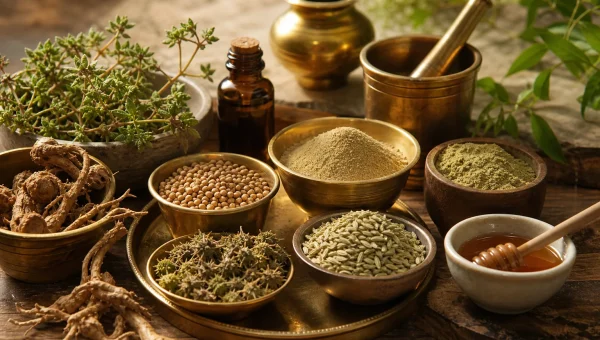
Dashamoola means “ten roots” and is widely used in Ayurvedic practice where Vata-related pain, stiffness, and swelling are part of the presentation. It may be used internally as a decoction or externally in steam procedures, depending on the patient’s digestive strength, constitution, and stage of disease.
Supporting Herbs
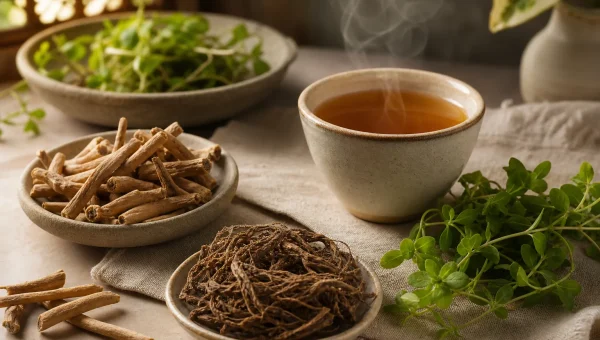
Additional herbs are selected only after examination. Ashwagandha may be considered where depletion, weakness, poor sleep, and low resilience dominate. Shallaki is traditionally used in painful inflammatory joint conditions. Rasna is a classical Vata-hara herb often used in musculoskeletal pain patterns. These herbs still require professional guidance when the patient is taking medication or has a chronic illness.
Nasya: Nasal Therapy for the Head and Neck Region
Nasya Karma is the Ayurvedic administration of medicine through the nasal route and is classically used for disorders above the clavicle. In cervical spondylosis care, it is usually not used as a standalone treatment; it is combined with local therapies, internal medicines, posture correction, and exercise when the patient is suitable for the procedure.
A typical clinical sequence includes gentle facial and neck preparation, mild fomentation, careful instillation of the prescribed oil, rest with the head supported, and post-procedure gargling or mild steam as advised. Published Ayurvedic clinical work on cervical spondylosis has used medicated oil Nasya along with procedures such as Ruksha Sweda, Patra Pottali Sweda, and internal medicines. The exact oil, dose, and number of days should be decided by a qualified Ayurvedic physician.
Diet Recommendations: Warm, Unctuous, and Nourishing
From an Ayurvedic perspective, cervical degeneration with stiffness and pain is commonly approached through a Vata-pacifying diet: warm, freshly prepared, moist, digestible, and nourishing. The diet should support tissue strength without weakening digestion.
- Favor: Warm cooked meals, soups, stews, soft grains, cooked root vegetables, moderate ghee or sesame oil, and spices that suit digestion.
- For tissue support: Include calcium- and mineral-containing foods such as sesame seeds, ragi, cooked leafy greens, moringa leaves, and dairy if tolerated.
- Limit: Excess cold food, ice water, dry snacks, very raw meals, irregular fasting, and excessive caffeine, because these can aggravate Vata in susceptible people.
- Hydration: Sip warm water through the day rather than taking large amounts of cold water with meals.
Neck Exercises and Lifestyle Practices
Exercise is introduced when acute pain is under control and there are no worsening neurological symptoms. Movements should be slow, pain-free, and preferably taught by a physiotherapist or qualified yoga therapist familiar with cervical spine conditions. Stop and seek medical advice if exercise increases arm pain, numbness, weakness, dizziness, or gait difficulty.
Gentle Cervical Exercises
These movements are commonly used to maintain range of motion and support the neck muscles. They should be done within a comfortable range, without jerking or forcing the end position.
- Neck flexion: Slowly bring the chin toward the chest, hold briefly, and return to neutral.
- Neck rotation: Turn the head gently to the right and left, staying within a pain-free range.
- Lateral flexion: Tilt one ear toward the shoulder without lifting the shoulder, return to center, and repeat on the other side.
- Isometric strengthening: Press the palm lightly against the forehead, back of the head, and each side of the head while resisting movement for a few seconds.
- Shoulder rolls: Roll both shoulders slowly backward and forward to reduce upper-back and neck guarding.
Supportive Yoga Asanas
Modified Bhujangasana, Marjariasana, and supported upper-back opening postures may be useful when performed gently and without cervical compression. Headstand, shoulder stand, deep unsupported backbends, sudden neck rotations, and any posture that loads the cervical spine should be avoided in cervical spondylosis unless specifically cleared by a qualified professional.
Ergonomic and Lifestyle Adjustments
Daily posture habits often determine whether treatment gains remain stable. The neck should be supported not only in the therapy room but also at the desk, during sleep, while driving, and while using a phone.
- Keep the computer screen at eye level and avoid working with the chin poked forward.
- Use a pillow that supports the natural cervical curve without forcing the neck too high or too low.
- Take short movement breaks during long desk work and include shoulder, upper-back, and chest mobility.
- Avoid holding the phone between the ear and shoulder.
- Use warm physician-prescribed oil massage to the neck and upper back only when it does not worsen pain or neurological symptoms.
What Improvement Should Look Like
Good progress is usually seen as reduced neck stiffness, less arm radiation, improved sleep, steadier grip, better tolerance for desk work, and safer range of motion. The goal is not merely to suppress pain for a few hours but to restore daily function while protecting the nerves and spinal cord.
Ayurvedic care can be valuable in cervical spondylosis when it is sustained, properly selected, and coordinated with modern assessment. External therapies such as Greeva Basti, Nadi Sweda, and Patra Pottali Sweda work best when combined with individualized internal medicines, warm nourishing diet, ergonomic correction, and gradual exercise. Persistent neurological deficit, spinal-cord signs, or progressive weakness should always take priority over routine therapy and must be evaluated medically.
Nothing in this article diagnoses or treats a medical condition. Use it as educational information and consult a qualified Ayurvedic practitioner and healthcare provider before starting herbs, herbo-mineral medicines, oils, detoxes, Nasya, Basti procedures, or therapeutic protocols, especially if pregnant, managing a condition, or taking medication.
References
- NCBI
- Clinical observation on Greeva Stambha (cervical spondylosis) Chikitsa (2010), PubMed Central
- Doaj (doaj.org)
- Charaka Samhita — Vata Vyadhi Chikitsa
- Ijprajournal (ijprajournal.com)
- A randomized controlled clinical trial to assess the efficacy of Nasya in reducing the signs and symptoms of cervical spondylosis (2012), PubMed
- Nature (nature.com)
- NCCIH
- Researchgate (researchgate.net)
- NCCIH
- Mskcc (mskcc.org)
- Ia800501 (ia800501.us.archive.org)
- Jaims (jaims.in)
- Banyanbotanicals (banyanbotanicals.com)
- Spine (spine.org)
- Nhsinform (nhsinform.scot)
- Effect of selected group of asana when used as an adjunct in management of cervical spondylosis of mild to moderate severity: An observational study (2021), PubMed
The Rajesh case is my case. C5-C6 disc bulge, arm numbness, right shoulder burning. I plateaued with physiotherapy and waited. After 3 months of Greeva Basti the radiculopathy has resolved enough that I can sleep through the night. First time in 14 months.
How many sessions of Greeva Basti are typically needed before seeing results? The article mentions 14-21 day courses but doesn’t specify how many sessions per week or what the minimum effective dose is.
I’m a physiotherapist. Several of my cervical spondylosis patients have done Greeva Basti in parallel with my PT work and the outcomes are consistently better than PT alone. The combination of thermal therapy, medicated oil, and the structural approach of PT seems complementary.
Is Greeva Basti safe with an existing hernia? My MRI shows disc herniation at C5-C6 and I worried that the warm oil retention dough might apply pressure in a way that could worsen it.
I was looking for a plain explanation of Cervical Spondylosis in Ayurveda. Small daily changes are easier to follow than a perfect plan.
I’ve had cervical spondylosis for 7 years and tried everything conventional. My neurosurgeon won’t recommend surgery because of my age (38). The Greeva Basti course I did last year gave me the best 3-month stretch I’ve had since diagnosis.
The self-care protocol between clinical sessions the specific exercises and oil application described makes this sustainable as a long-term management strategy rather than just episodic treatment.
The honest ‘we would need to try’ framing in the opening is exactly the clinical approach I want from any practitioner. Not promising a cure, but genuinely engaging with what’s possible.
The article doesn’t address severe cervical myelopathy (spinal cord compression). For patients with significant cord changes on MRI, the claim that Ayurvedic approaches can be primary management is potentially dangerous. Surgical decompression can be urgent in those cases.
The description of Greeva Basti’s dough dam using black gram flour caught my attention.
I was looking for a plain explanation of Cervical Spondylosis in Ayurveda. I appreciate that it does not oversell the result.
It makes sense that Nasya could affect neck pain since the treatment works above the clavicle.
After reading about Rajesh’s burning pain radiating to thumb and index finger, I wondered if my own tingling might be similar.
A software architect spending long hours at a desk would definitely benefit from the ergonomic tips mentioned.
The advice to get an MRI if arm pain lasts beyond six weeks seems like a practical step before trying any therapy.
The clear criteria for distinguishing simple neck strain from true cervical spondylosis helped me understand my symptoms better.
Learning that Mahayogaraja Guggulu contains mineral ingredients reminds me to consult a qualified practitioner before use.
Seeing that the diet focuses on warm, unctuous foods and advises against raw salads fits Vata balancing principles.
Seeing that grip strength returned to normal after three months of home practice gives hope for chronic cases.
Combining external Greeva Basti, internal herbs, and Nasya feels like a well rounded plan.
I found the reference to the 2021 observational study on yoga asanas helpful for deciding which poses to try.
this actually worked for me! tried cervical pillow recommendation for 2 weeks, energy is better
How often should Dashamula oil protocol be repeated? Once a year or can it be done more frequently?
The Cervical Spondylosis in Ayurveda angle is useful here. Good starting point for a cautious reader.
I asked my doctor about cervical pillow recommendation and got mixed answers tbh
yes! nerve compression section worked similarly for me, thanks for sharing
It’s reassuring that the author notes MRI findings must match symptoms, since many over forty show disc changes without pain.
my ayurvedic doctor told me the same thing about nerve compression section last month. glad to see it here
Does the collar exercise routine interact with metformin? Would appreciate a separate post on herb-drug combos.
Good reminder on Cervical Spondylosis in Ayurveda. I appreciate that it does not oversell the result.
Good reminder on Cervical Spondylosis in Ayurveda. The safety notes could be expanded a little.
Good reminder on Cervical Spondylosis in Ayurveda. The main idea is clear even if someone is new to Ayurveda.
Good reminder on Cervical Spondylosis in Ayurveda. The examples make the advice less abstract.
that’s a fair point. I noticed the the collar exercise routine approach varies by school
Good reminder on Cervical Spondylosis in Ayurveda. Good starting point for a cautious reader.
I came for Cervical Spondylosis in Ayurveda and this answered the main question. The practical details matter more than people think.
Sharing this.
Been following this blog for a while and the nerve compression section post is one of the most useful ones.
I’m a bit skeptical of the claims around the collar exercise routine. The mechanism you describe sounds plausible but where’s the data?
My naturopath recommended the collar exercise routine and I wanted more background on the classical reasoning.
At what point should someone stop self-administering nerve compression section and see a vaidya?
Been following this blog for a while and the cervical pillow recommendation post is one of the most useful ones. ❤️
the article is good but the Dashamula oil protocol part felt rushed. could use more depth नमस्ते
My grandmother used to do exactly what you described for the collar exercise routine. Never had a name for it until now.
I notice you don’t mention any contraindications for the collar exercise routine. That feels like an important omission.
Makes sense.
The Dashamula oil protocol schedule in section 2 , is that for all three doshas or specifically for Kapha?
Have been doing Dashamula oil protocol for about 3 months. Saw improvement in month 2, slight plateau now.
some of the claims about nerve compression section seem exaggerated. been in this space for years
This makes sense for Cervical Spondylosis in Ayurveda. The practical details matter more than people think.
This makes sense for Cervical Spondylosis in Ayurveda. Would be useful to see a short checklist next.
Bit unrelated but has anyone here tried Panchakarma and found it worth the cost?
This makes sense for Cervical Spondylosis in Ayurveda. The safety notes could be expanded a little.
my ayurvedic doctor told me the same thing about Dashamula oil protocol last month. glad to see it here
This makes sense for Cervical Spondylosis in Ayurveda. I would like to know how long to try it before judging results.
Been following this blog for a while and the Dashamula oil protocol post is one of the most useful ones.
Is the Dashamula oil protocol version from Kerala classical or is it more modern?