Breath is one of the most direct bridges between body, mind, and nervous-system state. Classical yoga texts describe a close relationship between the movement of breath and the steadiness of the mind, while Ayurveda gives a practical language for choosing calming, cooling, or clearing practices according to the person’s present doshic pattern. Most people learn alternate nostril breathing and stop there. These five pranayama sequences go further, offering different approaches for restless Vata-type worry, heated Pitta-type irritability, heavy Kapha-type low mood, mixed stress, and night-time anxiety.
Ayurvedic Understanding of Anxiety and Breath
Ayurveda does not reduce anxiousness to one single pattern. In practice, an anxious presentation is assessed through the qualities showing up in the body and mind: movement, heat, heaviness, dryness, congestion, sleep pattern, appetite, and emotional tone. Vata is linked with movement and higher mental activity; when disturbed, it commonly presents with irregularity, restlessness, fearfulness, tremor-like agitation, shallow breath, variable sleep, and difficulty settling. Pitta-predominant agitation tends to feel hot, sharp, urgent, irritable, perfectionistic, and reactive. Kapha-predominant distress tends to feel heavy, dull, withdrawn, slow, congested, and stuck.
Prana moves through the Pranavaha Srotas, the Ayurvedic channel system associated with vital breath and respiration. Classical Ayurvedic sources place the roots of Pranavaha Srotas in the heart region and major internal channels, showing that breath is treated as a whole-body life process rather than a mechanical lung action alone. Pranayama uses this breath–mind connection deliberately: the practice is not simply “taking deep breaths,” but choosing the right rhythm, temperature, sound, nostril pattern, and intensity for the state in front of you.
Modern Clinical Context for Breathwork
Structured breathing practices have been evaluated as supportive tools for stress and anxiety symptoms. A 2023 scoping review of breathwork interventions in adults with clinically diagnosed anxiety disorders found improvement across several intervention types, while also noting variation in study design and the need for stronger trials. A 2023 meta-analysis of randomized controlled trials found breathwork associated with lower self-reported stress, anxiety, and depressive symptoms compared with non-breathwork controls. A Stanford-led randomized study of brief daily breathing practices found that exhale-focused cyclic sighing improved mood and reduced respiratory rate more than mindfulness meditation over the study period.
For pranayama specifically, clinical work on slow breathing has reported shifts toward parasympathetic cardiac autonomic activity and improvement in anxiety-related measures after regular practice. These findings fit the traditional instruction to practice gradually and skillfully: classical Hatha Yoga cautions that improper or forceful pranayama can create problems, while well-guided practice supports steadiness.
The Five Pranayama Sequences
The following sequences are organized by presentation rather than by diagnosis. Choose the practice that matches the day’s dominant quality: restless and scattered, hot and irritable, dull and heavy, mixed and pressured, or wakeful at night. Practice on an empty or light stomach, keep the face soft, and never force retention or speed.
Sequence 1: Bhramari Pranayama (Humming Bee Breath) for Vata-Type Anxiety
Bhramari is a humming breath described in the Hatha Yoga tradition. The exhale is lengthened with a smooth bee-like sound, giving the mind a single steady vibration to follow. The sound, the longer exhale, and the inward sensory focus make it especially useful when anxiousness feels like racing thoughts, restlessness, and sleeplessness. Modern studies on Bhramari and humming have reported calming autonomic effects, improved relaxation markers, and increased nasal nitric oxide during humming.
Best for: Vata-type anxiousness with racing thoughts, physical restlessness, irregular breath, difficulty settling, and sleep-onset worry.
Practice: Sit comfortably with the spine upright. Close the eyes and relax the jaw. Either rest the hands on the thighs or gently close the ears with the index fingers. Inhale through the nose without strain. Exhale slowly with a continuous, soft humming sound. Let the vibration be pleasant rather than loud. Practice 5 to 10 rounds, then sit quietly for 2 to 5 minutes and feel the after-effect.
Duration: 5 to 10 minutes daily, especially in the evening or whenever the mind is scattered. Keep the sound gentle if there is ear discomfort, sinus pressure, or headache.
Sequence 2: Sitali or Sitkari Pranayama (Cooling Breath) for Pitta-Type Anxiety
Sitali is the classical cooling pranayama in which air is drawn in through the tongue and released through the nostrils. The Hatha Yoga tradition describes Sitali and Sitkari among the major pranayama practices and associates them with cooling, thirst-reducing, and Pitta-pacifying effects. In an Ayurvedic anxiety protocol, this makes Sitali most appropriate when the anxious state feels hot, sharp, irritated, impatient, flushed, or headache-prone.
Best for: Pitta-type anxiousness with irritability, heat, impatience, intensity, burning sensation, flushed face, or anger-tinged worry.
Practice: Sit upright. Curl the tongue into a tube if possible. Inhale slowly through the rolled tongue as if sipping cool air. Close the mouth and exhale gently through both nostrils. If the tongue does not curl, practice Sitkari: lightly bring the teeth together, part the lips, inhale through the teeth with a soft hissing sensation, then close the mouth and exhale through the nostrils. Practice 10 to 15 rounds, then return to natural nasal breathing.
Duration: 5 to 10 minutes, preferably during the hotter part of the day or after emotionally heated work. Avoid the practice in cold weather, chills, active cough, significant congestion, or cold-triggered asthma unless guided by a qualified teacher or clinician.
Sequence 3: Kapalabhati (Skull-Shining Cleansing Breath) for Kapha-Type Heaviness
Kapalabhati is listed in the Hatha Yoga tradition as one of the cleansing practices. It uses repeated active exhalations with passive inhalations, making it more stimulating than the calming practices above. It is best reserved for Kapha-type heaviness: dullness, morning fog, lethargy, sluggishness, and a congested feeling in the body and mind. It is not the first choice for panic, insomnia, heat, irritability, pregnancy, uncontrolled hypertension, or fragile health.
Best for: Kapha-type low mood with heaviness, lethargy, brain fog, excess sleepiness, dull breath, and morning inertia.
Practice: Sit upright on a chair or cushion. Take one natural inhale. Exhale sharply through the nose by drawing the lower abdomen inward. Allow the inhale to return passively as the abdomen releases. Keep the chest, shoulders, face, and throat relaxed. Begin with 20 to 30 gentle pumps, then rest for 60 seconds with normal breathing. Repeat for 2 to 3 rounds only if there is no dizziness, pressure, or strain.
Duration: 2 to 5 minutes in the morning, 3 to 5 days per week. Stop immediately if you feel lightheaded, pressured in the head or eyes, breathless, or anxious. This practice should be learned directly from a qualified yoga therapist or teacher if you are new to pranayama.
Sequence 4: Sama Vritti Pranayama (Equal-Ratio Breathing) for Mixed Anxiety
Sama Vritti means an even or equal pattern. In its simplest form, inhalation and exhalation are made equal; in more advanced forms, gentle pauses are added. The value of this practice is its neutrality: it is neither strongly heating nor strongly cooling, neither forceful nor sedating. It is useful when the anxious state is mixed, situational, or performance-related and you need a steady rhythm before speaking, working, driving, or sleeping.
Best for: Mixed-dosha stress, performance anxiety, work pressure, mental scatteredness with mild heat, and general daily regulation.
Practice: Sit upright. Inhale through the nose for 4 counts and exhale through the nose for 4 counts. Continue until the breath becomes smooth. If comfortable, progress to 5–5 or 6–6. Only after the practice is easy, add light pauses: inhale 4, pause 2, exhale 4, pause 2. Breath retention is optional and should remain soft.
Duration: 5 to 15 minutes at any time of day. Omit breath holds during pregnancy, uncontrolled blood pressure, panic tendency, significant cardiovascular disease, or any situation where holding the breath creates strain.
Sequence 5: Chandra Bhedana (Moon-Piercing Breath) for Night Anxiety
Chandra Bhedana is a left-nostril inhalation and right-nostril exhalation pattern used in yoga practice for a cooling, quieting effect. In the language of nadi theory, the left side is associated with Ida Nadi, the lunar current, while the right side is associated with Pingala Nadi, the solar current. For practical use, it is a simple, low-intensity sequence for bedtime anxiousness, heated thoughts, and difficulty shifting from activity into rest.
Best for: Night-time anxiety, sleep-onset worry, heat with mental activity, and acute overstimulation when forceful breathing would be inappropriate.
Practice: Sit comfortably or recline with the head slightly elevated. Use the right hand in a simple nostril-control position. Close the right nostril with the thumb and inhale slowly through the left nostril. Close the left nostril with the ring finger, release the right nostril, and exhale through the right nostril. Keep the breath quiet, smooth, and unforced. Repeat for 5 to 10 minutes.
Duration: 5 to 10 minutes before sleep. Avoid breath retention. Skip this practice when the nose is blocked, when left-nostril breathing feels effortful, or when lying flat worsens reflux or breathing symptoms.
Sequence Selection by Dosha and Anxiety Type
Use the table as a quick decision guide. The safest rule is to choose the gentlest practice that matches the dominant quality: quiet Vata with sound and steadiness, cool Pitta with Sitali or Sitkari, mobilize Kapha with careful cleansing breath, balance mixed stress with equal breathing, and use Chandra Bhedana for night-time downshifting.
| Pranayama | Sanskrit Name | Best Pattern | Key Effect | Duration | Avoid or Modify If |
|---|---|---|---|---|---|
| Humming Bee Breath | Bhramari | Vata-type restlessness | Sound-based calming and longer exhale | 5–10 min daily | Ear infection, painful sinus pressure, severe headache |
| Cooling Breath | Sitali / Sitkari | Pitta-type heat and irritability | Cooling, softening, reducing sharpness | 5–10 min | Cold weather, chills, cough, cold-triggered asthma |
| Skull-Shining Cleansing Breath | Kapalabhati | Kapha-type heaviness | Stimulating, clearing, mobilizing | 2–5 min morning | Pregnancy, uncontrolled hypertension, glaucoma, epilepsy, panic, recent surgery |
| Equal-Ratio Breathing | Sama Vritti | Mixed stress | Rhythm and steadiness | 5–15 min | Omit holds in pregnancy, cardiovascular disease, panic tendency |
| Moon-Piercing Breath | Chandra Bhedana | Night anxiety, heat, overstimulation | Cooling and quieting | 5–10 min bedtime | Nasal blockage, breath strain, reflux when lying flat |
Herbs That May Support a Pranayama Routine
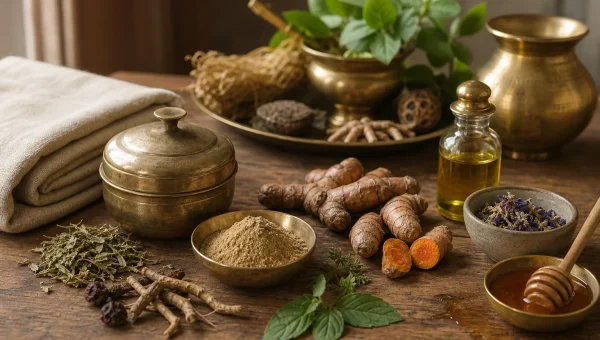
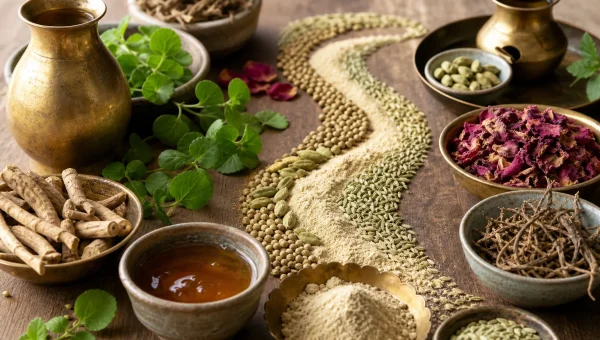
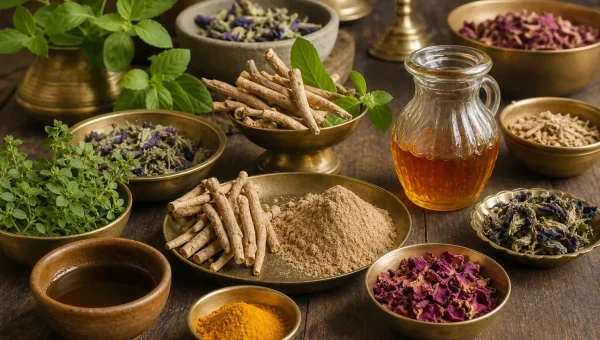
Herbs are not required for pranayama, but classical Ayurveda often pairs breath, diet, sleep, daily routine, and selected medhya or respiratory-supportive herbs when a person needs broader support. Herb choice should be individualized by constitution, digestion, medications, pregnancy status, and diagnosis.
- Brahmi (Bacopa monnieri): Traditionally used as a medhya herb to support intellect, memory, and clarity. It is best considered when the anxious pattern includes poor concentration and mental fatigue.
- Shankhpushpi (Convolvulus pluricaulis): Traditionally described as a Medhya Rasayana and used in formulations aimed at mental calm, memory, and sleep support.
- Ashwagandha (Withania somnifera): A classical root drug used as a strengthening and restorative herb. It is more appropriate for depletion and stress exhaustion than for hot, inflamed, or highly Pitta states.
- Vacha (Acorus calamus): A sharp, heating classical herb used in Ayurveda for Kapha-type obstruction and mental dullness. It requires professional guidance and proper processing; it should not be self-prescribed.
- Tulsi (Ocimum sanctum / Ocimum tenuiflorum): Traditionally used for respiratory support and as a household herbal infusion. A mild tulsi tea may suit Kapha-type congestion, but it can be too heating for some Pitta-dominant people.
Sequencing Your Practice: A Weekly Template
A useful weekly template is to begin with observation rather than routine. On waking, ask: Is the mind racing, hot, heavy, or simply pressured? If the morning feels restless and ungrounded, choose Bhramari. If it feels hot and irritable, choose Sitali or Sitkari. If it feels heavy and dull, choose a short, careful Kapalabhati practice followed by quiet breathing. If the state is mixed, use Sama Vritti. At night, choose Bhramari or Chandra Bhedana rather than stimulating practices.
For a balanced week, practice one primary sequence for 5 to 10 minutes daily for seven days before switching. This gives the body enough repetition to respond and gives you a clearer sense of which doshic pattern is dominant. Avoid stacking many pranayamas in one sitting unless guided; one well-matched practice done consistently is better than a complicated routine performed with strain.
Actionable Tip: Tonight, set a 10-minute timer before sleep. Practice either Bhramari or Chandra Bhedana with no breath retention and no force. If your anxiety is restless and thought-heavy, choose Bhramari. If it is hot, wired, or sleep-resistant, choose Chandra Bhedana. Repeat the same practice for seven nights and observe sleep onset, morning calmness, and any signs of strain.
Nothing in this article diagnoses or treats a medical condition. Use it as educational information and consult a qualified Ayurvedic practitioner, yoga therapist, physician, or mental health provider before starting herbs, supplements, detoxes, or therapeutic breathwork protocols, especially if pregnant, managing a condition, or taking medication.
References
- Sacred-texts (sacred-texts.com)
- Charaka Samhita — Vata dosha
- Charaka Samhita — Pranavaha srotas
- Breathwork Interventions for Adults with Clinically Diagnosed Anxiety Disorders: A Scoping Review (2023), PubMed Central
- Nature (nature.com)
- Effect of breathwork on stress and mental health: A meta-analysis of randomised-controlled trials (2023), PubMed
- Brief structured respiration practices enhance mood and reduce physiological arousal (2023), PubMed
- Cell (cell.com)
- Effects of Slow Breathing Exercises on Cardiac Autonomic Functions in Anxiety Disorder-A Randomised Control Trial (2024), PubMed
- Effect of Bhramari Pranayama intervention on stress, anxiety, depression and sleep quality among COVID 19 patients in home isolation (2022), PubMed
- Immediate Effects of Bhramari Pranayama on Resting Cardiovascular Parameters in Healthy Adolescents (2016), PubMed Central
- Humming greatly increases nasal nitric oxide (2002), PubMed
- Mayoclinic (mayoclinic.org)
- The impact of cold on the respiratory tract and its consequences to respiratory health (2018), PubMed Central
- Yogainternational (yogainternational.com)
- Study of immediate neurological and autonomic changes during kapalbhati pranayama in yoga practitioners (2022), PubMed Central
- Saspublishers (saspublishers.com)
- Yogajournal (yogajournal.com)
- Ijcep (ijcep.org)
- Ayurvedic Pharmacopoeia of India
- An update on Ayurvedic herb Convolvulus pluricaulis Choisy (2014), PubMed Central
- Ayurvedic Pharmacopoeia of India
- Ssgcbams (ssgcbams.co.in)
- Ia800501 (ia800501.us.archive.org)
- Ijrap (ijrap.net)
- Tulsi – Ocimum sanctum: A herb for all reasons (2014), PubMed Central
The Stanford cyclic sighing research is the most interesting bridge between modern neuroscience and Ayurvedic pranayama I have read. The PHSL researchers describing it as a new discovery while Nadi Shodhana has been practiced for 3000 years is a good illustration of science rediscovering what traditional knowledge already mapped.
found this post helpful. will try the suggested approach. (ref 1853-56)
The Breathwork for Anxiety explanation is clearer than most short posts. I would like to know how long to try it before judging results.
Started the anxiety protocol my Ayurvedic doctor recommended last summer and my energy has been noticeably more consistent. This explains the mechanism.
the Stanford cyclic sighing research rediscovering what Nadi Shodhana has been doing for millennia is a good story about science and tradition
I tried Kapalbhati for anxiety based on a different recommendation and it made my anxiety significantly worse. The forceful exhalation technique is very stimulating and for some anxiety presentations it is completely wrong. The article correctly identifies that different pranayamas suit different anxiety types. This distinction is often missed in general yoga instruction.
❤️ im a psychotherapist and the extended exhalation protocol is the most reliable tool I have for acute anxiety regulation in session
Sitali for Pitta-pattern anxiety and bhramari for rumination-type anxiety. most yoga anxiety content doesn’t make this distinction and just recommends Nadi Shodhana for everything नमस्ते
found this post helpful. will try the suggested approach. (ref 1853-45)
💯 sitali for Pitta-pattern anxiety and bhramari for rumination-type anxiety. most yoga anxiety content doesn’t make this distinction and just recommends Nadi Shodhana for everything
found this post helpful. will try the suggested approach. (ref 1853-40)
The Sama Vritti sequence with 4-4-4-4 count is the one I have found most consistently effective for acute anxiety. What is the maximum duration before the technique stops being beneficial? I sometimes practice for 30 minutes and wonder whether there is a point of diminishing returns.
🌿 been teaching yoga 8 years and the explanation for why inhale-exhale ratio determines autonomic branch activation is the clearest I’ve found anywhere
found this post helpful. will try the suggested approach. (ref 1853-64)
found this post helpful. will try the suggested approach. (ref 1853-98)
I am a psychotherapist who incorporates breathwork and I have been using the extended exhalation protocol described here for six months with clients. The consistency of response across different anxiety presentations is impressive. It is the most reliable single tool I have for acute anxiety regulation in a session.
Are there contraindications for these pranayamas for people with cardiovascular conditions? I have mild hypertension and my cardiologist has told me to avoid Valsalva maneuvers and breath retention. Which of these five sequences are safe for cardiovascular patients and which involve significant breath retention or pressure changes?
HRV before and after 15 min extended exhale sequence: consistently 9-11 ms improvement in rMSSD. that’s measurable and reproducible
I liked the practical side of Breathwork for Anxiety. I would still ask a practitioner before changing medicines.
I tried Bhramari last year during a particularly bad stretch of work stress and was genuinely surprised — within a few minutes the buzzing in my chest would settle. What I appreciate about this post is that it explains why that might be happening neurologically, not just that it does. The double inhale detail is new to me though. Does it matter how long you hold between the two parts of the inhale, or is it purely the extended exhale ratio that drives the effect?
found this post helpful. will try the suggested approach. (ref 1853-31)
After reading about cyclic sighing, I tried the double inhale extended exhale before bed and noticed my mind quieter within a couple of minutes.
the explanation for why extended exhale activates the parasympathetic nervous system is the clearest i have read. the ratio of inhale to exhale determining which branch of the autonomic system is engaged is the key insight. i teach yoga and will use this explanation with students who are skeptical about breathwork.
found this post helpful. will try the suggested approach. (ref 1853-24)
Can you practice these sequences during a panic attack or only as a preventive measure? I get panic attacks with hyperventilation and I am wondering if trying to do controlled breathing during an attack is helpful or whether the focus required makes the anxiety worse before the physiological effects kick in.
Seeing the table that matches pranayama to dosha types made me think about trying Sitali when I feel overheated in the afternoon.
✨ Cardiovascular patient here. which of these five involve significant breath retention? my cardiologist has restrictions on Valsalva-type maneuvers
I liked the practical side of Breathwork for Anxiety. The timing advice is the part I would start with.
i’m a psychotherapist and the extended exhalation protocol is the most reliable tool I have for acute anxiety regulation in session
the question about practicing during a panic attack is important. I found Sama Vritti takes about 90 seconds to override hyperventilation but those are hard 90 seconds
Been teaching yoga 8 years and the explanation for why inhale-exhale ratio determines autonomic branch activation is the clearest I’ve found anywhere
The point about breath control being one of the few levers we have for direct autonomic nervous system intervention is something I wish I’d understood ten years ago. I’ve been using simple box breathing for anxiety and it works, but the extended exhale sequences described here sound considerably more targeted. How long before someone with moderate anxiety typically notices a consistent effect from the Bhramari practice?
Sitali for Pitta-pattern anxiety and bhramari for rumination-type anxiety. most yoga anxiety content doesn’t make this distinction and just recommends Nadi Shodhana for everything
4-4-4-4 Sama Vritti for 15 minutes before a difficult meeting. consistent enough that my colleagues have noticed I handle stress differently now
cardiovascular patient here. which of these five involve significant breath retention? my cardiologist has restrictions on Valsalva-type maneuvers
been teaching yoga 8 years and the explanation for why inhale-exhale ratio determines autonomic branch activation is the clearest ive found anywhere
sitali for Pitta-pattern anxiety and bhramari for rumination-type anxiety. most yoga anxiety content doesnt make this distinction and just recommends Nadi Shodhana for everything
🙌 sitali for Pitta-pattern anxiety and bhramari for rumination-type anxiety. most yoga anxiety content doesn’t make this distinction and just recommends Nadi Shodhana for everything
kapalbhati made my anxiety worse because it’s stimulating not calming. this article correctly identifies that matching pranayama to anxiety type matters enormously
found this post helpful. will try the suggested approach. (ref 1853-12)
🌿 sitali for Pitta-pattern anxiety and bhramari for rumination-type anxiety. most yoga anxiety content doesn’t make this distinction and just recommends Nadi Shodhana for everything
The description of Kapalabhati as a stimulating practice for Kapha heaviness makes sense; I might give it a try on sluggish mornings.
been teaching yoga 8 years and the explanation for why inhale-exhale ratio determines autonomic branch activation is the clearest ive found anywhere 🙏
im a psychotherapist and the extended exhalation protocol is the most reliable tool I have for acute anxiety regulation in session
found this post helpful. will try the suggested approach. (ref 1853-32)
found this post helpful. will try the suggested approach. (ref 1853-70)
sitali for Pitta-pattern anxiety and bhramari for rumination-type anxiety. most yoga anxiety content doesn’t make this distinction and just recommends Nadi Shodhana for everything धन्यवाद
The framing of cyclic sighing as something Ayurveda has practiced for 3,000 years under a different name is a good reminder that the absence of a clinical trial doesn’t mean absence of evidence — it sometimes just means absence of funding. I’ve been doing Nadi Shodhana before bed for anxiety and the quality difference in sleep is consistent. Does the sequence matter if you’re combining two or three of these practices in one session?
found this post helpful. will try the suggested approach. (ref 1853-18)
Sitali for Pitta-pattern anxiety and bhramari for rumination-type anxiety. most yoga anxiety content doesn’t make this distinction and just recommends Nadi Shodhana for everything 💯
found this post helpful. will try the suggested approach. (ref 1853-20)
found this post helpful. will try the suggested approach. (ref 1853-23)
found this post helpful. will try the suggested approach. (ref 1853-21)
found this post helpful. will try the suggested approach. (ref 1853-27)
found this post helpful. will try the suggested approach. (ref 1853-26)
found this post helpful. will try the suggested approach. (ref 1853-92)
I’m a psychotherapist and the extended exhalation protocol is the most reliable tool I have for acute anxiety regulation in session ठीक है
found this post helpful. will try the suggested approach. (ref 1853-29)
found this post helpful. will try the suggested approach. (ref 1853-58)
found this post helpful. will try the suggested approach. (ref 1853-30)
I appreciate that the article warns against breath retention during pregnancy and hypertension, it feels responsible.
The safest part of the Breathwork for Anxiety advice is keeping it simple. Good starting point for a cautious reader.
found this post helpful. will try the suggested approach. (ref 1853-35)
found this post helpful. will try the suggested approach. (ref 1853-62)
✨ been teaching yoga 8 years and the explanation for why inhale-exhale ratio determines autonomic branch activation is the clearest ive found anywhere
Sitali for Pitta-pattern anxiety and bhramari for rumination-type anxiety. most yoga anxiety content doesn’t make this distinction and just recommends Nadi Shodhana for everything ठीक है
found this post helpful. will try the suggested approach. (ref 1853-41)
i’m a psychotherapist and the extended exhalation protocol is the most reliable tool I have for acute anxiety regulation in session नमस्ते
🙌 been teaching yoga 8 years and the explanation for why inhale-exhale ratio determines autonomic branch activation is the clearest I’ve found anywhere नमस्ते
Been teaching yoga 8 years and the explanation for why inhale-exhale ratio determines autonomic branch activation is the clearest I’ve found anywhere ठीक है
sitali for Pitta-pattern anxiety and bhramari for rumination-type anxiety. most yoga anxiety content doesn’t make this distinction and just recommends Nadi Shodhana for everything ❤️
im a psychotherapist and the extended exhalation protocol is the most reliable tool I have for acute anxiety regulation in session धन्यवाद
I’m a psychotherapist and the extended exhalation protocol is the most reliable tool I have for acute anxiety regulation in session ❤️
found this post helpful. will try the suggested approach. (ref 1853-49)
Reading about Bhramari’s humming vibration stimulating the vagus nerve reminded me of similar resonance techniques in chanting.
found this post helpful. will try the suggested approach. (ref 1853-50)
💯 I’m a psychotherapist and the extended exhalation protocol is the most reliable tool I have for acute anxiety regulation in session
The suggestion to set a 10 minute timer for Chandra Bhedana at bedtime seems like a practical experiment to track sleep onset.
I’m a psychotherapist and the extended exhalation protocol is the most reliable tool I have for acute anxiety regulation in session 🌿
been teaching yoga 8 years and the explanation for why inhale-exhale ratio determines autonomic branch activation is the clearest I’ve found anywhere ❤️
i’m a psychotherapist and the extended exhalation protocol is the most reliable tool I have for acute anxiety regulation in session धन्यवाद
I wonder if Sitkari would work just as well for those who cannot roll their tongue, since it’s presented as an equivalent.
been teaching yoga 8 years and the explanation for why inhale-exhale ratio determines autonomic branch activation is the clearest I’ve found anywhere नमस्ते
found this post helpful. will try the suggested approach. (ref 1853-59)
Having practiced basic Nadi Shodhana for years, the five sequences here feel like a natural next step for deeper work.
found this post helpful. will try the suggested approach. (ref 1853-60)
The Stanford cyclic sighing study is a useful bridge for people who are skeptical of pranayama as a concept — it gives a physiological foothold. I’ve been practicing Nadi Shodhana for about a year and the anxiety reduction is real but gradual. The sequences here go further than anything I’ve attempted. Is there a recommended order for trying them if you’re relatively experienced with basic alternate-nostril breathing but new to the others?
been teaching yoga 8 years and the explanation for why inhale-exhale ratio determines autonomic branch activation is the clearest I’ve found anywhere 💯
found this post helpful. will try the suggested approach. (ref 1853-83)
The cite to the 2023 Stanford study on cyclic sighing adds a modern research layer to ancient pranayama wisdom.
🙏 Been teaching yoga 8 years and the explanation for why inhale-exhale ratio determines autonomic branch activation is the clearest I’ve found anywhere
Sitali for Pitta-pattern anxiety and bhramari for rumination-type anxiety. most yoga anxiety content doesn’t make this distinction and just recommends Nadi Shodhana for everything 🌿
✨ I’m a psychotherapist and the extended exhalation protocol is the most reliable tool I have for acute anxiety regulation in session
It’s interesting how the article links each breath pattern to specific dosha imbalances like Vata racing thoughts or Kapha congestion.
found this post helpful. will try the suggested approach. (ref 1853-68)
Been teaching yoga 8 years and the explanation for why inhale-exhale ratio determines autonomic branch activation is the clearest I’ve found anywhere ✨
I found the safety note about avoiding Kapalabhati with glaucoma and epilepsy particularly useful before trying any new routine.
found this post helpful. will try the suggested approach. (ref 1853-71)
found this post helpful. will try the suggested approach. (ref 1853-72)
been teaching yoga 8 years and the explanation for why inhale-exhale ratio determines autonomic branch activation is the clearest ive found anywhere 🌿
found this post helpful. will try the suggested approach. (ref 1853-74)
found this post helpful. will try the suggested approach. (ref 1853-75)
found this post helpful. will try the suggested approach. (ref 1853-76)
I’m a psychotherapist and the extended exhalation protocol is the most reliable tool I have for acute anxiety regulation in session ✨
Thank you.
found this post helpful. will try the suggested approach. (ref 1853-79)
🙏 I’m a psychotherapist and the extended exhalation protocol is the most reliable tool I have for acute anxiety regulation in session
found this post helpful. will try the suggested approach. (ref 1853-81)
❤️ been teaching yoga 8 years and the explanation for why inhale-exhale ratio determines autonomic branch activation is the clearest I’ve found anywhere
I’m a psychotherapist and the extended exhalation protocol is the most reliable tool I have for acute anxiety regulation in session 🙏
found this post helpful. will try the suggested approach. (ref 1853-85)
sitali for Pitta-pattern anxiety and bhramari for rumination-type anxiety. most yoga anxiety content doesnt make this distinction and just recommends Nadi Shodhana for everything नमस्ते
found this post helpful. will try the suggested approach. (ref 1853-87)
found this post helpful. will try the suggested approach. (ref 1853-88)
Sharing this.
found this post helpful. will try the suggested approach. (ref 1853-89)
✨ been teaching yoga 8 years and the explanation for why inhale-exhale ratio determines autonomic branch activation is the clearest I’ve found anywhere
found this post helpful. will try the suggested approach. (ref 1853-91)
found this post helpful. will try the suggested approach. (ref 1853-93)
found this post helpful. will try the suggested approach. (ref 1853-94)
found this post helpful. will try the suggested approach. (ref 1853-96)
found this post helpful. will try the suggested approach. (ref 1853-97)
🌿 i’m a psychotherapist and the extended exhalation protocol is the most reliable tool I have for acute anxiety regulation in session
found this post helpful. will try the suggested approach. (ref 1853-100)