
Ayurvedic Approach to Road Rage and Driving Anxiety: Pitta-Vata Emotional Control
I used to be the guy who honked within 0.5 seconds of a light turning green, who tailgated slow drivers while muttering under his breath, and who arrived at work already irritated before the day had even started. My daily commute in Bangalore traffic turned me into someone I did not like. When a friend gently pointed out that I was becoming “that angry driver,” I realized the problem was not only traffic; it was the way my body and mind were meeting traffic.
Ayurveda gives a useful lens for this pattern. Pitta is hot, sharp, intense, and quick to flare; when disturbed, it easily appears as impatience, criticism, anger, and the urge to correct everyone else on the road. Vata is dry, light, mobile, and quick; when disturbed, it appears as fear, startle, overthinking, trembling, restlessness, and the feeling of being unsafe or out of control. Road rage and driving anxiety often involve both: pitta reacts to obstruction, while vata reacts to speed, uncertainty, noise, and sudden movement.
This article is a practical toolkit for managing your nervous system behind the wheel using Ayurvedic principles. The goal is not to become passive or careless; it is to stay alert without becoming heated, frightened, or aggressive.
Understanding the Doshic Mechanics of Driving Stress
Driving places the mind in a high-stimulation environment: movement, sound, heat, competition for space, time pressure, and constant visual decision-making. In Ayurvedic language, this can increase rajas in the mind, aggravate pitta through heat and intensity, and aggravate vata through speed, dryness, uncertainty, and sudden change.
| Driving Trigger | Likely Doshic Pattern | Emotional Response | Physical Response |
|---|---|---|---|
| Someone cuts you off | Pitta with rajas | Anger, judgment, urge to retaliate, moral indignation | Hot face, clenched jaw, tight grip, fast breathing, increased alertness |
| Traffic jam with no movement | Pitta + Vata | Impatience, frustration, worry about being late, mental restlessness | Fidgeting, shallow breathing, shoulder tension, neck tightness |
| Near-miss accident | Vata with rajas | Fear, shock, panic, loss of confidence | Shaking hands, rapid heartbeat, dry mouth, cold sweat, stiffness |
| Aggressive honking behind you | Vata followed by Pitta | Startle response followed by irritation or defensiveness | Flinching, tightened chest, faster breathing, reactive decision-making |
| Hot, stuffy car interior | Pitta | Irritability, reduced patience, sharper reactions | Sweating, headache tendency, thirst, reduced tolerance for delays |
| Long highway driving or unfamiliar routes | Vata | Hypervigilance, fear of losing control, mental fatigue | Dryness, stiffness, restless scanning, tired but wired feeling |
The Pre-Drive Ritual: 5 Minutes Before You Start
The best time to manage road rage is before the trigger appears. A short pre-drive ritual reduces the heat, hurry, dryness, and agitation that make traffic feel personal. Do these steps before driving, not while the vehicle is moving.
Step 1: Gentle Nasya or Nose Oiling
If nasal oiling is suitable for you, place 1–2 drops of Anu taila or plain sesame oil just inside each nostril, then breathe normally. In classical Ayurveda, nasya is the nasal route used for the head region, and gentle pratimarsha nasya is the low-dose daily form. This is especially useful for people who feel dry, scattered, or overstimulated before driving. Skip nasya during an active cold, sinus infection, nosebleed tendency, immediately after meals, or whenever your practitioner has advised against it.
Step 2: Cooling, Steady Hydration
Pitta rises with heat and thirst, while vata rises with dryness and rushing. Keep a simple drink in the car so that hydration becomes part of emotional regulation rather than an afterthought.
- Gulkand water: Stir 1 teaspoon of gulkand into 400–500 mL cool or room-temperature water. Because gulkand is sweet, use less or avoid it if you are limiting sugar.
- Dhanyaka hima: Soak 1 teaspoon of lightly crushed coriander seeds in water overnight, then strain into a bottle. This is a gentle, traditional option for thirst, heat, and pitta-type discomfort.
- Plain water: For most commutes, simple cool or room-temperature water is enough. Avoid making the drink ice-cold if it weakens your digestion or causes throat irritation.
Step 3: Alternate-Nostril Breathing Before You Move
Sit in the parked car with the engine off or before entering the car. Practice a gentle version of nadi shodhana without breath retention, so the mind settles without strain.
- Close the right nostril and inhale through the left nostril for 4 counts.
- Close the left nostril and exhale through the right nostril for 6 counts.
- Inhale through the right nostril for 4 counts.
- Close the right nostril and exhale through the left nostril for 6 counts.
This completes one round. Practice 5–10 rounds. Keep the breath soft, never force it, and stop if you feel dizzy. The longer exhale is the key: it gives the body a clear downshift before you enter traffic.
In-Car Techniques for When You Feel Triggered
Preparation helps, but triggers will still happen. The following techniques are designed for moments when you are stopped, parked, or safely waiting in traffic. Do not close your eyes, remove attention from the road, or perform breath-holding practices while the vehicle is moving.
Lengthened Exhale at Stops
When rage or anxiety begins to build, use a simple 4–6 rhythm: inhale through the nose for 4 counts and exhale slowly for 6 counts. At a long red light or complete standstill, you can extend the exhale to 8 counts if it feels comfortable. This is safer than complicated breath control and gives the mind one job: exhale longer than you inhale.
The Jaw and Tongue Release
Road anger often appears first as a clenched jaw and a hard grip. When you notice this, soften the jaw, let the tongue rest naturally, loosen the shoulders, and reduce unnecessary force in the hands. This does not reduce alertness; it removes excess muscular aggression from alertness.
The Steering Wheel Squeeze and Release
When fully stopped, squeeze the steering wheel firmly for 3 seconds, then release completely and feel the difference in your palms, forearms, jaw, and shoulders. Repeat 2–3 times only while stopped. This is a small driving-safe adaptation of progressive muscle relaxation: tension is acknowledged, contained, and released instead of being converted into aggressive driving.
Talahridaya Palm Pause
When stopped in traffic, press the center of one palm with the thumb of the opposite hand for a few slow breaths, then switch sides. In marma tradition, the center of the palm is known as talahridaya. Use it as a tactile reminder to soften your grip, return to the body, and stop feeding the mental argument with the driver in front of you.
Food and Drink Adjustments for Commuters
What you eat before driving can either steady the mind or make it sharper, hotter, heavier, or more restless. Ayurveda does not require a complicated commuter diet; it asks that the meal before driving be digestible, steadying, and appropriate to the time of day.
| Before Driving | Favor This | Limit This | Ayurvedic Reason |
|---|---|---|---|
| Morning commute | Warm oatmeal, poha, soft-cooked grains, ghee in moderation, ripe sweet fruit | Very spicy breakfast, excess sour pickle, strong coffee as the whole breakfast | Warm, steady food grounds vata; sweet and mild foods are friendlier to pitta than sharp, sour, salty, and pungent foods. |
| Evening commute | Dates, soaked almonds, fruit, light soup, or warm herbal tea | Heavy fried snacks, excess salt, energy drinks, repeated stimulants | A light, steady snack prevents irritability without creating heaviness, dullness, or agitation. |
| Long road trips | Simple cooked meals, fruit, nuts, water, mild spices, regular meal timing | Fast-food stops at every break, excess chili, sugary drinks, overeating | Predictable meals reduce vata; avoiding excess heat and heaviness helps preserve clarity behind the wheel. |
Herbal Support for Chronic Driving Stress
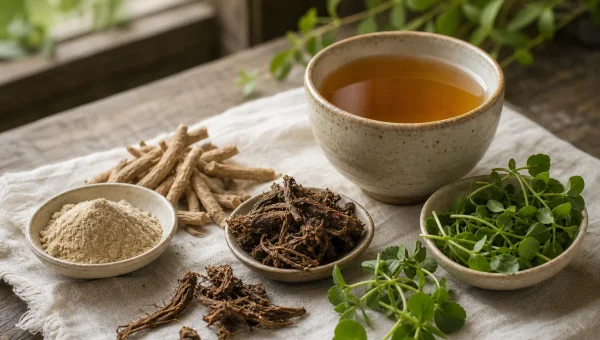
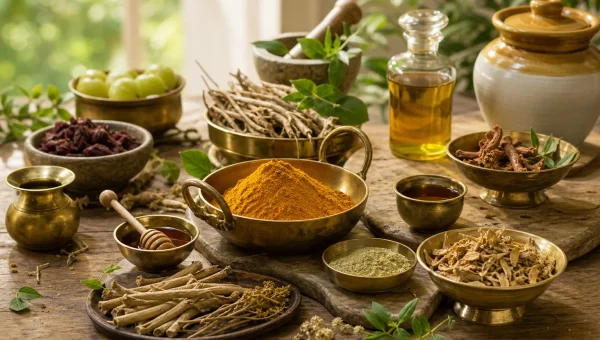
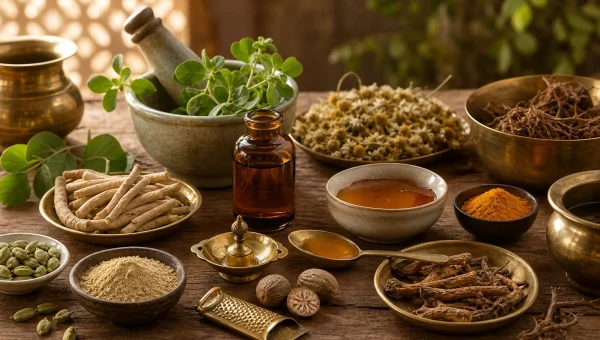
Herbs are not emergency tools to take just before a stressful drive. They belong in a longer plan for people whose pitta-vata reactivity is a repeated pattern. Start herbs only with guidance from a qualified Ayurvedic practitioner or healthcare provider, especially if you take medication, have a diagnosed condition, are pregnant or breastfeeding, or need to drive daily. Always observe a new herb on a non-driving day before assuming it is suitable for you.
- Brahmi (Bacopa monnieri): Brahmi is widely used as a medhya rasayana, a traditional category of herbs used to support memory, attention, and mental steadiness. It is better suited to long-term support than momentary anger control.
- Shankhapushpi (Convolvulus pluricaulis): Shankhapushpi is a classical medhya herb used in Ayurveda for intellect, memory, and calm mental functioning. Use the preparation and dose recommended by a practitioner, because commercial products vary widely.
- Jatamansi (Nardostachys jatamansi): Jatamansi is traditionally used for disturbed sleep and nervous-system agitation, but it may be sedating. Do not take it before driving unless a qualified practitioner has specifically advised it and you already know how your body responds. Because the plant is ecologically vulnerable, choose only ethically sourced preparations when it is prescribed.
- Ashwagandha (Withania somnifera): Ashwagandha can be considered for chronic vata-type stress, worry, and depletion, but it is not a same-day driving remedy. Avoid self-prescribing it if pregnant or breastfeeding, or if you have liver disease, thyroid concerns, prostate cancer, autoimmune conditions, or medication interactions unless your healthcare provider approves.
Driving Anxiety: The Vata Pattern
Road rage gets more attention, but driving anxiety can be equally disruptive. In Ayurvedic language, this is often a vata-dominant pattern: the mind becomes too mobile, the breath becomes irregular, the body becomes tense or shaky, and the person begins to avoid situations that feel fast, uncertain, or exposed.
- Fear of highways, flyovers, bridges, night driving, or high-speed lanes
- Excessive caution that creates hesitation at turns, merges, or intersections
- Physical symptoms such as shaking hands, rapid breathing, sweating, dry mouth, or unreality
- Avoidance behavior, such as refusing certain routes or driving only with another person present
- Loss of confidence after a near-miss, accident, or frightening driving episode
The vata-specific approach is warm, steady, predictable, and gradual. For driving anxiety, progress should feel organized rather than forced.
- Ground before driving: Stand beside the car, feel both feet on the ground, and take 5 slow breaths before getting in. This creates a pause between rushing and driving.
- Use warmth and oil carefully: A small amount of sesame oil on the soles at bedtime, or before socks if it will not make your feet slippery, can be used as a vata-calming routine. Wipe off excess oil before driving so the pedals remain safe.
- Reduce uncertainty: Leave earlier, choose familiar routes when possible, set navigation before starting, and avoid changing plans while moving.
- Practice gradual exposure: Do not jump from neighborhood driving to the most frightening highway. Increase distance, speed, and complexity step by step, ideally with a calm, experienced passenger or driving instructor if confidence is low.
- Stop safely when overwhelmed: If panic rises while driving, signal, slow down, and pull over only when it is safe. Resume only when your breath and attention are steady.
The Commute as Sadhana
The perspective shift that helped me most was treating the commute as sadhana, a daily practice. The car became a controlled environment for practicing steadiness: not spiritual performance, not forced positivity, but the simple discipline of not letting every external provocation control my inner state.
Traffic jams became opportunities to practice patience. Aggressive drivers became reminders not to personalize every movement around me. Red lights became short breathing sessions. The same commute that used to leave me angry and depleted became a daily training ground for emotional regulation.
This reframing is consistent with the Ayurvedic concern for the condition of the mind. Rajas pushes the mind into agitation, speed, comparison, and reaction; tamas pulls it toward dullness and poor judgment; sattva supports clarity, steadiness, and appropriate response. During a commute, every horn, delay, and lane change gives you a chance to feed one of these tendencies.
When to Seek Professional Help
Ayurvedic routines can support everyday driving stress, but they are not a substitute for mental-health care, medical care, or road-safety intervention when the pattern is severe or dangerous.
- You follow, threaten, chase, block, or deliberately intimidate other drivers.
- You regularly tailgate, speed, weave, or use the vehicle to express anger.
- Driving anxiety makes you avoid necessary work, family, or medical travel.
- You experience panic attacks while driving or feel unable to control the vehicle.
- Your anger behind the wheel continues at home, work, or in relationships.
- You use alcohol, sedatives, or other substances to get through driving.
- Your fear began after a crash, near-miss, assault, or other traumatic event.
In these situations, work with a qualified mental-health professional, physician, or driving-safety specialist. Cognitive tools, relaxation training, trauma-informed therapy, medical treatment, and structured driving practice can be combined with Ayurvedic lifestyle support when appropriate.
For understanding your constitutional anger and anxiety patterns, which may influence how you react behind the wheel, see our Doshic Assessment at Home guide.
Medical Disclaimer: This article is for educational purposes only. It does not diagnose or treat road rage, panic disorder, generalized anxiety disorder, PTSD, intermittent explosive disorder, or any other medical or mental-health condition. If your driving behavior puts you or others at risk, consult a mental-health professional and follow road-safety laws. Do not use sedating herbs, medicines, alcohol, or substances before driving. Some herbs and supplements can interact with medication, affect alertness, or vary in quality and purity. Consult a qualified Ayurvedic practitioner or healthcare provider before starting herbs, supplements, oils, detoxes, or therapeutic protocols, especially if pregnant, breastfeeding, managing a condition, or taking medication.
References
- Hopkinsmedicine (hopkinsmedicine.org)
- Charaka Samhita — Pitta dosha
- Charaka Samhita — Vata dosha
- Charaka Samhita — Roganika Vimana
- Easyayurveda (easyayurveda.com)
- Internationaljournal (internationaljournal.org.in)
- 1mg (1mg.com)
- Easyayurveda (easyayurveda.com)
- Sjsach (sjsach.org.in)
- Effect of alternate nostril breathing exercise on blood pressure, heart rate, and rate pressure product among patients with hypertension in JIPMER, Puducherry (2019), PubMed Central
- Breath of Life: The Respiratory Vagal Stimulation Model of Contemplative Activity (2018), PubMed Central
- Nature (nature.com)
- NCBI
- Efficacy of Progressive Muscle Relaxation in Adults for Stress, Anxiety, and Depression: A Systematic Review (2024), PubMed Central
- Easyayurveda (easyayurveda.com)
- NCBI
- Meta-analysis of randomized controlled trials on cognitive effects of Bacopa monnieri extract (2014), PubMed
- Ayurvedic Pharmacopoeia of India
- Greenpharmacy (greenpharmacy.info)
- Anxiolytic actions of Nardostachys jatamansi via GABA benzodiazepine channel complex mechanism and its biodistribution studies (2018), PubMed
- Central nervous system depressant activity of Jatamansi (Nardostachys jatamansi DC.) rhizome (2020), PubMed Central
- Orientjchem (orientjchem.org)
- NIH Office of Dietary Supplements
- NIH Office of Dietary Supplements
- An investigation into the stress-relieving and pharmacological actions of an ashwagandha (Withania somnifera) extract: A randomized, double-blind, placebo-controlled study (2019), PubMed
- Easyayurveda (easyayurveda.com)
- FDA
- NCCIH
- Nimh (nimh.nih.gov)
- Nimh (nimh.nih.gov)
- Apa (apa.org)
- Nhtsa (nhtsa.gov)
the dopamine/rajas connection is interesting theoretically but without neuroscience studies it’s hard to take seriously as a therapeutic basis.
good point, the article doesn’t address that
That’s a fair point, but there is actually some overlap — studies on the HPA axis and dopaminergic dysregulation under chronic stress do touch on what the rajas-excess model describes, just with different vocabulary. I’m not saying they’re identical, but dismissing it entirely seems premature.
The neuroscience gap is real, but I’d push back a little — the behavioral interventions described here (breath regulation, reducing sensory overload before driving) do have evidence behind them, even if the rajas framing doesn’t. The mechanism matters less to me than whether it actually works on a Tuesday morning in Bangalore traffic.
Thanks!
does this protocol change during monsoon season? I’ve heard Ayurvedic timing is seasonal
how do I source quality herbs for this? most local shops sell low-grade material.
same experience here actually
great to see peer-reviewed studies referenced alongside classical texts. makes it easier to trust.
finally an article that explains the classical text basis rather than just listing herbs.
thanks for sharing that, useful to know
road rage as pitta vata actually explains that hot rush feeling in traffic
the preparation method described here is exactly what my grandmother used to make. brings back memories.
That’s such a meaningful connection to carry into something like this. There’s something about recipes and practices passed down that gives them a different kind of weight, isn’t there? Did her version include any variation in the proportions, or was it pretty close to what’s described here?
does this protocol change during monsoon season? ive heard Ayurvedic timing is seasonal
very practical protocol. tried a modified version for a week and already feeling a difference.
Worth trying for a month at least before giving up
Which part made the biggest difference for you? I’m two days in and the pre-drive breathing practice feels awkward so far, but I’m curious if it clicks after a few more tries.
shared this with my Ayurveda practitioner and she confirmed the approach is sound.
i think it depends on your constitution tbh
tried a similar protocol 6 months back. results were modest at best and I was consistent.
@Anna worth trying for a month at least before giving up
is the rajas reduction protocol safe to combine with SSRI medication for anxiety
That’s really an important question and not one to guess at. I’d strongly recommend asking your prescribing doctor before combining anything here with an SSRI — even the adaptogenic herbs can affect serotonin pathways in ways that matter when you’re on medication. The lifestyle side of the protocol (breath work, reducing screen time, earlier meals) is probably safer to start with.
That said, if you are on medication, please loop in your doctor before starting any of the herbal recommendations specifically. The non-herbal parts of the protocol are worth starting right away though.
my practitioner said something similar
brahmi + shankhapushpi combination for driving anxiety took it for 6 weeks and my response to traffic situations changed noticeably.
the pitta-vata classification for road rage how do you distinguish when the primary driver is one vs the other
what’s the source text for this recommendation Charaka Samhita or Ashtanga Hridayam
Trying this next week.
Trying the nasya oil in each nostril before starting the car helped me feel more grounded during the Bangalore commute.
breathing before driving sounds basic but honestly most ppl wont do it unless its very short
@Aman @reply have u tried adjusting the dose
Three weeks of the pre-commute cooling practice here and I genuinely arrive at meetings calmer. The Bangalore traffic hasn’t changed, but my baseline before I even start the car feels different. Didn’t expect the shankhapushpi tea to do much but it seems to take the edge off. 🙏
not disputing Ayurveda has value but articles like this sometimes overstate efficacy. ❤️
is this appropriate for elderly patients above 70 or should the dosages be reduced
can someone with a strong Pitta constitution follow this or are modifications needed
Has anyone else found the coriander mint water to stay cool enough in a hot car?
u mention this is safe but what about drug interactions with common meds like bp tablets
mental health issues need proper clinical assessment. I’m not comfortable with Ayurveda being positioned as primary treatment for anxiety disorders. धन्यवाद
i find the dosage guidance vague. ‘appropriate amount’ is not helpful for someone measuring at home.
Very useful.
@reply same experience here actually
mental health issues need proper clinical assessment. im not comfortable with Ayurveda being positioned as primary treatment for anxiety disorders. 🌿
how long before results become noticeable with this protocol? my patience has limits tbh
exactly!
not disputing Ayurveda has value but articles like this sometimes overstate efficacy.
The jaw release trick seems simple; I’ll give it a try next time I feel my teeth clench at a red light.