
Skin disease is seldom treated in Ayurveda as a merely surface-level event. In the classical discussion of Kushtha, the visible lesion is only the outer expression of deeper disturbance involving diet, digestion, dosha movement, Rakta, Tvak, Mamsa and the fluid component described as Ambu. This is why Ayurvedic dermatology repeatedly begins with the gut, food habits, elimination, and purification rather than with topical application alone.
The modern phrase “gut-skin axis” gives contemporary language to a relationship Ayurveda has long treated as central: what is eaten, how it is digested, how the channels carry nutrients and waste, and how the blood-tissue field becomes irritated or restored. For skin conditions with redness, scaling, itching, oozing, acne-like eruptions, or recurrent flares, the Ayurvedic question is not only “what is happening on the skin?” but also “what is happening in the digestive fire, the channels, and the Rakta field?”
The Ayurvedic Architecture of Gut-Skin Communication
Ayurveda explains the gut-skin relationship through three practical ideas: Agni and Ama, Rakta and Tvak, and Srotas. Together, these concepts describe how improper food, weak digestion, incompatible combinations, excess heat, heaviness, sourness, saltiness, or unctuousness can produce internal disturbance that later appears as visible skin pathology.
Agni and Ama: When food is eaten before the previous meal is digested, when incompatible combinations are repeated, or when heavy and difficult-to-digest foods dominate the diet, Ayurveda describes the resulting digestive residue as Ama. In skin disease management, correcting this digestive burden is often the first step because the skin is being treated as an outlet of internal disorder rather than an isolated surface problem.
Rakta and Twak: Rakta is not only blood in a narrow anatomical sense; it is the living red tissue field through which heat, colour, irritation, nourishment, and inflammatory-type changes are understood. Twak, the skin, is closely involved in Kushtha pathology. Classical Ayurveda states that Kushtha manifests through disturbed doshas along with impaired Tvak, Rakta, Mamsa, and Ambu; therefore, healthy skin care must include correction of the tissues and channels that nourish the skin.
Pitta, Kapha and Vata in the skin: Redness, burning, heat, suppuration, unpleasant smell, and moist lesions are read through a Pitta-dominant lens. Itching, heaviness, oiliness, coldness, thickness, and slow progression suggest Kapha dominance. Dryness, roughness, cracking, pain, contraction, and hard scaling suggest Vata dominance. A gut-skin protocol becomes precise when the visible lesion is interpreted by dosha features rather than by one generic “skin detox” plan.
Modern Gut-Skin Axis Mechanisms Mapped to Ayurvedic Concepts
Modern dermatology uses terms such as microbiome change, barrier function, immune signalling, sebaceous activity, and inflammatory mediators. Ayurveda uses a different language, but the clinical direction remains similar: protect digestion, avoid incompatible and inflammatory food patterns, restore channel clarity, and treat the blood-skin field according to dosha dominance.
| Contemporary Language | Ayurvedic Reading | Practical Direction |
|---|---|---|
| Altered gut microbiota and immune signalling | Agni disturbance with Ama and Srotas Dushti | Simplify diet, improve meal timing, reduce incompatible foods, and restore bowel regularity. |
| Barrier dysfunction and systemic inflammatory activity | Disturbance of Rasa-Rakta movement and skin nourishment | Use digestible cooked foods, adequate hydration, and dosha-specific internal support. |
| Short-chain fatty acid and fibre-related barrier support | Wholesome, fibre-containing foods taken according to digestive capacity | Prefer warm cooked grains, legumes, vegetables and bitter-astringent greens as tolerated. |
| Sebum, hormones and acne inflammation | Kapha-Meda congestion with Pitta-Rakta irritation | Reduce high-glycaemic, heavy, oily and very sweet foods while supporting digestion. |
| Scaling, itching, redness, oozing or chronic plaques | Mixed dosha expression in Rakta, Tvak and channels | Match the protocol to Vata dryness, Pitta heat or Kapha itching and thickness. |
The Gut-Skin Axis in Specific Skin Conditions
Ayurveda does not force every modern dermatological diagnosis into one Sanskrit word. Instead, it reads the visible pattern, dosha dominance, tissue involvement, digestive history, season, diet, bowel pattern, sleep, stress and recurrence. This makes the gut-skin axis clinically useful across psoriasis-like scaling, eczema-like oozing and itching, and acne-like eruptions.
Psoriasis-Type Scaling: Ekakushtha as the Scaly Lens
Ekakushtha is described with absence of sweating, extensive involvement, and a fish-scale-like appearance. For this reason, many Ayurvedic clinicians use it as an interpretive lens for large, dry, scaly plaque-type presentations, while still avoiding a one-to-one equation with a modern diagnosis. The classical pattern is especially relevant when roughness, scaling, dryness, chronicity and Vata-Kapha features dominate.
The internal approach begins with Nidana Parivarjana, the removal of causative food and behaviour patterns. If the person shows strong Pitta-Rakta signs such as heat, redness, burning or exudation, classical treatment gives importance to Virechana and Raktamokshana under supervision. If Kapha heaviness, itching, thickening and sluggish digestion dominate, the protocol is adjusted differently. The benefit of this model is that it treats scaling skin as a systemic pattern, not merely a topical plaque.
Eczema-Type Oozing and Itching: Vicharchika
Vicharchika is described with itching, eruptions, dark or discoloured appearance, and abundant discharge. It is classically Kapha-dominant, but Pitta signs such as redness, burning, heat and moist inflammation may also be present. This makes the gut-skin strategy especially important: heavy, sour, salty, incompatible and poorly digested foods can keep the Kapha-Pitta burden active even when topical soothing gives temporary relief.
For this pattern, a practical Ayurvedic plan usually emphasises warm and digestible meals, avoidance of repeated curd-heavy or incompatible foods, careful use of oils, and internal herbs that support Rakta, digestion and channel clarity. When dryness and cracking coexist with oozing, overly harsh fasting, excessive bitter herbs, or aggressive purgation can aggravate Vata, so treatment must be individualised.
Acne-Type Eruptions: Meda, Kapha, Pitta and Rakta
Acne-type eruptions are approached through oiliness, follicular congestion, redness, tenderness, diet, bowel rhythm, menstrual or hormonal timing, and the person’s digestive capacity. Modern dermatology describes acne as involving sebum, dead skin cells, bacteria, inflammation and hormonal influence. Ayurveda reads the same visible field through Kapha-Meda accumulation, Pitta redness and heat, and Rakta irritation.
The gut-skin strategy for acne therefore begins with food rhythm and metabolic load. High-glycaemic, very sweet, oily, heavy and frequently snacked foods are reduced, while warm cooked meals, legumes as tolerated, vegetables, bitter greens and spices appropriate to the person’s Pitta level are prioritised. This is not a starvation plan; it is a digestive reset that reduces internal heaviness while protecting the skin from excess heat and irritation.
Clinical Protocol: Addressing Skin Disease Through the Gut
A comprehensive Ayurvedic skin protocol begins with causative-factor removal, then digestive correction, then dosha-specific tissue support. The safest order is: remove incompatible and aggravating foods, correct meal timing, restore bowel regularity, identify the dosha features of the lesion, and then choose herbs or purification procedures under guidance.
Step 1: Remove the recurring causes. Classical Kushtha causative factors include incompatible food and drink, excess heavy or unctuous intake, eating again before the earlier meal is digested, excessive sour and salty foods, curd, fish, black gram, radish, sesame, milk, jaggery preparations, day sleep after indulgence, and improper post-procedure conduct. These are not universal lifelong bans for every person, but they are important checkpoints during active flares.
Step 2: Restore Agni without overheating Pitta. Warm, freshly cooked, light and digestible meals are usually preferred over cold, stale, very oily or mixed incompatible foods. In Pitta-dominant skin flares, digestive correction should not rely on excessive chilli, alcohol, vinegar or heating stimulants. In Vata-dry scaling, too much austerity can worsen roughness; appropriate unctuous support may be needed. In Kapha-itching and thickening, heaviness and sweetness are reduced more strongly.
Step 3: Use purification only when appropriate. Classical treatment of Kushtha gives an important place to Vamana, Virechana, Raktamokshana, medicated ghee and other measures depending on dosha dominance. These are medical procedures, not home detox routines. The same texts caution that excessive elimination can weaken the person, so strength, age, digestion, season, disease stage and contraindications must be assessed.
Classical Herbs for the Gut-Skin Axis
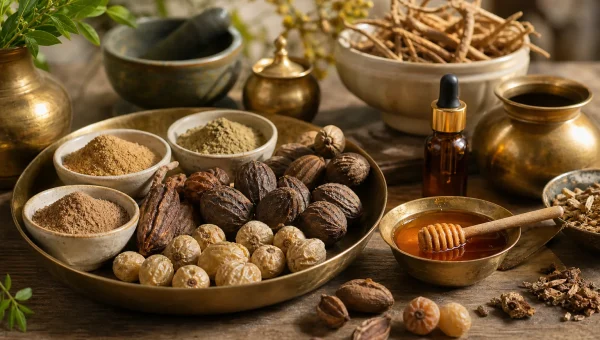
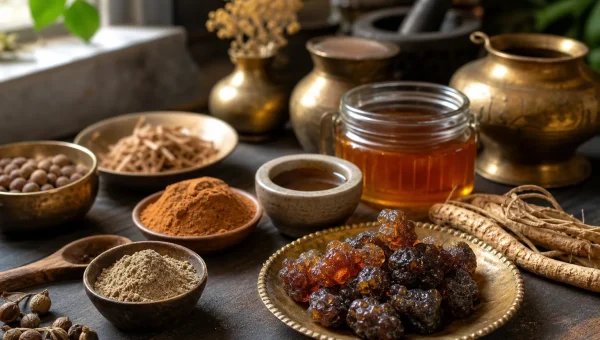
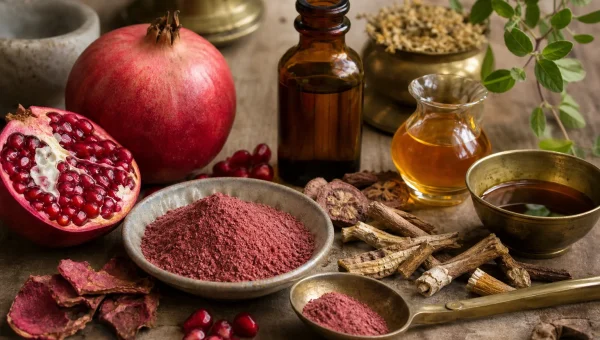
The following herbs belong to the Ayurvedic dermatology and digestive-support conversation because they act on Rakta, Pitta, Kapha, Agni, or Kushtha indications in classical and pharmacopoeial sources. The doses mentioned are pharmacopoeial adult ranges for crude drug forms and are not personal prescriptions.
Nimba (Azadirachta indica, neem): Nimba leaf is bitter, dry, cooling and pungent in post-digestive effect. It is listed with Pittanashaka action and therapeutic use in Kushtha, Krimiroga, Prameha, wounds and toxic conditions. In a gut-skin protocol, Nimba is most suited to hot, itchy, inflamed, Pitta-Kapha type skin patterns where bitterness and cooling are appropriate. Pharmacopoeial dose: 1–3 g leaf powder or 10–20 ml decoction.
Manjistha (Rubia cordifolia): Manjistha is sweet, bitter and astringent in taste, heavy in quality, heating in potency and pungent in post-digestive effect. It is described with actions including Varnya, Shothaghna, Kushthaghna, Rasayana and Shonitasthapana. It is especially relevant where the skin pattern suggests Rakta involvement, discoloration, swelling, recurrent eruptions or chronic inflammatory appearance. Pharmacopoeial dose: 2–4 g powder.
Guduchi (Tinospora cordifolia): Guduchi stem is bitter and astringent, light in quality, heating in potency and sweet in post-digestive effect. It is listed as Dipana, Rasayana, Tridoshashamaka, Raktashodhaka and Jvaraghna, with therapeutic use in Kushtha, Pandu, Prameha, Vatarakta and Kamala. In gut-skin work, it is a useful choice where digestion, immunity-like resilience and Rakta clarity all need support. Pharmacopoeial dose: 3–6 g powder or 20–30 g for decoction preparation.
Amalaki (Emblica officinalis, Indian gooseberry): Amalaki fruit is described with five tastes except salt, light and dry qualities, cooling potency and sweet post-digestive effect. It is listed as Tridoshajit, Rasayana and Chakshushya, with use in Raktapitta, Amlapitta, Prameha and burning conditions. It is valuable when skin heat is accompanied by digestive acidity, depletion, oxidative stress-like presentation or need for gentle rejuvenation. Pharmacopoeial dose for dried fruit pericarp: 3–6 g powder.
Katuka / Kutki (Picrorhiza kurroa): Katuka is intensely bitter and pungent, light in quality, heating in potency and pungent in post-digestive effect. It is listed with Pittahara, Dipani, Bhedini and Jvarahara actions, and therapeutic use in Daha, Kamala, Kushtha, fever patterns and loss of appetite. Because it is a strong bitter drug with purgative tendency, it belongs in practitioner-guided protocols rather than casual self-use. Pharmacopoeial dose: 1–3 g powder.
Dietary Modifications for Gut-Skin Health
The classical dietary prescription for Kushtha begins with avoiding Viruddha Ahara, excessive heaviness, excess sourness and saltiness, poor meal sequencing, and foods that are repeatedly difficult for the person to digest. In practical terms, this means reducing incompatible combinations, frequent snacking over undigested meals, alcohol, excess chilli, vinegar-heavy foods, refined sugar, deep-fried foods and heavy dairy patterns during active flares.
For Pitta-Rakta skin patterns, the diet is cooling without being cold and weakening: cooked grains, green vegetables, bitter and astringent foods, adequate hydration, and avoidance of sharp, sour, alcoholic and overheated foods. For Kapha-Meda acne-prone patterns, the emphasis is on low-glycaemic, lighter meals with less oil, sugar and heaviness. For dry Vata-scaling patterns, the plan should not become excessively rough or drying; digestible unctuous support may be needed under guidance.
Curd, fish, milk, jaggery preparations, black gram, radish, sesame and sour-salty excess are mentioned in the classical Kushtha context, but Ayurveda applies such guidance through individual assessment. A food that aggravates one person during a flare may not need to be permanently forbidden for another person after digestion and disease activity are corrected.
For related Ayurvedic science on gut health, the discussion of the gut mucosal barrier and Sleshma Kapha repair provides the structural layer of this topic. For practical food planning, the Ayurvedic anti-inflammatory diet guide gives a useful meal-based extension.
References and Further Reading
The most reliable way to read the gut-skin axis in Ayurveda is to keep classical diagnosis and modern diagnosis in their proper places. Charaka gives the Ayurvedic map of causes, tissues, doshas and purification principles. Modern dermatology gives the biomedical map of microbiome variation, barrier function, sebum, immune activity and inflammatory pathways. The clinical art is to use both maps without pretending that one vocabulary is identical to the other.
- Charaka Samhita, Kushtha Nidana: classical causation and tissue involvement in skin disease.
- Charaka Samhita, Kushtha Chikitsa: diet, dosha features and purification principles in skin disease.
- Ayurvedic Pharmacopoeia of India: Nimba, Manjistha, Guduchi, Amalaki and Katuka monographs.
- Contemporary dermatology sources on acne pathophysiology, low-glycaemic diet, gut microbiota in psoriasis and fibre-related skin barrier support.
Safety disclaimer: Skin diseases vary widely in cause and severity. The Ayurvedic and dietary strategies described here are educational and supportive, not a replacement for dermatological diagnosis or medical care. Consult a qualified dermatologist, physician and Ayurvedic practitioner before using herbs, supplements, detoxification procedures, Vamana, Virechana or Raktamokshana, especially if pregnant, breastfeeding, immunocompromised, managing liver, kidney, autoimmune or metabolic disease, or taking medication.
for eczema with known food triggers, does the Rakta-Pitta protocol address the allergic component or only the inflammatory response?
the article conflates correlation and causation in the gut-skin relationship. not all skin conditions have a primary gut origin. tbh
is there a timeline for seeing skin changes after starting the gut protocol? dermatological improvement can be slow. 💯
That’s the question I kept thinking about while reading — skin can be slow to respond even when the gut is improving. In my experience with eczema, I noticed digestive changes first, sometimes a few weeks before anything shifted visibly on my skin. Did the article give any guidance on what early signals to watch for that the gut protocol is working before skin improvement appears?
Will try!
does the gut-skin protocol change for psoriasis vs eczema vs acne? the article treats them similarly but their pathophysiology differs. 🙏
the gut-skin axis is a legitimate research area but the clinical application for specific skin diseases via Ayurvedic gut treatment lacks the controlled trial evidence needed.
That’s a fair critique on the evidence side, but I’d push back slightly — the Rakta-Pitta framework does seem to account for allergic sensitization indirectly through the concept of Ama accumulation in the gut driving systemic hypersensitivity. Whether that maps cleanly onto IgE-mediated eczema is the real question. Has anyone seen controlled data on this specifically?
Helpful.
the Rakta-Pitta skin disease pathway connecting gut microbiome disruption to skin inflammation is the clearest Ayurvedic gut-skin axis explanation I’ve found. it maps well to leaky gut research.
the Virechana for skin conditions with gut origin my dermatologist was skeptical but my acne cleared significantly 3 weeks after a Virechana course.
The connection between viruddha ahara and rakta vitiation makes me reconsider my meal combinations.
Noted.
the article distinguishes Kushtha types by gut involvement. is this used in clinical Ayurvedic practice or is it more of a theoretical mapping?
After reading about faecalibacterium depletion in psoriasis, I wonder if a prebiotic could help.
treating my acne from the gut (Triphala, dietary Ama reduction) rather than topically has given me more durable results than 3 years of dermatology topicals.
It’s interesting how the article links shodhana through virechana to modern PASI improvements.
The research cited here on gut microbiome shifts in psoriasis patients — the Faecalibacterium prausnitzii depletion in particular — really reframes how I think about skin disease management. The gut connection felt intuitive before but seeing the microbial data makes the Rakta-Pitta model a lot harder to dismiss.
One question I have is whether manjistha’s effect on tight junctions translates to noticeable skin clarity.
the Virechana for skin conditions with gut origin my dermatologist was skeptical but my acne cleared significantly 3 weeks after a Virechana course. ❤️
Some people might find the dietary advice to avoid dairy citrus combos surprising, but the reasoning fits.
@Ryan the article distinguishes Kushtha types by gut involvement. is this used in clinical Ayurvedic practice or is it more of a theoretical mapping?
treating my acne from the gut (Triphals, dietary Ama reduction) rather than topically has given me more durable results than 3 years of dermatology topicals. tbh
Makes sense.
@Anjali the Rakta-Pitta skin disease pathway connecting gut microbiome disruption to skin inflammation is the clearest Ayurvedic gut-skin axis explanation I’ve found. it maps well to leaky gut research.
Good one.
When the paper mentions elevated klebsiella pneumoniae in psoriasis, it raises the idea of targeting that overgrowth.
I appreciate the breakdown of pitta’s dual role in digestion and skin colour, especially bhrajaka pitta.
The suggestion to prioritize cooked over raw vegetables during flares feels practical for sensitive digestion.
What strikes me reading this is that Ayurveda essentially arrived at the gut-skin connection by a completely different route — through the concept of Rakta Dhatu purity rather than microbiome science — and still landed on broadly similar interventions. Whether that’s convergence or coincidence seems worth exploring.
It’s noteworthy that fermented foods are advised only in the recovery phase, not during active inflammation.
A practical tip: starting with a low dose of kutki seems wise given its potency and endangered status.
The article’s table matching intestinal permeability to srotas dushti helped me visualize the analogy.
I’m curious if the increase in bifidobacterium from neem extract is enough to shift microbiome balance.
Seeing the reference to charaka samhita nidanasthana chapter five made me look up the original verse.
The emphasis on addressing gut first before topical treatments aligns with what I’ve read about chronic skin issues.
Although the evidence is compelling, I’d like to see longer term studies on amalaki’s effect on zonulin levels.