Ayurvedic Boxing Recovery: What Your Body Actually Needs Between Rounds
Every fighter knows the drill: you walk out of a bout with swollen knuckles, a tender jaw, sore shoulders, bruised skin, and joints that feel older than they should. Standard recovery still comes first: medical assessment, concussion screening, wound cleaning, rest, ice when appropriate, compression, elevation, hydration, sleep, and a sensible return-to-training plan. Ayurvedic boxing recovery is best used as an added layer, not a replacement. Its value is in organizing recovery around tissue rebuilding, Vata pacification, digestion, warm oil work, and practitioner-guided herbs that support strength, mobility, and resilience between hard sessions.
In Ayurvedic terms, the main recovery targets are Mamsa Dhatu for muscle tissue, Asthi Dhatu and Sandhi for bones and joints, Rakta Dhatu for blood and bruising, and Srotas for the channels through which nutrition, waste removal, and tissue support move. The classical discussion of vyayama emphasizes exercise that builds firmness and strength, but also warns that effort must remain appropriate to capacity. That principle matters in boxing: recovery is not weakness; it is part of staying fight-ready.
Understanding the Recovery Map
Boxing recovery is not one single problem. A hard sparring session stresses several tissues at once, and each one needs a slightly different response. Ayurveda gives a useful framework for separating these layers instead of treating all soreness as the same thing.
- Mamsa Dhatu: Muscles, tendons, and the flesh of the shoulders, back, legs, neck, and forearms carry the workload of punching, footwork, clinching, and defensive movement. After the acute phase settles, Mamsa support means adequate food, sleep, gentle mobility, and strengthening herbs only when suitable.
- Asthi and Sandhi: The hand bones, wrists, elbows, shoulders, jaw, knees, and ankles absorb repeated impact and torque. Ayurvedic joint care focuses strongly on Vata pacification, warmth, oiling, and avoiding premature return to hard impact.
- Rakta Dhatu: Bruising, cuts, and superficial bleeding make Rakta care relevant. This does not mean rubbing herbs into fresh wounds. It means proper wound care first, then safe support for skin and blood tissue after bleeding, infection risk, and deeper injury are ruled out.
- Vata and Srotas: Repeated impact, travel, sleep loss, dehydration, and nervous-system arousal aggravate Vata-like patterns: stiffness, restlessness, dryness, tremor, spasms, poor sleep, and irregular digestion. Recovery should therefore be warm, rhythmic, nourishing, and not overly stimulating.
The Three Recovery Windows
The body needs different support in the first two days after a bout, the middle of the recovery week, and the rebuilding phase before the next training block. The following table keeps the original Ayurvedic intent while separating first aid, restoration, and longer-term conditioning.
| Phase | Primary Need | Ayurvedic Support | Important Caution |
|---|---|---|---|
| 0-48 hours post-bout | Injury assessment, swelling control, wound care, hydration, sleep | Warm light food, turmeric in food or milk if tolerated, gentle Vata-calming routine, clinician-guided Shallaki/Kunduru when appropriate | Do not apply oils or herbal pastes to fresh cuts, infected skin, active bleeding, suspected fractures, or areas with severe swelling |
| Days 3-5 | Mobility, muscle repair, reduction of stiffness, return of appetite | Warm oil massage on intact skin, gentle mobility, Ashwagandha if already prescribed and tolerated, protein reintroduction as digestion improves | Do not resume sparring with headache, dizziness, numbness, hand deformity, visual symptoms, or worsening pain |
| Week 1-2 rebuilding | Mamsa support, joint comfort, sleep stability, training readiness | Ashwagandha, Amalaki, Chyawanprash, ghee in small amounts if digestion tolerates it, regular meals, warm bathing, steady sleep | Do not start several new herbs at once; keep doses practitioner-guided |
| Fight-week maintenance | Ojas preservation, calm nerves, familiar digestion, predictable energy | Only familiar supports already tested in training camp, light Abhyanga, pranayama, simple warm meals | Avoid supplement experiments, aggressive dehydration, extreme heat exposure, and drastic fasting |
The Balya and Rasayana Stack for Fighters
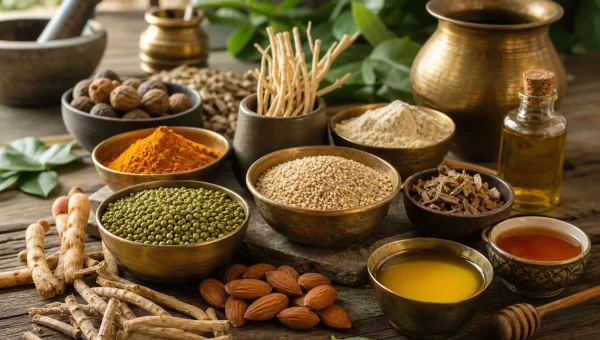
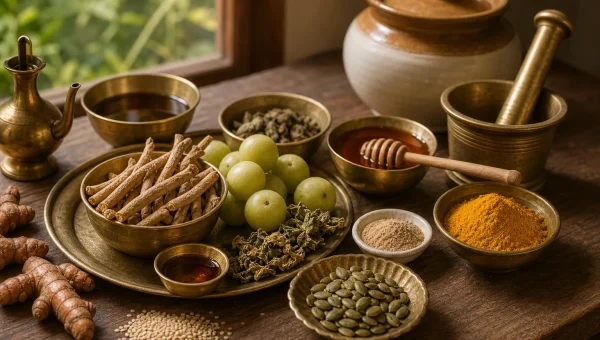
For fighters, the useful Ayurvedic stack is not a random list of “anti-inflammatory” herbs. It should be built around Balya support for strength, Rasayana support for resilience, Vata-calming joint care, and digestion-friendly nourishment. Doses below are reference anchors from classical or clinical sources, not personal prescriptions.
| Herb / Formula | Verified Anchor | Best Recovery Use |
|---|---|---|
| Ashwagandha | Ayurvedic Pharmacopoeia adult powder reference: 3-6 g; one resistance-training trial used 300 mg root extract twice daily | Mamsa support, strength rebuilding, Vata-pacifying recovery, sleep support when suitable |
| Shallaki / Kunduru | Ayurvedic Pharmacopoeia adult exudate reference: 1-3 g; modern extracts vary by product | Joint comfort, Vatahara support, short recovery blocks under guidance |
| Amalaki | Ayurvedic Pharmacopoeia adult powder reference: 3-6 g | Rasayana support, post-camp nourishment, general tissue resilience |
| Chyawanprash | Classical avaleha formulation listed in official Ayurvedic formulation sources | General Rasayana and Ojas support during camp when already tolerated |
| Shatavari | Ayurvedic Pharmacopoeia lists Shatavari as the tuberous root of Asparagus racemosus | Nourishing, cooling, clinician-selected support for depleted or dry constitutions |
| Mahanarayana Taila / Bala-based oils | Traditional external oils used for stiffness, soreness, and Vata-type joint discomfort | External massage on intact skin after the acute injury phase has passed |
Ashwagandha for Strength, Sleep, and Mamsa Support
Ashwagandha is the main recovery herb to consider when the goal is rebuilding strength after the acute injury window has passed. In Ayurvedic language, it is used as a Rasayana and Balya herb, with Vata-Kapha pacifying action. For a fighter, that makes it more appropriate during the rebuilding phase than in the first hours after a serious injury.
A practical approach is to use Ashwagandha only when it has already been tolerated in training, preferably under the supervision of a qualified practitioner. Root powder is commonly taken with warm milk or another suitable vehicle, while standardized extracts should follow product quality standards and professional dosing advice. Avoid starting it immediately before a bout if you do not know how it affects your sleep, digestion, alertness, or medication profile.
More on adaptogen comparison is available at this head-to-head comparison for readers who want to understand where Rhodiola may or may not fit in a training camp.
Shallaki and Kunduru for Joint Recovery
Shallaki, also listed as Kunduru in pharmacopoeial material, refers to the oleo-gum-resin of Boswellia serrata. In an Ayurvedic recovery plan, it is best understood as joint-supportive, Vata-calming assistance for the sore wrists, elbows, knees, and shoulders that come from repeated impact and loading.
For fighters, Shallaki should not be treated as a reason to ignore pain. A painful hand after a fight can be a fracture, ligament injury, tendon injury, or nerve problem. Use it only after serious injury is ruled out and avoid combining it casually with painkillers, blood-thinning medication, surgery recovery, or gastrointestinal conditions without professional guidance.
Turmeric, Bruises, and Rakta Care
Turmeric is better kept simple in boxing recovery. Use Haridra as food, in warm milk, or in cooking after the bout if digestion tolerates it. This supports the same Rakta-care intent without creating the skin risks that come from rubbing strong pastes into damaged tissue.
Do not apply turmeric, salt, essential oils, or herbal pastes to fresh cuts, eye-area wounds, contaminated abrasions, or actively bleeding skin. For bruises on intact skin, a mild oil-based application may be used only if the skin is closed, sensation is normal, and there is no severe swelling, heat, infection, or suspicion of deeper injury.
Oil Protocols for Cuts, Bruises, and Joint Trauma
External oiling is one of the clearest places Ayurveda adds value for a boxer, but timing matters. Oils belong on intact skin, usually after the urgent injury phase has passed. They are not first aid for open wounds, concussions, fractures, deep cuts, infected skin, or rapidly increasing swelling.
Mahanarayana Taila for stiffness and joint soreness: Warm the oil gently to body temperature. Apply to closed skin around the wrists, knuckles, elbows, shoulders, knees, neck, or low back using slow circular strokes and light-to-moderate pressure. Leave it on for 20-30 minutes, then take a warm shower. Use during recovery weeks for Vata-type stiffness, not as a substitute for diagnosis.
Bala-based oils for overworked tissues: Bala appears in classical medicated oil traditions used for Vata disorders, weakness, and recovery. For boxers, the safest use is external: gentle massage on intact skin, followed by warmth and rest. Oral Bala preparations should be taken only under qualified supervision.
Jatyadi Ghrita for superficial skin recovery: Jatyadi Ghrita belongs to the Ayurvedic wound-care tradition. In a combat-sports setting, it should be reserved for clean, superficial, closed or professionally assessed wounds. Do not use ghee or herbal oils on fresh, deep, dirty, infected, or actively bleeding cuts. Facial lacerations, cuts near the eye, and wounds that may need stitches require medical care first.
Post-Bout Dietary Protocol: First 72 Hours
The first post-bout meals should be warm, digestible, hydrating, and easy to tolerate. Intense exercise can disturb gastrointestinal comfort, and Ayurveda would describe the post-fight state as one in which Agni needs careful handling. The goal is not to avoid protein; the goal is to reintroduce it in a way the body can digest.
- Day 1: Moong dal soup, rice kanji or soft rice, warm water, ginger tea if tolerated, simple electrolytes, and cooked foods rather than cold, greasy, or very spicy meals.
- Day 2: Add soft cooked vegetables and moderate protein such as eggs, paneer, dal, fish, tofu, or other suitable foods according to constitution, diet, and medical needs.
- Day 3: Return toward full meals with carbohydrates, protein, cooked vegetables, and a small amount of ghee if digestion is comfortable.
Ghee can be useful in recovery cooking when appetite and digestion are stable, but the dose should be modest and individualized. A fighter with nausea, loose stools, reflux, gallbladder disease, or a strict weight-cut plan should not force extra fat. The detailed breakdown of ghee’s healing mechanisms explains the broader Ayurvedic view of ghee and tissue nourishment.
Marma Points for Hand and Wrist Recovery
Marma work should be gentle, informed, and never painful. It is not a replacement for imaging, splinting, taping, physiotherapy, or medical care. For boxers, marma-based self-care is best used as awareness work and light recovery massage after acute injury is ruled out.
- Manibandha Marma: Located around the wrist region. Use gentle circular oil massage around the wrist crease and forearm tendons for stiffness, avoiding direct pressure over swelling, sharp pain, deformity, numbness, or suspected fracture.
- Kshipra Marma: Located in the web space between the thumb and index finger. Use light pressure only; avoid deep compression if the hand is bruised, swollen, or neurologically sensitive.
- Kurpara Marma: Located at the elbow region. Gentle oiling around the elbow and forearm can support recovery from repetitive punching mechanics, but persistent elbow pain needs assessment.
Apply warm oil before gentle work and keep pressure mild. If pain increases during marma work, stop immediately.
Sleep: The Non-Negotiable Recovery Factor
Training camp sleep is where many fighters lose recovery quality. From an Ayurvedic perspective, hard evening sparring, stimulants, travel, cutting weight, and mental arousal can leave Vata high at night. The recovery routine should therefore be simple: warm shower, light oiling of the feet or scalp if suitable, dim light, slow breathing, and a consistent sleep window.
Ashwagandha may be used at night when appropriate, while Tagara is a stronger sleep-oriented herb that should be used only under practitioner guidance because sedating herbs can affect alertness, driving, training reaction time, and medication safety. Avoid experimenting with sleep herbs during fight week.
The pranayama for stress and sleep article has breathing sequences that can help shift the nervous system from training mode to rest mode before bed.
The Pre-Fight Ojas Building Phase
The final two weeks before a bout are for consolidation, not experimentation. Ayurveda describes Ojas as closely linked with vitality, stability, strength, and immune resilience. Fighters often describe low Ojas in practical terms: flatness, poor sleep, irritability, repeated illness, poor appetite, heavy legs, and lack of spark despite training hard.
The fight-week rule is simple: keep only what is familiar. If Amalaki, Chyawanprash, Ashwagandha, Shatavari, or a medicated oil has been part of the camp and is well tolerated, it may remain in the plan. Do not add new herbs, strong laxatives, aggressive fasting, extreme heat exposure, or heavy new foods at the end of camp. Weight cutting should be supervised and should not be confused with Ayurvedic cleansing.
Putting It Together: A Sample Recovery Week
A boxer who fights on Saturday can treat Sunday and Monday as medical-assessment and Vata-calming days: check the head, hands, eyes, jaw, ribs, and skin; eat warm light food; hydrate; sleep; and use rest, ice, compression, or elevation when appropriate. Oils and herbs should stay away from open wounds and acute injuries.
Tuesday through Thursday can shift toward gentle mobility, warm oil work on intact skin, Ashwagandha or Amalaki if already prescribed, and a gradual return to normal meals. Friday through the following week can rebuild strength, restore training rhythm, and reintroduce harder work only if symptoms have settled and the coach or clinician has cleared the athlete. The Srotas system overview explains the channel-based theory behind why Ayurveda pays attention to circulation, nourishment, clearing, and tissue communication during recovery.
Fighters who use this approach consistently are not trying to replace modern sports recovery. They are using Ayurveda to make recovery warmer, more rhythmic, more tissue-specific, and more respectful of the body’s limits between rounds, camps, and competitive seasons.
Medical Disclaimer: This article is for informational purposes only. Combat-sports injuries can include concussion, fractures, eye injury, nerve injury, internal injury, infection, and lacerations requiring stitches. Always consult a licensed sports medicine physician and a qualified Ayurvedic practitioner before using herbs, oils, supplements, or therapeutic protocols. Seek urgent medical care for loss of consciousness, worsening headache, repeated vomiting, confusion, seizure, slurred speech, unequal pupils, weakness, numbness, severe swelling, deformity, heavy bleeding, deep cuts, cuts near the eye, suspected fracture, or any symptoms that worsen after a bout.
Nothing in this article diagnoses, treats, or prevents a medical condition. Use it as educational information and consult a qualified Ayurvedic practitioner or healthcare provider before starting herbs, supplements, oils, detoxes, or therapeutic protocols, especially if pregnant, managing a condition, preparing for surgery, taking medication, or returning to contact sports after injury.
References
- Charaka Samhita — Vyayama
- Charaka Samhita — Dhatu
- Charaka Samhita — Mamsa dhatu
- Charaka Samhita — Asthi dhatu
- Charaka Samhita — Rakta dhatu
- Charaka Samhita — Srotasa
- Charaka Samhita — Vata dosha
- Charaka Samhita — Ojas
- Ayurvedic Pharmacopoeia of India
- Ayurvedic Pharmacopoeia of India
- Examining the effect of Withania somnifera supplementation on muscle strength and recovery: a randomized controlled trial (2015), PubMed
- Ayurvedic Pharmacopoeia of India
- Efficacy and tolerability of Boswellia serrata extract in treatment of osteoarthritis of knee–a randomized double blind placebo controlled trial (2003), PubMed
- Reduction of delayed onset muscle soreness by a novel curcumin delivery system (Meriva®): a randomised, placebo-controlled trial (2014), PubMed Central
- Miracledrinksclinic (miracledrinksclinic.com)
- Natural Ingredient Resource Center
- Natural Ingredient Resource Center
- My (my.clevelandclinic.org)
- CDC
- Mayoclinic (mayoclinic.org)
- Mayoclinic (mayoclinic.org)
- Health (health.clevelandclinic.org)
- Keralaayurveda (keralaayurveda.com)
- Review of grey literature on Ayurveda wound healing formulations and procedures – A systematic review (2023), PubMed Central
- Exercise-induced splanchnic hypoperfusion results in gut dysfunction in healthy men (2011), PubMed Central
- From Food Supplements to Functional Foods: Emerging Perspectives on Post-Exercise Recovery Nutrition (2024), PubMed Central
- Jaims (jaims.in)
- Easyayurveda (easyayurveda.com)
- Wjpr (wjpr.s3.ap-south-1.amazonaws.com)
- A comparative clinical study on the effect of Tagara (Valeriana wallichii DC.) and Jatamansi (Nardostachys jatamansi DC.) in the management of Anidra (primary insomnia) (2015), PubMed Central