Pandu Roga and Anemia: Mapping Ayurvedic Hematology to Modern Iron Deficiency
Anemia viewed through the Ayurvedic framework of pandu roga is a useful meeting point between classical diagnosis and modern hematology, provided the two systems are not forced into a one-to-one equivalence. In the Charaka Samhita, pandu is described as a disorder marked by pallor or yellow-white discoloration, weakness, loss of strength, impaired complexion, and disturbed nourishment of tissues. Charaka places the disorder in a broader pathogenesis involving pitta-dominant doshic disturbance, impaired tissue nutrition, weak digestive and tissue-level fire, and involvement of channels connected with blood formation and circulation.
Modern anemia is likewise not a single disease. It may arise from iron deficiency, blood loss, inflammation, chronic kidney disease, liver and spleen disorders, malabsorption, vitamin B12 or folate deficiency, hemoglobinopathies, or mixed causes. Global burden remains high: the Global Burden of Disease 2021 analysis estimated about 1.92 billion anemia cases worldwide, and the World Health Organization identifies children, pregnant women, menstruating women, and populations in Africa and South-East Asia as especially affected. Iron deficiency remains a major contributor, but not every pale, tired, or breathless patient should be treated as iron-deficient without laboratory confirmation.
The practical strength of the pandu model is its insistence that cause, digestive capacity, doshic pattern, diet, tissue depletion, and channel obstruction must be assessed before treatment. Classical Ayurvedic iron preparations, fermented formulations, sour-astringent digestive supports, and rasayana herbs can be clinically relevant when used appropriately, but they belong inside a diagnostic and safety framework rather than as casual self-medication.
Charaka’s Five Pandu Types and Practical Modern Correlates
Charaka classifies pandu into five forms: vataja, pittaja, kaphaja, sannipataja or tridoshaja, and mrittika-bhakshana janya pandu caused by habitual clay or earth eating. The modern parallels below are interpretive clinical bridges, not diagnostic replacements. A person with suspected anemia still requires blood tests and medical evaluation to identify the actual cause.
| Classical Pandu Type | Dominant Pattern | Possible Modern Clinical Parallel | Key Classical Features |
|---|---|---|---|
| Vataja pandu | Vata predominant depletion and dryness | Nutritional deficiency, poor intake, constipation-associated depletion, or malabsorptive patterns | Dryness, weakness, body ache, pricking pain, tremor, abdominal distension, constipation, fatigue |
| Pittaja pandu | Pitta and rakta involvement | Anemia with heat, jaundice, inflammation, bleeding tendency, or hemolytic features when clinically present | Yellow or greenish discoloration, burning, fever, thirst, sweating, sour belching, loose yellow stool and urine |
| Kaphaja pandu | Kapha heaviness and sluggish metabolism | Anemia accompanied by edema, chronic inflammation, low appetite, heaviness, or slow digestion | Whitish pallor, heaviness, drowsiness, salivation, nausea, anorexia, cough, dyspnea, edema |
| Sannipataja / tridoshaja pandu | All three doshas involved | Severe, mixed, chronic, or multifactorial anemia requiring broader investigation | Combined features of vata, pitta, and kapha, usually with greater distress and complexity |
| Mrittika-bhakshana pandu | Clay or earth eating as the cause | Pica or geophagia associated with iron deficiency, intestinal irritation, worms, or malabsorption concerns | Habitual clay eating, dryness of nutritive essence, channel obstruction, edema, abdominal disturbance, stool with mucus or blood |
This classification matters because the same hemoglobin value can arise from very different causes. A vata-depleted patient with poor intake and constipation, a pitta-dominant patient with jaundice or bleeding, and a kapha-dominant patient with edema and chronic inflammation should not receive identical treatment. In modern terms, iron replacement is appropriate when iron deficiency is demonstrated, but anemia from inflammation, hemolysis, B12 deficiency, kidney disease, occult bleeding, or inherited blood disorders requires cause-specific care.
Classical Iron Formulations: Mandura Vataka and Lohasava
Ayurvedic management of pandu includes both digestive correction and carefully prepared iron-containing formulations. Charaka describes mandura-based preparations for pandu, including combinations with herbs such as shunthi, pippali, tila, triphala, and suitable carriers according to digestive strength. This classical approach does not treat iron as an isolated mineral alone; it combines processed iron with digestive, channel-clearing, and tissue-supportive ingredients selected according to the patient’s pattern.
Lohasava is a pharmacopoeial fermented Ayurvedic preparation used in pandu and digestive weakness. The Ayurvedic Pharmacopoeia of India describes it as a fermented liquid containing purified iron along with ingredients such as shunthi, maricha, pippali, haritaki, bibhitaka, amalaki, yavani, vidanga, mustaka, dhataki, honey, jaggery, and water. Its alcohol is self-generated during fermentation; it is not a vinegar-based preparation. The pharmacopoeial adult dose is 15–30 ml with an equal quantity of water after meals, twice daily, but individual use should be decided by a qualified practitioner.
Classical iron medicines should be treated as medicines, not as routine supplements. Their safety depends on correct purification, preparation, dose, indication, manufacturer quality control, and monitoring. Products containing improperly processed metals or contaminated raw materials may pose serious toxicity risks, so self-prescribing bhasma or asava–arishta preparations for anemia is not advisable.
Amalaki and Vitamin C-Rich Anupana Support
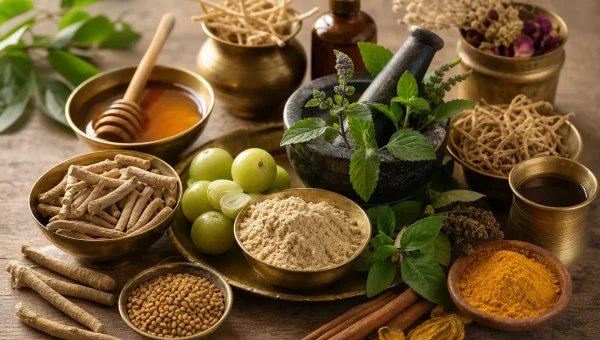
Amalaki (Emblica officinalis / Phyllanthus emblica) has a strong place in Ayurvedic tissue restoration. The Ayurvedic Pharmacopoeia of India lists amalaki as containing ascorbic acid and tannins, with sour, astringent, sweet, bitter, and pungent tastes, light and dry qualities, cooling potency, sweet post-digestive effect, and actions including rasayana and tridoshajit. Its fresh juice and dried powder are both recognized dosage forms in the pharmacopoeia.
From a nutritional perspective, vitamin C-rich foods are valuable alongside non-heme iron because ascorbic acid helps keep iron soluble and supports conversion of ferric iron to the more absorbable ferrous form. Amalaki, lemon, citrus, and pomegranate can therefore be useful meal companions when suitable for the patient’s digestion and doshic state. The practical point is not that one fruit is a guaranteed iron cure, but that sour, vitamin C-rich, digestion-supporting foods can improve the context in which plant iron and prescribed iron preparations are used.
For practical Ayurvedic use, amalaki churna or fresh amalaki juice may be paired with an iron-containing regimen when tolerated. Unlike most sour fruits, amalaki is a classically Pitta-pacifying (pittashamaka) rasayana by virtue of its cooling potency (sheeta virya) and sweet post-digestive effect (madhura vipaka), so it remains suitable, and is often specifically indicated, even when pitta symptoms are aggravated. Hot, sour, spicy, or fermented combinations should be adjusted in patients with strong burning, acidity, loose stool, or bleeding tendency.
Dietary Protocol for Rakta Dhatu Restoration
Rakta dhatu nourishment begins with the quality of ahara rasa, the nutritive essence formed after digestion. An iron-rich diet alone may not restore strength when appetite is weak, stools are irregular, inflammation is active, menstrual or gastrointestinal blood loss continues, or absorption is impaired. Diet should therefore support both iron intake and digestive capacity.
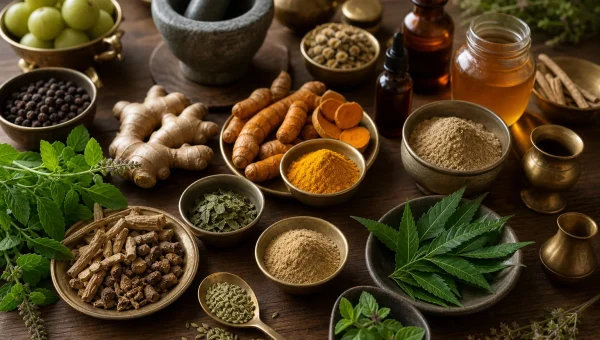
- Support agni with simple meals: Warm, freshly cooked foods, adequate protein, well-cooked dals, rice, wheat or millet as tolerated, and digestive spices such as cumin, coriander, ginger, or small amounts of trikatu may be used according to constitution. Strong heating spices are unsuitable when pitta features such as burning, loose stools, feverishness, or bleeding predominate.
- Use iron-containing plant foods intelligently: Black sesame, legumes, horse gram, green leafy vegetables, moringa leaves, dates, raisins, and other mineral-rich foods can support iron intake. They are dietary supports, not replacements for prescribed iron therapy when ferritin and hemoglobin are low.
- Pair plant iron with sour or vitamin C-rich foods: Amalaki, lemon, citrus, or pomegranate with meals may support non-heme iron absorption when tolerated. This is especially relevant for vegetarian diets where much of the iron is non-heme.
- Use jaggery with caution: Guda appears in classical fermented preparations such as Lohasava, but ordinary dietary jaggery is still sugar-rich. It should not be used as the main treatment for anemia, especially in diabetes, fatty liver disease, obesity, or high triglycerides.
- Separate inhibitors from iron dosing: Tea, coffee, and large calcium-rich doses taken at the same time as iron can reduce absorption. When iron deficiency is being corrected, the timing of milk, calcium, tea, coffee, and iron medicines should be planned carefully.
Liver, Spleen, Agni and the Raktavaha Context
Charaka’s applied discussion of pandu includes involvement of rasa, rakta, mamsa, and meda dhatus, weak digestive and tissue-level fire, and disease origin connected with the heart, channels, liver, and spleen. This is clinically important because pallor and fatigue may arise not only from low iron intake, but also from impaired transformation, chronic inflammation, blood loss, liver or spleen disease, or channel obstruction.
Modern physiology also keeps this broader view in mind: red blood cells are formed in bone marrow, erythropoietin is produced mainly by the kidneys in adults, and the liver and spleen participate in iron storage, bilirubin handling, and red blood cell recycling. A person with anemia, jaundice, enlarged spleen, chronic infection, inflammatory bowel symptoms, heavy menstrual bleeding, black stools, kidney disease, or unexplained weight loss needs medical investigation before an Ayurvedic rebuilding plan is chosen.
The srotas system overview provides additional context for understanding how channels, root organs, digestion, and tissue nourishment are considered together in Ayurvedic assessment. In pandu roga, strengthening blood is not only a matter of adding iron; it is a matter of correcting the pathway through which nourishment becomes stable tissue.
Monitoring Hemoglobin and Ferritin During Treatment
Monitoring is essential in anemia care. A baseline complete blood count, red cell indices, serum ferritin, transferrin saturation, B12, folate, and tests for bleeding, inflammation, kidney disease, liver disease, worms, or malabsorption may be needed depending on the presentation. Hemoglobin below about 12 g/dL in non-pregnant women and below about 13 g/dL in men is commonly used to define anemia, while ferritin helps identify iron deficiency but must be interpreted carefully because it can rise during inflammation.
Follow-up testing after an appropriate interval helps confirm whether treatment is actually rebuilding iron stores and blood parameters. Non-response despite proper adherence should prompt investigation for ongoing blood loss, celiac disease, inflammatory bowel disease, chronic infection, kidney disease, hemoglobinopathy, B12 or folate deficiency, medication effects, or an anemia type that is not iron-responsive. The Ayurvedic plan should be revised only after the cause of non-response is understood.
Medical Disclaimer: This article is for educational reference only. Anemia requires proper diagnosis and should not be self-treated. Ayurvedic iron preparations, including mandura-based formulations, loha bhasma, and Lohasava, should be sourced only from reputable quality-tested manufacturers and used under the guidance of a qualified Ayurvedic practitioner and healthcare provider. Seek medical care urgently for severe weakness, breathlessness, chest pain, fainting, pregnancy-related anemia, black stools, heavy bleeding, jaundice, or anemia in children.
References
- Charaka Samhita — Pandu Chikitsa
- The Association Between Pica and Iron-Deficiency Anemia: A Scoping Review (2023), PubMed Central
- Prevalence, years lived with disability, and trends in anaemia burden by severity and cause, 1990-2021: findings from the Global Burden of Disease Study 2021 (2023), PubMed
- World Health Organization
- Journals (journals.plos.org)
- Natural Ingredient Resource Center
- Ia800501 (ia800501.us.archive.org)
- Functional and Nutraceutical Significance of Amla (Phyllanthus emblica L.): A Review (2022), PubMed Central
- Pubs (pubs.rsc.org)
- Iron Absorption: Factors, Limitations, and Improvement Methods (2022), PubMed Central
- Sesame (Sesamum indicum L.): A Comprehensive Review of Nutritional Value, Phytochemical Composition, Health Benefits, Development of Food, and Industrial Applications (2022), PubMed Central
- Horse gram- an underutilized nutraceutical pulse crop: a review (2015), PubMed Central
- NCBI
- Aafp (aafp.org)
- Gastro (gastro.org)
- FDA