
If I could give one seasonal health instruction for the whole year, it would be this: use winter to protect Vata while your digestive fire is naturally strong. In Ayurveda, Hemanta and Shishira Ritu are not treated as weak seasons. They are seasons of strength, nourishment, oiling, warmth, and disciplined routine. When the body is properly supported with warm, unctuous food and steady daily habits, winter becomes a rebuilding season rather than a depleting one.
The Charaka Samhita describes winter as a time when external cold restrains body heat inward and makes Agni strong. This stronger digestive capacity allows heavier and more nourishing food than would be suitable in hotter seasons. At the same time, cold wind, dryness, inadequate food, excessive lightness, and irregular routine can provoke Vayu and dry the body. This is the key winter paradox: the body can digest nourishment well, but it also needs that nourishment more carefully.
Why Winter Vata Management Matters for the Whole Year
Ayurveda teaches Ritucharya, the seasonal adjustment of food, activity, sleep, oiling, and cleansing according to changes in Dosha, Bala, and Agni. Seasonal imbalance rarely appears in isolation. One season prepares the ground for the next, and poor adaptation during seasonal transitions can lead to disorders when the climate shifts.
Winter is especially important because late winter carries greater cold and dryness, while Kapha begins to accumulate and later expresses more strongly in spring. If a person enters spring already dry, irregular, constipated, depleted, or sleep-deprived, the spring Kapha period can feel heavier and more congested. Later in the rainy season, when Agni is traditionally described as weak, the same person may have fewer reserves to tolerate digestive disturbance and Vata fluctuation.
The corrected Ayurvedic view is precise: Vata is not classically described as naturally accumulating in winter; its seasonal accumulation is associated with summer and its aggravation with the rainy season. In winter, however, Vata can still be provoked by cold, wind, dryness, insufficient nourishment, fasting, excessive travel, sleeplessness, and irregular routine. Winter Vata management therefore means preventing provocation while using strong Agni to build stability.
The Winter Vata Blueprint: Diet
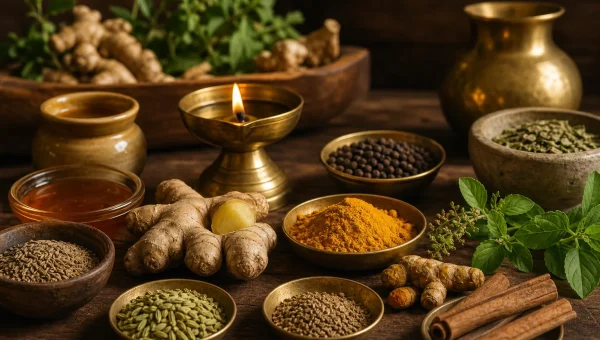
Winter Vata management begins with food that is warm, cooked, moist, nourishing, and suited to the strength of digestion. Classical seasonal guidance emphasizes unctuous foods and the sweet, sour, and salty tastes in Hemanta and Shishira, because these tastes and qualities oppose coldness, dryness, and excessive lightness.
What to Eat
The ideal winter plate is warm, freshly cooked, mildly spiced, and supported by suitable fats. This does not mean overeating or forcing heavy food when digestion is weak. It means choosing food that is grounding and lubricating rather than cold, raw, dry, or irregular.
- Ghee and suitable oils: Use according to digestion, constitution, activity level, and medical context. Ghee and oil add Sneha, the unctuous quality that helps counter dryness.
- Warm grains: Wheat, rice, oats, and other well-cooked grains can be useful winter staples when digested comfortably. Dry, puffed, or stale grains should not dominate the diet.
- Milk preparations: Warm milk, if tolerated, may be taken with suitable spices. Milk products are classically included among nourishing winter foods, but they should be avoided or modified when they cause heaviness, congestion, or poor digestion.
- Root vegetables: Sweet potato, carrot, beet, turnip, and similar vegetables are grounding when cooked with oil, ghee, and warming spices.
- Legumes prepared properly: Mung dal, black gram, and other legumes should be chosen according to digestive strength. Mung dal is lighter; black gram is heavier and more building, so it requires stronger Agni and proper spicing.
- Sesame preparations: Sesame seeds, sesame oil, and traditional sesame-jaggery preparations can be suitable in winter for people who digest them well.
- Warm soups and stews: Soups, porridges, khichari, rice dishes, and vegetable stews are better winter foundations than cold salads or dry snack foods.
What to Avoid
The main winter dietary mistake is living on cold, dry, raw, light, or irregular food while the body is asking for warmth and lubrication. Shishira, the later and drier winter period, especially calls for avoiding foods and drinks that increase coldness, dryness, and roughness.
- Cold drinks, iced beverages, and chilled foods.
- Raw salads and smoothies as the main meal.
- Dry snacks such as crackers, popcorn, chips, and roasted foods eaten without oil or warmth.
- Excessive fasting, skipped meals, and under-eating when appetite is strong.
- Excessive bitter, astringent, and pungent foods when dryness, gas, constipation, or sleep disturbance is present.
- Excess caffeine, especially when it worsens anxiety, dryness, palpitations, or insomnia.
For a practical seasonal meal plan, see our winter diet guide.
The Winter Vata Blueprint: Abhyanga
If diet is the foundation, Abhyanga is the daily shield. Classical winter guidance includes oil application, massage, oiling of the head, warmth, and protection from wind. The broader Dinacharya tradition also praises regular oil massage for calming Vata, supporting sleep, nourishing the body, and maintaining skin quality.
A practical winter Abhyanga method can be simple:
- Oil: Use warm sesame oil or a practitioner-selected medicated oil. For localized joint or muscle issues, medicated oils such as Mahanarayana Taila should be chosen with professional guidance.
- Timing: Apply before a warm morning bath or shower. Avoid applying oil immediately after a heavy meal.
- Amount: Use enough oil to leave the skin comfortably lubricated, without making the practice so heavy that it becomes impractical.
- Technique: Use long strokes over the limbs, circular strokes over joints, gentle clockwise circles over the abdomen, and careful attention to the feet, knees, lower back, shoulders, and scalp if suitable.
- Duration: Ten to twenty minutes is ideal for a full practice. When time is limited, oil the feet, joints, lower back, ears, and crown of the head as appropriate.
- Bathing: Bathe with warm water. Do not scrub the skin aggressively; let a subtle residual softness remain.
Abhyanga should be reduced, delayed, or avoided during fever, acute illness, indigestion, active vomiting or diarrhea, heavy Kapha congestion, immediately after major cleansing procedures, or whenever a practitioner advises against it. People with skin infections, open wounds, severe inflammatory skin disease, or oil intolerance should seek individualized advice.
The Winter Vata Blueprint: Herbs
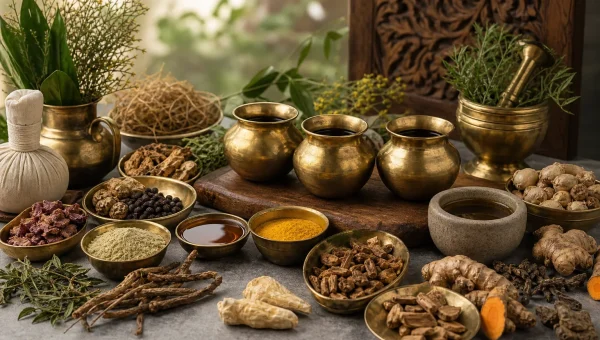
Herbs can support winter Vata management, but they should not be treated as a universal self-prescription. Ayurveda chooses herbs according to constitution, digestion, age, strength, disease state, season, and the person’s current medicines. The following are common winter-relevant options to discuss with a qualified practitioner.
| Herb or Formula | Classical Role | Winter Use Context | Important Caution |
|---|---|---|---|
| Ashwagandha (Withania somnifera) | Described in the Ayurvedic Pharmacopoeia of India as Rasayana, Balya, Vatakaphapaha, and Vajikarana. | Often considered when winter Vata presents with depletion, poor strength, sleep disturbance, or nervous exhaustion. | Avoid during pregnancy or breastfeeding unless specifically advised. Use caution with thyroid disorders, autoimmune conditions, liver disease, sedatives, and prescription medicines. |
| Dashamoola | A ten-root formulation traditionally used in Vata-related conditions. | Commonly considered when Vata affects the joints, muscles, lower back, flanks, or respiratory passages. | Use as a decoction or formulation only with appropriate guidance, especially in chronic illness or pregnancy. |
| Trikatu | A combination of dry ginger, black pepper, and long pepper used to kindle digestive capacity and clear Kapha-type heaviness. | Useful when winter diet becomes too heavy and appetite, digestion, or respiratory Kapha needs support. | Avoid or use cautiously with acidity, burning sensation, ulcers, bleeding tendency, strong Pitta symptoms, or during pregnancy unless prescribed. |
| Triphala | Traditionally used in Ayurveda as a Rasayana and digestive tonic. | Often considered when winter dryness contributes to irregular bowel habits. | Do not use as a substitute for evaluation of chronic constipation, unexplained weight loss, rectal bleeding, or persistent digestive symptoms. |
The safest basic rule is this: use food, oiling, warmth, sleep, and routine first; add herbs only when the indication is clear. Herbal medicines have active effects and can interact with health conditions and modern drugs.
The Winter Vata Blueprint: Sleep
Winter naturally supports a more settled night routine because the nights are longer and the body benefits from conservation of energy. Good winter sleep care is not about oversleeping through the day; it is about giving the nervous system a predictable evening rhythm and enough warmth to settle.
- Keep a steady bedtime and wake time. Regularity is one of the simplest ways to calm Vata.
- Use warmth before bed. A warm bath, warm foot wash, warm milk if tolerated, or gentle oiling of the feet can help the body shift toward rest.
- Oil the feet. Warm sesame oil or a suitable foot oil on the soles can be used before bed, followed by socks to protect bedding and retain warmth.
- Keep the room comfortable. The bedroom should be warm enough to prevent cold stress but not so hot that sleep becomes restless.
- Avoid heavy stimulation late at night. Intense work, excessive screens, arguments, travel planning, and late-night scrolling all increase movement in the mind and can disturb Vata.
- Be careful with daytime sleep. Day sleep is not a universal winter prescription. It should be avoided when there is heaviness, congestion, sluggish digestion, obesity, or Kapha dominance unless a practitioner advises otherwise.
The Winter Vata Blueprint: Lifestyle Anchors
Vata is calmed by steadiness, warmth, oiliness, regularity, and protection from excessive movement. Winter lifestyle should therefore be predictable and insulating, without becoming sedentary or dull.
Wake and eat at consistent times. A steady daily rhythm supports Agni and reduces the irregularity that disturbs Vata. Meals should be warm and taken with attention, not rushed while working or traveling.
Exercise according to strength. Classical winter guidance allows stronger exercise than summer because Bala is better in cold seasons. Still, exercise should be adapted to age, strength, constitution, and disease state. Stop before exhaustion, dryness, breathlessness, or joint strain appears.
Protect the body from wind and cold. Warm clothing, covered ears, warm footwear, and avoiding cold drafts are practical winter Vata care. After oil massage, exercise, or bathing, do not sit in cold wind.
Use warmth intelligently. Warm baths, warm bedding, warm rooms, and warm food are appropriate; overheating, sweating excessively, or drying the body out with too much artificial heat is not.
Reduce unnecessary travel and irregularity. Long travel, skipped meals, late nights, and unpredictable work patterns are common winter Vata triggers. When travel is unavoidable, carry warm food, warm water, oil for the feet, and a fixed sleep plan.
Monitoring Your Vata Through Winter
The best winter protocol is the one that keeps the body lubricated, regular, warm, and mentally steady. Watch practical signs rather than waiting for a major imbalance.
- Bowel movements: Dry, hard, delayed, or irregular stools suggest increasing dryness and Vata disturbance.
- Sleep: Difficulty falling asleep, light sleep, repeated waking, or waking very early with racing thoughts suggests Vata involvement.
- Skin: Cracking heels, dry shins, rough elbows, chapped lips, and flaking skin show a need for more internal and external Sneha.
- Joints and muscles: Cracking, stiffness, pain that shifts location, and cold-sensitive discomfort are common Vata-type signals.
- Mental state: Anxiety, scattered attention, restlessness, excessive worry, and difficulty settling are signs that routine, sleep, warmth, and oiling need more attention.
If these markers worsen, first correct the foundations: regular warm meals, adequate nourishment, daily or near-daily oiling, warm clothing, reduced late-night stimulation, and consistent sleep. Do not respond to every symptom by adding more herbs. In winter Vata care, oil, warmth, rhythm, and nourishment are often the deeper medicine.
Begin before symptoms become severe, ideally during the seasonal shift into winter, and adjust gradually again during Ritusandhi, the transition between seasons. A good winter routine should leave you feeling steady, well-digested, warm, rested, lubricated, and resilient as spring approaches. For individualized guidance on your constitution, see our Vata dosha guide and consult a qualified Ayurvedic practitioner.
This article is intended for generally healthy adults and is not a substitute for medical care. If you are pregnant, nursing, elderly, managing chronic disease, taking prescription medicines, preparing for surgery, or experiencing persistent symptoms, consult a qualified Ayurvedic practitioner and a licensed healthcare provider before changing your diet, herbs, medicines, or therapeutic routine.
References
- NCCIH
- Charaka Samhita — Tasyashiteeya Adhyaya
- Charaka Samhita — Dosha
- Easyayurveda (easyayurveda.com)
- Easyayurveda (easyayurveda.com)
- Ayurvedic Pharmacopoeia of India
- Ayurvedic Pharmacopoeia of India
- NCCIH
- NCBI
- An Ayurvedic formulation ‘Trikatu’ and its constituents (1992), PubMed
- Webprod (webprod.hc-sc.gc.ca)
- Riddhishherbals (riddhishherbals.com)
- A critical review on two types of Laghupanchamula (2012), PubMed Central
- Ayush (ayush.delhi.gov.in)

Been using vata for about 3 months now and the difference in how I feel is real. My practitioner said the same things this article covers so good to have it spelled out.
The Charaka reference for winter Vata naturally accumulating is what I needed to see. I’ve been told this many times but never had the actual text citation. Understanding the theoretical basis makes the protocol feel less like folk wisdom and more like applied classical medicine.
The seasonal variation angle is underused in most health content. Good to see it here
The Abhyanga frequency recommendation for winter versus other seasons is something I’d appreciate more detail on. Daily application is described as ideal but for someone with limited time is three times weekly equivalent or does the cumulative Vata-calming benefit specifically require daily consistency?
Thanks for the clear explanation.
I’ve been doing winter Vata management consistently for two years and my seasonal joint complaints that used to start in December have largely stopped. The warm oil, dietary changes, and earlier sleep schedule together seem to address the Vata accumulation before it becomes symptomatic.
My doctor in Bangalore suggested something similar but used different herbs. Is there regional variation in how Ayurvedic practitioners approach this condition?
The dietary recommendations are consistent with what chronobiology and metabolic research supports for winter: higher calorie intake, more fats and complex carbohydrates, reduced cold and raw foods. The Ayurvedic framework and the metabolic research are aligned here.
Good article on this subject. #76
What’s the shelf life of the prepared vata formulations? I ask because some preparations I’ve used seemed less potent after 2-3 months.
Are there food interactions with vata that I should be aware of? My Ayurvedic doctor mentioned something about dairy but wasn’t specific.
Same here
Following this protocol now.
The blanket recommendation for heavy foods in winter seems to ignore individual variation quite significantly. Someone with a Kapha constitution or significant metabolic syndrome doesn’t need the heavy grain and dairy protocol even in winter.
Been following Ayurveda for 5 years and this article still taught me something new
The article makes a strong case that getting Vata right in winter sets the tone for the whole year.
The specific Ashwagandha and Bala timing recommendations for winter are what I’ve been looking for. Most general ashwagandha guidance doesn’t address seasonal optimization. Taking it twice daily in winter versus once daily in other seasons makes intuitive sense.
Good article on this subject. #69
I tried the vata approach described and it genuinely worked. Simple, not expensive, and it addressed what was actually causing the problem.
Are there clinical studies backing the specific herb combination you mentioned? 🙌
Is the morning or evening timing more important for this protocol overall?
Sorry off-topic but anyone here used Ayurveda for hair fall? Would love recommendations
Not skeptical about Ayurveda generally but some claims here need stronger evidence
I appreciate how specific the instructions are compared to most Ayurveda articles
tbh wasnt expecting much from this but the specifics are actually helpful
The early morning abhyanga in winter when it’s cold how do you warm the oil without burning? 🙌
The traditional context helps understand why it’s done this way. Not just ‘eat this herb’
The contraindications section was important and often missing from similar articles
The connection between gut health and this condition is the angle most allopathic doctors miss
Useful post
This explains something I’ve experienced but couldn’t name. Good validation
The travel in winter as a Vata aggravator good reminder since I fly a lot for work
It’s interesting how the text ties the Charaka Samhita concept of Sanchaya to everyday symptoms like dry skin and constipation.
How long typically before seeing results with this approach? ठीक है
started this 3 weeks ago, too early to say but the process itself feels right
@Sarah Anyone else tried this for longer than 6 months? Wondering about long-term effects
The Ayurvedic framing made this topic much easier to understand than the Western medical version
Does this apply to children or only adults?
Following Vata protocol since last winter, noticeably less dry skin this season
I would like more detail on Winter Vata Management. The article avoids making it sound like a quick fix.
Does this protocol change if someone is pregnant or breastfeeding?
What’s the typical duration of the treatment before reassessing?
The anxiety and dryness connection to Vata in winter is something I experience every year around Dec
I tried a similar approach last year but without the specific sequencing. Wonder if that’s why it didn’t work
The Vata-aggravating effect of dry heating systems in modern buildings is underappreciated
Is this suitable for elderly patients or does the dosage need adjustment?
good info, sharing with my father who has been looking for something like this
Doing this
Did this for 6 weeks exactly as described, going to update here with results 🙏
Shared this with my Ayurveda practitioner. She agreed with most points
The dosage range given is wide. Is there a way to determine where in the range I should start?
This is the Ayurveda article I’ve been looking for since November. Very practical winter protocol 💯
Can this be combined with modern medication or is it better standalone?
The Vata-pacifying diet in winter combined with heavier foods creates confusion with Hemanta diet advice
My doctor dismissed this as pseudoscience. Going to try it anyway and report back
Does this protocol apply equally to all ages or is it more critical for elderly and children?
The section on dosage was the most practically useful for me
Will try
Where do you recommend sourcing the herbs mentioned here in India?
Thanks!
My joints feel worse in winter but I’m not elderly. Is that Vata in joints or something else?
Would love a follow-up article going deeper on the herb preparation methods
I’ve found that swapping raw salads for hearty stews improves my digestion during the cold months.
Good information on this topic. ❤️
Helpful article, thank you.
Tried this, results were good.
Interesting perspective here.
Will try this approach soon.
This helped clarify my doubts.
Useful and actionable.
If you struggle with joint pain in colder months, trying a daily Abhyanga with warm sesame oil could be worth a shot.
Bookmarked for future reference.
Good article on this subject. #66
Good article on this subject. #55
Good article on this subject. #56
Good article on this subject. #57
Patients who skip the winter Vata focus often see allergy flare ups in spring, which matches the described cascade.
Good article on this subject. #58
Good article on this subject. #59
Good article on this subject. #60
Good article on this subject. #61
One practical tip from the piece is to keep the bedroom around 65°F and use a little nutmeg in warm milk for better sleep.
Good article on this subject. #62
Good article on this subject. #63
Good article on this subject. #64
Good article on this subject. #65
Good article on this subject. #67
Good article on this subject. #68
Good article on this subject. #70
Good article on this subject. #71
Good article on this subject. #72
Good article on this subject. #73
Good article on this subject. #74
Good article on this subject. #75
Good article on this subject. #77
Good article on this subject. #78
Good article on this subject. #79
Good article on this subject. #80
Good article on this subject. #81
Good article on this subject. #82 ठीक है
Good article on this subject. #83
Good article on this subject. #84
Good article on this subject. #85
Good article on this subject. #86
Good article on this subject. #87
Good article on this subject. #88
Good article on this subject. #89