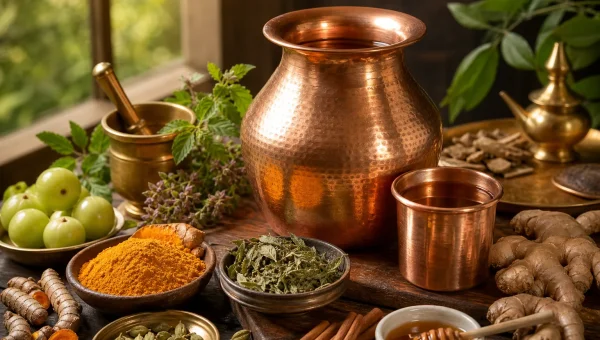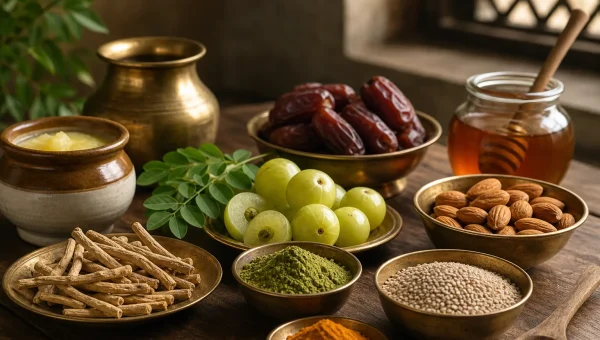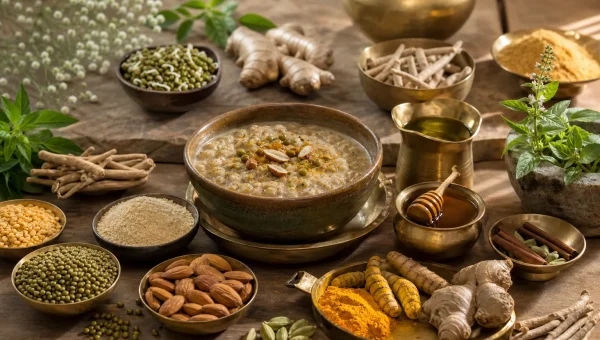
My grandmother never called it bone broth. She called it “haddi ka shorba” – bone soup – and she made it every single winter without fail. The house would fill with this deep, earthy, spice-heavy aroma that started around midnight and was ready by the time we woke up. She’d hand us a cup before school, and I remember thinking it tasted like warmth itself. It wasn’t until I studied Ayurvedic nutrition years later that I understood what she was doing. She was building Asthi and Majja Dhatu – bone and marrow tissue – during the exact season when the body is primed to receive deep nourishment.
This recipe takes my grandmother’s tradition and layers in something she didn’t have: Bala root, Ashwagandha, and a five-spice Ayurvedic blend that transforms ordinary bone broth into a genuine Rasayana preparation. And we’re using a slow cooker, because honestly, nobody has 12 hours to babysit a stovetop pot in December.
Why Bala Root Belongs in Your Broth
Bala (Sida cordifolia) literally translates to “strength.” It’s one of Ayurveda’s premier Balya (strengthening) herbs, classified in the Charaka Samhita under the Balya, Brimhaniya, and Prajasthapana groups. That triple classification tells you something – it simultaneously strengthens muscles, nourishes tissues, and supports reproductive vitality.
What makes Bala particularly suited for bone broth is its affinity for Asthi Dhatu (bone tissue) and Majja Dhatu (marrow/nervous tissue). Research published in the Journal of Ethnopharmacology (2015, n=in vivo) found that Sida cordifolia extract demonstrated significant anti-osteoporotic activity, improving bone mineral density and reducing osteoclast activity. When combined with the collagen, minerals, and gelatin naturally present in bone broth, you’re creating a synergistic preparation that feeds bones from the inside.
The Complete Recipe
Ingredients
| Ingredient | Amount | Purpose |
|---|---|---|
| Grass-fed beef or goat bones (marrow and joint bones) | 1.5 kg | Collagen, minerals, gelatin base |
| Bala root (dried, cut pieces) | 10 grams | Bone strengthening, Dhatu nourishment |
| Ashwagandha root (dried, cut pieces) | 5 grams | Adaptogenic, Ojas building |
| Fresh ginger, sliced | 2-inch piece | Agni stimulation, anti-inflammatory |
| Turmeric root, whole or 1 tsp powder | 1-inch piece | Anti-inflammatory, Ama clearing |
| Black peppercorns | 10 whole | Bioavailability enhancer |
| Cumin seeds | 1 tsp | Digestive support |
| Fenugreek seeds (methi) | 1/2 tsp | Joint lubrication, anti-inflammatory |
| Cinnamon stick | 1 small | Warming, circulation |
| Himalayan pink salt | 1 tsp (adjust to taste) | Mineral content, Agni stimulation |
| Apple cider vinegar or lemon juice | 2 tbsp | Mineral extraction from bones |
| Filtered water | 2.5 liters | Base liquid |
| Ghee | 1 tbsp (added at end) | Fat-soluble compound carrier |
Method
- Roast the bones first. Spread bones on a baking tray and roast at 200 degrees Celsius for 25-30 minutes until golden. This step concentrates flavor and breaks down surface proteins. Skip this if you’re short on time, but the broth will taste noticeably richer if you don’t.
- Toast the spices. In a dry pan, lightly toast the cumin, fenugreek, black peppercorns, and cinnamon for 60 seconds until fragrant. Don’t burn them. Tie these in a small muslin cloth bag – this makes cleanup easier and prevents grittiness in your final broth.
- Layer the slow cooker. Place roasted bones at the bottom. Add Bala root pieces and Ashwagandha root pieces directly into the pot (these will soften and disintegrate during cooking). Add ginger slices and turmeric. Drop in your spice bag. Pour apple cider vinegar over the bones – this acid is what pulls calcium, magnesium, and phosphorus out of the bone matrix.
- Add water. Pour filtered water over everything. The water should cover the bones by at least 2 inches.
- Cook low and slow. Set your slow cooker to LOW and let it go for 10-12 hours. If using a standard slow cooker, 12 hours is ideal. If using an Instant Pot on slow cook mode, 10 hours works. Don’t lift the lid for the first 8 hours.
- Skim and strain. In the last hour, skim any foam or impurities from the surface. When done, strain through a fine mesh sieve into a large pot. Press the solids to extract maximum liquid. Discard bones and spent herbs.
- Finish with ghee. Stir 1 tablespoon of ghee into the hot broth. This isn’t just for flavor – ghee acts as a carrier substance (Anupana) that improves the absorption of fat-soluble compounds extracted from Bala and Ashwagandha.
- Season. Add salt to taste. A squeeze of fresh lemon at serving time adds brightness.
How to Drink It
This isn’t a once-a-week thing. For real benefit during the winter months, here’s my recommended schedule:
- Morning (6-8 AM): 200 ml warm broth on an empty stomach. According to gut health research published in Current Opinion in Clinical Nutrition (2018), warm liquids on an empty stomach prime gastric acid production. This ignites Agni and provides easily absorbable minerals before breakfast.
- Pre-dinner (5-6 PM): 150 ml as an appetizer. The European Journal of Nutrition (2018) confirms that pre-meal soup or broth reduces overall caloric intake. This primes digestion and reduces the tendency to overeat heavy winter meals.
- Bedtime (optional): 100 ml with an extra 1/4 tsp Ashwagandha powder stirred in, for those needing sleep support.
One batch makes approximately 2 liters of finished broth. Store in glass jars in the refrigerator for up to 5 days. A proper bone broth will gel when cold – that gelatin is liquid collagen, and it’s one of the most valuable components for joint health.
The Ayurvedic Logic of Winter Bone Broth
Ashtanga Hridaya’s Hemanta Ritucharya chapter states that during winter, Agni (digestive fire) is at its peak because the body’s internal heat concentrates as external cold increases. This heightened Agni can process heavy, nourishing foods that would overwhelm digestion in summer. Bone broth is exactly this kind of food – heavy (guru), unctuous (snigdha), and deeply nourishing (brimhana).
Classical texts specifically recommend Mamsa Rasa (meat soup) during Hemanta as a Rasayana food. Charaka Samhita (Sutrasthana 6) lists it among the optimal winter foods. Research in Phytotherapy Research (2017) supports Bala’s anti-inflammatory and muscle-strengthening properties, validating its traditional Balya classification. The addition of Bala root elevates this from a simple nutritive food to a medicinal preparation.
A study in the Journal of Agricultural and Food Chemistry (2021) analyzed the amino acid profile of long-cooked bone broths and confirmed high concentrations of glycine, proline, and hydroxyproline – amino acids directly involved in collagen synthesis and gut lining repair. These same amino acids support what Ayurveda describes as Asthi and Sandhi Dhatu maintenance (bone and joint tissue).
Variations by Dosha
| Dosha | Bone Type | Extra Addition | Serving Notes |
|---|---|---|---|
| Vata | Marrow bones (richest fat content) | Extra ghee + 1/2 tsp nutmeg | Drink warm, not hot. Add rock salt. |
| Pitta | Chicken or goat bones | Fresh coriander leaves + fennel seeds | Let cool slightly before drinking. Reduce pepper. |
| Kapha | Goat bones (lightest) | Extra ginger + 1/4 tsp Trikatu | Drink hot. Skip the ghee. Add lime. |
Vegetarian Alternative: Asthi Dhatu Vegetable Broth
For vegetarians, you can create a modified version using:
- Sesame seeds (50 grams) – rich in calcium and magnesium
- Bala root (10 grams) and Ashwagandha (5 grams) – same amounts
- Kelp or kombu seaweed (5 grams) – mineral-rich
- Root vegetables: beet, carrot, sweet potato
- Same spice blend as above
Cook for 6-8 hours on low. The nutrient profile won’t match bone broth exactly – you’ll miss the collagen and gelatin – but the herbal benefits remain. Research in Food & Function (2019) found that long-cooked vegetable broths with seaweed can provide significant mineral content, though in different proportions than bone-based preparations. Supplement with 5 grams of barley powder stirred into each serving for additional mineral content.
Storage and Batch Cooking Tips
My family makes a double batch every Sunday in December. Here’s what I’ve learned:
- Freeze in silicone ice cube trays. Each cube is roughly 30 ml – pop two into a mug, microwave, and you have an instant 60 ml shot of broth on busy mornings.
- Label your batches. Bala-Ashwagandha broth tastes different from a plain bone broth. You don’t want to grab the wrong one.
- The fat cap is medicine. When your broth cools, a layer of fat solidifies on top. Don’t skim it off for storage – it seals the broth from air and extends shelf life. Stir it back in when reheating.
- Acid matters. Don’t skip the vinegar. Without it, mineral extraction drops by up to 50% according to food science research. Nutrients journal (2019) confirmed that acidic cooking environments significantly increase calcium and magnesium extraction from bones.
This broth carried my family through cold season last year, and it’s already simmering in my kitchen as I write this in late November. A comprehensive review in the Journal of Renal Nutrition (2020) supports the use of bone broths for their bioavailable mineral content and gut-healing properties. There’s something deeply satisfying about a food that’s simultaneously delicious, medicinal, and rooted in generational tradition. My grandmother would approve – except she’d insist on using a clay pot over a coal fire, and honestly, she’d probably be right.
Medical Disclaimer: This article is for informational and culinary purposes only. It does not constitute medical advice. Consult a healthcare provider before incorporating new herbal preparations into your routine, particularly if you are pregnant, nursing, on medication, or managing chronic conditions. Bone broth may not be suitable for those with histamine sensitivity or gout.