Sulfur Gut Bacteria Ayurveda: Hydrogen Sulfide, Apana Vata, and a Specific Dysbiosis Pattern
Sulfur gut bacteria Ayurveda connections are best understood as a practical bridge between a modern microbiome pattern and the classical Ayurvedic language of lower-abdominal elimination. Hydrogen sulfide (H2S) is a sulfur-containing gas produced in the intestine by host tissues and by gut microbes that metabolize sulfate, sulfite, taurine, cysteine, methionine, and related sulfur substrates. Desulfovibrio species, Bilophila wadsworthia, Fusobacterium species, and other sulfur-metabolizing organisms may contribute to this pattern in different people.
In balanced amounts, H2S participates in normal gastrointestinal signaling, mucosal defense, and tissue repair. When sulfur-metabolizing activity becomes excessive or poorly tolerated, the clinical picture may include rotten-egg or sulfurous flatus, urgent loose stools, bloating, lower abdominal cramping, and visceral sensitivity. Ayurveda does not name hydrogen sulfide as a molecule, but the symptom cluster sits naturally within apana vata disturbance, especially when irregular downward movement, gas, loose elimination, and abdominal pain appear together.
Hydrogen Sulfide in the Gut
Colonic sulfur metabolism is not driven by one organism alone. Sulfate-reducing bacteria can reduce sulfate and sulfite to H2S, while other bacteria generate sulfide from sulfur-containing amino acids, taurine-linked compounds, and host-derived mucus substrates. Bilophila wadsworthia is especially relevant because it can use taurine-related compounds and has been discussed in relation to bile-rich, high-fat dietary environments. Desulfovibrio species remain a central group in discussions of sulfate reduction, but the broader H2S pattern may involve several microbial pathways at once.
The same molecule can be supportive at one concentration and irritating at another. Low physiologic H2S participates in gut signaling and repair, while higher sulfide exposure can interfere with colonocyte energy metabolism, weaken the mucus barrier, and contribute to a more reactive bowel environment. This dual nature is important because the goal is not to demonize sulfur foods permanently, but to identify when a person’s gut ecology and symptoms suggest that sulfur load and sulfide production need short-term correction.
Modern Microbiome Findings in IBS-D and Bowel Inflammation
Recent IBS work using breath gases and stool microbiome sequencing has associated diarrhea-predominant IBS patterns with higher breath H2S and H2S-producing organisms such as Fusobacterium and Desulfovibrio, while methane-dominant patterns align more strongly with constipation. Animal-model work has also used Desulfovibrio piger and Fusobacterium varium to reproduce a diarrhea-like phenotype, supporting the idea that H2S-producing organisms can shape motility and stool form under experimental conditions.
In bowel inflammation, sulfate-reducing bacteria and sulfide have been repeatedly discussed because sulfide can reduce disulfide bonds in the mucus network, impair butyrate oxidation in colonocytes, and at high concentrations inhibit mitochondrial cytochrome c oxidase. These mechanisms help explain why a sulfide-heavy pattern may feel different from ordinary gas: the symptoms often include odor, urgency, lower abdominal pain, and a sense that the bowel is reactive rather than merely bloated.
The Apana Vata Reading
Classical Ayurveda locates apana vayu in the lower abdomen and pelvic region and describes it as governing the downward elimination of flatus, feces, urine, semen, menstrual flow, and the fetus. From this perspective, urgent stools, disturbed flatus, cramping in the lower abdomen, and irregular evacuation belong to the territory of apana vata. When these symptoms occur with foul odor, heaviness, coating, or poorly digested stool, the clinical picture also involves agni and ama rather than vata alone.
The useful Ayurvedic interpretation is therefore not a rigid one-to-one equation of “H2S equals apana vata.” It is a symptom-based framework: regulate downward movement, reduce excess fermentation load, protect digestive fire, avoid unnecessary aggravation from heavy or poorly tolerated foods, and restore the gut environment gradually once urgency and odor settle.
Dietary Substrate: The Sulfur Food Connection
Sulfur-metabolizing bacteria require sulfur-containing substrates. A temporary sulfur-aware diet can be useful when the pattern is clear: rotten-egg odor, urgent loose stools, bloating, and lower abdominal discomfort that worsen after sulfur-rich meals. This is not the same as a permanent “no sulfur” diet, because sulfur-containing foods also include many nutritious vegetables, proteins, and plant compounds.
| Dietary Category | Relevant Sulfur Compounds | H2S Substrate Potential | Ayurvedic Clinical Handling |
|---|---|---|---|
| Red meat, processed meat, and high-fat animal meals | Sulfur amino acids, taurine-linked bile substrates | High in susceptible patterns | Reduce during loose, gassy, foul-smelling flares; favor lighter meals until agni steadies |
| Eggs, especially frequent or large servings | Methionine, cysteine | Moderate to high, depending on tolerance | Assess individually; pause temporarily if odor and urgency clearly worsen |
| Cruciferous vegetables such as cabbage, cauliflower, broccoli, and mustard greens | Glucosinolates and other sulfur compounds | Variable; often higher when raw, large in quantity, or poorly digested | Use well-cooked, modest portions with digestive spices if tolerated; avoid raw excess during vata-ama patterns |
| Alliums such as onion, garlic, leek, and chive | Organosulfur compounds and fructans | Variable; may help or aggravate depending on dose and gut tolerance | Prefer small cooked amounts; reduce if they clearly increase odor, burning, gas, or looseness |
| Wine, dried fruits, and processed foods containing sulfites | Sulfites and sulfur dioxide preservatives | Potential trigger in sensitive people | Avoid during active flares; reintroduce only if clearly tolerated |
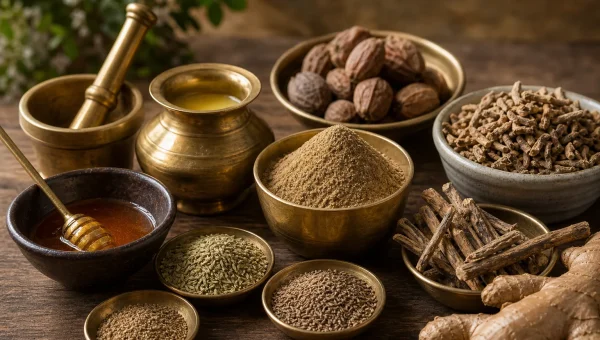
A sulfur-aware Ayurvedic diet for this pattern is warm, cooked, simple, and temporary. Rice gruel, thin mung soup, soft-cooked vegetables, small amounts of ghee if tolerated, cumin, coriander, fennel, dry ginger, and ajwain can be used according to prakriti, strength, season, and stool pattern. Once urgency and odor settle, fiber diversity should be restored gradually rather than keeping the diet overly restricted.
Ayurvedic Herbs Aligned with the Pattern
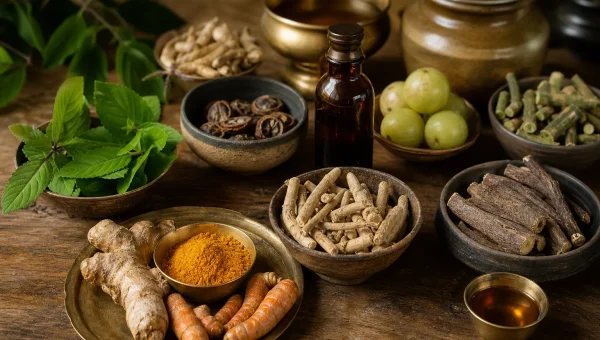
The herbs below should be understood as Ayurvedic pattern supports, not as proven selective eradication agents for Desulfovibrio or Bilophila. Their relevance comes from classical indications such as krimi, adhmana, anaha, shula, atisara, pravahika, grahani, dipana, pachana, anulomana, and sangrahi, along with limited modern antimicrobial and microbiome-related data.
Vidanga (Embelia ribes): Vidanga is listed in the Ayurvedic Pharmacopoeia of India as the dried mature fruit of Embelia ribes. Its actions include dipana, anulomana, kriminashana, and vatakaphapaha, with classical uses including shula, krimiroga, udararoga, and adhmana. This makes it a strong classical choice when foul gas, abdominal distension, and suspected krimi-like gut disturbance dominate the picture. It is not a casual daily digestive spice and should be used under practitioner guidance, especially in pregnancy, debility, chronic illness, or concurrent medication use.
Kutaja (Holarrhena antidysenterica): Kutaja bark is listed in the Ayurvedic Pharmacopoeia of India with tikta and kashaya rasa, laghu and ruksha guna, shita virya, katu vipaka, and actions including dipana, sangrahi, and kaphapitta shamaka. Its classical therapeutic uses include atisara, pravahika, jvaratisara, grahani-related patterns, and related bowel conditions. In this H2S-associated symptom picture, Kutaja is most relevant when loose stools, mucus tendency, urgency, and weakness of stool-holding are prominent. It is less appropriate when constipation, excessive dryness, or marked vata depletion is dominant.
Ajwain or Yavani (Trachyspermum ammi): Yavani is listed in the Ayurvedic Pharmacopoeia of India with katu and tikta rasa, laghu, ruksha, and tikshna guna, ushna virya, katu vipaka, and actions including shulahara, anulomana, dipana, krimighna, pachana, and ruchya. This aligns well with gas, abdominal distension, sluggish digestion, and lower abdominal discomfort. A small household approach is roasted ajwain infused in warm water after meals; it should be reduced or stopped if it causes burning, reflux, excess heat, or irritation.
Triphala: Triphala is traditionally used to support bowel regularity and gut health through the combined fruits Haritaki, Bibhitaki, and Amalaki. Modern reviews describe Triphala as rich in polyphenols such as gallic acid, ellagic acid, chebulinic acid, and related tannins, with prebiotic-like effects on gut microbial ecology. In this pattern, Triphala is best introduced after acute looseness begins to settle; in an active diarrhea-dominant phase, strong laxative use may aggravate symptoms.
The Apana Vata Management Protocol
For an adult with the specific pattern of sulfurous odor, urgent loose stools, bloating, and lower abdominal cramping, the Ayurvedic goal is to calm disturbed apana vata, reduce avoidable sulfur fermentation load, rekindle agni without overheating the gut, and then restore microbial diversity. This approach is appropriate only when alarm symptoms are absent and a qualified practitioner has assessed the case.
- First screen for red flags: blood in stool, persistent fever, unexplained weight loss, anemia, severe dehydration, night-time diarrhea, new symptoms after age fifty, family history of colorectal cancer or inflammatory bowel disease, or severe persistent pain require medical evaluation.
- Diet modification for two to four weeks: remove sulfite-containing processed foods, wine, and dried fruits; pause red and processed meats; reduce very high-fat animal meals; cook cruciferous vegetables thoroughly; use onion and garlic only in small cooked amounts if tolerated.
- Warm cooked meal base: use rice gruel, mung soup, soft-cooked vegetables, and simple meals at regular times. Avoid overeating, late heavy dinners, frequent snacking, cold drinks, and raw-heavy meals during the active phase.
- Digestive water after meals: roasted ajwain in warm water may be used in small amounts when gas and cramping dominate, provided there is no burning, reflux, gastritis tendency, or pregnancy-related concern.
- Kutaja when loose stools dominate: Kutaja or Kutajarishta may be considered under practitioner guidance when urgency, loose stool, mucus tendency, or pravahika-like symptoms are present.
- Vidanga when krimi-like disturbance is suspected: Vidanga is reserved for practitioner-supervised use when foul gas, distension, abdominal discomfort, and krimi-type features are prominent.
- Restore gradually: after four to six weeks, or once urgency and odor improve, reintroduce tolerated fiber and fermented foods slowly, such as takra, kanji, cooked oats, mung, and diverse cooked vegetables in modest portions.
The broader gut-brain axis implications remain important because a reactive bowel can continue to produce urgency and visceral discomfort even after stool form improves. For readers exploring this wider digestive-emotional connection, the related framework is discussed in the gut-brain axis agni manas guide, while Triphala’s broader gastrointestinal context is addressed in the Triphala IBS research article.
When H2S-Type Dysbiosis Requires Medical Investigation
A sulfurous, loose-stool pattern is a clue, not a diagnosis. Similar symptoms may occur with IBS-D, inflammatory bowel disease, infection, celiac disease, bile acid diarrhea, lactose or fructose malabsorption, medication effects, pancreatic or gallbladder disorders, and other conditions. If symptoms persist beyond several weeks, recur frequently, or interfere with weight, sleep, hydration, or daily function, gastroenterological assessment is appropriate. Breath testing, stool testing, and other laboratory tools may help guide care, but results should be interpreted in clinical context rather than used alone.
Medical Disclaimer: This content is for educational discussion only and does not diagnose, treat, or cure any medical condition. Chronic digestive symptoms require evaluation by a qualified healthcare provider to rule out inflammatory, infectious, structural, metabolic, and medication-related causes. Consult a qualified Ayurvedic practitioner or physician before using herbs, supplements, detoxes, fermented preparations, or therapeutic protocols, especially if pregnant, breastfeeding, elderly, treating a child, managing liver, kidney, bowel, or immune disease, or taking medication.
References
- Microbial pathways in colonic sulfur metabolism and links with health and disease (2012), PubMed Central
- Link (link.springer.com)
- Desulfovibrio in the Gut: The Enemy within? (2023), PubMed Central
- Hydrogen sulfide toxicity in the gut environment: Meta-analysis of sulfate-reducing and lactic acid bacteria in inflammatory processes (2021), PubMed Central
- Bacteroides thetaiotaomicron enhances H(2)S production in Bilophila wadsworthia (2024), PubMed Central
- Effects of Hydrogen Sulfide on the Microbiome: From Toxicity to Therapy (2022), PubMed Central
- Hydrogen sulfide signaling in the gastrointestinal tract (2014), PubMed Central
- Methanogens and Hydrogen Sulfide Producing Bacteria Guide Distinct Gut Microbe Profiles and Irritable Bowel Syndrome Subtypes (2022), PubMed
- Pulse (pulse.cedars-sinai.org)
- Hydrogen Sulfide Producers Drive a Diarrhea-Like Phenotype and a Methane Producer Drives a Constipation-Like Phenotype in Animal Models (2024), PubMed Central
- Hydrogen sulfide toxicity in the gut environment: Meta-analysis of sulfate-reducing and lactic acid bacteria in inflammatory processes (2021), PubMed
- Impact of Hydrogen Sulfide on Mitochondrial and Bacterial Bioenergetics (2021), PubMed Central
- The inhibition of mitochondrial cytochrome oxidase by the gases carbon monoxide, nitric oxide, hydrogen cyanide and hydrogen sulfide: chemical mechanism and physiological significance (2008), PubMed
- Sulfide as a Mucus Barrier-Breaker in Inflammatory Bowel Disease? (2016), PubMed
- Cell (cell.com)
- Hydrogen sulfide and colonic epithelial metabolism: implications for ulcerative colitis (2001), PubMed
- Reducing sulfur compounds of the colon impair colonocyte nutrition: implications for ulcerative colitis (1993), PubMed
- Kottakkalayurvedacollege (kottakkalayurvedacollege.ac.in)
- Ijhsr (ijhsr.org)
- Cancer (cancer.gov)
- Sulfur content in foods and beverages and its role in human and animal metabolism: A scoping review of recent studies (2023), PubMed Central
- Beneficial Effects of Organosulfur Compounds from Allium cepa on Gut Health: A Systematic Review (2021), PubMed Central
- Experts (experts.umn.edu)
- Ayurvedic Pharmacopoeia of India
- Antibacterial activity of embelin (2003), PubMed
- Ia800501 (ia800501.us.archive.org)
- Natural Ingredient Resource Center
- Metabolic Diversity and Therapeutic Potential of Holarrhena pubescens: An Important Ethnomedicinal Plant (2020), PubMed Central
- Holarrhena antidysenterica Extract and Its Steroidal Alkaloid, Conessine, as Resistance-Modifying Agents Against Extensively Drug-Resistant Acinetobacter baumannii (2016), PubMed
- Trachyspermum ammi (L.) sprague: chemical composition of essential oil and antimicrobial activities of respective fractions (2015), PubMed
- Thymol screening, phenolic contents, antioxidant and antibacterial activities of Iranian populations of Trachyspermum ammi (L.) Sprague (Apiaceae) (2022), PubMed Central
- Therapeutic Uses of Triphala in Ayurvedic Medicine (2017), PubMed Central
- Triphala: current applications and new perspectives on the treatment of functional gastrointestinal disorders (2018), PubMed Central
- NCBI
- NCCIH