
The clinical frustration of treating constipation-predominant irritable bowel syndrome is not confined to patients. Many people cycle through food restriction, fiber supplements, osmotic laxatives, antispasmodics, and stress-management advice without obtaining stable relief, because IBS-C is a syndrome with several possible drivers rather than a single uniform disease.
The Ayurvedic framework is useful here because it does not treat constipation, bloating, abdominal discomfort, appetite change, and irregular digestion as one flat category. It examines Agni, stool pattern, abdominal sensations, food tolerance, dryness, gas, stress rhythm, sleep, and the direction of Vata movement. Constipation-predominant presentations often resemble Vata-predominant Grahani patterns with Vibandha and Apana Vata disturbance, while some patients also show Pitta, Kapha, Ama, pelvic-floor, or medication-related contributors that must be identified before treatment is chosen.
The Ayurvedic Pathophysiology of IBS-C
Charaka Samhita discusses Grahani in Chikitsa Sthana 15 as a disorder centered on Agni and the Grahani region, where digestion, assimilation, and stool formation are regulated. In Vata-predominant presentations, causative factors include dry, cold, rough, irregular, insufficient, or aggravating food habits, suppression of natural urges, excessive travel, strain, and depletion. The resulting pattern may include variable appetite, bloating, gurgling, dryness, abdominal discomfort, and difficult or irregular evacuation.
- Agni correction: The first objective is to restore digestive capacity with suitable warm, light, digestible food and physician-selected Deepana-Pachana measures when Ama is present.
- Apana Vata regulation: Ayurveda emphasizes Anulomana, the restoration of the proper downward movement of Vata, rather than merely forcing stool evacuation.
- Relief of dryness and obstruction: Vata’s dry and rough qualities are addressed with appropriate Sneha, warm food, warm water, and, when clinically indicated, classical therapies such as Basti under supervision.
- Pattern-based treatment: Vataja Grahani, Pittaja Grahani, Kaphaja Grahani, and mixed patterns are treated differently, so the same formula is not suitable for every IBS-C patient.
Modern IBS-C descriptions include altered bowel motility, abdominal pain related to defecation, stool-form change, bloating, visceral sensitivity, diet-triggered symptoms, and gut-brain interaction. The practical bridge is to use Ayurvedic subtype assessment while also ruling out organic disease, pelvic-floor dysfunction, thyroid disease, medication effects, inflammatory bowel disease, and other causes of chronic constipation.
Clinical Evidence for a Responsible Integrative Plan
The strongest responsible position is an integrative one: use Ayurveda as individualized supportive care while keeping standard IBS-C evaluation and safety screening in place. Triphala, Haritaki, Eranda, warm diet, routine, Sneha, and Vata-Anulomana measures have classical and pharmacopeial support for constipation-related patterns, while modern IBS guidance also supports individualized diet work, soluble fiber when tolerated, gut-directed psychological therapy, and medical treatment when symptoms are persistent or severe.
Human clinical material on Triphala is more modest than promotional claims often suggest, but it does include gastrointestinal and constipation-focused use. This supports Triphala as a traditional and practical bowel-regulating option when chosen carefully, not as a universal replacement for medical IBS-C care.
Triphala: Classical Core for Vata-Constipation Presentations
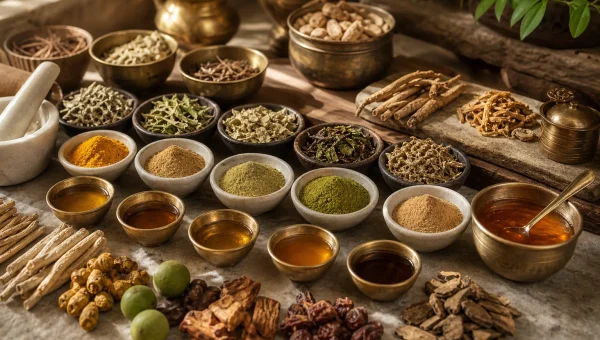
Triphala is the three-fruit formulation of Haritaki, Bibhitaki, and Amalaki. In Ayurvedic practice, it is valued because it combines Anulomana, Rasayana, digestive support, and bowel regulation without being classified as a harsh purgative in routine use. Haritaki is especially important in Vata-related constipation because the Ayurvedic Pharmacopoeia of India lists Anulomana, Deepana, Rasayana, and Sarvadosha-prashamana actions, with Vibandha and Udavarta among its therapeutic indications.
- Haritaki: Supports Anulomana and is traditionally used in constipation, gas-related obstruction, and Vata-type bowel irregularity.
- Bibhitaki: Adds Kashaya-predominant digestive and bowel-supporting action and is listed with Bhedaka activity and Vibandha use.
- Amalaki: Balances the formula with cooling, Rasayana, and Tridosha-supportive qualities, making Triphala broader than a simple laxative mixture.
Practical use: A conservative adult starting approach is often 1-3 g of Triphala powder in warm water at bedtime, adjusted according to stool response and constitution. Traditional laxative monographs commonly place adult dried-fruit Triphala use within a 2-6 g daily range. Higher doses, daily long-term use, or use with chronic disease, pregnancy, kidney disease, heart medicines, diuretics, corticosteroids, anticoagulants, or multiple prescriptions should be supervised by a qualified clinician.
Eranda and Gandharvahastadi: Stronger Anulomana Under Supervision
Eranda, identified botanically as Ricinus communis, is a stronger Vata-Anulomana and Vatahara substance. The Ayurvedic Pharmacopoeia of India describes Eranda root as Snigdha, Ushna, Vatahara, and Amapachana, and Charaka Samhita includes Eranda Taila in Vataja Grahani management after preparatory measures. Castor oil is therefore not a casual daily bowel tonic; it is a stronger intervention for selected cases and should be used cautiously.
Modern pharmacology identifies ricinoleic acid as the key castor oil constituent that activates prostaglandin EP3 receptors involved in laxation and uterine contraction. This explains both its bowel-clearing action and its safety limits. It should not be used in pregnancy unless specifically directed by a clinician, and it is inappropriate when intestinal obstruction, inflammatory bowel disease flare, severe dehydration, unexplained abdominal pain, rectal bleeding, or suspected appendicitis is present.
| Preparation | Typical Clinical Role | Common Timing | Duration | Notes |
|---|---|---|---|---|
| Triphala powder | Gentle bowel regulation, Vata-Anulomana, digestive support | Warm water at bedtime | Short course or practitioner-guided longer use | Often started low; monitor stool looseness, cramps, and medication interactions |
| Haritaki powder | Vata-type constipation, Udavarta, dry or obstructed bowel pattern | Warm water before bed | Course-based use | Classically important for Anulomana; dose should match strength and bowel response |
| Eranda Taila | Stronger Vata-Anulomana or cleansing measure in selected cases | Only as directed | Acute or procedure-linked use | Not for pregnancy, obstruction, inflammatory bowel flare, severe dehydration, or unexplained abdominal pain |
| Gandharvahastadi Kashayam | Physician-selected Vata-Anulomana decoction pattern | Before meals when prescribed | Usually course-based | Built around classical Vata bowel logic; product strength and dose vary |
| Avipattikar Churna | Constipation with Amlapitta-type acidity, burning, or sour belching | After food or as prescribed | Short course when indicated | Not the primary choice for simple dry Vata constipation |
Dietary Protocol for Vataja IBS-C
The dietary foundation for Vataja IBS-C is warm, moist, cooked, regular, and easy to digest. The goal is not to overload the bowel with rough fiber but to restore rhythm, hydration, softness, and digestive steadiness. Soluble fiber may help many IBS patients, but sudden high-fiber changes, raw salads, cold smoothies, and heavy legumes can worsen gas and discomfort in Vata-predominant presentations.
Often useful when tolerated:
- Warm rice gruel, soft rice, thin khichadi, or moong-based soups during flare phases
- Cooked oats, cooked root vegetables, stewed apple, soaked raisins, prunes, or figs in small individualized amounts
- Warm water through the day rather than cold drinks with meals
- Small amounts of ghee or sesame oil in food to counter dryness, when digestion and lipid tolerance allow
- Digestive spices such as cumin, fennel, ajwain, or dry ginger when matched to the patient’s Pitta and reflux tendency
Often reduced during active Vata flares:
- Cold drinks, cold leftovers, iced smoothies, and dry packaged snacks
- Large raw salads, raw cruciferous vegetables, and sudden bran-heavy fiber loading
- Chickpeas, kidney beans, black gram, and other heavy legumes when gas and bloating are prominent
- Irregular meal timing, meal skipping, late-night eating, and eating while stressed or rushed
- Excess caffeine and alcohol, especially when dehydration and hard stool are present
When low-FODMAP work is needed, it should be used as a structured temporary tool rather than a permanent restrictive identity. Ayurveda can be layered onto it by keeping meals warm, cooked, adequately oiled, regularly timed, and constitutionally appropriate.
The Gut-Brain Axis and Manasika Support
IBS is widely understood as a disorder of gut-brain interaction, and Ayurveda gives Vata a central role in rhythm, nerve sensitivity, movement, and response to stress. For IBS-C, this makes daily routine, sleep regularity, slow meals, breath regulation, and nervous-system calming practices part of bowel treatment rather than optional lifestyle decoration.
- Abhyanga: Gentle warm sesame-oil self-massage may support Vata pacification when the patient is not feverish, acutely inflamed, or intolerant to oil.
- Breath practice: Slow diaphragmatic breathing or Bhramari before meals can encourage a calmer eating state and reduce rushed, sympathetic-dominant digestion.
- Meal discipline: Sitting, chewing, and eating at predictable times protects Agni and reduces the irregularity that aggravates Vata.
- Psychological care: Gut-directed cognitive behavioral therapy, hypnotherapy, and related therapies can be coordinated with Ayurvedic care when stress, fear of symptoms, or hypervigilance maintains the IBS cycle.
When to Escalate Beyond Home Care
IBS-C should not be self-labeled without proper evaluation. Medical assessment is important when constipation is new, worsening, severe, or associated with red-flag symptoms such as rectal bleeding, black stool, unexplained weight loss, persistent vomiting, iron-deficiency anemia, night symptoms, fever, severe pain, family history of colorectal cancer, inflammatory bowel disease, or celiac disease, or new bowel changes after age 50.
Evaluation is also important when symptoms suggest pelvic-floor dyssynergia, thyroid disease, medication-induced constipation, pregnancy-related constipation, neurological disease, or obstruction. In such cases, Triphala, castor oil, purgation, enemas, or stronger bowel-clearing methods may delay proper care if used without diagnosis.
Disclaimer: IBS-C is a medical diagnosis that requires appropriate evaluation. This article is educational and describes Ayurvedic supportive approaches, not a substitute for diagnosis or treatment by a gastroenterologist, physician, or qualified Ayurvedic practitioner. Consult a qualified healthcare provider before starting Triphala, Haritaki, Eranda, castor oil, Basti, detoxification, or any therapeutic protocol, especially if pregnant, breastfeeding, elderly, treating a child, managing chronic disease, taking medication, or experiencing blood in stool, severe pain, vomiting, weight loss, anemia, or persistent constipation. Use only quality-tested Ayurvedic products because contamination and adulteration are recognized safety concerns.
References
- NIDDK
- LWW Journals
- Charaka Samhita — Grahani Chikitsa
- Charaka Samhita
- Webprod (webprod.hc-sc.gc.ca)
- Webprod (webprod.hc-sc.gc.ca)
- Ayurvedic Pharmacopoeia of India
- Utoronto (utoronto.scholaris.ca)
- Therapeutic Uses of Triphala in Ayurvedic Medicine (2017), PubMed Central
- Castor oil induces laxation and uterus contraction via ricinoleic acid activating prostaglandin EP3 receptors (2012), PubMed
- My (my.clevelandclinic.org)
- Efficacy of psychological therapies for irritable bowel syndrome: systematic review and network meta-analysis (2020), PubMed
- Mayoclinic (mayoclinic.org)
- FDA

the Vata-type IBS-C root cause protocol finally explains my pattern. my constipation is clearly nervous system mediated and the Snehana + Basti approach makes more sense than just fiber.
the dietary guidance says warm, cooked, oily foods. for someone with SIBO alongside IBS, is this safe? fermented and oily foods can aggravate SIBO.
iBS can have serious structural causes that need colonoscopy before any protocol. the article should more strongly recommend ruling out organic disease first. ✨
Bilwadi Churna with warm water before meals has been more effective for my bowel regularity than Triphala. the article’s explanation of why suits my Vata predominance exactly.
the hard stools with bloating advice is okay, but timing and dose still matter a lot
Interesting.
Haritaki dose for Vata-type constipation the article says 1-3g at bedtime. does this need to be cycled or can it be used long-term daily?
the article is useful but triphala timing needs a stronger warning, people may self treat too much
ibs can have serious structural causes that need colonoscopy before any protocol. the article ahould more strongly recommend ruling out organic disease first.
the ‘root cause’ framing is ambitious. IBS-C is now understood as a gut-brain axis disorder with complex neurological components that a Vata-pacifying protocol alone doesn’t address. 🙌
I found the explanation of Apana Vata vitiation really helpful for understanding why my constipation feels worse when I’m stressed.
Has anyone tried the warm milk and castor oil combo at bedtime and noticed a quicker bowel movement?
haritaki dose for Vata-type constipation the article says 1-3g at bedtime. does this need to be cycled or can it be used long-term daily? ❤️
@Smita the dietary guidance says warm, cooked, oily foods. for someone with SIBO alongside IBS, is this safe? fermented and oily foods can aggravate SIBO.
that’s a really important point on SIBO — the cooked oily food recommendation here would need to be modified significantly in that case. did your practitioner suggest an elimination sequence, like addressing the SIBO first before moving to the Vata-balancing dietary phase?
The part about Triphala’s prebiotic effect making sense after reading about increased Faecalibacterium in the study.
for IBS-C alternating with loose stools, which part of the protocol applies? my presentation doesn’t fit cleanly into Vata-C alone.
I wonder if the ghee recommendation would work for someone who is lactose intolerant?
Soaking figs overnight seems like a simple tweak to add soluble fiber without aggravating Vata.
the section on Triphala in this IBS-C protocol is the part I want to understand better. it’s listed as a gentle option but I’ve read conflicting things about whether it’s actually appropriate for constipation-predominant type versus diarrhea-predominant. anyone had a practitioner weigh in on this distinction?
The article makes a strong case for looking at gut motility beyond just fiber intake.
Will try!
I’ve read that Haritaki alone can be a gentler start before moving to the full Triphala formula.
@Kavita the ‘root cause’ framing is ambitious. IBS-C is now understood as a gut-brain axis disorder with complex neurological components that a Vata-pacifying protocol alone doesn’t address.
Does the protocol suggest any specific timing for the ginger fennel tea alongside Triphala?
Same here.
Thanks!
for IBS-C alternating with loose stools, which part of the protocol applies? my presentation doesnt fit cleanly into Vata-C alone.
I appreciated the clarification that castor oil is for acute use only, not daily long term.
The connection between mental anxiety and Apana Vata dysfunction resonates with my own experience.
Trying cooked cooled sweet potato as a resistant starch source could be an easy addition to meals.
It’s interesting that the mucosal moisture loss described as Pakwashaya Shosha mirrors what we see in colonic transit slowdown.
the ‘root cause’ framing is ambitious. IBS-C is now understood as a gut-brsin axis disorder with complex neurological components that a Vata-pacifying protocol alone doesnt address. 🙏
Same here. 💯