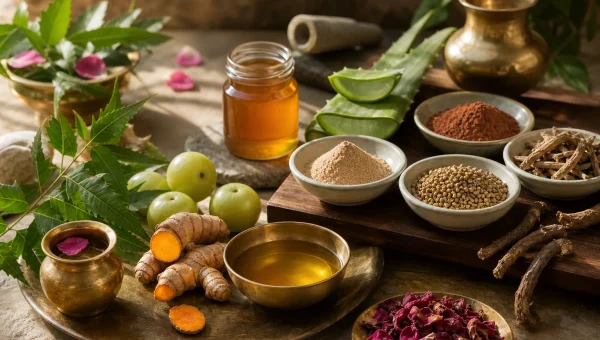
Autumn Ayurvedic Seasonal Transition: The 21-Day Ritucharya Reset
Autumn Ayurvedic seasonal transition is best understood through Ritucharya, the seasonal regimen that adjusts food, activity, sleep, oiling, and daily rhythm according to the qualities present in the environment. Ayurveda does not treat autumn as a single uniform block of time. Early autumn may still carry heat and Pitta sensitivity, while later autumn often becomes colder, drier, windier, and more Vata-provoking. The most important classical idea here is Ritusandhi, the junction of seasons: the previous season’s regimen should be reduced gradually and the next season’s regimen introduced gradually.
This 21-day reset turns that gradual seasonal transition into a practical three-week structure: seven days of preparation, seven days of active stabilization, and seven days of consolidation. It is especially useful when the weather begins to feel dry, cold, windy, irregular, or depleting, and when Vata-type signs appear—dry skin, variable appetite, constipation, restless sleep, stiffness, worry, or a scattered routine.
Classical Seasonal Mechanics: Sharad, Hemanta, and Vata
Classical Ayurveda places Sharad after the rainy season and before Hemanta. This matters because Sharad is classically a Pitta-sensitive season, while the later shift toward Hemanta brings stronger cold-season requirements: warmth, steadiness, nourishment, oiling, and protection from wind and cold. A correct autumn reset therefore does two things at once. It avoids excessive heat, sourness, sharp spices, overexertion, and heavy oiling when Pitta signs are present; and it steadily builds warmth, regularity, unctuousness, and grounding when Vata signs appear.
In the seasonal dosha cycle, Vata accumulates during the dry heat of Grishma, aggravates during Varsha, and is expected to settle in Sharad when the proper regimen is followed. If the actual weather is cold, dry, rough, windy, or irregular, or if the person is already Vata-dominant, autumn can still require Vata-calming care. The practical rule is simple: follow the season’s real qualities and your present symptoms, not the calendar alone.
How to Use the 21-Day Reset
This protocol is a structured wellness routine, not a classical rule that every person needs exactly 21 days. The classical instruction is gradual transition at Ritusandhi; the 21-day format gives that principle a workable container. Week one softens summer or rainy-season habits, week two stabilizes Vata without provoking Pitta, and week three converts the useful changes into an autumn-to-early-winter maintenance rhythm.
Phase 1: Days 1-7 — Preparation and Transition
The first week begins the dietary and lifestyle shift before the season becomes strongly cold, dry, or windy. The goal is gradual adjustment, not a sudden overhaul. Use this week to make meals warmer, sleep more regular, exercise steadier, and evening routines quieter.
| Category | Transition Away From | Move Toward |
|---|---|---|
| Meals | Cold drinks, irregular meals, excessive raw foods | Warm, freshly cooked meals at regular times |
| Seasonal emphasis | Pure summer cooling without regard for dryness or wind | Pitta-aware cooling in warm autumn; Vata grounding as cold and dryness increase |
| Grains and legumes | Skipping meals or relying on light snacks | Rice, wheat, barley, mung, and soft warm porridges according to digestion |
| Fats | Too little fat when dryness and constipation are present | Moderate ghee or sesame-based food when cold, dry, or Vata signs dominate |
| Spices | Very sharp, hot, sour, or irritating spice use during Pitta signs | Gentle cumin, coriander, fennel, and mild ginger only when digestion is cold or sluggish |
| Sleep | Late nights, overstimulation, irregular bedtime | A steadier evening routine and earlier wind-down |
| Exercise | Excessive intensity, sweating, or outdoor exertion in harsh wind or heat | Walking, steady yoga, mobility work, and moderate strength practice |
Days 1-7 practice focus: Keep meals regular, replace iced drinks with warm water or gentle herbal infusions, make lunch the main meal when possible, and begin a calmer evening rhythm. If dryness, stiffness, coldness, or restlessness are present, introduce 5-10 minutes of warm sesame oil self-massage before bathing on several days of the week. If heat, rashes, acidity, burning sensations, or irritability are dominant, use less oil and keep the food warm but not heating.
Phase 2: Days 8-14 — Active Vata Reset
This is the active stabilization phase, but “active” does not mean aggressive. The purpose is to create predictable rhythm, protect digestion, reduce dryness, and prevent the nervous system from becoming overstimulated by cold, wind, travel, irregular meals, and late nights.
Morning routine: Wake at a consistent time, ideally close to sunrise, and begin quietly rather than rushing into screens, messages, or errands. Drink warm water, allow time for elimination, and use warm oil self-massage before bathing when coldness, dryness, stiffness, or Vata restlessness are present. Follow with grounding movement: a steady walk, slow Surya Namaskar, long-held standing postures, gentle mobility, or moderate strength work. Avoid exhausting cardio when sleep is disturbed, joints feel dry, digestion is irregular, or anxiety is elevated.
Breakfast: Do not force fasting during this reset if it leaves you shaky, cold, anxious, constipated, or mentally scattered. Choose a warm, cooked morning meal such as rice porridge, mung soup, soft wheat porridge, or cooked vegetables with a small amount of ghee. If Pitta signs are present, keep ginger, black pepper, chili, sour foods, and fermented foods modest. If coldness and Vata dryness dominate, the meal can be slightly more unctuous and warming.
Midday rhythm: Make lunch the most complete meal of the day whenever your schedule allows. Favor warm cooked grains, mung, seasonal cooked vegetables, a suitable protein source, and enough fat to prevent dryness without making the meal heavy. Eat seated, avoid working while eating, and keep raw salads, crackers, cold smoothies, and dry snacks minimal during this phase.
Breath practice: Practice 5-10 minutes of quiet breathing or Nadi Shodhana if you already know the technique. Keep it simple and comfortable, without breath retention or strain. This can be done in the late morning, afternoon, or early evening on an empty or light stomach. A detailed technique can be followed in the pranayama for stress article.
Evening routine: Eat a warm dinner early enough to digest before sleep. Soups, kitchari-style meals, cooked grains, mung, cooked vegetables, and simple stews work well for Vata-type autumn evenings. Keep raw and cold foods small at night. Reduce screens, heavy work, and stimulating conversation late in the evening. If the body feels cold or restless, use warm socks, a warm bath, or light foot oiling before bed.
The Autumn Herbal Support Options: Days 8-21
Herbs are optional support, not the foundation of the reset. Food, sleep, oiling, warmth, and regularity come first. Choose herbs according to constitution, digestion, symptoms, medications, and practitioner guidance; do not combine multiple herbs from a checklist without individual assessment.
- Ashwagandha (Asvagandha): A warming, strengthening root described with Rasayana, Balya, and Vata-Kapha-pacifying actions. It is most appropriate when Vata signs are joined with depletion, weakness, coldness, poor resilience, or nervous exhaustion. It is not automatically suitable for every autumn constitution, especially when heat, irritability, strong Pitta signs, pregnancy, thyroid concerns, autoimmune issues, liver concerns, or medication interactions are present.
- Shatavari (Satavari): A nourishing, unctuous, cooling root with Vatahara and Pittahara actions. It is more suitable when dryness and depletion coexist with heat sensitivity, acidity, or Pitta irritation. It should be used carefully when heaviness, congestion, sluggish digestion, or Kapha excess dominates.
- Triphala and Haritaki: Haritaki is classically described with Anulomana and Sarvadosha-pacifying actions and is a key fruit in Triphala. It is most relevant when autumn Vata affects Apana Vata, producing irregular elimination, gas, bloating, or constipation. It should not be used casually in pregnancy, dehydration, active diarrhea, severe weakness, or when a healthcare provider has restricted laxative or bowel-moving herbs.
- Sesame (Tila): Sesame is a practical food-and-oil support for Vata because it is unctuous and warming. Use sesame seeds, tahini, or sesame oil externally when coldness, dryness, stiffness, or roughness are present. Reduce or avoid heavy sesame use when strong Pitta heat, active skin inflammation, or digestive burning is dominant.
Phase 3: Days 15-21 — Consolidation and Autumn Maintenance
The third week turns the reset into a sustainable autumn routine. Keep the practices that clearly improve sleep, digestion, elimination, skin moisture, joint comfort, and mental steadiness. Drop anything that feels too heating, too heavy, too stimulating, or unsuitable for your constitution.
The Day 21 self-check is simple: Is sleep steadier? Is appetite predictable? Is elimination regular? Is skin less dry? Are joints less stiff? Is the mind less scattered? If these signs are improving, continue the gentler maintenance version. If symptoms persist or worsen, do not intensify herbs on your own; shift to individual assessment with a qualified practitioner.
Autumn-to-early-winter maintenance protocol:
- Use warm, cooked meals as the default, especially breakfast and dinner when Vata signs are present.
- Keep meal timing, sleep timing, and exercise timing steady.
- Use warm sesame oil self-massage 3-7 times weekly when coldness, dryness, stiffness, or restlessness are present.
- Protect the body from direct wind, cold floors, late-night exposure, and excessive travel fatigue.
- Practice Nadi Shodhana or quiet breathing for 5 minutes on several days each week.
- Keep sharp spices, sour foods, alcohol, fermented foods, and overheating routines modest when Pitta signs are present.
- Increase warmth, softness, ghee, sesame, soups, and oiling as the season becomes colder and drier.
When to Modify or Stop the Reset
Simplify or stop the protocol if it causes heaviness, nausea, loose stools, acidity, rash, agitation, excessive sleepiness, or worsening symptoms. This reset is not a substitute for diagnosis or treatment. Strong cleansing practices, Panchakarma, Virechana, Basti, prolonged fasting, and high-dose herbal protocols should not be self-directed.
Medical Disclaimer: This seasonal protocol is for generally healthy adults maintaining wellness through seasonal transition. Individuals who are pregnant or breastfeeding, taking medications, managing thyroid, autoimmune, liver, kidney, gastrointestinal, psychiatric, cardiovascular, or hormonal conditions, or experiencing persistent symptoms should consult a qualified Ayurvedic practitioner and a licensed healthcare provider before beginning any herbal or seasonal protocol.