
The Morning I Noticed the Spot
I was 29 when my barber paused mid-cut and said, “You have a small thin area here at the crown. Want me to cut around it?” That casual observation triggered a low-grade panic that lasted months. I started photographing my head from every angle. I became aware of every hair in the shower drain. I bought three different “hair growth” shampoos in a single week, none of which gave me the structure I needed.
What finally helped was stepping back from the panic and approaching the problem methodically: observe the pattern, remove obvious aggravating factors, support the scalp, nourish the body, and track changes with monthly photographs. The Ayurvedic framework for hair fall gave me a practical way to organize that process without pretending that every kind of baldness has the same cause or the same prognosis.
Let me be honest from the start: Ayurvedic hair care is most useful when there are still living follicles, recent shedding, early thinning, irritation, stress-related loss, or poor hair quality. It should not be presented as a guaranteed reversal for advanced baldness, scarring alopecia, untreated autoimmune disease, thyroid disease, severe nutritional deficiency, or rapidly progressive hair loss. Those situations need professional diagnosis.
The Ayurvedic Map: Khalitya, Indralupta, and Diffuse Shedding
Ayurveda does not treat all hair loss as one condition. Classical descriptions of hair fall speak of pitta and vata affecting the hair root, followed by kapha and rakta obstructing the follicular opening and limiting regrowth. In practice, the first step is to identify the visible pattern and then choose care accordingly.
| Presentation | Ayurvedic Lens | Modern Condition to Rule In or Out | Visible Pattern | Treatment Emphasis |
|---|---|---|---|---|
| Gradual patterned thinning | Khalitya-type hair fall | Androgenetic alopecia | Receding hairline, temple thinning, or crown thinning | Scalp oiling, pitta-vata pacification, nutrition, stress regulation, early dermatology support when needed |
| Sudden patchy hair loss | Indralupta-type presentation | Alopecia areata or another patchy alopecia | Round or oval bald patches, often appearing quickly | Prompt dermatology evaluation, practitioner-guided Ayurveda, gentle scalp care, avoidance of irritants |
| Diffuse shedding | Dosha disturbance with dhatu and agni assessment | Telogen effluvium, nutritional deficiency, thyroid imbalance, medication-related shedding, post-illness shedding | Uniform shedding across the scalp, often noticed in the shower, comb, or pillow | Identify the trigger, restore diet and sleep, check labs when indicated, use mild scalp support |
Modern dermatology describes androgenetic alopecia as progressive follicle miniaturization influenced by androgens such as dihydrotestosterone. Ayurveda uses a different language: dosha, dhatu, agni, and obstruction. The useful bridge is clinical rather than literal. Do not translate DHT directly into pitta or every oily scalp into kapha; use the Ayurvedic model to guide support while still getting the correct diagnosis.
The 6-Month Hair-Support Protocol
This protocol keeps the original practical goal: improve scalp health, reduce avoidable shedding, nourish the hair roots, and track whether early thinning stabilizes. It is not a replacement for minoxidil, finasteride, steroid treatment, thyroid care, iron correction, or other medical treatment when those are appropriate.
Phase 1: Scalp Preparation and Irritant Removal (Month 1)
The first month is about calming and preparing the scalp. Before adding strong herbs, remove avoidable irritation: harsh shampoos, frequent high-heat styling, tight hairstyles, aggressive scratching, heavy product buildup, and repeated chemical treatments.
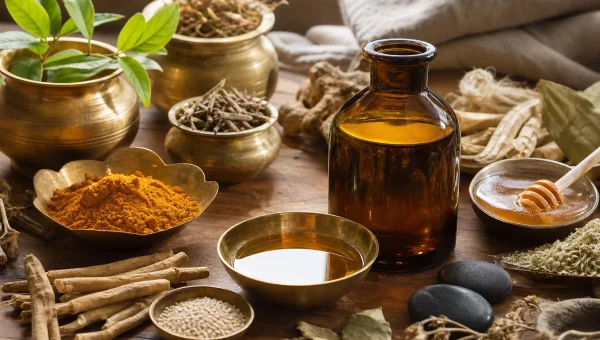
Gentle oil massage twice weekly: Use a small amount of plain coconut oil, sesame oil, or a classical bhringaraj-based hair oil if it suits your scalp. Warm the oil indirectly by placing the bottle in warm water, then apply a thin layer to the scalp. Massage with fingertip pads for 5-10 minutes. Leave it on for 30-60 minutes, then wash with a mild cleanser.
Simple scalp cleansing: Wash the scalp regularly enough to remove sweat, excess oil, and product residue, but avoid scraping or abrasive exfoliation. If the scalp is inflamed, painful, infected, scaly, or oozing, skip home scrubs and see a dermatologist.
Patch-test all oils and powders: Apply a small amount behind the ear or on the inner arm first. Burning, redness, rash, swelling, or increased itching means the preparation is not suitable for you.
Phase 2: Growth Support and Bhringaraj Oiling (Months 2-4)
The second phase introduces the main Ayurvedic external support. Bhringaraj, also called Kesharaja in the Ayurvedic Pharmacopoeia of India, is classified as keshya, meaning beneficial for hair. Classical formulations include Bhringaraja Taila and related hair oils.
Bhringaraj Taila routine:
- Apply bhringaraj-based oil 3-5 nights per week, or less often if your scalp is oily or sensitive.
- Part the hair in sections and apply oil directly to the scalp rather than coating only the hair shaft.
- Massage gently for 10 minutes using circular movements and medium-light pressure.
- Leave on for 1-2 hours or overnight if it suits you and does not trigger itching, acne, or heaviness.
- Wash out with a mild cleanser. Do not leave rancid, dusty, or irritating oil on the scalp for long periods.
Topical Eclipta alba preparations have produced hair-growth activity in rat and mouse models, including changes in anagen activity and follicle measures. This supports traditional use, but animal findings should not be treated as a guaranteed human regrowth result. The practical value of bhringaraj oiling is that it combines herb delivery, lubrication, scalp massage, and a consistent routine.
Optional weekly herbal scalp pack:
- Bhringaraj powder: 1 tablespoon
- Amalaki powder: 1 tablespoon
- Brahmi powder: 1 teaspoon
- Fenugreek powder: 1/2 teaspoon
- Warm water or thin coconut milk: enough to make a smooth paste
Apply the paste to the scalp and hair for 20-30 minutes, then rinse thoroughly. Keep it mild. A scalp pack should never burn, sting, or leave the scalp red. If powders make your hair dry or rough, reduce frequency or use oiling alone.
Practitioner-guided internal support: Internal herbs should be chosen according to constitution, digestion, medications, and the type of hair loss. Amalaki is classically rasayana and tridosha-balancing. Ashwagandha is classically rasayana, balya, and vata-kapha pacifying. Bhringaraj is classically keshya and rasayana. These herbs are not interchangeable with cosmetic oils, and they should not be self-prescribed in high doses or combined casually with medication.
| Herb | Classical Role | Common Use in Hair Support | Safety Note |
|---|---|---|---|
| Bhringaraj | Keshya, rasayana, vata-kapha pacifying | External oiling; practitioner-selected internal use when appropriate | Use quality products; stop if scalp irritation occurs |
| Amalaki | Rasayana, tridoshajit, cooling, nourishing | Dietary and herbal support where digestion allows | Use cautiously with acidity, loose stools, or medication concerns |
| Brahmi | Medhya, rasayana, cooling | Used in scalp packs and oils where stress and heat are part of the pattern | Patch-test topical use; internal use needs guidance |
| Ashwagandha | Rasayana, balya, vata-kapha pacifying | Used when depletion, poor sleep, stress, or vata aggravation is part of the picture | Avoid casual use in pregnancy, thyroid disease, autoimmune disease, liver concerns, or while taking sedatives or other medication unless supervised |
Phase 3: Consolidation and Maintenance (Months 5-6)
By months 5-6, the goal is to decide what is actually helping. Keep the parts of the routine that improve shedding, scalp comfort, and hair texture. Remove anything that feels irritating, greasy, time-consuming, or unsustainable.
Maintenance routine: Continue bhringaraj oiling 2-4 times weekly, keep a mild wash routine, and use the scalp pack only if it leaves the scalp comfortable and the hair manageable. Continue monthly photographs in the same lighting, angle, hair length, and time of day.
Nasya only when prescribed: Nasya is a classical Ayurvedic route using medicated oils in the nose, and Anu Taila is a traditional preparation used for this purpose. For hair loss, do not self-prescribe nasal oil. Use nasya only when a qualified Ayurvedic practitioner has examined you and chosen the oil, dose, and duration.
Diet for Hair Regrowth Support
Ayurveda connects kesha, or scalp hair, with the nourishment and metabolism of deeper tissues, especially asthi dhatu. Practically, this means hair care is not only external. If diet, digestion, sleep, and nutrient status are poor, the scalp routine has less to work with.
| Nutrient | Why It Matters | Food Sources | Adult Reference Intake |
|---|---|---|---|
| Iron | Iron deficiency can contribute to hair shedding and should be checked when diffuse hair loss persists. | Lentils, beans, sesame seeds, leafy greens, dates, jaggery, eggs, meat if used | 8 mg/day for adult men and women over 50; 18 mg/day for adult women 19-50 |
| Zinc | Zinc is involved in normal cell function and deficiency can be relevant in hair loss assessment. | Pumpkin seeds, chickpeas, lentils, cashews, dairy, eggs, meat if used | 11 mg/day for adult men; 8 mg/day for adult women |
| Biotin | Biotin deficiency is uncommon, but true deficiency can affect hair and nails. | Eggs, nuts, seeds, sweet potato, legumes, whole grains | 30 mcg/day for adults |
| Protein | Low protein intake can worsen shedding and poor hair quality. | Dal, paneer, curd, eggs, sprouts, soy, nuts, seeds, fish or meat if used | At least 0.8 g/kg/day for most adults, adjusted for activity and medical status |
| Vitamin D | Vitamin D status is commonly checked when hair loss is persistent or unexplained. | Sun exposure, fortified foods, supplements only when needed | 600 IU/day for adults 19-70; 800 IU/day for adults over 70 |
Use food first and supplement only when there is a clear reason. Excess supplementation is not better for hair, and unnecessary high-dose supplements can create new problems. If shedding is persistent, get blood work rather than guessing.
Lifestyle Factors That Can Accelerate Hair Loss
Hair loss is often multi-factorial. Even a good oiling routine will be limited if the scalp is constantly pulled, burned, inflamed, deprived of sleep, or affected by an uncorrected deficiency.
- Chronic stress and illness: Physical or emotional stress can trigger diffuse shedding. Prioritize regular meals, adequate rest, walking, pranayama, and realistic workload reduction.
- Sleep deprivation: Poor sleep affects recovery, appetite regulation, stress resilience, and daily routines. Keep a consistent sleep window and reduce late-night screen exposure when possible.
- Very hot water: Wash the scalp with lukewarm water. Very hot water can worsen dryness and irritation.
- Tight hairstyles: Repeated pulling from tight buns, ponytails, braids, extensions, or headgear can contribute to traction alopecia. Keep hairstyles loose and vary the point of tension.
- Excessive heat and chemical styling: Frequent straightening, curling, high-heat blow drying, bleaching, and harsh treatments can damage the hair shaft and make thinning look worse.
Realistic Expectations: What Results to Track
Track results with the same method every month: same lighting, same angle, same hair length, same camera distance, and no styling fibers or wet-hair comparison. A reliable photo record is more useful than checking the mirror ten times a day.
- Month 1: Scalp comfort may improve, itching or flaking may reduce, and avoidable breakage may decrease.
- Months 2-3: Shedding may begin to settle if the trigger has been addressed. Hair may feel less dry or brittle.
- Months 4-6: Early thinning may look more stable, and some people may notice short new hairs in recovering areas.
- After 6 months: If thinning is still progressing, get a dermatology review and lab assessment rather than simply adding more oils or supplements.
Earlier intervention usually has a better chance of preserving density than waiting until large areas are shiny, scarred, or long inactive. Conventional options such as minoxidil or finasteride may be appropriate for some people, and they can be discussed with a dermatologist alongside Ayurvedic support.
When Ayurvedic Treatment Alone Is Not Enough
Be realistic. Sudden patchy hair loss, scarring, pain, pus, scaling, eyebrow or beard loss, rapid shedding after illness, postpartum shedding, thyroid symptoms, anemia symptoms, or strong family-pattern baldness should be evaluated professionally. Ayurveda can support the terrain, but it should not delay diagnosis.
- See a dermatologist to identify the exact type of alopecia.
- Ask about blood work when appropriate, including CBC, ferritin or iron status, thyroid function, vitamin D, zinc, and other tests chosen by your clinician.
- Discuss conventional options when indicated, including minoxidil, finasteride, anti-inflammatory treatment for alopecia areata, or other therapies specific to the diagnosis.
- Use Ayurvedic herbs, oils, and nasya under qualified guidance, especially if you take medication or have a medical condition.
There is no shame in using multiple approaches. The Ayurvedic protocol addresses scalp care, nutrition, sleep, stress, and daily habits. Those factors can improve the foundation for hair health regardless of what other treatment path you choose.
Use this protocol as a structured self-care framework, not as a diagnosis. The safest approach is to combine careful observation, gentle scalp care, appropriate diet, and professional guidance when symptoms are persistent or unusual.
References
- Jaims (jaims.in)
- Niimh (niimh.nic.in)
- MedlinePlus
- NCBI
- NCBI
- Niams (niams.nih.gov)
- Telogen Effluvium: A Review of the Literature (2020), PubMed Central
- Bad (bad.org.uk)
- Ayurvedic Pharmacopoeia of India
- Hair growth promoting activity of Eclipta alba in male albino rats (2008), PubMed
- Hero (hero.epa.gov)
- Ayurvedic Pharmacopoeia of India
- Identification and estimation of bioactive constituents Negundoside, Berberine chloride, and Marmelosin by HPLC and HPTLC for development of quality control protocols for Ayurvedic medicated oil formulation (2021), PubMed Central
- Charaka Samhita — Asthi dhatu
- Aad (aad.org)
- NIH Office of Dietary Supplements
- NIH Office of Dietary Supplements
- NIH Office of Dietary Supplements
- NIH Office of Dietary Supplements
- Health (health.harvard.edu)
- Aad (aad.org)
- Aad (aad.org)
- NCCIH
the article would be stronger with a clear ‘when to see a doctor’ section. some of these conditions need medical clearance. 💯
my practitioner said something similar
tried bhringraj oil for 6 months for AGA (male pattern baldness). no regrowth. genetics is genetics.
good point
Thanks for sharing that, useful to know
same experience here actually
does this protocol change during monsoon season? I’ve heard Ayurvedic timing is seasonal
does this protocol change during monsoon season? ive heard Ayurvedic timing is seasonal
respectfully, most of these claims need larger RCTs before we can say they’re validated.
u mention this is safe but what about drug interactions with common meds like bp tablets
That’s a fair concern. Most of the oils mentioned here are topical so the systemic interaction risk is lower, but for any internal herbs like bhringraj capsules I’d definitely check with a doctor first if you’re on antihypertensives.
@Rebecca I had the same question
I find the dosage guidance vague. ‘appropriate amount’ is not helpful for someone measuring at home.
Same frustration honestly. For the oil application at least, I’ve seen practitioners suggest a coin-sized amount per zone as a rough starting point, but it’d be much more useful if the article gave something like that directly.
Honestly that barber moment is something a lot of men relate to more than they admit. What made you finally decide to try the Khalitya protocol specifically rather than going the minoxidil route first?
not disputing Ayurveda has value but articles like this sometimes overstate efficacy.
Yes but results vary a lot from person to person
tried a similar protocol 6 months back. results were modest at best and I was consistent.
Modest results after 6 months is still interesting to hear. Was that with the full protocol including internal herbs, or just the topical oil application? Makes a difference in what to expect, I think.
is the regrowth protocol different for androgenic alopecia vs stress-related hair loss
is there a simplified version for beginners who dont have access to all these herbs 💯
how long should I give the protocol before deciding it’s not working 3 months or 6
i think it depends on your constitution tbh
how do I source quality herbs for this? most local shops sell low-grade material.
tried a similar protocol 6 months back. results were modest at best and I was consistent. ✨
how long before results become noticeable with this protocol? my patience has limits tbh
The barber’s casual comment about a thin spot at the crown really hit home for me.
bhringraj + bramhi oil for bald spots been applying nightly for 10 weeks. fine hair regrowth visible in 3 spots.
can someone with a strong Pitta constitution follow this or are modifications needed
is this appropriate for elderly patients above 70 or should the dosages be reduced
worth trying for a month at least before giving up
great to see peer-reviewed studies referenced alongside classical texts. makes it easier to trust.
The combination of classical text citations and the modern trichology studies on scalp blood flow really does help. It’s one thing to say “this worked in ancient times” and another to show a plausible mechanism.
Finally!
shared this with my Ayurveda practitioner and she confirmed the approach is sound.
can someone with a strong Pitta constitution follow this or r modifications needed
good point, the article doesn’t address that
very practical protocol. tried a modified version for a week and already feeling a difference.
is there a simplified version for beginners who don’t have access to all these herbs
I tried three different growth shampoos in a week and saw no change which made me look deeper.
finally an article that explains the classical text basis rather than just listing herbs.
the nasya component for hair loss which oil and how does that help scalp follicles
The neem oil detox treatment sounds like a good way to clear buildup before stimulating follicles.
the preparation method described here is exactly what my grandmother used to make. brings back memories.