
At kilometer 32 of the bike leg at my first Ironman, I hit the wall that every long-distance athlete eventually meets. Not a nutrition wall. Not a hydration wall. Something deeper: a bone-level exhaustion that felt like my body was running on credit it didn’t have. I finished the race. But the recovery took three weeks, and for the first ten days I couldn’t train at all.
That race was the reason I started studying Ayurveda seriously. Not because I wanted ancient wisdom. Because I wanted to understand why two athletes with identical training loads and identical race nutrition plans recover so differently. One is back in the pool in four days. The other is still shuffling to the kitchen at day seven. The difference, I’ve come to believe, is Ojas – the subtle vital reserve that Ayurveda places at the foundation of endurance capacity and recovery speed.
Here’s what an Ayurvedic framework looks like when you’re serious about triathlon performance, not just wellness.
The Dosha of Triathlon Training
Triathlon is among the most Vata-aggravating sporting pursuits in existence. The combination of high training volume, multiple disciplines requiring different movement patterns, frequent early-morning sessions in cold conditions, constant travel to races, and the psychological pressure of race-day execution creates a chronic Vata-elevated state in most triathletes.
The signs are familiar to anyone who’s trained seriously: disrupted sleep despite physical exhaustion, a racing mind during taper, digestive irregularity during race week, hypersensitivity to cold, joint aches that don’t quite qualify as injuries but don’t quite resolve, and the post-race “crash” that hits hardest three to four days after a major event when the adrenaline finally dissipates.
Pitta is simultaneously elevated by the competitive drive, heat of heavy training, and the intensity of race-day effort. When both Vata and Pitta are chronically elevated – common in serious amateur triathletes – the athlete ages prematurely, recovers slowly, and is prone to overtraining syndrome, which Ayurveda would classify as Ati Vyayama (excessive exercise) leading to Ojas depletion. Classical texts (Charaka Samhita, Sutrasthana) warn that ativyayama causes kshaya (depletion), shrama (fatigue), and breathlessness – a recognizable description of the overtrained athlete.
Phase 1: Base Training Period (16+ Weeks Out)
The base training period is when Rasayana (rejuvenating) herbs have the most time to exert their effects. This is not the time for stimulants or short-term performance enhancers. This is the time to build the foundation.
Core Adaptogen Stack for Base Building
These four classical rasayana herbs form the backbone of an off-season stack. Each is a distinct rejuvenative – supporting adaptation to training stress, antioxidant and mineral status, and immune resilience. The doses below reflect commonly studied or traditional ranges and should be confirmed with a qualified Ayurvedic practitioner before use.
| Herb | Sanskrit (Botanical) Name | Primary Benefit for Athletes | Daily Dose |
|---|---|---|---|
| Ashwagandha KSM-66 | Asvagandha (Withania somnifera) | VO2 max improvement; cortisol regulation; muscle recovery | 300mg twice daily |
| Shilajit (purified) | Shilajatu (Asphaltum punjabianum) | Rasayana/yogavahi; stamina and recovery support (fulvic acid, ionic minerals) | 300mg daily |
| Amalaki | Amalaki (Phyllanthus emblica) | Systemic antioxidant; iron absorption support | 1g extract or 5g powder daily |
| Guduchi | Guduci (Tinospora cordifolia) | Immune resilience; inflammation modulation | 400mg extract daily |
The cardiorespiratory data on ashwagandha is genuinely encouraging – but it has to be cited correctly. A 2012 trial in the Journal of Ayurveda and Integrative Medicine (Shenoy et al.) gave 40 elite Indian cyclists 500mg of aqueous ashwagandha root extract twice daily for eight weeks and found significant gains in VO2 max and time to exhaustion versus placebo. A separate 2015 trial in the journal Ayu (Choudhary et al.) found KSM-66 ashwagandha at 300mg twice daily improved VO2 max in healthy athletic adults. A third, frequently confused study – Wankhede et al. 2015 in the Journal of the International Society of Sports Nutrition – used KSM-66 in resistance-trained men and measured muscle strength, size, and recovery, not aerobic capacity. For an Ironman athlete building aerobic base over years, the endurance findings are the relevant ones.
Shilajit (Shilajatu) is one of Ayurveda’s premier rasayana substances, named in the Charaka Samhita, and a classic yogavahi – a catalyst traditionally said to enhance the herbs taken with it. Purified shilajit is composed mainly of humic and fulvic acids with dibenzo-alpha-pyrones and ionic minerals (Stohs, 2014), and has long been used for stamina, recovery, and anti-fatigue. Well-controlled, athlete-specific endurance trials remain limited, so it is best treated as a traditional rejuvenative for the base phase rather than a proven ergogenic aid.
Phase 2: Race-Specific Build (8-16 Weeks Out)
As training intensity increases and long sessions accumulate, the recovery demand rises. This is when athletes most commonly overtrain. The Ayurvedic principle for this phase: match the increase in Vata (from high training load) with a proportionate increase in Vata-pacifying, nourishing protocols.
Recovery Nutrition After Sessions Over 2 Hours
The Ayurvedic recovery meal: Warm khichdi (1/2 cup each of moong dal and rice, cooked with ghee, cumin, ginger, turmeric, and salt). This provides approximately 350 calories, 14g protein, 60g carbohydrates, and maximum digestibility. The moong dal protein is among the easiest to digest in the entire legume family – critical when gut blood flow is redirected during exercise.
Shatavari milk at bedtime: 5g Shatavari (Asparagus racemosus) powder in warm milk with ghee and cardamom. Shatavari is classically a rasayana and balya (strengthening) herb; in the Charaka Samhita its documented rasayana action is principally on shukra dhatu and ojas, and it is valued as a brimhana (nourishing) and vata-pitta pacifying agent that supports tissue repair and restful sleep. (Sequential nourishment of the seven dhatus – dhatu poshana krama – is general Ayurvedic physiology, not a Shatavari-specific property attributed in the classical texts.)
Bala (Sida cordifolia) during heavy training blocks: 3-5g powder in warm milk. Bala is classically balya (strengthening), brimhana (nourishing), and vatahara. Important safety correction: Sida cordifolia naturally contains the sympathomimetic alkaloids ephedrine and pseudoephedrine themselves – not merely “precursors.” These are WADA-prohibited stimulants, so Bala can cause a positive doping test and is not appropriate for athletes in or near competition. Reserve it, if used at all, for off-season recovery under practitioner supervision, and never exceed traditional doses. Note: Sida cordifolia will likely show positive in sport drug testing. Verify with your sport’s governing body.
Race Week Protocol
Race week is where digestive fire (Agni) and nervous-system steadiness (Vata balance) matter more than any single herb. The goal is to carbohydrate-load without overwhelming a stress-narrowed Agni, then taper stimulating inputs as the start line approaches. The day-by-day plan below works backward from race day.
Days 7-4 Before Race: Carbohydrate and Agni Management
Standard carbohydrate loading works better when your digestive fire is strong. Race week anxiety consistently impairs digestion in athletes, and loading with pasta and bread when Agni is low creates exactly the bloating, sluggishness, and GI distress that derails race performance.
Ayurvedic race-week carbohydrate strategy:
- Replace pasta with cooked white rice, rice noodles, or rice flour preparations – all significantly easier to digest than wheat-based carbohydrates
- Add 1/4 teaspoon each of cumin and ginger to all carbohydrate meals to maintain digestive fire
- Take Trikatu Churna (500mg with meals) for the first three days of race week to keep Agni strong during loading
- Avoid raw salads, raw vegetables, and cold beverages during race week entirely
Days 3-1 Before Race: Simplification
Three days out, drop Trikatu (too stimulating close to race). Continue:
- Ashwagandha and Shilajit at standard doses through race eve
- Increase Amalaki to 1.5g extract (antioxidant loading)
- Warm sesame oil full-body Abhyanga the evening two days before race: 15-20 minutes of self-massage. This grounds Vata, improves sleep quality, and reduces the pre-race anxiety that costs athletes sleep they cannot afford to lose
Race Morning
The race-morning window is about keeping Agni active and the gut calm while topping off glycogen. Everything here should already be familiar from training – race day is never the time to experiment. Timings are measured back from the start gun.
| Time Before Start | What to Do |
|---|---|
| 3 hours | Light, warm breakfast: cooked rice or rice porridge with ghee, banana, a little salt. No raw food. |
| 2 hours | Ashwagandha 300mg with warm water (last adaptogen dose) |
| 90 min | Warm ginger tea (1cm fresh ginger in hot water) to keep digestive fire active |
| 30 min | Standard pre-race fueling protocol (sports nutrition) |
Do not introduce any new Ayurvedic herb on race day. Everything used on race day should have been trialed in training. This is non-negotiable.
Multi-Day Recovery Protocol After Ironman
The post-Ironman recovery period is where most athletes make their biggest mistakes. They either rush back to training too soon (Pitta drive overriding physical signals) or they collapse into completely passive recovery that doesn’t actively support tissue repair. Ayurveda provides a structured middle path.
Days 1-3: Vata Crisis Phase
Immediately post-race, Vata is severely elevated. Symptoms: erratic appetite, disturbed sleep despite exhaustion, joint aches, emotional volatility, digestive sensitivity. The single most important intervention is warmth – of food, environment, and contact.
- Eat warm, soft foods only: Khichdi, rice porridge, warm soups with ghee. No cold, raw, or difficult-to-digest food for at least 72 hours post-race.
- Warm sesame oil Abhyanga daily: 20-30 minutes. In classical dinacharya (Charaka Samhita, Sutrasthana 5; Ashtanga Hridaya, Sutrasthana 2), abhyanga is the foremost vata-pacifying daily practice – it steadies the nervous system, eases stiff joints, and improves sleep. Modern recovery research on massage for delayed-onset muscle soreness is broadly supportive, though Ayurveda’s rationale here is vata-shamana rather than a specific muscle-damage mechanism.
- Ashwagandha in warm milk at bedtime: 600mg for maximum anabolic and sleep-quality support during the first week
- Shatavari morning and evening: 5g powder in warm milk. Post-race Ojas depletion is real; Shatavari is a classical rasayana/balya that supports tissue-level rebuilding and ojas
Days 4-14: Tissue Repair Phase
Once the acute Vata crisis settles, the focus shifts to rebuilding tissue (dhatu) and restoring Ojas. This is the window where rasayana and balya herbs do their work; keep food warm and digestible and let the doses below run for the full ten days.
| Herb | Dose | Function |
|---|---|---|
| Ashwagandha | 300mg twice daily | Anabolic; cortisol normalization |
| Shatavari | 5g powder morning and evening in milk | Ojas and tissue rebuilding |
| Bala | 5g in warm milk at bedtime | Balya/brimhana; strength restoration (off-season only – see anti-doping note) |
| Triphala | 3g at bedtime in warm water | Antioxidant clearance; bowel regularity |
| Shilajit | 300mg with breakfast | Rasayana; stamina and mineral replenishment |
Return to Training Markers
Classical Ayurveda does not set numeric return-to-activity criteria; its guidance is qualitative – resume exertion only when bala (strength), agni (appetite and digestion), and ojas (steady mind, sound sleep, good complexion) have been restored. The checklist below pairs that classical principle with practical, modern sports-medicine markers, which are conservative for long-course triathlon but appropriate:
- Appetite has fully returned and meals are satisfying (a sign of restored agni)
- Sleep is consolidating into 7-8 hours without sleep aids (modern marker)
- Morning heart rate has returned to within about 5 beats of typical resting rate (modern marker)
- Joints feel mobile without significant stiffness after the first 15 minutes of the day (modern marker)
- Emotional regulation has normalized (post-Ironman irritability and sadness are Vata and Pitta signs, not psychological weakness)
For the weekend-recovery framework between key training blocks, see our guide on the weekend Ayurvedic reset protocol. For sleep optimization specific to athletes, we cover evidence-based approaches in our Ayurvedic sleep guide for athletes.
Year-Round Principles
The herbs and protocols above work best within a broader lifestyle framework:
- Eat warm, cooked meals: Cold salads and smoothies at every meal are Vata-aggravating and anti-performance for endurance athletes. This is non-negotiable.
- Sleep before 10pm during heavy training blocks: Ayurvedic dinacharya divides the night into Kapha (about 6-10pm), Pitta (about 10pm-2am), and Vata (about 2-6am) periods, and recommends falling asleep during the Kapha phase – before roughly 10pm – because staying awake into the Pitta phase tends to bring a “second wind” that delays and fragments sleep. (The growth-hormone and cortisol timing argument is modern physiology – related but separate; the classical texts do not describe it.)
- Seasonal adaptation: In winter, increase warming herbs (ginger, ashwagandha, shilajit) and reduce training volume slightly. Summer increases Pitta; adjust cooling foods and reduce heat-of-day training.
- Abhyanga weekly at minimum, daily during race prep: A core dinacharya practice for Vata balance; massage is also broadly supported in modern recovery research.
Safety, consult, and anti-doping note: This article is educational and not a substitute for individual medical advice. Consult a qualified Ayurvedic practitioner or physician before starting any herb, particularly if you have a medical condition, are pregnant, or take medication. Athletes competing under WADA or a national anti-doping code should verify the status of every herb before competition: Sida cordifolia (Bala) naturally contains ephedrine and pseudoephedrine – WADA-prohibited stimulants – and can trigger a positive test, so it should be avoided in and around competition. Shilajit from non-certified sources may contain heavy metals or other contaminants. Buy only from reputable suppliers with batch-testing documentation, and consult your sport’s anti-doping authority with any concerns before competition.
Vikram Desai is a yoga teacher, wellness consultant, and competitive age-group triathlete based in Bangalore. He works with endurance athletes integrating Ayurvedic protocols with sports science methodology.
References
- Effects of eight-week supplementation of Ashwagandha on cardiorespiratory endurance in elite Indian cyclists (2012), PubMed Central
- Efficacy of Ashwagandha (Withania somnifera [L.] Dunal) in improving cardiorespiratory endurance in healthy athletic adults (2015), PubMed
- Examining the effect of Withania somnifera supplementation on muscle strength and recovery: a randomized controlled trial (2015), PubMed
- Sciencedirect (sciencedirect.com)
- Onlinelibrary (onlinelibrary.wiley.com)
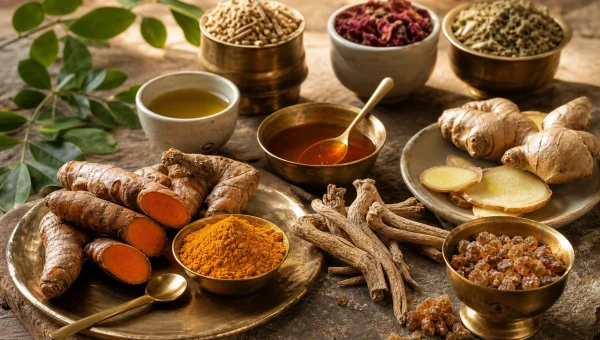
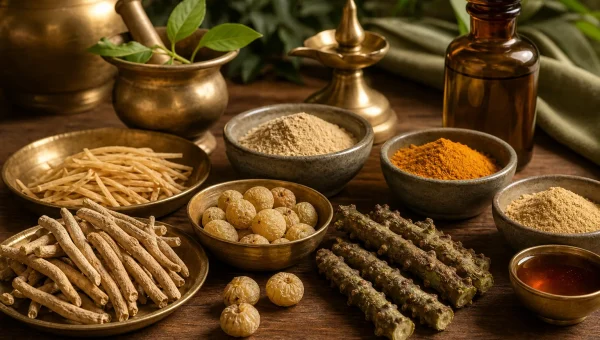
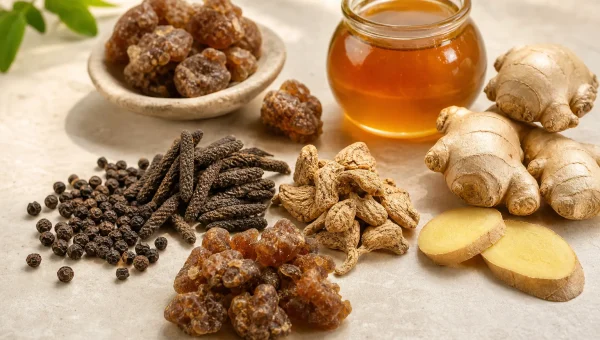
I am a triathlete who started studying Ayurveda after a similar wall experience at my first Ironman. The thing that surprised me most was that my recovery problem turned out to be Rasa Dhatu depletion rather than anything related to training load. Two practitioners looked at my pulse and independently said the same thing. The coconut water and shatavari protocol helped more than any sports supplement I had tried.
The bone-level exhaustion at kilometer 32 description is exactly how I would describe hitting the wall at a marathon. But I have had that experience with perfectly calibrated nutrition and hydration too. The Ayurvedic argument that something deeper than fuel drives recovery differences is compelling. What does the vaidya look for specifically in a high-performance athlete assessment?
Can athlete be taken alongside metformin? I have type 2 diabetes and my endocrinologist hasn’t heard of this approach.
Pre-race Ashwagandha and Shatavari loading for the week before an event is something I started doing a year ago. My race-day heart rate variability scores are measurably better than before I started the protocol. I use a Garmin with overnight HRV tracking and the difference on race mornings is consistent.
My concern with Ayurvedic adaptogen use in competition sports is whether these herbs have been tested for WADA compliance. Ashwagandha is generally considered fine but some formulas contain compounds that could be flagged. Any competitive athlete should verify with their national federation before following protocols like this.
The part about Ojas as a subtle reserve really clicked with me after my last long bike leg.
I am a Pitta type triathlete and the post-event Pitta management section resonates strongly. My usual recovery behavior is to immediately plan the next event, overanalyze my race splits, and push back into training too early. My vaidya calls this Pitta aggravation masquerading as enthusiasm and the cooling protocol she prescribed has been hard for me to follow but clearly necessary.
The Triathlete explanation is clearer than most short posts. The examples make the advice less abstract.
I never thought about Vata being aggravated by early morning swims in cold water, but it makes sense.
The event-day nutrition in this article is interesting but does not address the practical logistics of consuming herbal preparations during a triathlon. How does someone take Chyawanprash or herbal decoctions during a 10-hour event? Is this consumed only in the days before and after, or is there an adapted during-race approach?
The khichdi recipe for post session recovery looks simple enough to try after my brick workouts.
i tried the recommended coconut-based carbohydrate loading approach for my last half-ironman and genuinely felt better in the final third of the run than in any previous race. I was expecting to hit the wall at mile 8 and didn’t. I cannot attribute it entirely to the Ayurvedic protocol but the preparation was different and the result was different.
I appreciate the warning about Bala containing ephedrine; I’ll skip it during race season.
The research cited is old and small. n=96 for a genomic study in 2015 would not pass peer review today. I’d want to see updated work before drawing strong conclusions.
Shilajit’s fulvic acid angle is interesting, though I wish there were more endurance studies on triathletes.
The multi-day recovery section is exactly what is missing from most triathlon training guides. The 72-hour and 2-week post-race protocols are much more detailed than anything in conventional sports nutrition. Whether or not you use Ayurvedic herbs, the framework for how recovery should be structured over multiple phases is actually very good evidence-based sports science.
The suggestion to replace pasta with rice during race week could help avoid the bloating I usually get.
Do you think the ashwagandha dose of 300mg twice daily works for someone who’s not elite?
I liked the breakdown of the base phase herbs; it gives me a clear off season stack to discuss with my practitioner.
my vaidya recommended something similar last month, good to see teh reasoning explained
The dosage here seems higher than what my Ayurvedic doctor recommended.
appreciate that this goes into contraindications, most blog posts skip that part
the part about adjusting based on prakriti was exactly what i needed
Just found this post, the section 3 protocol seems intensive for a beginner, any lighter version?
The part about adjusting based on prakriti was exactly what I needed.
tried this for 6 weeks and saw no difference, maybe im applying it wrong
The event-day ghee recommendation conflicts with established sports nutrition advice on fat digestion during exercise.
after reading this i am curious whether an Ayurvedic assessment before beginning triathlon training would be a useful investment. to understand whether my constitution is actually suited to the demands of long-course racing before i spend a year training and find out the hard way that my Vata cannot sustain it.
Some of these claims are very strong for what is essentially anecdote-level evidence.
is this suitable for pitta dominant people or mainly vata?
Noted
Been following this for 3 weeks and my energy levels are much better, the protocol described here really clicked for me.
late to this but wanted to ask, do these recommendations still hold in 2027?
@Rebecca Same here
this works in theory but practically very hard to source authentic herbs 🌿
how long before seeing results? the article mentions 4 to 6 weeks but is that for everyone
my functional medicine doctor mentioned something similar, helpful to have the ayurvedic framing too
The idea of warming sesame oil Abhyanga before a race to calm nerves is something I’ll experiment with.
Where can you source the herbs in India outside of major cities? I’m in a tier-2 town.
this works in theory but practically very hard to source authentic herbs
Reading this after finding it on Google, is this dosage still recommended?
@Anjali the multi-day recovery approach with virechana after the season is something im now planning with my ayurvedic practitioner
the specific morning timing recommendation is practical, most articles skip that detail
Noted ✨
where are the actual clinical trials? i need rct data before trying anything
bookmarked this to share with my mother who has been struggling with the same issue
It’s helpful to see how Pitta and Vata together can lead to overtraining signs like joint aches and irritability.
Tried the morning routine from this article and noticed a difference by day 5.
would this protocol work if i travel frequently and cant maintain a fixed routine
Where are the actual clinical trials? I need RCT data before trying anything.
Quick question: does the dosage change if someone is also on other medication? 🌿
The article focuses on long-course triathlon is the protocol different for sprint-distance athletes?
tried the morning routine for 2 months, gave up the timing is impossible with kids and a job
tried this for 6 weeks and saw no difference, maybe im applying it wrong नमस्ते
The recovery timeline, first three days warm soft foods, then ten days of rasayana, feels realistic for an Ironman.
the pre-race abhyanga adaptation for athletes was the most specific ayurvedic sports content i’ve found
The description of that kilometer-32 wall is painfully familiar. I’ve had two half-ironmans where the back half felt like I was borrowing from a depleted reserve rather than drawing on actual energy. The concept of building Ojas before race season rather than just carb-loading the week before is something I’ve never seen in any endurance nutrition guide but it makes complete sense.
The event-day nutrition protocol with Dates-Ghee-Rock salt combination was new to me and worked well in my last sprint triathlon. ✨
Does the carbohydrate loading recommendation here conflict with Ayurvedic advice on heavy Kapha foods before exertion?
where can you source the herbs in india outside of major cities? im in a tier-2 town
followed the dosage table for 10 days and my sleep improved, will continue 🙏
starting this next week, will report back in about a month
the pitta protocol here caused a lot of heat and skin irritation for me
some of these claims r very strong for what is essentially anecdote-level evidence
I’m curious whether Triphala at bedtime really improves bowel regularity after long distance efforts.
The pre-race Abhyanga adaptation for athletes was the most specific Ayurvedic sports content I’ve found.
the event-day nutrition protocol with dates-ghee-rock salt combination was new to me and worked well in my last sprint triathlon ✨
My constitution is Vata-Pitta, the article seems focused on one or the other. 🙏
My constitution is Vata-Pitta, the article seems focused on one or the other. 💯
How long before seeing results? the article mentions 4 to 6 weeks but is that for everyone.
i tried the ashwagandha loading protocol before my last ironman and felt more lethargic than usual, may not suit everyone
quick question: does the dosage change if someone is also on other medication?
The safest part of the Triathlete advice is keeping it simple. A few more examples would still help.
would this protocol work if i travel frequently and can’t maintain a fixed routine
Packaging this as science when most of it is tradition makes me skeptical. 🙏
The safest part of the Triathlete advice is keeping it simple. Small daily changes are easier to follow than a perfect plan.
The article’s note about checking herb legitimacy with anti doping agencies is a good reminder for age groupers.
Reading about the Charaka Samhita references made me want to look up the original verses on ativyayama.
some of these claims are very strong for what is essentially anecdote-level evidence
just started exploring ayurveda after years of allopathy, still a lot to absorb
The morning routine of warm ginger tea and light rice porridge seems doable even on a busy workday.
how much lead time does the season-end virechana need before starting training again?
my constitution is vata-pitta, the article seems focused on one or the other
tried the morning routine from this article and noticed a difference by day 5
This works in theory but practically very hard to source authentic herbs.
The multi-day recovery approach with Virechana after the season is something I’m now planning with my Ayurvedic practitioner. ठीक है
Useful post
packaging this as science when most of it is tradition makes me skeptical
This helped me understand Triathlete without too much jargon. A few more examples would still help.
my functional medicine doctor mentioned something similar, helpful to have the ayurvedic framing too 🙌
just found this post, the section 3 protocol seems intensive for a beginner, any lighter version? ✨
the dosage here seems higher than what my ayurvedic doctor recommended
my vaidya recommended something similar last month, good to see the reasoning explained
The Pitta protocol here caused a lot of heat and skin irritation for me.
tried this for 6 weeks and saw no difference, maybe im applying it wrong 💯
Starting this next week, will report back in about a month.
the event-day nutrition protocol with dates-ghee-rock salt combination was new to me and worked well in my last sprint triathlon
Would this protocol work if I travel frequently and can’t maintain a fixed routine.
Tried this for 6 weeks and saw no difference, maybe I’m applying it wrong.
been following this for 3 weeks and my energy levels are much better, the protocol described here really clicked for me 🙏
how long before seeing results? the article mentions 4 to 6 weeks but is that for everyone ठीक है
Will try this
Tried the morning routine for 2 months, gave up the timing is impossible with kids and a job.
the pitta protocol here caused a lot of heat and skin irritation for me नमस्ते
does the carbohydrate loading recommendation here conflict with ayurvedic advice on heavy kapha foods before exertion? 💯
My functional medicine doctor mentioned something similar, helpful to have the Ayurvedic framing too. ✨
where are the actual clinical trials? i need rct data before trying anything ✨
reading this after finding it on google, is this dosage still recommended? 🙌 नमस्ते
How much lead time does the season-end Virechana need before starting training again? 🙌
the multi-day recovery approach with virechana after the season is something im now planning with my ayurvedic practitioner ✨
how long before seeing results? teh article mentions 4 to 6 weeks but is that for everyone