
I received more reader questions about Ashwagandha than any other herb in the past year, and the majority came from women over 50. The questions were serious and practical: Is it safe with thyroid medication? Does it affect oestrogen? Can it interfere with the hormonal shifts of menopause? Is it the same as taking hormone therapy? And if you feel better on it but your doctor is concerned, how should you decide?
I want to give you real answers, not blanket reassurance. Ashwagandha is a major Ayurvedic Rasayana herb and a widely used adaptogen, with human clinical data for stress and sleep and smaller trials for menopausal symptoms. It is also not appropriate for every woman over 50, especially when thyroid disease, autoimmune disease, liver disease, sedative medicines, blood pressure medicines, diabetes medicines, or hormone therapy are part of the picture.
What Ashwagandha Actually Does Around Menopause
Ashwagandha is best understood as a supportive Rasayana and adaptogenic root, not as an oestrogen tablet, progesterone, testosterone, or hormone replacement therapy. Its most consistent modern use is for stress resilience, sleep, fatigue, and nervous-system steadiness; in small menopause trials, reproductive hormone markers also changed alongside symptom scores.
In a randomized, double-blind, placebo-controlled trial published in 2021, 91 perimenopausal women aged 45–55 received either Ashwagandha root extract or placebo for eight weeks. The Ashwagandha group used 300 mg twice daily and had greater improvement in total Menopause Rating Scale scores, including hot-flash symptoms; serum estradiol increased, while follicle-stimulating hormone and luteinizing hormone decreased, and testosterone did not differ significantly from placebo.
A later randomized, double-blind, placebo-controlled trial in 60 women aged 45–55 used KSM-66 Ashwagandha root extract at 300 mg twice daily for 56 days. Participants taking Ashwagandha had improvement in psychological, somatic, and urogenital Menopause Rating Scale domains, fewer hot-flash events, improved perceived stress and quality-of-life scores, increased estradiol and progesterone, and reduced FSH and LH compared with placebo.
A 24-week randomized trial in post-menopausal women aged 40–55 evaluated standardized Ashwagandha and Shatavari extracts in separate and combined arms. Women receiving Ashwagandha extract had dose-related improvements in menopause-specific quality-of-life scores and markers related to vascular function, bone turnover, inflammation, and oxidative stress. This supports Ashwagandha as a potentially useful menopause-support herb, but not as a replacement for medical evaluation or prescribed hormone therapy.
The Thyroid Question: The Most Important Safety Concern
This is the point most likely to change whether Ashwagandha is reasonable for you. In a double-blind, placebo-controlled trial of 50 adults with subclinical hypothyroidism, Ashwagandha root extract at 300 mg twice daily for eight weeks lowered TSH and increased T3 and T4 compared with placebo. That means Ashwagandha can move thyroid markers; it is not a neutral bedtime herb for everyone.
For women over 50 taking levothyroxine or other thyroid hormone: Ashwagandha may add to the effect of thyroid medication. Do not start it quietly and then interpret new symptoms in isolation. A sensible plan is to discuss it with the prescribing clinician, check baseline thyroid labs if needed, and repeat TSH, free T4, and sometimes T3 after about 6–8 weeks. Palpitations, tremor, anxiety, insomnia, heat intolerance, unexplained weight loss, or a suddenly racing pulse should be treated as warning signs.
For women with hyperthyroidism, Graves’ disease, thyroiditis with suppressed TSH, or a history of thyrotoxicosis: Ashwagandha should not be used as self-care. Case reports describe thyrotoxicosis in women taking Ashwagandha extract, with symptoms resolving after discontinuation. Use in this setting should happen only if an endocrinologist specifically approves it.
For women with normal thyroid labs: Ashwagandha may still be appropriate, but “normal thyroid” should not be used as a permanent guarantee. Women over 50 often have changing thyroid requirements, and new palpitations, agitation, sweating, insomnia, or weight changes after starting Ashwagandha deserve prompt review.
Hormone Replacement Therapy and Compounded Hormones
Ashwagandha should not be treated as a substitute for HRT. Menopausal hormone therapy remains the established medical treatment for bothersome vasomotor symptoms in eligible women, with decisions based on age, time since menopause, symptoms, risk factors, route, dose, and duration. Ashwagandha belongs in a different category: a supportive herb that may help stress, sleep, fatigue, and some menopausal symptoms, while also having measurable endocrine activity in small trials.
Women using systemic oestrogen, progesterone, vaginal oestrogen, compounded “bioidentical” hormones, DHEA, testosterone, or other endocrine-active supplements should treat Ashwagandha as a monitored addition. Track hot flushes, sleep, mood, breast tenderness, bleeding, pelvic symptoms, palpitations, and thyroid-like symptoms during the first 6–8 weeks, and report unexpected changes to the prescribing clinician.
The Safety Profile in Older Women
Most short-term clinical trials describe Ashwagandha as generally well tolerated, with common side effects such as drowsiness, nausea, loose stools, and stomach discomfort. The longer-term safety picture is less settled, and women over 50 are more likely to be taking medications or to have thyroid, autoimmune, liver, blood pressure, blood sugar, or sleep-related conditions that change the risk calculation.
- Autoimmune disease: Ashwagandha can stimulate immune activity. Women with rheumatoid arthritis, lupus, multiple sclerosis, Hashimoto’s thyroiditis, inflammatory bowel disease, transplant history, or immunosuppressant therapy should use it only with clinician guidance.
- Blood pressure and blood sugar medicines: Interaction warnings exist for antihypertensive and antidiabetes medicines. If you use these medicines, monitor blood pressure or glucose more closely when starting or changing the dose.
- Sedatives and sleep medicines: Ashwagandha can cause drowsiness and may have additive effects with benzodiazepines, barbiturates, anticonvulsants, prescription sleep medicines, alcohol, and other calming supplements.
- Liver safety: Rare clinically apparent liver injury has been reported with commercial products labelled as containing Ashwagandha. The typical pattern appears within 2–12 weeks and may include jaundice, itching, dark urine, nausea, abdominal discomfort, fatigue, or abnormal liver tests. Women with cirrhosis or advanced chronic liver disease should avoid it unless a specialist specifically advises otherwise.
- Pregnancy and breastfeeding: Although this is uncommon in the over-50 audience, pregnant or breastfeeding women should not use Ashwagandha without medical guidance.
Finding the Right Dose for You
Dose should be matched to the person, the preparation, the goal, and the safety context. The table below is a practical guide, not a prescription. For women over 50, it is usually wiser to start low, reassess after 6–8 weeks, and stop if symptoms move in the wrong direction.
| Situation | Commonly Used Range | Duration Before Reassessment | Monitor |
|---|---|---|---|
| Perimenopause, normal thyroid labs, no interacting medicines | 300 mg standardized root extract twice daily, as used in menopause trials | 8 weeks, then reassess | Hot flushes, sleep, mood, digestion, pulse, daytime drowsiness |
| Post-menopause with stress, sleep disruption, or fatigue | 250–600 mg/day standardized extract, or practitioner-guided traditional root powder | 8–12 weeks, then reassess | Sleep quality, morning alertness, fatigue, digestion, sedation |
| Hypothyroidism on levothyroxine or thyroid hormone | Clinician-guided only; do not self-adjust thyroid medication | 6–8 weeks with lab follow-up | TSH, free T4, sometimes T3; palpitations, anxiety, insomnia, tremor |
| On HRT or compounded hormones | Clinician-guided addition, preferably one change at a time | 6–8 weeks | Bleeding, breast tenderness, hot flushes, sleep, mood, thyroid-like symptoms |
| Hyperthyroidism, Graves’ disease, thyrotoxicosis history | Avoid self-use | N/A | Endocrinologist-guided thyroid monitoring only |
| Active autoimmune disease, immunosuppressant therapy, cirrhosis, or advanced chronic liver disease | Avoid unless a qualified clinician specifically approves | N/A | Disease activity, medication interactions, liver symptoms or liver enzymes |
Form Matters: What to Buy
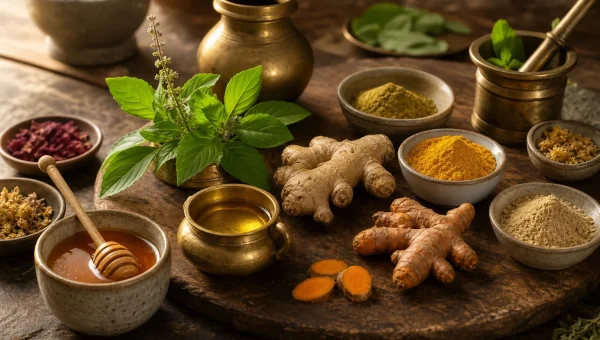
Not all Ashwagandha products are equivalent. A useful label should tell you the botanical name, plant part, amount per serving, extract ratio or standardization, and whether the product is root-only or root-and-leaf. The root and leaf differ chemically, so one extract should not automatically be treated as interchangeable with another.
- Standardized root extract: KSM-66 is a root-only extract used in menopause and sleep trials, often at 300 mg twice daily, standardized to more than 5% withanolides in the cited clinical product.
- Root-and-leaf extracts: Some products and trials use root-and-leaf preparations. These may have different potency and tolerability from root-only extracts, so follow the label and avoid assuming the same dose applies.
- Traditional root powder: The Ayurvedic Pharmacopoeia of India lists 3–6 g of Ashwagandha root powder as the classical dose, while the Health Canada monograph lists 2–6 g dried root per day for traditional Ayurvedic claims.
Choose single-ingredient, clearly labelled, third-party tested products when possible. Avoid vague proprietary blends if you are trying to understand whether Ashwagandha is helping or causing side effects, especially when thyroid or liver monitoring is relevant.
What Ayurveda Actually Says About Ashwagandha for Older Women
The Ayurvedic Pharmacopoeia of India defines Ashvagandha as the dried mature root of Withania somnifera Dunal. It lists its constituents as alkaloids and withanolides, its rasa as Tikta and Kashaya, guna as Laghu, virya as Ushna, vipaka as Madhura, and karma as Rasayana, Vatakaphapaha, Balya, and Vajikarana. Its therapeutic uses include Shotha, Kshaya, Daurbalya, Vataroga, and Klaibya.
In plain clinical language, Ashwagandha is classically a strengthening, rebuilding, Vata-Kapha balancing root used where depletion, weakness, wasting, and Vata-type disturbance are part of the picture. For a woman over 50, this makes it most relevant when menopause is accompanied by poor sleep, nervous exhaustion, muscle loss, low resilience, and a depleted feeling. Its Ushna virya also means it is not universally cooling or neutral; the same warming and stimulating quality that can help one woman may aggravate another, especially when thyroid heat, palpitations, inflammatory activity, or liver vulnerability is present.
The Bottom Line for Women Over 50
Ashwagandha can be a valuable menopause-support herb when the pattern is stress, sleep disruption, fatigue, Vata-type depletion, and reduced resilience. It is not HRT, not a substitute for medical care, and not an herb to add casually on top of thyroid medication or complex hormone regimens.
- It is most suitable when thyroid function is stable, liver health is good, autoimmune disease is absent or quiet, and medication interactions have been reviewed.
- It should be used cautiously with thyroid hormone, HRT, blood pressure medicines, blood sugar medicines, sedatives, immunosuppressants, and any history of liver disease.
- It should be avoided as self-care in hyperthyroidism, Graves’ disease, thyrotoxicosis, advanced liver disease, active autoimmune disease, pregnancy, and breastfeeding.
- If you feel better on Ashwagandha but your doctor is concerned, do not frame it as Ayurveda versus medicine. Track symptoms, check the relevant labs, and make the decision with a qualified Ayurvedic practitioner and your healthcare provider.
For related reading, see Ashwagandha dosage and low-dose study updates, our guide to the Ayurvedic perimenopause 7-year protocol, and post-menopausal Ayurvedic self-care protocols.
References
- Ayurvedic Pharmacopoeia of India
- Webprod (webprod.hc-sc.gc.ca)
- NIH Office of Dietary Supplements
- Obgyn (obgyn.onlinelibrary.wiley.com)
- Frontiersin (frontiersin.org)
- Ashwagandha and Shatavari Extracts Dose-Dependently Reduce Menopause Symptoms, Vascular Dysfunction, and Bone Resorption in Postmenopausal Women: A Randomized, Double-Blind, Placebo-Controlled Study (2025), PubMed Central
- Efficacy and Safety of Ashwagandha Root Extract in Subclinical Hypothyroid Patients: A Double-Blind, Randomized Placebo-Controlled Trial (2018), PubMed
- Mskcc (mskcc.org)
- Mskcc (mskcc.org)
- NCBI
- Menopause (menopause.org)
नमस्ते, longtime reader first comment. This post finally convinced me to start.
The thyroid interaction section is the most important part of this article. Ashwagandha can raise T4 and T3 anyone on levothyroxine needs to monitor.
This is a really important point for anyone on levothyroxine. I asked my endocrinologist about Ashwagandha last year and she had no information on the interaction — ended up having to bring my own research. Worth getting labs done before starting and after about six weeks.
Fatty liver is a bit off the topic of this post — this one is specifically about Ashwagandha and hormone effects in women over 50. You might get better answers posting that question under an article on liver health or digestion.
My Ayurvedic doctor recommended the same thing last month. Good to find it confirmed here.
Any dosage adjustment needed for women who are still perimenopausal vs fully post?
My gynecologist had no opinion either way. Would be good to have an OB-GYN perspective on this article.
Doing this
That’s encouraging to hear — are you taking it with milk as the article suggests or just with water? Wondering if the anupana makes a difference for the hot flash effect specifically.
The oestrogen interaction section is what I came for — I’m 54, in early post-menopause, and have been nervous about anything that might shift hormone levels unpredictably. The breakdown of phytoestrogenic vs. adaptogenic mechanisms here is the clearest explanation I’ve found.
Late to this post, found it via Google. Is this still the recommended approach in 2027?
I stopped ashwagandha after 6 months because my periods became irregular. Could that be the herb?
Will try 🌿
Useful
धन्यवाद for explaining this so clearly
52 years old, postmenopausal. Started Ashwagandha 600mg KSM-66 three months ago. Sleep markedly better, anxiety down.
Same here
💯 The KSM-66 vs full-spectrum debate you raise, most clinical trials used KSM-66 specifically. Useful distinction.
Just found this. Really helpful for my situation.
The dosage breakdown by constitution is what I needed. I’ve seen everything from 250mg to 600mg recommended online with no context, and the KSM-66 vs. root powder distinction matters a lot more than most guides acknowledge.
At 52 I was hesitant to try anything that might interfere with my thyroid meds, so the section on T3/T4 effects was exactly what I needed before deciding. Very grateful someone finally addressed this properly. 🙏
The point about cycling it rather than taking it continuously is something no supplement brand ever mentions on the label. Started a four-weeks-on, one-week-off pattern after reading this and it does seem to prevent the flattening effect I noticed before. ✨
Found this helpful. The Ashwaganfha for Women Over 50 section was particularly useful for my situation.
The breakdown of how ashwagandha influences the HPA axis helped me understand why it might ease night sweats without directly raising estrogen.
Would the 300mg twice daily dose be too much for someone already on a low dose levothyroxine?
Really appreciate that this covers post-menopausal women specifically rather than lumping everyone over 40 together. The cortisol and sleep quality angle is where I’ve noticed the most difference after starting a low dose. 💯
The note about monitoring thyroid levels after six to eight weeks feels like a sensible precaution.
The clear distinction between ashwagandha’s effect on DHEA-S and actual estrogen cleared up a lot of confusion for me.
Seeing the liver injury cautions made me double-check the brand I use for any added herbal blends.
The part about women with Pitta dominance needing to be more cautious with long-term use is something I wish I’d read two years ago. Ended up with more heat and irritability than before — cutting the dose and adding cooling foods helped. 🌿