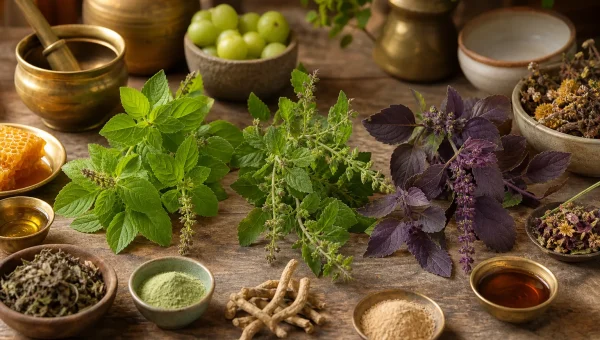
Tulsi Varieties Compared: Rama, Vana, and Krishna for Different Uses
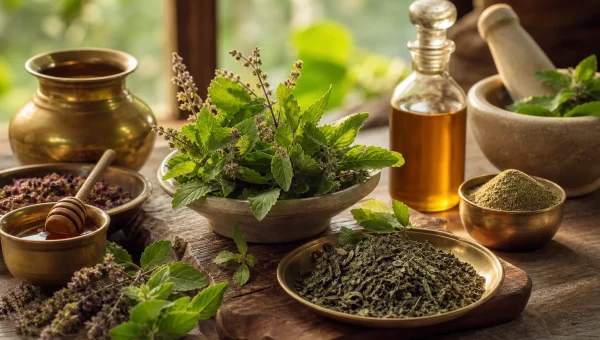
Three Plants in One Name: What Your Tulsi Plant Actually Is The name tulsi is used in households, nurseries, tea...

September 5, 2026
Ayurvedic articles on adaptogen
Three Plants in One Name: What Your Tulsi Plant Actually Is The name tulsi is used in households, nurseries, tea...
Challenging the “Women’s Herb” Narrative Shatavari (Asparagus racemosus) is often presented in contemporary wellness culture as a “women’s herb,” mainly...

In pharmacognosy, some botanicals remain “shadow herbs”: respected within one medical system, chemically rich, and repeatedly investigated in laboratory pharmacology,...
I received more reader questions about Ashwagandha than any other herb in the past year, and the majority came from...

Police work can combine rotating shifts, prolonged vigilance, traumatic exposure, sedentary hours, interrupted meals, and rapid high-stakes decisions. A systematic...

Travel nursing combines temporary assignments, repeated relocation, unfamiliar workplaces, and, for many nurses, night or rotating shifts. Classical Ayurveda does...
Shatavari is the Ayurvedic drug prepared from the tuberous roots of Asparagus racemosus Willd. Its reputation is especially associated with...
Shatavari for Men: Why This “Women’s Herb” Benefits Everyone Shatavari (Asparagus racemosus Willd.) is a classical Ayurvedic root medicine with...
Tulsi in Modern Research: Moving Beyond Traditional Claims Ocimum tenuiflorum (syn. Ocimum sanctum ), commonly known as Tulsi or Holy...