
The gym was not supposed to be part of my Ayurvedic practice. For years I kept the two worlds separate: morning yoga and herbs on one side, heavy compound lifts on the other. Then a senior vaidya I studied with pointed out something obvious I had missed: classical Ayurveda does not oppose physical training. It treats exercise, tissue nourishment, strength, recovery, digestion, and seasonal capacity as one integrated system.
The Ayurvedic Framework for Strength and Muscle
Classical Ayurveda uses the concept of bala (strength) and mamsa dhatu (muscle tissue) as central categories for physical health. Charaka describes three kinds of strength: sahaja bala (constitutional strength), kalaja bala (strength influenced by age and season), and yuktikrita bala (strength cultivated through intentional food, activity, and therapeutic support). Strength training belongs most naturally under yuktikrita bala: strength built through disciplined effort, proper nourishment, and recovery.
Ayurvedic exercise guidance is not a command to train endlessly. Sushruta praises properly performed vyayama for firmness, bodily development, digestive power, lightness, tolerance of exertion, and resistance to fatigue, while also advising that exercise be matched to age, strength, constitution, food, season, and place. This is close to the practical logic of good strength programming: progressive overload is useful only when recovery capacity is respected.
Muscle development can be understood through the Ayurvedic language of dhatu nourishment. Food first supports rasa, then rakta, then mamsa, with later tissues such as asthi, majja, and shukra depending on continued nourishment and sound metabolism. For a lifter, this means that muscle gain is not only a matter of training stimulus; it also depends on digestion, sleep, sufficient food, and consistent balya, brimhana, and rasayana support.
Pre-Workout Ayurvedic Nutrition
Ayurveda gives priority to agni, strength, season, and readiness before exercise. Training when very hungry, thirsty, exhausted, or overloaded with undigested food weakens the purpose of vyayama. A practical pre-workout approach is to eat the main meal far enough away from training that digestion is comfortable, and to use a small, warm, easy snack if the session is demanding.
Pre-Workout Support: 60 to 90 Minutes Before Training
The simplest Ayurvedic pre-training plan is not a stimulant stack. It is a digestible combination of light fuel, hydration, and one carefully chosen tonic when appropriate for the individual.
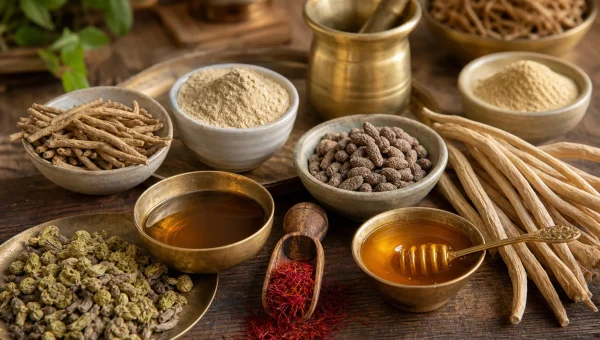
- Ashwagandha (Withania somnifera): 300 to 600 mg of a reputable root extract daily, or classical root powder in a practitioner-guided dose. Ashwagandha is described in the Ayurvedic Pharmacopoeia of India as balya, rasayana, and vajikarana, and a resistance-training trial used 600 mg/day for 8 weeks alongside lifting.
- Purified shilajit: 250 to 500 mg/day of purified, third-party-tested material when suitable. A human trial in recreationally active men used purified shilajit during an 8-week training period, with the higher dose used for fatigue-related strength retention. Raw or uncertified shilajit should not be used.
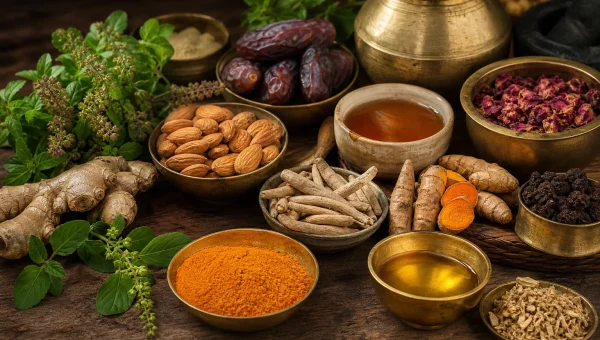
- Pre-training food: 5 to 10 soaked almonds, 2 to 4 dates, or a small warm milk-based snack can be used when training intensity is high and digestion is strong. The aim is sustained fuel without the heaviness of a full meal immediately before lifting.
Intra-Workout Hydration
For short, moderate sessions, plain water is often enough. For longer sessions, hot climates, heavy sweating, or high-volume leg training, fluid and electrolytes become more important. Ayurveda generally favors fluids that do not shock digestion, so room-temperature or warm water is preferable for many constitutions.
- Simple training drink: 500 ml water with a small pinch of mineral salt, a little honey, and a squeeze of lime. Sip gradually during the session rather than drinking in bulk. People with hypertension, kidney disease, fluid restriction, diabetes, or sodium restriction should use individualized medical guidance.
The Core Balya and Brimhana Herb Protocol
Balya herbs support strength, while brimhana measures nourish and build tissue. For a lifter, these are best used as a small, individualized protocol rather than a long list of supplements taken all at once.
| Herb | Sanskrit Name | Typical Adult Use | Timing | Primary Ayurvedic Role |
|---|---|---|---|---|
| Ashwagandha | Ashwagandha (Withania somnifera) | 300-600 mg extract daily, or 3-6 g root powder when appropriate | Evening, post-training, or divided daily | Balya, rasayana, vajikarana; supports strength, recovery, and resilience |
| Shilajit | Shilajatu | 250-500 mg purified, tested extract | Morning or before training | Rasayana-style mineral support; use only purified and tested material |
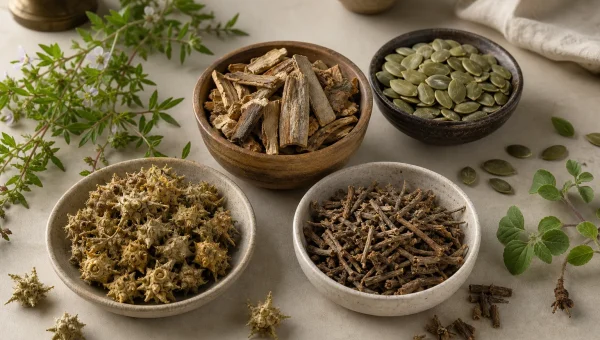
| Gokshura | Gokshura (Tribulus terrestris) | 3-6 g powder or 20-30 g decoction in classical use | With meals or as prescribed | Brimhana, vrishya, vatanut, and urinary-system support |
| Shatavari | Shatavari (Asparagus racemosus) | 3-6 g root powder when suitable | With warm milk or post-training meal | Cooling balya, rasayana, vrishya, and nourishing support |
| Guduchi | Guduchi (Tinospora cordifolia) | 3-6 g powder or 20-30 g decoction in classical use | With meals | Balya, rasayana, dipana, and tridosha-supportive recovery aid |
| Bala | Bala (Sida cordifolia) | Practitioner-guided only | As prescribed; often used in oils and classical formulations | Classical balya and brimhana herb for strength and vata support |
| Triphala | Triphala | Use according to product label or practitioner guidance | Bedtime or away from heavy meals | Digestive regularity and gut-supportive polyphenol source |
Post-Workout Recovery Nutrition: Ayurvedic Approach
After training, the goal is to restore fluids, provide protein and carbohydrate, and protect digestion. Ayurveda favors warm, digestible, freshly prepared foods over cold, heavy intake that sits poorly in the stomach. This does not mean protein is unimportant; it means the protein source should be digestible for the person using it.
A practical post-training meal template:
- Warm milk with a small amount of ghee, if dairy is tolerated, with ashwagandha or shatavari only when appropriate for the individual.
- Khichdi made from rice and mung dal, optionally with ghee and digestive spices, for a warm combination of carbohydrate, plant protein, and easy digestion.
- A full meal containing dal, paneer, curd, eggs, fish, meat, tofu, or other suitable protein according to diet, constitution, and digestive strength.
- Avoid very cold, raw, or excessively heavy foods immediately after training if they disturb appetite, bloating, or sleep.
Joint and Connective-Tissue Protection for Heavy Lifters
Heavy lifting places repeated demand on asthi, sandhi, tendons, and surrounding soft tissue. Ayurveda addresses this through intelligent loading, warm-up, oil application, and herbs that support comfortable movement and recovery.
- Warm oil application: Apply warm Mahanarayan oil or another suitable medicated oil to heavily loaded joints before or after training. Massage knees, shoulders, wrists, elbows, hips, or the lower back for 3 to 5 minutes, then keep the area warm. External oil use is especially relevant for vata-type dryness, cracking, and stiffness.
- Turmeric in food: Use turmeric regularly in cooked meals with a small amount of fat and digestive spices. Concentrated curcumin or curcumin-piperine capsules should be used cautiously if taking anticoagulants, antiplatelet drugs, diabetes medicines, or multiple prescriptions.
- Shallaki (Boswellia serrata): Boswellia preparations are used for joint comfort and are valued because boswellic acids, especially AKBA, act on the 5-lipoxygenase pathway. Use standardized extracts under professional guidance, especially if combining with pain medicines or anti-inflammatory drugs.
- Programming discipline: Joint support also means planned deloads, clean technique, progressive loading, sufficient sleep, and not training through sharp pain. Ayurveda’s instruction to train according to capacity is directly relevant to long-term lifting.
Specific Dosages for Training Support
These dosage ranges are practical reference points, not a universal prescription. Begin with one intervention at a time, observe digestion and sleep, and adjust with a qualified practitioner when herbs are used for more than short-term support.
- Ashwagandha for strength and recovery: 300 mg once or twice daily is a common modern extract range; the Ayurvedic Pharmacopoeia lists 3 to 6 g for root powder. Evening use with warm milk is often better when stress and sleep are the main limiting factors.
- Shilajit for training resilience: 250 to 500 mg/day of purified, tested shilajit is the range used in human supplementation work. Avoid raw resin, unlabeled powders, or products without heavy-metal testing.
- Gokshura for urinary and reproductive-system support: Use as a classical powder or decoction only when it suits constitution and clinical need. It should not be treated as a guaranteed testosterone booster.
- Shatavari for cooling nourishment: 3 to 6 g powder with warm milk may suit lifters who run hot, lose weight easily, or need a gentler nourishing tonic. It may not suit everyone with heavy kapha, sluggish digestion, or congestion.
- Guduchi for steady recovery: Classical powder or decoction dosing may be used when digestion, heat, and immune resilience need support. Use caution with autoimmune disease, immunosuppressant therapy, or complex chronic illness.
- Triphala for digestion: Use at bedtime when bowel regularity, appetite rhythm, or heavy eating from bulking needs support. Reduce or stop if it causes loose stools, cramping, or dehydration.
For complementary reading on Ayurvedic approaches to physical health, see our complete guide to ashwagandha dosing for performance and our overview of shilajit for energy and recovery.
Safety and Disclaimer
Strength training, herbs, and supplements should be individualized. Consult a qualified Ayurvedic practitioner and healthcare provider before starting an herbal protocol if you are pregnant, trying to conceive, breastfeeding, using prescription medicines, or living with thyroid disease, liver disease, kidney disease, autoimmune disease, cardiovascular disease, diabetes, hormone-sensitive conditions, or a history of supplement-related reactions.
- Ashwagandha may affect thyroid function, sedation, immune activity, and rare liver injury risk. Avoid during pregnancy and use medical guidance with thyroid medicines, sedatives, immunosuppressants, liver disease, and hormone-sensitive prostate conditions.
- Shilajit must be purified and tested for heavy metals and contaminants. Avoid uncertified raw products, and use medical guidance with kidney disease, gout, mineral imbalance, or chronic illness.
- Bala (Sida cordifolia) should not be used casually as a stimulant or gym supplement. Use it only under practitioner guidance, especially in people with hypertension, arrhythmia, anxiety, insomnia, or stimulant sensitivity.
- Curcumin, Boswellia, and herbal extracts may interact with medicines and procedures. Stop self-directed use and seek care if rash, jaundice, abdominal pain, unusual bleeding, palpitations, severe digestive upset, or worsening symptoms occur.
One Actionable Tip
Add one warm recovery meal after your hardest training session this week. A bowl of khichdi with ghee, or warm milk with a small amount of ghee if tolerated, is simple, nourishing, and aligned with the Ayurvedic principle that tissue building depends on digestible food taken at the right time.
References
- A review on balya action mentioned in Ayurveda (2014), PubMed Central
- Ijmhsjournal (ijmhsjournal.in)
- Concepts of Dhatu Siddhanta (theory of tissues formation and differentiation) and Rasayana; probable predecessor of stem cell therapy (2014), PubMed Central
- Explication on tissue nutrition in prenatal and postnatal life: An Ayurveda perspective (2021), PubMed Central
- International society of sports nutrition position stand: nutrient timing (2017), PubMed Central
- Betterhealth (betterhealth.vic.gov.au)
- American College of Sports Medicine position stand. Exercise and fluid replacement (2007), PubMed
- Germanjournalsportsmedicine (germanjournalsportsmedicine.com)
- Ayurvedic Pharmacopoeia of India
- Examining the effect of Withania somnifera supplementation on muscle strength and recovery: a randomized controlled trial (2015), PubMed
- NIH Office of Dietary Supplements
- The effects of Shilajit supplementation on fatigue-induced decreases in muscular strength and serum hydroxyproline levels (2019), PubMed Central
- Hazardous or Advantageous: Uncovering the Roles of Heavy Metals and Humic Substances in Shilajit (Phyto-mineral) with Emphasis on Heavy Metals Toxicity and Their Detoxification Mechanisms (2024), PubMed
- Operation Supplement Safety
- Natural Ingredient Resource Center
- Jaims (jaims.in)
- Therapeutic Uses of Triphala in Ayurvedic Medicine (2017), PubMed Central
- Effect of curcumin supplementation on exercise-induced muscle damage: a narrative review (2022), PubMed Central
- From bench to bedside, boswellic acids in anti-inflammatory therapy – mechanistic insights, bioavailability challenges, and optimization approaches (2025), PubMed Central
- A double blind, randomized, placebo controlled study of the efficacy and safety of 5-Loxin for treatment of osteoarthritis of the knee (2008), PubMed Central
- NCCIH
The breakdown of sahaja, kalaja, and yuktikruta bala really clarified why my lifting routine feels aligned with Ayurveda.
I appreciated the practical pre workout stack with ashwagandha, shilajit, soaked almonds, dates, and warm ghee, it’s easy to try.
Does anyone have experience using gokshura after heavy deadlifts for kidney support?
The Shukra Dhatu maintenance for athletic recovery is the most clinically relevant section. I’ve been training BJJ 5 days per week and adding Ashwagandha-Bala combination improved my recovery between hard sessions noticeably from week 6 onward.
Most Ayurveda content I find is focused on disease management and detox. Ayurveda for athletic performance enhancement is less covered. Good to see Rasayana applied to healthy athletes rather than just sick or old people.
Can dhatu be taken alongside metformin? I have type 2 diabetes and my endocrinologist hasn’t heard of this approach.
The Strength Training section feels grounded enough to try carefully. The practical details matter more than people think.
The Strength Training section feels grounded enough to try carefully. Small daily changes are easier to follow than a perfect plan.
The post-workout nutrition section recommending cooked grains with ghee and the Agni-recovery relationship makes practical sense. My digestion is actually weakest immediately post-training and I’ve shifted to easier-to-digest foods in that window based on this principle.
The warm water electrolyte tip with pink salt, honey, and lime seems like a simple swap for sugary intra workout drinks.
The Strength Training section feels grounded enough to try carefully. I would still ask a practitioner before changing medicines.
The Strength Training section feels grounded enough to try carefully. This is the kind of detail readers can test slowly.
I’m an endurance athlete rather than strength-focused and I found the VO2 max and aerobic capacity sections thin. The Vata-primary nature of endurance sports and specific Vata-management for high-mileage running would deserve its own section.
The Dinacharya timing recommendations eating and training with the sun’s arc is impractical for competitive athletes with structured training schedules. How much of the performance benefit is lost when you can’t follow the timing protocols?
I’m curious how the 35 day tissue cycle matches the usual 4 week mesocycle in strength programming.
Women’s strength training is represented here as an afterthought. The hormonal cycle effects on training capacity, recovery, and herbal support needs are distinctly different for female athletes and deserve as much depth as the male-default content.
The Shilajit section is the strongest from an evidence standpoint the fulvic acid and mitochondrial support are better researched than most of the other supplements mentioned. This one I feel comfortable recommending to training clients.
Applying Mahanarayan oil before shoulder sessions has noticeably reduced my joint stiffness.
The article’s note on avoiding cold protein shakes post workout made me rethink my usual smoothie habit.
Shatavari with milk after training sounds soothing; I wonder if it also helps with digestion.
Seeing the reference to Sushruta Samhita’s three bala types gave me a new lens to view progressive overload.
The caution about shilajit sourcing and heavy metal testing is a reminder to check certificates before buying.
I liked the specific dose ranges for ashwagandha, 300 mg twice daily feels manageable for beginners.
Integrating bala (Sida cordifolia) in the morning could be a nice adjunct to my current pre lift routine.
The connection between mamsa dhatu nourishment and modern muscle hypertrophy makes the ancient advice feel surprisingly current.
I’m in the US and getting authentic herbs here is hard. Any trusted online sources?
the writing assumes India-based readers. Temperature/herb availability differs greatly outside India.
ashwagandha 600mg KSM-66 is that morning or post-workout? Timing isnt clear in the article. ठीक है
I took notes from this and created a personal protocol. Three weeks in, positive changes.
some of the preparation methods r too time-intensive for working adults. Needs a quick-version alternative. ❤️
found this article after searching for 3 days. Exactly what I needed. ❤️
the sourcing of quality herbs in my city is impossible. Makes these protocols academic for many readers.
i was prescribed this by a practitioner 2 years back but never understood why. now i do.
no mention of the potential testosterone-related effects for men with hormone-sensitive conditions.
The reference to Ashtanga Hridayam which Sutrasthana chapter? Would like to read the original.
I was looking for a plain explanation of Strength Training. The practical details matter more than people think.
for an old post this is still very relevant. good information doesn’t expire.
nani used to say the same things in different words. There’s real wisdom here.
my training partner started Shilajit based on this article. His recovery metrics improved.
Too theoretical without enough concrete steps. The ‘what’ is clear but the ‘how exactly’ is missing.
The dosage for children per kg bodyweight would be useful to add. धन्यवाद
Been following this blog for six months and the quality is consistently high.
u said it better than my 45-min consult with the vaidya tbh
my western trained MD friend looked at this and said the pharmacology section was reasonable.
for an old post this is still very relevant. good information doesn’t expire. नमस्ते
As someone who does both allopathy and Ayurveda I appreciate that this article doesn’t demonize either.
late to this discussion but the question in the first comment is still unanswered anyone have more info?
people should know this. Sharing everywhere.
could you address the quality certification issue in a future article? Third-party tested herbs are hard to find.
this is now my reference article for explaining this topic to friends. 💯
Skeptical about Ayurveda in general but this is presented honestly enough that I’ll try it.
My doctor actively discouraged this after I mentioned it. Getting conflicting guidance is difficult to navigate.
Would like to see the contraindications section expanded. Too brief for something being suggested for health issues.
how does weather and season affect the protocol? Im in a hot humid climate.
this article connected the dots between things my vaidya told me over several years.
I came for Strength Training and this answered the main question. Good starting point for a cautious reader.
for Pitta-Kapha dual constitution which aspects of the protocol take priority?
Is the Safed Musli dosage here for standardized extract or raw powder? Makes a big difference in amount.
ashwagandha 600mg KSM-66 is that morning or post-workout? Timing isn’t clear in the article.
The part about Strength Training feels realistic. Good starting point for a cautious reader.
the Hindi terms alongside English make this usable in both languages.
my experience perfectly matches what is described in the long-term use section.
can someone here who has tried this protocol confirm the timeline? Two weeks vs six weeks?
what’s the cycling recommendation? Should you take a break after 3 months?
so much misinformation out there. Good to find something grounded.
does this work for people over 60? The age range in the examples skews younger.
brilliant breakdown. Forwarding this.
does ghee quality affect results significantly? I use store-bought A2 ghee.
my grandma was right about all of this. just didn’t have the explanation.
I appreciate that the dosages are given in actual mg not just ‘a pinch’ or ‘as needed’.
the before-and-after in my experience matches what the article predicts. That’s meaningful.
For Strength Training, consistency seems like the hard part. I appreciate that it does not oversell the result.
Three months later: the results held. Happy to report.
found this article after searching for 3 days. Exactly what I needed.
Same here
skeptical but curious. trying the minimal version first.
quality content. Keep writing like this.
is the guidance here applicable for elderly patients or is it designed for younger adults?
Reading this later and the Strength Training advice still feels relevant. I would like to know how long to try it before judging results.
The Strength Training explanation is clearer than most short posts. The timing advice is the part I would start with.
What brand of triphala do you recommend? So many options and quality varies greatly.
I liked the practical side of Strength Training. The practical details matter more than people think.
I liked the practical side of Strength Training. This is the kind of detail readers can test slowly.
Coming from a conventional medicine background this article impressed me with its rigor.
the timing protocol assumes a morning training schedule. Doesn’t address evening trainers. 🙏
three herbs three outcomes surprisingly simple when laid out like this
Late to this but pitta burning its way through this article and finding useful info 🔥 just kidding but yes helpful. 💯
Useful
can this be taken in summer or only winter months?
would love a video version of the preparation method
Just found this via Google, for Kapha-dominant types is the warm water recommendation essential or can it be room temp?
the language is accessible which is rr for classical Ayurveda writing
This helped me understand Strength Training without too much jargon. Good starting point for a cautious reader.
late to this but the Ashwagandha 600mg KSM-66 twice daily recommendation matches what Im already doing. Good to have the science behind it.
This is now my reference article for explaining this topic to friends.
The Strength Training section feels grounded enough to try carefully. The article avoids making it sound like a quick fix.
the question about brand quality is important. not all suppliers are equal.
the dose specificity here is what makes this actionable. Vague ‘take regularly’ instructions are useless.
the dosage for children per kg bodyweight would be useful to add.
old post but still helpful. the combination of theory and practical steps is what I appreciate most about this blog.
Will try for a month and report back here. ❤️
reading this in 2027, can this be done alongside an allopathic treatment or should there be a gap?
The reference to Ashtanga Hridayam which Sutrasthana chapter? Would like to read the original. 🙌
can these adaptogens be stacked with whey protein or does it affect absorption? ✨ ठीक है
Will try 🙏
My yoga teacher recommended this site and now I see why.
reading this in 2027 are the herb sourcing recommendations still valid?
Helpful
Good reminder on Strength Training. This is the kind of detail readers can test slowly.
Sharing this
first comment here. been lurking for months. this is the one that made me want to say thank u
Old post but still helpful. my Ayurvedic practitioner of 12 years said this is one of the better online resources she’s seen on the topic.
is there a children’s version of this protocol? My daughter has a similar issue.
i appreciate the acknowledgment that this isnt a substitute for professional consultation.
my grandma was right about all of this. just didnt have the explanation. नमस्ते
The part about Strength Training feels realistic. I appreciate that it does not oversell the result.
the combination of theory and practical steps is what I appreciate most about this blog.
is the guidance here applicable for elderly patients or is it designed for younger adults? ❤️
This is the clearest explanation of this topic I’ve found. Bookmarked for reference.
as someone who does both allopathy and Ayurveda I appreciate that this article doesnt demonize either.
real information. Not fluff. Rare. 🌿
old post but still helpful. the practical implementation section is what separates this from other Ayurveda sites.
finally an article that doesn’t treat Ayurveda as magic and also doesn’t dismiss it entirely
no mention of the potential testosterone-related effects for men with hormone-sensitive conditions. धन्यवाद
reading this in 2027, coming from a conventional medicine background this article impressed me with its rigor.
people should know this. Sharing everywhere. 💯
found this searching for answers, i was prescribed this by a practitioner 2 years back but never understood why. now i do.
the sourcing of quality herbs in my city is impossible. Makes these protocls academic for many readers.
found this searching for answers, is the guidance here applicable for elderly patients or is it designed for younger adults?
thanks for the clear writing. This isnt easy material to explain simply.
found this searching for answers, i asked my dr about this. she said she doesnt have enough info on it but didnt say no
real information. Not fluff. Rare.
the balance between Sanskrit terminology and plain English is really well done.
Reading this later and the Strength Training advice still feels relevant. Would be useful to see a short checklist next.
Reading this later and the Strength Training advice still feels relevant. The article avoids making it sound like a quick fix.
reading this in 2027 r the herb sourcing recommendations still valid?
tried the protocol. Week 2 no change yet but following through to the full period.
can these adaptogens be stacked with whey protein or does it affect absorption?
old post but still helpful. can these adaptogens be stacked with whey protein or does it affect absorption?
reading this in 2027 are the herb sourcing recommendations still valid? नमस्ते
any recommendation for online vaidya consultations for those of us not near an Ayurvedic clinic?
late to this but does anyone know a practitioner in Hyderabad who works with this kind of protocol?
The Strength Training explanation is clearer than most short posts. I would like to know how long to try it before judging results.
finally something that explains the why, not just the what.
just found this via Google, for Pitta-Kapha dual constitution which aspects of the protocol take priority?
I liked the practical side of Strength Training. This would be easier to follow with a one-week sample plan.
Just found this through Google. Is this still the current recommendation?
I liked the practical side of Strength Training. Good starting point for a cautious reader.
reading this in 2027, reading this in 2027 are the herb sourcing recommendations still valid?
Needed this
i asked my dr about this. she said she doesnt have enough info on it but didnt say no
shared this with my 68-year-old father. He said its exactly what his vaidya prescribed 30 years ago.
how long does a typical protocol like this take to show results? ✨
Thanks 🙏
The timing protocol assumes a morning training schedule. Doesn’t address evening trainers.
Bookmarked
the seasonal protocol is smart. Most people try to use the same routine all year.
the language is accessible which is rare for classical Ayurveda writing
Have been searching for this explanation for years. Saved. Sharing.
do the ratios change if you are doing this as preventive care versus active treatment? धन्यवाद
Too theoretical without enough concrete steps. The ‘what’ is clear but the ‘how exactly’ is missing. 🙌
does this work for people over 60? The age range in the examples skews unger. धन्यवाद
my constitution is Vata-Pitta so some of this applies and some doesn’t. A chart for dual types would help. ✨
will try for a month and report back here.
this site is different from other ayurveda blogs. feels researched not just copied.
is there a children’s version of this protocol? My daughter has a similar issue. 🙌
for Kapha-dominant types is the warm water recommendation essential or can it be room temp?
The advice around Strength Training is specific enough to be useful. This feels more usable than a long list of herbs.
Just found this via Google, the IST timings in the practical section are a nice touch. Feels like it’s written for us.
can this be done alongside an allopathic treatment or should there be a gap?
How long does a typical protocol like this take to show results?
the classical text reference to Charaka Samhita gave this article more credibility in my eyes.
tried the protocol. Week 2 no change yet but following through to the full period. ✨
this atricle connected the dots between things my vaidya told me over several years.
as someone who does both allopathy and Ayurveda I appreciate that this article doesn’t demonize either. ✨
Old post but still helpful. my grandma was right about all of this. just didn’t have the explanation.
I appreciate the acknowledgment that this isn’t a substitute for professional consultation.
is there a children’s version of this protocol? My daughter has a similar issue. 🌿