
Perimenopausal depression can arrive quietly: low mood, anxiety, irritability, sleep disruption, brain fog, loss of motivation, or the unsettling feeling of being absent from oneself. It belongs to a transition in which ovarian hormones fluctuate, menstrual cycles become irregular, and the nervous system is often asked to adapt while ordinary midlife responsibilities continue. Ayurveda is useful here because it does not separate mood, sleep, digestion, tissue nourishment, daily rhythm, and hormonal transition into unrelated compartments.
The Ayurvedic approach to perimenopausal low mood is not a rejection of modern care. It is a way of understanding why the same woman may feel anxious at night, foggy in the morning, emotionally heavy by afternoon, and physically depleted despite “normal” test results. The goal is to steady Vata, support Manas, nourish depleted tissues, protect sleep, and help the woman make clear decisions about medical options such as psychotherapy, antidepressants, or hormone therapy when they are appropriate.
The Ayurvedic Framework: Rajonivritti, Vata, and Manas
Rajonivritti refers to the natural cessation of menstrual flow, traditionally placed around the later reproductive years and often described as an age-related transition rather than a separate disease. When this transition becomes distressing, Ayurveda interprets the pattern through jara (aging), dhatu-kshaya (tissue depletion), altered nourishment of rasa and artava, and the increasing influence of Vata in later life.
Vata is associated with movement, variability, dryness, lightness, subtlety, and instability. In the mind-body picture of perimenopause, this may appear as irregular sleep, sudden worry, fearfulness, emotional sensitivity, scattered attention, variable energy, palpitations, digestive irregularity, and a feeling that the inner rhythm has become unreliable.
Ayurvedic psychology also uses the language of sattva, rajas, and tamas. Sattva supports clarity, steadiness, and discernment. Rajas brings movement, agitation, and reactivity. Tamas brings heaviness, dullness, obscuration, and inertia. Perimenopausal depression is often not one single pattern: some women feel mostly Vata-Rajas restlessness, while others feel Vata-Tamas depletion, heaviness, and emotional numbness.
The Manovaha Srotas are the channels through which mind and body interact. In practical terms, caring for Manovaha Srotas means caring for sleep, breath, sense input, digestion, emotional rhythm, and the quality of daily routine. This is why an Ayurvedic plan for perimenopausal depression is never only an herb list; it is a stabilizing plan for the whole nervous system.
Why This Period Can Feel Neurologically Unstable
Perimenopause is not simply a state of “low estrogen.” It is a time of fluctuation before the body settles into the more stable hormonal pattern of postmenopause. This volatility can affect mood, sleep, temperature regulation, memory, and stress tolerance, especially in women who are already vulnerable to depression, anxiety, insomnia, or chronic stress.
Estrogen-sensitive signaling is involved in brain regions and neurotransmitter systems related to mood, memory, emotional regulation, and stress response. This helps explain why depression in perimenopause may feel different from earlier episodes: it can arrive with hot flashes, night waking, brain fog, irritability, anxiety, and a physical sense of nervous-system instability.
The Ayurvedic implication is straightforward: the nervous system needs steadiness. Warmth, regularity, oiling, adequate nourishment, predictable sleep, gentle breathwork, and carefully chosen medhya and rasayana herbs are used to reduce Vata volatility and rebuild resilience.
The Herbal Foundation: Nourishing, Medhya, and Vata-Pacifying Support
Herbs for perimenopausal depression should be selected by pattern rather than by diagnosis alone. A woman with hot flashes, irritability, and dryness does not need the same plan as a woman with coldness, exhaustion, poor sleep, and anxious rumination. The following herbs are commonly used in Ayurvedic practice, but they should be matched to constitution, digestion, medications, and symptom severity.
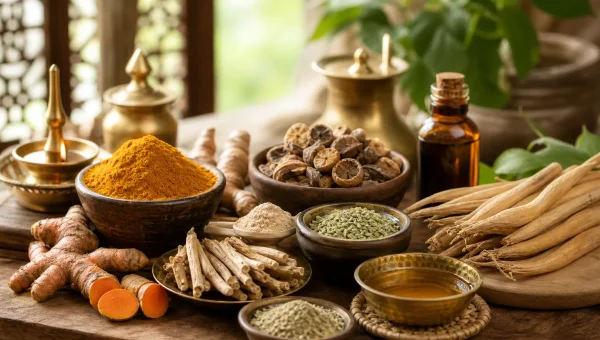
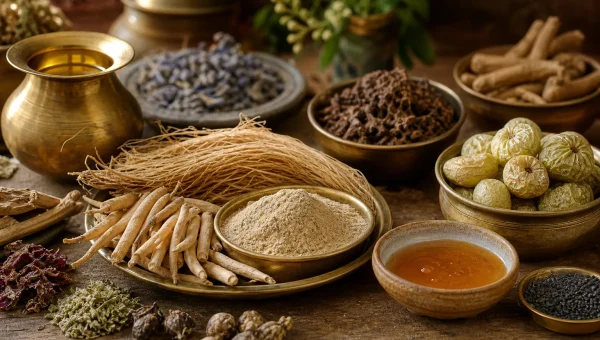
Ashwagandha (Withania somnifera) is a major Vata-Kapha-pacifying rasayana and balya herb. It is especially suited to patterns of depletion, nervous exhaustion, stress sensitivity, poor sleep, muscle weakness, and anxious restlessness. The Ayurvedic Pharmacopoeia of India lists its root powder dose as 3–6 g. A standardized root extract dose of 300 mg twice daily has also been used for 8 weeks in perimenopausal women for climacteric symptoms and quality of life. Because Ashwagandha is warming and can interact with thyroid medications, sedatives, immune-modulating medicines, and pregnancy-related concerns, it should be used with professional guidance.
Shatavari (Asparagus racemosus) is cooling, nourishing, unctuous, rasayana, balya, medhya, and Pitta-pacifying. It is traditionally suited to perimenopausal patterns involving dryness, heat, irritability, hot flashes, vaginal dryness, disturbed sleep from heat, and a depleted feeling after years of caregiving, stress, or poor nourishment. The Ayurvedic Pharmacopoeia of India lists the root powder dose as 3–6 g. It is not automatically suitable for every woman, especially when there is marked heaviness, sluggish digestion, or Kapha-Ama dominance.
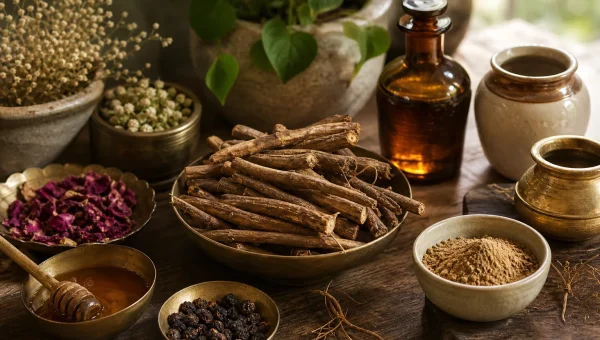
Brahmi (Bacopa monnieri) is a classical medhya rasayana used for the mind, memory, intellect, and Manas-related disorders. It is particularly relevant when perimenopausal depression includes brain fog, poor concentration, forgetfulness, rumination, or difficulty holding attention. The Ayurvedic Pharmacopoeia of India lists Brahmi as medhya, rasayana, mohahara, and useful in manasavikara, with a powder dose of 1–3 g. Standardized Bacopa extracts have also been used in human cognitive studies in older adults.
Jatamansi (Nardostachys jatamansi) is a cooling medhya herb traditionally used in manasaroga and anidra. It is most relevant when mood symptoms are tied to disturbed sleep, mental agitation, exhaustion, emotional heaviness, and difficulty settling at night. The Ayurvedic Pharmacopoeia of India lists the rhizome powder dose as 2–3 g. Because it may deepen sedation and is not appropriate for all constitutions or medication combinations, it is best used under the care of a qualified practitioner.
Manovaha Srotas Practices: Stabilizing the Channels
The daily practices matter because perimenopausal depression often worsens when rhythm is lost. Herbs may help, but irregular meals, late nights, overstimulation, skipped breakfast, excessive caffeine, unprocessed grief, and chronic sleep debt can keep Vata moving in the wrong direction. A Manovaha Srotas plan gives the mind repeated signals of safety and steadiness.
Nasya or gentle nasal oiling may be used when appropriate. Classical Nasya is described for disorders of the head and region above the clavicle. In a home routine, this is usually kept mild: 1–2 drops of plain sesame oil, ghee, or a practitioner-recommended oil after washing the face in the morning. It should be avoided during acute cold, sinus infection, immediately after meals, immediately after exercise, during active vomiting, or whenever a clinician advises against it.
Shiro Abhyanga, or warm oil massage of the head, is a grounding practice for Vata in the head and sense organs. Warm sesame oil, Brahmi oil, or another suitable oil may be massaged into the scalp for 10–15 minutes, two or three times weekly. For women whose depression is worsened by insomnia, mental overactivity, dryness, or tension in the head and neck, this simple practice can become one of the most stabilizing parts of the week.
Bhramari Pranayama is a gentle humming breath practice. A simple method is to sit upright, inhale softly through the nose, and exhale with a low, steady humming sound for 5–10 rounds. It should never be forced. In perimenopausal depression, Bhramari is most useful when the mind is agitated, the chest feels tight, sleep is shallow, or worry becomes louder in the evening.
Yoga Nidra and restorative rest can be used when the body is tired but the mind will not let go. A 15–25 minute guided Yoga Nidra practice in the late afternoon or early evening is often more useful than pushing through exhaustion. The aim is not to “perform meditation,” but to give the nervous system a structured experience of rest before the Vata period of evening intensifies.
Food, Routine, and Sleep: The Part That Makes the Herbs Work
A Vata-stabilizing diet during perimenopause emphasizes warmth, moisture, regularity, and digestibility. Warm cooked meals, soups, stews, well-cooked grains, mung dal, root vegetables, adequate healthy fats, and spices that support digestion are usually more suitable than cold salads, skipped meals, fasting, dry snacks, and erratic eating. This is especially important when depression comes with anxiety, constipation, insomnia, or feeling ungrounded.
Sleep protection is central. Perimenopausal depression often worsens when night waking, hot flashes, or late-night rumination become chronic. A useful evening routine may include a lighter early dinner, reduced screens before bed, warm foot massage, a quiet room, breathable bedding, and a consistent sleep-wake rhythm. The Ayurvedic aim is to reduce the number of decisions and sensory disturbances the nervous system must process at night.
Movement should match the state of depletion. Some women benefit from brisk walking, strength training, and morning sunlight. Others need a temporary phase of gentler yoga, mobility work, and slow rebuilding because intense workouts worsen insomnia or hot flashes. The guiding principle is steadiness after movement, not collapse after effort.
The HRT and Antidepressant Question
Hormone therapy, antidepressants, and psychotherapy are not enemies of Ayurveda. For clinical perimenopausal depression, modern guidelines place antidepressants and psychotherapy among front-line options. Estrogen therapy is not approved as a depression treatment by itself, but transdermal estradiol has been studied in perimenopausal depression, and hormone therapy may be considered by clinicians when mood symptoms occur together with vasomotor symptoms such as hot flashes and night sweats.
Ayurvedic care can be used alongside medical care when all clinicians are informed. The role of Ayurveda is to improve the terrain: sleep, digestion, Vata stability, emotional rhythm, nervous-system recovery, and resilience. The decision to use HRT should be made with a gynecologist or qualified healthcare provider, especially when there is a personal or family history of breast cancer, blood clots, stroke, cardiovascular disease, liver disease, abnormal bleeding, migraine with aura, or other risk factors.
| Pattern | Ayurvedic Reading | Primary Support | Usual Timing |
|---|---|---|---|
| Anxiety, restlessness, night worry | Vata-Rajas aggravation | Ashwagandha if suitable, Bhramari, warm evening routine, head or foot oiling | Evening or bedtime |
| Brain fog, forgetfulness, poor focus | Manovaha Srotas disturbance with depleted clarity | Brahmi, regular meals, reduced overstimulation, morning light | Morning |
| Hot flashes with irritability and poor sleep | Pitta-Vata disturbance with dryness and heat | Shatavari if suitable, cooling routine, breathable bedding, earlier dinner | Afternoon or evening |
| Heavy low mood, inertia, emotional dullness | Vata-Tamas pattern with depleted strength | Brahmi, guided routine, gentle morning movement, practitioner-guided Jatamansi if sleep is disturbed | Morning and evening |
| Insomnia worsening mood | Vata aggravation in the evening and head region | Jatamansi or Ashwagandha only when appropriate, Yoga Nidra, Shiro Abhyanga, stable bedtime | Bedtime |
For the full context of the perimenopausal transition in Ayurvedic terms, see the Ayurvedic perimenopause Rajonivritti protocol. For the postmenopausal stage and daily self-care after the transition, see Rajonivritta Paricharya post-menopausal self-care.
Disclaimer: Perimenopausal depression can be a serious medical condition. If you are experiencing severe depression, suicidal thoughts, inability to function, panic, rapid worsening of mood, symptoms of mania or psychosis, or any risk of self-harm, seek immediate professional mental health support. Ayurvedic approaches discussed here are educational and complementary; they are not replacements for psychiatric care, psychotherapy, antidepressants, emergency care, or hormone therapy when these are indicated.
Herbs such as Ashwagandha, Brahmi, Jatamansi, and Shatavari may interact with medications, sedatives, thyroid treatment, hormone therapy, fertility treatment, immune-modulating drugs, or pregnancy-related conditions. Consult a qualified Ayurvedic practitioner and a licensed healthcare provider before starting herbs, supplements, detoxes, or therapeutic protocols, especially if you are pregnant, trying to conceive, managing a medical condition, or taking medication.
References
- Charaka Samhita — Menopausal Syndrome
- Case series on the effect of ayurvedic medications in the management of symptoms of vulvovaginal atrophy in postmenopausal women (2025), PubMed Central
- Pib (pib.gov.in)
- Charaka Samhita — Manovaha srotas
- Charaka Samhita — Rajas
- The risk of depression in the menopausal stages: A systematic review and meta-analysis (2024), PubMed
- Estrogen, Stress, and Depression: Cognitive and Biological Interactions (2019), PubMed Central
- Menopause-Associated Depression: Impact of Oxidative Stress and Neuroinflammation on the Central Nervous System-A Review (2024), PubMed Central
- Neurobiological Underpinnings of the Estrogen – Mood Relationship (2012), PubMed Central
- Ayurvedic Pharmacopoeia of India
- Effect of an ashwagandha (Withania Somnifera) root extract on climacteric symptoms in women during perimenopause: A randomized, double-blind, placebo-controlled study (2021), PubMed
- NIH Office of Dietary Supplements
- Ayurvedic Pharmacopoeia of India
- Dravyaguna notes
- Effects of a standardized Bacopa monnieri extract on cognitive performance, anxiety, and depression in the elderly: a randomized, double-blind, placebo-controlled trial (2008), PubMed Central
- Effects of 12-Week Bacopa monnieri Consumption on Attention, Cognitive Processing, Working Memory, and Functions of Both Cholinergic and Monoaminergic Systems in Healthy Elderly Volunteers (2012), PubMed Central
- A randomized controlled clinical trial to assess the efficacy of Nasya in reducing the signs and symptoms of cervical spondylosis (2012), PubMed Central
- Blog (blog.theayurvedaexperience.com)
- Effect of Bhramari Pranayama intervention on stress, anxiety, depression and sleep quality among COVID 19 patients in home isolation (2022), PubMed Central
- Europepmc (europepmc.org)
- Frontiersin (frontiersin.org)
- Efficacy of yoga for vasomotor symptoms: a randomized controlled trial (2014), PubMed Central
- Yogic Sleep and Walking Protocol Induced Improvement in Sleep and Wellbeing in Post-menopausal Subject: A Longitudinal Case Study During COVID Lockdown (2022), PubMed Central
- Guidelines for the Evaluation and Treatment of Perimenopausal Depression: Summary and Recommendations (2019), PubMed
- Efficacy of estradiol for the treatment of depressive disorders in perimenopausal women: a double-blind, randomized, placebo-controlled trial (2001), PubMed
- Efficacy of Transdermal Estradiol and Micronized Progesterone in the Prevention of Depressive Symptoms in the Menopause Transition: A Randomized Clinical Trial (2018), PubMed
- NCBI
Shatavari dosage for perimenopause the article mentions 500mg twice daily. is this standardized extract or churna weight? 🙏
Makes sense. धन्यवाद
the Manovaha Srotas concept is valuable but the article doesn’t engage with the established estrogen-serotonin connection that underlies much of perimenopausal mood disorder.
shatavari + Brahmi combination for perimenopausal anxiety and low mood started 6 weeks ago. the mental chatter has quieted significantly and I’m sleeping better.
shatavari dosage for perimenopause the article mentions 500mg twice daily. is this standardized extract or churna weight?
the Manovaha Srotas concept is valuable but the article doesnt rngage with the established estrogen-serotonin connection that underlies much of perimenopausal mood disorder.
the correlation between Pitta provocation in perimenopause (hot flashes) and concurrent mood shifts is something this article connects better than any Western resource I’ve found.
perimenopausal depression can be severe and may require antidepressants or HRT. the article doesn’t clearly state when Ayurvedic support is insufficient and psychiatric referral is needed.
for perimenopause with both depression and hot flashes (Pitta pattern), does the cooling protocol for hot flashes conflict with the warming protocol nreded for Vata-type depression?
the Manovaha Srotas framework for perimenopause-related mood changes gave me a context my psychiatrist hadn’t provided. the Vata-vitiation during hormonal transition explanation makes sense experientially. tbh
@Prakash is there an Ayurvedic framework for the cognitive changes (brain fog, memory issues) in perimenopause separate from the mood component?
the article mentions Ashoka for uterine stability. does this apply during perimenopause when cycles are irregular or is it primarily for menstruating women?
is there an Ayurvedic framework for the cognitive changes (brain fog, memory issues) in perimenopause separate from the mood component?
shatavari dosage for perimenopause rhe article mentions 500mg twice daily. is this standardized extract or churna weight? 🙌
good question, I was wondering the same. standardized extract and churna can differ a lot in effective dose since extracts are concentrated. if the article means churna, 500mg is actually quite modest — many practitioners suggest closer to 3-6g of the raw powder. would be helpful if the author clarified which form the 500mg twice daily refers to 🙌
The description of standing in a dim room really hit home for anyone feeling that vague loss of self during perimenopause.
Will try!
Useful info.
is there an Ayurvedic frameeork for the cognitive changes (brain fog, memory issues) in perimenopause separate from the mood component?
perimenopausal depression can be severe and may require antidepressants or HRT. the article doesnt clearly state when Ayurvedic aupport is insufficient and psychiatric referral is needed. 🌿
@Kavita the Manovaha Srotas concept is valuable but the article doesn’t engage with the established estrogen-serotonin connection that underlies much of perimenopausal mood disorder. ✨ नमस्ते
the Manovaha Srotas concrpt is valuable but the article doesnt engage with the established estrogen-serotonin connection that underlies much of perimenopausal mood disorder.
I wonder how nasya with sesame oil compares to just using a nasal spray for daily Vata calming.
the Manovaha Srotas concept is valuable but the article doesnt engage with the established eatrogen-serotonin connection that underlies much of perimenopausal mood disorder. tbh
@Aarti shatavari + Brahmi combination for perimenopausal anxiety and low mood started 6 weeks ago. the mental chatter has quieted significantly and I’m sleeping better.
Reading about ashwagandha’s effect on GABA receptors makes me consider trying the powdered form before bed.
@Eric is there an Ayurvedic framework for the cognitive changes (brain fog, memory issues) in perimenopause separate from the mood component?
@Jennifer perimenopausal depression can be severe and may require antidepressants or HRT. the article doesn’t clearly state when Ayurvedic support is insufficient and psychiatric referral is needed.
It’s interesting that the article links fluctuating estrogen to serotonin volatility rather than just low levels.
the Manovaha Srotas framework gor perimenopause-related mood changes gave me a context my psychiatrist hadn’t provided. the Vata-vitiation during hormonal transition explanation makes sense experientially.
Some women might find shatavari’s mild estrogenic activity helpful for buffering mood swings.
The Manovaha Srotas framework gave language to something I’ve been experiencing but couldn’t articulate. The idea that hormonal transition directly disturbs the channels governing mental and emotional experience — not just mood as a side effect of low estrogen — shifts how I think about what I’m going through. Are there specific Nasya or Shirodhara protocols the author would recommend alongside the herbs mentioned?
@Anna perimenopausal depression can be severe and may require antidepressants or HRT. the article doesn’t clearly state when Ayurvedic support is insufficient and psychiatric referral is needed.
@Sunita the correlation between Pitta provocation in perimenopause (hot flashes) and concurrent mood shifts is something this article connects better than any Western resource Ive found.
The mention of jatamansi for heaviness and hopelessness caught my eye; has anyone tried it for that Tamas feel?
After learning about brahmi’s cognitive benefits, I’m curious if the juice form works as well as the extract.
What struck me in this post is how the Vata-vitiation model actually maps onto what perimenopause depression feels like from the inside — scattered, ungrounded, unlike the heavy low-affect depression most people picture. That distinction matters for treatment. The friend’s description of being ‘absent from herself’ is exactly how I would put it too.
The suggestion to practice bhramari pranayama twice daily seems doable, especially with the default mode network findings.
perimenopause depression being linked with manovaha srotas makes sense, but mental health red flags should be bold here
Thanks! धन्यवाद
Yoga nidra in the early evening as a Vata time practice sounds like a gentle alternative to fighting insomnia.
the Manovaha Srotas framework for perimenopause-related mood changes gave mr a context my psychiatrist hadn’t provided. the Vata-vitiation during hormonal transition explanation makes sense experientially. tbh
@John the Manovaha Srotas framework for perimenopause-related mood changes gave me a context my psychiatrist hadn’t provided. the Vata-vitiation during hormonal transition explanation makes sense experientially.
I appreciate that the author notes HRT can coexist with Ayurvedic herbs rather than presenting them as opposites.
Noted. नमस्ते
is there am Ayurvedic framework for the cognitive changes (brain fog, memory issues) in perimenopause separate from the mood component?
The table matching symptoms to herb combos is practical; I might try ashwagandha with nutmeg for sleep related mood dips.
It’s reassuring to see the disclaimer about consulting a physician before mixing herbs with antidepressants.
the Manovaja Srotas concept is valuable but the article doesnt engage with the established estrogen-serotonin connection that underlies much of perimenopausal mood disorder.
The concept of Manovaha Srotas as mind channel networks gives a fresh way to think about brain fog.
Having read the Charaka Samhita reference, I’m motivated to look up the exact verses on Rajonivritta.
The article’s blend of modern neuroendocrine research and classical Ayurveda feels balanced without overpromising.