
A demanding founder calendar makes the first 90 minutes of the day unusually important. Ayurveda treats this window not as a place for frantic productivity, but as a place for preparation: clearing the senses, supporting elimination, steadying the nervous system, moving the body, and entering work with a settled mind. A modern entrepreneur can adapt Dinacharya, the Ayurvedic daily regimen, into a practical morning sequence that protects energy instead of spending it all before the workday begins.
Dinacharya (दिनचर्या, daily routine) is described in classical Ayurvedic literature as a regimen for maintaining health in a healthy person. It includes rising early, attending to natural urges, cleansing the mouth and tongue, caring for the senses, oil massage, exercise, bathing, appropriate food, and disciplined conduct. For entrepreneurs, its value is simple: it gives the day a stable physiological and mental foundation before email, meetings, negotiations, and decision fatigue begin.
Why the Morning Matters: Ayurvedic Timing and Biological Readiness
Classical Ayurveda advises a healthy person to rise during Brahma Muhurta, traditionally understood as the quiet pre-dawn period before sunrise. This is not a command to sleep less; it assumes adequate, timely sleep the night before. The practical point is that the first part of the day should begin with clarity rather than hurry. Modern physiology also recognizes that many people experience sleep inertia after waking and that cortisol normally rises after awakening, making the early morning a meaningful transition period between sleep and full daytime performance.
Many Ayurvedic teaching lineages also organize the day through Dosha-dominant periods: Vata before sunrise, Kapha through the early morning, Pitta around midday, Vata in the afternoon, Kapha in the evening, and Pitta later at night. Used practically, this means the early morning is well suited to lightness, movement, sensory cleansing, and mental orientation. Kapha qualities of heaviness and inertia are met with exercise, warm water, breath, and routine; Pitta’s sharper midday qualities are reserved for focused analysis and important decisions.
The 90-Minute Dinacharya Protocol for Entrepreneurs
This protocol is a modern, household adaptation of classical Dinacharya for generally healthy adults. It is not Panchakarma, not a medical treatment plan, and not a reason to ignore sleep debt. Begin with the practices that are safe and easy for you, keep the sequence consistent, and personalize the details according to constitution, season, digestion, health status, and professional schedule.
Minutes 0 to 5: Wake, Eliminate, and Sip Warm Water
Wake early enough that the day does not begin in panic. If your sleep schedule allows, aim for the pre-dawn period or a calm waking time before the main workday begins. Attend first to natural urges rather than suppressing them. Ayurveda gives great importance to the proper movement of Apana Vayu, the downward-moving function associated with elimination, urination, menstruation, childbirth, and grounding.
After rinsing the mouth, sip warm water slowly. A practical amount is about 300 to 500 mL, adjusted to thirst, climate, constitution, and tolerance. Warm water is gentler than ice-cold water in this context and helps create a predictable morning rhythm. If constipation is a recurring issue, Triphala or other bowel-supportive herbs should be used with guidance rather than treated as a daily productivity supplement.
Minutes 5 to 15: Oral Hygiene and Tongue Cleansing
Begin with tooth cleaning and tongue scraping. Classical descriptions of Jihvanirlekhana, or tongue cleansing, recommend a smooth, soft-edged scraper and gentle strokes. In a modern setting, a stainless steel or copper tongue scraper is commonly used. Scrape from back to front without force until the tongue feels clean. The goal is oral cleanliness, better taste perception, and a cleaner start for eating and speaking.
Gandusha or Kavala, the Ayurvedic practice of holding or swishing liquid in the mouth, may be added when time permits. Sesame oil is traditional; coconut oil is commonly used in many households. Swish gently for 5 to 10 minutes, then spit the oil into trash rather than the sink. Oil pulling should be treated as an adjunct to oral hygiene, not as a replacement for brushing, flossing, or dental care.
Minutes 15 to 25: Nasal Care and Face-Eye Rinsing
For healthy adults who tolerate it well, Pratimarsha Nasya is the gentle daily form of nasal oiling. Place 1 to 2 drops of warm sesame oil, ghee, or practitioner-recommended Anu Taila in each nostril, then inhale softly without force. Ayurveda places nasal care within the care of the head, voice, and sense organs. This should not be confused with stronger therapeutic Nasya, which belongs under clinical supervision.
Follow with simple face and eye rinsing. Splash the face and closed or gently open eyes with clean cool or room-temperature water according to comfort. This is not Netra Tarpana, which is a separate Ayurvedic eye procedure involving retained medicated ghee. For entrepreneurs who begin screen work early, this brief sensory reset is a useful boundary between sleep, personal care, and digital attention.
Minutes 25 to 45: Abhyanga, the Grounding Oil Practice
Abhyanga (अभ्यंग) is warm oil self-massage. Apply warm oil to the body using long strokes on the limbs and circular strokes over the joints. Give special attention to the feet, ears, scalp, neck, and lower back if time allows. Sesame oil is widely used, especially for Vata-type dryness and cool seasons. Coconut oil may suit Pitta-type heat or hot climates. Kapha-dominant individuals may prefer lighter oiling, shorter application, or dry rubbing on some days.
Classical texts praise Abhyanga for softness, strength, comfort, and the pacification of Vata, especially when applied to the head, ears, and feet. For an entrepreneur, the practical effect is not mystical: the body receives warmth, touch, rhythm, and a clear pause before performance begins. Leave the oil on briefly, then bathe. Avoid full oil massage during acute indigestion, fever, heavy Kapha congestion, immediately after major purification therapies, or when a practitioner has advised against it.
Minutes 45 to 60: Exercise and Breathwork
Classical Ayurveda recommends Vyayama, or exercise, according to strength, season, age, and constitution. A key instruction is Ardha Shakti: exercise to about half of one’s capacity, not to exhaustion. For entrepreneurs, this means 15 to 20 minutes of brisk walking, mobility work, Surya Namaskar, light strength training, or another movement practice that creates warmth and alertness without draining the day’s energy.
After movement, use 5 to 10 minutes of breath practice. Nadi Shodhana, or alternate-nostril breathing, is a calm choice before strategic work. Bhramari, the humming breath, is useful when the mind feels agitated. Kapalabhati is more forceful and should be reserved for people who have learned it properly and are suited to it. Avoid forceful breathwork during pregnancy, uncontrolled hypertension, cardiovascular disease, dizziness, acute illness, or after recent surgery unless cleared by a qualified professional.
Minutes 60 to 75: Meditation and Strategic Clarity
Sit quietly for 10 to 15 minutes after the body has been cleaned, oiled, moved, and steadied. This may be mantra meditation, breath awareness, prayer, or silent observation. The purpose is not to escape work; it is to enter work with less reactivity. A founder’s most expensive mistakes often come from urgency, fear, scattered attention, or ego-driven decisions. A short morning meditation gives space for discernment before the first external demand arrives.
After meditation, write three brief lines: the one decision that matters most today, the one relationship that deserves steadiness today, and the one action that should not be delayed. This keeps the Ayurvedic intention of mental clarity while translating it into the language of leadership, execution, and accountability.
Minutes 75 to 90: Herbs and an Intentional Breakfast
Use the final part of the routine for food and, when appropriate, herbs. Ayurveda generally favors warm, freshly prepared, digestible food over hurried eating, cold leftovers, or stimulant-only mornings. A suitable breakfast may be spiced oatmeal with ghee and dates, warm khichdi, stewed fruit with spices, or another cooked meal matched to appetite and constitution. If true hunger is absent, take a lighter breakfast rather than forcing a heavy meal.
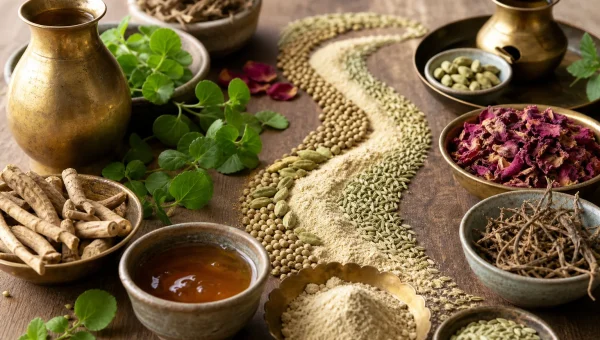
Herbs should be chosen for the person, not for a generic performance fantasy. The following options are common in Ayurvedic practice, but they are not mandatory and should be used carefully, especially if you take medication or have a medical condition.
| Herb | Classical Identity | Traditional Use Range | Entrepreneurial Relevance |
|---|---|---|---|
| Brahmi (Bacopa monnieri) | Medhya and Rasayana; cooling, light, and traditionally used for intellect and the nervous system | Powder is traditionally listed around 1 to 3 g; standardized extracts should follow label and practitioner guidance | Supports a routine aimed at memory, steadiness, and sustained attention |
| Ashwagandha (Withania somnifera) | Root drug; Rasayana, Balya, Vata-Kapha pacifying, warming | Powder is traditionally listed around 3 to 6 g; extracts vary widely and require caution | Useful in a constitutionally appropriate plan for stress resilience, strength, and recovery |
| Shankhapushpi (Convolvulus pluricaulis) | Whole plant; Medhya, Rasayana, Balya, cooling, and traditionally used for the mind | Powder is traditionally listed around 3 to 8 g | Appropriate in selected cases where mental overactivity and restlessness dominate |
| Amalaki or Amla (Emblica officinalis / Phyllanthus emblica) | Fruit; Rasayana, Tridoshajit, cooling, and valued for digestion, eyes, and rejuvenation | Fresh fruit or powder may be used according to tolerance and guidance | Supports a nourishing breakfast pattern without relying on excessive stimulants |
| Triphala | Classical three-fruit formula combining Amalaki, Haritaki, and Bibhitaki | Often used at night or as directed for bowel regularity | Best considered when elimination needs support, not as a universal morning stimulant |
How the Protocol Compounds
The strength of this routine is its sequence. Warm water and elimination address the lower body and Apana Vayu. Oral cleansing refreshes taste and speech. Nasal and facial care prepare the senses. Abhyanga grounds the body. Exercise clears heaviness and generates warmth. Breath and meditation settle attention. Breakfast and herbs, when appropriate, nourish the system before high-demand work begins. Each step is modest; together they create a morning that is stable, repeatable, and less dependent on caffeine and urgency.
Implementation Strategy: Start with Three, Then Add Weekly
The common mistake is attempting the full 90 minutes from day one. Begin with three practices: warm water after waking, tongue scraping, and 5 minutes of quiet breathing. After one week, add a short movement practice. In the second or third week, add Abhyanga two or three mornings per week. Meditation and herbs can come later. This gradual approach respects the Ayurvedic principle that a routine should become suitable, sustainable, and digestible for the person practicing it.
Entrepreneurs often succeed by intensity, but health routines succeed by repeatability. A 20-minute version practiced daily is better than a perfect 90-minute version abandoned after four days. The goal is not to perform Ayurveda; the goal is to arrive at work clear, steady, nourished, and less reactive.
Safety and Disclaimer
This protocol is for educational purposes and is not a substitute for medical care. Consult a qualified Ayurvedic practitioner and healthcare provider before using herbs, changing medication, beginning forceful breathwork, or practicing Nasya if you have a medical condition. Brahmi may interact with sedatives, cholinergic or anticholinergic drugs, and other medications. Ashwagandha may cause digestive upset or drowsiness, may affect thyroid or immune function, should be avoided during pregnancy unless medically directed, and has been associated with rare liver injury reports. Choose products tested for quality and contaminants.
Oil pulling does not replace dental care. Nasal oiling should be avoided during acute sinus infection, active cold, immediately after food, or when it causes discomfort. Exercise and breathwork should be adapted for age, cardiovascular status, pregnancy, injury, and current fitness. When in doubt, simplify: wake calmly, hydrate, clean the mouth, move gently, breathe quietly, and eat with attention.
Actionable Tip: Tomorrow, wake 20 minutes earlier than usual. Use those 20 minutes for one simple sequence: sip warm water, scrape the tongue, move for five minutes, breathe quietly for five minutes, and write the one decision that matters most today. Practice that for seven days before adding more.
References
- Easyayurveda (easyayurveda.com)
- Ahsutrasthana (ahsutrasthana.blogspot.com)
- Sleep inertia: current insights (2019), PubMed Central
- The circadian system modulates the cortisol awakening response in humans (2022), PubMed Central
- Ayurvedacollege (ayurvedacollege.com)
- Wisdomlib — classical text
- Easyayurveda (easyayurveda.com)
- Easyayurveda (easyayurveda.com)
- Effect of oil pulling in promoting oro dental hygiene: A systematic review of randomized clinical trials (2016), PubMed
- Easyayurveda (easyayurveda.com)
- Easyayurveda (easyayurveda.com)
- Alternate Nostril Breathing at Different Rates and its Influence on Heart Rate Variability in Non Practitioners of Yoga (2016), PubMed Central
- NCCIH
- Ayurvedic Pharmacopoeia of India
- Ayurvedic Pharmacopoeia of India
- Therapeutic Uses of Triphala in Ayurvedic Medicine (2017), PubMed Central
- NCBI
- NCCIH
- NCCIH


Been using ayurvedic for about 3 months now and the difference in how I feel is real. My practitioner said the same things this article covers so good to have it spelled out.
The 90-minute version is inspiring but startups are chaotic. is there a 30-minute core version that keeps the key elements? ठीक है
found this post helpful. will try the suggested approach. (ref 1868-51)
A 45-minute modified version starting this week. will scale up as it becomes stable ❤️
found this post helpful. will try the suggested approach. (ref 1868-82)
How long before seeing results with this protocol? My practitioner said 4 weeks but I’m seeing other timelines mentioned online.
🙌 the 90-minute version is inspiring but startups are chaotic. is there a 30-minute core version that keeps the key elements?
Pre-preparing Kitchari the night before solves the breakfast time problem for early-stage founders ❤️
💯 The no-screen morning rule is the part I want most. I know it sets a reactive tone. tried to stop 4 times. the Sattva framework is the first one that worked
The sequence of abhyanga before meditation makes sense from a Vata regulation standpoint. Oil grounds the nervous system. If you meditate in a depleted, agitated state you are not getting the full benefit of the practice. I had the order wrong for years.
The 90-minute requirement is the barrier for me. Startups are chaotic and mornings often get blown up by investor calls or team crises. Can this be a 30-minute version that still captures the key elements?
I have had 4 coffees before 10am for the past 3 years. Reading that this is a Vata-aggravating pattern that depletes the adrenals over time is useful information that I have been avoiding confronting.
❤️ the first-thing-Slack problem is real. the Sattva-before-Rajas framing is the first reframe that has actually worked for breaking the morning check-in habit धन्यवाद
This matches my clinical experience. I’ve recommended ayurvedic to patients with similar presentations and the response rate is consistent with what the article describes.
Useful.
found this post helpful. will try the suggested approach. (ref 1868-60)
Reading this later and the Morning Routine for Entrepreneurs advice still feels relevant. I would like to know how long to try it before judging results.
The breakdown of Brahma Muhurta and Kapha time really clarifies why waking before 6 feels different.
I am a VCs and I see founders at every stage of the burnout spectrum. The ones who build sustainable routines early perform better over time. But this article’s routine requires stability that early-stage founders often don’t have. What is the minimum viable version?
✨ i’m a VC and I see founders at every stage of the burnout spectrum. the ones who build sustainable routines early perform better over time
🙌 I’m a VC and I see founders at every stage of the burnout spectrum. the ones who build sustainable routines early perform better over time
The breakfast section is where this routine falls apart for most founders I know. Preparing a proper Ayurvedic breakfast requires 20-30 minutes they don’t have. Pre-preparing Kitchari the night before is something I do now that solves this problem.
The advice about not checking your phone before completing the morning routine is where I always fall apart. I’ve tried to build morning habits before but the startup brain kicks in and everything collapses into email within ten minutes of waking up. Is the sequence of the five practices fixed — does it matter whether abhyanga or pranayama comes first — or is the order flexible once you understand what each one is doing?
The biological capital line hit hard. I kept telling myself the exhaustion was temporary — just until the next funding round, just until we hit the growth target. Three years of that. The part about oil pulling and its cognitive clarity effect sounds like something I’d have dismissed before, but at this point I’m willing to try anything with even modest evidence behind it. Did you phase all 90 minutes in gradually or attempt the full routine from day one?
Has anyone tried the tongue scraping step and noticed less morning breath right away?
The research cited is old and small. n=96 for a genomic study in 2015 would not pass peer review today. I’d want to see updated work before drawing strong conclusions.
I appreciate the suggestion to start with just warm water, tongue scraping, and pranayama for the first week.
The 90-minute version is inspiring but startups are chaotic. is there a 30-minute core version that keeps the key elements?
i’m a VC and I see founders at every stage of the burnout spectrum. the ones who build sustainable routines early perform better over time
@Greg noted!
4 coffees before 10am for 3 years. Vata-depleting adrenal pattern is useful information I have been avoiding confronting
found this post helpful. will try the suggested approach. (ref 1868-27)
I have been a product manager at high-growth startups for 10 years and this article described my last 5 years back to me with unsettling accuracy. Starting the routine this week with a 45-minute modified version and will scale up as it becomes stable.
A 45-minute modified version starting this week. will scale up as it becomes stable
the research cited is from 2015 and the sample size would not pass peer review today. would want updated work before drawing strong conclusions
not related to this post but does anyone know a good practitioner in Hyderabad?
Pre-preparing Kitchari the night before solves the breakfast time problem for early-stage founders 🙌
The part about avoiding ice water and sticking to warm water makes sense for digestion.
10 years of product management and this article described my last 5 years back to me with unsettling accuracy
Pre-preparing Kitchari the night before solves the breakfast time problem for early-stage founders
The no-screen morning rule is the part I want most. I know it sets a reactive tone. tried to stop 4 times. the Sattva framework is the first one that worked
The 90-minute version is inspiring but startups are chaotic. is there a 30-minute core version that keeps the key elements? ✨
The first-thing-Slack problem is real. the Sattva-before-Rajas framing is the first reframe that has actually worked for breaking the morning check-in habit
found this post helpful. will try the suggested approach. (ref 1868-24)
I’m a VC and I see founders at every stage of the burnout spectrum. the ones who build sustainable routines early perform better over time 🙌
The no-screen morning rule is the part I want most. I know it sets a reactive tone. tried to stop 4 times. the Sattva framework is the first one that worked 🙌
im a VC and I see founders at every stage of the burnout spectrum. the ones who build sustainable routines early perform better over time
found this post helpful. will try the suggested approach. (ref 1868-21)
💯 the 90-minute version is inspiring but startups are chaotic. is there a 30-minute core version that keeps the key elements?
the first-thing-Slack problem is real. the Sattva-before-Rajas framing is the first reframe that has actually worked for breaking the morning check-in habit ✨
the 90-minute version is inspiring but startups are chaotic. is there a 30-minute core version that keeps the key elements? 🌿
A 45-minute modified version starting this week. will scale up as it becomes stable ठीक है
pre-preparing Kitchari the night before solves the breakfast time problem for early-stage founders ✨
found this post helpful. will try the suggested approach. (ref 1868-25)
🙏 pre-preparing Kitchari the night before solves the breakfast time problem for early-stage founders
pre-preparing Kitchari the night before solves the breakfast time problem for early-stage founders धन्यवाद
Does the oil pulling need to be done before or after brushing teeth?
the 90-minute version is inspiring but startups r chaotic. is there a 30-minute core version that keeps the key elements?
the first-thing-Slack problem is real. the Sattva-before-Rajas framing is the first reframe that has actually worked for breaking the morning check-in habit ठीक है
found this post helpful. will try the suggested approach. (ref 1868-88)
Same here!
🙌 Pre-preparing Kitchari the night before solves the breakfast time problem for early-stage founders
found this post helpful. will try the suggested approach. (ref 1868-32)
The no-screen morning rule is the part I want most. I know it sets a reactive tone. tried to stop 4 times. the Sattva framework is the first one that worked 🙏
the no-screen morning rule is the part I want most. I know it sets a reactive tone. tried to stop 4 times. the Sattva framework is the first one that worked ❤️
the no-screen morning rule is the part I want most. I know it sets a reactive tone. tried to stop 4 times. the Sattva framework is the first one that worked ✨
found this post helpful. will try the suggested approach. (ref 1868-38)
found this post helpful. will try the suggested approach. (ref 1868-40)
✨ The no-screen morning rule is the part I want most. I know it sets a reactive tone. tried to stop 4 times. the Sattva framework is the first one that worked
Pre-preparing Kitchari the night before solves the breakfast time problem for early-stage founders ठीक है
The explanation of how Abhyanga shifts nervous system balance caught my attention.
pre-preparing Kitchari the night before solves the breakfast time problem for early-stage founders 🌿
I’m a VC and I see founders at every stage of the burnout spectrum. the ones who build sustainable routines early perform better over time ✨
found this post helpful. will try the suggested approach. (ref 1868-47)
found this post helpful. will try the suggested approach. (ref 1868-46)
i’m a VC and I see founders at every stage of the burnout spectrum. the ones who build sustainable routines early perform better over time नमस्ते
Thank you. 🌿
found this post helpful. will try the suggested approach. (ref 1868-54)
the no-screen morning rule is the part I want most. I know it sets a reactive tone. tried to stop 4 times. the Sattva framework is the first one that worked ठीक है
🙌 the no-screen morning rule is the part I want most. I know it sets a reactive tone. tried to stop 4 times. the Sattva framework is the first one that worked
the 90-minute version is inspiring but startups r chaotic. is there a 30-minute core version that keeps the key elements? ठीक है
the 90-minute version is inspiring but startups are chaotic. is there a 30-minute core version that keeps the key elements? 🙌
found this post helpful. will try the suggested approach. (ref 1868-56)
I’m curious if sesame oil works better than coconut for the self massage in colder months.
found this post helpful. will try the suggested approach. (ref 1868-57)
found this post helpful. will try the suggested approach. (ref 1868-58)
found this post helpful. will try the suggested approach. (ref 1868-59)
The herb list is helpful, especially the dosage for Brahmi capsules with breakfast.
found this post helpful. will try the suggested approach. (ref 1868-62)
a 45-minute modified version starting this week. will scale up as it becomes stable धन्यवाद
Skipping breakfast to extend fasting seems counterproductive according to the article’s glucose argument.
found this post helpful. will try the suggested approach. (ref 1868-65)
a 45-minute modified version starting this week. will scale up as it becomes stable 🌿
The idea of stacking practices so each builds on the previous one feels like a smart design.
the 90-minute version is inspiring but startups are chaotic. is there a 30-minute core version that keeps the key elements? 💯
I’m a VC and I see founders at every stage of the burnout spectrum. the ones who build sustainable routines early perform better over time 🙏
Has anyone measured changes in cortisol after a few weeks of this routine?
a 45-minute modified version starting this week. will scale up as it becomes stable ✨
found this post helpful. will try the suggested approach. (ref 1868-71)
found this post helpful. will try the suggested approach. (ref 1868-72)
The safety note about ashwagandha interacting with thyroid meds is a good reminder.
found this post helpful. will try the suggested approach. (ref 1868-73)
A 45-minute modified version starting this week. will scale up as it becomes stable 🙏
found this post helpful. will try the suggested approach. (ref 1868-75)
I like the actionable tip of adding just twenty minutes tomorrow to test the water, tongue, nasya, and quiet sit.
found this post helpful. will try the suggested approach. (ref 1868-76)
the no-screen morning rule is the part I want most. I know it sets a reactive tone. tried to stop 4 times. the Sattva framework is the first one that worked नमस्ते
found this post helpful. will try the suggested approach. (ref 1868-78)
The reference to Dinacharya as the oldest documented productivity system adds an interesting historical angle.
found this post helpful. will try the suggested approach. (ref 1868-79)
The advice around Morning Routine for Entrepreneurs is specific enough to be useful. The main idea is clear even if someone is new to Ayurveda.
found this post helpful. will try the suggested approach. (ref 1868-81)
The 90-minute version is inspiring but startups are chaotic. is there a 30-minute core version that keeps the key elements? ❤️
found this post helpful. will try the suggested approach. (ref 1868-84)
found this post helpful. will try the suggested approach. (ref 1868-85)
🌿 Thank you.
pre-preparing Kitchari the night before solves the breakfast time problem for early-stage founders 💯
found this post helpful. will try the suggested approach. (ref 1868-89)
Sharing this.
found this post helpful. will try the suggested approach. (ref 1868-91)
❤️ The 90-minute version is inspiring but startups are chaotic. is there a 30-minute core version that keeps the key elements?
found this post helpful. will try the suggested approach. (ref 1868-94)
found this post helpful. will try the suggested approach. (ref 1868-95)
found this post helpful. will try the suggested approach. (ref 1868-96)
The first-thing-Slack problem is real. the Sattva-before-Rajas framing is the first reframe that has actually worked for breaking the morning check-in habit 🙌
found this post helpful. will try the suggested approach. (ref 1868-98)
✨ A 45-minute modified version starting this week. will scale up as it becomes stable
🙏 I’m a VC and I see founders at every stage of the burnout spectrum. the ones who build sustainable routines early perform better over time
found this post helpful. will try the suggested approach. (ref 1868-102)
found this post helpful. will try the suggested approach. (ref 1868-103)