
There is a bowl of khichdi that I make whenever someone in my household is recovering from illness, feeling depleted, or simply needs the culinary equivalent of a warm embrace. It is not fancy. It is rice and lentils cooked together with ghee and a handful of spices. Alongside khichdi, India’s spiced rice tradition runs deep, from dry aromatic pulao to coconut rice, lemon rice, curd rice, pongal, and soft rice gruels. In an Ayurvedic kitchen, these dishes are shaped not only by flavor but by the qualities of the ingredients: light or heavy, warming or cooling, dry or unctuous, softening or stimulating.
Rice in Ayurvedic Nutrition
Classical Ayurvedic dietetics gives rice an important place among staple foods. The shali group of rice is described as generally sweet, cooling, unctuous, nourishing, and suitable when prepared with attention to constitution and season. Charaka’s food chapter also distinguishes older shali rice from the usual Kapha-building tendency of many sweet foods, which is one reason aged rice remains preferred in many Ayurvedic kitchens. Modern cooks often use aged basmati as a practical substitute for traditional fragrant shali varieties because it cooks light, separates well, and carries spices beautifully.
The key is not rice alone, but rice as prepared. A soft, ghee-rich rice dish with cumin, ginger, and sweet vegetables has a very different effect from a dry, peppery rice dish with mustard seed and minimal fat. The same grain can be made more Vata-pacifying with warmth and unctuousness, more Pitta-soothing with coconut and leafy herbs, or more Kapha-balancing with pungent spices and a lighter hand with oil.
Understanding Dosha-Specific Spicing
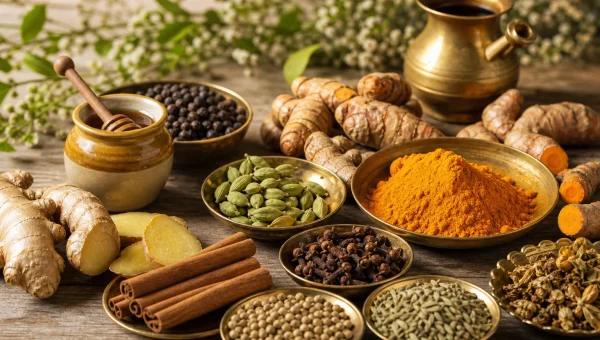
Spices are the energetic steering wheel of Ayurvedic rice cooking. Vata generally benefits from warmth, softness, moisture, and gentle aromatics. Pitta does best with cooling, fragrant, mildly digestive spices and fewer sharp or sour additions. Kapha is supported by lighter, drier preparations with pungent, stimulating spices and less heavy fat. These are not rigid rules; they are starting points for choosing the right rice dish for the person, season, appetite, and digestive strength.
Fresh ginger
Cardamom
Cinnamon
Bay leaf
Fennel
Clove in small amount
Fennel
Cardamom
Fresh mint
Fresh cilantro
Small cumin amounts
Minimal chili and mustard
Black pepper
Mustard seeds
Fenugreek
Ajwain
Turmeric
Small amount of chili
Three Dosha-Specific Recipes
These three rice dishes keep the same basic canvas—rice, legumes or vegetables, fat, and spices—but change the preparation to suit different needs. The Vata pulao is moist, grounding, and aromatic. The Pitta coconut rice is mild, cooling, and fresh. The khichdi is soft, simple, and adaptable, especially when digestion needs gentleness.
Recipe 1: Vata Pulao with Sweet Potato and Cashews
This is a grounding, sweet-savory pulao designed for days when Vata feels high: cold, dry, restless, irregular, or depleted. Sweet potato brings natural sweetness and substance, soaked cashews add richness, and ghee provides the unctuous quality that Ayurveda values for countering dryness. Cinnamon, cardamom, bay leaf, cumin, and fresh ginger keep the dish warm and aromatic without making it harsh.
Ingredients (serves 2): 1 cup aged basmati rice, soaked 30 minutes and drained; 1 medium sweet potato, peeled and cut into 1-inch cubes; 1/4 cup cashews, soaked 2–4 hours and drained; 1 1/2 tbsp ghee; 1 small cinnamon stick; 4 cardamom pods, lightly crushed; 2 cloves; 1 bay leaf; 1/2 tsp cumin seeds; 1 tsp freshly grated ginger; 1 small onion, thinly sliced; 1/4 tsp turmeric; 1/2 tsp coriander powder; 3/4 tsp rock salt or mineral salt; 1 3/4 cups water; a few saffron strands soaked in 2 tbsp warm milk or warm water.
Method: Heat ghee in a heavy-bottomed pot. Add cinnamon, cardamom, cloves, and bay leaf. When fragrant, add cumin seeds and ginger. Add onion and cook over medium heat until soft and lightly golden. Add sweet potato, turmeric, and coriander powder, and stir for 2 minutes. Add drained rice and cashews, coating them gently in the spiced ghee. Add water and salt. Bring to a boil, pour the saffron infusion over the top, reduce heat to the lowest setting, cover tightly, and cook for 15 minutes. Turn off the heat and keep covered for 5 more minutes. Fluff gently and serve warm, ideally with a little extra ghee and a side of soft moong dal.
Recipe 2: Pitta-Cooling Coconut Rice with Coriander
This coconut rice is best for warm weather, sharp appetite, irritability, excess heat, or days when the meal needs to be soothing rather than stimulating. Coconut, coriander, fennel, mint, and mild tempering give fragrance without excessive fire. Mustard seed and chili are traditional in many South Indian versions, but for strong Pitta they should be minimized or skipped.
Ingredients (serves 2): 1 cup basmati rice, cooked and cooled until just warm; 1/2 cup fresh grated coconut; 1 tsp coconut oil or ghee; 1/2 tsp cumin seeds or a small pinch of mustard seeds; 1/2 tsp white urad dal, optional; 1/2 tsp chana dal, optional; 8 curry leaves; 1/4 tsp turmeric; 1/2 tsp fennel powder; 1/2 tsp salt; 3 tbsp fresh coriander leaves, chopped; 1 tbsp fresh mint, chopped; a small squeeze of lime, optional and best used lightly.
Method: Heat coconut oil or ghee over low to medium heat. Add cumin seeds, or use only a small pinch of mustard seeds if suitable. Add urad dal and chana dal if using, and fry briefly until golden. Add curry leaves and turmeric, then remove from heat before the spices darken. Toss the warm rice with grated coconut, fennel powder, salt, coriander leaves, and mint. Pour the tempering over the rice and mix gently. Finish with a small squeeze of lime if desired. Serve at room temperature or just warm, not piping hot.
Recipe 3: Classic Tridoshic Moong Khichdi
Khichdi is one of the most practical Ayurvedic rice dishes because it is soft, adjustable, and easy to simplify. Rice and split yellow moong dal cook into a gentle one-pot meal, while ghee, cumin, ginger, turmeric, and hing make it fragrant and digestible. Charaka describes green gram as light and among the best pulses; when it is split, soaked, and cooked soft with rice, it becomes especially useful for a mild, nourishing meal.
Ingredients (serves 2–3): 1/2 cup white basmati rice, soaked 20 minutes; 1/2 cup split yellow moong dal, soaked 30 minutes; 4 cups water; 1 1/2 tbsp ghee; 1/2 tsp cumin seeds; 1/4 tsp turmeric; 1/2 tsp coriander powder; 1/8 tsp asafoetida (hing); 1 tsp freshly grated ginger; 1 small carrot, diced; 1/2 cup green beans, chopped; 1/2 tsp rock salt or mineral salt; 2 tbsp fresh coriander; optional lime juice to taste.
Method: Heat ghee in a pressure cooker or heavy pot. Add cumin seeds, then hing and ginger, stirring briefly. Add carrot, green beans, turmeric, and coriander powder. Stir for 2 minutes. Add drained rice and moong dal and coat them in the spiced ghee. Add water and salt. Pressure cook until very soft, or simmer covered for about 30 minutes, stirring occasionally. The finished khichdi should be soft and slightly soupy, not dry. Add more hot water if needed. Stir in fresh coriander before serving. For Vata, add extra ghee and keep it warm and soft. For Pitta, reduce ginger and add more coriander or fennel. For Kapha, use less ghee, add black pepper, and keep the texture a little lighter.
Nutritional Comparison
These dishes are not identical meals with different flavors; they are different Ayurvedic strategies. The Vata pulao emphasizes softness, sweetness, and nourishment. The Pitta coconut rice emphasizes cooling fragrance and moderation in heat. The khichdi emphasizes digestibility, softness, and the complementary pairing of grain and pulse.
| Dish | Key Food Qualities | Dosha Action | Best Time |
|---|---|---|---|
| Vata Sweet Potato Pulao | Warm, moist, mildly sweet, unctuous, nourishing | Grounds Vata, supports steadiness and warmth | Lunch or early dinner |
| Pitta Coconut Rice | Cooling, mild, fragrant, gently oily, fresh | Soothes Pitta when chili, mustard, and sourness are kept low | Lunch in warm weather |
| Moong Khichdi | Soft, simple, warm, adaptable, easy to cook down | Can be adjusted for all three doshas | Any main meal, especially when digestion needs gentleness |
How to Adjust Any Rice Dish
For Vata, cook rice soft, serve it warm, and include ghee, ginger, cumin, and gentle sweet vegetables. For Pitta, keep the meal mild, avoid too much chili, mustard, sourness, and salt, and favor coconut, coriander, fennel, mint, and fresh cilantro. For Kapha, reduce oil and nuts, use warming spices such as dry ginger, black pepper, mustard, fenugreek, ajwain, and turmeric, and pair rice with lighter vegetables or well-cooked moong rather than heavy sauces.
Nothing in this article diagnoses or treats a medical condition. Use it as educational information and consult a qualified Ayurvedic practitioner or healthcare provider before starting herbs, supplements, detoxes, or therapeutic protocols, especially if pregnant, managing a medical condition, or taking medication.

The part about Healing Spiced Rice feels realistic. Good starting point for a cautious reader.
This makes sense for Healing Spiced Rice. A few more examples would still help.
This makes sense for Healing Spiced Rice. The practical details matter more than people think.
Moved to India from Canada 2 years ago and khichdi was the first food that made me feel genuinely well after a period of gut adaptation. The version described here for Vata types is very close to what I found instinctively worked for my digestion.
The Vata pulao with sweet potato and cashews sounds like a comforting dinner option for cooler evenings.
Is there a version appropriate for diabetics? The standard moong dal khichdi is lower glycemic than rice alone but adding more rice for texture increases it. I want to know the optimal grain ratio for blood sugar management.
My family has been making seasonal pulaos for three generations without any knowledge of the Ayurvedic framework. Methi-heavy in winter, lighter sambhar rice in summer, tamarind rice when the rains came. Reading this I realize we have been following a protocol that nobody explicitly taught but the food encoded it.
I wonder if using aged basmati really makes a noticeable difference in texture compared to regular white rice.
What is the minimum amount of ghee that makes the Ayurvedic difference in khichdi? I use very little because of cholesterol concerns. My Ayurvedic physician says this is counterproductive but she hasn’t given me a specific quantity. Is a teaspoon enough?
The Pitta-cooling coconut rice seems perfect for summer lunches, especially with fresh coriander and lime.
The Pitta pulao with cooling herbs and tamarind and coconut milk base is one I made last week for the first time. The combination sounds complex but it is not. My husband who is strongly Pitta had noticeably less post-dinner heat complaints that evening.
Do the mustard seeds in the khichdi recipe need to be toasted first, or can they be added raw?
I tried the tridoshic khichdi last week and felt lighter after dinner, though I added extra veggies.
The spice lists for each dosha are helpful; I especially liked seeing fennel appear in both Vata and Pitta sections.
This makes sense for Healing Spiced Rice. I appreciate that it does not oversell the result.
This makes sense for Healing Spiced Rice. The timing advice is the part I would start with.
Made the tridoshic khichdi from the recipe last week and it was the first time my whole family ate the same meal without anyone complaining it was too spicy or too bland. The ratio of mung dal to rice matters more than I expected. One thing I haven’t figured out is whether basmati is always the right rice or if other varieties work for specific dosha conditions.
Is there a substitute for ghee if someone prefers a plant based fat in these recipes?
The description of basmati as laghu, madhura, and snigdha clarified why it’s often recommended for digestion.
I appreciate that the article links modern research to traditional Ayurvedic claims about aged rice.
The Kapha reducing spices like dry ginger and black pepper seem easy to keep on hand for everyday cooking.
The recovery khichdi is something I’ve made for years without knowing it had a formal Ayurvedic rationale. My version uses a lot more ghee than most recipes call for and I always felt slightly guilty about it. Nice to see it validated here. I’d be curious about the spice balance for someone with Pitta tendencies who still needs the easy digestibility but can’t handle much ginger or black pepper.
❤️ will try and report back. fingers crossed
any thoughts on rice for pre-diabetic vata types? the grain guide doesn’t address metabolic concerns specifically
the dosha-specific grain guide finally explains why brown rice makes me feel heavy. too earthy for vata apparently
Would the saffron milk step in the Vata pulao be essential, or could it be omitted without losing the grounding effect?
the basic concepts here match what I learned in my yoga teacher training
which of these approaches works best for Kapha constitution? the article mixes all three doshas ❤️
Thanks!
Seeing the nutritional comparison table made it clear which dish fits which meal timing best.
The advice around Healing Spiced Rice is specific enough to be useful. The article avoids making it sound like a quick fix.
The advice around Healing Spiced Rice is specific enough to be useful. This feels more usable than a long list of herbs.
following this from UK, hard to find some of these herbs here
the translation of Sanskrit terms throughout helps a lot for those of us learning this system
does the approach differ for someone with multiple doshas elevated at once?
tried 3 of the suggestions here. 2 worked well, 1 made no difference. good enough ratio for me
moringa in dals is the easiest way to sneak it in. I add 1 teaspoon to toor dal and nobody notices the flavor
Good reminder on Healing Spiced Rice. The practical details matter more than people think.
the article says jowar for pitta but I always read that jowar is heating. contradiction?
would love a follow-up article on the same topic but for elderly patients
this is the most detailed breakdown of the topic I’ve found. saving for reference
started this protocol 2 weeks ago. nothing notable yet but will report back in a month
Good read
reading this in 2027, has anything changed about the dosage recommendations since this was published?
नमस्ते, this is exactly what I was looking for 🙏
does anyone know if these herbs are safe while on blood thinners? would really appreciate a response
This makes sense for Healing Spiced Rice. I would still ask a practitioner before changing medicines.
my vaidya says the same thing about agni being central to everything
been doing this for 6 months, amazing difference in energy levels
would prefer more citations in the text itself
the seasonal rotation idea is something I had never considered before ठीक है
I would like more detail on Healing Spiced Rice. The article avoids making it sound like a quick fix.
धन्यवाद for the detailed protocol
I would like more detail on Healing Spiced Rice. The safety notes could be expanded a little.
same here
My nutritionist sent me this link 🌿
not sure about some of the claims here. would like to see proper citations for the traditional references
same question as above, any substitute for herbs not available outside India?
🌿 tried this for 30 days, mixed results. maybe my constitution assessment is wrong