
Small intestinal bacterial overgrowth (SIBO) and grahani roga belong to different medical frameworks. SIBO is a modern clinical syndrome in which symptoms and, in some patients, nutritional abnormalities are attributed to excessive numbers or an altered composition of microorganisms in the small intestine. Grahani is a classical Ayurvedic concept centered on digestion, retention, transformation, and the passage of food in the gastrointestinal tract. The two frameworks can overlap in symptoms, but neither can be substituted for the other.
A clinical comparison is still useful. Classical descriptions of grahani roga include weak or irregular digestion, abdominal distension, loss of appetite, weakness, and stools that may be loose, bound, frequent, or mixed with incompletely digested material. Modern SIBO commonly presents with bloating, abdominal discomfort, diarrhea, flatulence, and, in more severe cases, maldigestion or malabsorption. These shared clinical features may help an integrative practitioner organize care, provided that the modern diagnosis is not claimed to have been anticipated in exact microbiological terms.
What SIBO Means in Modern Gastroenterology
The American Gastroenterological Association describes SIBO as an imprecisely defined clinical entity involving symptoms, signs, or laboratory abnormalities attributed to changes in the number or composition of bacteria in the small intestine. Commonly associated symptoms include bloating, abdominal pain or discomfort, and diarrhea; steatorrhea and nutritional deficiencies can occur in more severe disease. Constipation accompanied by excess methane is more accurately discussed as intestinal methanogen overgrowth because methanogens are archaea rather than bacteria.
Diagnosis is not based on symptoms alone. Glucose or lactulose hydrogen-methane breath testing is widely used because it is non-invasive, while quantitative culture of small-bowel aspirate is a more direct but invasive method. Both approaches have limitations, and breath-test results must be interpreted in clinical context. SIBO can resemble irritable bowel syndrome, carbohydrate malabsorption, celiac disease, pancreatic insufficiency, inflammatory bowel disease, medication effects, and structural or motility disorders.
What Grahani Means in Classical Ayurveda
Charaka Samhita, Chikitsa Sthana chapter 15, describes grahani as the site associated with agni that holds food during digestion and releases it after proper processing. When agni is weakened or disturbed, grahani no longer performs this function normally and may pass food in an incompletely digested state. In this framework, grahani is both a functional principle and a disease site; it should not be reduced to a single modern anatomical structure or one biomedical diagnosis.
The same chapter describes a broad spectrum of manifestations. Depending on the doshic pattern and stage, stools may be loose, watery, pellet-like, difficult to pass, frequent, foul or sour-smelling, or mixed with undigested food. Other features include abdominal distension, anorexia, altered taste, thirst, nausea or vomiting, weakness, and emaciation. The breadth of this description means that grahani roga may resemble several modern gastrointestinal disorders, not SIBO alone.
The SIBO–Grahani Comparison
The comparison is most useful at the level of clinical pattern rather than microbial mechanism. SIBO describes a disorder involving the small-intestinal microbial environment, whereas grahani roga describes disturbed digestion and gastrointestinal function through Ayurvedic concepts such as agni, dosha, ama, retention, digestion, and the separation of nutritive and waste portions of food.
| Feature | SIBO | Grahani Roga | Responsible Interpretation |
|---|---|---|---|
| Primary framework | Microbial, anatomical, motility, and nutritional | Agni, dosha, ama, retention, digestion, and passage | Different explanatory systems |
| Common symptoms | Bloating, abdominal discomfort, diarrhea, and flatulence | Distension, irregular stool, anorexia, weakness, and incompletely digested food | Meaningful symptom overlap |
| Constipation | May occur, especially with methane-positive intestinal methanogen overgrowth | Bound or pellet-like stool is described in some patterns | Overlap does not establish equivalence |
| Nutritional effect | Vitamin B12 deficiency and other deficiencies may occur; steatorrhea is possible in severe cases | Weakness, emaciation, and impaired nourishment are described | Comparable clinical consequences, different mechanisms |
| Diagnosis | Clinical assessment with breath testing or small-bowel aspirate in selected patients | Ayurvedic examination of agni, stool, dosha, strength, diet, and associated signs | One assessment cannot replace the other |
| Treatment goal | Address underlying causes, nutritional deficits, and overgrowth when treatment is indicated | Restore agni, manage dosha and ama, regulate bowel function, and rebuild strength | Potentially complementary under supervision |
Why Symptoms Can Return After Treatment
Recurrence is a recognized problem. In a 2008 prospective study of 80 patients whose glucose breath tests normalized after rifaximin, recurrent test positivity occurred in 12.6% at three months, 27.5% at six months, and 43.7% at nine months. This result comes from one cohort and should not be treated as a universal recurrence rate.
Modern guidance therefore emphasizes more than microbial suppression. Management should identify and correct contributing conditions where possible, replace nutritional deficiencies, and use antibiotics when clinically appropriate. Predisposing factors may include impaired motility, structural changes that cause stasis, prior gastrointestinal surgery, reduced gastric acid, and systemic diseases that affect intestinal movement. The exact strategy depends on the patient and the suspected cause.
Ayurvedic treatment similarly does not begin and end with a single antimicrobial herb. Charaka’s grahani chapter places the state of agni at the center of assessment and varies treatment according to dosha, ama, stool pattern, strength, and stage of illness. This is a conceptual point of convergence with modern root-cause management, but agni is not a synonym for gastric acid, digestive enzymes, the microbiome, or the migrating motor complex.
Classical Medicines Used in Grahani Care
Charaka Samhita describes numerous compound preparations for grahani rather than one universal prescription. The selection changes according to whether ama is present, which dosha predominates, whether stool is loose or obstructed, and how strong the patient and digestive capacity are. The herbs below are classical ingredients and are not substitutes for SIBO-directed medical evaluation.
Bilva (Aegle marmelos)
Bilva appears repeatedly in classical gastrointestinal formulations. Charaka includes bilva with chitraka and nagara in a preparation for abdominal pain with mucus or incompletely digested stool, and bilva pulp occurs in other formulations for grahani and atisara. The Ayurvedic Pharmacopoeia of India provides official identity and quality standards for Aegle marmelos plant material. The prescribed plant part matters because bark, fruit pulp, and other parts are not interchangeable.
Kutaja or Vatsaka (Holarrhena antidysenterica)
Charaka includes kutaja seeds and bark in several grahani preparations, especially in patterns involving loose stool, pitta-kapha features, colic, or dysenteric symptoms. The pharmacopoeial identity is Holarrhena antidysenterica. Its classical role is defined by the Ayurvedic presentation and does not function as a stand-alone microbiological diagnosis or treatment rule.
Chitraka (Plumbago zeylanica)
Chitraka is a prominent deepana-pachana ingredient in the grahani chapter. Chitrakadi gutika is described for digesting ama and stimulating agni, and chitraka also appears in compound powders, ghritas, and kshara preparations. It is a potent plant containing plumbagin and should not be self-prescribed as a crude powder or concentrated extract. Dose, processing, formulation, constitution, pregnancy status, and concurrent medicines require professional review.
Musta (Cyperus rotundus)
Musta is included in classical decoctions and powders for grahani and associated diarrheal or pitta-dominant presentations. The Ayurvedic Pharmacopoeia identifies the drug as the dried rhizome of Cyperus rotundus. Its place in a formula depends on the complete clinical pattern, which is expressed in classical Ayurvedic terms rather than the modern term “fermentative dysbiosis.”
Triphala
Triphala appears in selected grahani and mandagni formulations, but Charaka does not present a fixed bedtime dose of Triphala as a universal SIBO protocol. Its use should be based on bowel pattern, patient strength, hydration, concurrent medicines, and the purpose of the complete formulation.
Agni Restoration Without False Biomedical Equivalence
Ayurvedic management of grahani may use deepana measures to kindle appetite and digestive capacity, pachana measures when ama is judged to be present, grahi measures when excessive loose stool requires checking, and nourishing measures after digestion stabilizes. Charaka also describes the importance of appropriate food quantity, timing, and compatibility. These categories are selected according to the stage and presentation and are not interchangeable.
Trikatu, warm water, and related measures belong to traditional Ayurvedic practice. Modern SIBO guidelines do not use them as tests of gastric acid, digestive-enzyme output, or small-intestinal motility, and they do not replace diagnostic evaluation or medical treatment.
The Migrating Motor Complex and Meal Spacing
The migrating motor complex is an interdigestive pattern of gastrointestinal motility that occurs during fasting and helps move residual contents through the stomach and small intestine. Reviews describe cycles occurring approximately every 90 to 120 minutes, and eating interrupts the fasting pattern. Impaired motility can contribute to small-intestinal stasis and bacterial overgrowth.
This physiology supports avoiding continuous grazing in selected patients, but it does not prove that every person with bloating should fast for four or five hours between meals. Meal spacing is not a home test of whether the migrating motor complex is intact. Timing should be individualized when nutritional or glycemic risk is present.
Dietary Management
There is no single diet that treats every case of SIBO or grahani roga. A temporary low-FODMAP or other fermentable-carbohydrate restriction may reduce symptoms for some patients, but restrictive diets can become nutritionally inadequate and are not a substitute for evaluating the cause of symptoms. Reintroduction and dietitian support are important when restriction is used.
Classical grahani care generally favors food that matches the patient’s digestive capacity and current stool pattern. Warm, freshly prepared, appropriately portioned meals may be easier for some patients than large, rich, raw, or highly mixed meals. Diet should be individualized rather than applying blanket bans on wheat, all legumes, raw vegetables, leftovers, or cold drinks.
Takra, or churned buttermilk, is specifically praised in Charaka’s grahani chapter and may be combined with other ingredients according to the pattern. Its classical rationale is not a standardized probiotic-dose claim. Takra may be unsuitable for people with milk allergy, lactose intolerance, or symptoms worsened by fermented dairy.
What Ayurveda Cannot Replace
Ayurvedic pattern assessment cannot confirm microbial overgrowth, identify intestinal methanogen overgrowth, quantify nutritional deficiency, or exclude structural disease. Persistent symptoms may require blood tests, stool studies, breath testing, endoscopy, imaging, or small-bowel sampling according to a gastroenterologist’s judgment. Breath tests themselves are imperfect, so treatment should not be based on a home kit or symptom list without clinical interpretation.
Antibiotics, including rifaximin in appropriate cases, remain part of evidence-based SIBO management. A 2014 retrospective chart review compared self-selected herbal combination protocols with rifaximin and found no statistically significant difference in follow-up lactulose breath-test normalization. The study was non-randomized, had substantial loss to follow-up, and did not test individual Ayurvedic herbs; it does not establish equivalence for berberine, neem, allicin, or another single herb in an individual patient.
Safety and Clinical Guidance
SIBO is a medical diagnosis and grahani roga is an Ayurvedic clinical assessment; neither should be self-diagnosed from bloating alone. Seek prompt medical care for blood or black stool, persistent vomiting, fever, progressive abdominal pain, dehydration, nocturnal diarrhea, unexplained weight loss, anemia, severe weakness, or signs of malnutrition. These features can indicate conditions requiring urgent investigation.
Do not self-prescribe Chitraka, Kutaja, concentrated essential oils, multi-herb antimicrobial regimens, fermented Ayurvedic preparations, or repeated courses of laxatives. Product identity, contamination, adulteration, interactions, pregnancy and breastfeeding, liver or kidney disease, and concurrent medicines all affect safety. Consult a qualified Ayurvedic practitioner and a healthcare provider or gastroenterologist, and ensure that each knows what the other has prescribed.
Practical next step: Keep a seven-day record of meal times, foods, abdominal pain, bloating, stool frequency and form, medicines, and any weight change. Do not make several restrictive changes at once. Bring the record to a clinician so that testing, nutrition, medication review, and an individualized Ayurvedic assessment can be planned without confusing symptom relief with proof of a diagnosis.
References
- Gastro (gastro.org)
- AGA Clinical Practice Update on Small Intestinal Bacterial Overgrowth: Expert Review (2020), PubMed
- Bspghan (bspghan.org.uk)
- ACG Clinical Guideline: Small Intestinal Bacterial Overgrowth (2020), PubMed
- Hydrogen and Methane-Based Breath Testing in Gastrointestinal Disorders: The North American Consensus (2017), PubMed Central
- Charaka Samhita — Grahani Chikitsa Adhyaya
- Small intestinal bacterial overgrowth recurrence after antibiotic therapy (2008), PubMed
- Msdmanuals (msdmanuals.com)
- Natural Ingredient Resource Center
- Natural Ingredient Resource Center
- Pharmacokinetics, toxicity, and cytochrome P450 modulatory activity of plumbagin (2016), PubMed Central
- Ayurvedic Pharmacopoeia of India
- Small intestinal bacterial overgrowth: a comprehensive review (2007), PubMed Central
- Gastro (gastro.org)
- Diet and intestinal bacterial overgrowth: Is there evidence? (2022), PubMed Central
- Herbal therapy is equivalent to rifaximin for the treatment of small intestinal bacterial overgrowth (2014), PubMed Central
- NIDDK
- Mayoclinic (mayoclinic.org)
- Ayurvedic Pharmacopoeia of India
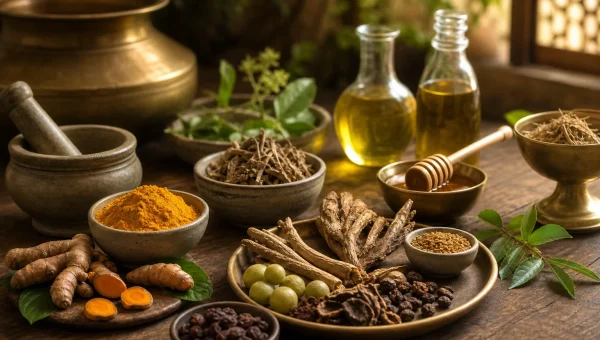
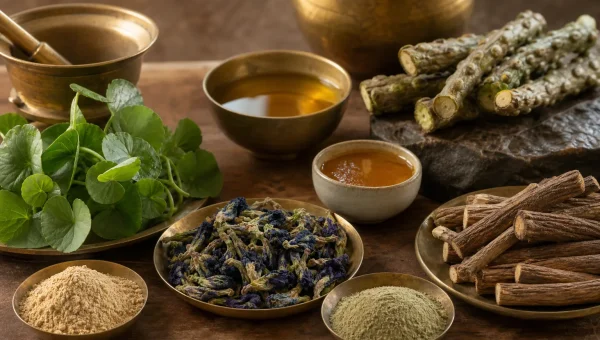
The stack of GI specialist reports alongside the Charaka Samhita page is the image that captured exactly where Ayurvedic medicine should be positioned: in conversation with, not in opposition to, conventional gastroenterology.
How long before seeing results with this protocol? My practitioner said 4 weeks but I’m seeing other timelines mentioned online.
Started the charaka protocol my Ayurvedic doctor recommended last summer and my energy has been noticeably more consistent. This explains the mechanism.
What’s the evidence that the Ayurvedic treatment of Grahani actually reduces bacterial overgrowth measured by breath test? The framework is compelling but I’d want to see before and after lactulose breath test data, not just symptom improvement.
The connection between Agni weakness and SIBO recurrence explains my entire pattern. I’ve been on and off a low-FODMAP diet for two years without addressing why my digestive fire is weak in the first place. This is the piece of the puzzle I was missing.
The article makes a good point about not equating the two conditions directly.
The dietary overlap between low-FODMAP and Ayurvedic recommendations for weak Grahani is interesting. Both restrict fermentable carbohydrates. Both recommend warm, well-cooked food. The Ayurvedic system just adds the digestive herbs and the constitutional framing.
What Agni-rebuilding protocol would you prescribe alongside or after the antibiotic treatment, for someone who has to take rifaximin again and wants to prevent recurrence this time?
Three years of SIBO management and the afternoon bloating was my dominant complaint. Started Chitrak Haritaki three months ago alongside my conventional treatment. Bloating is about 70% better. My GI doctor has no framework for explaining why but isn’t arguing with the result.
It’s interesting how grahani covers a broader range of stool patterns than modern SIBO descriptions.
The lactase deficiency versus Grahani dysfunction distinction is important and underappreciated. Many patients with dairy intolerance are told they’re lactose intolerant when the actual issue is the absorptive capacity of the small intestine for multiple substrates, not just lactose.
The three-month protocol duration is shorter than I expected. SIBO treatment and recovery usually takes at least six months in my experience. Is the Grahani treatment truly sufficient in twelve weeks for well-established cases?
I wonder if practitioners ever use takra as part of a plan for bloating.
The description of the looking-three-months-pregnant afternoon bloating is so specific it could only have been written by someone who’s either had it or treated it extensively. That kind of specificity builds credibility.
The section on migrating motor complex helped me think about meal timing differently.
The framing of Grahani as the Ayurvedic concept anticipating SIBO is a reasonable analogy but I’d caution against treating them as identical. SIBO has specific microbial causes that Grahani theory doesn’t address and not all Grahani presentations involve bacterial overgrowth.
Does the article suggest any specific herbs for pitta type grahani?
I appreciated the caution about not self prescribing chitraka or kutaja.
The recurrence rate issue is what brought me to this article. Two rounds of rifaximin, same result both times. What I found useful here is the framing of Grahani as a dysfunction in the intestinal intelligence rather than just a bacterial imbalance, because my GI specialist has never been able to explain why the bacteria keep coming back. Has anyone tried the Ayurvedic approach alongside the low-FODMAP diet rather than replacing it?
The probiotics recommendation for Grahani needs careful qualification. Hydrogen-dominant SIBO may tolerate certain Lactobacillus strains while methane-dominant SIBO may be worsened by them. Anyone else tried this?
The parallel between Grahani Roga and small intestinal bacterial overgrowth is one of the most precise correlations between classical Ayurveda and modern gastroenterology that I’ve seen drawn in accessible writing.
the low-FODMAP overlap with the Ayurvedic diet for Grahani, is this intentional or just coincidental
6 months of SIBO symptoms and conventional treatment wasn’t holding. 3 months into this Grahani protocol and bloating is maybe 30% of what it was
tried the Pippali + Hing combination and it made my gas significantly worse the first week. not sure if this is a normal response or the protocol isn’t suitable
the article says SIBO can cause anxiety this is a significant claim that needs more than one sentence. interested readers won’t know the mechanism
Is the Vasti (enema) treatment for Grahani the descending colon focus traditional to Basti, and if so, how does this address the small intestinal pathology of SIBO specifically?
the dietary protocol for Grahani says avoid legumes but SIBO low-fermentation diets vary by type. can you clarify which SIBO type this protocol is for
The recognition that Grahani is a Srotas (channel) dysfunction rather than a simple disease entity is conceptually important. It explains why treatment requires attention to multiple aspects simultaneously.
The probiotics recommendation for Grahani needs careful qualification. Hydrogen-dominant SIBO may tolerate certain Lactobacillus strains while methane-dominant SIBO may be worsened by them.
Ajwain water after meals instead of my usual post-meal green tea changed my post-meal bloating within 2 weeks. small change but significant result
The Takra (medicated buttermilk) preparation for Grahani is one of the most classical treatments in the texts. The specific inclusion of Bida Lavana and cumin is consistent with Charaka Samhita formulations. Has anything changed since?
The discussion on breath test limits feels honest and useful for patients.
The Takra (medicated buttermilk) preparation for Grahani is one of the most classical treatments in the texts. The specific inclusion of Bida Lavana and cumin is consistent with Charaka Samhita formulations.
The sequential approach, first addressing Agni, then addressing the bacterial component, then rebuilding the gut lining, mirrors the best clinical protocols in functional medicine.
The Agni-centric model for understanding SIBO pathogenesis, inadequate digestive fire allowing fermentation in the wrong part of the gut, maps reasonably well onto the gastric acid and motility factors in modern SIBO research.
SIBO treatment requires eradication of specific organisms with antibiotics like rifaximin or herbal antimicrobials in specific doses. The article’s herbal recommendations are not adequately supported for the eradication phase.
been treated for SIBO twice with rifaximin with relapse each time. added the Agnimantha + Triphala protocol 4 months ago and the bloating pattern has not returned
the herbal protocol for SIBO eradication is too gentle if methane-dominant SIBO is present. that form requires stronger antimicrobials
the herbal protocol for SIBO eradication is too gentle if methane-dominant SIBO is present. that form requires stronger antimicrobials Six months in and still relevant.
SIBO treatment requires eradication of specific organisms with antibiotics like rifaximin or herbal antimicrobials in specific doses. The article’s herbal recommendations are not adequately supported for the eradication phase. Anyone else tried this?
does Triphala make SIBO worse? heard it can feed bacteria if taken in large amounts curious to hear others’ experiences
the dietary protocol for Grahani says avoid legumes but SIBO low-fermentation diets vary by type. can you clarify which SIBO type this protocol is for Has anything changed since?
after the SIBO is treated, how long should the Ayurvedic maintenance protocol continue to prevent relapse
how do u know if u have SIBO vs regular IBS without a breath test
does Triphala make SIBO worse? heard it can feed bacteria if taken in large amounts
It seems reasonable to keep a simple food and symptom diary before seeking care.
Readers might find the table comparing symptoms helpful for quick reference.
The piece does a nice job showing why modern tests can’t capture agni.
I liked that the article mentions nutritional deficiencies without overstating them.
It’s worth noting that recurrence rates vary and shouldn’t be taken as a fixed number.
The advice to consult both a gastroenterologist and an Ayurvedic practitioner feels balanced.
Is the Vasti (enema) treatment for Grahani the descending colon focus traditional to Basti, and if so, how does this address the small intestinal pathology of SIBO specifically? Anyone else tried this?
I think the reminder about not using home breath kits without guidance is important.
The part about SIBO and Grahani feels realistic. The article avoids making it sound like a quick fix.
Taking warm freshly prepared meals may suit some people with weak digestion according to the text.
been treated for SIBO twice with rifaximin with relapse each time. added the Agnimantha + Triphala protocol 4 months ago and the bloating pattern has not returned Anyone else tried this?
after the SIBO is treated, how long should the Ayurvedic maintenance protocol continue to prevent relapse Has anything changed since?
The part about SIBO and Grahani feels realistic. The main idea is clear even if someone is new to Ayurveda.
the low-FODMAP overlap with the Ayurvedic diet for Grahani, is this intentional or just coincidental Has anything changed since?
The Agni-centric model for understanding SIBO pathogenesis, inadequate digestive fire allowing fermentation in the wrong part of the gut, maps reasonably well onto the gastric acid and motility factors in modern SIBO research. Has anything changed since?
The recognition that Grahani is a Srotas (channel) dysfunction rather than a simple disease entity is conceptually important. It explains why treatment requires attention to multiple aspects simultaneously. Has anything changed since?
tried the Pippali + Hing combination and it made my gas significantly worse the first week. not sure if this is a normal response or the protocol isn’t suitable curious to hear others’ experiences
The sequential approach, first addressing Agni, then addressing the bacterial component, then rebuilding the gut lining, mirrors the best clinical protocols in functional medicine. Anyone else tried this?
how do u know if u have SIBO vs regular IBS without a breath test Has anything changed since?
6 months of SIBO symptoms and conventional treatment wasn’t holding. 3 months into this Grahani protocol and bloating is maybe 30% of what it was Anyone else tried this?
Ajwain water after meals instead of my usual post-meal green tea changed my post-meal bloating within 2 weeks. small change but significant result Anyone else tried this?
Is the Vasti (enema) treatment for Grahani the descending colon focus traditional to Basti, and if so, how does this address the small intestinal pathology of SIBO specifically? Sharing with family too.
This makes sense for SIBO and Grahani. I appreciate that it does not oversell the result.
Ajwain water after meals instead of my usual post-meal green tea changed my post-meal bloating within 2 weeks. small change but significant result curious to hear others’ experiences
This makes sense for SIBO and Grahani. The timing advice is the part I would start with.
This makes sense for SIBO and Grahani. The main idea is clear even if someone is new to Ayurveda.
The probiotics recommendation for Grahani needs careful qualification. Hydrogen-dominant SIBO may tolerate certain Lactobacillus strains while methane-dominant SIBO may be worsened by them. Anyone else tried this? Anyone else tried this?
The recognition that Grahani is a Srotas (channel) dysfunction rather than a simple disease entity is conceptually important. It explains why treatment requires attention to multiple aspects simultaneously. curious to hear others’ experiences
the herbal protocol for SIBO eradication is too gentle if methane-dominant SIBO is present. that form requires stronger antimicrobials curious to hear others’ experiences
This makes sense for SIBO and Grahani. I would like to know how long to try it before judging results.
the dietary protocol for Grahani says avoid legumes but SIBO low-fermentation diets vary by type. can you clarify which SIBO type this protocol is for curious to hear others’ experiences
SIBO treatment requires eradication of specific organisms with antibiotics like rifaximin or herbal antimicrobials in specific doses. The article’s herbal recommendations are not adequately supported for the eradication phase. Has anything changed since?
how do u know if u have SIBO vs regular IBS without a breath test Anyone else tried this?
tried the Pippali + Hing combination and it made my gas significantly worse the first week. not sure if this is a normal response or the protocol isn’t suitable Anyone else tried this?
the article says SIBO can cause anxiety this is a significant claim that needs more than one sentence. interested readers won’t know the mechanism curious to hear others’ experiences
I would like more detail on SIBO and Grahani. I would still ask a practitioner before changing medicines.
I would like more detail on SIBO and Grahani. This is the kind of detail readers can test slowly.
been treated for SIBO twice with rifaximin with relapse each time. added the Agnimantha + Triphala protocol 4 months ago and the bloating pattern has not returned Has anything changed since?
I would like more detail on SIBO and Grahani. I appreciate that it does not oversell the result.