Six Tastes Ayurvedic Cooking: The Shad Rasa Strategy Most Diets Miss
Six tastes Ayurvedic cooking, or Shad Rasa, is a practical way to design meals around the full range of taste rather than around calories alone. Ayurveda names six primary rasas: Madhura (sweet), Amla (sour), Lavana (salty), Katu (pungent), Tikta (bitter), and Kashaya (astringent). These are not only flavor labels; in Ayurvedic pharmacology, rasa helps indicate the action of a food or dravya along with its qualities, potency, post-digestive effect, and suitability for the person.
The most useful lesson for daily cooking is moderation and completeness. Charaka states that the six rasas are beneficial when used properly and in suitable quantity, and harmful when used improperly. This means a Shad Rasa meal is not a demand for equal amounts of six tastes. It is a method for avoiding one-dimensional eating: too much sweet and salty heaviness, too much sour heat, too much pungent sharpness, or too much bitter-astringent dryness.
Modern convenience eating often narrows the palate toward sweet, salty, fatty, and acid-sharp foods, while bitter vegetables, astringent legumes, and fresh pungent herbs appear less often. A Shad Rasa plate restores range: a nourishing base, a digestive spark, a small sour note, measured salt, a bitter green or spice, and a binding astringent element. It is a cost-effective kitchen habit because it improves variety, satiety, and Ayurvedic balance without requiring exotic ingredients.
Each Taste and What Balance Supports
Each rasa has a directional effect. The table below is a cooking map, not a medical prescription. The right emphasis depends on prakriti, vikriti, season, agni, age, climate, activity level, and health condition.
| Taste (Rasa) | Practical Foods | Ayurvedic Role When Used Properly | Balance Note |
|---|---|---|---|
| Madhura (sweet) | Cooked grains, milk or ghee where suitable, dates, sweet fruits, sweet root vegetables | Nourishing, strengthening, dhatu-supporting, ojas-supporting, Vata-Pitta pacifying | Excess sweet-heavy eating increases Kapha, heaviness, dull appetite, and sluggishness. |
| Amla (sour) | Lime, lemon, amalaki, tamarind, small amounts of curd, fermented foods, pickles | Deepana, ruchya, moistening, digestive, Vata-anulomana | Excess sourness aggravates Pitta and Rakta and may be unsuitable during heat, acidity, or inflammatory states. |
| Lavana (salty) | Rock salt, sea salt, naturally salted condiments used in measured quantity | Digestive, appetizing, moistening, softening, Vata pacifying | Excess salt aggravates Pitta and Rakta and contributes to thirst, heat, and fluid retention tendencies. |
| Katu (pungent) | Ginger, black pepper, mustard seed, cumin, ajwain, mild chili where tolerated | Deepana, channel-opening, Kapha-reducing, lightening, warming | Excess pungency increases heat, dryness, thirst, and Vata-Pitta aggravation. |
| Tikta (bitter) | Bitter gourd, fenugreek leaves, dark leafy greens, turmeric, neem only with guidance | Appetizing, digestive, lekhana, kleda-absorbing, Pitta-Kapha pacifying | Excess bitterness dries the dhatus, reduces strength, and aggravates Vata. |
| Kashaya (astringent) | Pomegranate, legumes, lentils with skins, unripe banana, sprouts, tea-like infusions | Sangrahi, sandhana, ropana, shoshana, stambhana; Kapha-Rakta-Pitta pacifying | Excess astringency dries the mouth, delays digestion, constricts channels, and aggravates Vata. |
The Bitter Taste: Bringing Tikta Back Without Making Food Harsh
Tikta is one of the easiest tastes to lose from everyday meals. Ayurveda describes bitter taste as light, rough, and cooling. In moderate quantity, it supports appetite, pakana, lekhana, absorption of excess kleda, and pacification of Pitta and Kapha. Its value is balance: it cuts through heaviness, gives a meal a cleaner finish, and prevents the plate from being dominated only by sweetness, salt, oil, and sourness.
Practical bitter delivery can be gentle. Use a handful of methi leaves in dal, a small karela preparation once or twice a week if suitable, turmeric in cooked dishes, lightly cooked greens, or a few bitter salad leaves alongside a heavier meal. The aim is not to make food unpleasant. Bitter taste works best as a correcting note: present enough to be noticed, not so much that it dries the body or disturbs Vata.
Contemporary physiology also recognizes bitter sensing in the gut as part of enteroendocrine signaling, including pathways involving GLP-1 and CCK. In everyday cooking, that does not mean using bitter foods as medicine for blood sugar or weight loss. It simply makes bitter vegetables and bitter-pungent spices a rational part of a diverse, digestive meal pattern.
Astringent Taste: The Forgotten Binder
Kashaya is the puckering, drying, tightening taste that many people notice in pomegranate rind, strong tea, lentil skins, unripe banana, and some legumes. Ayurveda gives this taste binding and restraining actions: sangrahi, sandhana, ropana, shoshana, and stambhana. In a meal, Kashaya provides the counterweight to oil, salt, sourness, and sweetness.
Culinary astringency often comes from tannin- and polyphenol-rich plant foods that interact with salivary proteins and create a dry, puckering mouthfeel. In practical Shad Rasa cooking, this does not require strong decoctions or medicinal dosing. A spoon of pomegranate, a serving of dal with skin, a legume-based side, a small sprout salad, or cooked raw banana can provide the astringent contribution without making the meal austere.
For people with constipation, gas, dryness, depleted strength, or clear Vata aggravation, Kashaya should be softened with warmth, ghee or oil, proper cooking, and digestive spices. Astringent foods are useful when they bind and steady the meal; they become problematic when they make the whole plate dry, cold, and difficult to digest.
Building the Shad Rasa Plate in Practice
The simplest way to cook with all six tastes is not to prepare six separate dishes. Build six flavor contributions across three elements: a base, a vegetable or side, and a condiment. This approach respects the classical idea that foods can carry primary and secondary tastes and that everyday meals work through combinations of rasa.
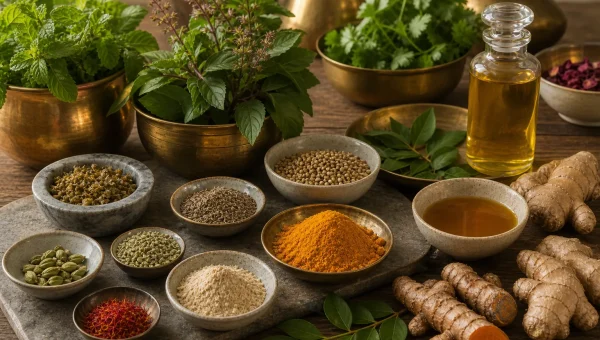
Element 1 – Main dish: Start with a cooked grain, root, or legume preparation. Rice, millet, wheat, dal, khichadi, or a root vegetable naturally contributes Madhura through nourishment and steadiness. Add measured Lavana and a digestive Katu base such as ginger, cumin, black pepper, mustard seed, or ajwain.
Element 2 – Vegetable or side: Choose one bitter or astringent note. Methi leaves, greens, karela, turmeric-seasoned vegetables, legumes with skin, pomegranate, sprouts, or raw banana can bring Tikta and Kashaya into the plate. This is the step most modern plates miss.
Element 3 – Condiment: Add a small sour-pungent accent. Lemon, lime, amla chutney, tamarind, ginger-lime, coriander-mint chutney, or a small amount of achar can complete Amla and sharpen Katu without overwhelming the meal. For practical achar preparations, see the Ayurvedic achar probiotic guide.
For active people and athletes, the same framework can make meals satisfying without making them heavy. The sweet base gives steadiness, pungent spices support digestive sharpness, bitter foods keep the plate light, and astringent legumes or pomegranate add a binding counterpoint. The Agni and meal timing relationship remains important because even a well-composed Shad Rasa plate feels different when eaten with strong agni, weak agni, hurry, late-night fatigue, or poor recovery.
Seasonal Adjustments to the Six Tastes
Shad Rasa is not static. Ritucharya changes the emphasis according to season. In Hemanta and Shishira, the diet leans toward sweet, sour, salty, warm, heavy, and unctuous nourishment. In Vasanta, the emphasis shifts toward pungent, bitter, astringent, light, dry, and warming foods. In Grishma, sweet, cool, liquid, light, and unctuous foods become more suitable while excessive salty, sour, pungent, and heating foods are reduced. In Varsha, sweet, sour, salty, warm, and unctuous qualities are used carefully. In Sharada, sweet, bitter, astringent, light, and cooling qualities are emphasized for Pitta balance.
The practical rule is to keep the six-taste framework while adjusting quantity, warmth, oiliness, and intensity. A winter dal can be richer, warmer, and more sour-salty. A spring plate can be lighter, with more ginger, barley, greens, legumes, and methi. A summer plate can use less chili and salt, more cooling cooked vegetables, and gentler sweet nourishment. The six tastes stay available; the seasonal dial changes.
Medical Disclaimer: This article presents traditional Ayurvedic nutritional principles for educational purposes. Dietary changes, herbs, bitter preparations, fermented foods, and therapeutic use of rasa should be individualized. Consult a qualified Ayurvedic practitioner or healthcare provider before making significant dietary changes, especially if pregnant, managing a medical condition, taking medication, or using medicinal herbs such as neem.
References
- Charaka Samhita — Sutra Sthana 26.9
- Charaka Samhita — Rasa
- Charaka Samhita — Sutra Sthana 26.44
- Charaka Samhita — Dosha
- Charaka Samhita — Sutra Sthana 26.43
- World Health Organization
- Ultra-processed foods: what they are and how to identify them (2019), PubMed Central
- Consumers’ Perceptions and Preferences for Bitterness in Vegetable Foods: The Case of Extra-Virgin Olive Oil and Brassicaceae-A Narrative Review (2019), PubMed Central
- Frontiersin (frontiersin.org)
- NCBI
- Sensorial Perception of Astringency: Oral Mechanisms and Current Analysis Methods (2020), PubMed Central
- Dravyasambhasha (dravyasambhasha.com)
- Charaka Samhita — Tasyashiteeya Adhyaya