
I spent years chasing protein targets like a lab rat following a spreadsheet. Four eggs at breakfast, chicken breast at lunch, whey shake after training, cottage cheese before bed. I was hitting big daily numbers and tracking macros down to the gram, yet my digestion felt worse than my training felt better: bloating, heaviness, sluggishness, and inconsistent recovery. The standard sports-nutrition answer was always the same: eat more protein, time it better, or change the powder.
Ayurveda asks a different first question: what is the state of Agni, the digestive and metabolic fire that turns food into usable nourishment? From that view, the issue is not only how much protein reaches the plate. It is how well the body digests, assimilates, and converts that food into stable tissue.
The 30g Rule and Why It Does Not Apply Universally
The popular “30 grams of protein per meal” rule comes from a useful but narrow sports-nutrition idea: a single meal has a practical ceiling for stimulating acute muscle protein synthesis, especially in young healthy adults eating high-quality protein after resistance exercise. It is not a universal law of digestion, and it is not the same as saying the body cannot digest or absorb protein above that number.
A more practical modern target for active people is to distribute total daily protein across the day, commonly around 1.4–2.0 g/kg/day for many exercising individuals, then adjust meal size according to body weight, training load, appetite, digestive comfort, and health status. Reviews on protein distribution often suggest about 0.4 g/kg per meal across at least four meals as a useful muscle-building framework, with higher per-meal intakes sometimes used when daily protein targets are higher. Ayurveda adds another layer: the same protein target may feel nourishing for one person and heavy, heating, or congesting for another.
Ayurveda’s Lens: Agni Comes Before the Macro Number
In Ayurveda, Agni governs digestion, absorption, assimilation, and tissue nourishment. Traditional Ayurvedic teaching describes four functional states of digestive fire: Sama Agni (balanced), Vishama Agni (irregular), Tikshna Agni (sharp), and Manda Agni (slow). These are not permanent identity labels. They are patterns that can shift with constitution, current dosha imbalance, season, sleep, stress, food quality, and meal timing.
When Agni is balanced, food is digested at the right pace and becomes nourishment. When Agni is disturbed, even good food can feel wrong. Dense protein is especially revealing because it demands steady digestive capacity. A person with irregular appetite, gas, bloating, acidity, loose stools, heaviness, or sleepiness after meals should not blindly copy a protein plan built for someone with different digestion.
How Each Dosha Pattern Changes Protein Meals
The dosha framework is most useful when it is applied to observable digestion rather than rigid personality typing. The question is not “Which dosha am I forever?” but “Which digestive pattern is showing up today, and how should the protein meal be prepared?”
Vata Pattern: Vishama Agni and the Absorption Problem
A Vata-aggravated digestive pattern often shows up as variable appetite, gas, abdominal sounds, bloating, constipation, dryness, and irregular meal tolerance. Some meals digest easily; other meals sit heavily for hours. In this pattern, forcing a large, dry, cold, or fast protein meal is often counterproductive, even when the protein source is technically “clean.”
For this pattern, protein works best when it is warm, moist, simple, and regular. Instead of forcing 30–40 g at once, many people do better by starting with a moderate serving, watching digestion, and increasing only when there is no bloating, heaviness, reflux, or loss of appetite at the next meal.
Practical protocol for a Vata pattern:
- Use warm, moist protein formats such as mung dal, lentil soup, khichadi with extra dal, soft-cooked eggs, paneer, or warm milk preparations if they suit you.
- Begin with a moderate serving, often around 15–25 g for many recreational trainees, then adjust upward according to body size, training load, and digestion.
- Keep meal times consistent; rhythm is one of the strongest supports for irregular Agni.
- Add a small amount of ghee or sesame oil when appropriate to reduce dryness and support a grounded meal.
- Avoid cold shakes, dry protein bars, rushed eating, and large raw meals when bloating or constipation is present.
Pitta Pattern: Tikshna Agni and the Heat Problem
A Pitta-aggravated digestive pattern often shows up as strong hunger, acidity, burning, loose stools, irritability when meals are delayed, and inflammatory skin or heat symptoms. This person may tolerate a larger protein serving, but the limiting factor is not only quantity. It is the heat, sharpness, oiliness, saltiness, and intensity of the meal.
For this pattern, protein should be steady and sufficient without constantly provoking heat. Eating protein every two hours just to satisfy a spreadsheet can keep the system over-stimulated. A calmer approach is to use complete meals, moderate spice, and protein sources that do not trigger acidity or burning.
Practical protocol for a Pitta pattern:
- Use moderate protein servings aligned with body weight and training, rather than automatically pushing the largest possible dose.
- Favor simpler preparations of mung, masoor, tofu, paneer, milk, eggs, fish, or chicken according to diet preference and tolerance.
- Reduce very hot chili, deep-fried protein foods, excessive sour marinades, and heavy red-meat meals when heat signs are present.
- Use cooling supports such as coriander, fennel, mint, cilantro, and adequate hydration rather than relying only on pungent digestive stimulants.
- Stop increasing protein when acidity, burning stools, skin flares, or irritability rise.
Kapha Pattern: Manda Agni and the Sluggishness Problem
A Kapha-aggravated digestive pattern often shows up as low appetite, heaviness after meals, sleepiness after eating, slow digestion, coating on the tongue, mucus tendency, and easy weight gain. In this pattern, the meal may be “high protein” on paper but still feel dull and congesting if Agni has not been awakened.
For this pattern, the priority is to make protein lighter, warmer, leaner, and better spiced. Frequent grazing usually worsens the problem because the previous meal has not fully cleared. Clear hunger is an important sign that Agni is ready.
Practical protocol for a Kapha pattern:
- Use two or three well-spaced meals rather than constant snacking, unless a clinician has advised otherwise.
- Favor warm, lighter protein such as mung dal, lentils, chickpea soup, eggs, lean poultry, or other lean sources that digest cleanly for you.
- Cook with ginger, black pepper, cumin, mustard seed, ajwain, or other suitable warming spices.
- Keep dairy-heavy protein meals, fried protein snacks, and large meat-cheese-grain combinations occasional rather than routine.
- Use Trikatu or stronger pungent herbs only when appropriate and preferably under practitioner guidance, especially if you take medication.
The Physiology Bridge: Protein Digestion Is a Process, Not Just a Number
Modern nutrition also treats protein as more than a gram count. The digestion and absorption pattern of protein changes with food form, processing, gastric emptying, protein source, meal composition, age, training status, and gut health. Whey, casein, cooked egg, meat, dal, and fermented foods do not behave identically in the stomach and small intestine.
This is where the Ayurvedic idea of Agni remains practically useful. It does not need to be reduced to one enzyme or one lab marker. It is a broader clinical way of observing whether the body is ready to receive, break down, move, absorb, and assimilate food. For athletes and lifters, the best protein plan is the one that improves strength, recovery, appetite, stool quality, sleep, and body composition without creating digestive residue.
Herbs That Support Protein Digestion and Assimilation
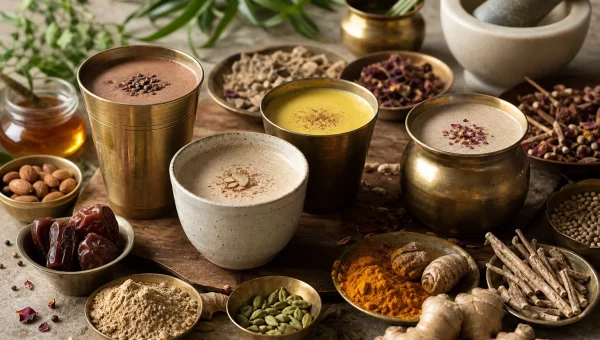
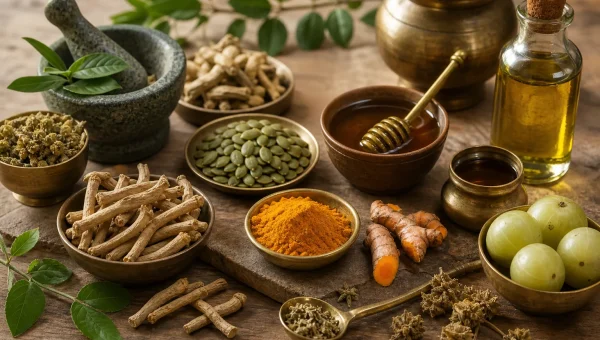
Ayveda uses herbs, spices, and carrier substances according to the state of Agni. Pungent herbs may be useful when digestion is cold, slow, or heavy, but they are not universally appropriate. A person with acidity, ulcers, burning, pregnancy, liver disease, kidney disease, or prescription medication use should get individualized guidance before using concentrated herbal products.
| Herb or Formula | Sanskrit Name | Traditional Role | Best Fit | Use Notes |
|---|---|---|---|---|
| Dry ginger | Shunthi | Dipana and Pachana support; warms cold, sluggish digestion | Vata and Kapha patterns | Use as tea, in cooking, or small powder doses; avoid excess if burning or acidity is present |
| Long pepper | Pippali | Warming digestive and respiratory support; part of Trikatu | Vata and Kapha patterns | Use cautiously; piperine-containing herbs may affect drug metabolism |
| Black pepper | Maricha | Pungent digestive spice; part of Trikatu | Kapha pattern, cold digestion | Best used in small culinary amounts; avoid excess in Pitta heat |
| Trikatu | Trikatu | Classical three-pungent formula of Shunthi, Maricha, and Pippali | Kapha-type heaviness and selected Vata-Kapha patterns | Traditionally taken with honey or warm water in small amounts; avoid self-prescribing if you have acidity, ulcers, pregnancy, or medication use |
| Ajwain / carom seed | Yavani / Ajamoda family usage | Dipana, Pachana, and gas-reducing digestive support | Vata and Kapha patterns with gas or heaviness | Use in cooking legumes or take a small pinch with warm water when suitable |
| Ashwagandha | Ashwagandha | Rasayana and strength-supporting herb; better for tissue support than immediate Agni stimulation | Vata depletion, recovery support, selected strength programs | Use after digestion is stable; avoid in pregnancy, liver disease, certain thyroid/autoimmune situations, and medication interactions unless supervised |
Trikatu deserves respect, not casual overuse. It is useful when there is clear Kapha-type heaviness, low appetite, mucus, sluggish digestion, and a coated feeling after meals. It is not the right choice for a person whose main symptoms are burning, reflux, mouth ulcers, loose stools, or excessive heat.
Practical Absorption Protocols by Agni Pattern
These protocols are not replacements for individualized dietetics. They are starting templates for matching protein intake to digestion. Use them for two to four weeks, track actual outcomes, and adjust according to appetite, stool, recovery, training performance, and body composition.
Vata Protocol: Stabilize Before You Increase
When digestion is irregular, the first goal is consistency. Protein timing matters less than digestive rhythm, warm preparation, calm eating, and meal simplicity.
- Begin the day with warm water; use ginger tea only if it does not cause heat or irritation.
- Eat the first protein meal at a consistent time, in a warm and moist form.
- Use moderate servings and repeat them reliably rather than forcing very large servings.
- Choose warm dal, khichadi, soft eggs, paneer, or milk preparations over cold shakes when bloating is common.
- Increase total protein gradually toward your training target only when digestion remains comfortable.
Pitta Protocol: Build Without Overheating
When digestion is sharp, the goal is to nourish without inflaming. This pattern often needs enough protein, but not aggressive spice, excessive red meat, constant eating, or stimulant-style digestion hacks.
- Use complete meals at steady times rather than grazing all day.
- Keep pungent digestive formulas minimal unless a practitioner advises them.
- Favor moderate spices and cooling herbs such as coriander and fennel.
- Watch for reflux, burning, loose stool, irritability, or skin heat as signs that the plan is too sharp.
- Use protein targets as a range, not a commandment.
Kapha Protocol: Awaken Agni Before Dense Meals
When digestion is slow, the goal is to make meals lighter and more stimulating without overeating. Kapha digestion usually improves when meals are warm, well-spiced, and spaced far enough apart for real appetite to return.
- Eat protein-rich meals when true hunger is present, not just because a timer says to eat.
- Use ginger, black pepper, ajwain, cumin, or mustard seed in cooking.
- Consider small amounts of Trikatu with practitioner guidance when heaviness and low appetite are the main pattern.
- Choose leaner protein and reduce heavy dairy, fried foods, and oversized portions.
- Walk gently after meals to support movement and reduce post-meal heaviness.
The Anupana Factor: Carriers Change the Meal
Ayurveda calls a carrier substance Anupana. It may be taken with or after food or medicine to guide, support, or modify its action. Common Anupanas include warm water, honey, milk, and ghee. The choice depends on constitution, the food or herb being used, and the desired effect.
For a Vata pattern, warm milk or a small amount of ghee may make a nourishing protein meal feel steadier. For a Kapha pattern, warm water, ginger water, or honey used correctly in small amounts may suit better. For a Pitta pattern, milk or ghee may be useful when tolerated, while strong pungent carriers may aggravate heat. The carrier is not decoration; it changes how the meal lands.
What to Stop Doing Immediately
If your digestion is already giving warning signs, the fastest improvement may come from removing habits that weaken Agni rather than adding more supplements. Protein quality matters, but meal context matters too.
- Stop forcing cold shakes when digestion is weak: A chilled shake may be convenient, but Vata and Kapha patterns often tolerate warm, cooked, or room-temperature protein better.
- Stop eating every two to three hours without hunger: Constant intake can blur the natural return of appetite and leave heavier meals only partly processed.
- Stop stacking heavy combinations: Very dense meals combining large portions of meat, dairy, refined starch, and fat are harder to digest, especially in Kapha and Vata imbalance.
- Stop using pungent herbs as if they are harmless: Trikatu, pippali, black pepper extracts, and high-dose ginger can aggravate heat and may interact with medications.
- Stop treating the protein number as the only feedback: Track appetite, stool quality, bloating, reflux, sleep, training performance, and recovery alongside grams.
The Number Is Not the Answer
Thirty grams per meal can work well for a person with balanced Agni, appropriate body size, proper training stimulus, and a meal that suits their constitution. The same number can feel bloating for one person, heating for another, and heavy for a third. Ayurveda’s contribution is not to reject protein science, but to individualize it through digestion.
The better performance framework is simple: set a reasonable daily protein target, divide it into meals your digestion can handle, prepare those meals according to your Agni pattern, use herbs only where they fit, and judge success by recovery, strength, digestive ease, appetite, and body composition over time. Most people do not need a more exotic protein powder. They need a protein plan their Agni can actually transform into tissue.
Disclaimer: This article is for educational purposes only and does not constitute medical advice. Protein targets and herbal protocols should be individualized according to age, kidney function, liver health, digestive disease, medications, pregnancy status, training load, and constitution. Consult a qualified Ayurvedic practitioner, registered dietitian, or healthcare provider before beginning high-protein diets or herbal supplements, especially if you have kidney disease, liver disease, gastrointestinal disease, thyroid or autoimmune conditions, pregnancy, or prescription medication use.
References
- Ingested protein dose response of muscle and albumin protein synthesis after resistance exercise in young men (2009), PubMed
- How much protein can the body use in a single meal for muscle-building? Implications for daily protein distribution (2018), PubMed
- How much protein can the body use in a single meal for muscle-building? Implications for daily protein distribution (2018), PubMed Central
- International Society of Sports Nutrition Position Stand: protein and exercise (2017), PubMed
- Cambridge (cambridge.org)
- Physiological aspects of Agni (2010), PubMed Central
- Jatharagni and Prakriti of young Indian adult population: A descriptive cross-sectional study (2022), PubMed Central
- Critical review and validation of the concept of Āma (2012), PubMed Central
- Easyayurveda (easyayurveda.com)
- Ayurvedic Pharmacopoeia of India
- Ayurvedic Pharmacopoeia of India
- Ayurvedic Pharmacopoeia of India
- Ayurvedic Pharmacopoeia of India
- Deciphering the impact and mechanism of Trikatu, a spices-based formulation on alcoholic liver disease employing network pharmacology analysis and in vivo validation (2022), PubMed Central
- Journals (journals.plos.org)
- Mail (mail.greenpharmacy.info)
- Piperine, a major constituent of black pepper, inhibits human P-glycoprotein and CYP3A4 (2002), PubMed
- Influence of piperine on the pharmacokinetics of curcumin in animals and human volunteers (1998), PubMed
- CCRAS
- Examining the effect of Withania somnifera supplementation on muscle strength and recovery: a randomized controlled trial (2015), PubMed
- NCCIH
- NCBI
- NCCIH
- An appraisal of the bioavailability enhancers in Ayurveda in the light of recent pharmacological advances (2016), PubMed Central
- Banyanbotanicals (banyanbotanicals.com)
- Viruddha Ahara: A critical view (2012), PubMed Central
Useful post on Protein Absorption in Ayurveda. I would still ask a practitioner before changing medicines.
Where are the controlled trials? Personal anecdotes are useful context but they’re not evidence. I need to see RCT data before recommending this to patients.
Useful post on Protein Absorption in Ayurveda. The article avoids making it sound like a quick fix.
I was skeptical when my vaidya first suggested agni but six weeks in and I can tell something has shifted. Not placebo either, my blood work confirmed it.
The mung dal and digestive spice combination described here as a superior post-workout protein source over whey is a big claim. Has anyone actually compared muscle protein synthesis markers between these two sources in matched subjects?
Good article on this subject. #88
I switched from whey protein shakes to a warm lentil preparation for my post-workout meal and the digestive relief was immediate. The bloat that followed every whey shake is gone. Whether the muscle outcomes are different I will know after another 3 months.
What about the plant-versus-animal protein completeness issue? Mung dal is lower in methionine than whey. For those who use protein specifically for muscle protein synthesis optimization, the amino acid profile difference cannot be ignored.
I never realized my bloating after a whey shake could be linked to my Vata Agni.
Useful post on Protein Absorption in Ayurveda. The main idea is clear even if someone is new to Ayurveda.
The seasonal protein adjustment recommendation is something I had never considered. Eating differently sized portions of protein in winter versus summer based on agni strength makes sense but is very different from any sports nutrition protocol I have followed.
How does one measure Agni strength at home without seeing a practitioner?
I tried adding black pepper and ginger to my whey protein shake as suggested for the digestive fire issue. The bloat reduction was real even without switching protein sources. That simple modification made the whey protocol more tolerable.
I’m Pitta dominant and have no issues with 40g protein per meal. This article made me doubt myself
The idea that Kapha needs digestive stimulants before protein makes sense for my sluggish mornings.
My practitioner wants to use digestion alongside agni. Is this a common combination or is the article’s protocol more commonly used in isolation?
Good article on this subject. #92
started this 3 weeks ago, too early to say but the process itself feels right
How long typically before seeing results with this approach? ठीक है
What about plant vs animal protein does dosha-based absorption differ between them? 🙌
Been following Ayurveda for 5 years and this article still taught me something new
Anyone else tried this for longer than 6 months? Wondering about long-term effects
What’s the typical duration of the treatment before reassessing?
This explains something I’ve experienced but couldn’t name. Good validation
Doing this
Where do you recommend sourcing the herbs mentioned here in India?
tbh wasnt expecting much from this but the specifics are actually helpful 🙏
Good reminder on Protein Absorption in Ayurveda. This feels more usable than a long list of herbs.
Does the 30g protein per meal rule become completely irrelevant in Ayurveda or just adjusted? 🙏
The connection between gut health and this condition is the angle most allopathic doctors miss
I tried warm dal instead of a cold shake post workout and felt less gas.
The Vata digestion being variable is exactly what I experience. Some days dal hits fine, other days gas
Will try
Does the protein timing section account for people who train at different times of day?
good info, sharing with my father who has been looking for something like this
The digestive spice pairing with protein-rich meals is simple and actually implementable
My sports nutritionist would argue against this but I find heavy protein at dinner genuinely harder
Does this apply to children or only adults?
The seasonal variation angle is underused in most health content. Good to see it here
I appreciate how specific the instructions are compared to most Ayurveda articles
The Ayurvedic framing made this topic much easier to understand than the Western medical version
Useful post
Would love a follow-up article going deeper on the herb preparation methods
The contraindications section was important and often missing from similar articles
The traditional context helps understand why it’s done this way. Not just ‘eat this herb’
Shared this with my Ayurveda practitioner. She agreed with most points
Is the morning or evening timing more important for this protocol overall?
Did this for 6 weeks exactly as described, going to update here with results
Is Trikatu safe to take daily for Pitta types, or should it be limited?
The dosage range given is wide. Is there a way to determine where in the range I should start? 🙌
Can this be combined with modern medication or is it better standalone? 🙏
Does this protocol change if someone is pregnant or breastfeeding? 🌿
Good article on this subject. #72
The section on dosage was the most practically useful for me धन्यवाद
Interesting perspective here.
Same here
Is this suitable for elderly patients or does the dosage need adjustment?
The Kapha-protein connection is something no gym trainer would ever discuss
30g protein per meal is already an oversimplification from modern nutrition side too. This adds nuance
Not skeptical about Ayurveda generally but some claims here need stronger evidence
Good article on this subject. #69
Reading about Ama as undigested protein gave me a new lens on my food log.
I tried a similar approach last year but without the specific sequencing. Wonder if that’s why it didn’t work ठीक है
Are there clinical studies backing the specific herb combination you mentioned?
Tried this, results were good.
This honestly describes my last two years almost exactly. I kept adding more protein thinking I just wasn’t eating enough, and my digestion got progressively worse. The bit about Agni being the limiting factor rather than total intake is something no fitness coach ever mentioned to me. What dosha type tends to struggle most with high-protein diets in your experience?
Thanks!
My doctor dismissed this as pseudoscience. Going to try it anyway and report back
The suggestion to space meals four to six hours apart feels doable for my schedule.
Good information on this topic.
Helpful article, thank you.
Will try this approach soon.
I wonder if white fish really cools Pitta enough to offset inflammation from lentils.
Thanks for the clear explanation.
This helped clarify my doubts.
Useful and actionable.
Using ghee with lentil soup sounds like a simple tweak I can try tonight.
Following this protocol now.
Bookmarked for future reference.
Good article on this subject. #55 💯
Good article on this subject. #56
The article breakdown of Sama Vishama Tikshna Manda Agni clarified why my friend gains muscle easily while I stall.
Good article on this subject. #57 ❤️ नमस्ते
Tracking macros lately, I never considered gastric acid variation.
Good article on this subject. #58
Would a small amount of raw honey with Trikatu affect blood sugar for Kapha?
Good article on this subject. #59 ❤️
Good article on this subject. #60 धन्यवाद
Good article on this subject. #61
The part about Anupana made me rethink my post run milk habit.
Good article on this subject. #62
Good article on this subject. #63
Good article on this subject. #64
Avoiding protein isolates without fat is a reminder I often forget when mixing shakes.
Good article on this subject. #65 💯
Seeing the dosha specific protein ranges helped me adjust my lunch portions today.
Good article on this subject. #66
Good article on this subject. #67
Good article on this subject. #68
Good article on this subject. #70
Good article on this subject. #71
Good article on this subject. #73
Good article on this subject. #74
Good article on this subject. #75 🙌
Good article on this subject. #76
Good article on this subject. #77
Good article on this subject. #78
Good article on this subject. #79
Good article on this subject. #80
Good article on this subject. #81
Good article on this subject. #82
Good article on this subject. #83
Good article on this subject. #84
Good article on this subject. #85
Good article on this subject. #86
Good article on this subject. #87
Good article on this subject. #89 नमस्ते
Good article on this subject. #90 ✨
Good article on this subject. #91