
Fibromyalgia as Mamsagata Vata: A Clinically Useful Classification
Fibromyalgia ayurvedic treatment begins with a clinically useful working classification, not with a claim that one modern diagnosis is identical to one classical disease name. The fibromyalgia pattern of widespread musculoskeletal pain, fatigue, non-restorative sleep, cognitive fog, heightened pain sensitivity, stiffness, and bowel disturbance fits most closely with a vata disorder affecting the muscle layer, especially when the patient also shows dryness, coldness, variable symptoms, poor recovery after exertion, and sensitivity to stress.
In Charaka’s description, vata situated in mamsa and meda produces heaviness of the body, pricking pain, a feeling as if the body has been struck, pain, and severe fatigue. That classical description is not a complete modern definition of fibromyalgia, but it gives an Ayurvedic language for the muscle pain, tenderness, exhaustion, and body-wide discomfort that often dominate the condition. The purpose of this classification is practical: it helps decide when to emphasize vata-pacifying care, when to clear ama first, when to avoid aggressive exercise, and when deeper therapies such as snehana, svedana, virechana, or basti may be appropriate under supervision.
Pathogenesis: Why Vata Lodges in the Muscle Tissue
In Ayurvedic reasoning, vata does not randomly enter a tissue. It settles where there is susceptibility, known as kha vaigunya, and where the tissue channels have become vulnerable through depletion, poor digestion, strain, trauma, stress, irregular routine, or insufficient recovery. In a fibromyalgia-like presentation, the mamsa dhatu may become a vulnerable site because the muscle system is repeatedly strained while the person’s sleep, digestion, nourishment, and nervous system regulation remain weak.
- Irregular sleep, excessive activity, emotional strain, physical trauma, chronic worry, or inadequate nourishment aggravates vata and weakens the steadiness of the body.
- When agni is weak, food and tissue metabolism remain incomplete, forming ama. Ama creates heaviness, dullness, coating, sluggish digestion, and obstruction in the channels.
- Vitiated vata moves through weakened channels and lodges in the mamsa-dhatu region where there is dryness, tightness, undernourishment, or previous strain.
- Once vata and ama affect the muscle layer together, the clinical picture may include shifting pain, pricking pain, tenderness, fatigue, stiffness, heaviness, and poor tolerance to exertion.
This model explains why the same person may feel both depleted and heavy, why symptoms may worsen after overexertion, why sleep disturbance intensifies pain, and why emotional stress can trigger a flare. It also explains why treatment should not be reduced to pain relief alone. The digestive fire, sleep rhythm, bowel pattern, muscle recovery, and nervous system stability all need attention.
Assessment Protocol: Grading Mamsagata Vata Severity
The useful clinical question is not simply whether the patient has pain, but how deeply vata, ama, sleep disturbance, digestive disturbance, and tissue depletion are involved. The following table is a practical assessment guide for Ayurvedic case-taking. It does not replace medical diagnosis, but it helps determine whether the first emphasis should be langhana and ama-pachana, gentle nourishment, external oleation, basti-based care, or a more cautious integrated plan.
| Clinical Feature | Mild Mamsagata Vata Pattern | Severe Mamsagata Vata Pattern |
|---|---|---|
| Pain distribution | Limited to a few muscle regions, with periods of relief | Generalized, bilateral, axial and peripheral, with marked tenderness |
| Pain quality | Aching, pulling, occasional pricking, worse after strain | Pricking, burning-aching, deep soreness, pain with light pressure |
| Sleep quality | Disturbed sleep with non-restorative rest | Severely disturbed sleep, frequent waking, unrefreshed morning state |
| Cognitive symptoms | Intermittent fogginess, worse with fatigue | Persistent fog, poor concentration, memory difficulty |
| Digestive pattern | Gas, bloating, irregular appetite, mild constipation or looseness | Marked bloating, alternating bowel habit, heaviness, thick tongue coating |
| Body feel | Dryness, mild stiffness, cold tendency, fatigue after exertion | Marked dryness or heaviness, cold extremities, severe stiffness, poor recovery |
Phase 1: Ama Pachana Before Snehana
A frequent clinical mistake is beginning heavy oleation when ama signs are still strong. Classical snehana guidance treats ama and weak digestion as reasons for caution, because unctuous substances are harder to process when agni is low and channels are obstructed. If the patient has thick tongue coating, heaviness, sluggish digestion, nausea, foul belching, bloating, cloudy urine, sticky stools, or pain that feels heavy and obstructed, the first step is to kindle agni gently and lighten the channels before deeper oleation.
A practical ama-pachana phase may include the following measures, adjusted for constitution, strength, medications, acidity, and bowel pattern:
- Warm, light, cooked meals: moong dal khichdi, thin soups, cooked vegetables, cumin, coriander, ajwain, ginger, and small amounts of ghee when digestion allows.
- Warm water sipping: small sips of warm water through the day support lightness and digestion without overloading the stomach.
- Simple digestive support: dry ginger, cumin, ajwain, or a physician-selected formulation may be used when the person has coldness, gas, heaviness, and weak appetite.
- Cautious use of Trikatu: Trikatu is heating and pungent, so it is unsuitable for people with burning acidity, gastritis, mouth ulcers, strong pitta symptoms, pregnancy, or sensitive digestion unless specifically prescribed.
- Gentle movement only: short walks, joint rotations, slow stretching, and Pawanmuktasana-style movements are preferred over strenuous exercise during a flare.
Signs that this phase is working include a cleaner tongue, lighter body feeling, better appetite, less bloating, more regular bowel movement, and pain that becomes less heavy and less migratory. When these signs appear, snehana and vata-pacifying nourishment can be introduced more safely.
Phase 2: Snehana and Svedana for the Vata-Muscle Pattern
Once ama is reduced, snehana becomes central to the mamsagata vata approach. Snehana means oleation or unction, applied externally through oil massage or internally through ghee, oil, or other prescribed sneha preparations. In vata disorders, its purpose is to soften dryness, reduce roughness, support movement of obstructed dosha, and prepare the body for further therapies when needed.
External snehana may include gentle abhyanga with warm sesame oil or a physician-selected medicated oil, followed by mild svedana if the patient has sufficient strength and no contraindication. The oil should be comfortably warm, never scalding, and the pressure should be soothing rather than painful. Patients with fibromyalgia-like tenderness often do better with slow, light, consistent strokes than with deep tissue pressure. Strong massage can aggravate vata if the tissues are depleted or hypersensitive.
Svedana should also be individualized. Mild steam, warm fomentation, or localized warmth can help stiffness and coldness, but excessive heat, dehydration, or prolonged sweating can worsen fatigue and vata depletion. For many patients, short localized fomentation after oiling is safer than intense full-body steam.
Basti and Panchakarma in Chronic Mamsagata Vata
When pain is chronic, sleep is poor, bowel function is irregular, and vata signs are deep, basti becomes an important classical consideration. Charaka’s management of vata disorders includes oleation, sudation, unctuous and evacuative enema procedures, and site-appropriate measures. For vata affecting the muscle and fat region, purgation, evacuative enema, and palliative treatment are included in the classical treatment logic.
This does not mean every fibromyalgia patient should undergo full Panchakarma. The person’s strength, age, digestion, medications, menstrual status, bowel habit, coexisting illness, and degree of ama must be assessed first. A qualified Ayurvedic physician may choose matra basti, kala basti, yoga basti, mild virechana, or only external therapies and oral support depending on the case. Self-administered purgation, internal oleation, or basti is not appropriate for this condition.
Herbal Formulations for Ongoing Management
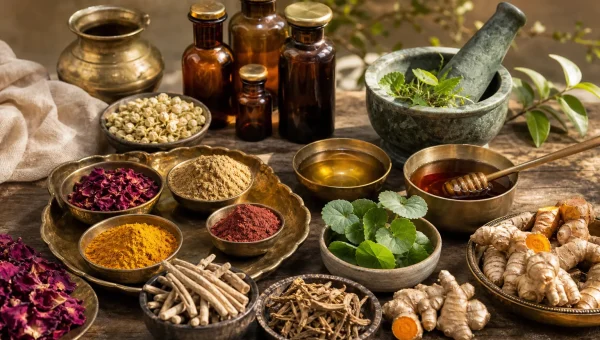
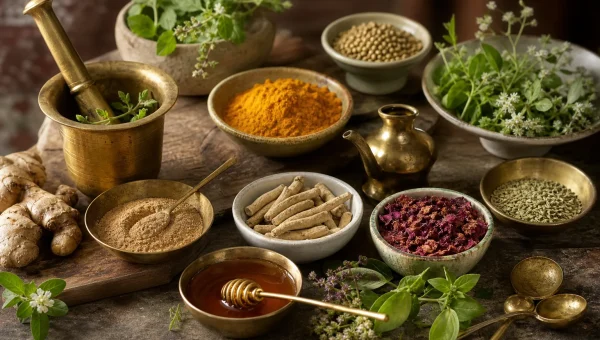
Herbs are best chosen by pattern rather than by disease name. A depleted, dry, anxious, sleepless vata presentation needs a different plan from a heavy, coated, ama-dominant presentation. The following herbs and formulations are commonly considered in Ayurvedic practice, but dose, duration, preparation, and suitability should be decided by a qualified practitioner.
- Ashwagandha: most suitable when the picture is vata depletion with weakness, poor recovery, poor sleep, nervous exhaustion, and low resilience. It is not suitable for everyone and needs caution with thyroid disease, autoimmune disease, sedatives, immunosuppressants, diabetes medicines, blood pressure medicines, pregnancy, upcoming surgery, and liver concerns.
- Dashamoola: a classical ten-root group used in vata conditions, especially when pain, stiffness, and deeper tissue involvement are present. It may be given as a decoction, in oils, or as part of a larger vata-pacifying plan.
- Shallaki: may be considered when stiffness and inflammatory discomfort are prominent, especially in a broader musculoskeletal pain plan. It should not be presented as a stand-alone cure for fibromyalgia.
- Guduchi: may be chosen in selected cases where rasayana support, ama-pitta balance, and recovery are part of the plan. It should be used with professional guidance, especially in people with liver disease, autoimmune conditions, or complex medication use.
- Shunthi, ajwain, cumin, or Trikatu: useful only when the digestive picture calls for warming, drying, and ama-pachana support. They should be reduced or avoided when burning, acidity, dryness, or pitta aggravation is dominant.
Sleep support is not optional in this condition. A stable bedtime, warm evening routine, reduced stimulation after sunset, gentle oiling of the feet, slow breathing, and a light early dinner are often as important as herbs. If milk is tolerated, warm milk with a suitable vata-pacifying herb may be used; if not tolerated, warm water or a light herbal preparation is preferable.
Movement, Rest, and Daily Routine
For the mamsagata vata pattern, movement should be regular, gentle, and graded. Complete inactivity increases stiffness and heaviness, while aggressive workouts can worsen pain and fatigue. The best starting point is often a short daily walk, gentle mobility practice, restorative yoga, breath-led stretching, or warm-water movement if available.
The principle is to stop before exhaustion. A patient who crashes after exercise has exceeded their current capacity. Progress is made by consistency, not intensity: a small amount of daily movement, stable meals, regular sleep, warmth, and reduced sensory overload gradually retrain the body away from vata instability.
Medical disclaimer: Fibromyalgia should be diagnosed and monitored by a qualified healthcare provider. Ayurvedic care for suspected mamsagata vata should be individualized by a qualified Ayurvedic practitioner and coordinated with conventional care, especially if you take pain medicines, sleep medicines, antidepressants, thyroid medicine, immunosuppressants, anticoagulants, diabetes medicines, or blood pressure medicines, or if you have pregnancy, liver disease, kidney disease, autoimmune disease, fever, unexplained weight loss, progressive weakness, numbness, or new severe pain. Do not discontinue prescribed medication or attempt Panchakarma, internal oleation, purgation, or basti at home.
References
- CDC
- NHS
- Charaka Samhita — Vatavyadhi Chikitsa
- Charaka Samhita — Kha vaigunya
- Charaka Samhita — Ama
- Charaka Samhita — Snehana %28unction therapy%29
- EULAR revised recommendations for the management of fibromyalgia (2017), PubMed
- NCCIH
- NCCIH
- Boswellia serrata, a potential antiinflammatory agent: an overview (2011), PubMed Central
- Easyayurveda (easyayurveda.com)
for someone with fibromyalgia and hypothyroidism together, does the protocol need modification?