
The cramps hit at 2 PM on a Tuesday. You are in a meeting, smiling through a presentation while your uterus quietly declares war on the rest of your body. The bloating started yesterday. Sleep was shallow. The lower back ache makes sitting in a chair feel like a punishment. Most of us have been told to just take an ibuprofen and push through.
Ayurveda adds another option for ordinary monthly discomfort: warm, digestive, Vata-pacifying home remedies that support smoother Apana Vata, steadier digestion, calmer nerves, and a more settled pelvic region. These six remedies are arranged by symptom so you can choose the support that matches what you feel most strongly.
Understanding PMS Through Ayurveda
Ayurveda understands menstrual comfort through the healthy movement of Apana Vata, the downward-moving aspect of Vata associated with elimination and menstruation. Rasa Dhatu, Rakta Dhatu, and Artava are also important because menstrual rhythm depends on nourishment, circulation, and the proper downward flow of the reproductive channel. When Vata is aggravated by irregular meals, poor sleep, stress, cold exposure, excessive exertion, or weak Agni, the days before and during menstruation may feel more painful, bloated, heavy, restless, or emotionally unsettled.
The remedies below use three simple Ayurvedic principles: warmth to counter cold and constriction, mild digestive spices to support Agni and reduce gas, and nourishing herbs to support strength and reproductive tissue over time. They are not meant to replace medical care, but they can be a practical part of a monthly self-care rhythm for common premenstrual discomfort.
Remedy 1: Ginger-Ajwain Jaggery Tea for Cramps
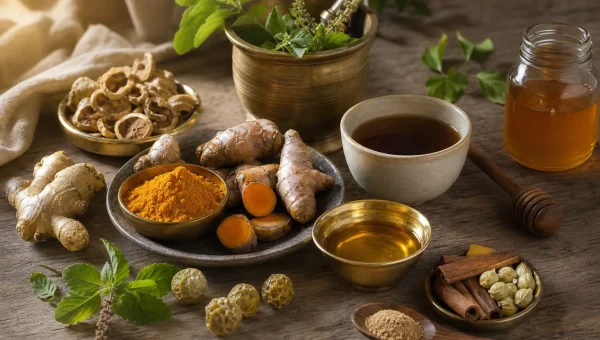
This warm tea is best for cramping with coldness, heaviness, gas, or sluggish digestion. Ginger and ajwain are both heating, digestive spices that Ayurveda uses to support Vata movement and relieve abdominal discomfort. Take it warm, sit quietly for a few minutes, and avoid cold drinks immediately afterward.
Ingredients
- 1 inch fresh ginger root (Zingiber officinale), grated
- 1/4 teaspoon ajwain seeds (Trachyspermum ammi), also called carom seeds
- 1 to 2 teaspoons jaggery, adjusted to taste
- 1.5 cups water
- 1 small pinch black salt, optional
Method
- Bring the water to a boil in a small saucepan.
- Add grated ginger and ajwain seeds.
- Reduce the heat and simmer for 7 to 8 minutes.
- Strain into a cup and stir in jaggery while the tea is still warm.
- Add a tiny pinch of black salt if cramps are accompanied by gas or bloating.
- Sip slowly while warm.
How it helps: In the Ayurvedic Pharmacopoeia of India, dried ginger is described as katu in taste, ushna in potency, and useful for anulomana, dipana, pachana, and Vata-Kapha pacification. Ajwain is described with shulahara, anulomana, dipana, and pachana actions. Together, they suit cramping that is associated with Vata obstruction, gas, coldness, or poor digestion. Jaggery softens the sharpness of the spices and makes the tea more grounding.
When to use: Take at the first sign of cramps or when menstrual discomfort is accompanied by bloating. It may be repeated later in the day if it suits your body. Avoid excess ginger or ajwain if you have active acidity, burning sensation, mouth ulcers, or a strong Pitta flare.
Remedy 2: Shatavari Milk for Luteal-Phase Nourishment
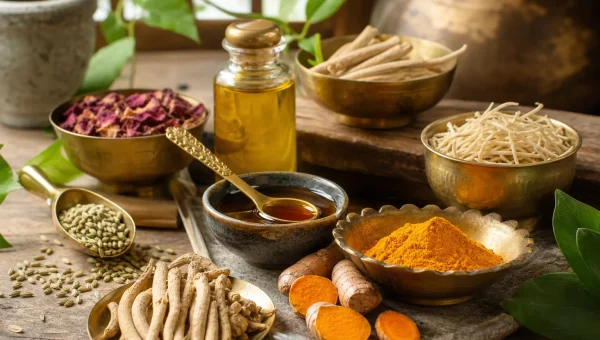
Shatavari (Asparagus racemosus) is a classic Ayurvedic nourishing herb for women’s strength, reproductive tissue, and post-depletion support. It is cooling, moistening, and building, so it is especially suited to PMS patterns with dryness, irritability, heat, weakness, poor sleep, or a feeling of being depleted before menstruation.
Ingredients
- 1/2 teaspoon Shatavari powder, approximately 2 to 3 grams
- 1 cup warm whole milk, or almond milk if dairy does not suit you
- 1/4 teaspoon cinnamon powder
- 1/2 teaspoon ghee
- 1 teaspoon honey or jaggery, optional
Method
- Warm the milk gently in a saucepan. Do not boil it aggressively.
- Add Shatavari powder and cinnamon. Stir well.
- Pour into a cup and stir in ghee.
- If using honey, let the drink cool to a comfortably warm temperature before adding it. Ayurveda traditionally avoids heating honey.
- Drink in the evening, ideally 30 to 60 minutes before bed.
How it helps: Shatavari is described in the Ayurvedic Pharmacopoeia of India as madhura and tikta in taste, guru and snigdha in qualities, shita in potency, and madhura in post-digestive effect. Its actions include rasayana, balya, vatahara, pittahara, and stanyakara. Milk and ghee add nourishment and softness, while a small amount of cinnamon makes the drink easier to digest.
When to use: Begin 5 to 7 days before the expected period and continue into the first days of menstruation if it feels supportive. This remedy is best used as a steady monthly tonic rather than a quick cramp remedy. People with hormone-sensitive conditions, those taking hormonal medicines, and anyone who is pregnant or trying to conceive should use Shatavari only with professional guidance.
Remedy 3: Ashwagandha and Brahmi Evening Blend for Stress, Sleep, and Mood
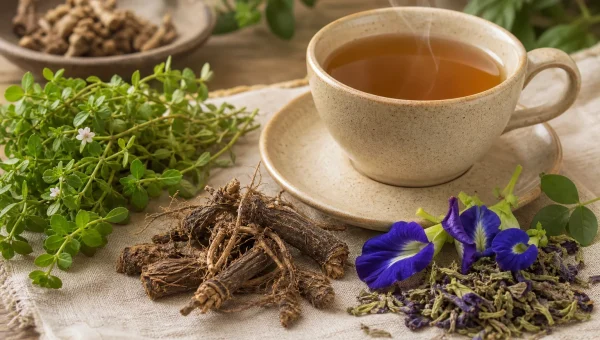
Premenstrual mood changes often worsen when the nervous system is already strained. Ayurveda approaches this pattern by calming aggravated Vata, supporting sleep, strengthening resilience, and using medhya herbs that nourish the mind. Ashwagandha and Brahmi are better suited as a steady evening support than as an emergency remedy.
Ingredients
- 1/4 teaspoon Ashwagandha powder (Withania somnifera)
- 1/4 teaspoon Brahmi powder (Bacopa monnieri)
- 1 cup warm water or milk
- 1/2 teaspoon ghee
- 1/4 teaspoon cardamom powder
- 1 teaspoon jaggery or honey, optional
Method
- Warm the water or milk gently.
- Stir in Ashwagandha, Brahmi, and cardamom.
- Add ghee and mix until evenly combined.
- If using honey, add it only after the drink has cooled to a comfortably warm temperature.
- Drink once daily in the evening.
How it helps: Ashwagandha is described in the Ayurvedic Pharmacopoeia of India as rasayana, balya, vajikarana, and Vata-Kapha pacifying. Brahmi is described as medhya, rasayana, vatahara, and useful in manasavikara. Together, they suit the PMS pattern marked by worry, restlessness, poor sleep, emotional sensitivity, and fatigue.
When to use: Use during the luteal phase, especially when irritability, anxiousness, or sleep disturbance tends to appear before menstruation. Start with a small amount and stop if it causes digestive upset, excess sleepiness, or discomfort. Ashwagandha is not suitable for everyone, especially during pregnancy, with some thyroid or autoimmune conditions, before surgery, or alongside certain medicines unless a healthcare provider approves it.
Remedy 4: Warm Castor Oil Pack for Lower Back Tension and Pelvic Tightness
This is an external remedy, not something to drink. A warm castor oil pack combines snehana and gentle warmth, two classic Ayurvedic approaches for Vata-related stiffness, tightness, and aching. It is most appropriate for lower back tension, pelvic tightness, and cramps that feel better with warmth and rest.
Materials
- 2 tablespoons cold-pressed castor oil (Ricinus communis)
- Unbleached cotton or flannel cloth, large enough to cover the lower abdomen
- Hot water bottle or heating pad set to low or medium warmth
- Old towel, because castor oil stains fabric
Method
- Warm the castor oil slightly by placing the bottle in a bowl of hot water for a few minutes.
- Apply a small amount of oil to the skin first to check comfort.
- Saturate the cloth with warm oil so it is damp but not dripping.
- Lie down and place the cloth over the lower abdomen or lower back.
- Cover with an old towel and place gentle warmth over it.
- Rest for 20 to 30 minutes while breathing slowly into the belly.
- Remove the pack and wipe excess oil with a warm damp cloth.
How it helps: Warm oil and gentle heat soften the abdomen, relax guarding in the lower back, and support the Vata-calming qualities of stillness, warmth, and lubrication. The practice also encourages rest, which is often the missing ingredient when cramps become sharper from stress and tension.
When to use: Use in the premenstrual days or during mild cramping when warmth feels comforting. Do not use castor oil packs if you are pregnant, suspect pregnancy, have very heavy bleeding, fever, skin irritation, open wounds, or unexplained pelvic pain. Never sleep with an electric heating pad on the body.
Remedy 5: Fennel, Cumin, and Coriander Water for Bloating
Premenstrual bloating may feel like abdominal tightness, gas, heaviness, or water retention. This warm seed infusion is a simple kitchen remedy for supporting Agni without being overly sharp. It is especially useful when PMS comes with burping, gas, sluggish appetite, or a swollen feeling after meals.
Ingredients
- 1 teaspoon fennel seeds (Foeniculum vulgare)
- 1/2 teaspoon cumin seeds (Cuminum cyminum)
- 1/2 teaspoon coriander seeds (Coriandrum sativum)
- 2 cups water
Method
- Lightly crush the seeds with a mortar and pestle.
- Bring the water to a boil and add the crushed seeds.
- Simmer for 5 minutes.
- Turn off the heat, cover, and steep for another 5 minutes.
- Strain and sip warm through the day.
How it helps: Fennel is described in the Ayurvedic Pharmacopoeia of India with anulomana, dipana, and Vata-Pitta pacifying actions. Coriander is described with dipana, pachana, tridoshanut, and mutrala actions. Cumin is traditionally used in Ayurvedic kitchens to kindle digestion and make heavier foods easier to process. Together, these seeds are a gentle choice when bloating is linked with weak digestion and Vata disturbance.
When to use: Begin 3 to 4 days before the period if bloating is predictable. Continue through the first days of menstruation as needed. If you feel dryness, burning, or excessive heat, reduce the cumin and use more fennel and coriander.
Remedy 6: Dashamoola Hip Bath for Pelvic Heaviness and Aching
Dashamoola means “ten roots.” In Ayurvedic practice, it is a respected Vata-supporting formulation made from the five larger roots of Brihat Panchamoola and the five smaller roots of Laghu Panchamoola. As a warm hip bath, it is best understood as a soothing external measure for pelvic heaviness, lower abdominal aching, and Vata-type discomfort.
Ingredients
- 2 to 3 tablespoons Dashamoola powder or coarse Dashamoola decoction herb
- 4 cups water for preparing the decoction
- Warm bath water, enough to cover the hips in a clean basin or bathtub
Method
- Boil 4 cups of water in a saucepan.
- Add Dashamoola and reduce the heat.
- Simmer for 15 to 20 minutes.
- Strain through a fine cloth.
- Add the strained decoction to warm bath water. The water should feel comfortably warm, not hot.
- Sit so the hips and lower abdomen are covered. Soak for 15 to 20 minutes.
- Pat dry and avoid cold drafts afterward.
How it helps: Warm water acts as gentle svedana, easing tightness and supporting circulation in the pelvic and lower back region. Dashamoola brings a traditional Vata-calming context to the bath. This remedy is most suitable when the body feels tense, cold, heavy, or achy.
When to use: Use in the evening before menstruation or during mild to moderate pelvic aching when warmth feels relieving. Avoid hip baths during very heavy bleeding, fever, vaginal infection, pregnancy unless approved by a clinician, or unexplained pelvic pain.
Quick Reference: Matching Remedies to Symptoms
Choose the remedy that matches your dominant symptom rather than taking everything at once. A simple, consistent routine is usually better than a crowded regimen.
| Symptom Pattern | Best Remedy | Best Use | Method |
|---|---|---|---|
| Cramps with gas, coldness, or sluggish digestion | Ginger-Ajwain Jaggery Tea | At the first sign of cramps | Internal drink |
| Dryness, weakness, heat, irritability, or depletion before the period | Shatavari Milk | Evening tonic before menstruation | Internal drink |
| Stress, restless sleep, anxiousness, or mood sensitivity | Ashwagandha-Brahmi Blend | Evening support during luteal phase | Internal drink |
| Lower back tension and pelvic tightness | Warm Castor Oil Pack | Premenstrual days or mild cramping | External application |
| Bloating, gas, heaviness after meals | Fennel-Cumin-Coriander Water | Several days before the period and as needed | Internal drink |
| Pelvic heaviness and aching that improves with warmth | Dashamoola Hip Bath | Evening rest practice | External bath |
Building a Monthly Routine
These remedies work best when they are layered into a monthly rhythm. The goal is not to overwhelm the body with herbs, but to support the pattern that appears most often in your cycle.
- Days 15 to 28, or the luteal phase: Use the Ashwagandha-Brahmi blend if stress, poor sleep, or mood swings are a predictable pattern.
- Five to seven days before the expected period: Add Shatavari milk in the evening if PMS feels dry, hot, irritable, or depleting.
- Three to four days before the expected period: Sip fennel-cumin-coriander water if bloating usually begins before bleeding.
- The day before menstruation: Use a warm castor oil pack or Dashamoola hip bath if lower back tension or pelvic heaviness tends to appear early.
- Days 1 to 3 of menstruation: Use ginger-ajwain tea when cramps are associated with gas, coldness, or sluggish digestion. Rest, warmth, and simple meals matter as much as the remedy.
- After bleeding ends: Return to regular meals, good sleep, gentle movement, and nourishing foods rather than continuing every remedy unnecessarily.
Track your symptoms for three cycles: cramp intensity, bloating, sleep, mood, flow, bowel movements, and what helped. This makes your self-care more precise and gives a qualified practitioner better information if you seek individualized Ayurvedic guidance.
Disclaimer: These remedies are for common premenstrual discomfort and are not intended to diagnose, treat, cure, or prevent any medical condition. Severe menstrual pain, sudden new pain, fainting, fever, pelvic pain outside menstruation, bleeding that soaks pads or tampons rapidly, bleeding longer than usual, or major cycle changes require medical evaluation. Consult a qualified Ayurvedic practitioner or healthcare provider before starting herbs if you are pregnant, trying to conceive, breastfeeding, taking prescription medication, using hormonal treatment, have thyroid disease, autoimmune disease, liver disease, hormone-sensitive conditions, or a diagnosed reproductive health condition.
References
- Primary Dysmenorrhea: Pathophysiology, Diagnosis, and Treatment Updates (2022), PubMed Central
- Keralajournalofayurveda (keralajournalofayurveda.org)
- Banyanbotanicals (banyanbotanicals.com)
- Ayurvedic Pharmacopoeia of India
- Ginger for Pain Management in Primary Dysmenorrhea: A Systematic Review and Meta-Analysis (2024), PubMed
- Ia800501 (ia800501.us.archive.org)
- Studies on the physicochemical characteristics of heated honey, honey mixed with ghee and their food consumption pattern by rats (2010), PubMed Central
- Comparative effect of cinnamon and Ibuprofen for treatment of primary dysmenorrhea: a randomized double-blind clinical trial (2015), PubMed Central
- NCCIH
- NCBI
- Health (health.com)
- Fennel for Reducing Pain in Primary Dysmenorrhea: A Systematic Review and Meta-Analysis of Randomized Controlled Trials (2020), PubMed Central
- A critical review on two types of Laghupanchamula (2012), PubMed Central
- ACOG
- ACOG
this is better than the consultation I paid for. Seriously thorough and well-researched.
Is there a specific brand or source you recommend for the herbs mentioned? Quality varies so much.
The presentation, meeting with uterus declaring war, is so specific and so accurate. I read it to my partner who had never understood what PMS actually felt like. He finally got it.
What’s the best time of year to start this? Does the season matter for effectiveness?
good effort but need more clinical data backing these claims. anecdotes arent enough for me
My grandmother used to sit with a warm cloth on her abdomen and drink something with ajwain during her worst days. I never understood why until I read this. The vata-pacifying logic behind the warmth and antispasmodic herbs makes what she did suddenly make complete sense.
The section on timing is something I’ve never seen addressed elsewhere. So important.
Followed this advice for a month. Not only did it not help, my symptoms actually got slightly worse before I went back to my doctor
I appreciate your thoughtful question. I’ll address this in more detail in an upcoming post, but in the meantime, the key is to listen to your body and adjust accordingly.
just sent this to three friends. perfect introduction to ayurveda
That’s a very fair point. We always recommend working with a qualified practitioner alongside any self-guided protocol. We’ll add a more prominent disclaimer.
This helped me understand PMS Relief in 30 Minutes without too much jargon. This is the kind of detail readers can test slowly.
Sharing this with my wife because she has been pushing through cramps with ibuprofen for years and always said nothing else worked. The point about addressing uterine spasm specifically rather than just masking pain is the kind of explanation that might actually convince her to try something different.
This helped me understand PMS Relief in 30 Minutes without too much jargon. I appreciate that it does not oversell the result.
All six remedies work for me to varying degrees. The shatavari-warm milk combination is the one I maintain month-round and the reduction in PMS severity over 4 months of daily use has been significant. The acute remedies are for the moments when it breaks through anyway.
Has anyone tried the ginger jaggery tea for sudden cramps during a workday
The castor oil pack suggestion surprised me because my mother used to do this and I had written it off as an old wives thing. Reading the explanation about uterine circulation made me reconsider. Have you heard from readers who combined this with the ginger tea on the same day? I want to know if that’s too much at once.
The idea of sipping warm Shatavari milk a week before my period sounds like a gentle way to ease mood swings
I wonder if a warm cloth with oil really reaches deep enough to affect uterine muscles
Preparing a simple seed tea the night before seems easier than remembering pills for bloating
This helped me understand PMS Relief in 30 Minutes without too much jargon. The safety notes could be expanded a little.
This helped me understand PMS Relief in 30 Minutes without too much jargon. The main idea is clear even if someone is new to Ayurveda.
Actually I felt relief after trying the CCF water during my last cycle
A hip bath with herbal powder might be messy but worth trying on the heaviest day
Learning about Apana Vata blockage made me reconsider how stress influences my monthly discomfort
The PMS Relief in 30 Minutes section feels grounded enough to try carefully. This is the kind of detail readers can test slowly.
that’s a fair concern. I’d suggest starting lower and building up
yes that specific thing you mentioned is what made the difference for me too
can these remedies be used alongside hormonal contraception or are there interactions?
how early before the period starts should the sitz bath herbal protocol begin for best effect?
remedy 3 mentions shatavari, what dose is appropriate for PMS versus fertility support?
sorry to go off topic but any tips for Ayurvedic approach to knee pain?
I think other web-site proprietors should take this site as an model, very clean and excellent user friendly style and design, as well as the content. You’re an expert in this topic!
sorry off-topic but has anyone here used Ayurveda for hair loss? nothing seems to work 💯
off topic but can these herbs be taken with thyroid medication? my doctor doesnt know
unrelated question but does anyone know a good vaidya in Pune?