
Before any other word in this article, I want to say clearly: autism is not a disease to be cured. It is a neurodevelopmental difference with a wide range of communication styles, sensory experiences, strengths, challenges, and support needs. Autistic children and adults are whole, worthy, and remarkable people. The purpose of Ayurvedic support in autism is not to “fix” the child. It is to support comfort, regulation, sleep, digestion, appetite, bowel rhythm, sensory tolerance, and family wellbeing when these areas are causing distress.
With that framing clearly established, Ayurvedic care for an autistic child is best understood as supportive, individualized paediatric care. It should sit alongside autism-informed medical care, developmental support, speech and language therapy, occupational therapy, educational planning, nutrition care, and prescribed medicines where they are needed.
The Ayurvedic Framework: Vata, Manas, Agni, and Individual Care
Autism is not described as a single named disease entity in the classical Ayurvedic texts. Ayurveda therefore should not claim to “treat autism” as a diagnosis. Instead, it looks at the child’s individual pattern: Prakriti, current Vikriti, digestion, sleep, bowel habits, appetite, sensory tolerance, emotional regulation, strength, growth, and family routine. In paediatric Ayurveda, this individualized approach belongs within the broader field of Kaumarabhritya, the Ayurvedic branch concerned with child care and development.
When an autistic child is distressed by irregular sleep, constipation, abdominal discomfort, food selectivity, anxiety, or sensory overwhelm, Ayurveda often interprets these patterns through Vata, Agni, Manas, and the nourishment of body tissues. Vata is especially relevant where there is irregularity, sensitivity, restlessness, dryness, disturbed sleep, or difficulty settling. Agni is central where appetite, digestion, stool formation, and tolerance of foods are unstable. Manas is considered important in attention, sleep, emotional balance, and the way a child receives and responds to sensory experience.
Importantly, Ayurvedic support is not based on the autism diagnosis alone. Two autistic children may need completely different approaches. One child may need gentle constipation care and a calming evening routine; another may need help with appetite, food variety, reflux, or sensory defensiveness around touch; another may need very little herbal support but significant routine, nutrition, and sleep-environment support.
Area 1: Digestive Health and Daily Comfort
Gastrointestinal discomfort is common in autistic children, including constipation, diarrhoea, abdominal pain, reflux-like symptoms, bloating, and distress around eating. Food selectivity can also make fibre, fluid intake, protein variety, and micronutrient intake more difficult. From an Ayurvedic perspective, this is an important place to begin because disturbed Agni and irregular Apana Vata can affect comfort, sleep, appetite, irritability, and the child’s capacity to engage with the day.
The first layer of support is not herbal. It is rhythm: predictable meal times, unhurried eating, warm freshly prepared foods when tolerated, adequate fluids, fibre appropriate to the child’s diet, and careful observation of stool pattern. For some children, simple changes such as a regular breakfast, warm water in the morning, cooked vegetables blended into accepted textures, or reducing grazing between meals can make digestion steadier without adding anything new to the child’s sensory load.
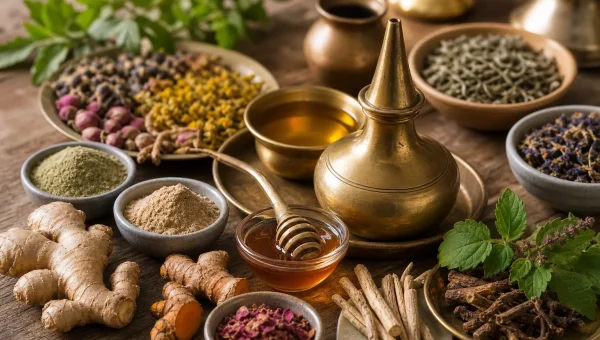
Triphala Churna: Triphala is a classical Ayurvedic formulation made from Amalaki, Haritaki, and Bibhitaki and is traditionally used as a Rasayana and digestive support. In children, it should be used only when appropriate for the child’s constitution, stool pattern, appetite, hydration, and medical history. It is not suitable for every child with constipation, and it should not be used casually in children with diarrhoea, dehydration, significant abdominal pain, unexplained weight loss, or ongoing medical treatment without professional guidance.
Ginger and cardamom in foods: Ardraka (fresh ginger) and Sukshmaila (cardamom) are recognized Ayurvedic kitchen herbs. When tolerated, tiny food-level amounts may be used in warm meals, soups, porridges, or milk preparations to support taste, warmth, and digestive comfort. For sensory-selective children, these should be introduced gently, without pressure, and only in textures and flavours the child can accept.
Area 2: Sleep Support
Sleep disturbance is a major source of distress for many autistic children and their families. Difficulty falling asleep, night waking, early waking, bedtime anxiety, sensory sensitivity, constipation, reflux, itching, pain, seizures, medication effects, and environmental triggers can all affect sleep. Ayurveda approaches sleep through calming Vata, settling Manas, reducing evening stimulation, supporting digestion, and creating a consistent nightly rhythm.
A practical Ayurvedic sleep plan begins with routine: a predictable bedtime sequence, dimmer lights in the evening, less stimulating sound and screen exposure, a comfortable room temperature, a familiar blanket or pressure input if the child likes it, and attention to hunger, thirst, bowel discomfort, and skin irritation before bed. A warm bath, gentle oiling of the feet, a familiar story, mantra, soft music, or quiet breathing with a caregiver can become part of the child’s safety signal at night.
Brahmi (Bacopa monnieri): Brahmi is described in Ayurvedic pharmacopoeial and classical contexts as a Medhya and Rasayana herb. In an autistic child, it may be considered by a qualified practitioner when the presentation includes restlessness, difficulty settling, learning strain, or sleep disturbance with a Vata-Manas pattern. It should not be started as a general supplement for every child, and it should be reviewed carefully if the child takes medicines, has thyroid disease, epilepsy, significant gastrointestinal sensitivity, or multiple supplements already in use.
Ashwagandha (Withania somnifera): Ashwagandha is a strong Ayurvedic herb and is not a routine bedtime supplement for every autistic child. It may be considered only when a qualified practitioner determines that the child’s constitution and current pattern are appropriate. Extra caution is needed in children taking sedatives, anticonvulsants, thyroid medicines, immune-modulating medicines, or medicines for blood pressure or blood sugar.
Padabhyanga: Gentle warm-oil foot massage before sleep is often more acceptable than full-body massage for children who are sensitive to touch. A caregiver may apply a small amount of warm sesame oil, coconut oil, or another tolerated oil to the feet for a few minutes, using steady pressure only if the child welcomes it. The child should be allowed to refuse, stop, choose the pressure, or limit the massage to one foot, the soles only, or no massage at all. Consent and predictability are part of the therapy.
Area 3: Medhya Herbs and Sensory Support
Classical Ayurveda describes a group of Medhya Rasayana herbs used to support intellect, memory, mental steadiness, and the nourishment of the mind. These include Mandukaparni, Shankhpushpi, Guduchi, and Yashtimadhu in the Rasayana context. In autistic children, these herbs should be understood as individualized supports for associated patterns such as restlessness, sleep difficulty, learning fatigue, anxiety, or poor tolerance of change, not as treatments for autism itself.
Shankhpushpi: Shankhpushpi is classically valued as a Medhya Rasayana and is especially associated with support for intellect and mental steadiness. It may be considered where Vata-type restlessness, difficulty settling, or learning strain is prominent. Its form, dose, timing, and suitability should be decided by a qualified practitioner, especially in children with epilepsy, complex medication schedules, or significant digestive sensitivity.
Mandukaparni (Centella asiatica): Mandukaparni is another classical Medhya herb and is traditionally used in Rasayana formulations for mental and nervous-system support. It may be better suited to some children than others depending on digestion, heat, skin sensitivity, sleep pattern, and constitution. It should be introduced only with professional guidance, and only one new herb or intervention should be introduced at a time so that tolerance can be observed clearly.
Area 4: Abhyanga for Sensory Regulation
Whole-body warm oil massage, or Abhyanga, is traditionally used in Ayurveda to calm Vata, nourish the body, support sleep, soften dryness, and create a grounded daily rhythm. For an autistic child, Abhyanga is not about forcing touch tolerance. It is a sensory support only when the child experiences it as safe, predictable, and pleasant.
Some children prefer deep steady pressure, while others prefer very light touch or no touch at all. Abhyanga may begin with only the feet or hands, using the same oil, same time, same towel, and same sequence each day. The child may be invited to apply the oil themselves, choose the body area, or use a visual timer. If the child becomes tense, distressed, avoidant, or dysregulated, the practice should stop and be reconsidered.
Sesame oil is traditionally warming and Vata-calming, but it may feel too heavy or warming for some children. Coconut oil or a lighter neutral oil may be better tolerated in children who run warm, dislike strong smells, or have sensitive skin. A patch test is sensible before wider use. Oil massage should be avoided over rashes, infections, fever, acute illness, unexplained pain, or any area the child does not want touched.
Area 5: Food Selectivity, Routine, and the Sensory Environment
Many autistic children have strong sensory preferences around taste, texture, smell, temperature, colour, and presentation of food. Ayurveda can support this gently through consistency rather than pressure. The aim is to protect nourishment, digestion, and calm while slowly widening tolerance only when the child is ready.
Warm, simple, familiar meals are often easier on Agni than irregular snacking or highly unpredictable food routines. New foods can be introduced beside accepted foods without forcing tasting. For children with restricted diets, constipation, poor growth, anaemia risk, or multiple excluded food groups, a paediatrician or dietitian should be involved. Restrictive diets should not be used as a general autism intervention unless there is a clear medical reason and professional supervision.
The sensory environment also matters. Bright light, sudden noise, strong smells, scratchy clothing, crowded rooms, hunger, constipation, and sleep debt can all increase distress. Ayurvedic care should therefore include practical environmental regulation: quiet transitions, predictable routines, warm clothing when the child is cold-sensitive, calming evening rituals, and respectful reduction of avoidable sensory overload.
Family Support Summary
The following summary is intentionally not a self-prescribing dosage chart. Children need individualized assessment, and classical adult dosage references should not be copied into paediatric use. Use this as a family discussion guide for a qualified Ayurvedic practitioner and the child’s healthcare team.
| Support | When It May Be Considered | How It Is Commonly Used | Important Cautions |
|---|---|---|---|
| Digestive rhythm and Agni support | Constipation, irregular appetite, bloating, abdominal discomfort, food selectivity | Regular meals, warm foods when tolerated, fluids, fibre, gentle routine | Medical review is needed for persistent pain, diarrhoea, blood in stool, weight loss, vomiting, or severe constipation |
| Triphala | Selected constipation patterns with practitioner guidance | Used as an individualized Ayurvedic digestive formulation | Not suitable for every child; avoid casual use in diarrhoea, dehydration, acute abdominal pain, or complex medical situations |
| Brahmi | Restlessness, difficulty settling, learning strain, sleep disturbance with a suitable pattern | Used as a Medhya Rasayana under professional guidance | Review carefully with medicines, thyroid concerns, epilepsy, or digestive sensitivity |
| Ashwagandha | Only selected children with a practitioner-confirmed pattern | Used cautiously as a stronger Ayurvedic herb | Potential interactions with sedatives, anticonvulsants, thyroid medicines, immune medicines, and blood sugar or blood pressure medicines |
| Shankhpushpi or Mandukaparni | Medhya support when appropriate to constitution and symptoms | Used one at a time, with careful observation | Requires professional guidance in children with epilepsy, medication use, or complex developmental and medical needs |
| Padabhyanga | Bedtime settling, sensory grounding, Vata-type restlessness | Short consent-led warm-oil foot massage before sleep | Stop if the child dislikes it; avoid during fever, rash, infection, acute illness, or distress |
| Abhyanga | Touch-seeking children, dryness, restlessness, sleep support, predictable regulation routine | Warm oil applied gently before bathing, beginning with small areas | Never force touch; patch test oils; avoid rashes, fever, infection, and unwanted touch |
For related paediatric Ayurvedic reading, the complete Kaumarabhritya paediatric care guide provides a broader child-care framework. The ADHD Ayurvedic protocol guide addresses overlapping attentional, restlessness, routine, and sensory-support themes that may co-occur in some children.
Safety and Professional Guidance
Autism spectrum disorder is a neurodevelopmental condition, not an illness that needs to be cured. The interventions described here are supportive measures for specific challenges such as sleep disturbance, digestive discomfort, sensory overwhelm, constipation, appetite irregularity, and stress. They should not be used to suppress harmless autistic traits, force eye contact, override sensory boundaries, or replace respectful developmental support.
All herbal supplementation in autistic children should be coordinated with the child’s paediatrician, developmental paediatrician, autism specialist team, and a qualified Ayurvedic practitioner. Some children have epilepsy, food allergies, restricted diets, reflux, constipation, sleep disorders, thyroid conditions, or medication schedules that change herb suitability. Never discontinue prescribed medication, therapy, nutrition care, seizure treatment, sleep treatment, or behavioural support in favour of Ayurvedic approaches without medical guidance.
Nothing in this article diagnoses, treats, or cures a medical condition. Use it as educational information and consult a qualified Ayurvedic practitioner or physician before starting herbs, supplements, detoxes, oil therapies, or therapeutic protocols, especially for children, pregnancy, chronic illness, epilepsy, medication use, or complex developmental needs.
References
- CDC
- CDC
- Unique contributions of Keraleeya Ayurveda in pediatric health care (2018), PubMed Central
- Charaka Samhita — Manas
- Mayoclinic (mayoclinic.org)
- Nice (nice.org.uk)
- Aan (aan.com)
- Charaka Samhita — Rasayana Adhyaya
- Miracledrinksclinic (miracledrinksclinic.com)
- Ayurvedic Pharmacopoeia of India
- Ayurvedic Pharmacopoeia of India
- Ayurvedic Pharmacopoeia of India
- Therapeutic Uses of Triphala in Ayurvedic Medicine (2017), PubMed Central
- Ia800501 (ia800501.us.archive.org)
- Qigong massage treatment for sensory and self-regulation problems in young children with autism: a randomized controlled trial (2009), PubMed
- Hopkinsmedicine (hopkinsmedicine.org)
- NCCIH
- NCBI


the article mentions Brahmi for cognitive support in ASD. is there specific evidence in autistic populations or is this extrapolated from general cognitive benefit data?
That’s a fair point on the framing, though the article does seem careful to describe Vata imbalance as a physiological pattern rather than a defining feature of the person. On the Brahmi evidence question — I had the same curiosity. The studies I’ve seen are mostly on general cognitive tasks, not specifically autistic populations, so I’d treat those recommendations as provisional.
the framing of ASD as a Vata disorder risks pathologizing neurodivergence. the article would benefit from neurodiversity-affirming language throughout.
ASD requires multi-disciplinary support including speech therapy, occupational therapy, and behavioral intervention. the article should be explicit that Ayurveda is one supportive element, not a treatment. 💯
@Jessica abhyanga adapted for sensory-sensitive children the article’s guidance on building tolerance gradually is exactly the approach that worked for our family.
is the dietary protocol in the article specifically for ASD or is it a general Vata-pacifying approach that happens to apply to sensory hypersensitivity?
The opening statement that autism is not a disease to be cured is what made me feel safe reading further. As a parent of an autistic child I’ve encountered so many protocols that start from a deficit framing — this one doesn’t, and that matters.
the sensory Ayurveda approach for my son (8 years, ASD with sensory processing challenges) has been the most respectful framework I’ve encountered. the emphasis on not forcing but gently offering grounding experiences matches what his OT does.
abhyanga adapted for sensory-sensitive children the article’s guidance on building tolerance gradually is exactly the approach that worked for our family.
Doing this.
sensory Ayurveda for autism feels more useful than just herbs. routines and texture tolerance matter daily
is the dietary protocol in the article specifically for ASD or is it a general Vata-pacifying approsch that happens to apply to sensory hypersensitivity?
for families who can’t access Ayurvedic practitioners, which parts of the protocol are safe to implement without supervision?
for families who cant access Ayurvedic practitioners, which parts of the prorocol are safe to implement without supervision? tbh
I appreciate the clear statement upfront that autism isn’t a disease to be cured; it sets a respectful tone for the rest of the piece.
The framing in the introduction — that Ayurveda aims to reduce physiological burden rather than change the child — is so important and I appreciate that it leads the article. नमस्ते
@Ashok aSD requires multi-disciplinary support including speech therapy, occupational therapy, and behavioral intervention. the article should be explicit that Ayurveda is one supportive element, not a treatment.
Completely agree that multi-disciplinary support is essential — the article does say that explicitly in a few places, though I agree it could be foregrounded more. The question is really which Ayurvedic elements slot in alongside OT and speech therapy without overlap or conflict.
@Ryan aSD requires multi-disciplinary support including speech therapy, occupational therapy, and behavioral intervention. the article should be explicit that Ayurveda is one supportive element, not a treatment.
the article mentions Brahmi for cognitive support in AAD. is there specific evidence in autistic populations or is this extrapolated from general cognitive benefit data?
for families who cant access Ayurvedic practitioners, which parts of the protocol are safe to implement without supervision?
Has anyone tried Triphala Churna for bedtime constipation in kids on the spectrum, and did they notice any change in irritability?
The explanation linking Majja Dhatu and elevated Vata to sensory processing issues feels both familiar and new.
Good one.
I found the dosage table helpful, especially the age adjusted amounts for Brahmi and Ashwagandha.
Does the article mention any precautions for using Shankhpushpi alongside seizure meds?
Reading about Padabhyanga made me want to try a gentle foot massage routine with my niece before bedtime.
It’s interesting how the gut brain connection is framed through Agni and Prana Vata, bridging Ayurveda and modern neuroscience.
The citation of a 2020 BMC study on Triphala gives me confidence to discuss it with our pediatrician.
I wonder if the sensory herbs like Mandukparni would also help with focus during school hours.