
Bacterial Vaginosis and the Ayurvedic Yoni Flora Framework
Bacterial vaginosis (BV) is a vaginal dysbiosis in which the usual Lactobacillus-dominant environment is replaced by a more diverse anaerobic bacterial pattern. It commonly presents with thin white or gray discharge, a fishy odor, and a vaginal pH above 4.5, although some people have few symptoms. Recurrence after standard treatment is common, especially when the vaginal ecosystem does not return to a stable Lactobacillus-rich state.
Ayurveda understands conditions affecting the yoni under yoni vyapad, disorders of the female reproductive channel. The Charaka Samhita describes twenty forms of yoni vyapad and classifies them through doshic patterns rather than through modern microbial categories. A BV-like presentation is most often approached through a kapha-dominant lens when discharge is pale, sticky, slimy, heavy, or itchy, with pitta involvement when burning, heat, redness, or yellowish discharge is present. This framework does not replace laboratory diagnosis; it helps an Ayurvedic practitioner individualize supportive care after the condition has been properly assessed.
Dosha-Based Root Cause Identification
The Ayurvedic approach begins with careful observation of discharge quality, odor, itching, burning, tissue sensitivity, menstrual timing, bowel habits, diet, stress, sexual exposures, antibiotic history, and use of scented or intravaginal hygiene products. These details guide whether the main therapeutic emphasis should be reducing kapha and kleda, cooling pitta, stabilizing apana vata, or rebuilding tissue resilience after depletion.
Kapha-predominant pattern: White, pale, grayish, sticky, slimy, or heavy discharge with itching, mild discomfort, dampness, and little burning. Classical descriptions of kaphaja yoni vyapad include sliminess, coldness, itching, mild pain, and pale or slimy discharge. Supportive care emphasizes lighter meals, reduced added sugar and refined carbohydrates, less heavy dairy where it increases mucus or heaviness, improved daily movement, gentle external hygiene, and practitioner-selected bitter, astringent, and kapha-reducing herbs.
Pitta-predominant pattern: Burning, heat, redness, tenderness, stronger odor, yellowish discharge, irritability, loose stools, or symptom flares around hotter phases of the cycle. Classical pittaja descriptions include burning, inflammation, heat, and discolored discharge. Because yellow, green, painful, or foul-smelling discharge can also indicate sexually transmitted infections or pelvic infection, this pattern should be medically evaluated rather than self-treated. Ayurvedic support focuses on cooling, non-irritating care and avoidance of excessive heat, alcohol, very spicy food, and harsh topical applications.
Vata-predominant or vata-involved pattern: Dryness, thin or scanty discharge, irritation after antibiotics, stress-related recurrence, post-menstrual dryness, perimenopausal dryness, irregular bowel habits, or pelvic sensitivity. Classical teaching gives vata a central role in yoni disorders, especially through apana vata. Supportive care emphasizes regular meals, sleep rhythm, bowel regularity, stress reduction, mucosal nourishment, and avoidance of repeated drying or astringent applications that aggravate irritation.
The Triphala External Wash Protocol
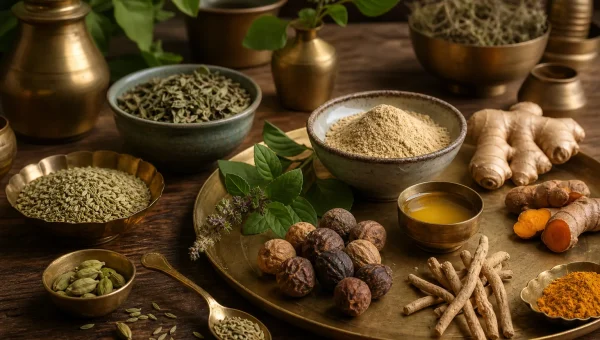
Triphala is the classical combination of Haritaki (Terminalia chebula), Bibhitaki (Terminalia bellirica), and Amalaki (Emblica officinalis). In Ayurvedic gynecological care, decoctions and washes are described among local therapies, and Triphala appears in classical formulations used for yoni disorders. In a modern home-care setting, this should be interpreted conservatively as an external vulvar rinse only, not internal douching. Internal douching can disturb the protective vaginal flora and should be avoided.
Preparation: Add 1 teaspoon of good-quality triphala powder to 500 ml of water. Bring to a gentle boil, simmer for 10 minutes, and allow it to cool completely to room temperature. Strain through a very fine clean cloth so that no powder particles remain. Prepare fresh each time and discard any leftover liquid.
Application: After bathing, pour a small amount externally over the vulvar area or use clean cotton to gently rinse the external folds only. Do not insert a syringe, nozzle, finger, cloth, or applicator inside the vagina. Pat dry with a clean towel and allow the area to remain dry and breathable. Use once daily for up to 3-5 days for external comfort when approved by a qualified practitioner, then stop. Discontinue immediately if burning, dryness, rash, pain, or worsening odor occurs. Avoid this wash during pregnancy unless your obstetrician or qualified clinician has approved it.
Internal Ayurvedic Support for Rebuilding the Terrain
Internal Ayurvedic care for recurrent BV is not meant to sterilize the vagina. The goal is to support digestion, reduce ama and kleda, regulate apana vata, and strengthen the mucosal terrain so that a healthy vaginal environment can re-establish itself after proper medical treatment. Herbs should be chosen by a qualified Ayurvedic practitioner, especially during pregnancy, breastfeeding, fertility treatment, chronic illness, liver disease, autoimmune disease, or when taking prescription medicines.
Shatavari (Asparagus racemosus) is traditionally used as a nourishing reproductive tonic and is most appropriate when dryness, tissue sensitivity, depletion, or vata-pitta irritation accompanies recurrent discharge. It appears in classical reproductive formulations and is better suited to rebuilding and moistening patterns than to heavy, sticky kapha states unless balanced with other herbs.
Guduchi (Tinospora cordifolia) is used in Ayurveda as a rasayana and as a support for metabolic and immune steadiness. In recurrent BV care, it may be selected when the pattern includes pitta-kapha disturbance, poor resilience, inflammatory tendency, or recurrence after repeated illness or antibiotic use. Classical yoni formulations include guduchi in combination with other herbs, and it should be dosed according to constitution and clinical context.
Neem or Nimba (Azadirachta indica) is bitter, cleansing, and traditionally associated with itching, microbial overgrowth patterns, skin disorders, and kapha-pitta conditions. It is not a daily reproductive tonic and should not be self-prescribed for long periods. It is generally avoided during pregnancy and while trying to conceive unless specifically directed by a qualified clinician.
| Phase | Duration | Internal Focus | External Focus |
|---|---|---|---|
| Diagnosis and acute care | Days 1-7 | Medical diagnosis and prescribed treatment when indicated; practitioner-guided support for digestion, kapha, pitta, or vata | External hygiene only; no internal douching; short external triphala rinse only if non-irritating and approved |
| Microbiome rebuilding | Weeks 2-8 | Low-glycemic, fiber-rich meals; fermented foods if tolerated; individualized herbs such as shatavari, guduchi, neem, amalaki, or lodhra as appropriate | Avoid scented products, intravaginal washes, and repeated drying applications |
| Mucosal resilience | Months 2-3 | Constitutional plan for apana vata, agni, bowel regularity, stress, and reproductive tissue strength | Plain water external cleansing; occasional external astringent rinse only if it does not cause dryness |
| Relapse prevention | Ongoing | Reduce recurrence triggers, maintain bowel regularity, minimize added sugar, and follow medical advice for recurrent BV | Avoid douching, vaginal fragrances, harsh soaps, and unapproved intravaginal remedies |
Dietary Protocol for Yoni Flora Rebalancing
The vaginal microbiome does not exist in isolation from the rest of the body. Ayurveda views recurrent discharge through digestion, tissue quality, kleda, ama, and apana vata, while modern vaginal microbiome science recognizes BV as a shift away from a Lactobacillus-dominant environment. Diet cannot replace treatment for BV, but it can support the terrain in which recurrence either settles or repeats.
Increase: warm, freshly prepared meals; vegetables; adequate protein; legumes and whole grains in digestible portions; clean water; seasonal fruits; and food-level fermented preparations if tolerated, such as plain unsweetened yogurt, takra, kanji, or kefir. Amla and pomegranate may be used as food-level sour-astringent supports when they suit the person’s digestion. Fermented foods are taken by mouth only; no food, yogurt, oil, herb paste, or probiotic capsule should be inserted into the vagina unless specifically prescribed in a clinical setting.
Reduce: added sugar, sweetened drinks, refined flour, frequent fried or heavy foods, alcohol, and excess dairy when it increases heaviness, mucus, or dampness. A lower-glycemic, fiber-rich pattern is especially useful for kapha-dominant recurrence. Regular bowel movements, adequate sleep, daily walking, breathable cotton underwear, and avoiding tight damp clothing are simple but important parts of yoni care.
Important Safety Notes and When to See a Doctor
Bacterial vaginosis requires proper diagnosis because its symptoms overlap with yeast infection, trichomoniasis, chlamydia, gonorrhea, cervicitis, urinary infection, and other conditions that need different treatment. Seek prompt medical care if you are pregnant, have pelvic pain, abdominal pain, fever, bleeding, sores, severe burning, green or frothy discharge, a partner with a sexually transmitted infection, symptoms after a new sexual exposure, or symptoms that recur after treatment. Symptomatic BV during pregnancy should be managed with conventional obstetric care because untreated BV is associated with adverse pregnancy outcomes.
Avoid internal douching, vaginal steaming, scented washes, deodorants, perfumed pads, and unverified intravaginal remedies. Ayurvedic care can be a useful supportive framework for recurrence, diet, tissue resilience, and constitution, but it should not replace indicated antibiotics or medical evaluation. Work with a qualified Ayurvedic practitioner and a licensed healthcare provider when symptoms are persistent, recurrent, or occurring during pregnancy.
Medical Disclaimer: This content is for educational purposes only and does not replace medical diagnosis or treatment. Bacterial vaginosis and other vaginal infections require diagnosis by a qualified healthcare provider. Do not substitute herbal protocols for conventional treatment of confirmed infections, especially during pregnancy. Always consult your healthcare provider before beginning any herbal treatment for vaginal conditions.
References
- CDC
- NCBI
- Frontiersin (frontiersin.org)
- Frontiersin (frontiersin.org)
- Charaka Samhita — Yonivyapat Chikitsa
- Choprafoundation (choprafoundation.org)
- Exploring of Antimicrobial Activity of Triphala Mashi-an Ayurvedic Formulation (2008), PubMed Central
- Ayurvedic Pharmacopoeia of India
- Ayurvedic Pharmacopoeia of India
- Tinospora cordifolia: One plant, many roles (2012), PubMed Central
- The Antimicrobial Potential of the Neem Tree Azadirachta indica (2022), PubMed Central
- Therapeutics Role of Azadirachta indica (Neem) and Their Active Constituents in Diseases Prevention and Treatment (2016), PubMed Central
- Sciencedirect (sciencedirect.com)
- Nature (nature.com)
for bacterial vaginosis that keeps recurring after antibiotic treatment, does the Ayurvedic protocol run concurrently with metronidazole or only after?
That’s what I’d want to know too. My doctor keeps prescribing the same course and it works for a few weeks before recurring. Is the Ayurvedic approach meant to run alongside the antibiotic to protect the flora during treatment, or is it more of a post-course restoration protocol? The timing seems critical.
the Artava Vaha Srotas explanation for ovarian cysts finally helped me understand why my Ayurvedic doctor is treating the whole cycle and not just the cyst.
That’s a really different context though — this post is specifically about bacterial vaginosis and vaginal flora rebalancing, not third trimester care. For the BV protocol described here, did the article address whether internal herbs like Triphala or Lodhra affect the vaginal microbiome directly or mainly work through systemic immune modulation?
The point about antibiotic-driven recurrence really resonates. I went through three rounds of metronidazole over 18 months and each time it came back within two months. The article’s framing of BV as a dysbiosis rather than a simple infection is exactly what my gynecologist never explained — it finally makes the pattern make sense.
for ovarian cysts confirmed om ultrasound, at what size does Ayurvedic treatment need to yield to surgical intervention?
yoni Picchu for cervical erosion was suggested by my gynecologist who practices integrative medicine. the Jatyadi oil application protocol described here matches exactly.
Yoni Picchu what’s the oil retention time and how is it removed? the article describes insertion but not duration. धन्यवाद
The explanation of kaphaja yoni vyapad really helped me understand why my discharge is thick and white.
the perineal massage article mentions Ashwagandha oil. is this safe in the third trimester or should plain sesame be used?
That’s a legitimate concern actually. The article does mention Shatavari and Lodhra as internal supports, but I’d like to know more about whether any of the yoni wash preparations described have been tested against Gardnerella specifically, or if the evidence is more general for vaginal pH restoration.
Good one.
for BV in women who are pregnant, is the Yoni Flora protocol safe? antibiotics are sometimes avoided in early pregnancy.