
Matra Basti is one of the most approachable forms of Basti therapy in Ayurveda: small in dose, oil-based, Vata-pacifying, and comparatively gentle when prescribed and taught correctly. It is not a casual wellness hack or a substitute for medical care; it is a classical Panchakarma-related procedure that should be selected according to the person’s strength, digestion, bowel condition, disease state, age, season, and clinical need.
Matra means a measured dose, and Basti means therapeutic enema. In classical classification, Matra Basti belongs to the oleaginous family of Basti, closely related to Anuvasana Basti, in which a small amount of warm medicated oil or ghee is introduced rectally. Its purpose is not forceful cleansing; its primary role is Snehana—uncting, softening, lubricating, and pacifying aggravated Vata at its lower-gastrointestinal seat.
The Classical Foundation
Basti therapy occupies a special place in Ayurvedic therapeutics because Vata is the dosha most responsible for movement, nerve impulse, elimination, circulation of other doshas, dryness, pain, stiffness, and irregularity. Classical texts describe Basti as especially suited to Vata-dominant disorders, and Ashtanga Hridaya Sutra Sthana 19 opens its Basti discussion by placing Basti among the foremost measures for Vata-predominant conditions.
The same chapter describes three principal forms of Basti: Niruha or Asthapana Basti, Anuvasana Basti, and Uttara Basti. In the traditional commentarial explanation, Matra Basti is treated as a smaller-dose form of Anuvasana Basti. Because it uses a reduced quantity of Sneha, it is considered easier to administer, less demanding than stronger Basti courses, and suitable for repeated use when the patient is properly selected.
Matra Basti is described in the commentarial tradition as a form of Anuvasana Basti using a smaller oleaginous dose, suitable for regular use in appropriate persons.
Why Matra Basti Is Considered Gentle
The gentleness of Matra Basti comes from its dose and intention. Unlike decoction-based Niruha Basti, Matra Basti is not designed to provoke strong evacuation. The classical dose is described in different ways by different authorities: Charaka refers to a small oleaginous measure, while later explanatory traditions commonly discuss quantities around 1½ pala, often interpreted in modern practice as roughly 60–72 mL. In clinical settings, the actual quantity is individualized by the physician according to body strength, bowel capacity, oil selection, and disease state.
Because the dose is small and oil-based, Matra Basti is used where the goal is to soothe Vata, support lubrication of the colon, ease dryness-related constipation, reduce stiffness, and nourish depleted tissues. It is not appropriate to treat the dose as fixed for everyone; a frail elderly person, a strong adult, a child, a pregnant woman, and a patient with bowel disease require very different clinical judgment.
Mechanism of Action: Ayurvedic and Biomedical View
Ayurvedically, Matra Basti acts through Vata-shamana, Snehana, and support of normal Apana Vata function. In modern language, the rectal route, the enteric nervous system, local mucosal contact, bowel motility, and the gut-brain axis provide useful ways to understand why a lower-gastrointestinal oil therapy is treated with such importance in the classical system.
Local Snehana of the Vata Seat
Ayurveda identifies the lower bowel region as central to Vata regulation. When dryness, irregular bowel movement, gas, pain, cracking joints, stiffness, insomnia, fatigue, and variable symptoms dominate the presentation, the therapeutic logic is to apply warmth and unctuousness at the level where Apana Vata is governed. Matra Basti is therefore used as a direct local Snehana therapy rather than as a purgative procedure.
Rectal Route and Oil Medium
The rectal route can provide local and systemic drug delivery, and pharmacology literature notes that rectal administration may partially bypass hepatic first-pass metabolism depending on the site of absorption and the compound involved. This supports the general plausibility of rectal delivery as a meaningful route, but it does not justify exaggerated claims about specific oil constituents unless those constituents have been directly tested in that route and dose.
Enteric Nervous System and Gut-Brain Axis
The lower gastrointestinal tract is richly innervated and participates in bidirectional communication with the central nervous system through neural, immune, endocrine, and microbial pathways. From an Ayurvedic perspective, this helps explain why Vata disorders with pain, motility disturbance, restlessness, sleep disturbance, and nervous-system sensitivity are often approached through the gut rather than through the painful area alone.
Microbiome Context
The colon is also the main habitat for gut microbes that produce short-chain fatty acids such as acetate, propionate, and butyrate. These metabolites are involved in gut barrier function and inflammatory regulation. In Matra Basti writing, this should be kept as a supportive biological context: the therapy is classically justified as Vata-pacifying Snehana, not as a protocol with proven, fixed effects on named bacterial species.
Oil Selection: Matching the Oil to the Condition
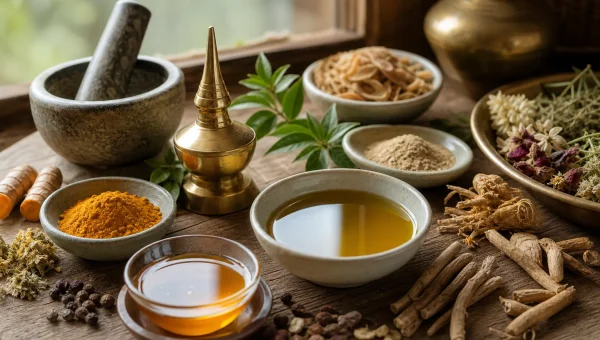
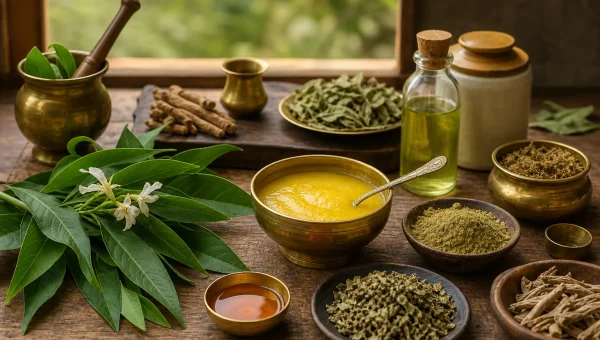
The oil is not a neutral carrier in Ayurvedic practice. The practitioner selects the base and medicated oil according to the patient’s dosha state, tissue depletion, pain pattern, digestion, bowel movement, age, and strength. The following examples describe common clinical selection patterns; they are not a self-prescription chart.
| Oil Preparation | Typical Ayurvedic Use Pattern | Common Adult Clinical Range | Clinical Note |
|---|---|---|---|
| Plain sesame oil (Tila Taila) | General Vata dryness, dry constipation, roughness, coldness | 60–80 mL | Usually chosen when the goal is simple lubrication and Vata pacification. |
| Bala Taila or Kshirabala Taila | Vata depletion, neuromuscular weakness, stiffness, wasting tendency | 60–80 mL | Often selected when nourishment and strengthening are more important than cleansing. |
| Sahacharadi Taila | Vata-Kapha pain affecting the low back, hip, thigh, or leg pathway | 60–80 mL | Commonly considered in Gridhrasi-like presentations under supervision. |
| Mahanarayana Taila | Joint stiffness, muscular pain, Vata-type musculoskeletal restriction | 60–80 mL | More often used externally, but may be selected internally as Basti only by a qualified physician. |
| Dhanvantaram Taila | Vata depletion, postpartum Vata care, weakness after strain or wasting | 60–80 mL | Selection requires special caution in pregnancy and postpartum care. |
Only clean, pharmaceutically prepared, practitioner-approved medicated oils should be used. Poor-quality Ayurvedic preparations may be contaminated or adulterated, and some traditional products have been associated with heavy metals; therefore, sourcing and clinical supervision matter as much as the formula name.
The Correct Technique
Technique matters for both benefit and safety. The following is a clinic-taught outline, not a substitute for hands-on instruction. A patient should first learn the method from a qualified Ayurvedic physician or trained Panchakarma practitioner and should not attempt Basti during acute illness, rectal bleeding, severe abdominal pain, pregnancy, or active bowel disease without medical clearance.
- Preparation: The bowel and bladder should be emptied naturally. The oil should be warmed to approximately body temperature and checked on the inner wrist. Cold oil aggravates Vata and may trigger cramping or immediate expulsion.
- Positioning: The usual position is lying on the left side with knees slightly flexed. The body should be relaxed, warm, and unhurried.
- Administration: A sterile, soft-tipped applicator or bulb syringe is used. The nozzle is lubricated, inserted gently, and the oil is introduced slowly without force. Pain, bleeding, sharp resistance, or panic is a reason to stop.
- Retention: After administration, the patient rests quietly. Retention varies by person; the aim is comfortable retention, not suppression of a strong urge. Overnight administration may be used only when prescribed and tolerated.
- Aftercare: The oil may pass with stool or separately. Warm water, light food, rest, and avoidance of cold exposure support the treatment. Persistent pain, bleeding, fever, severe abdominal distension, or inability to pass stool or gas requires medical attention.
Clinical Indications: When Matra Basti Is Most Appropriate
Matra Basti is most appropriate when the presentation is Vata-dominant and the patient is suitable for oleaginous rectal therapy. The signs that often guide selection include dryness, constipation, variable pain, cold aggravation, stiffness, cracking joints, fatigue, emaciation tendency, sleep disturbance, and relief from warmth or oil application.
- Chronic low back pain with Vata features: Especially when pain is dry, variable, cold-aggravated, and associated with stiffness or constipation.
- Gridhrasi-like sciatic pain: Considered when pain follows the hip-thigh-leg pathway and the physician has ruled out urgent neurological or structural red flags.
- Dry constipation and Apana Vata disturbance: Used when bowel dryness and irregular evacuation are central features, not when there is acute abdominal disease.
- Post-travel and overexertion Vata aggravation: Traditionally relevant after long travel, physical strain, loss of sleep, and depletion.
- Debility with Vata predominance: Considered where the aim is gentle nourishment, warmth, and restoration rather than evacuation.
- Musculoskeletal stiffness: Used as part of a broader plan that may include Abhyanga, Svedana, diet correction, sleep regulation, and oral medicines when appropriate.
Published clinical evaluations have used Matra Basti as part of Ayurvedic treatment for conditions such as Gridhrasi and low back pain, but these interventions are not the same as unsupervised home enemas. They belong within individualized clinical care, with assessment, monitoring, and adjustment of the oil, dose, timing, and duration.
Contraindications: When Not to Use Matra Basti
Matra Basti should not be used simply because it is smaller than other Basti procedures. The classical contraindications of oleaginous Basti and modern rectal-safety considerations both matter. Avoid or defer Matra Basti unless a qualified clinician specifically clears it in the following situations:
- Active rectal bleeding, anal fissure, acute painful hemorrhoids, rectal ulcers, or recent rectal trauma
- Inflammatory bowel disease flare, severe diarrhea, bowel infection, unexplained abdominal pain, obstruction symptoms, or fever
- Recent bowel, anal, rectal, pelvic, or abdominal surgery without surgical clearance
- Pregnancy, especially without direct supervision from a qualified clinician experienced in pregnancy care
- Use of anticoagulants or bleeding disorders, because applicator trauma can cause bleeding
- Severe weakness, acute systemic illness, jaundice, anemia, uncontrolled metabolic disease, or markedly impaired digestion
- Children, elderly patients, postpartum patients, and medically complex patients unless the dose and oil are prescribed individually
Duration and Course Design
Course design depends on the aim. A short course may be prescribed for acute Vata aggravation after travel, strain, or constipation. A longer supervised course may be used in chronic Vata disorders such as low back stiffness, Gridhrasi-like pain, or post-illness depletion. Some physicians use Matra Basti daily for a limited period; others use it on alternate days or several times weekly, depending on bowel response, appetite, sleep, strength, and symptom change.
The most important sign of correct dosing is comfort: better bowel regularity, reduced dryness, improved sleep, softer pain, and less stiffness without heaviness, nausea, abdominal distension, fever, diarrhea, or aversion to food. If oil repeatedly expels immediately, causes discomfort, or produces heaviness and poor appetite, the plan should be reassessed rather than forced.
How Matra Basti Fits Into a Complete Plan
Matra Basti works best when it is not isolated from the rest of Ayurvedic care. Vata disorders usually require warm food, regular meals, adequate sleep, oil massage, gentle sweating when appropriate, correction of constipation, reduced overexertion, and protection from cold and wind. In musculoskeletal conditions, it may be combined with local therapies such as Abhyanga, Patra Pinda Sveda, Kati Basti, or carefully selected oral medicines.
For broader joint and Vata-care context, a related discussion of Ayurvedic joint pain and Sandhivata protocols explains how Basti may be placed inside a comprehensive treatment plan rather than treated as a stand-alone procedure.
Matra Basti must be learned under qualified practitioner guidance before any home administration. This article is for educational purposes only and does not constitute medical advice. Do not begin Basti therapy if you are pregnant, have active bowel or rectal disease, have unexplained abdominal symptoms, take blood-thinning medication, or have a serious medical condition without consulting a qualified Ayurvedic physician and appropriate healthcare provider.
References
- Wisdomlib — classical text
- Wisdomlib — classical text
- Researchgate (researchgate.net)
- Ijrap (ijrap.net)
- Charaka Samhita — Panchakarmiya Siddhi
- Physiological and Pharmaceutical Considerations for Rectal Drug Formulations (2019), PubMed Central
- The gut-brain axis: interactions between enteric microbiota, central and enteric nervous systems (2015), PubMed Central
- Vagus Nerve as Modulator of the Brain-Gut Axis in Psychiatric and Inflammatory Disorders (2018), PubMed Central
- Short-Chain Fatty-Acid-Producing Bacteria: Key Components of the Human Gut Microbiota (2023), PubMed Central
- Impactfactor (impactfactor.org)
- A clinical study of Nirgundi Ghana Vati and Matra Basti in the management of Gridhrasi with special reference to sciatica (2010), PubMed
- Jahm (jahm.co.in)
- OA03.18. “A comparative study of kati basti with sahacharadi taila and maha narayana taila in the management of gridhrasi (Sciatica)” (2013), PubMed Central
- A Clinical study of Matra Vasti and an ayurvedic indigenous compound drug in the management of Sandhigatavata (Osteoarthritis) (2010), PubMed Central
- NCCIH
- FDA

not sure how relevant ancient dosage guidelines are for modern bodies with different baseline health. ❤️
is there a validated questionnaire for assessing the 8 Samprapti Ghstakas clinically or is it purely clinical judgment?
matra basti is one therapy i would never DIY from a blog. useful explanation, but supervision should be loud and clear.
Is there a specific guidance for those living at high altitude where digestion behaves differently?
Good question and I wonder the same. I am at around 2200 metres and noticed that my Vata symptoms in general feel more pronounced here than when I lived at lower altitude. Whether that changes how the oil is retained or how frequently Matra Basti should be administered seems like something that would vary quite a bit.
That is worth flagging more prominently. People with chronic pain conditions are often already on anticoagulants or anti-inflammatories and they may not think to mention herbal treatments to their prescribing doctor. Glad the article includes it but I agree it tends to get buried.
Completely agree. I have read a few explanations of Vipaka before but they always felt abstract. The way it was connected to why the oil absorbs and acts at the tissue level rather than just the gut made it land differently for me.
Seconding this — especially for patients who may be on warfarin or aspirin therapy for cardiac reasons. Combining even gentle Basti protocols with blood thinners without disclosure could be a real issue and it is the kind of thing people skip over when they are focused on pain relief.
The language of ‘balancing doshas’ is hard to evaluate without measurable outcomes.
The Pitta-aggravating foods list in this article finally explains why my symptoms peaked in summer ngl
That is a good question actually. I live at around 2800m and my Vaidya has mentioned that Vata tends to run higher here due to the cold and dryness. Would the oil volume or retention time for Matra Basti need adjusting in that kind of climate?
the specific preparation method for basti described here is different from general churna usage, helpful tbh
That distinction matters a lot and I am glad you raised it. The preparation method here being specific to basti rather than general churna use is something I almost missed on my first read. Changed how I approached the whole process. 💯
The preparation method described requires equipment most people don’t have. Not practical.
Which part specifically is the barrier for you? I found the enema kit itself is easy to get, the harder part was sourcing the oil blend. If it is just the kit the basic rubber bulb type works for Matra Basti and is widely available.
Genuinely curious about this too. I know high altitude affects agni and gut motility in specific ways. Would the oil quantity or the scheduling of Matra Basti need to be modified for someone whose digestion is already irregular because of the altitude?
Piggybacking on this question — post-menopausal Vata aggravation is real and the dryness aspect seems very relevant to the Matra Basti rationale. But I wonder if altitude compounds that. Has anyone been managing both factors at once?
My practitioner in Pune also uses a slightly different retention duration than what this article describes. I wonder if the high altitude question connects here too since regional traditions seem to adapt to local climate and constitution patterns. ✨
I had the same thought. At altitude the body already deals with lower oxygen levels affecting digestion and circulation. Whether the contraindication list accounts for that kind of baseline physiological difference seems like a real gap.
the circadian-dosha mapping is interesting but the times given are approximate and the article presents them with more precision than the texts support.
How many Panchakarma sessions would complement this oral protocol typically?
daily oil enema sounds intense to a beginner. can you explain who should definitely avoid it?
for Samprapti Ghatakas, at which stage (Sthana Samshraya vs Vyakti) does treatment become most complex?
From what I understand, Vyakti stage is where things get significantly harder because the dosha imbalance is already manifesting as clear symptoms and the channels are more obstructed. Intervening at Sthana Samshraya seems to offer more flexibility in terms of approach. But curious whether Matra Basti is used at both stages or primarily once it has progressed.
Interesting to learn that Matra Basti can be done daily without the usual prep work.
I have had chronic lower back pain for about six years now and gone through two rounds of physiotherapy with limited results. The case at the beginning of this article reads almost exactly like my situation. Is Matra Basti something you would typically try before considering more invasive options, or is it usually recommended after other approaches have failed?
how long does a typical course run before someone would expect to see meaningful results tbh
How does retaining the oil overnight compare to other enema methods in terms of comfort?
The part about patients who come in having already failed physiotherapy and steroid injections really stood out. My father is in exactly that situation after two years of chronic Vata-type lower back issues. What I want to understand better is whether the oil selection for Matra Basti changes depending on how long the condition has been established.
That standardization issue probably applies to the Matra Basti assessment too — deciding which oil to use and for how long seems to involve a lot of practitioner judgment. Is there any written protocol, even a general one, for how these decisions get made consistently across patients with similar Vata presentations?
My 8-year-old son’s recurrent cough improved significantly after following the milder version here.
I wonder if the reported sixty percent pain drop is typical or just an optimistic case.
the Samprapti Ghatakas framework helped me understand why my treatment protocol targets specific stages, not just symptoms.
does Manah Prakriti change with life circumstances or is it considered fixed like Deha Prakriti? asking because my Rajas-Tamas balance feels different than 5 years ago.
finally an article that gives actual prep instructions and not just herb names.
for Samorapti Ghatakas, at which stage (Sthana Samshraya vs Vyakti) does treatment become most complex? 💯
The temperature tip about warming the oil to body temperature makes sense for avoiding expulsion.
samprapti Ghatakas is well-described but the article doesn’t address what happens when multiple Samprapti stages are active simultaneously.
I’m curious to try the plain sesame oil version for my occasional constipation.
the section on drug interactions is too short. My cardiologist had concerns I had to research separately tbh
the explanation of why Vata types need higher fat anupana clicked for me after reading this.
Yes, that section clicked for me too. And once that logic is clear the whole approach makes more sense rather than feeling like guesswork. The fat-as-carrier idea for pacifying Vata is something I had read about but never understood properly until now.
can this protocol be followed alongside standard medication for hypothyroidism?
@Rekha Useful.
finally an article that gives actual prep instructions and not just herb names tbh
The section on diet modifications, is that specific to this condition or general Ayurvedic eating?
That is a useful question actually. My understanding from other Ayurvedic resources is that some of the diet modifications described for Vata disorders are condition-specific, especially the warm, unctuous foods, but others overlap with general Ayurvedic eating guidelines. Worth clarifying with your practitioner.
what are the signs that Ama is being cleared successfully with this protocol? 🙏
From what I have read, lighter stool, less joint noise in the morning, and improved sleep are often the first signs people notice. The article mentions some of these too. Did your Vaidya give you specific markers to watch for with this protocol? 🙏
That tracks with my experience as well. The fat anupana explanation helped me understand why my previous attempts without the right carrier oil did very little. Makes you appreciate why classical formulations are specific about the medium.
Good to know week 3 is when things shifted for you. Did you stay strictly at that dose throughout or did you adjust at any point? Asking because I am just entering week two and trying to calibrate my expectations.
Good question on the quality markers. I have had some luck asking suppliers for the batch certificate or checking whether the product carries GMP certification from a recognized Ayurvedic body. Not perfect but gives you at least a baseline for comparison.
the chronic vata angle is clear, constipation plus back pain plus dryness is a familiar pattern.
Seeing the reference to Charaka Samhita makes the therapy feel more grounded.
i know people joke about basti, but in panchakarma it is taken seriously. still needs proper clinic hygiene.
Are there any specific signs that indicate the oil should be stopped before the usual retention time?
the way you broke down the Samprapti stages for this condition made the treatment logic clear honestly
is there a validated questionnaire foe assessing the 8 Samprapti Ghatakas clinically or is it purely clinical judgment? tbh
the word daily makes me nervous. maybe clarify daily for whom and for how many days, not forever.
My father has had chronic lower back pain for almost three years and has tried everything the article mentions — physio, injections, nerve medication. Reading about Matra Basti here is the first time I felt like there might be something else worth trying. How do you find a qualified practitioner who actually does this procedure properly?
the 1g dosage here is quite different from what my Ayurvedic doctor prescribed. Contradictory.
It’s hard to believe a simple oil enema could affect neuropathy without more data.
would matra basti be different from just using castor oil orally? both get discussed for vata and it gets confusing.
The list of oils matched to conditions helps decide which one to discuss with a practitioner.
The Ojas-building dietary suggestions here overlap well with what my nutritionist already advised.
Is there seasonal guidance for when to start this protocol for best results? ❤️
what’s the difference between the formulation for acute versus chronic presentations honestly 💯
Makes sense.
where is the evidence that the specific sequence matters versus using the herbs individually? ❤️
After reading about the microbiome changes I’m interested in the gut brain angle.
Is there a specific time of day that works best for basti for sleep versus energy benefits?
six weeks on this, no improvement. Might be a diet issue but the article doesn’t address that.
i’m Vata-Pitta dominant, does the dosage for this condition change significantly?
the body type variation in dosage is something I never found explained properly before this.
please add a safety box for fissures, pregnancy, diarrhea and recent surgery. readers may skip the fine print.
The 10ml dose mentioned in the article works well for me, started seeing changes around week 3.
samprapti Ghatakas is well-described but the article doesn’t addreas what happens when multiple Samprapti stages are active simultaneously.
How do you determine whether to use the Kashayam versus the Churna form for this condition r u?
these preparations aren’t regulated. How do we know the label matches what’s inside?
the seasonal adjustment angle here is something most websites skip entirely. Good detail tbh
the circadian-dosha mapping is interesting but the times given are approximate amd the article presents them with more precision than the texts support.
how does the Doshic imbalance from this condition typically present in blood work honestly
Interesting question. I know Ayurvedic assessment is mostly clinical and pulse-based, but my integrative doctor has mentioned that elevated inflammatory markers and low ferritin sometimes show up alongside Vata imbalance. Have you found blood work useful in tracking progress with this kind of protocol?
Switched to taking basti with warm water based on this article, digestion noticeably smoother r u? 🙌
I had the same question about warm water. Did you find a noticeable difference in how quickly you felt the effect? I am Pitta-dominant and have been wondering if the temperature adjustment matters more for my constitution than for Vata types. r u? 🙌
my vaidya suggested oil basti for sciatica once, but only after checking digestion. that detail matters.
what’s the difference between the formulation for acute versus chronic presentations tbh
The third section mentions a specific oil preparation. Is this available commercially or only homemade?
does the protocol need to be followed in sequence or can the individual elements be used separately? ✨
not comfortable with daily enema advice unless the article keeps repeating practitioner guidance. people copy things blindly.
i liked the distinction between nourishing vata and purging. many online posts mix all basti types together.
is there a difference in outcome between using the tablet form versus the churna form?
several claims here contradict what I’ve read from AYUSH-published guidelines.
the dose and oil type should not be guessed. sesame, bala taila, dhanwantharam all are not same.
eight weeks in, no change. The article should mention that individual variation is significant.
The section on recognizing a good quality basti at purchase is practically very useful.
Realistically, most people can’t source high-quality basti at affordable prices. Article ignores this ngl 🙌
Fair point and it is one I share. The article does mention quality sourcing briefly but does not address cost or accessibility at all. Home preparation might be the realistic option for most people honestly 🙌
The specific prepartion method for basti described here is different from general churna usage, helpful r u?
the body type variation in dosage is something I never found explained properly before this tbh 🙌
vata disorders are broad. neck pain, anxiety, constipation, all need different handling even if vata is common.
Is there specific guidance for the post-menopause phase of life with this protocol?
The seasonal adjustment angle here is something most websites skip entirely. Good detail.
@Emily How does the dosage vary between male and female patients for this specific condition ngl
The detail about the 52-year-old patient who had already exhausted conventional options is really what got my attention. My mother has been dealing with chronic Vata-related joint pain and stiffness for years and we keep hitting the same wall with mainstream treatment. Is Matra Basti typically done in a clinical setting or can it eventually be self-administered at home under guidance?
my practitioner approved this protocol and said the 10ml dose is appropriate for my weight.
Will try! धन्यवाद
The article assumes readers have a nearby Vaidya for supervision. That’s not always the case r u?
how does this compare to the Charaka Samhita recommendations for the same condition tbh
how does this compare to the Charaka Samhita recommendations for the same condition?
My practitioner suggested basti but didn’t specify the form. What would you recommend based on this?
The frequency and timing specifics you gave are more actionable than vague ‘take twice daily’ advice. 🙌
switched to taking basti before meals based on this article, digestion noticeably smoother.
The specific mention of Mangala and basti avoiding combination was new information for me.
good explainer but pls dont make basti sound like wellness trend. it is a medical procedure in Ayurveda.
would like a comparison of matra basti vs anuvasana basti. i always mix those two up.
After 3 weeks on this protocol my symptoms actually worsened before improving, worth mentioning.
the chronic dryness description clicked for me. dry stool, cracking joints, poor sleep, very vata picture.
The dryness symptoms you described are exactly what brought me here too. The cracking joints in particular. I have tried topical oils and dietary fat increases before but the article’s argument that systemic absorption via Matra Basti goes deeper is what I want to test.
i have been asking my Vaidya about this exact approach for years and she disagrees with the sequence.
The side effects section is too brief. i had insomnia on basti that isn’t mentioned here.
can someone do this if they have piles? that should probably be answered before any routine section.
Where is the evidence that the specific sequence matters versus using the herbs individually r u?
the diet restrictions here are extensive. Most people can’t maintain this alongside a work schedule.
not everyone responds the same way to basti. The article could use more nuance on individual variation tbh
I have tried 4 different approaches to this issue, this one finally gave consistent results. 🙏
The 15 years of clinical evidence the author mentions is what makes this piece feel different from most articles on Basti therapy. Most of what I have read is either very theoretical or anecdotal. Did anyone else find the section on how long a typical Matra Basti course runs particularly useful? I had assumed it was a short course but the duration surprised me.
the basti you recommend, is it available at standard Ayurveda stores or is it specialty sourced?
the section on circadian timing, is that strictly necessary or is approximate timing sufficient?
I came here with lower back pain that had not responded to physio and two rounds of steroid injections, similar to the patient case in the article. Matra Basti was suggested as the next step and this post finally made the rationale clear to me. Very glad I found it.
can this be given to children between 8 and 12 years? Any age-adjusted dose guidance honestly 💯
That is a reasonable concern to raise. For children that age I would expect dosage to be body weight dependent and the oil formulation might also differ. The article does not address pediatric use at all so consulting a Vaidya directly seems necessary here.
What would be the first signs that someone’s constitution is shifting after following this protocol?
Good breakdown of which symptoms respond faster and which need the longer 2 months course.
Can children below 8 use a milder version of this or should they avoid it entirely?
Section 3 and section 5 seem to contradict each other on the timing. Which is correct? 🙏
for Samprapti Ghatakas, at which stage (Sthana Samshraya vs Vyakti) does trearment become most complex?
i am glad this is not just herb capsules again. basti is important but also easy to misuse.
Fully agree on that point. The misuse risk is real especially without a proper intake assessment. The article at least covers contraindications but I would have liked more on how to recognize early signs that the treatment needs to be paused or adjusted.
how long does a typical course run before someone would expect to see meaningful results?
i’m in my late 60s, should any of the dosages here be reduced for older adults?
the post covers the exact gap between classical texts and modern clinical usage really well honestly 🙏
rough topic but useful. many people wont ask these questions in clinic until it gets severe.
the prep time for home formulations is significant. Most working people can’t commit to that tbh
i tried this for 2 months and while some things improved, others didn’t. Mixed results.
The theory is interesting but the practical protocol is too vague to actually implement.
the homemade preparation method here is simpler than I expected. Made my first batch yesterday tbh
Nice, how did the consistency turn out? I tried a home preparation last month and found the temperature during mixing was trickier than expected. Also curious how long you plan to store it and whether you refrigerated it.
the language of ‘balancing doshas’ is hard to evaluate without measurable outcomes tbh
The specific case framing here — a patient with chronic lower back pain after failed conventional treatment — made me think about how rarely Basti is even offered as an option in mainstream integrative settings. My Vaidya has mentioned it but only in passing. Does the author address anywhere whether there is an ideal window in terms of disease duration when Matra Basti tends to show the best results?
The opening case study is what drew me in — a patient failing pregabalin and steroid injections before turning to Matra Basti is a scenario a lot of people with chronic Vata disorders can relate to. I am curious how the author gauges when someone is a good candidate versus when the condition is too advanced for this therapy to be effective.
the 5ml dosage here is quite different from what my Ayurvedic doctor prescribed. Contradictory honestly
is there a validated questionnaire for assessing the 8 Samprspti Ghatakas clinically or is it purely clinical judgment?
Does the environmental toxin exposure factor mentioned here require additional chelation support r u?
Does this protocol require a complete break from coffee and black tea?
The Pitta-aggravating foods list in this article finally explains why my symptoms peaked in summer.
Can children below 8 use a milder version of this or should they avoid it entirely r u? ❤️
Will look into this.
the Samprapti Ghatakas framework helped me understand why my treatment prptocol targets specific stages, not just symptoms. tbh
i know two people who tried this approach and neither had the results described here tbh
The article is useful as a starting point but needs more referencing before I’d act on it. 💯
Is the protocol appropriate for someone who has just completed chemotherapy?
the article mentions benefits for Vata-Pitta types but doesn’t address what to do when it doesn’t work.
the classical texts cited don’t always agree with each other. The article presents them as unified.
please include what normal after-effect feels like vs warning signs. that would make the article safer.
The post specifically answered a question I had about Pitta constitution adjustments.
My liver function slightly elevated after starting this protocol. Stopped and normalized. Worth warning.
i don’t see how this is different from generic Ayurveda advice you can find anywhere honestly
the 250mg dosage here is quite different from what my Ayurvedic doctor prescribed. Contradictory. धन्यवाद
the article mentions benefits for Kapha types but doesn’t address what to do when it doesn’t work tbh
Is there any specific preparation guidance for someone who is fasting during Navratri?
the herb quality problem in India is real. You can’t assume readers have access to authentic preparations.
my doctor is skeptical about combining this with my current prescription. Who takes responsibility r u? 🙌
is the protocol appropriate for someone who has just completed chemotherapy honestly
Thanks!
for chronic constipation this sounds tempting, but i would want to rule out thyroid and meds side effects too.
the dosage range is too wide to be useful. From 3g to another amount with no explanation of how to choose.
is this safe for someone who has had kidney stones? The herb list mentions some diuretics.
I’m Pitta-Kapha dominant, does the dosage for this condition change significantly?
The patient story at the beginning is a good hook but what kept me reading was the explanation of why sesame oil specifically is used in Matra Basti for Vata conditions — the penetrating quality argument is something I had heard before but never seen connected so clearly to the lower back symptom pattern. Makes the classical logic feel clinically grounded rather than just traditional.
Spoke to two Vaidyas and neither confirmed this exact protocol. Where does it come from?
just found this through a Google search. Is this the most current version of the protocol tbh
Not everyone responds the same way to basti. The article could use more nuance on individual variation. 🙏
That nuance is appreciated. My response in week one was very different from week three and I might have stopped early if I had not read about the initial aggravation phase. More individual variation examples in the article would help people stay the course. 🙏
is the 500mg dose based on body weight or is it uniform for adults?
What would be the signs that this protocal isn’t suitable for a particular individual?
This protocol would be easier to follow with actual product recommendations, not just herb names.
my digestive issues had been dragging for 8 months, 2 weeks on this protocol and things are stable tbh
i’m Vata-Kapha dominant, does the dosage for this condition change significantly tbh
Late to this discussion but wanted to ask, does the herb quality brand matter as much as you suggest?
Switched from a generic brand to the extract form you recommended, noticeably more effective.
Would appreciate a clearer explanation of why the Pitta constitution adjustment is so different.
Where are the actual peer-reviewed citations? I searched PubMed and found mostly small sample studies.
the basti + ghee combination approach you described aligns with what my practitioner suggested tbh
the article assumes readers have a nearby Vaidya for supervision. That’s not always the case.
after 6 weeks on this protocol my symptoms actually worsened before improving, worth mentioning.